

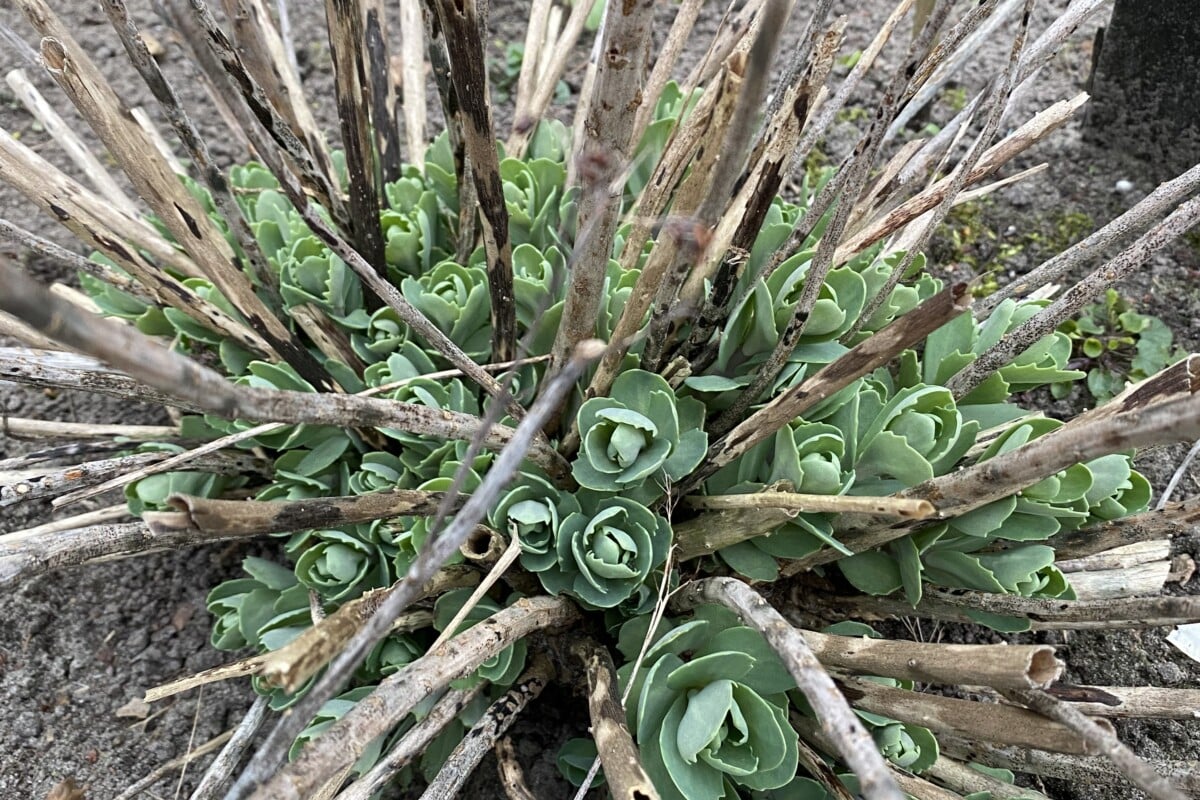
Winter is slowly, gradually, loosening its grip on my garden and on my mood. I was thinking the other day how I always complain about how “this winter feels like it has lasted forever.” Every year. Invariably.
I don’t remember ever thinking this about spring or fall. Even the hottest of summers seems to go by in a hurry. It’s only winter that feels neverending.
And yet, by mid-February I’m back to making gardening lists and spending more time outside, tidying up the plants I overwintered in place. A lot of my perennials are showing signs of growth, so I’m taking advantage of a couple of mild days to clean up the old leaves and allow the new shoots to make their way towards the sparse late winter sun.
Here are some of the plants we can cut back now, right before spring rolls around.
1. Deciduous grasses
I wrote an entire dissertation (okay, it’s just an article) on why we should refrain from pruning ornamental grasses before winter. Here’s the link.
I was referring, of course, to the deciduous grasses (also called warm-weather grasses) that turn a gorgeous shade of shimmering yellow in the fall.
(If you have evergreen grasses, you don’t need to prune them anyway, unless they’re getting unruly.)
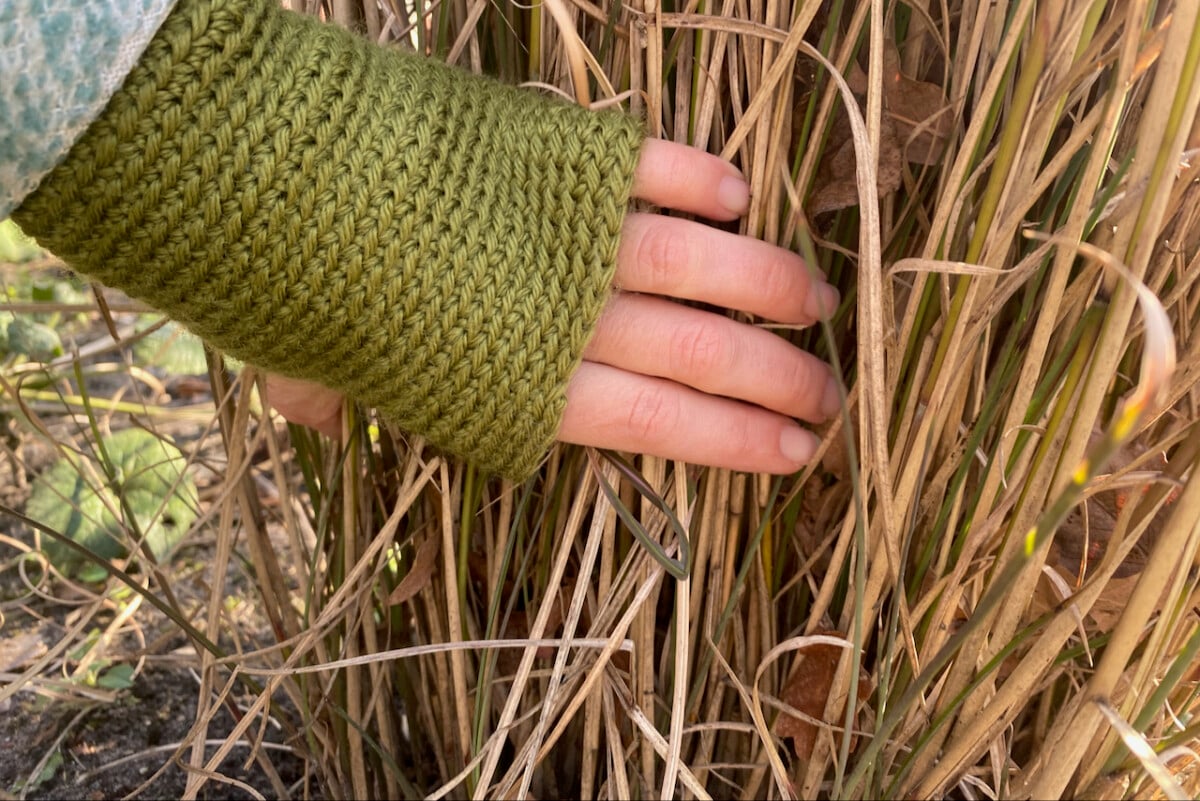
But now that winter is almost on its way out (fingers firmly crossed), it’s time to do a bit of cleanup of the old clumps. If we prune them down as close to the ground as possible, we’ll make enough room for the new growth to emerge.
You can tie them up in a sheaf before pruning to make cleanup easier. Here’s a link to the article dedicated to pruning grasses again, in which I explain this bunching-up method in more detail.
2. Canna lilies
Canna lilies always astonish me with how quickly they transform from stunning showstoppers to a soppy mess and back to stunning blooms again within less than a year.
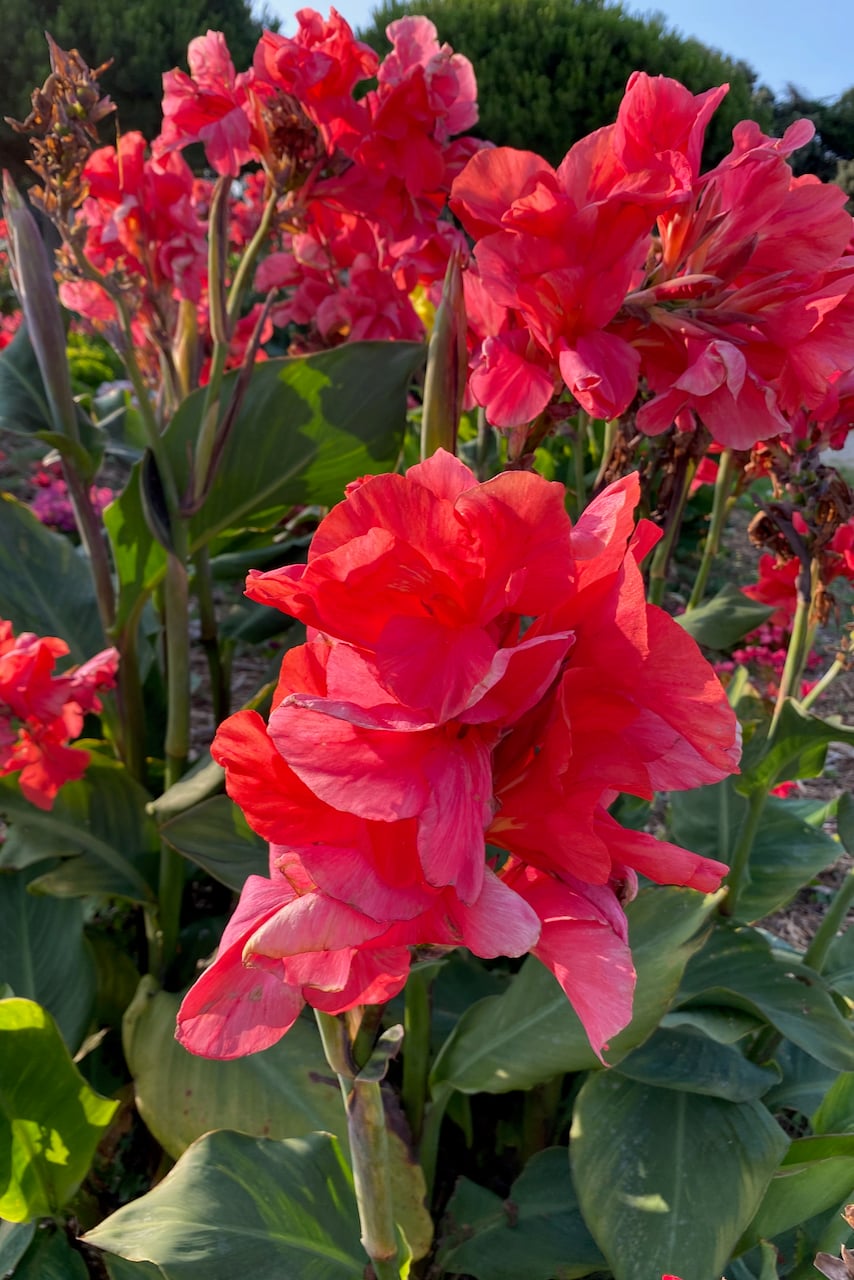
I have neither the time nor the patience to dig them out every fall, so I’m kind of forcing them to cope with winter below ground. I noticed that the longer they’ve been established, the more winter hardy they become. But at least I let them hold on to their safety blankies during the cold period of the year. And by that, I mean their dry foliage.
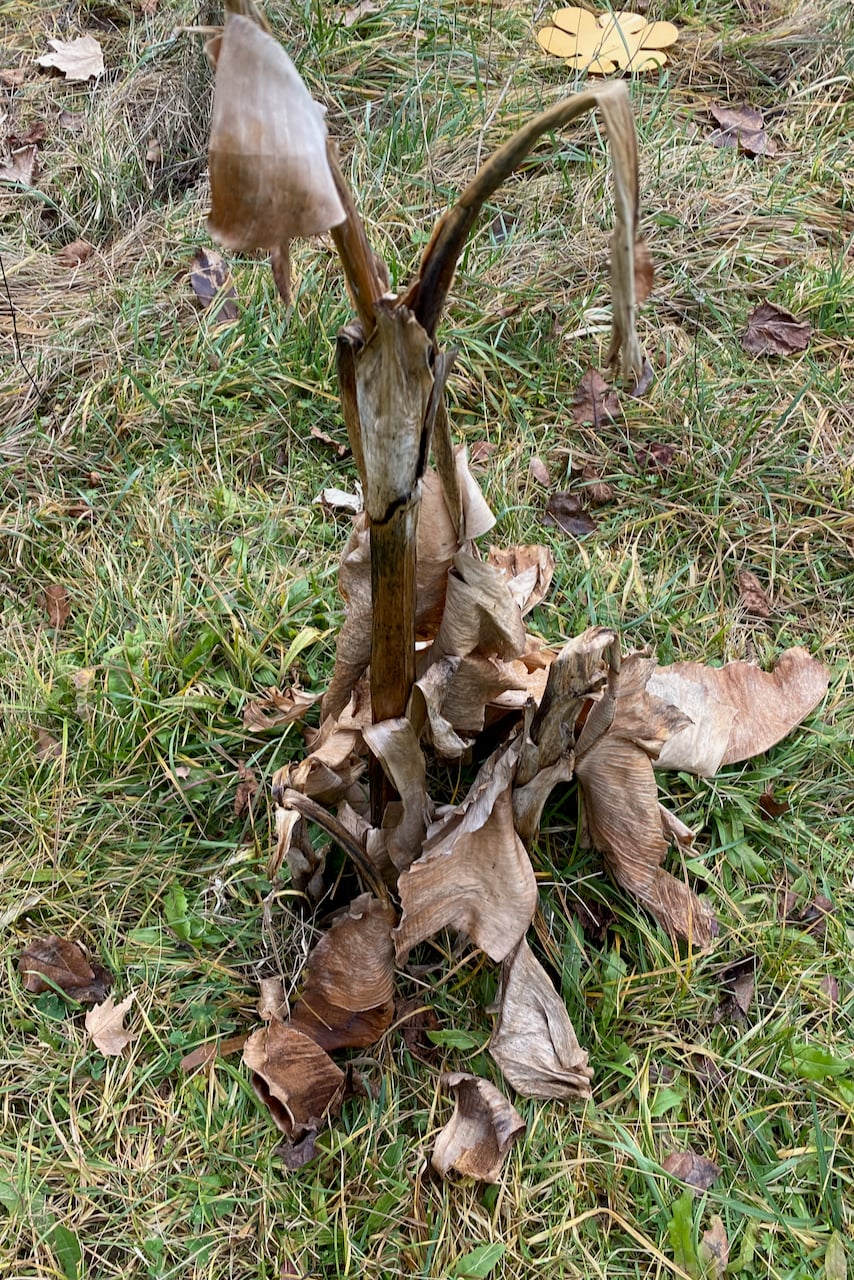
Like all withered tropical foliage, it looks pretty sad by late winter. That’s why we cut it all the way back to the ground, in preparation for new growth.
Young shoots will sprout from the same tuber, but not from the same ‘eye’, so the new stalks will grow pretty close to the old ones, but not right in the middle of them.

3. Hydrangeas
I always leave my hydrangea flower heads on the plant throughout the winter months. I like how elegant the giant mopheads look with some light snow and frost lace on their pretty little heads. An added advantage is that the dry organic material acts as an insulator for the plant and protects it from the fluctuations in temperature.
But by mid-February, the hydrangeas look a bit like this:
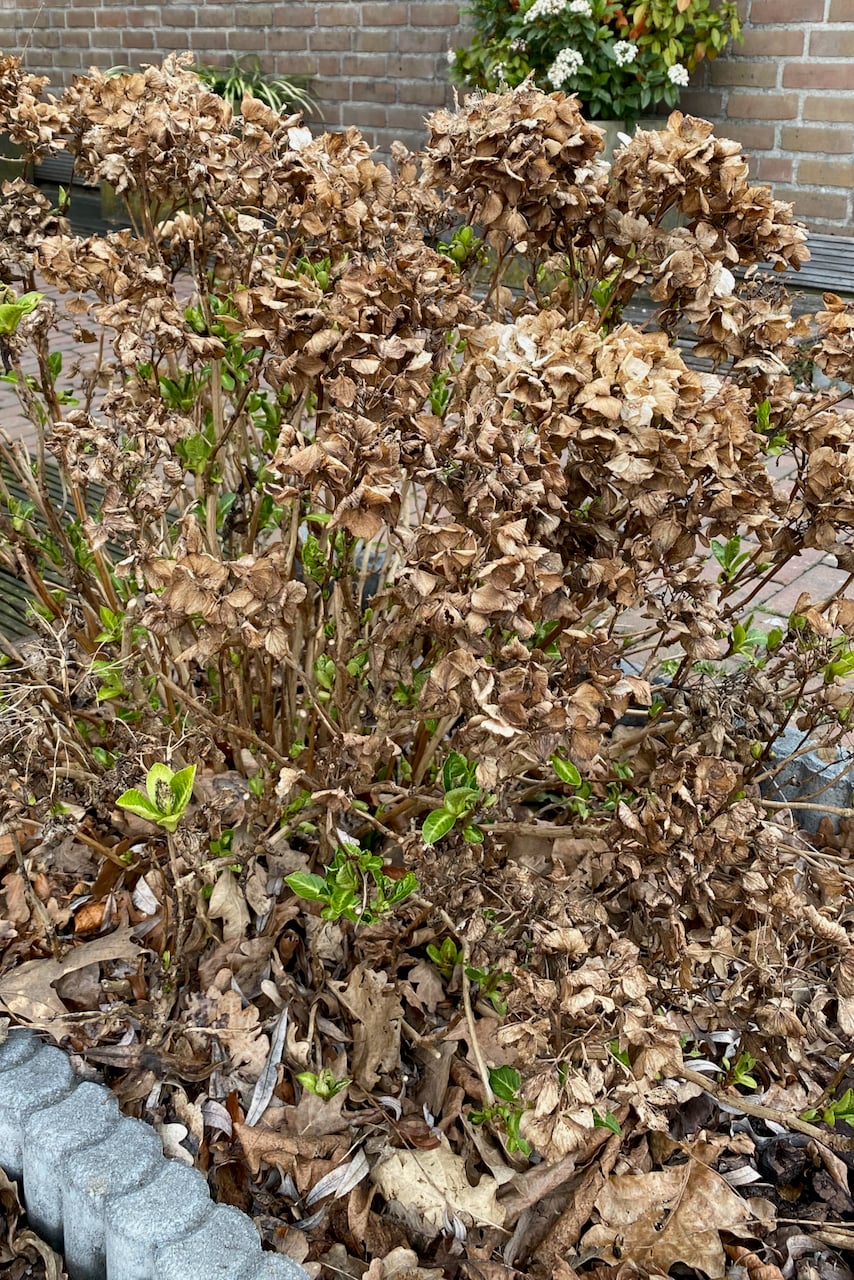
Messy mopheads looking like they’ve just woken up. Can you see the little green shoots? That’s the new growth, and the best way to make room for it is to clean up the plant now.
Deadhead the stems that hold the dry flowers, cutting above the first bud below the flower head. Don’t cut too much into an old wood hydrangea in spring, though. At least not if you still want it to bloom this year.
And while you’re at it, here are a few more ways to pamper your hydrangea this spring. It’s not weird, I promise!
4. Lemon balm (Melissa officinalis)
It’s getting a bit ridiculous how many times I “clean up” the clumps of lemon balm in my garden. Each time seems like the perfect occasion to use the leaves in something yummy. In fact, lemon balm is one of the perennials that gets the Chelsea chop in my yard – that midsummer prune that makes it grow a second, lusher set of leaves and flowers.
By the time spring rolls around, it needs another good pruning session, since it’s quite an early sprouter. Here it is, getting ready to spring into action with a couple of weeks of winter still left on the calendar.

5. Oregano
Sticking to the herb section of my brain, let me tell you about oregano (and its first cousin, marjoram). I know some people grow it as an ornamental only, but I can’t fathom how you could have it in your garden and not consume copious quantities of it. I add oregano to everything I cook. Honestly, I would add it to my coffee if I could. (Note to self, it might not taste bad at all.)
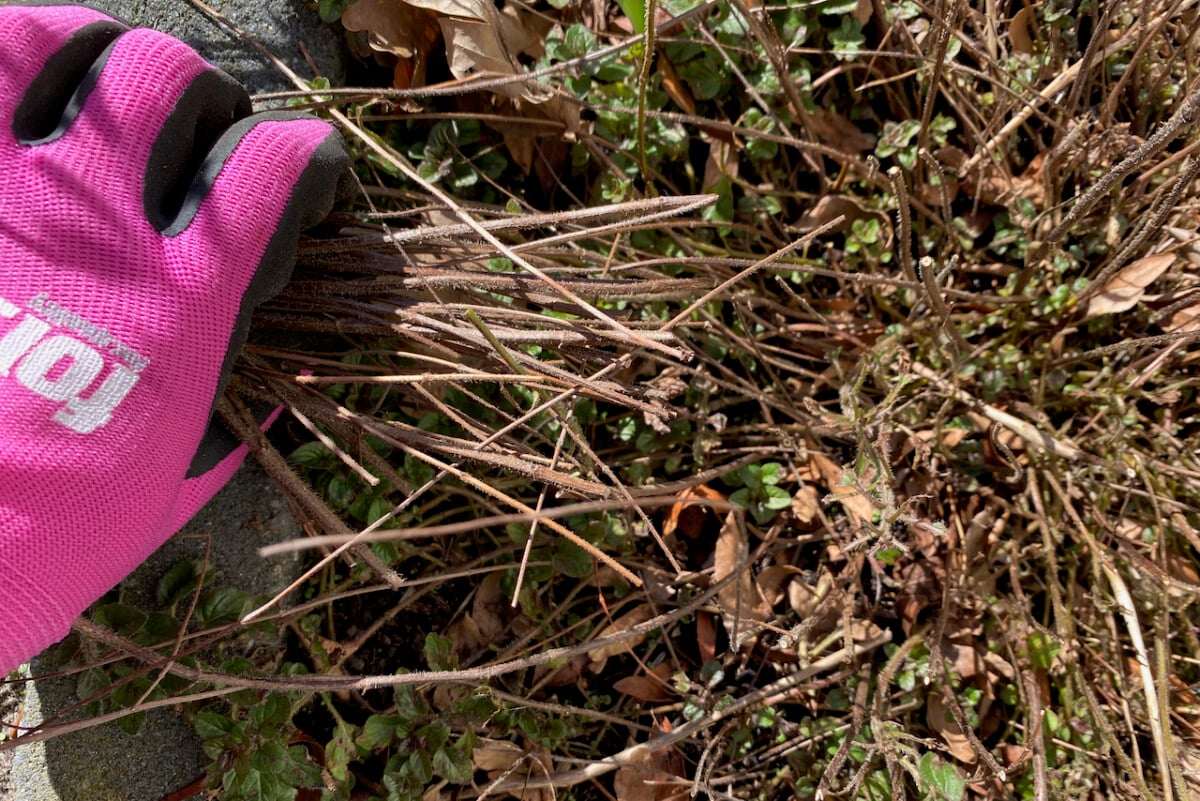
But even though I harvest it with abandon, there’s still a fair bit to clean up after winter. Oregano resprouts from the base pretty early in the season, so cutting off the dried-up stems in February makes sense.
With my large plants, I simply grab a handful of stems at a time and chop them all the way down. Oregano is the opposite of delicate, so it goes pretty fast when I don’t worry too much about damaging the new growth.
6. Upright sedum ‘Autumn joy’ (Hylotelephium)
It’s amazing how these little knobs will transform into the voluptuous candy tufts that give credence to the moniker of Autumn joy, the name of the most popular cultivar of upright sedums.

It doesn’t happen quickly (it takes about six months), but it does happen reliably. And by late August, it will be in full pink bloom.
Last year, Autumn joy made the top billing in my post on perennials with three or more seasons of interest. I even argued that it has four seasons of interest.

But we’re now at the time of the year when we have to remove its winter interest in order to make room for the new stems that will bloom this year. We’ll cut all the brown stems that are still standing all the way down to the ground.
7. Black-eyed Susan (Rudbeckia)
In my garden, black-eyed Susan retreats underground for a good part of the cold months. The foliage is gone, but I leave the seed heads for the birds to snack on and the hollow stalks for insects to burrow in.
To be fair, it also serves to remind me where the rudbeckia is planted, so I don’t accidentally dig it out in my frenzy to plant “just one more thing” in late winter.
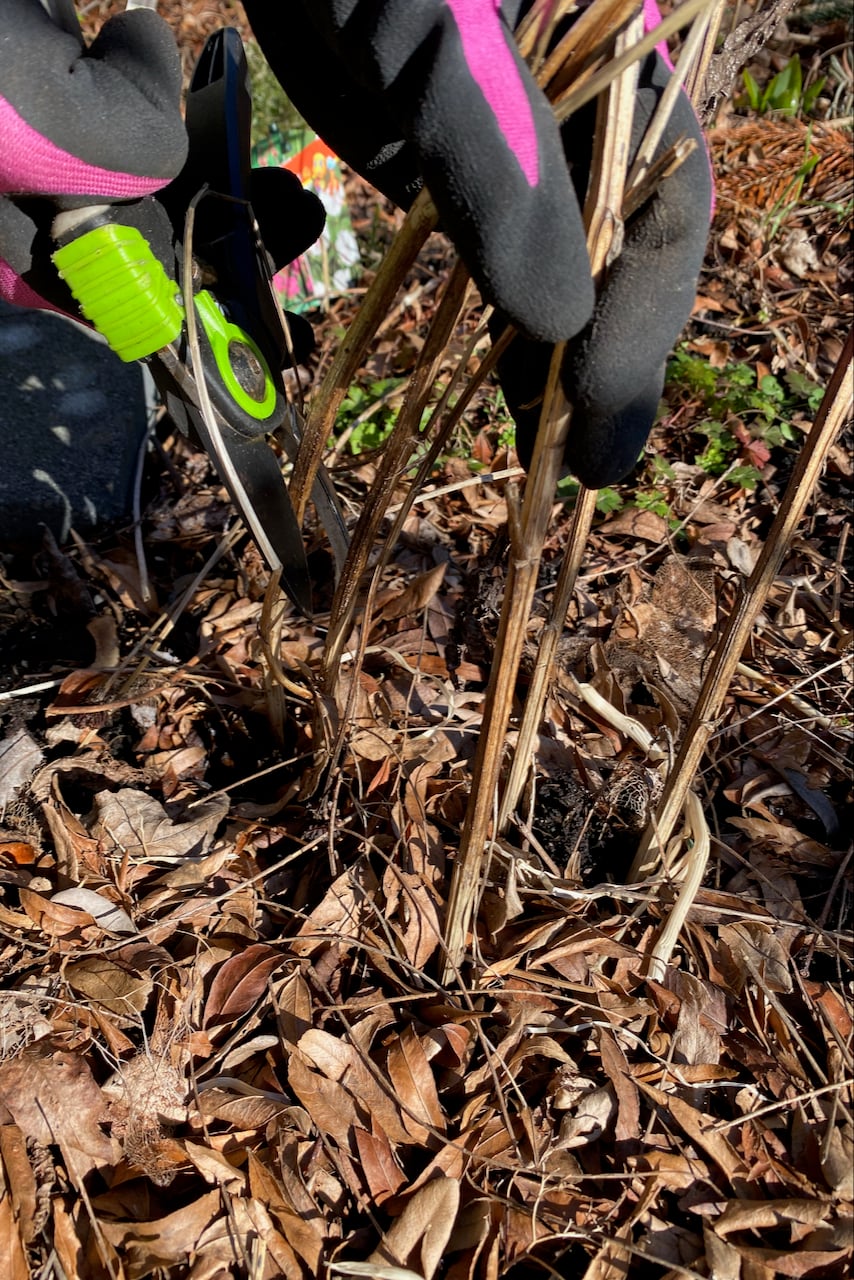
Now that it’s done its job (I love plants that serve multiple functions in my garden), the dry stalks need to make room for the new leaves. I cut them as low as possible and lay them in my designated messy corner for the insects to still make use of them.
8. Silver dollar plant (Lunaria annua)
THE main reason why I grow lunaria (you may know them as moon plants or silver dollar plants) is to add a bit of whimsy to my winter garden.
I featured lunaria on my list of plants with three seasons of interest for a reason. Here’s how the seed pods look once the flowers have faded.
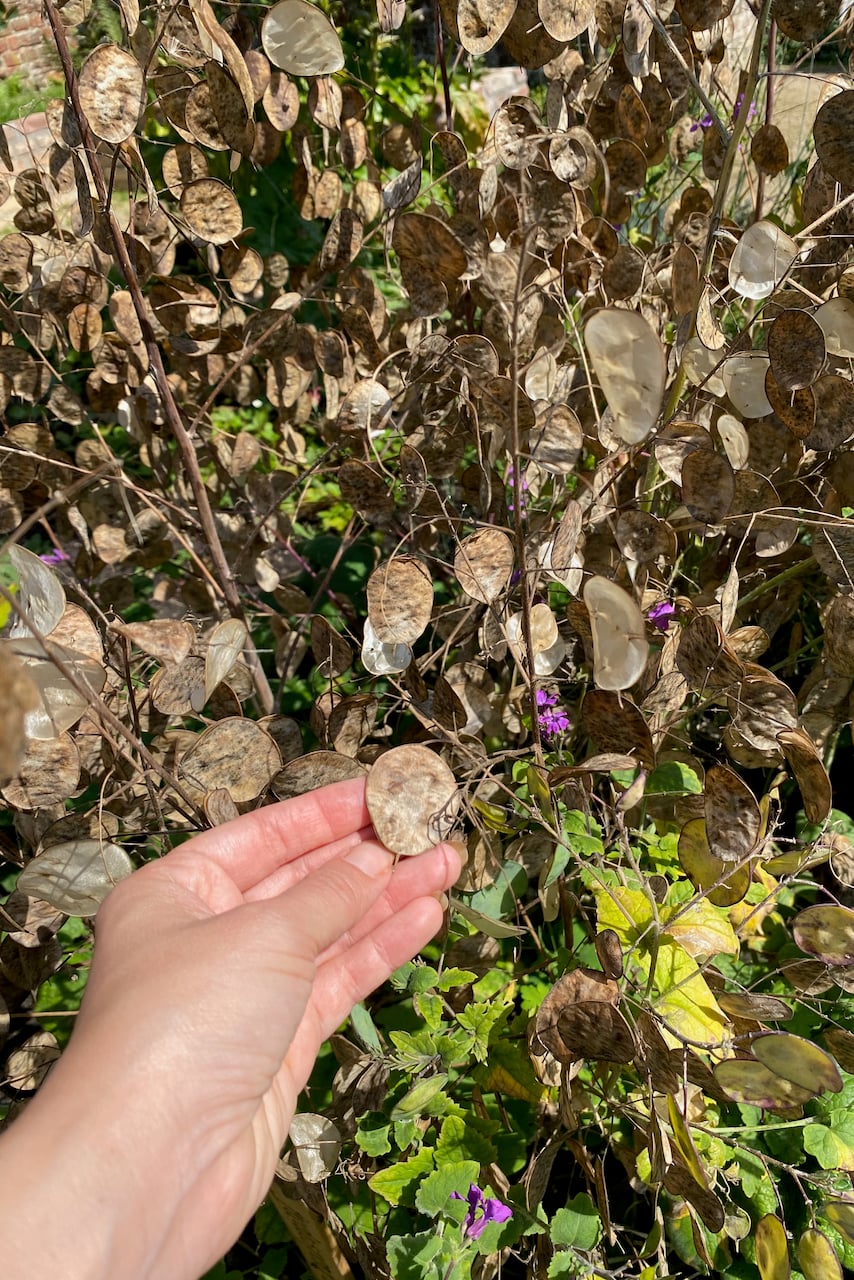
And the flowers start fading at the tail end of summer in my garden. I leave everything in place over winter just to see the pods shed their outer layer and glimmer in the sun. They look like elegant silver Christmas ornaments in the garden.
Now that Christmas is over, it’s time to put these ornaments away, so I remove everything by cutting at ground level. Allow me to remind you that lunaria plants will usually grow as biennials, meaning they spend the first year developing a strong root system and only bloom in their second year.
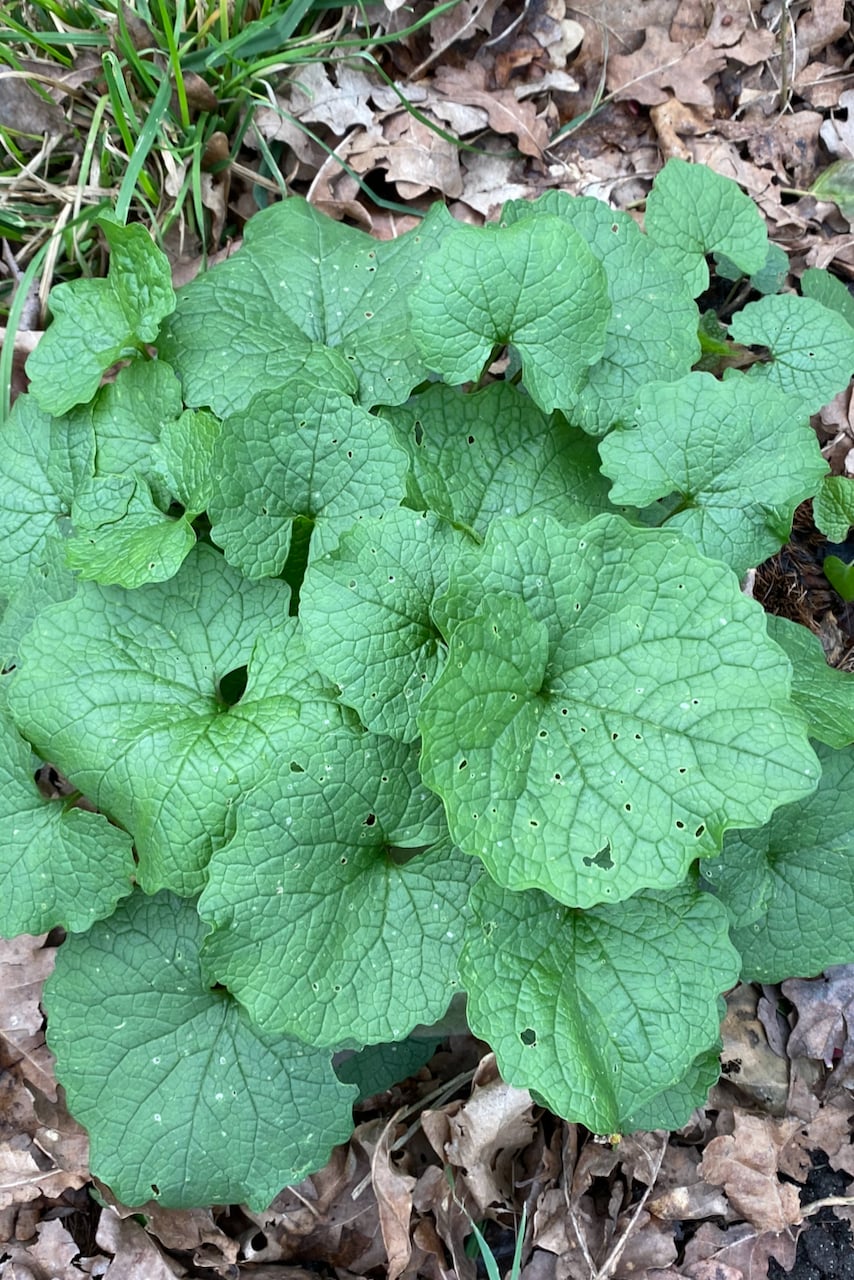
That’s why it’s important to let them self-seed over the winter. That way, we’ll always have silver dollar plants in their blooming year.
I wrote more about the advantages and drawbacks of growing biennials in this article.
9. Lupines
I think lupines have a reputation for being a bit finicky to get started. The wax-coated seeds make them tricky to start from seed, and their tap roots don’t exactly make them amenable to being divided. In fact, I added them to my list of plants you shouldn’t even try to divide.
Which means that once I get them growing, I’ll do my best to protect them over the winter. You’ll usually find them tucked in under a layer of their own leaves.

But I’m always a bit worried about getting the timing of the clean-up right. You see, slugs love young lupine leaves. And slug eggs generally overwinter in foliage debris. So I try not to procrastinate and clean up the lupines before the tiny voracious snackers wake up from their winter slumber.
10. Coral bells (Heuchera)
In this article on plants we can grow in a shallow garden, I was pondering whether we can still call coral bells evergreens when they’re more likely to come in shades of burgundy, silver and purple. Because if we’re growing heuchera, it sure isn’t for the flowers. The foliage is the main attraction.

Whether you’re growing coral bells as an evergreen or a semi-evergreen, you will have noticed by this time in late winter that there’s a layer of dead leaves piling up. The plant will look much cleaner if we cut them off or simply pull them off. And there’s a chance that there will be new baby leaves growing along the bare lower stem in a couple of months.
11. Elephant’s ears (Bergenia)
Bergenia showed up on my list of thirty plants you shouldn’t prune in the fall. Which means it’s looking a bit unkempt by late winter. A section of mine flowered at the end of the year, and another section is getting ready to flower now. And by mid-March, bergenia will be a riot of hot pink flower clusters floating over a layer of thic,k leathery leaves.
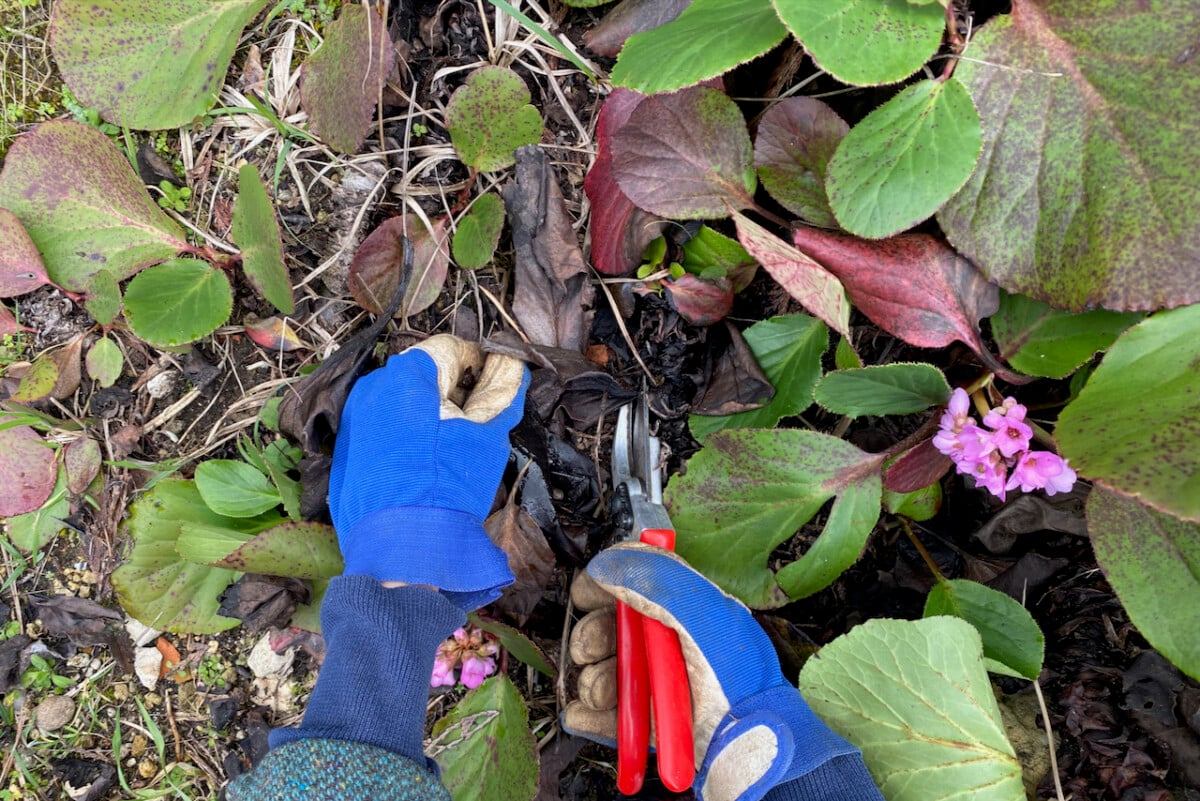
The nice thing about elephant’s ears – other than its tolerance to drought – is that it doesn’t fully go below ground when it’s cold. But some of its lower leaves, the older ones, wither away and get slimy.
Not only does it look a bit gross, but having a layer of slimy fiber wrapped around the rhizome can’t be good long-term. So I get in there and scrape it all out now, to improve airflow and give it some time to dry out.
12. Lavender cotton (Santolina)
Santolina is quickly becoming my favorite Mediterranean plant. It grows fast, but stays compact. It doesn’t need any extra feeding. And it’s very tolerant to drought, rain and pretty much any type of soil.
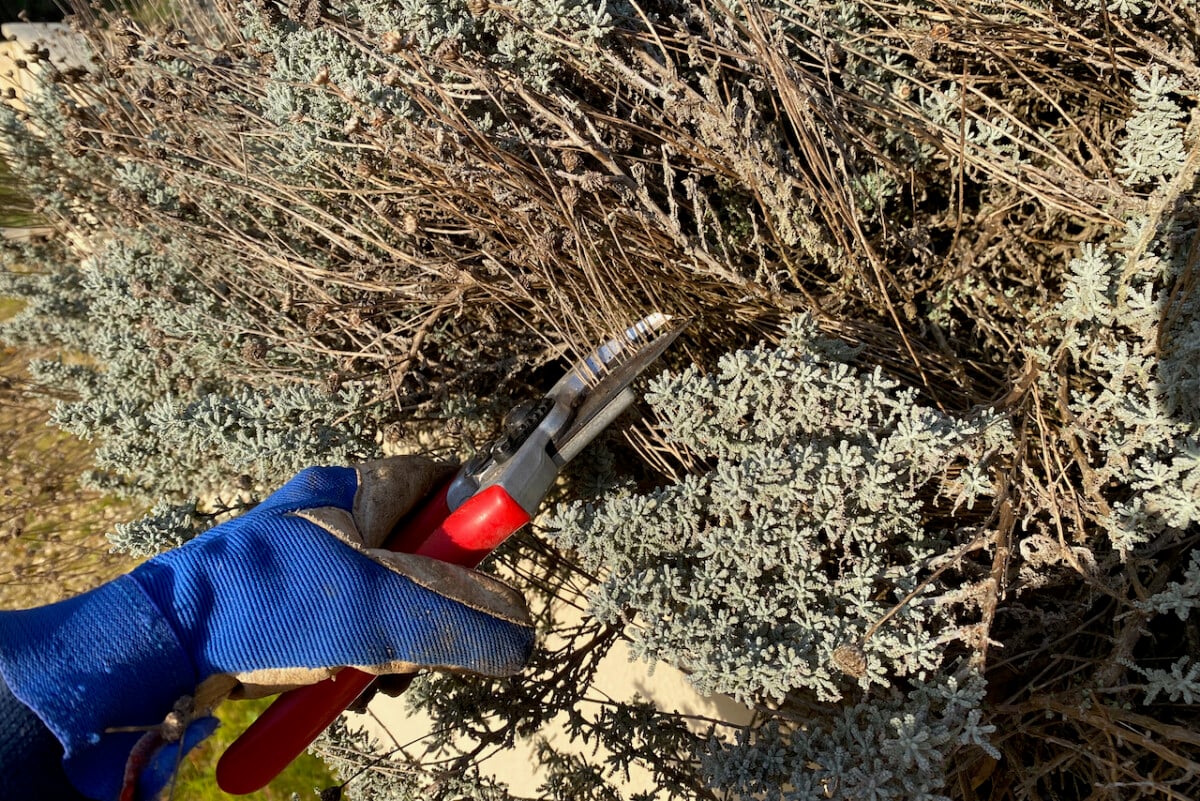
Every branch on this mature lavender cotton produces so many bright yellow button-like flowers in the summer. It’s really a joy to watch. I leave everything in place over the winter – for texture and for shelter for insects – and cut back the dry flowers in early spring.
13. Irises
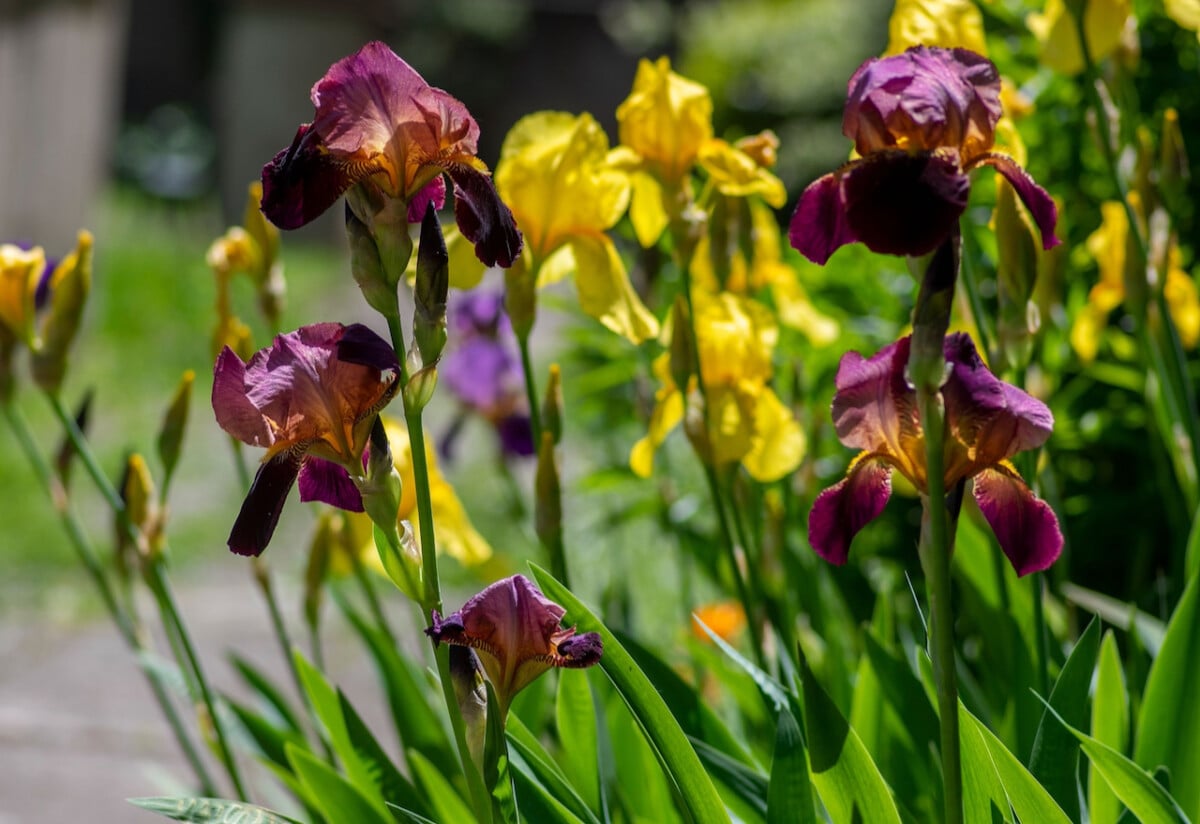
The best time to clean up your irises is after they’ve bloomed. If you didn’t get a chance to do it then, the second-best time is right before they start growing again. This is what the iris patch looks like on one side of my new garden.

I left everything in place over the winter for the dry leaves to act as insulation for the iris rhizomes. (The soil hadn’t been built up for years, so the rhizomes were partly exposed.)
But now, since the irises have started resprouting, I wanted to take off their winter blanket. It only took a fifteen-minute cleanup to uncover the rhizomes. Then I chopped most of the foliage and dropped it back in place as mulch.
14. Bee blossom (Gaura)
You may know this plant as bee blossom, wand flower or apple blossom. Its Latin name is Oenothera lindheimeri. I’ve only just become the keeper of a few gaura plants in my new garden, but I can already tell it will shoot up to the top of my favorite perennials list.
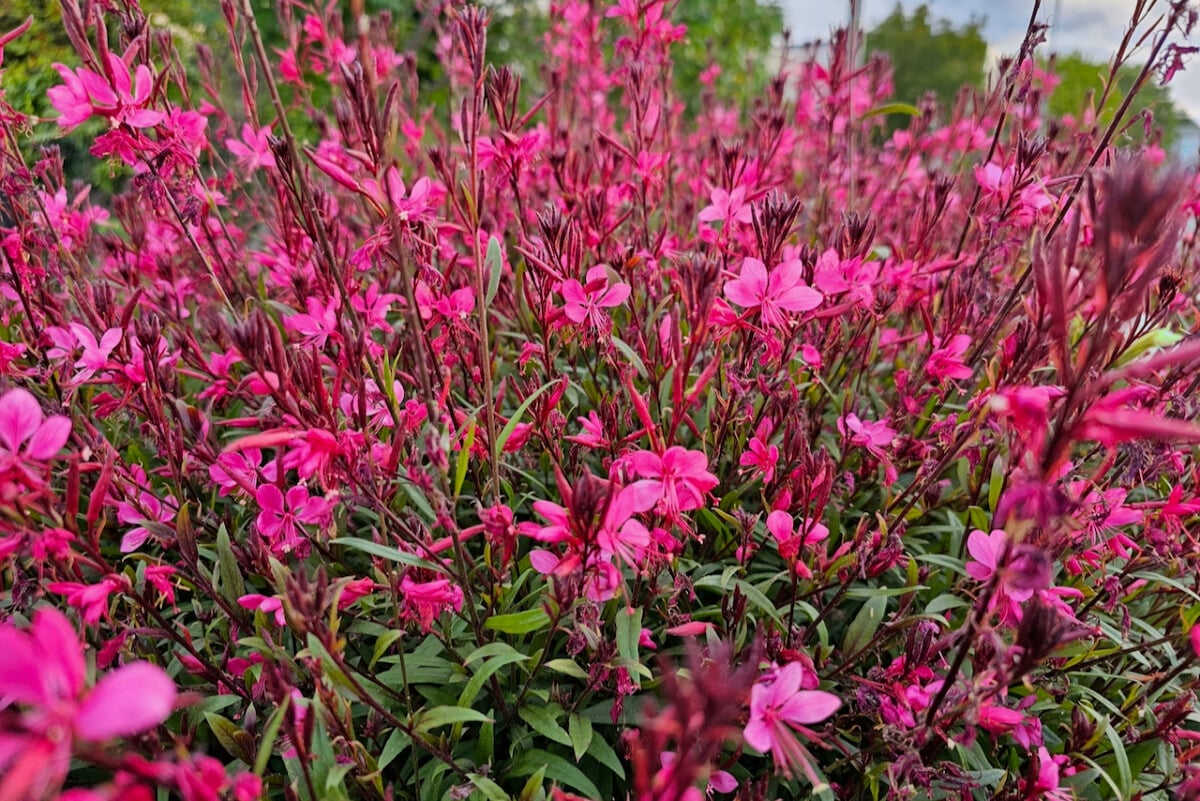
Gaura is low-maintenance and can tolerate heat. And it was still in bloom in my garden in mid-October last year, so you definitely get a good return on investment when you plant it.
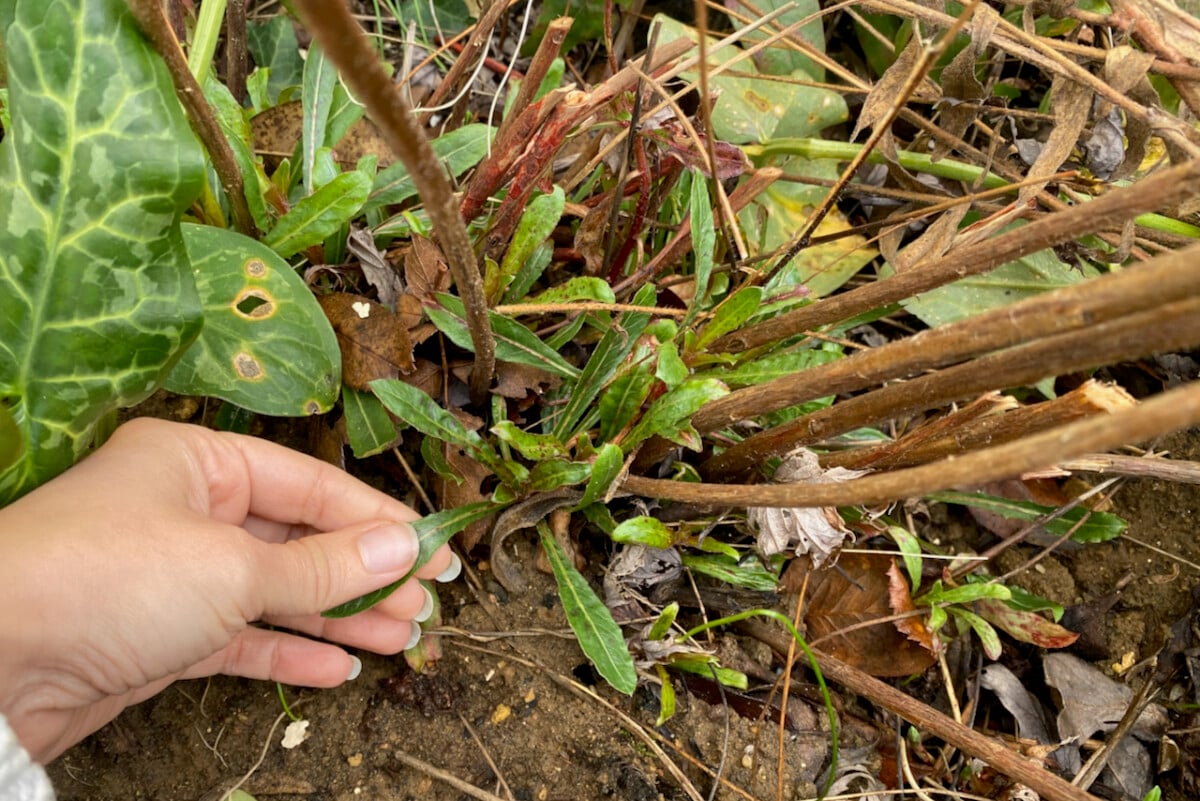
Just like black-eyed Susan, its stems are hollow when dry, so they make an excellent insect hotel in the winter. But before the new stems start growing again in spring, we have to clean up the old ones.
15. Lady’s mantle (Alchemila mollis)
Much like the heuchera I mentioned above, the attraction of lady’s mantle is all in the foliage. If you’ve ever seen drops of rain collecting on its velvety, elegantly shaped leaves, you’ll know what I’m talking about.
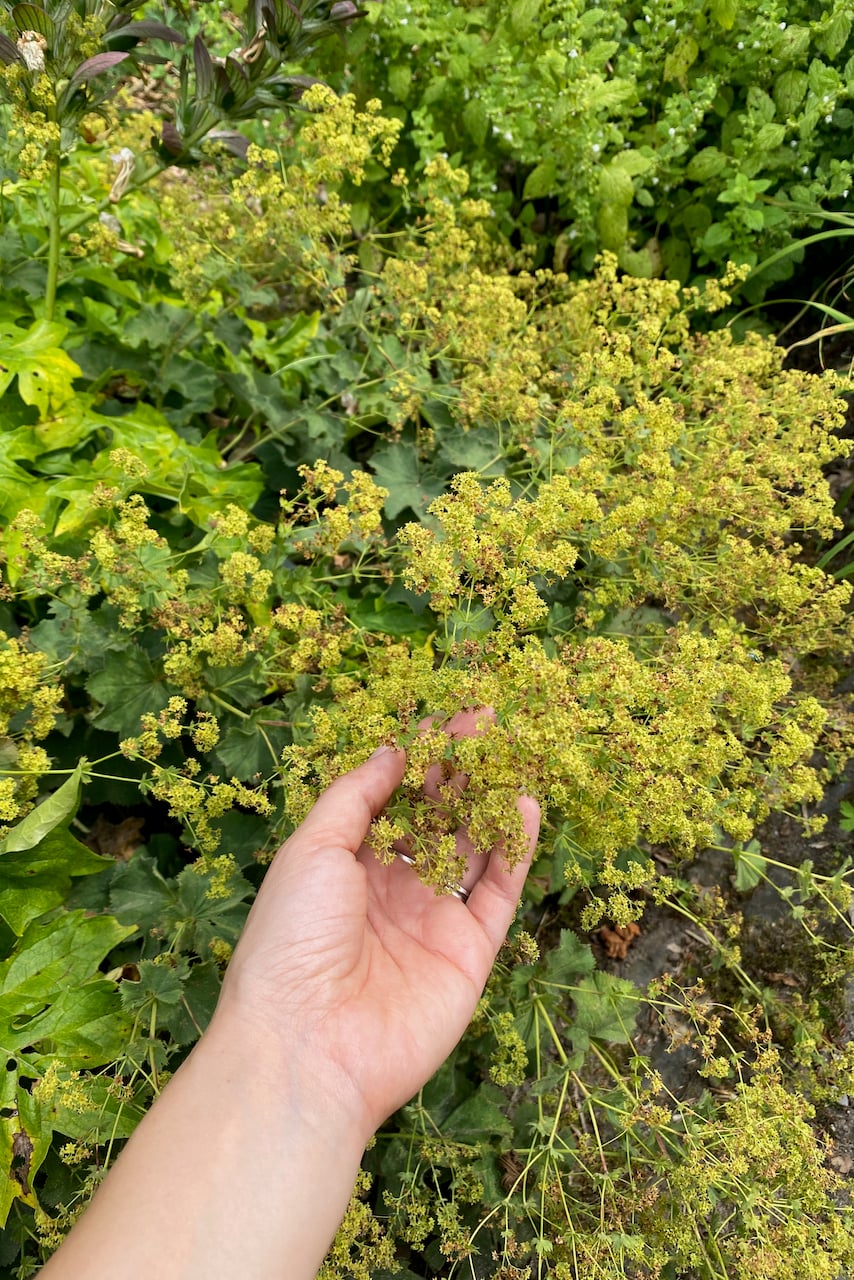
The lime-green flowers float like a layer of foam over the entire plant.
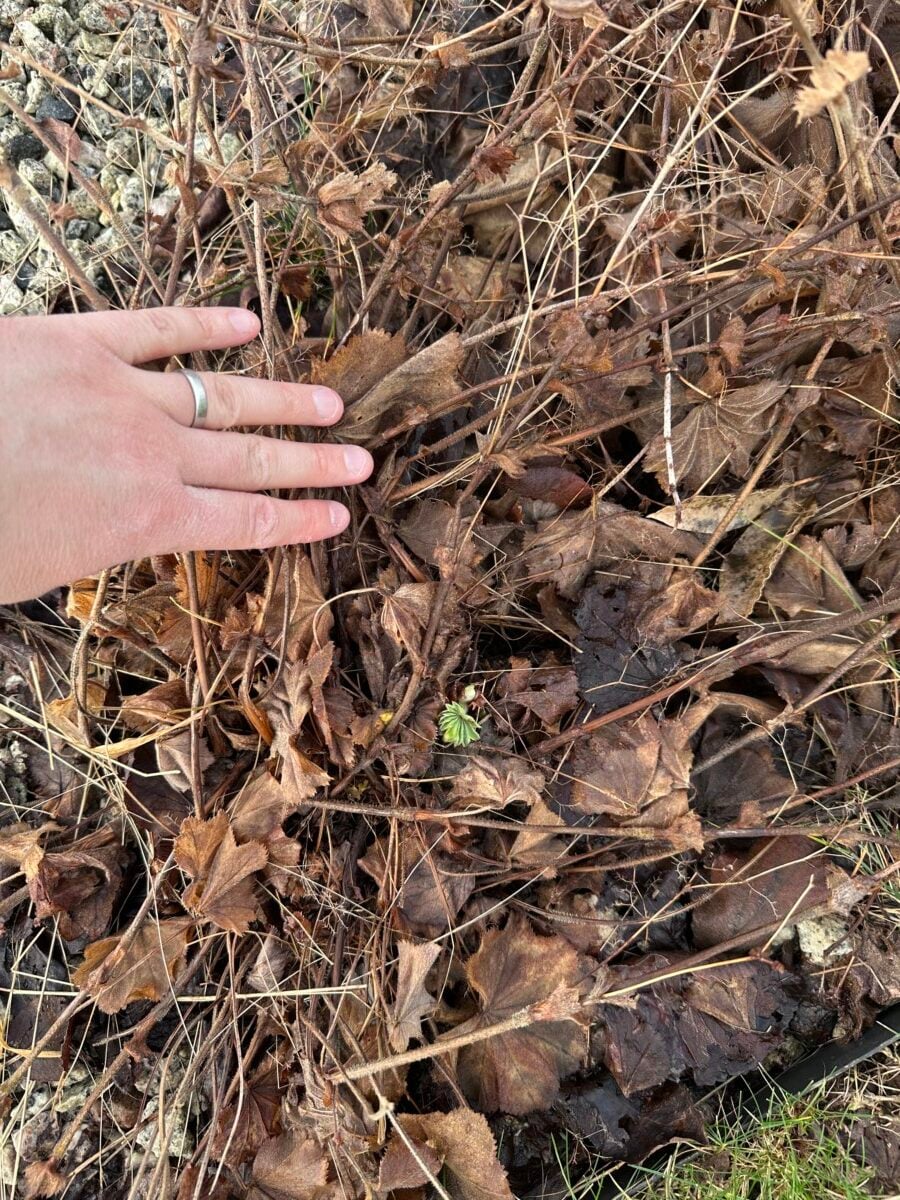
It may not be as showstopping as a dahlia in bloom, but its understated elegance makes it one of my favorite perennials. It fully retreats underground pretty late in the fall and pokes back up in late winter. That’s my cue to clean it up and give it breathing room for a new growing season.
Get the famous Rural Sprout newsletter delivered to your inbox.
Join the 50,000+ gardeners who get timely gardening tutorials, tips and tasks delivered direct to their inbox.