

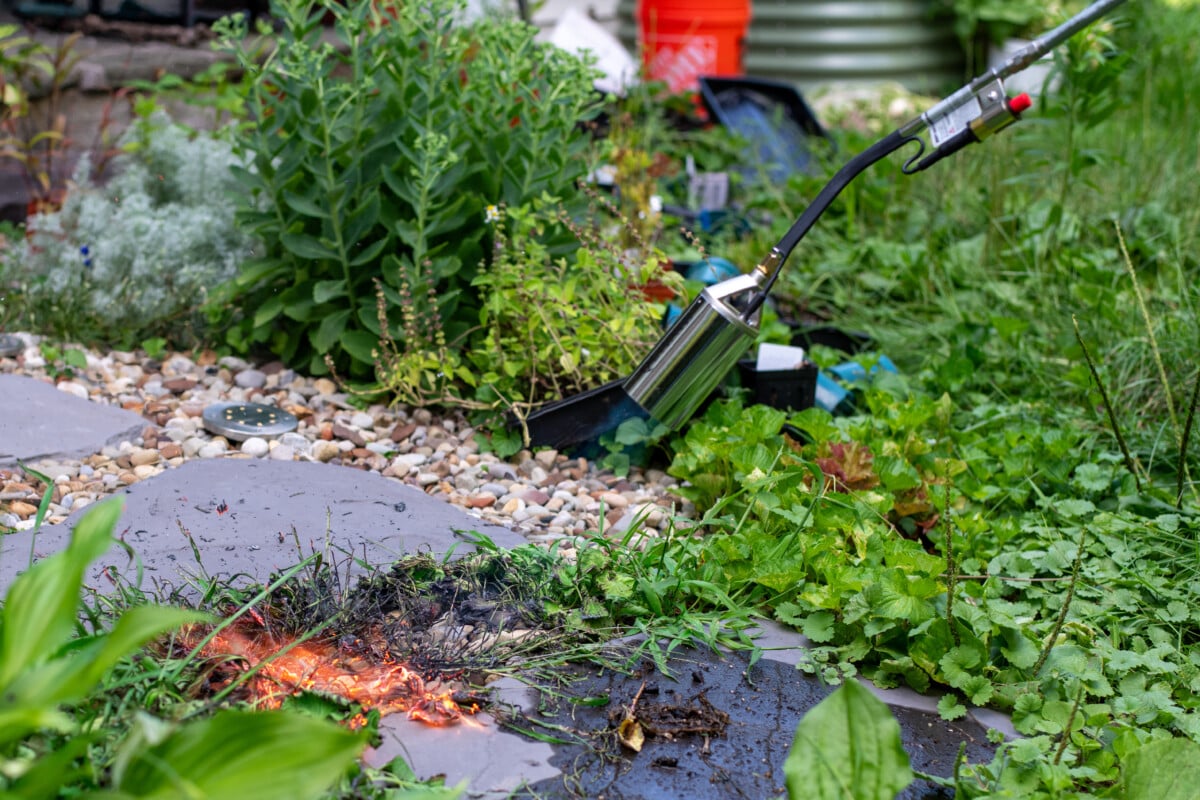
Last month, I bought a propane weed torch.
Yes, it’s as awesome as it sounds. No, it’s not at all complicated to use. And yes, it does a great job getting rid of persistent weeds that pop up in all the places where pulling them is either annoying, impractical, or just plain impossible.
I’m sure that if any family members read this, they will do so with a raised eyebrow. “Fire? Really, Tracey?”
Yes, really.
I’m not gonna lie, this is one of those garden tools that toes the line between practical and just plain fun. Once you try it, you’ll be hooked. There’s something deeply satisfying about using a literal flame to take care of unwanted plants, especially when you’re already tired of weeding the same cracks in the driveway for the third time this month.
(Speaking of, this is truly the way to go if you want weed-free pavers and paths.)
But before you go full Tom Hanks in Castaway, standing in your driveway pointing at smoldering weeds and shouting, “I have made fire!” it’s important to remember that, well, it’s fire. Let’s talk about how to safely and effectively use a propane weed torch responsibly.
Because this just might become your new favorite garden gadget.
What the Heck Is a Propane Weed Torch
A flame thrower for gardeners. Okay, okay, it’s not that dramatic.
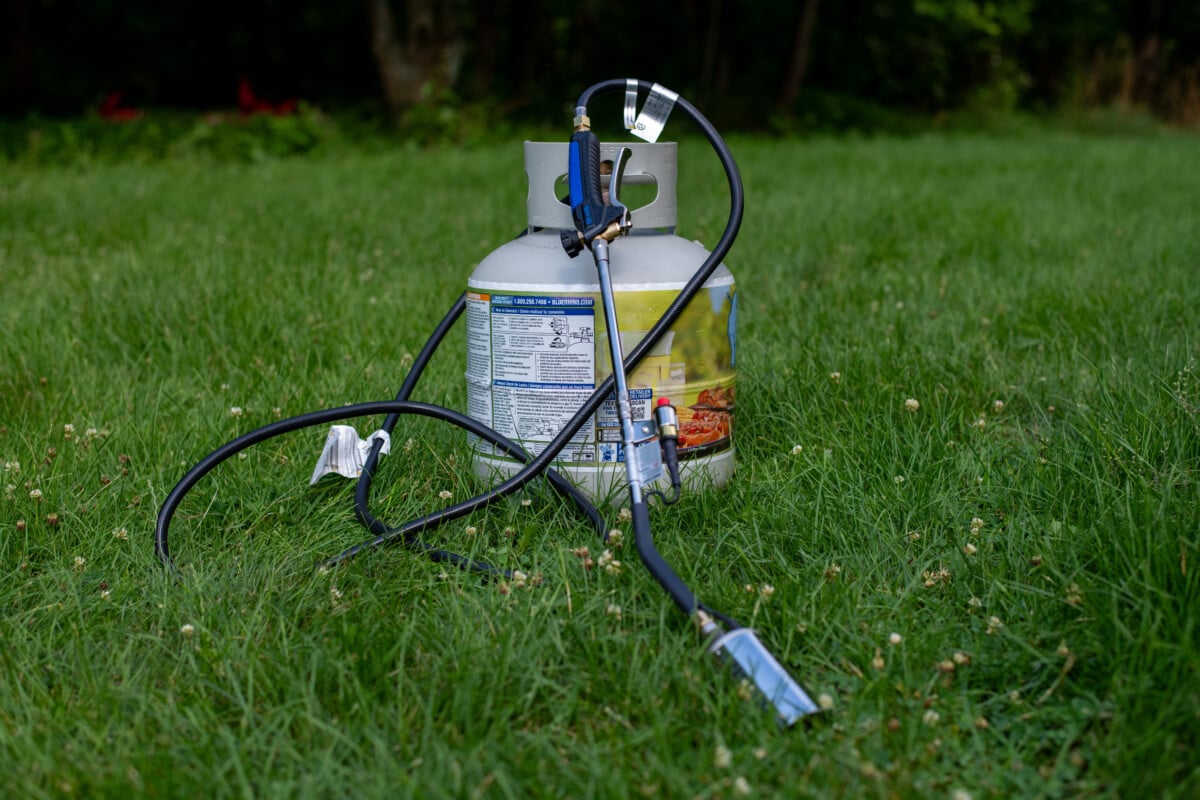
A propane weed torch is essentially a long wand with a nozzle at one end and a hose at the other, which attaches to a standard propane tank. Yup, just like the one you use for your grill. Most come with an ignition switch, much like the standard one found on your grill.

You ignite the torch, adjust the flame, and then pass it over the weeds to kill them.
We’re not out to incinerate the entire plant, which is a common misconception. That’s overkill and wastes propane. All we’re doing is superheating the plant tissue just enough to rupture the cells so the plant can’t photosynthesize. Within a day or two, it wilts and dies.
No chemicals, no back-breaking pulling, and no yard smelling like a side salad (hello, horticultural vinegar.)
Depending on where the weeds are, you can let them break down in place once they’re dead or rake them up later.
Choosing a Propane Torch Set Up
Let’s walk through what you need.
First, the obvious, you’re going to need a propane weed torch. There are quite a few models out there, but what you’re looking for is one with a sturdy handle, a long hose and a trigger or valve to control the flame.
For ease, it’s a good idea to choose one with an ignition switch, too, so you don’t have to worry about lighting it by hand. This is the one I bought, and I love this thing!
I chose this one specifically because it had thousands of reviews, rather than a handful, and because it comes with a ten-foot hose, which is great for when I’m torching weeds in the driveway. I don’t have to keep picking up the propane tank.
You’ll also need a propane tank.
Most folks use the standard 20-pound size you’d find under your gas grill. If you’ve already got one, you’re all set. If not, your local Walmart or home improvement store has them.
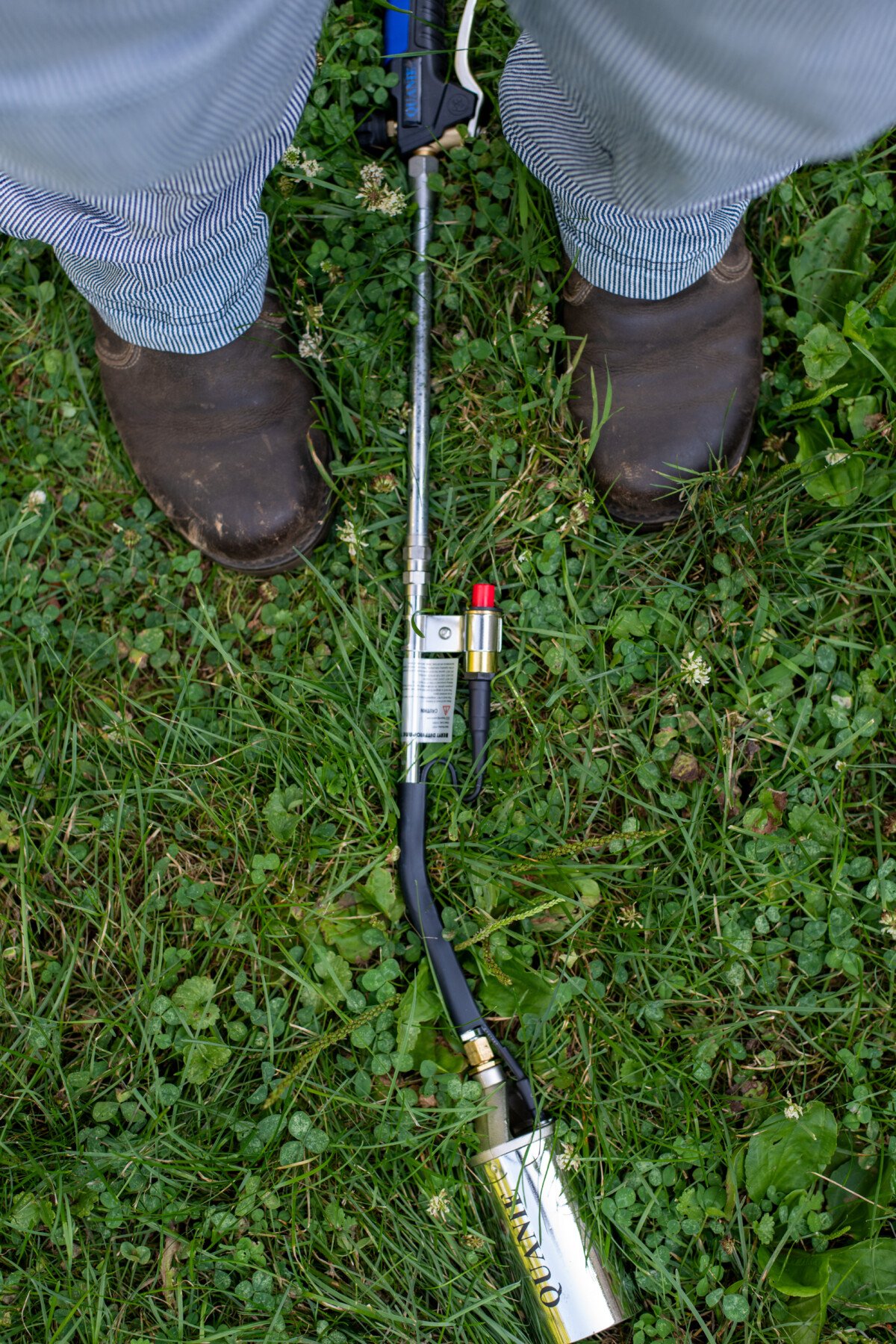
Finally, safety gear. This is not like grilling, so it’s not the time for flip-flops and your favorite pair of cut-offs. Wear closed-toe shoes and long pants (preferably cotton, such as denim, rather than synthetics), as hot sparks do not care about your cute summer pedicure.
Now for the fun part – lighting it up.
It’s important to read through the manual that comes with your propane torch before you use it. I’m looking at you, guy who always throws out the manual when he opens the package. Each model is different, and you want to ensure you’re using it correctly. Because again, fire.
But the basics are you will hook the torch’s hose up to your propane tank, making sure everything is tightened properly. Make sure the valve on the torch is closed all the way, then open the valve on the tank first slowly. Then open the valve on the torch and use the built-in igniter to ignite the gas.
Don’t freak out, yelp, and drop the wand when you hear the initial whoosh.
I’m not saying that’s what I did. I’m just saying that if you do, it’s a sign of weakness in your teenagers’ eyes, and they may recreate your yelp at every family meal for the next week.
Grill aficionados are likely pretty familiar with that whoosh.
Adjust your flame so it’s strong with just a hint of a roar. We’re not trying to replicate the scene from every action movie with a gas station explosion. Medium to high heat is usually the sweet spot.
To kill a weed, simply pass the flame over the leaves for a second or two.
That’s it. You’re not looking for fireworks or ash. The goal is to disrupt the plant’s cellular structure so it withers over the next few days.
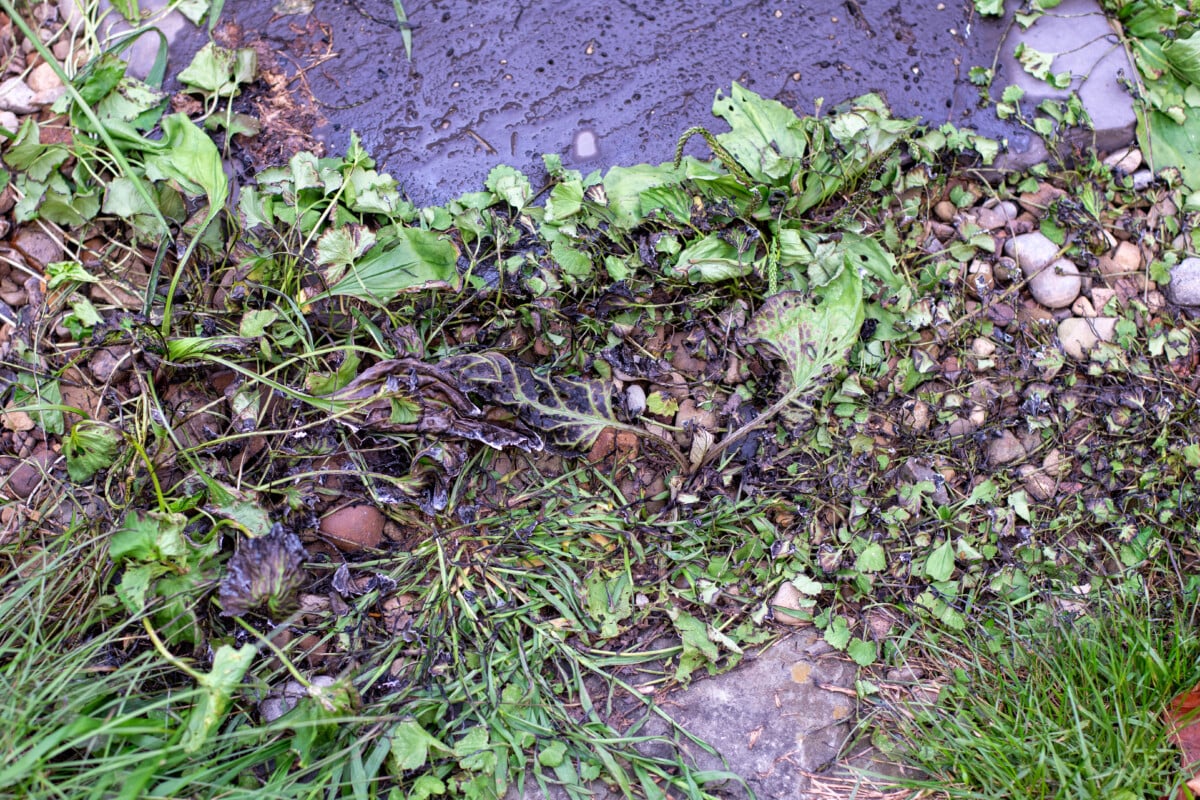
Granted, if you’ve got a powerful torch, you’ll likely end up with some charred greens. However, remember that they don’t need to be on fire for the torch to be effective. Some leaves will wilt immediately, but the real damage occurs below the surface.
Be patient. Move slowly. Find a good rhythm.
Safety, Safety, Safety
This is the part where the heady power of owning what amounts to a mini flamethrower can start to go to one’s head. So, before we get carried away torching every green thing in our path, let’s talk safety.
It should go without saying that this is not a tool to use on dry, windy days.
The last thing you want is to start a brush fire because you got a little too enthusiastic in the middle of July. If you live in an area prone to wildfires, there may be local ordinances that prevent the use of propane weed torches. If that’s the case, I will direct your attention here, for something just as effective without the fire hazard.)
Always keep a hose nearby or a fire extinguisher readily available. Have the hose turned on already with a sprayer attachment. The last thing you want is to have to run over and turn the hose on if you accidentally catch something on fire that you shouldn’t have.
Avoid using the torch near mulch beds, dry grass, wood siding, or any other flammable materials.
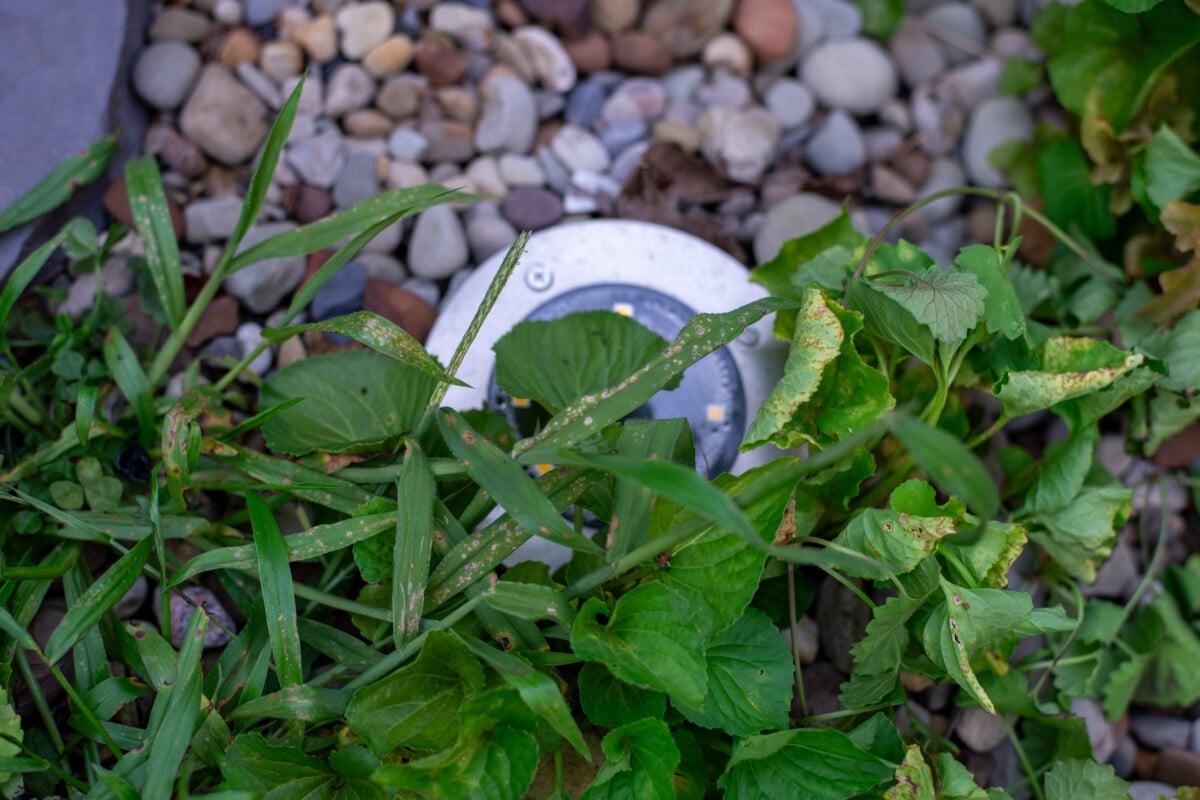
Pay attention to where you are using the torch. If your weeds have gotten a bit out of hand, they can hide things you don’t want to hit with a propane torch, such as your solar-powered walkway lights. Oops!
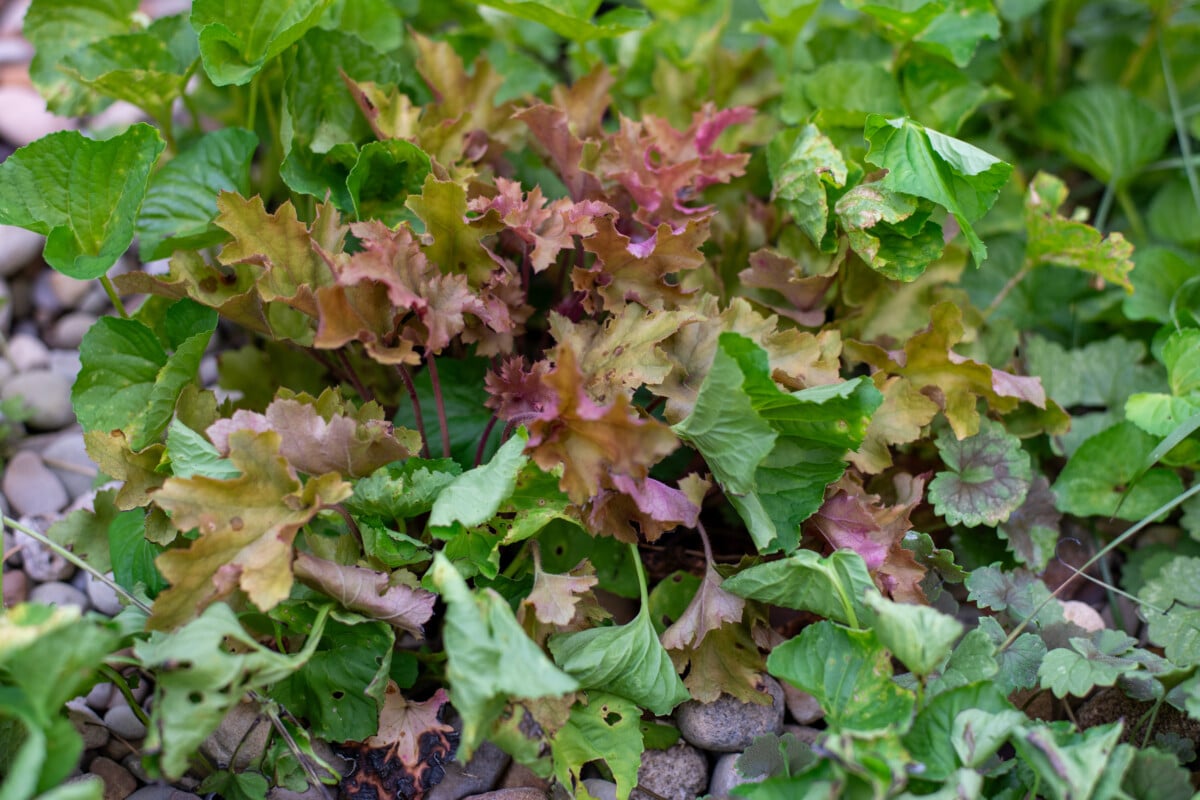
Also, be careful using it near decorative plants. Remember, you don’t have to actually burn the plant to cause damage. The heat from this can kill both weeds and the surrounding plants if you aren’t careful. (My poor coral bells! I think I got a little too close. I’ll find out over the next day or so.)
Keep children and pets inside while you work with your torch.
When used correctly, a weed torch is an excellent tool for clearing weeds in sidewalk cracks, gravel driveways, along fences, around raised beds, gravel patios, or even before planting your vegetable garden in the spring. You can also use it after a rainstorm when flammability risk is low.
I have found that this works best on young weeds. Get ‘em while they’re short! If you wait until they’re waist-high monsters with thick stalks and a bad attitude, it’s going to take more effort. Torch early, torch often, and keep it as part of your regular maintenance routine. You’ll be surprised how much of a difference it makes.
I recently put my propane torch to the test against two other popular non-chemical weed control methods to see which was the most effective. You can read which method won here.
A few final notes
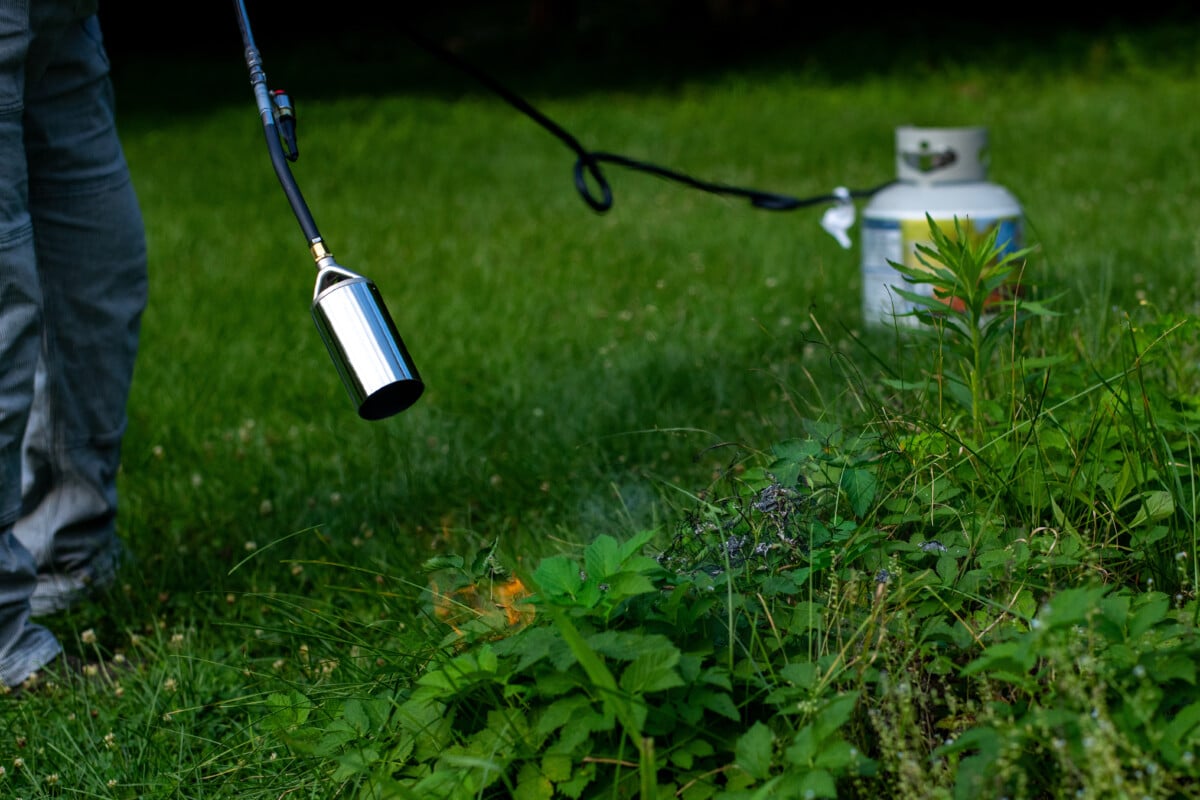
Turn off the torch, then turn off the propane tank when you’re done. Hold the trigger on the torch nozzle so that all the gas is released from the hose before disconnecting it.
Store your tank upright in the shade, and keep your torch in a dry and safe location.
Inspect the hose and connections before each use to ensure nothing is cracked or leaking. A little maintenance goes a long way toward staying safe and making sure your fire-breathing garden tool stays in good shape.
So yes, I wish I had bought one of these things ages ago. I’m playing with fire, and it still counts as gardening.
It’s effective, affordable, and weirdly satisfying. Granted, it’s not a replacement for every weed control method, but it’s a great tool to have in your gardening arsenal for the spots that are hard to reach or just too annoying to deal with otherwise.
Related Reading: I Compared Stone vs. Wood Mulch – Here’s Why I Chose Stone
I’m also looking forward to using this in the winter. The side entrance to my house stays in the shade all day in the winter, so the stone walkway up to the door is always covered in ice. I’ll be able to melt it all away, rather than needing to use chemicals to melt the ice.
And between you and me, this thing gets a fire going in our backyard fire pit way faster than a match.
Now go forth and torch, my friends! Responsibly, of course.

Get the famous Rural Sprout newsletter delivered to your inbox.
Join the 50,000+ gardeners who get timely gardening tutorials, tips and tasks delivered direct to their inbox.