

I’ll be the first one to admit that it feels a bit premature (bordering on ridiculous) to write about propagating plants in January.
As I’m sitting down to write this article, the sun is shining on my garden, but there’s a frost warning notification in my weather app. However, that doesn’t mean that my insatiable appetite for more plants is taking a winter break.
I know that as soon as spring gives me the tiniest hint of nearing, I’ll throw myself with abandon into sowing seeds. So I’m taking advantage of a slow January in the garden to propagate plants that can handle it at this time of year.
Can we even propagate plants in the winter?
Yes, we absolutely can, but not all plants and not by any means.
In fact, you’ll notice that the propagation methods fall under one of these three categories:
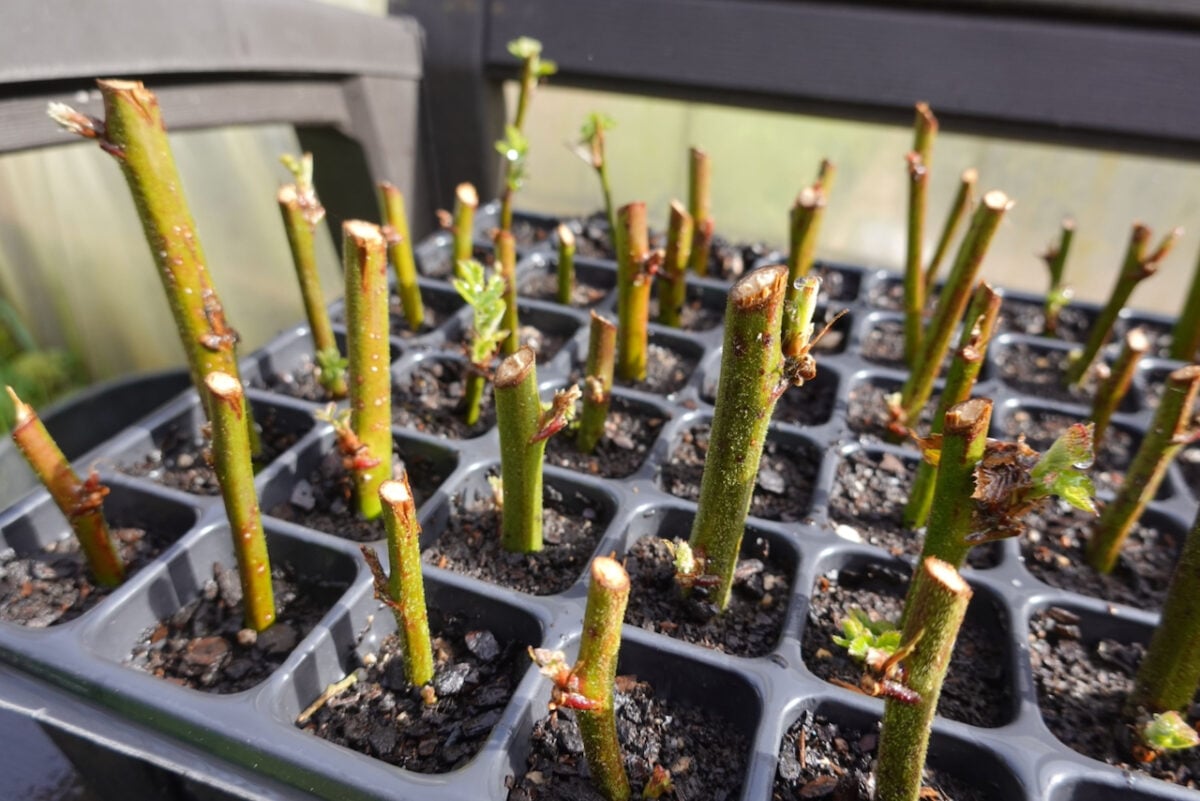
- Taking hardwood cuttings. We take softwood cuttings in late spring and early summer; we take semi-hardwood cuttings in late summer through fall. And we take hardwood cuttings in late fall and throughout the winter months.
- Taking root cuttings. We generally take root cuttings when the plants are dormant. That’s because we need to dig out the roots to access the cuttings. So now’s the best time to do it.
- Dividing plants that are “active” at this time of year. Also known as dividing in the green. This is the best time to divide plants that will recede below ground when the weather warms up.
One word of warning, before we get started.
Any type of propagation that we do in the winter will take longer to show results. While spring and fall propagations can show signs of successful growth in as little as a month, it might take a winter cutting a couple of months or more to start growing again. We just have to be patient in the knowledge that those sticks will turn into brand new plants eventually.
Let’s have a look at the plants that can keep us busy this January.
1. Winter aconites (Eranthis)
Propagate by division.
If you want a reason to get out in the garden in the dead of winter, plant yourself some joyful winter aconites. They are one of the first bulbs to bloom in the new year and don’t find it a bother to poke their yellow heads out from under a layer of snow or ice.
Winter aconites perennialize really well, and if the conditions are right, they’ll spread in a couple of years much more reliably than other early bulbs, such as snowdrops. When the clumps are large enough, that’s when we get to swoop in and move them around to start a new patch.
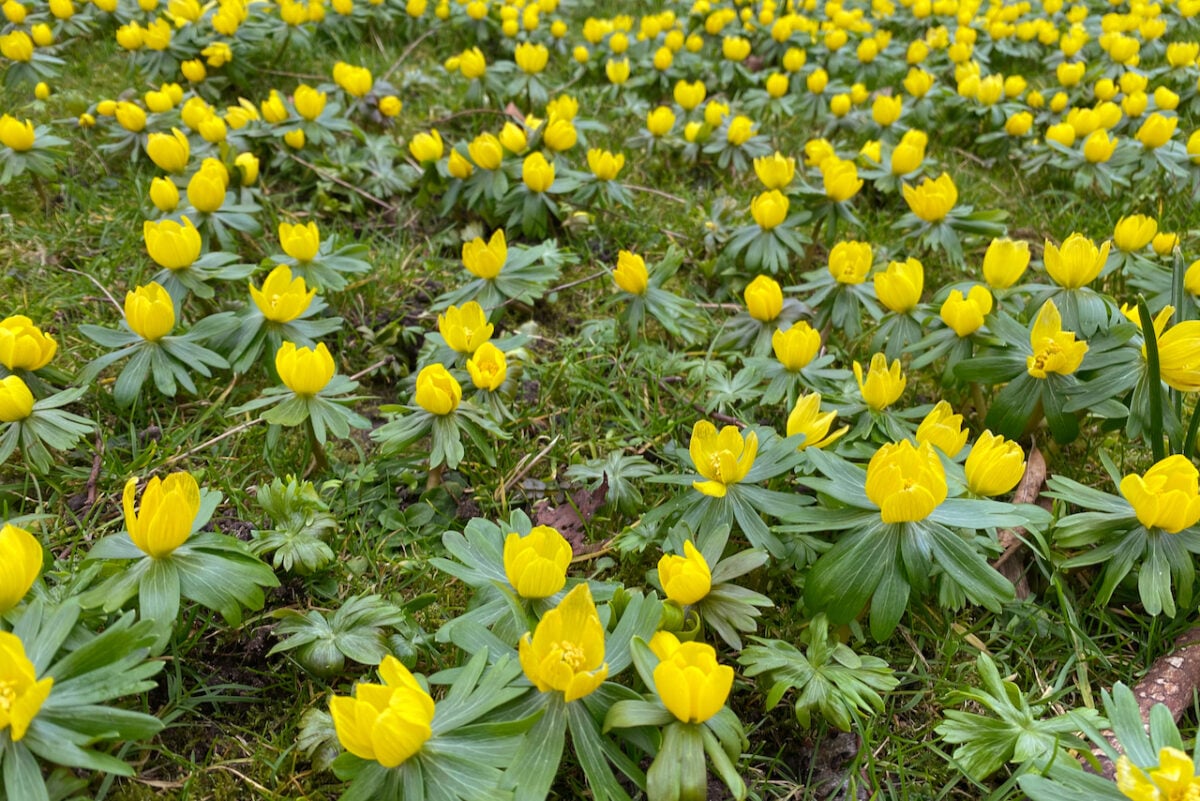
It’s much easier to divide these perennials in the winter, when the leaves are still visible, rather than dig for them when they’ve receded below ground. And the divisions get to recover faster with their foliage still attached.
These are the same type of bulbs that we would plant “in the green”.
Wait until the blooms fade for the season, then gently lever the plant up out of the ground. Shake the soil loose, then cut through the root structure to separate it into as many divisions as you want. Replant the new divisions right away, making sure you bury them at the same depth as before. Finish by rehydrating them with a glug of water.
I wrote an entire guide about winter aconites, and I think you should read it. Here’s the link.
2. Viburnum
Propagate by taking hardwood cuttings.
Viburnum is an absolute joy in my winter garden. Here it is, in early January, with the flower buds ready to pop open in a few weeks. Though to be fair, it’s been taking its sweet time in this exact same configuration for about a month. It will add touches of pink to the garden when everything else around it seems to have its preset color set to yellow. Not to mention the subtle scent that wafts in on the crisp air.
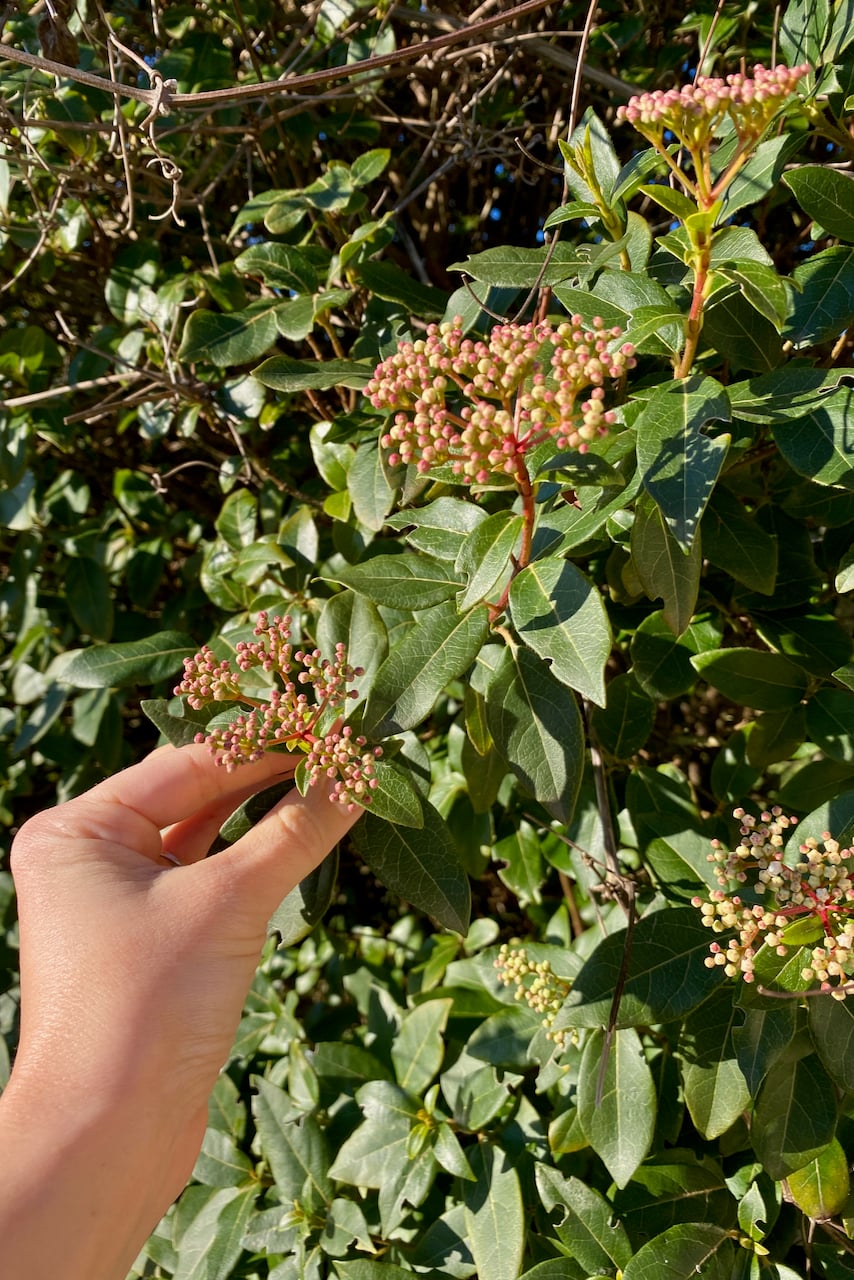
There are hundreds of viburnum cultivars, some that bloom in the middle of winter (like mine) and some that are deciduous and nothing but a bunch of sticks in January.
Whether you’re growing a deciduous viburnum (also called snowball or Chinese viburnum) or an evergreen one, now is a good time to take cuttings.
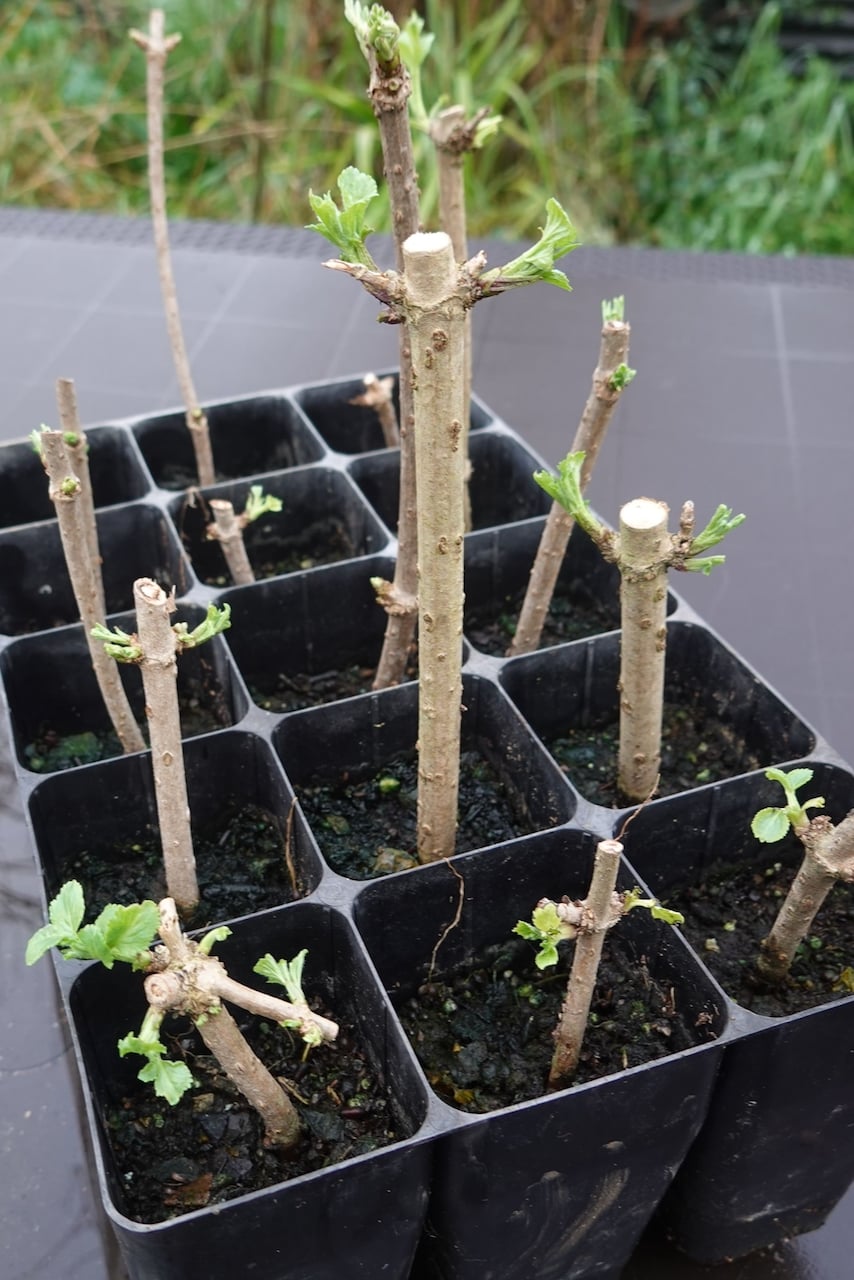
Each cutting should be about 4 to 6 inches long. Though if you’re using deeper pots to propagate them, you can definitely take longer cuttings. Take the cutting right below a leaf node and make sure that node (and the one above it, preferably) is below soil level when you put your cutting in the ground.
3. Forsythia
Propagate by taking hardwood cuttings.
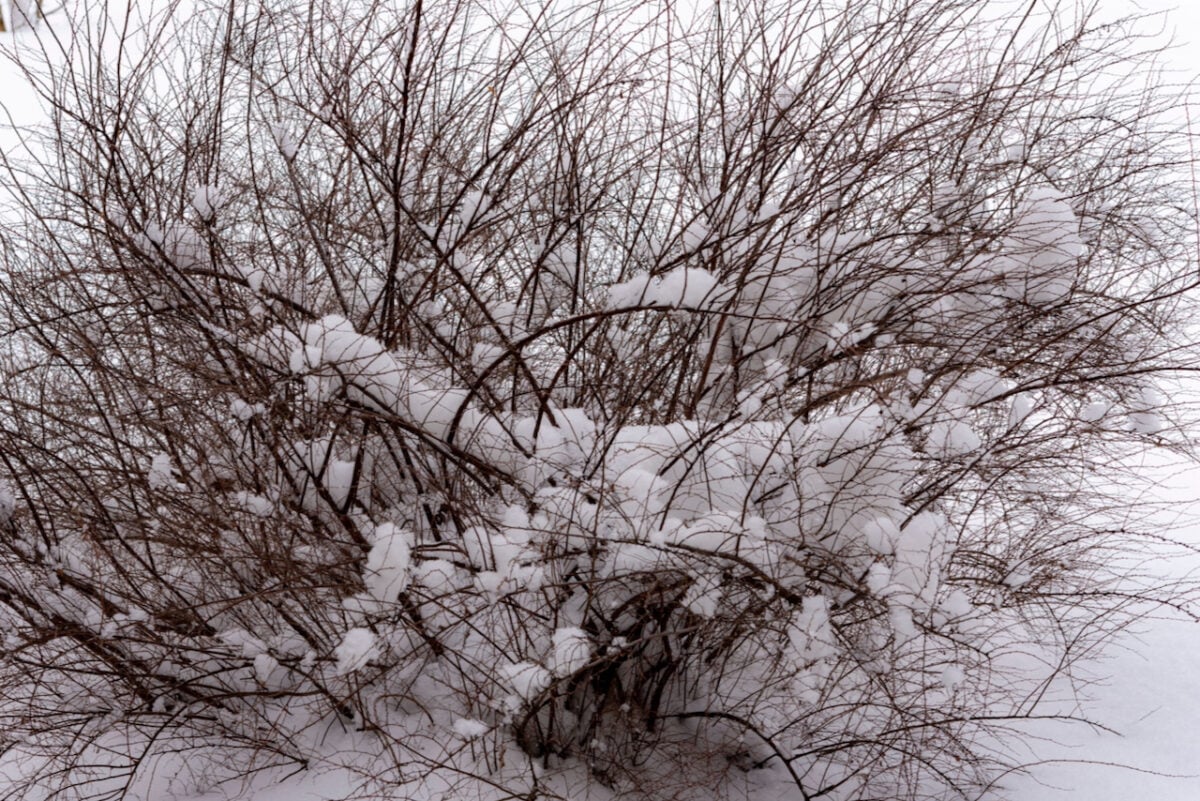
This is the time of the year when you’ll hear me mention forsythia a lot. It’s one of my favorite shrubs, and this time of year it’s showing its love to me right back.
The nice thing about forsythia is that we can propagate it from all types of cuttings (softwood, semi-hardwood and hardwood), so really no biggie if you just want to admire its blooms now and cut into it later – perhaps when you’re ready to prune it anyway.
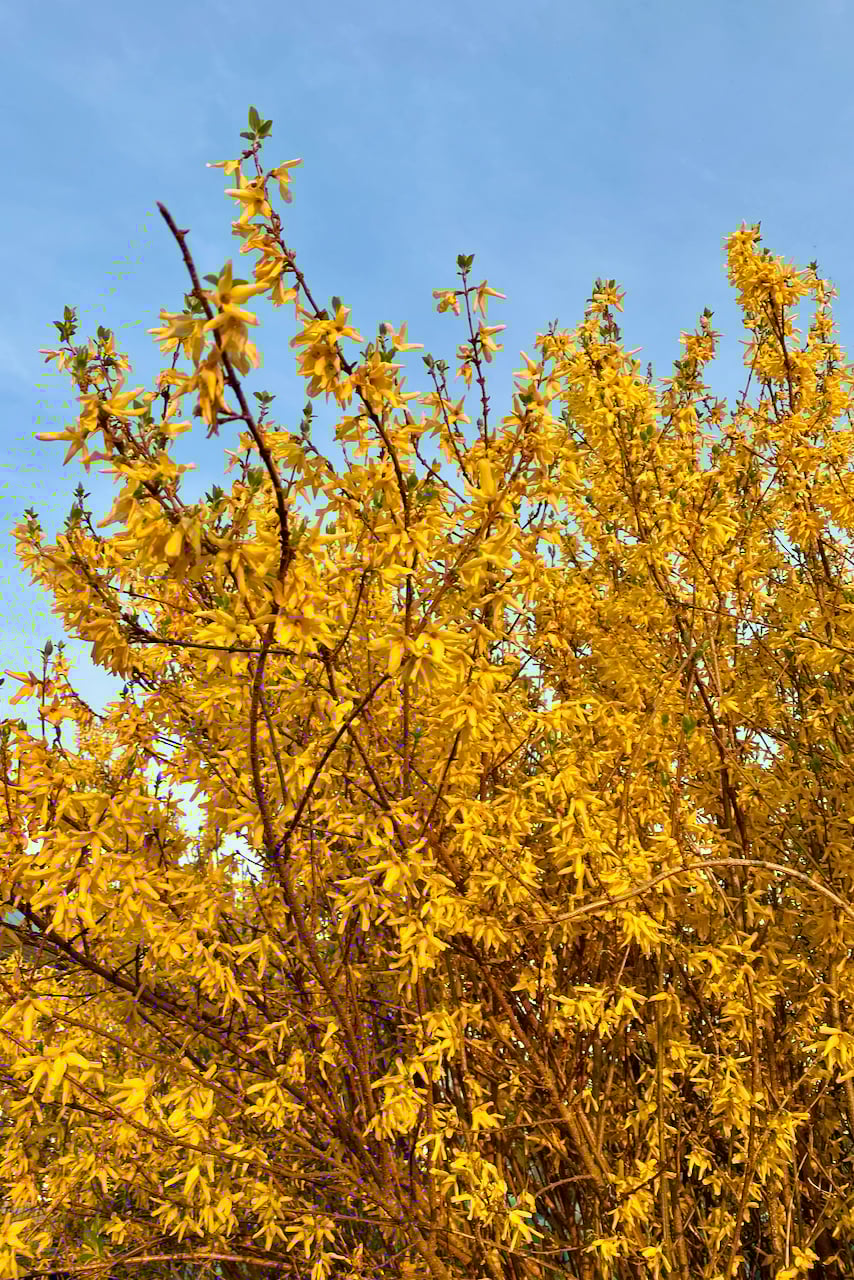
For me, my impatience to have more forsythia in the garden, coupled with the lack of time to propagate it later in the growing season, means I’ll start the propagation now.
Set it and forget it applies to hardwood cuttings we take in the winter, too. Take pencil-thick and pencil-length cuttings, plop them into a propagation pot with at least one node below soil level (preferably more, if you can). Keep the soil slightly moist, and you’ll see results in late spring.
4. Witch hazel (Hamamelis)
Propagate by taking hardwood cuttings.
Witch hazels are the best of both worlds. With the color infusion of forsythias and the floral scent of viburnums, it’s only natural that we want more of them in the garden.
Unlike some of the viburnums, though, all witch hazel cultivars shed their leaves for the winter, but only after putting on a spectacular display of colorful foliage in the fall. What we get instead are the bare stems that are dotted with frilly flowers.
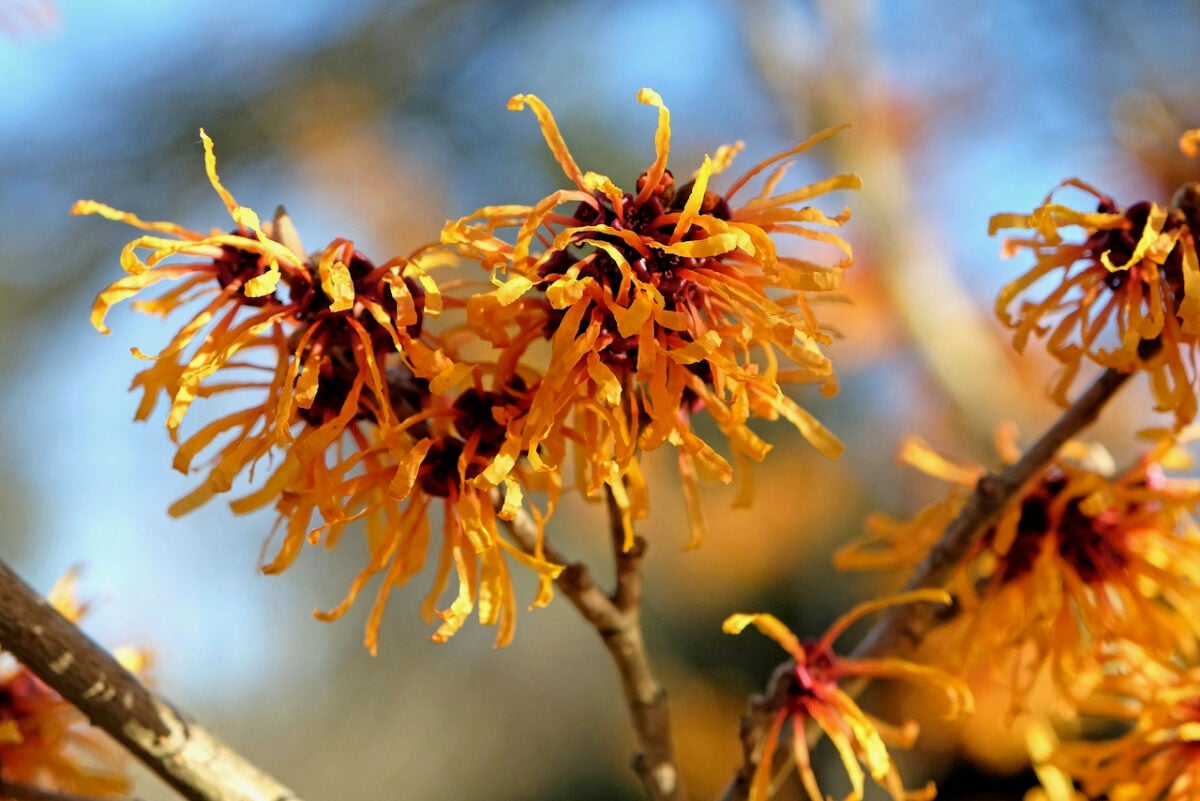
The flowers vary in color from orange to red, but the most common ones tend to come in shades of yellow.
Once the leaves are gone, taking cuttings is very straightforward. Cut about 4-6 inches (10-15 cm) off a stem. You can leave the flowers on the cuttings if you’d like. The roots won’t start growing right away, anyway, so we might as well let the flowers shine a bit longer. Always make the cut below a node and insert the node in the ground or in a propagation pot.
5. Dogwood (Cornus stolonifera)
Propagate by taking hardwood cuttings.
If you’ve been reading any of my articles on this website for the past four years, you’ll have noticed that dogwood makes an appearance every time I talk about the winter garden. And certainly every time I write about plants you shouldn’t prune in the fall.
In the winter, the young bare stems of dogwood shrubs look like an explosion of fiery colors – from yellow to red and orange, it’s a joy to see them growing against a snowy background.
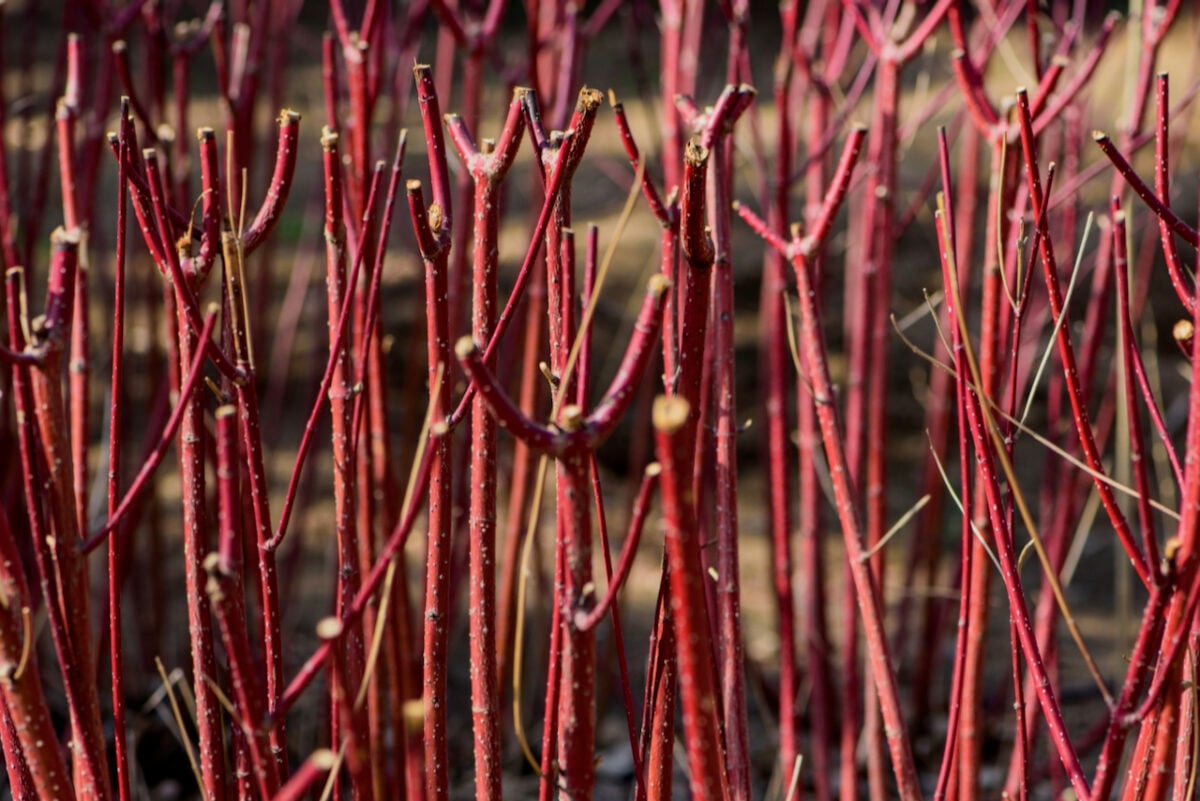
Now’s also the best time to take dogwood hardwood cuttings, which is super easy to do when the stems are bare. Put the cuttings in the ground and keep the ground very lightly moist. You likely won’t see any growth until spring, but rest assured that once you see leaves popping up, the roots have also started to grow below ground.
6. Elephant’s ears (Bergenia)
Propagate by taking root cuttings or division.
Bergenia (also known as elephant’s ears) is one of those evergreen plants that bloom in the middle of winter. Some parts of mine bloomed in December, while a different clump (pictured below) is getting ready to bloom soon.
So why would I propagate it now? Because it will become harder to access the roots or to dig it out and divide it as soon as it plumps up again in spring. As you can see, the leaves are fairly soft now – and I need to do a bit of clean-up – but the plant is still easy to maneuver.
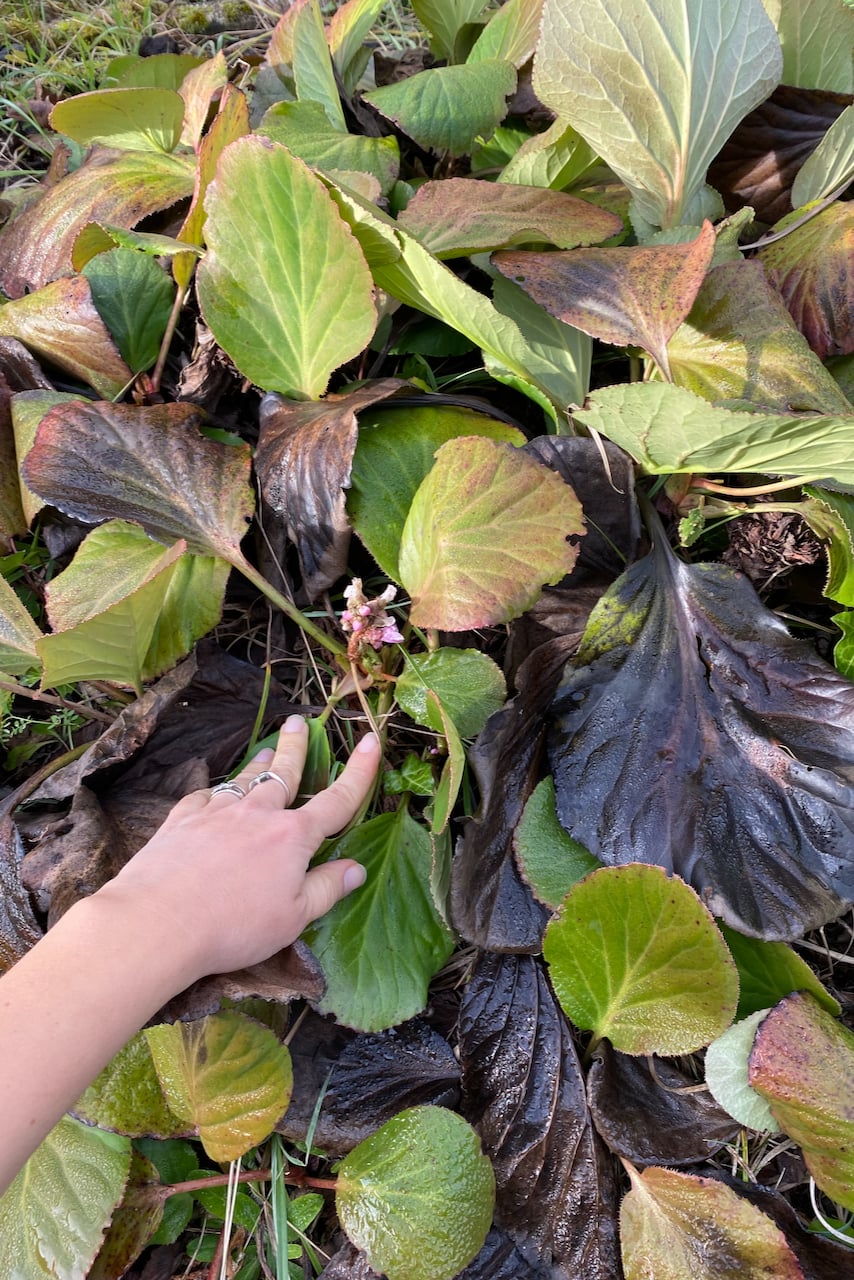
We have to dig out the roots, or dig around the roots, in order to access them. Then cut a few lengths of fleshy, flexible roots (of about 2-5 inches or roughly 5-10 cm in length). Lay them horizontally on moist soil and keep the air humidity higher by covering the propagation pot with either cling film or a cloche. (You could improvise one from a cut plastic bottle.)
I have a list of no fewer than forty-five plants that we can propagate from root cuttings. I show the process of root cutting propagation with step-by-step photos in the link above, so have a look if my explanation sounds a bit vague.
The nice thing about root cuttings is that they don’t need much maintenance to begin with, at least compared to other non-dormant types of cuttings. They don’t require too much watering, since they don’t have the feeder roots to absorb it. They don’t have leaves, so there’s no need for too much light. And since they’re still dormant in the winter, they don’t need a heated propagator. (Though don’t let them freeze, please.)
7. Raspberries and blackberries
Propagate by taking hardwood cuttings or root cuttings.
If you’ve ever doubted your abilities as a gardener, I dare you to try to propagate raspberries or blackberries. It’s almost impossible to mess it up. Yes, even in the winter.
I’ve used raspberries as my demo plant in the article, taking root cuttings (here’s the link again). Happy to report it worked like a charm.
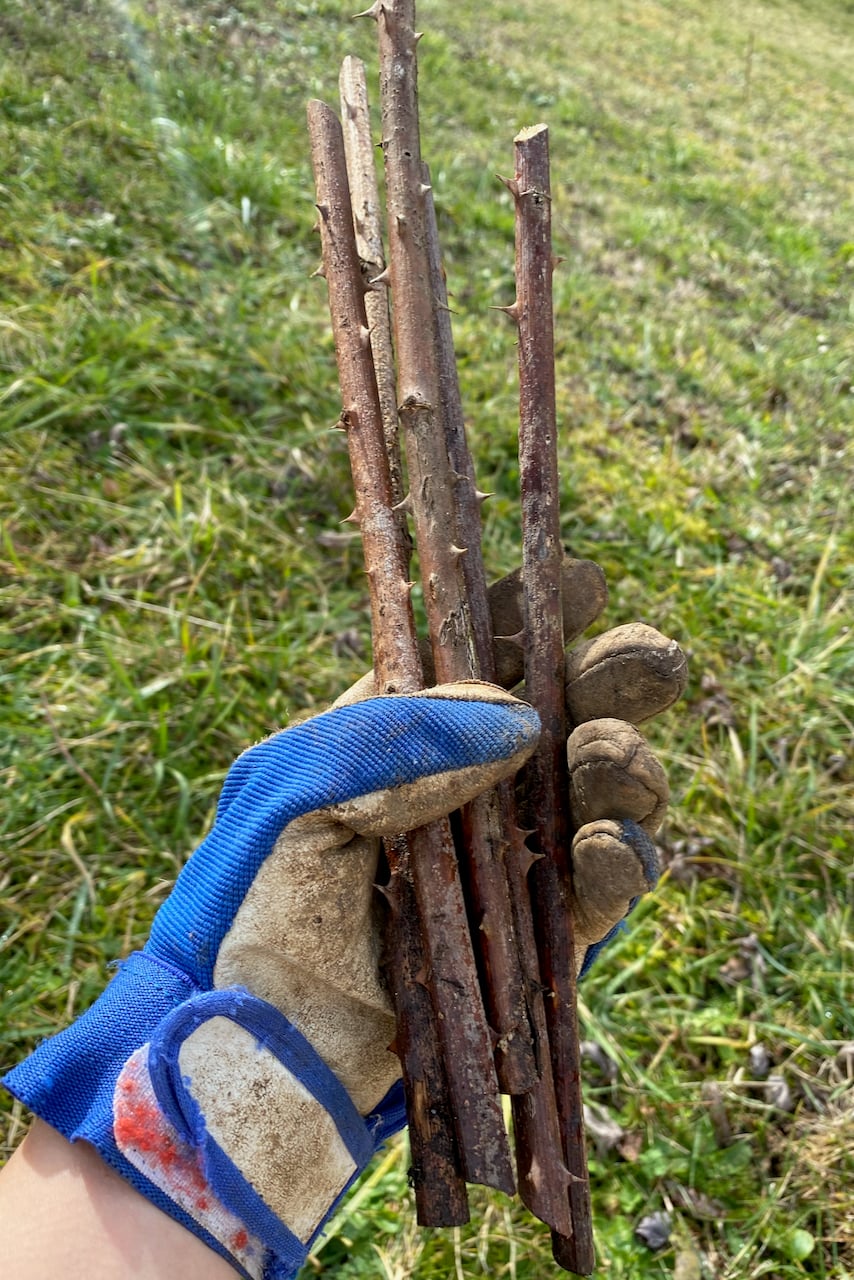
Taking hardwood cuttings is just as easy as long as (and here’s where there might be room for error) you’re not taking cuttings from dead canes. Raspberry canes that have already fruited for two years are spent – meaning that they’re dead on the inside, even if they’re still standing.
You can recognize old canes by the color when you cut into them. If they’re white or light brown, they’re already dead. If they’re light green, they’re still viable. Dead canes are also more rigid. If you try to bend one, it will probably snap. The same is true for two-year-old blackberries. So as long as you take the cuttings from a younger cane (but not softwood young), everything should sprout.
8. Japanese quince (Chaenomeles)
Propagate by taking hardwood cuttings or root cuttings.
Japanese quince might be my new favorite flowering shrub. It’s in full bloom by late March in my zone, then the bright peach-colored flowers turn into a mini-quince fruit. They make excellent jelly in the fall.
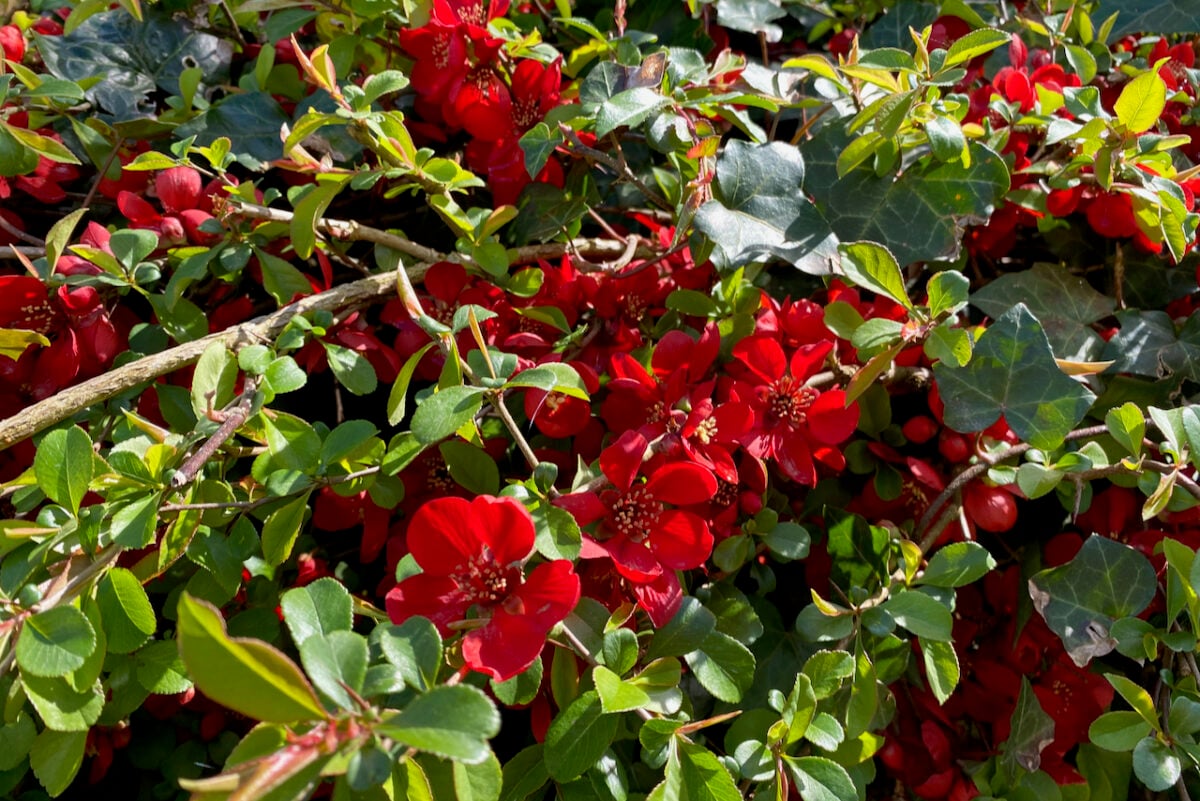
We can propagate Japanese quince by starting them from seed, semi-hardwood cuttings or root cuttings. But in the winter months, the best way to do it is by taking hardwood cuttings. Keep in mind that the baby plants we’ll get won’t fruit for a couple of years, until they’re fully established.
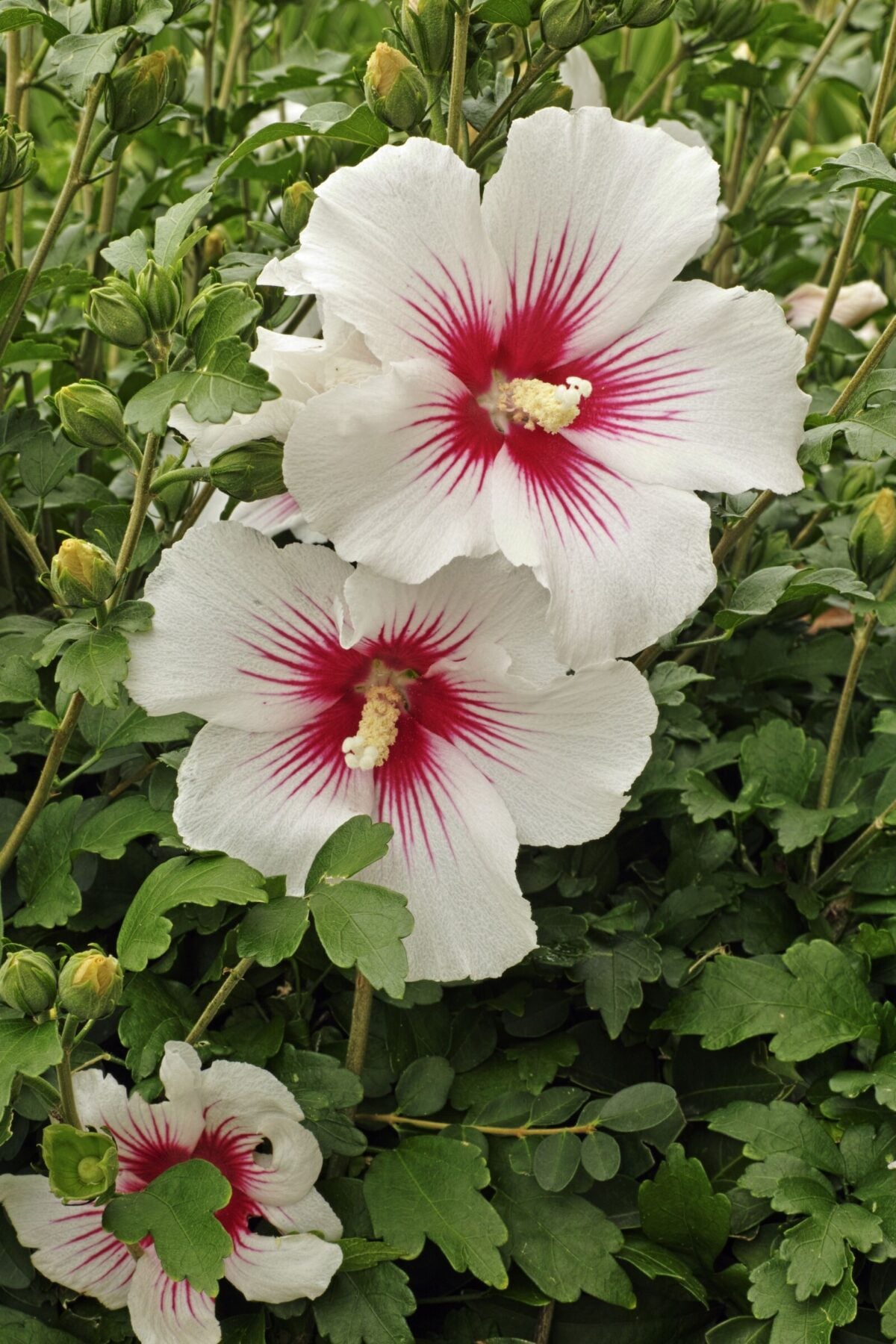
9. Rose of Sharon (Hibiscus syriacus)
Propagate by taking hardwood cuttings.
I have a few Rose of Sharon shrubs dotted around my garden. And I suspect that the smaller ones came from just two of the mature shrubs. The former owner of our house must have been really skilled at taking cuttings successfully, and for that I am grateful to her.
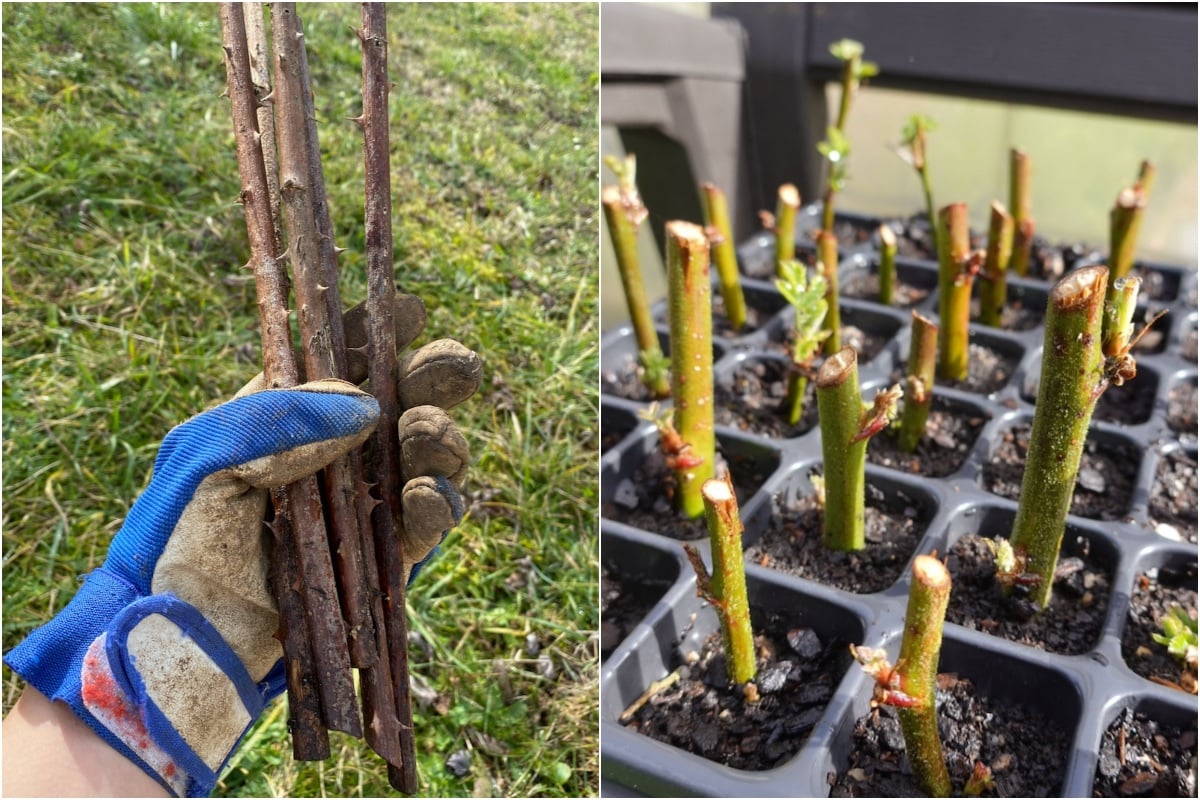
I’m doing my own part now, taking hardwood cuttings of Rose of Sharon in mid-January. The shrub is bare, so I can see what I’m doing. (And you can see that these sticks are indeed Rose of Sharon by the shape of their seed pods.)
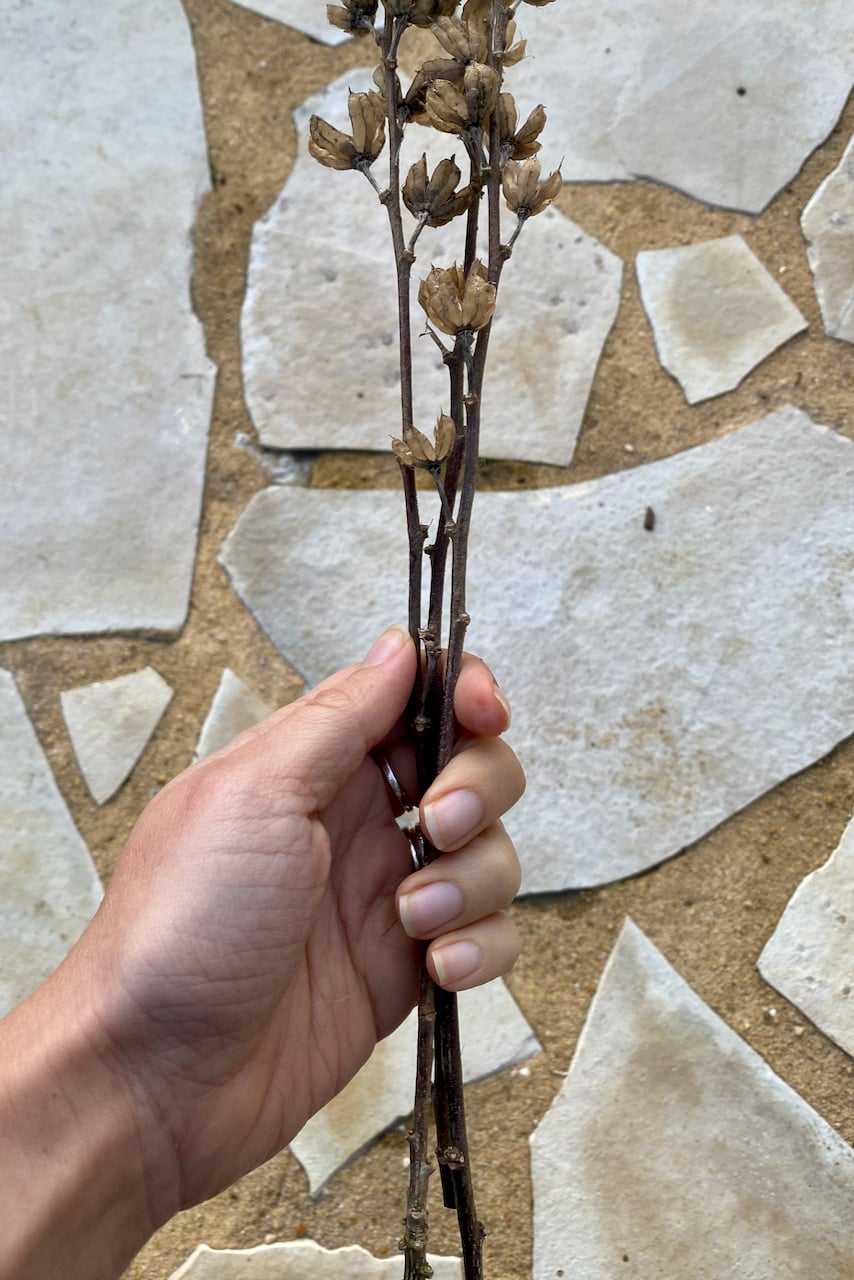
I only used the bottom half of the cuttings I’m holding. I plopped them into a pot filled with well-draining compost mixed with some horticultural sand and perlite. It will take a couple of months to show signs of life, as long as I keep the soil lightly moist.
10. Spirea
Propagate by taking hardwood cuttings.
Whether you’re growing the colorful Japanese variety (you might remember it from my article on plants you should never prune in the fall) or the elegant white one, you can start taking cuttings of it now. It does not technically constitute pruning, does it?
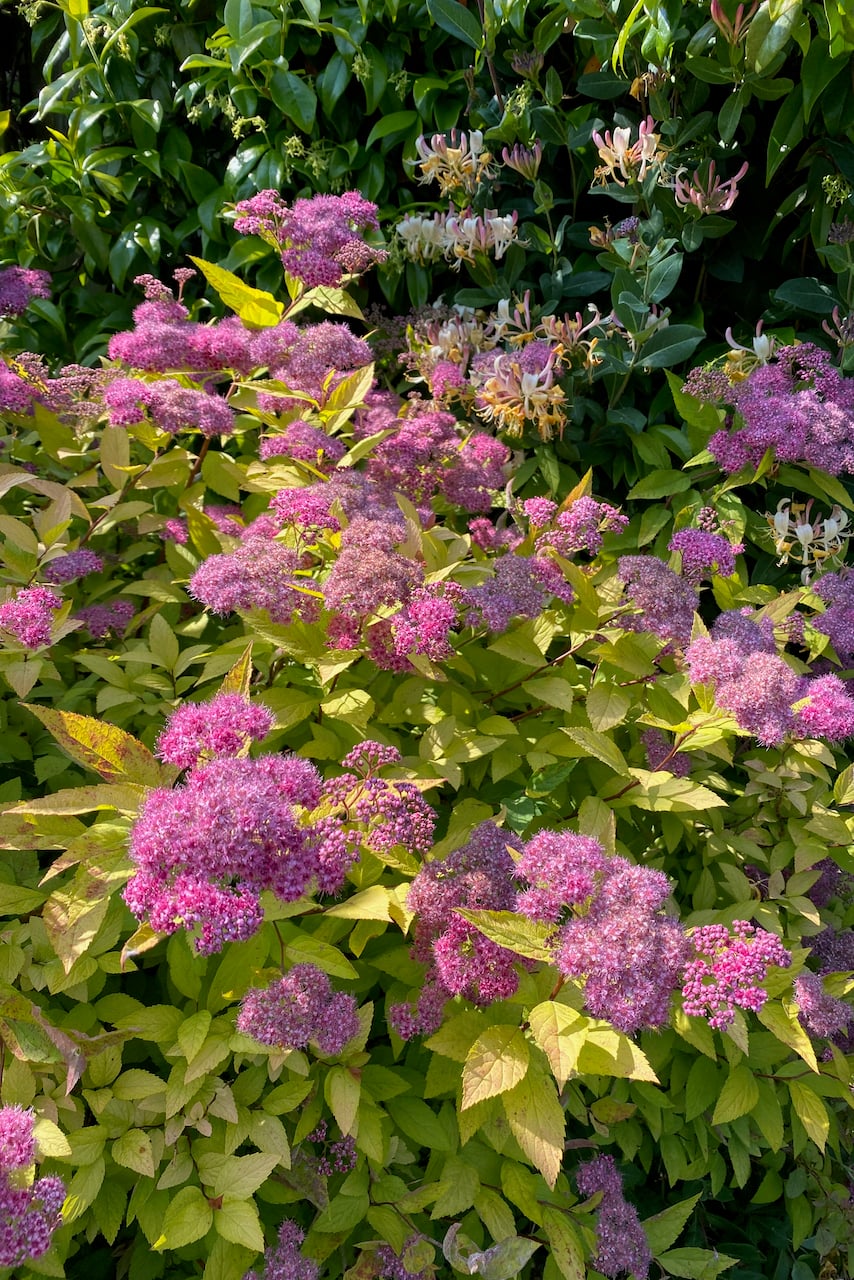
Take hardwood cuttings of about six to eight inches. The leaf nodes are close together on the stems of the Spirea japonica, so getting at least a couple of them below soil level shouldn’t be a problem. Keep the soil moist, but not water logged, and you’ll start to see them leafing up in a couple of months.
Get the famous Rural Sprout newsletter delivered to your inbox.
Join the 50,000+ gardeners who get timely gardening tutorials, tips and tasks delivered direct to their inbox.