

Fall is here! What? You didn’t notice that everyone is suddenly selling pumpkins and chrysanthemums?
This time of year, mums make their way into our grocery carts and grace our porches and yards with fall color. Add a pumpkin and some weird-looking gourds that look like they survived a nuclear accident, and you’re all set. But if you’re looking for something with a bit more flair and drama to match the season for your outdoor décor, I’ve got some ideas.
There are plenty of annuals that pair well with mums, and I’ve got some easy tips for how to arrange them for an autumnal display that would make Martha proud. And yes, you can buy them now.
Whether you’ve got a large planter to fill, you want to spruce up your front entrance or a roadside mailbox that needs some attention, chrysanthemums are the showpiece of the season. There’s a reason so many of us reach for these brilliantly-hued flowers each fall.
With their mounding growth habit and sunburst flowers, they look like a fireworks display captured at its zenith. It’s no wonder you can plop a plain potted mum on your front step and call it good. They’re gorgeous enough to stand on their own. (Click here to learn how to keep them blooming all fall long.)
But far too many of us spent the 90s watching Martha Stewart Living, and now a simple potted chrysanthemum just won’t do. Not when we’ve got such great raw materials to work with this time of year.
Here are eight plants that are easy to find this time of year and look amazing with chrysanthemums. (Get ready to read the word ‘ornamental’ a lot.)
Plants to Pair with Mums
Asters
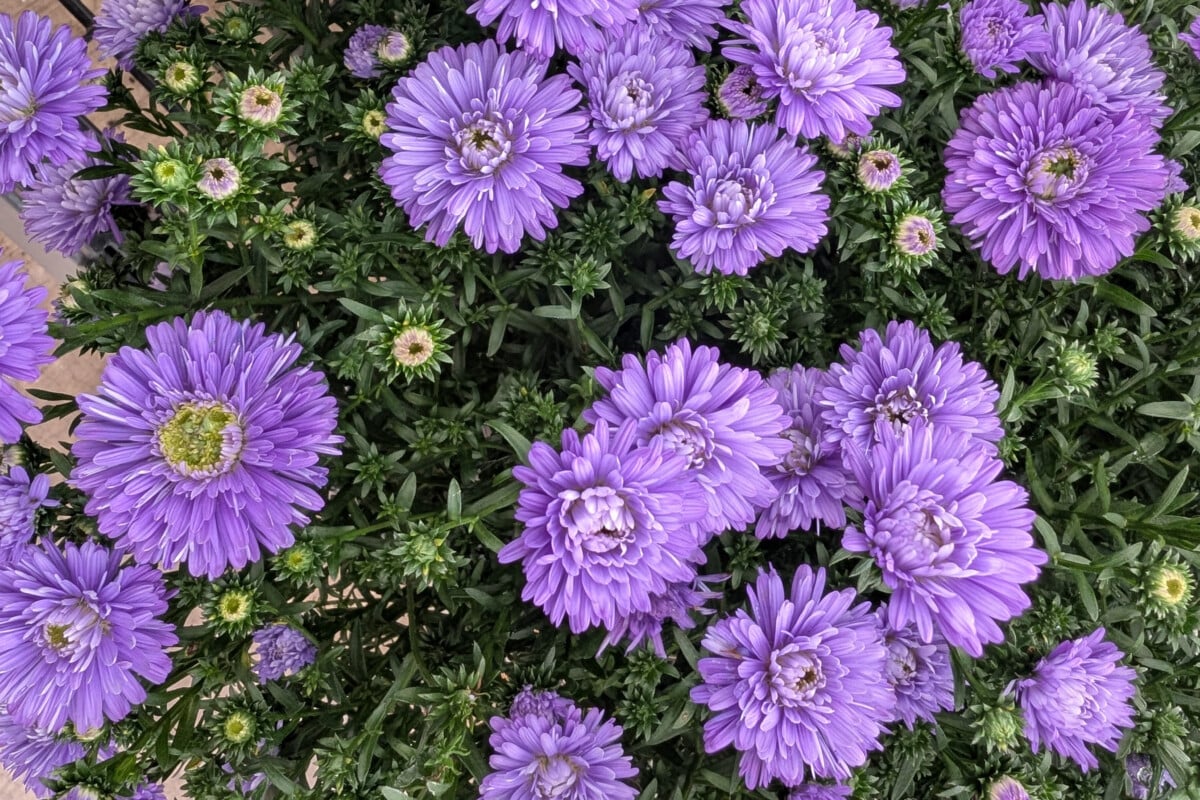
I almost feel a bit like it’s cheating adding asters in, as they’re also in the Asteraceae family with mums. However, their flowers are often more on the cool side of the color spectrum, whereas chrysanthemums tend to be more on the warm side.
Depending on the look you’re hoping to achieve, asters can provide a contrasting texture with their shaggy flowers. Another great reason to opt for asters is that they’re quite a rugged flower. They are frost-hardy, and the blooms will usually tolerate a frost or two before they quit. Your asters could out-bloom your mums.
Celosia
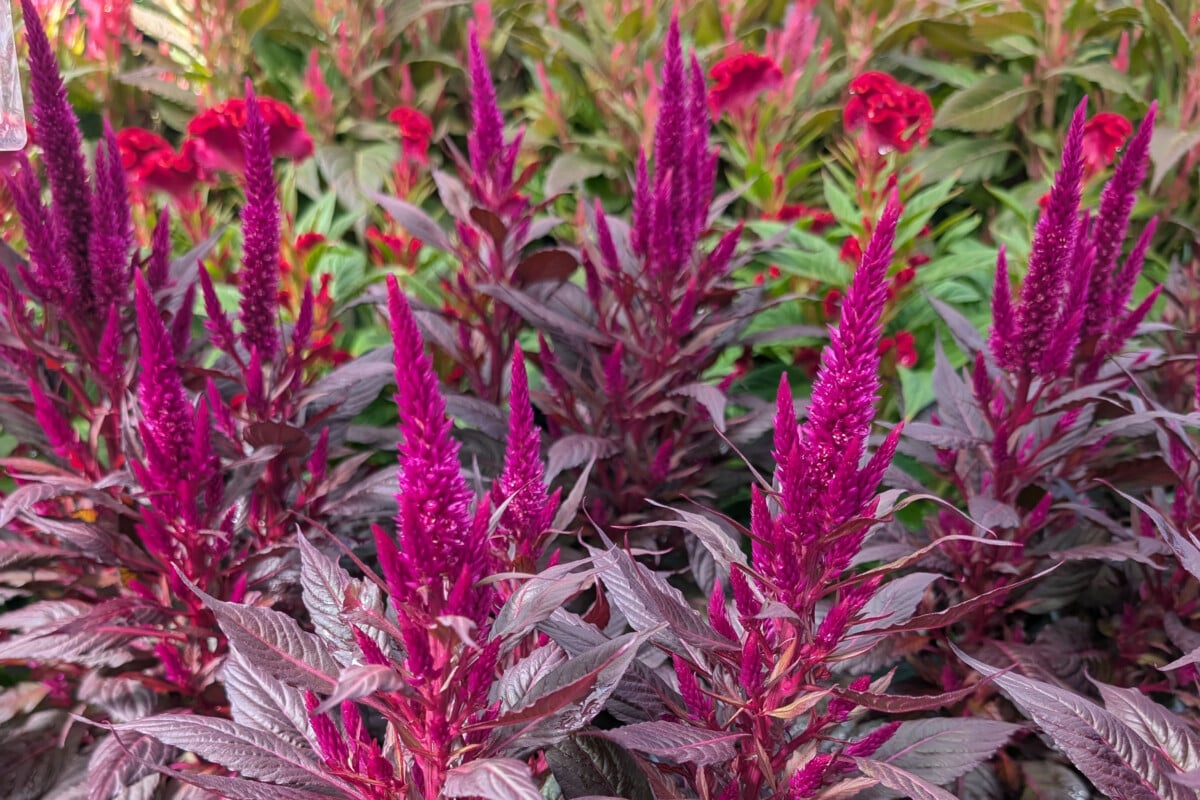
While celosia is not cold-hardy, this gorgeous, velvety plant deserves a spot in your autumn display. Even if it isn’t a permanent one. With a color palette that rivals a good sunset, it’s easy to find one that matches the look you’re going for.
Celosia’s shape and texture make it the perfect complement to a mounded mum. You can find crimped celosia that look like ruffles (or brains if you’re leaning more towards Halloween) and fiery-feathery plumes.
Coneflower
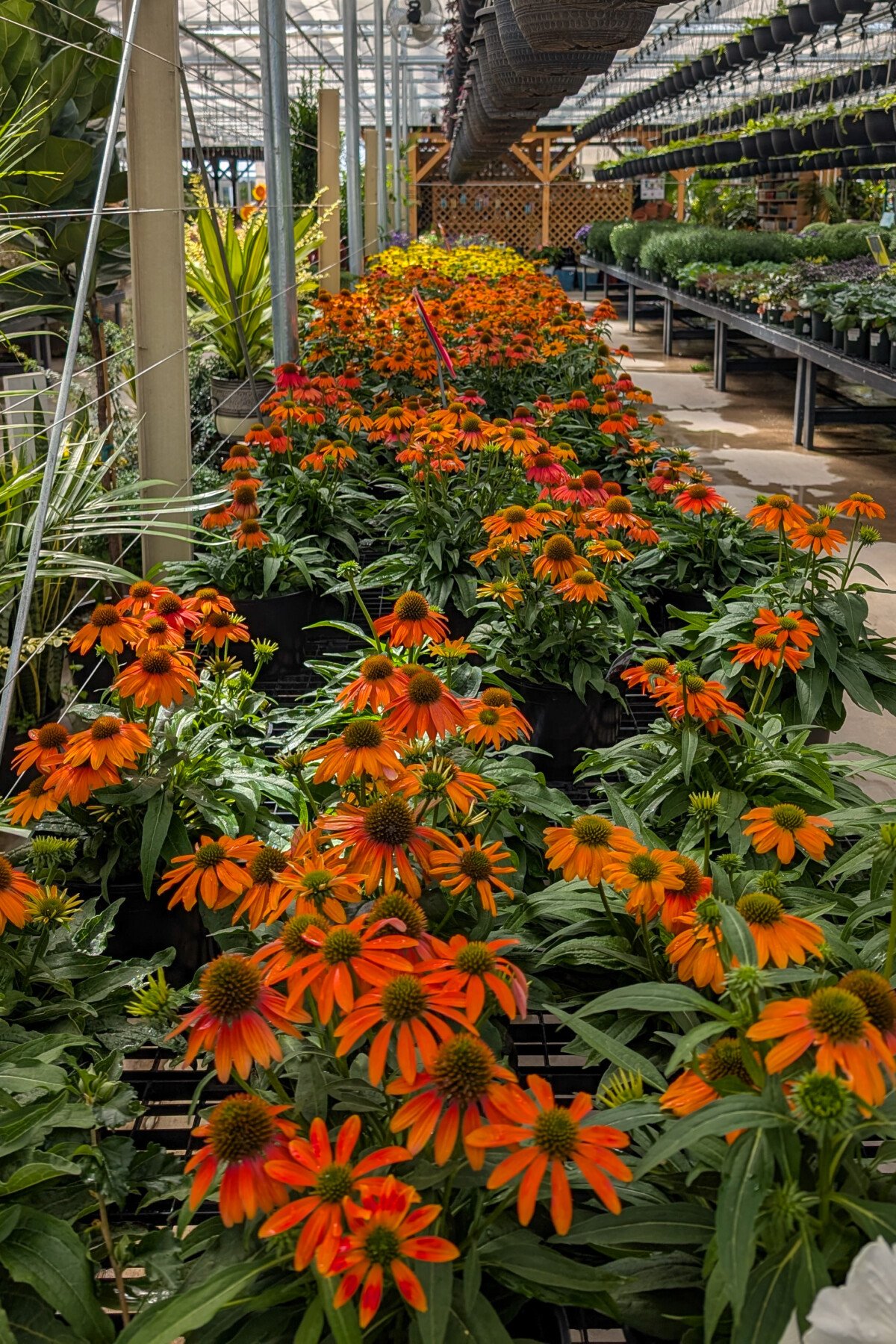
There are so many coneflower hybrids these days, offering blooms in just about every color of the sunset, from deep rusty-red to glowing hot-pink. Their spiky seedheads and daisy-like petals make them a gorgeous contrast to chrysanthemums. Use coneflower to add height and a bit of texture to ornamental displays this fall.
Coneflower is another rugged beauty that tolerates the cold quite well. Mature plants can stand up to an early frost or two. But for the longest blooms, you’ll want to cover them when there is a chance of frost.
Evergreens
Um, we’re decorating for fall, Trace. Aren’t you jumping the gun a bit?
No, hear me out.
Picture this: it’s a foggy, slightly overcast fall day, you’re driving along, admiring the beautiful scenery —a palette of burgundy, golds, burnished yellows, glowing pinks, and pops of deep, deep green. The contrast of evergreens amid their deciduous fellows is breathtaking. Why wouldn’t we incorporate it into our own displays? (And yeah, you can save them and get a jump on that other season that will be here before we know it.)
Small potted boxwoods, junipers or Alberta spruce all make wonderful additions to fall displays. They offer height, texture and a contrasting color to really make those mums pop.
Ornamental Cabbage
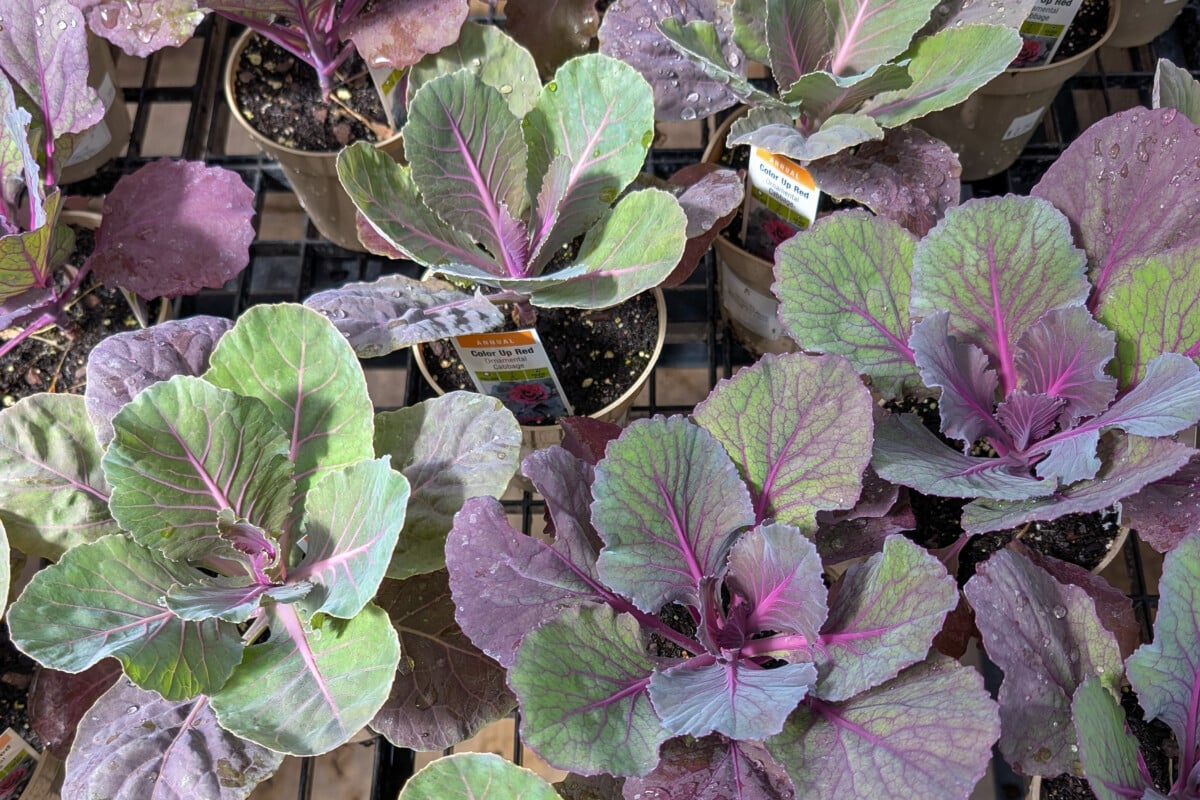
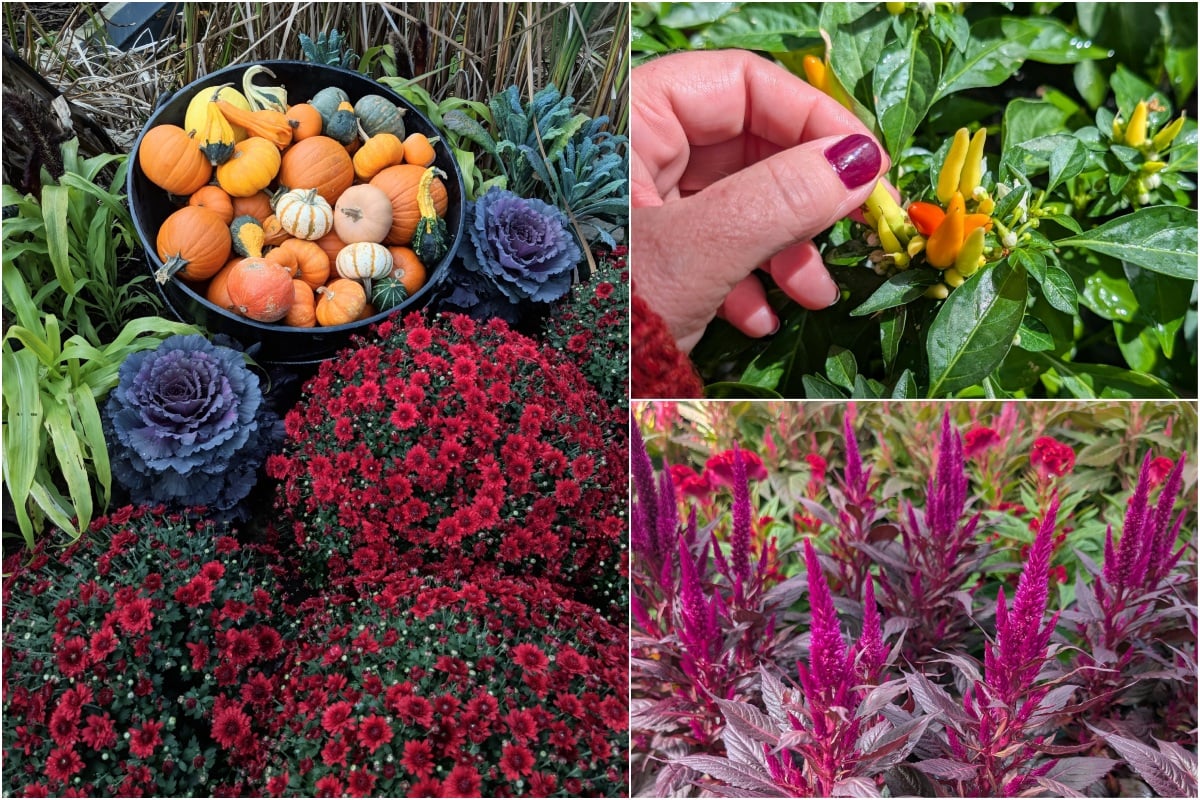
These beautiful cabbages are perfect for propping up alongside your mums. They’re lovely, with round rosette growth that gives them the appearance of being overly large, green, red, and purple flowers. Whether you choose scalloped edges or a more curly-edged variety is a matter of personal preference. The silvery-green foliage looks even more beautiful after a shower, as water naturally beads up in the crooks and crevices. The tiny beads of water look like jewels.
If you want fall decorations that are tough enough to last until Turkey Day, you’ll want to include ornamental cabbage. They’re frost-hardy and absolutely adore cool weather.
Ornamental Grasses
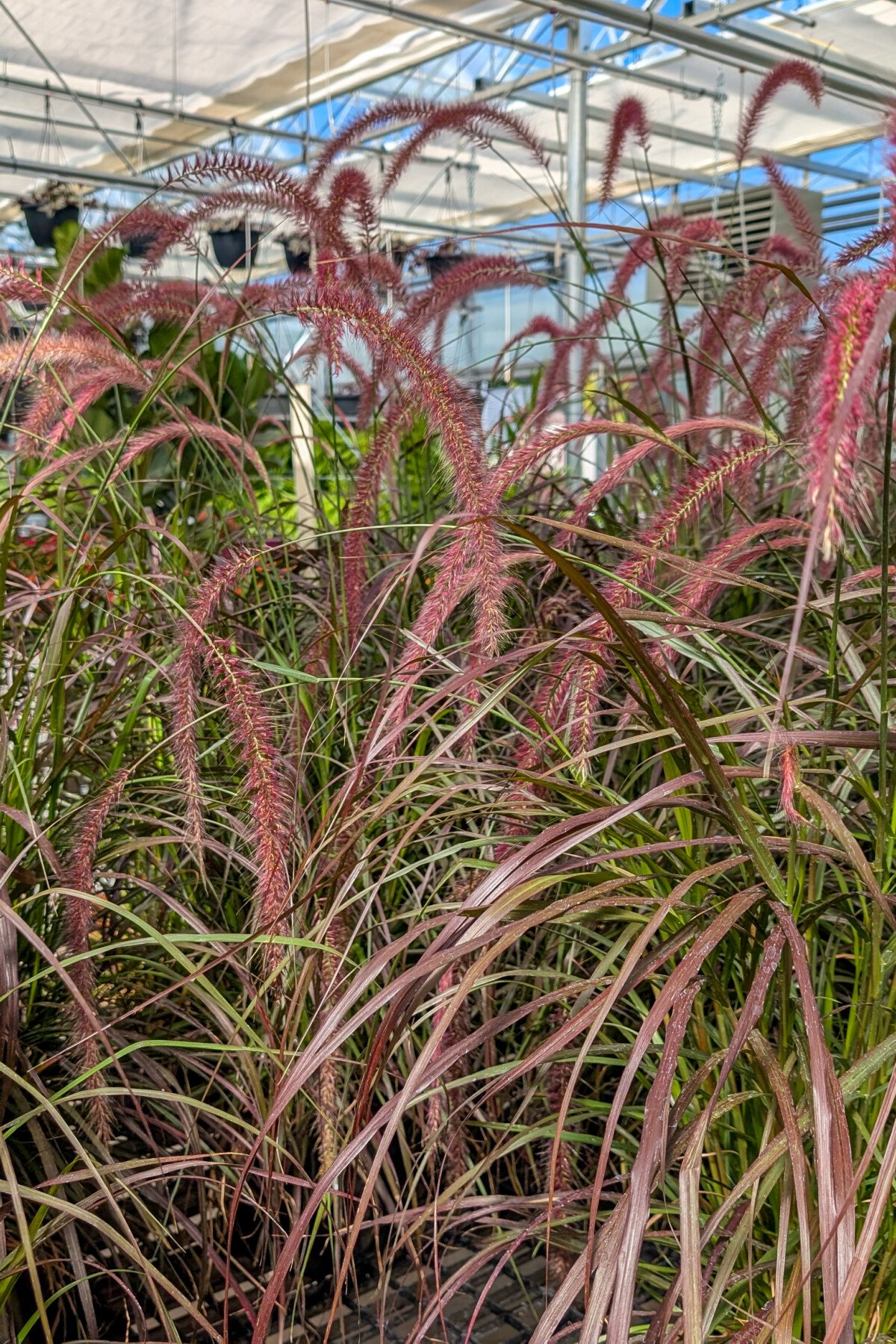
You’ll find a number of ornamental grasses for sale in nurseries this time of year. Ranging in color from blonde to green to burgundy, these stately plants offer height, structure and drama with their swaying seed heads and long fronds.
Those fuzzy heads also help soften the hard texture of stiff leaves and solid squash. And their movement gives life to an otherwise static display. If you find cornstalks to be a bit gauche and kitschy, ornamental grasses are a more elegant option, retaining their austere beauty even after frosts.
Ornamental Kale

It’s everyone’s favorite kale – the kind you don’t eat. (As much as I joke about it, I do love kale and grow it unironically every year.) Regardless of your thoughts on how kale tastes, you can’t deny that it’s a beautiful plant. Just like ornamental cabbage, the waxy leaves give it a soft sheen that looks lovely in fall light.
Ornamental kale comes in deep greens, silver greens and purplish-burgundies. Leave edges can be tightly curled, almost lacey or softly scalloped.
This is another decorative plant that holds up well as the season moves toward the cooler end of the thermometer.
Ornamental Peppers
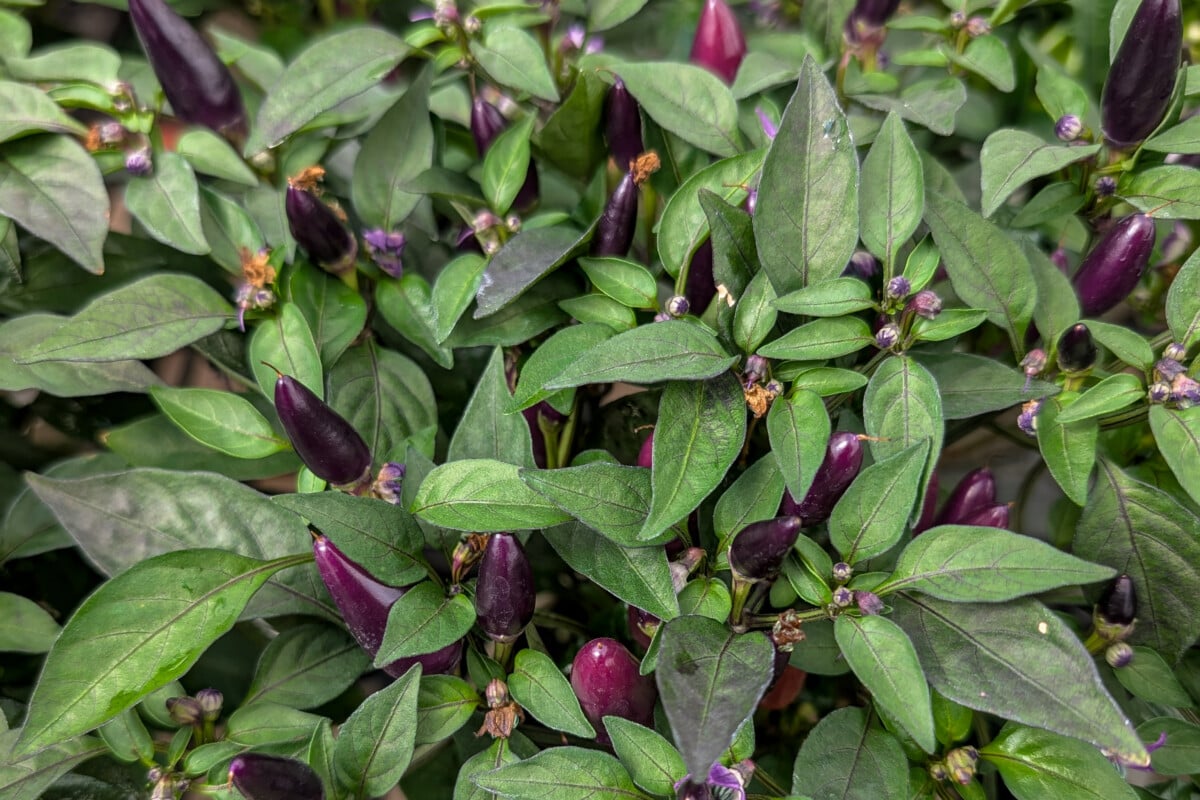
These beautiful potted peppers show up each fall. (I even find them at my favorite grocery store, Wegmans.) They offer a gorgeous contrast to the warmer tones of most mums. You’ll generally find two types of ornamental peppers available: Black Pearl and Numex Twilight.
The Black Pearl is a stunner with purple-black foliage and deep, singular eggplant-colored peppers that gradually change to scarlet.
Numex Twilight is a veritable rainbow of color, with clusters of peppers that spend the season changing color from purple to lavender to yellow to orange and finally to red.

Both ornamental pepper varieties provide a beautiful backdrop or accent for the warmer hues of chrysanthemums and different colored pumpkins. Despite being marketed and sold as fall decorations, these plants are not cold-hardy. If you plan to include them in your fall display, you’ll need to bring them indoors or cover them when temperatures dip below 40 degrees F.
Creating the Perfect Decorative Fall Display
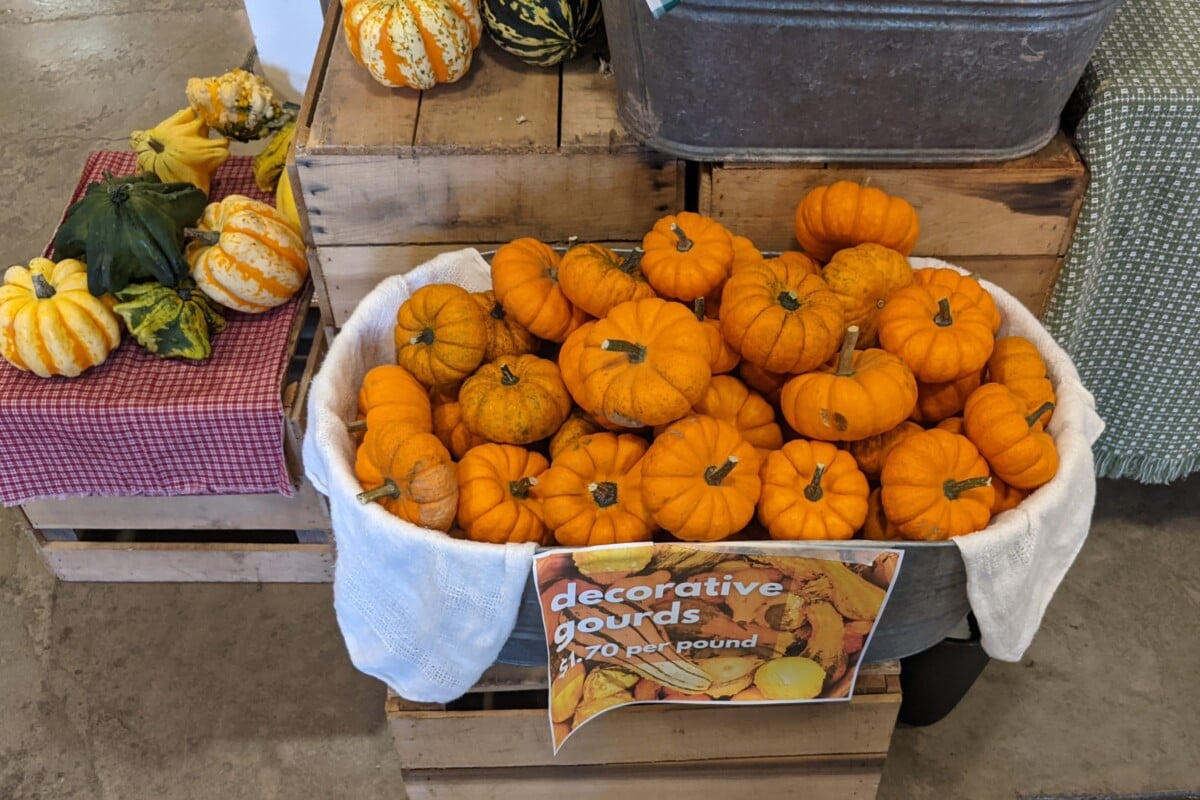
Now that you’ve bought them at the right time and have a trunk full of mums, partner plants and pumpkins, let’s get creative! Here are some basic tips for arranging and displaying them at their best.
Layer Upon Layer
It helps to think of your display like a stage. You don’t want one note. You want a mix of different heights, textures, shapes and colors.
- Tall backdrops: Ornamental grasses, corn stalks, or small shrubs.
- Mid-height: Mums, asters, ornamental kale, and pumpkins or gourds.
- Front/ground level: Smaller pumpkins, ornamental cabbage, trailing plants like ivy, or creeping thyme.
Layering creates depth and can make even the tiniest front stoop look full and inviting.
Pick a Color Palette

Fall doesn’t have to be just yellow, orange and brown. Consider pairing:
- Warm tones: Salmon and sunset pinks, deep red, burgundy.
- Cool contrast: Purple peppers or kale, silver dusty miller, hubbard squash or pale teal-green pumpkins, or blue-green ornamental grasses.
- Neutrals & accents: White pumpkins, hay bales, or pale gourds to balance the bold colors.
Stick to 2–3 main colors to keep the display cohesive rather than chaotic. Step back about six feet and look at your display. Does anything seem out of place or out of balance?
Mix Textures
Our eyes love contrast:
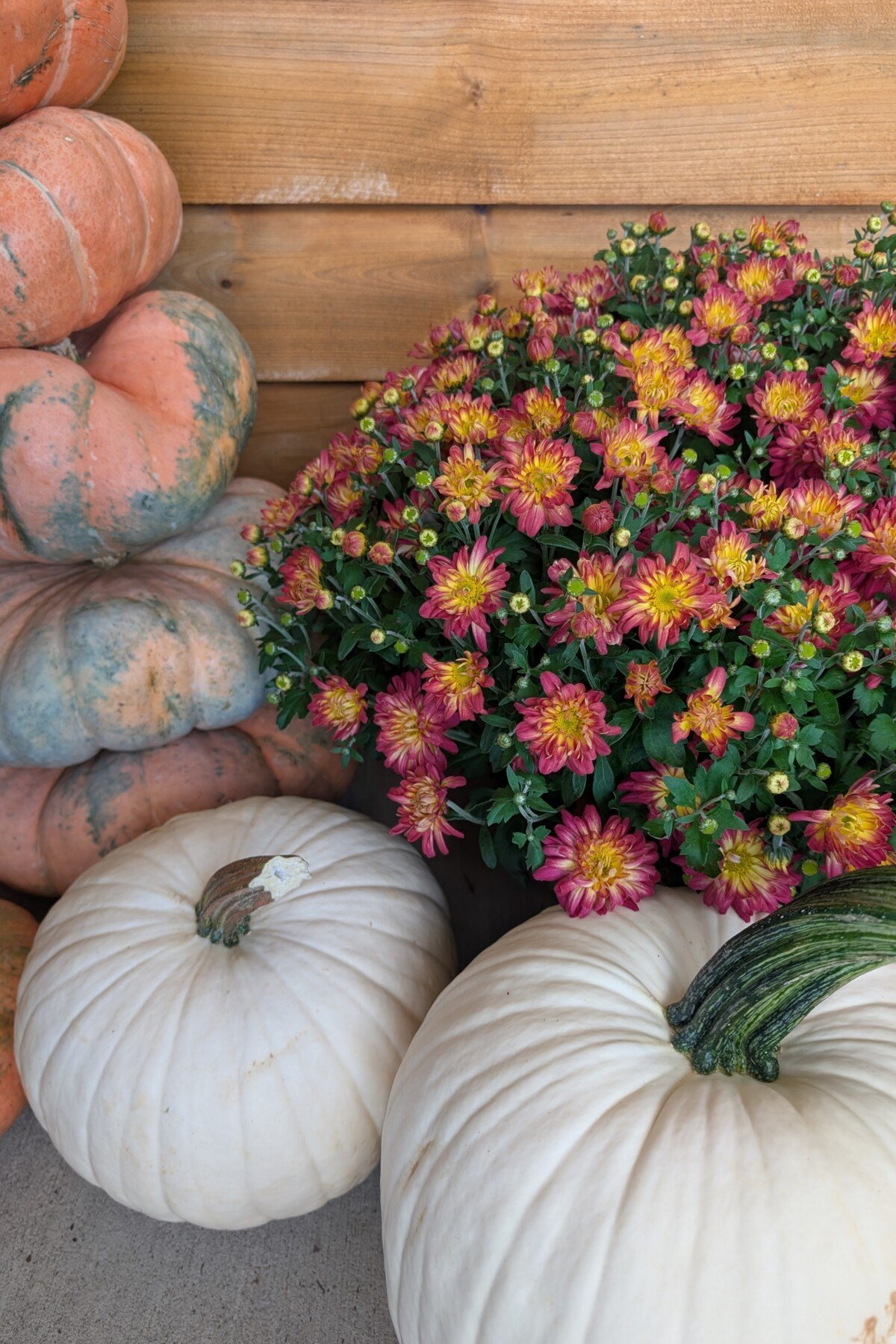
- Smooth pumpkin surfaces paired with spiky mums.
- Rounded mums with tall, wispy grasses among them.
- Shiny peppers alongside the velvet of celosia.
Texture adds visual appeal and interest even if your color scheme is simple.
Containers & groupings
- Use different-sized pots: Ceramic, terra cotta, or rustic metal buckets to vary the height naturally. (They don’t have to be seen; you can use them to elevate a plant and hide it with other surrounding plants and decorations.)
- If you’re planting in containers, don’t forget: thriller (your central focal point), spiller (something to waterfall over the edges), filler (something to fill in around your thriller).
- Odd numbers are your friends. Odd numbers feel more organic and visually balanced than even groupings.
Stack cheese wheel-type pumpkins to create height and structure.
Seasonal Accents Beyond Plants
- Hay bales, cornstalks, or baskets make great backdrops or pedestals.
- Twine, burlap, or plaid fabric adds texture and a cozy touch.
- String lights (especially solar-powered ones) can make a daytime display pop at night.
Porch vs. Yard Strategy
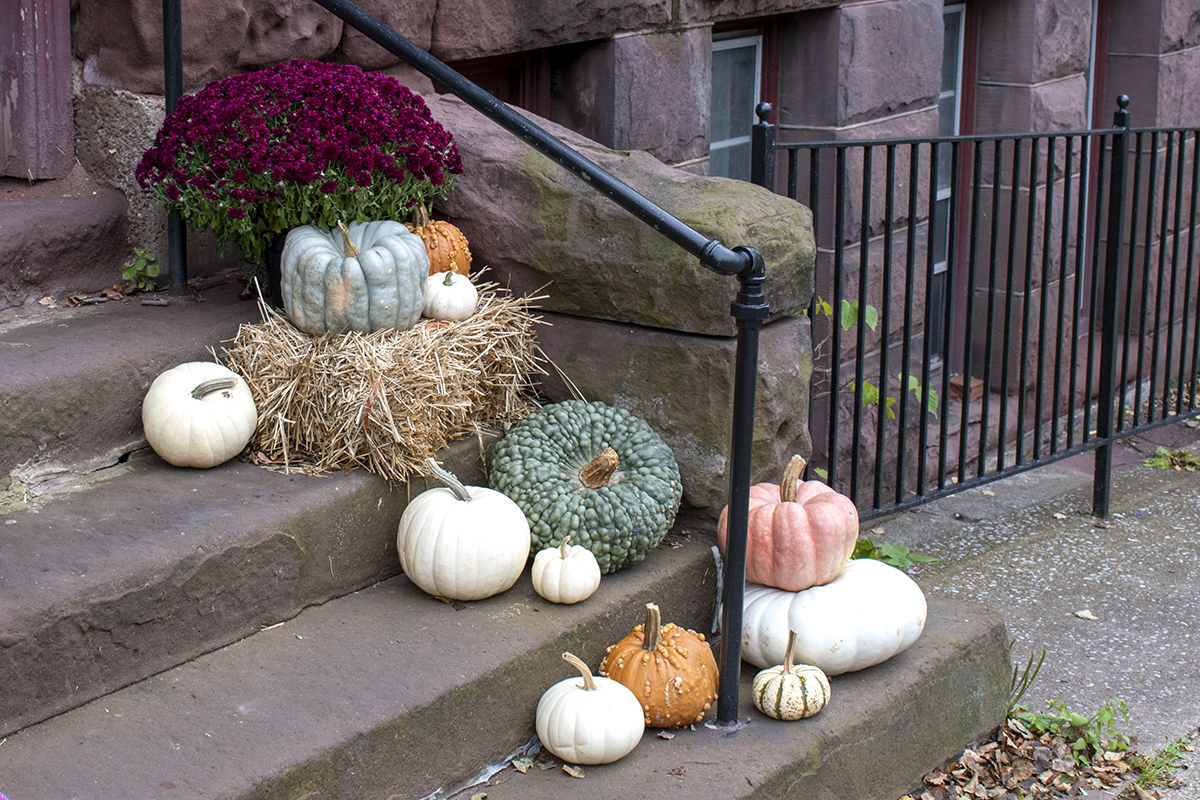
- Porch/front step displays: Keep them compact but layered vertically—tall grasses or cornstalks in the back, mums in mid, mini pumpkins in front.
- Yard beds or large planters: This is where you get to go bold with clusters of pumpkins, gourds, and late-blooming perennials like asters or sedum. Add height with ornamental grasses, pumpkin towers or baskets.
Contrast with Your Home
- Light-colored walls or siding? Use deep burgundy, orange, or purple to create a bold statement.
- Dark-colored walls? Go lighter—yellow, cream, and white pumpkins or flowers stand out.
With these plants and decorating tips, your home is about to get a fall glow-up that will be the envy of the neighborhood.
Get the famous Rural Sprout newsletter delivered to your inbox.
Join the 50,000+ gardeners who get timely gardening tutorials, tips and tasks delivered direct to their inbox.