


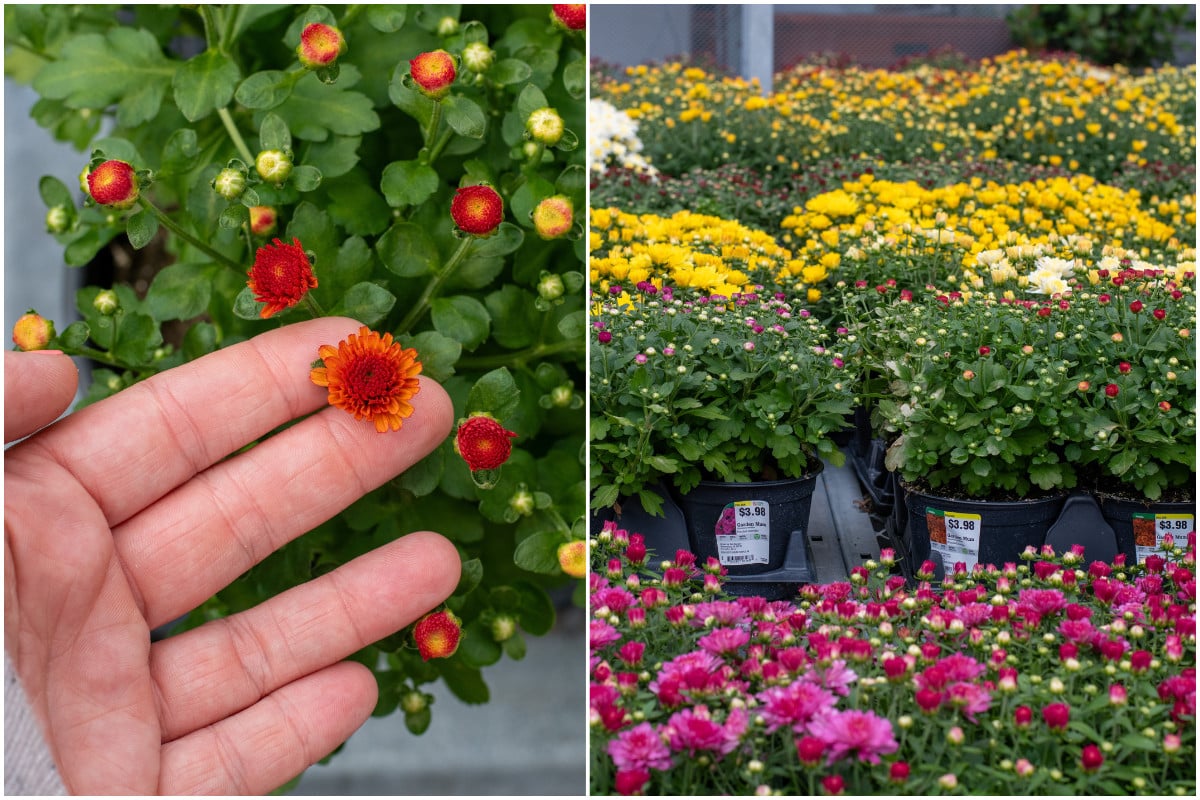
Fall is synonymous with chrysanthemums. Those vibrant, bushy potted mums lining garden centers and grocery stores alike practically shout, “Fall is finally here!” With their deep burgundies, rusty oranges, golden yellows, and creamy mauves that seem to encapsulate autumn itself. But not all mums are created equal.
The key to a stunning, long-lasting autumnal display begins with what you select at the store.
Choosing a potted mum that will thrive and bloom all autumn long requires timing and an eye for plant health. Learn what to look for when choosing potted mums this fall.
It’s Officially Fall
As I write this, it’s the final week of August. Traditionally, the first day of fall is toward the end of September. But that doesn’t matter. Fall officially started this past weekend. How do I know?
The grocery store told me so.
I was met with a parking lot crammed with cars, as I realized, too late, that it was move-in weekend for Penn State students. (Fall sign #1) As I made my way to the entrance, I noticed row upon row of chrysanthemums for sale. (Fall sign #2) And finally, my nose was assaulted with the scent of cinnamon brooms and cinnamon pine cones as I walked through the sliding doors. (Fall sign #3) Those suckers are enough to make your eyes water.
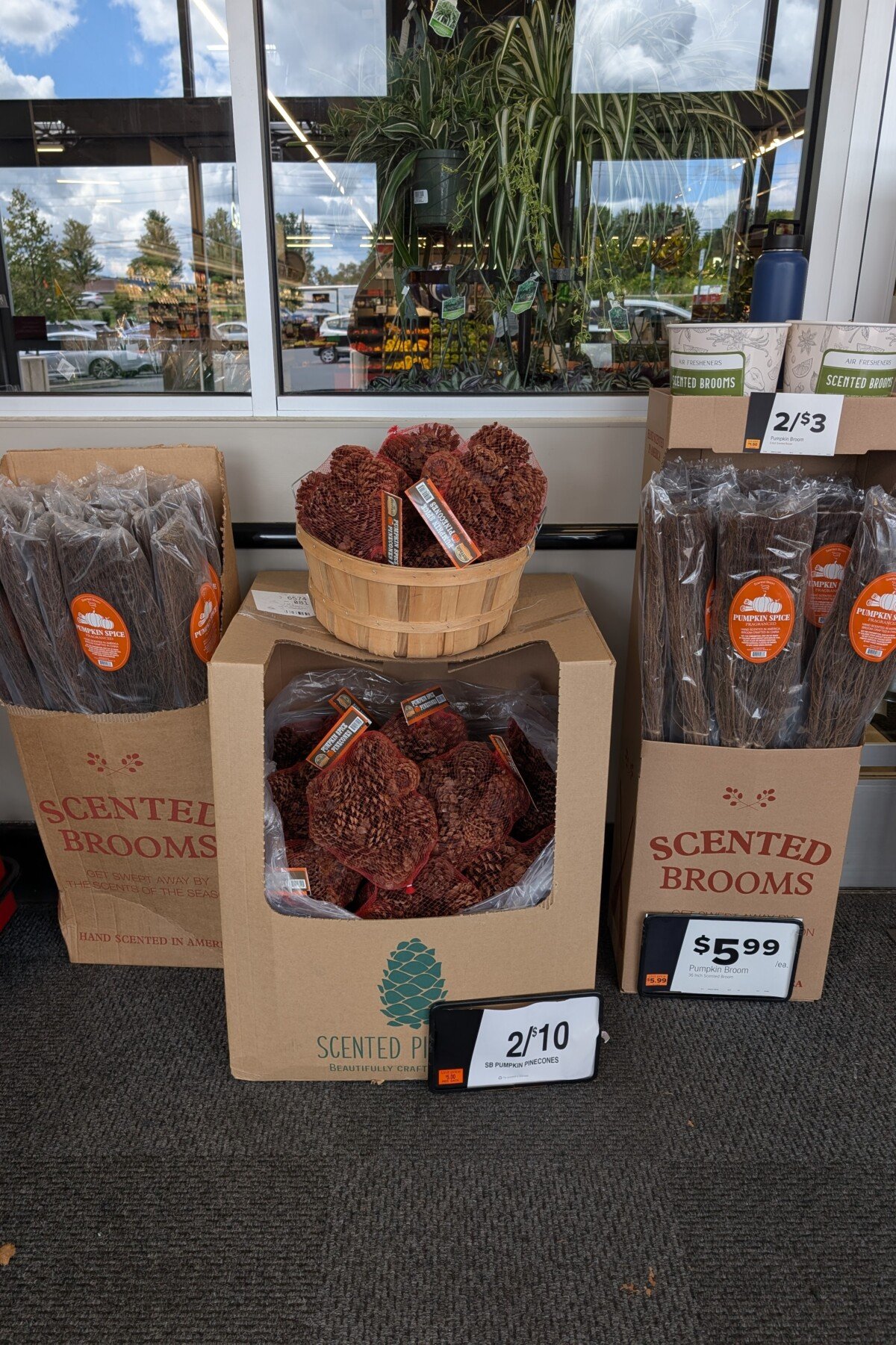
I made a mad dash for milk, coffee beans and eggs, weaving through eager parents and dazed college students before heading home. I left the mums exactly where I found them, which brings me to our first mum-buying tip.
Timing Is Everything

The first step in picking mums that last is knowing when to buy. Now, I know that retail America makes sure we all have access to mums from late August through October. But the exact timing of purchase can dramatically influence how long your flowers will stay vibrant. Because mums naturally fade over time, but we’ll get to that later.
Buying mums too early often means you’ll end up buying them again in a few weeks.
Mums are made for cooler weather, and those final heatwaves that like to show up in late August and early September can really do a number on them.
I know it’s hard to wait, but consider holding off on buying your chrysanthemums until September. I typically buy mine the second or third weekend in September and have gorgeous color all autumn.
Since we’re getting in the fall mood, you’ll want to grab a pumpkin or two when you do buy mums, for my easy slow-cooker pumpkin butter. It’s beyond delicious!
Check Out the Buds
When it comes to flower buds, the goal is to select plants with buds that are tight and just barely starting to open. No one wants to do this, but the best way to get mums to last is to buy plants that you can’t even tell what color they will be because the buds haven’t started opening yet. While you don’t have to go that far, you get the idea.
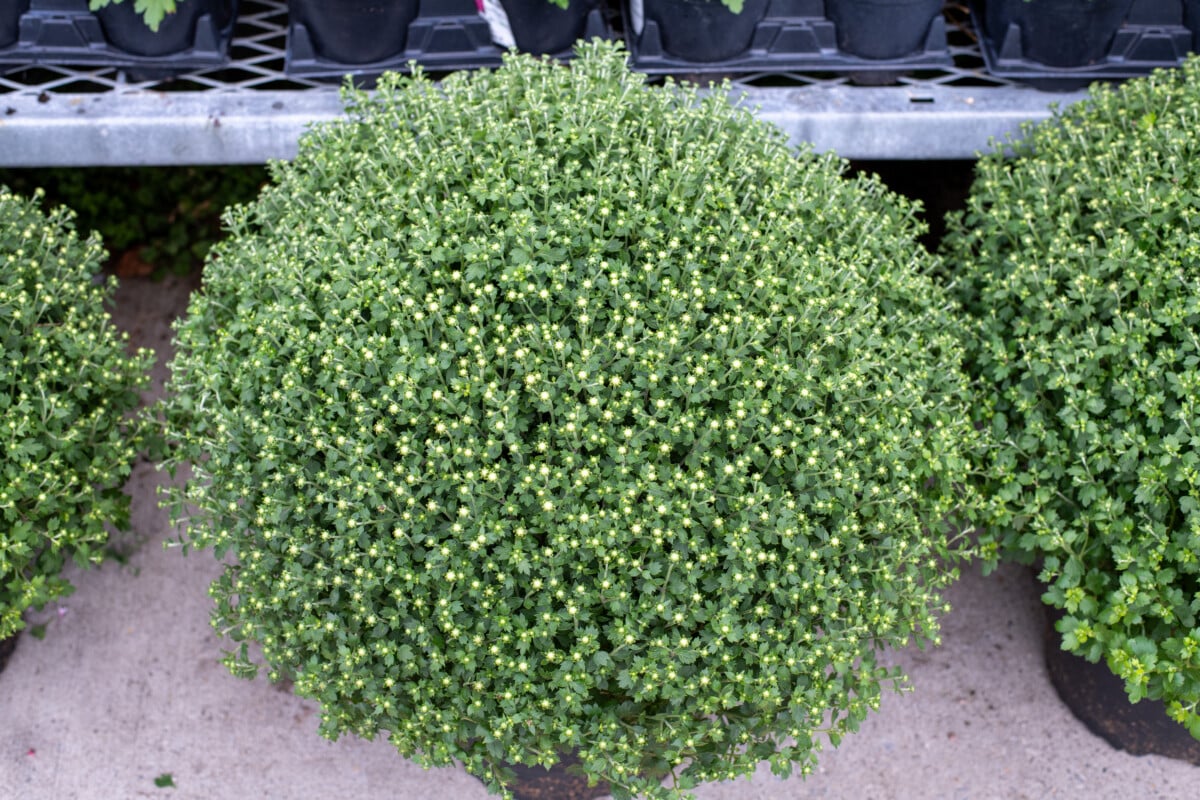
Tight buds will gradually bloom over several weeks, giving a prolonged display from late September into Thanksgiving. Mums with partially open flowers will peak sooner and may fade before the season is over. Fully open blooms are immediately gorgeous, but their peak is brief, meaning your plant may look tired after only a couple of weeks after purchase.
Buy Twice?
You’ve probably already figured out a workaround here to get the best of both worlds – buy mums twice during the fall. Really, this comes down to personal preference. If you want the immediate explosion of fall color on your doorstep, then yes, go for plants with buds that are blooming. You’ll get the instant gratification of all those gorgeous fall colors.
Then, when that first set of plants starts to peter out and the colors are less vibrant, you can replace them with new plants and start the whole process over again. This option, while more costly, does get you full color all season long.
Be Choosey About What You Choose
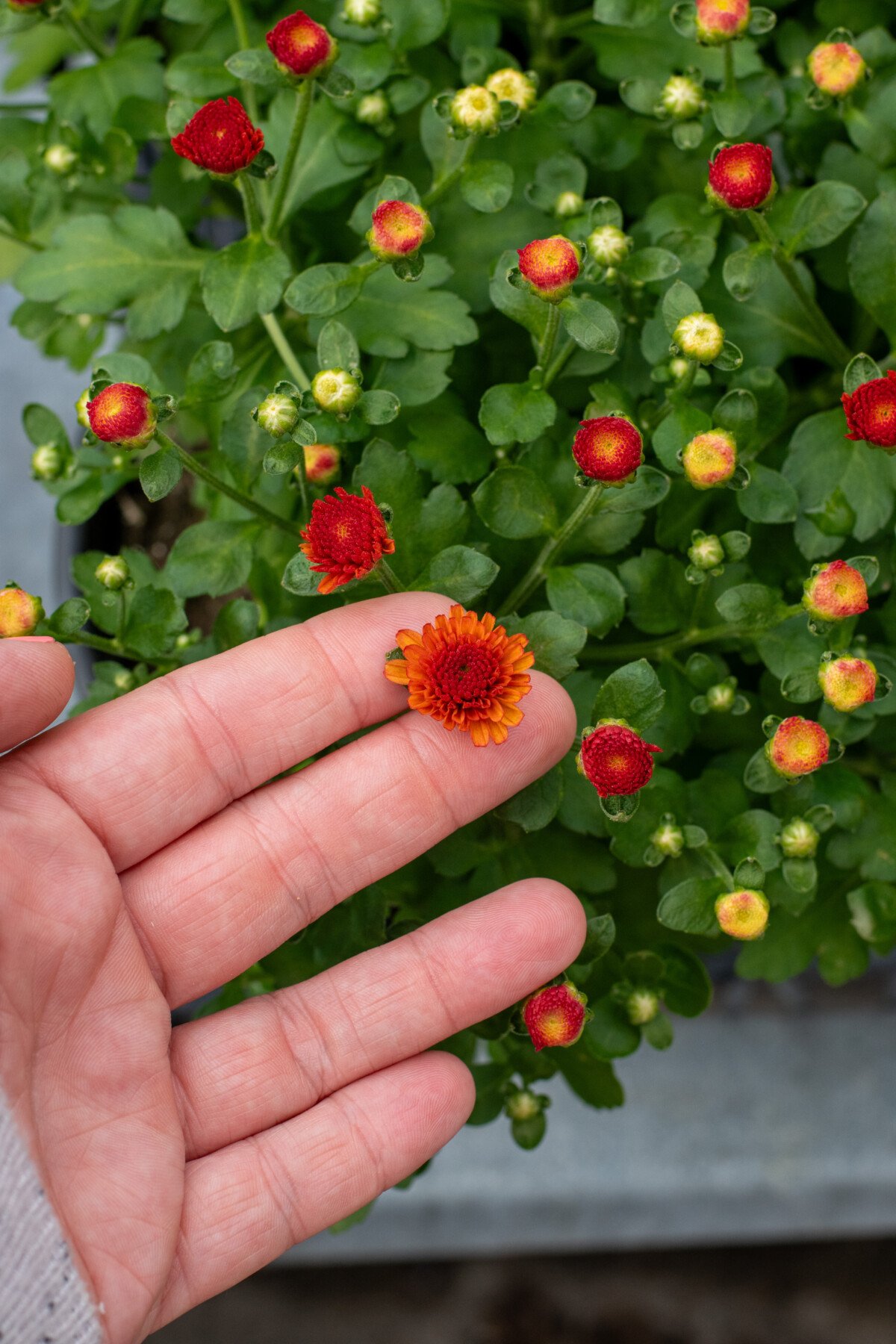
Once timing is settled, the next critical step is poking around those potted mums. Even the most perfectly timed mum won’t last if it’s already stressed or pest-ridden.
Start with the foliage. Leaves should be vibrant green, free of yellowing, browning, or wilting. Avoid plants with drooping stems or brittle foliage. (A sign that someone forgot to water them.)
Examine the undersides of leaves for small insects, spider mites, or evidence of disease. The stems should be firm, supporting the plant without bending or breaking under gentle pressure.
Next, inspect the soil and roots. The soil should be slightly moist. Dried-out or waterlogged soil is an automatic “skip” from me.
Do You Need to Worry About Root-Bound Mums?

I see this advice all the time – don’t buy root-bound mums! Here’s the thing. We’re talking about a plant that is most likely going to be composted or thrown out when it’s time to decorate for the winter holidays.
Do not worry about whether or not your mums are root-bound because they’re supposed to be. That’s part of how growers get them to bloom so profusely. The plants need to be a bit root-bound (stressed) to encourage the plant to put out ten thousand blooms in one go.
Be more concerned about brown, mushy or rotten-smelling roots, as that’s a sure sign of root rot.
Finally, check the buds. (Yes, again.) You want to avoid plants with brown or shriveled tips or buds that feel mushy, as these are signs of stress or impending bloom doom.
Choosing Colors That Last
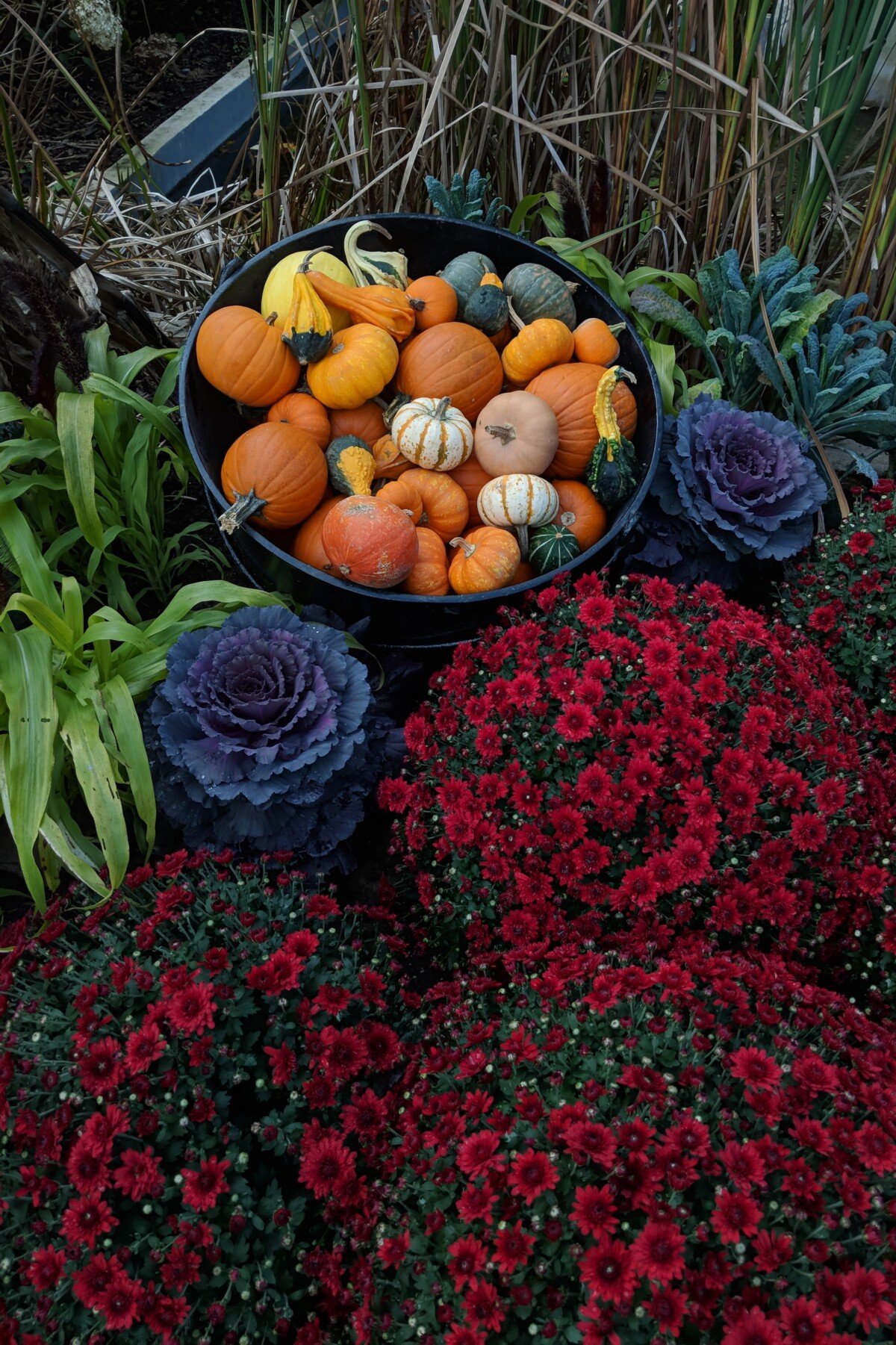
Here’s the thing no one tells you about mums: their pigment fades over time. Too much sun? Faded blooms. Too much rain? Faded blooms. Not all mum colors are equal when it comes to surviving the autumnal season.
Bright reds and deep burgundies are striking but tend to fade faster in full sun, while oranges can oxidize or dull over time. Yellows, creams, and light pinks are more resilient, but get washed out in too much rain and develop brown edges as they fade.
If you’re concerned about the fading colors, display your mums out of the rain and scorching afternoon sun. Again, though, take this advice with a grain of salt.
As we’ve already discussed, these plants aren’t in it for the long haul. Pick the colors you love and enjoy them while they last. Some look quite pretty as they begin to fade.
Petite or Big and Bushy?
Full, bushy mums are appealing. I get it. The local Amish-run greenhouse near me grows mums so big I can only fit two in the back of my Subaru Outback. They’re nice in that you’ve got a veritable explosion of color for larger planters.
However, that old saying rings true: the bigger they are, the harder the fall. Or in the case of these huge mums, split. Often, these extra-large plants will split in half when you get a heavy rain once they are in full bloom. Something to keep in mind.

Smaller mums tend to dry out much faster and are harder to keep alive. Unless you plan on planting them directly in the ground, I would avoid the very petite potted mums available.
Caring for Mums at Home
Moms appreciate not having to tell you where the sour cream is when you’re standing right in front of the fridge with the doors wide open. Your hips are functional, which means you can bend at the waist and look for yourself. The last time I checked, your eyeballs still worked, too.
Oh, mums! Mum care at home! Sorry, I thought we were talking about something else.
You’ve already made this part so much easier on yourself by selecting a happy, healthy mum at the garden center. That being said, mums require a little upkeep if you want them to last all fall.

- Water them whenever the top inch of soil dries out. Give them a good soaking, but don’t let them sit in standing water.
- You can encourage your mums to keep on blooming by fertilizing them with a liquid, balanced fertilizer every three weeks. (Schultz makes a pretty easy-to-use fertilizer that would work well for mums.)
- Deadhead faded blooms consistently to encourage your mums to redirect energy into new flower production.
- Make sure your mums receive at least six hours of bright, indirect sun per day. This is especially important if you have them indoors.
- Cooler night temperatures also help slow down bloom fading and enhance color vibrancy. If you get a few days of leftover scorching summer weather, bring your mums indoors or move them somewhere cool and shady until it passes.
Now that you know when to buy fall chrysanthemums, what are you going to do with yours? May I suggest this 5-minute craft? (Full details here.)

At the end of the day, I have always found that the nicest and longest-lasting chrysanthemums come from a local greenhouse or garden center. When growing plants is your job, you tend to be pretty good at it. If you’re able, look locally first for the best mums. Regardless of where you get them, now that you know what to look for, you’ll have glorious fall color right up until Thanksgiving.
Get Garden Notes From Tracey, Right to Your Inbox
Pull up a chair on the front porch. Join 54,000+ gardeners who get Tracey\'s friendly notes, seasonal to-dos, and hands-on tutorials three times a week.