

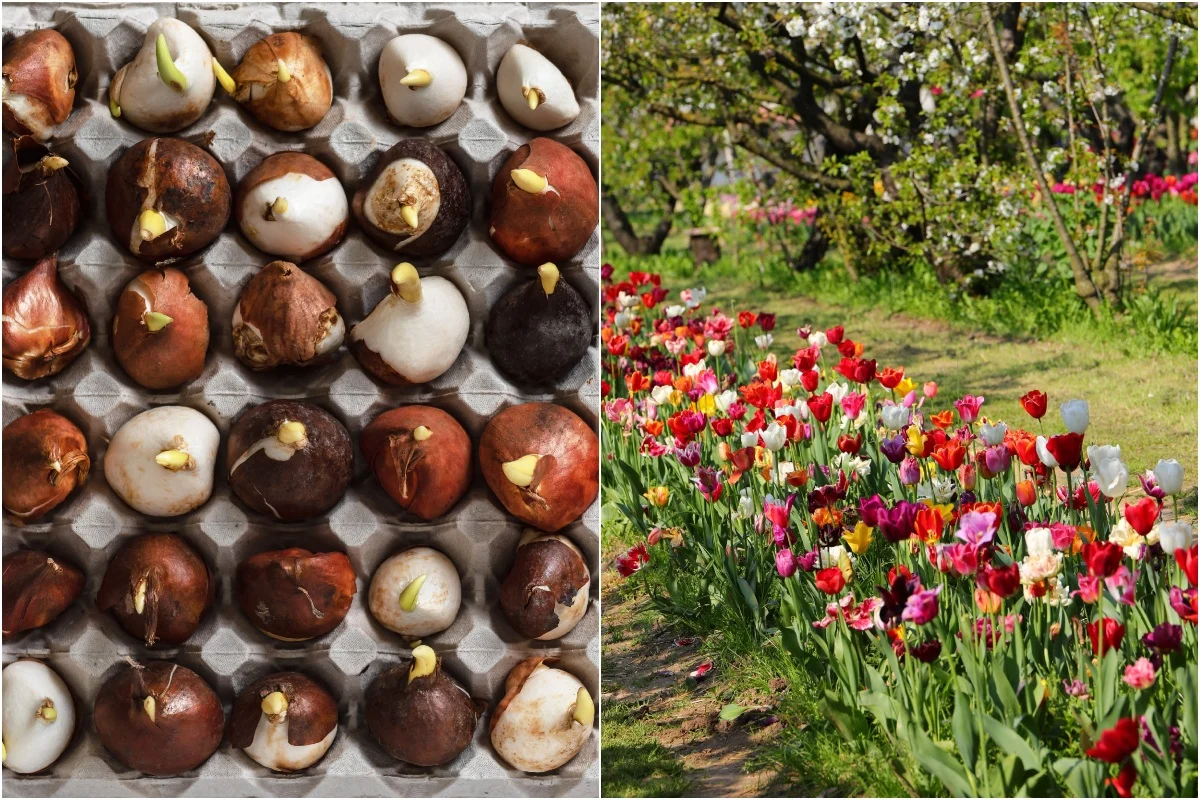
If you spend any amount of time in the gardenverse on social media, you’ve probably seen the AI-generated videos using egg cartons as an easy hack to plant bulbs. Like most things AI, on the surface, it seems too good to be true. But does this one actually work?
AI – Trash or Treasure?
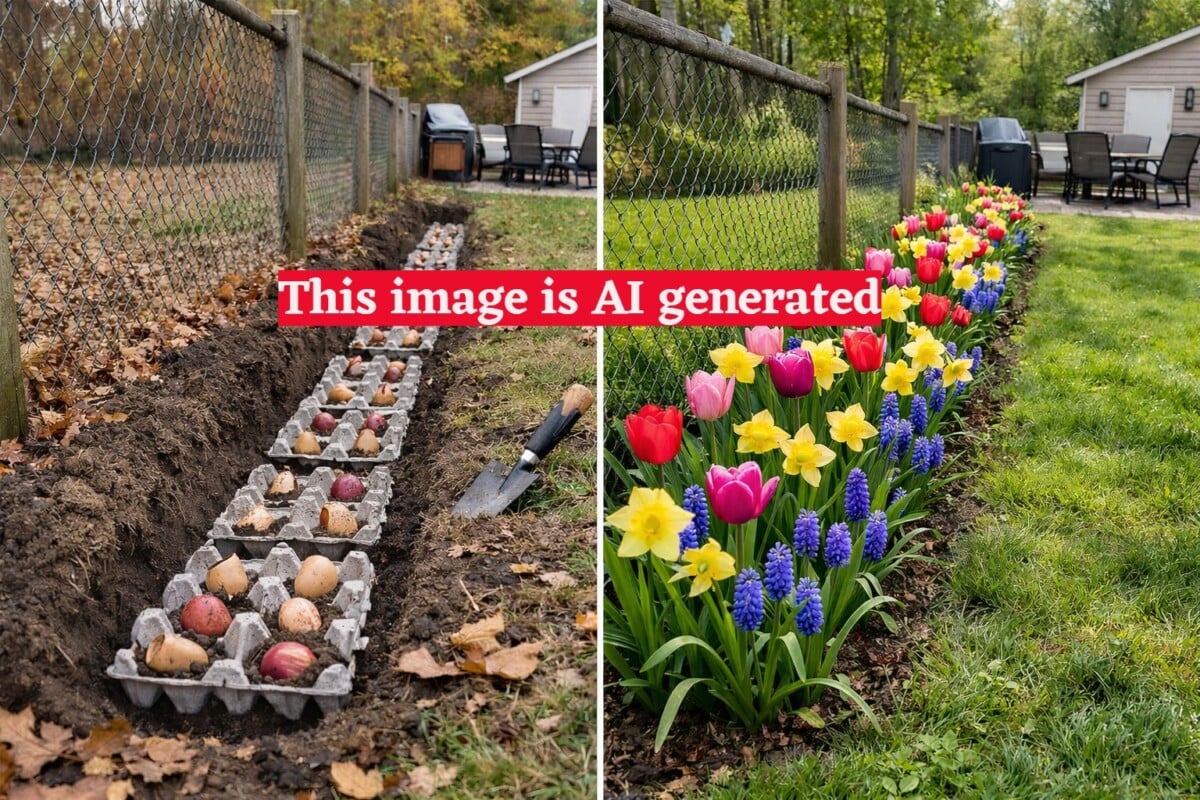
I don’t know about you, but I have come across very few people who think AI is a good thing. At least where it stands currently. On the surface, it seems as though it could be helpful. But if you’ve played around with it a bit, you begin to see how unreliable it is. Facts are often not factual, and the images have that creepy Uncanny Valley feel.
But getting back to the garden and AI. It’s now easier than ever for shady types looking for quick clicks to flood the internet with AI garbage. Yes, even in the gardening world, AI is becoming a problem, which brings us to these paper egg carton videos.
This one is my favorite. So creepy!
Here’s one showing egg cartons for growing onion sets.
And one for garlic.
I’m blown away by how many people have viewed these videos. And there are so many others floating around out there. But after the novelty of watching the horrible AI videos wore off, it got me wondering:
What exactly is the trick they are trying to promote? What problem is supposedly solved here?
As someone who has been gardening for 30+ years, these videos set my gardening senses tingling. I can see several things about this that don’t add up. Let’s take a quick look.
What’s the Claim They Are Trying to Make?
For a hack to be a hack, it’s supposed to make the task easier, right? But from where I’m sitting, all I’m seeing are complications added to a relatively straightforward process: planting flowering bulbs/onion sets/garlic.
For the flowering bulbs, the general idea is that rather than digging up dozens of individual holes all over your yard and throwing out your back, you use egg cartons and plant a ton of bulbs in one go.
Uh-huh.
The first problem should be glaringly obvious to anyone who has ever planted bulbs before. These videos are popping up everywhere…and it’s March. You plant spring-flowering bulbs in the fall, not in the spring. (Check this out for plenty of bulbs to plant in the fall for next spring.)
Okay, no biggie. You take this trick and use it in the fall instead. Right? Well, maybe.
You’ll note the egg cartons being used are the large ones from the 36-count packages of eggs. And they use quite a few of them in each video, however, most of us are buying our eggs by the dozen. Again, the easy fix is to use your typical one dozen egg carton. You just need to save a lot more of them. I hope you like quiche. And frittata. And scrambled eggs.
Paper or Styrofoam?
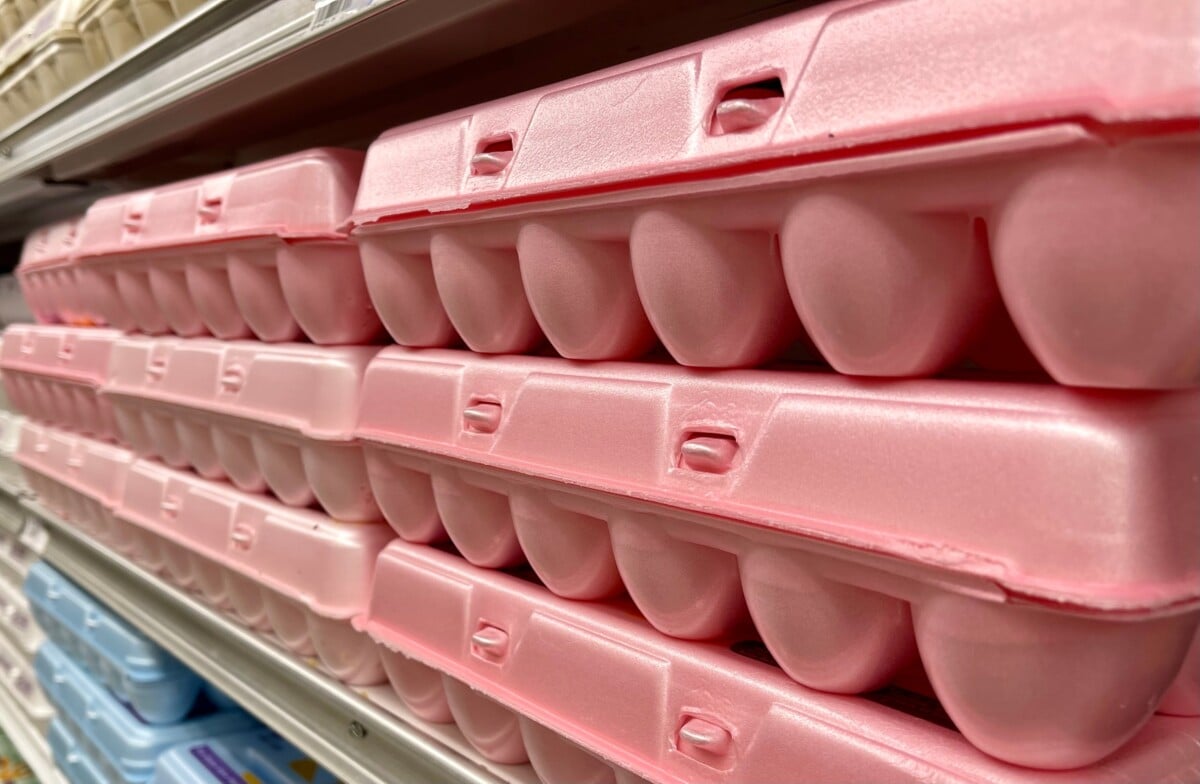
One thing that’s incredibly important if you’re going to give this a try is that the egg carton must be the rough paper type cartons, not the nice pressed paperboard. Styrofoam or plastic obviously won’t work either. They would hold the water and rot your bulbs, making all that digging moot.
And even then, I have serious doubts as to whether the paper egg cartons would break down in the soil fast enough.
On the one hand, I toss these types of egg cartons in my compost heap all the time, and even ripped into smaller pieces, they take months to break down. Bulbs put out roots fast, and they could be impacted by the paper if it doesn’t break down fast enough. Or worse, the paper could hold moisture at the bottom of the bulb, causing the whole thing to rot.
On the other hand, we shouldn’t underestimate the power of roots.
Plants have a way of growing where they want when they are determined enough. I had a root-bound spider plant crack the pot it was in because the roots just kept on growing.
But that’s not really a risk I’m willing to take when it comes to flowering bulbs. Those buggers are expensive, especially in the quantities shown in these videos. I’m already trying to keep the deer and squirrels from eating them. Can you imagine planting all of those bulbs in the same spot only to find that some critter has unearthed and eaten all of them a few days later? It would be like an all-you-can-eat buffet!
I don’t want to waste a couple hundred dollars’ worth of bulbs on something my gut says is just going to lead to rotten bulbs or brunch for Bambi.
Oh, My Aching Back!
This is supposed to save you time and a sore back. Again, I’m wondering how. You’re still digging. But instead of many small holes, you’re digging a full-on trench. That’s a lot of work.
And once you’ve gone to all the trouble of digging your trench, why do you even need the egg cartons? Most of us can handle setting bulbs in a relatively straight line, a few inches apart.
They talk about the bulbs being perfectly spaced. Not so, my friends!
Unless you are growing them specifically for cut flowers, like a flower farmer, the carton spacing is too close together. Yes, you could easily just put a bulb in every other pocket on the egg carton, but again, I feel like we’re just creating more work rather than eliminating it.
Realistically, how many gardeners are looking to plant a whole bunch of bulbs crammed together in one spot like that? Unless you’re landscaping for a large building with geometric beds out front (I’m thinking of all the flower beds full of tulips on the Penn State campus each spring), not many of us home gardeners plant our bulbs that way.
I’m going to let you in on a little secret.
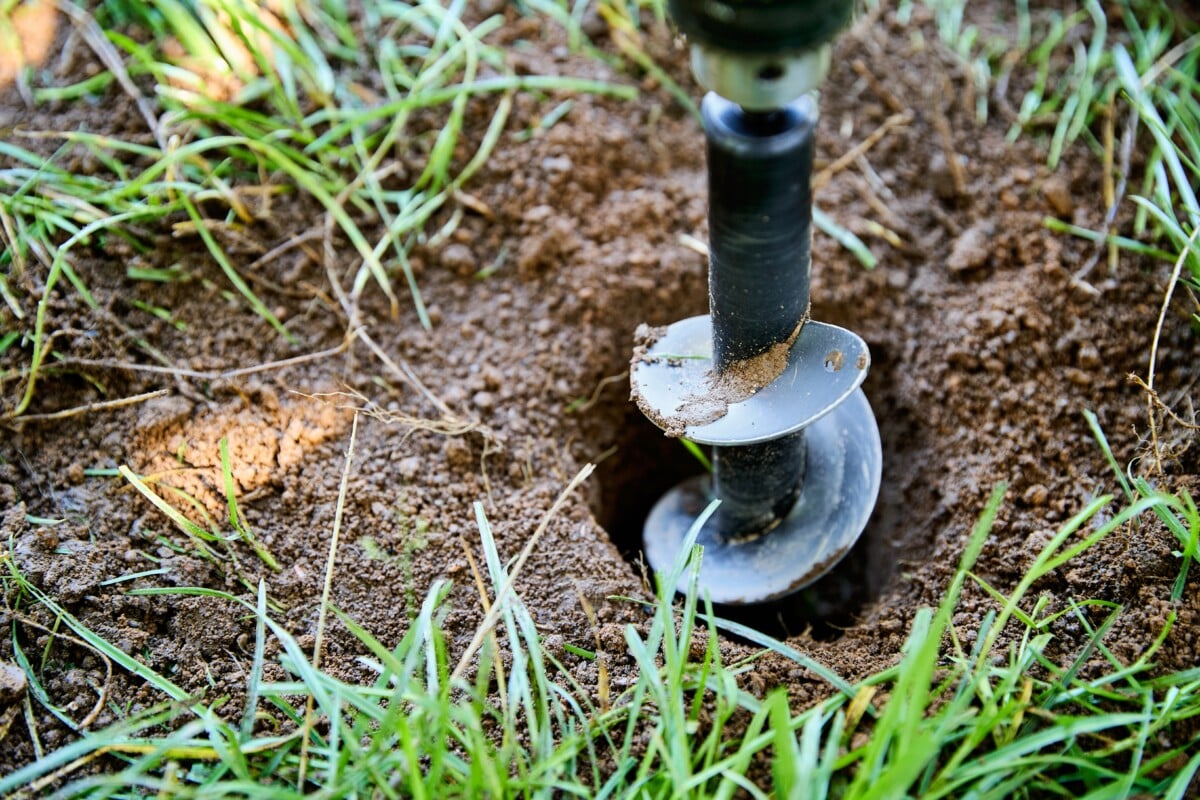
In fact, it’s not even a secret because they’ve been around forever. Go grab your cordless drill and order a set of these bulb augers. No stooping, no digging. You just use your drill to make a hole and drop in the bulb. Use your boot to push the soil back in over the bulb and step on it lightly to pack it all down. Easy peasy! (They’re great for planting the little 4-packs of annual flowers, too.)
In the end, I don’t see how using egg cartons makes planting bulbs easier. In fact, it increases the likelihood that after all that work of digging, you’ll end up with bulbs that are too crowded and will rot in the soil, rather than bloom.
Related Reading: 6 Bulb Planting Mistakes That Will Spoil Your Spring Bloom
But It Does Still Have Me Wondering…
The one scenario where I am curious to give this a try is with onions. Onions need to be planted shallowly, or they don’t grow well. If you plant them too deeply, they don’t bulb out properly. I think the idea of setting the egg carton on the surface of the soil, with my little onion sets placed in it, and then lightly covering the whole thing with soil could work. That is, as long as the roots can penetrate the egg carton and the carton doesn’t hold enough moisture to rot the onion.
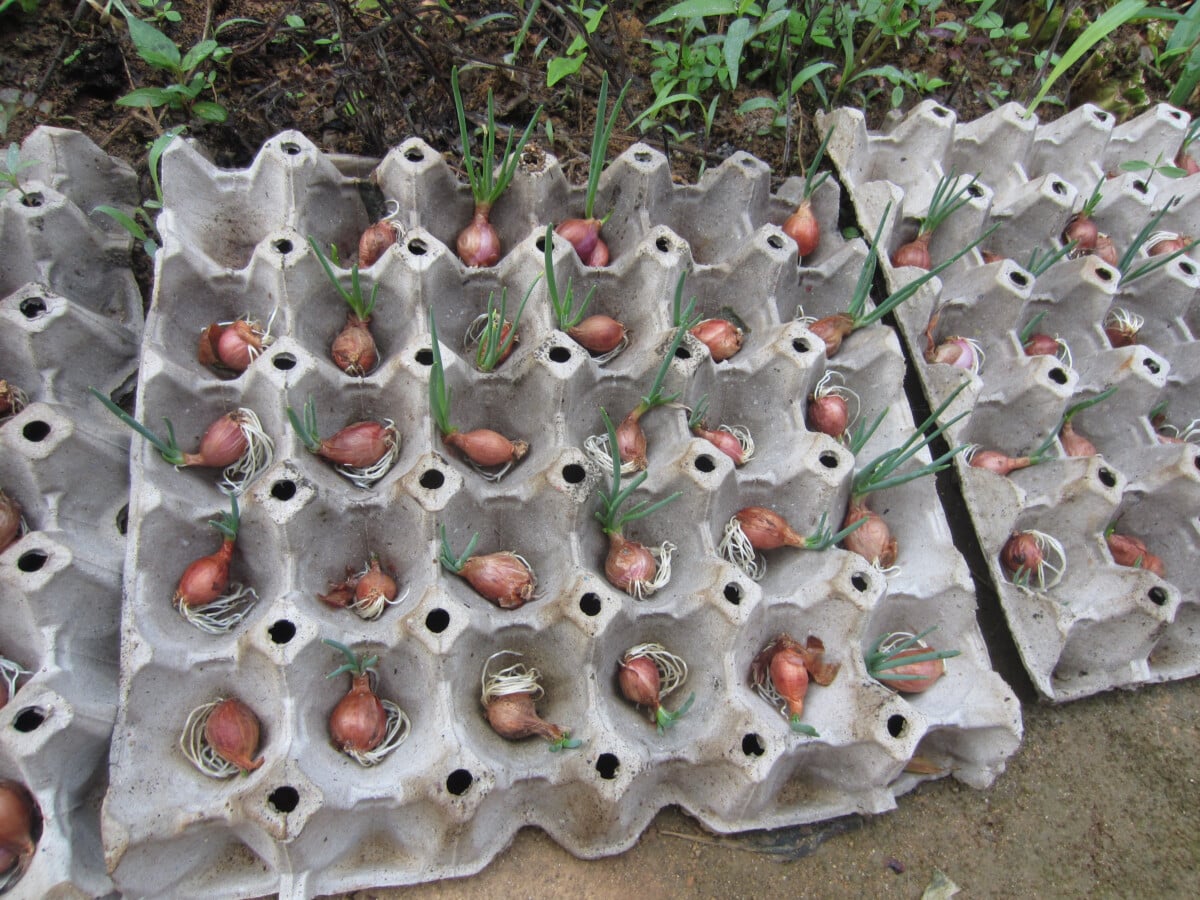
Again, though, you would need to space them out a bit more, say one onion every other egg cell.
As onion sets are much cheaper than flowering bulbs, I think I might give this a try and see what happens. I’ll let you know what I find.
In the end, would I trust AI to give me bulb-planting advice? Oh, honey, in this economy? Please. These are fun, slightly creepy videos to watch, but not very realistic as a gardening hack.
If you’re sick of the “AI Slop” gardening videos and images rotting social media, then follow Rural Sprout on Facebook – an AI free zone with real gardening tips and advice from real gardeners.
Read Next:
Get the famous Rural Sprout newsletter delivered to your inbox.
Join the 50,000+ gardeners who get timely gardening tutorials, tips and tasks delivered direct to their inbox.