

This might be an unpopular opinion, but I believe every single garden needs at least one shrub. I still like perennials and annuals, but shrubs just tie the room together. Uh, I mean the garden.
Even when I was gardening in postage-stamp-sized backyards in cities, I planted shrubs: a small magnolia here, a rhododendron there, a camellia in the shaded corner. Shrubs are the framework on which we can stretch the canvas of the garden.
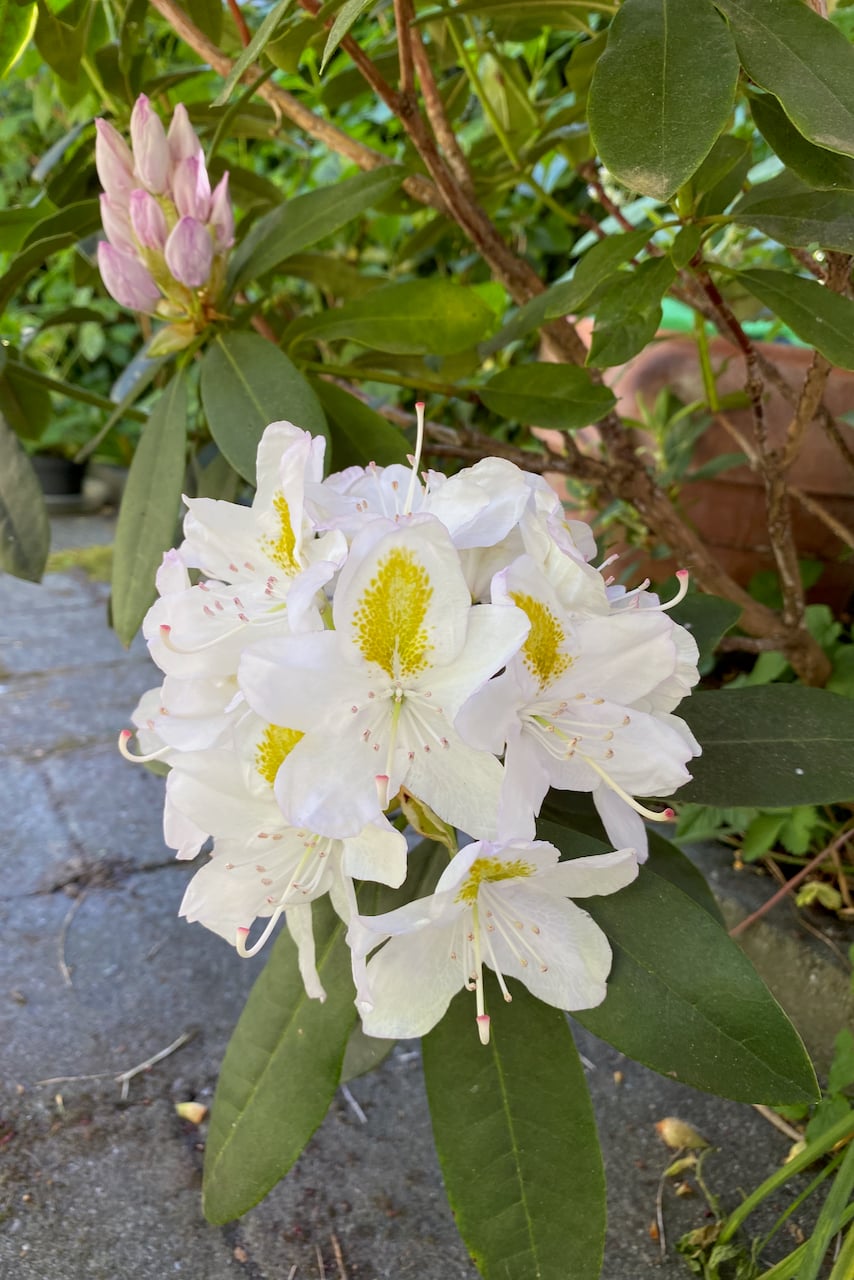
The first thing I started doing in my new garden was to plant more shrubs. There are already some established ones (for which I’m very thankful to the previous owners), but there are also spots where shrubs would solve a problem – such as lack of privacy – reliably and sustainably.
As I was putting roots in the ground, I was thinking of some shrub-planting tips that our readers might not know. And since buying shrubs is considerably more expensive than buying perennials, some of these tips might even save us a few bucks.
1. Did you consider buying bare root shrubs?
This is my first move when I buy plants for the garden, either online or in-store. Can I buy them bare root? It has saved me so much money over the years, and it works both for shrubs and for trees. Bare root plants tend to be cheaper because we’re not paying to ship a pot full of potting soil with the plant.
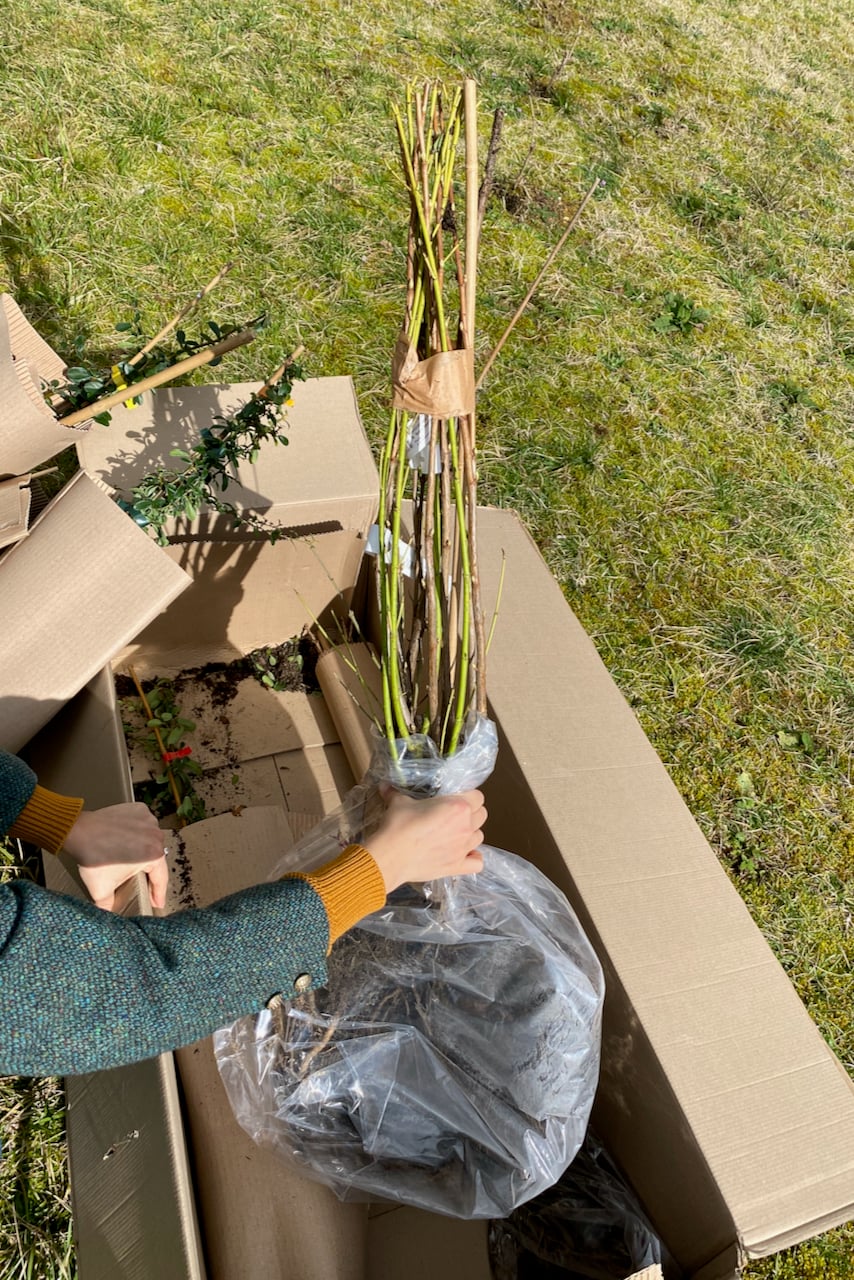
I also noticed that whenever I bought bare roots, the plants that I got tended to be more mature (this is not a guarantee, but you can ask the vendor).
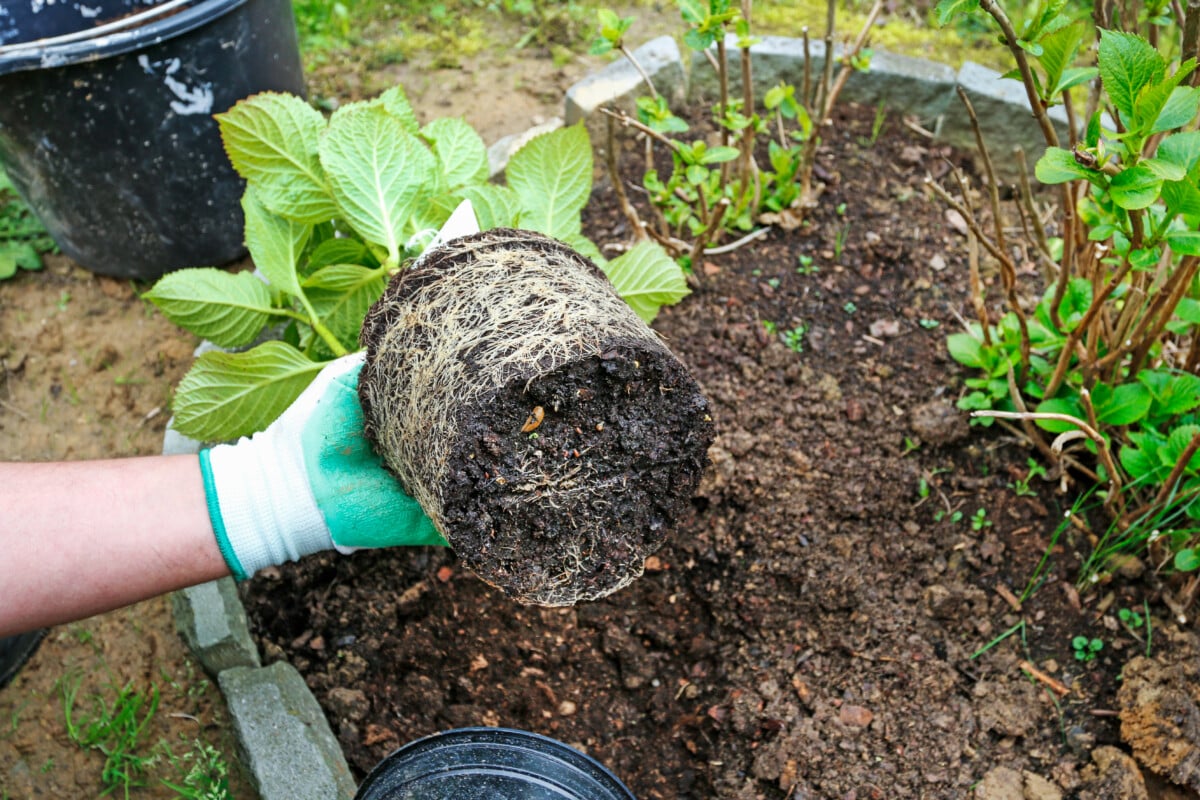
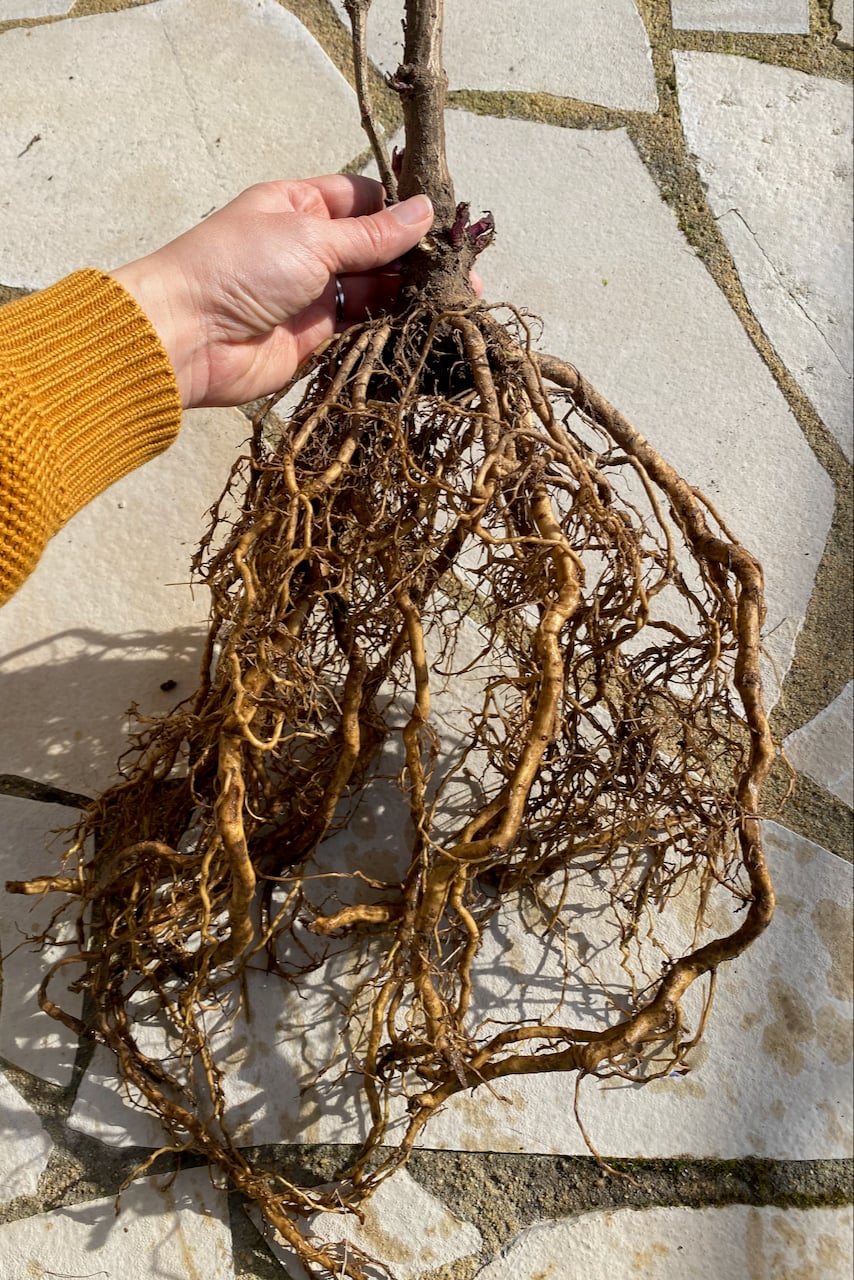
Bonus points: bare roots have just been pulled out of the ground by the vendor right after you ordered them. Which means the roots have been growing unimpeded by a container and did not get pot-bound. They have a healthy, well-formed root system that will transition to the garden better.
We don’t need to disentangle bare roots, and the roots don’t need to spend the energy finding the right direction to grow in. Overall, planting bare roots makes for more resilient plants.
There must be some downsides to buying bare root shrubs, right?
Only two that I can think of, honestly.
First, bare root shrubs are only available in the dormant season. Which, in most climates, extends from November to April at the latest. So if you want to buy a shrub in the summer, say, there’s little chance you’ll find it sold bare root.
And the second disadvantage, which can be easily mitigated, is that once we get the bare root shrubs, we have to plant them right away. So we can’t procrastinate as we could with a potted shrub. The roots will have just been pulled out of the ground before delivery and need to be put back in the ground as soon as possible, once we get them in order to prevent desiccation (getting dry).
However, there’s an easy way to buy ourselves more time. If we only need a couple more days to get to this job, we can simply place the roots in a bucket of water.
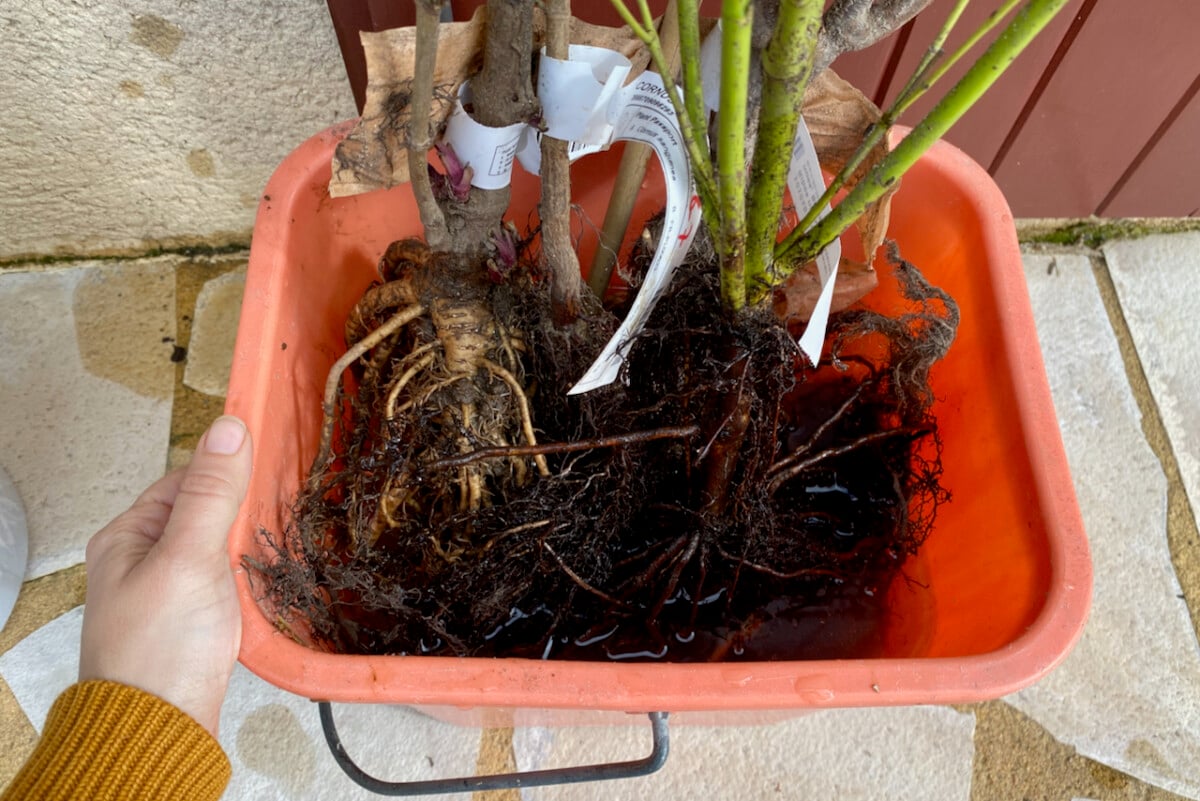
If, however, we need more time, we can either plant in a temporary pot or just in a random place in the garden until we know we’ll get to them. It doesn’t have to be the final location, but the roots have to make contact with the soil in order to stay nice and plump.
This buys us a couple of weeks, but don’t forget about it too long, though. We don’t want the shrub to start putting down roots in this temporary location – the closer we are to when the shrub breaks dormancy, the faster we need to act.
2. Did you consider the shrub size at maturity?
Unless you fork out a lot of cash – in the hundreds or more – you’re probably buying a shrub that will take at least a couple of years to reach maturity. Which is a good thing, because the shrub will have more time to adapt to its new environment over the seasons.
However, we tend to underestimate their mature size based on their planting size. It happens to me a lot because it’s not easy for me to visualize what’s not there. So I sometimes end up with plants that are a bit too snug (which is a nice way to say overcrowded).
And it’s totally fine if that’s your intention.
If we’re planting shrubs to create a hedge, for example, we want the shrubs to be tightly planted in order for the hedge to fill up quickly. If we’re planting shrubs to prevent hill erosion, same deal. There’s also this Japanese method of planting called Miyawaki, where trees and shrubs are planted really close together. The goal, in this case, is quick reforestation in dense, urban areas.
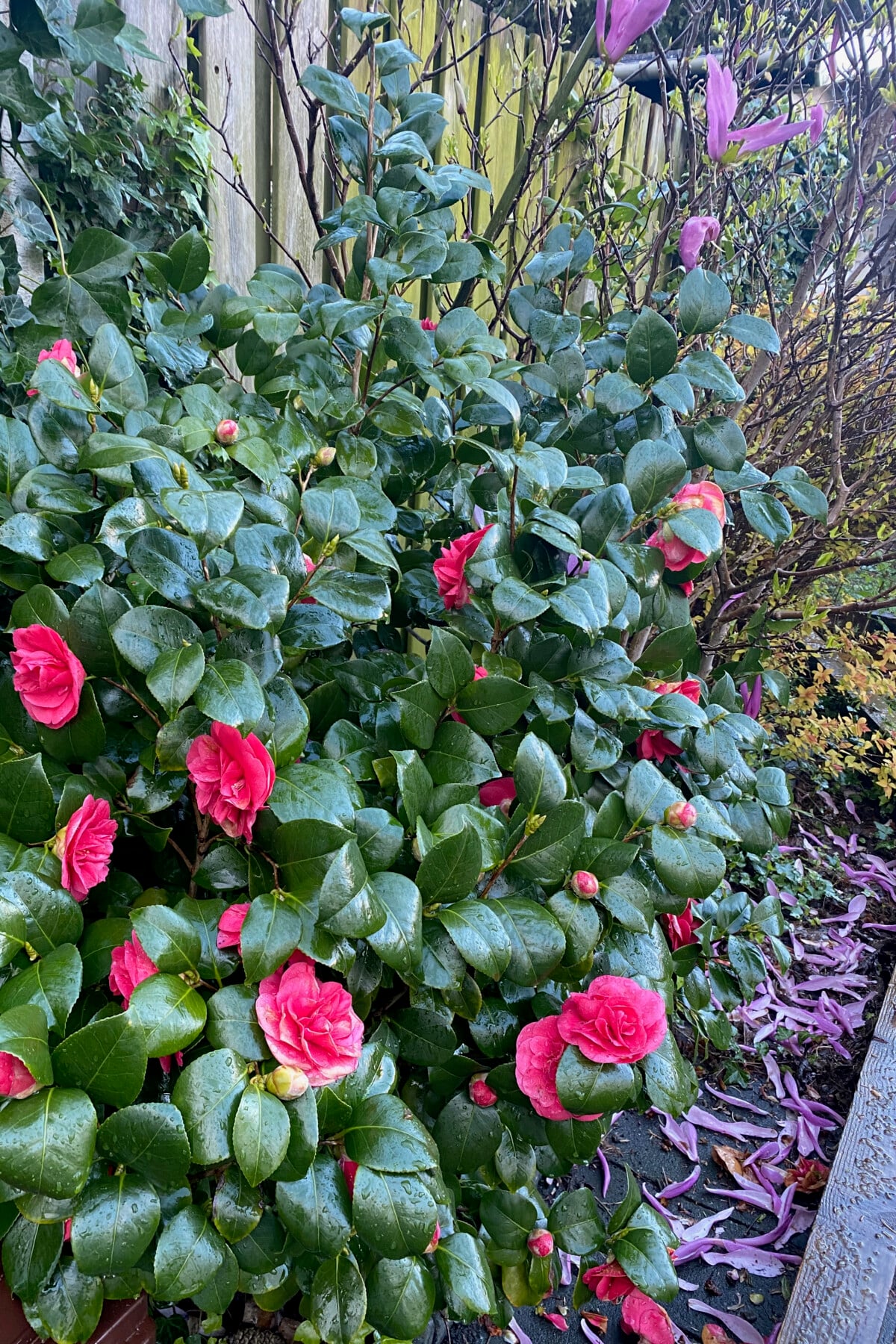
However, is that what you want for your garden? Or are your landscaping goals different?
Always research the ultimate height and spread of the shrub at maturity and consider the spacing. Is it going to overcrowd other plants?
Is it going to cast a shadow over spots of the garden where you need light? Are you sure you’re not planting it too close to the foundation of the house or the shed?
Will it press on the siding or block ventilation units? Will it block paths? Is it going to block windows and make some of the rooms a bit too dark?
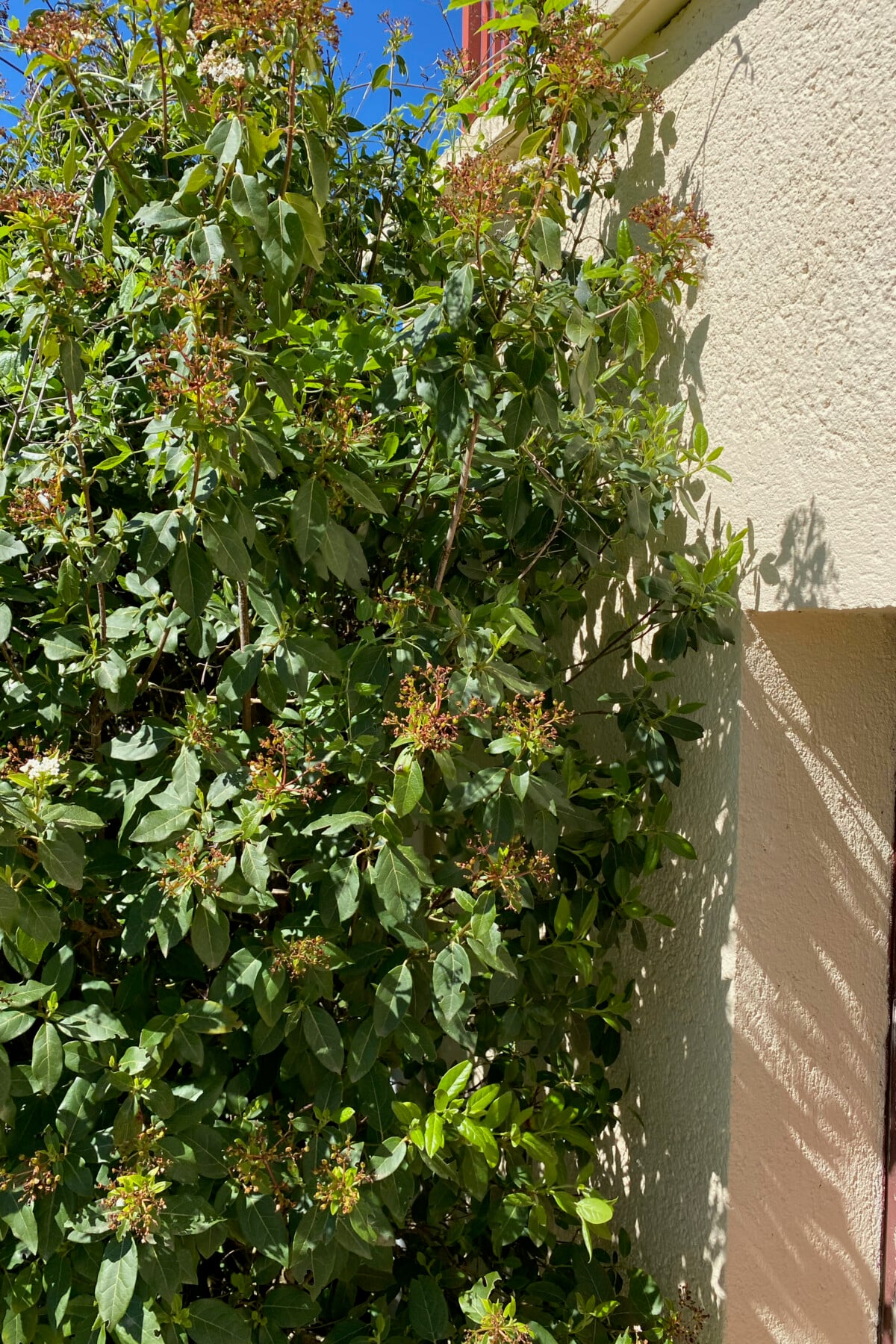
Ideally, we want to do this kind of research before we buy the shrubs.
The best way I found to visualize the size of the shrub at maturity is to actually do a mock-up of the layout. I cut a piece of cardboard approximately the diameter of the shrub at maturity and use a ladder or a taller pole to visualize the height. This works really well for me because I’m a visual learner.
And every time I’ve done this and given up on a shrub that would have grown too large, I managed to find a shorter, more compact cultivar to plant instead.
3. Did you consider seasonal variety?
We tend to prioritize what our garden will look like in the summer, without much consideration of how drab it can get in the winter. And that’s a mistake I see often with newbie gardeners. (I know, I made this mistake too when I first started out.)
My goal is to have something in bloom in my garden every month of the year. And adding some shrubs to the mix helps me reach this objective. Admittedly, it’s easier to find shrubs that flower in spring and summer. But there are plenty that form flowers in the winter too, such as camellias, viburnums, flowering quince, witch hazel (Hamamelis) and winter daphne (Daphne odora).
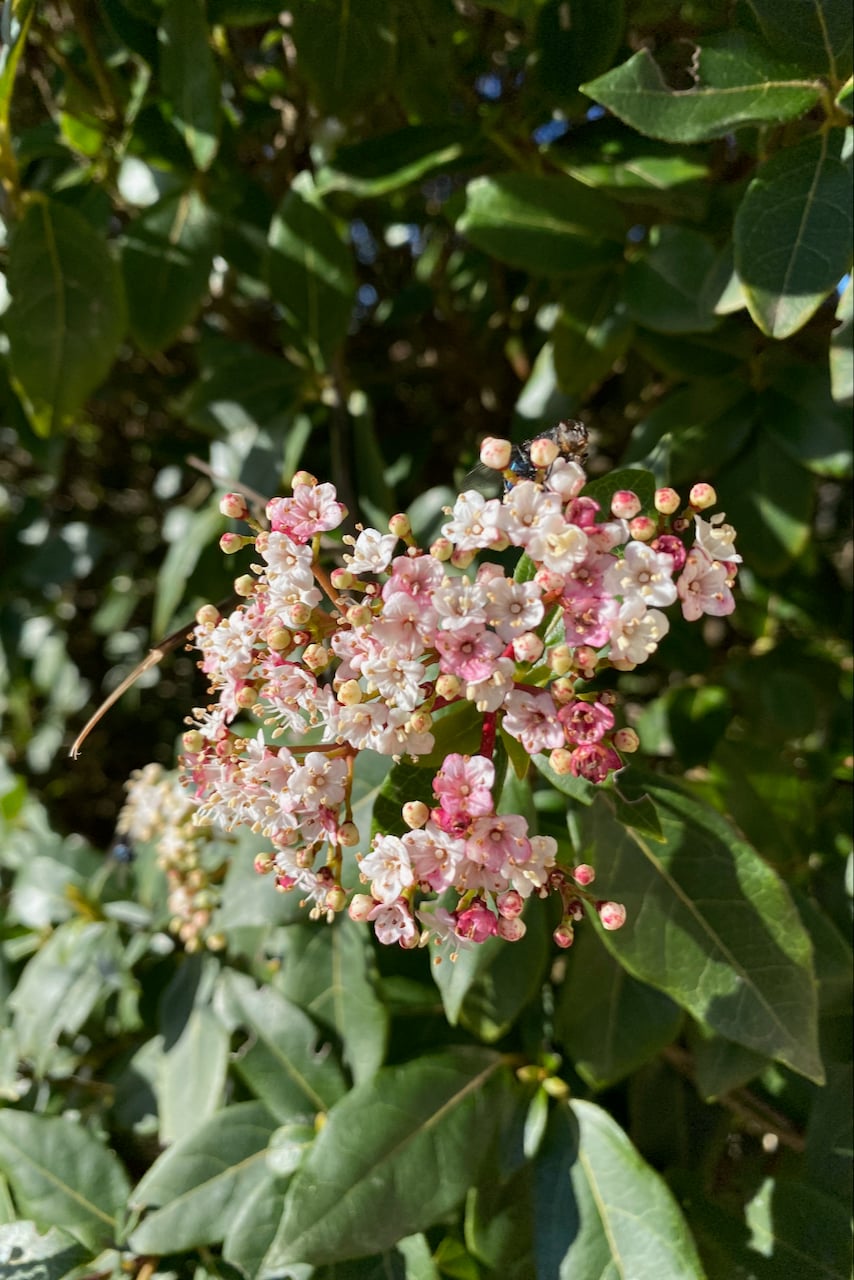
For shrubs that flower in the cold months, it’s also important to understand when they set their buds. Time your pruning wrong (in the fall) and say goodbye to winter flowers.
I admit this might be more of a personal goal of mine rather than general advice. But I think if more people were thinking this way, we – as gardeners – could make a much deeper contribution to backyard ecosystems.
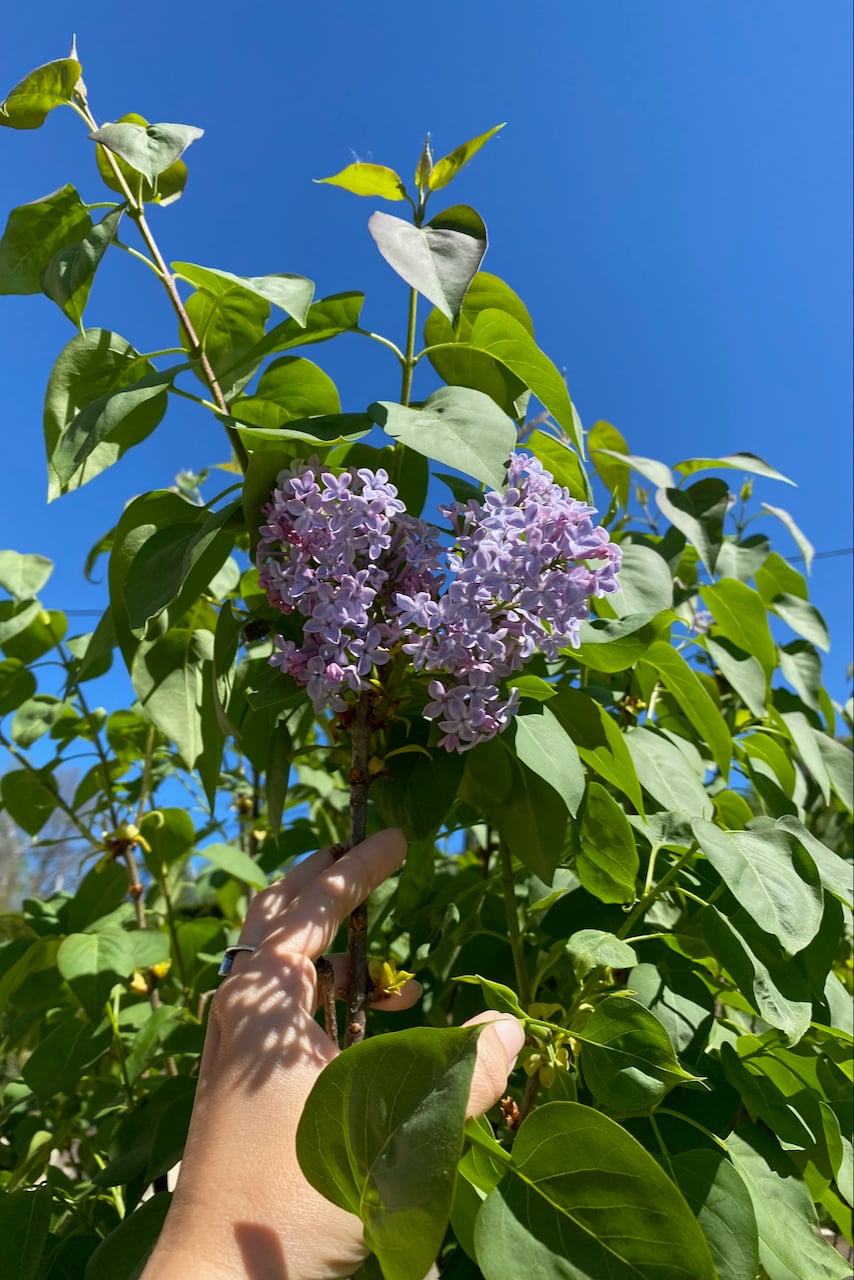
A few other considerations when planting a shrub include:
- foliage color – deciduous shrubs have the most dramatic seasonal color transformation;
- leaf texture – evergreens add amazing texture to the winter garden, while disappearing in the background in the summer
- and flower fragrance – shrubs such as lilacs, magnolias and abelias bloom in quick succession, making the garden smell amazing for months.
4. Are you planting the shrub too deeply?
This is one of the most common mistakes I see when shrubs are planted. And it’s easier to make with shrubs than with herbaceous perennials because they have a thick base that doesn’t look fragile if buried. But don’t.
Don’t cover the crown of the shrub (the point where the stems start growing out of the roots). If we keep this area under a layer of constantly moist soil, the bark will lack air and will start to decay. If we don’t catch it in time, this rot will cut off the flow of nutrients and water from the roots to the canopy of the shrub.
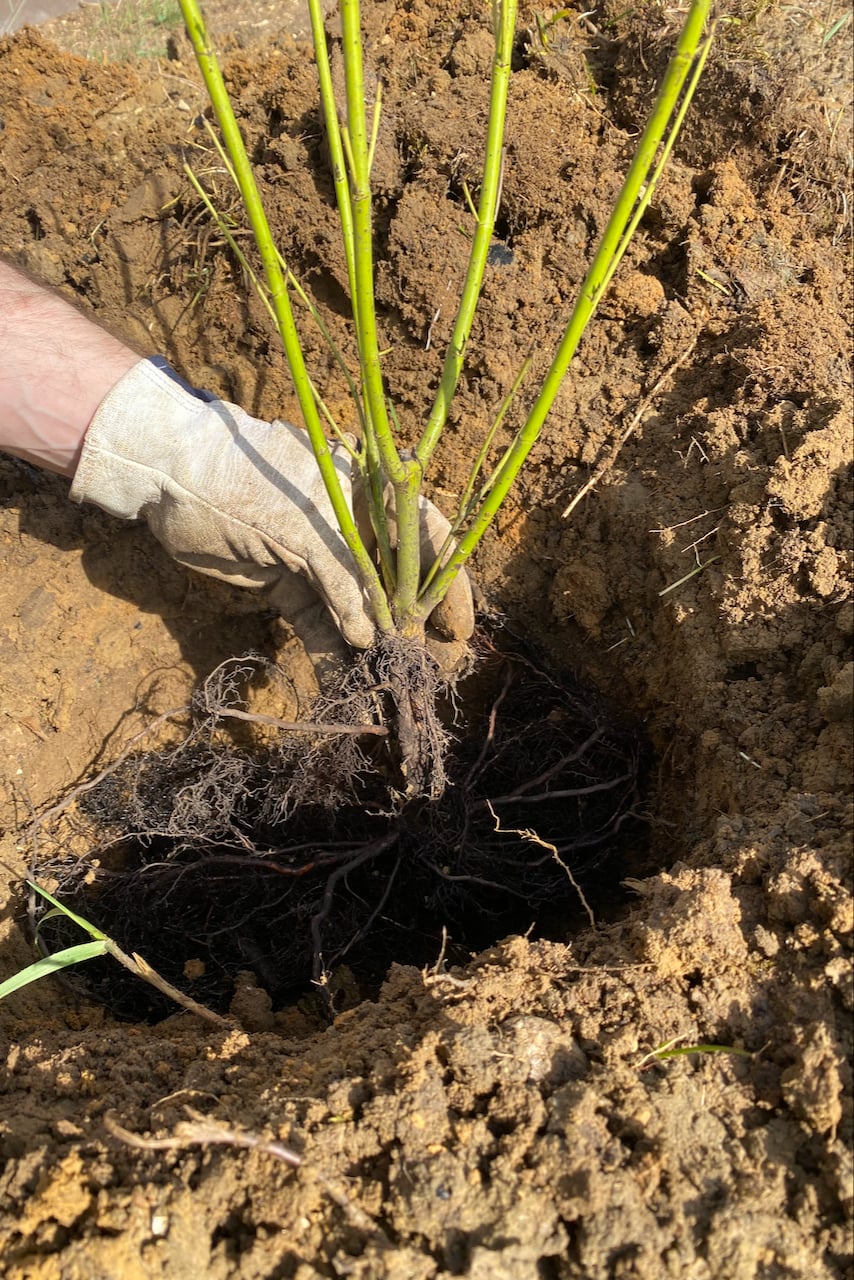
The best way to plant shrubs is by digging a bowl-shaped hole where the deepest part is the same height as that of the root ball. The root ball should be slightly above or at soil level when planted. As the soil settles around it, the root ball will sink lower.
An indication that we’ve planted the shrub too low is if it’s showing signs of stunted growth, such as smaller or yellowing leaves, thinner branches and poor bud formation (if it’s a flowering shrub).
5. Will you meet the shrub’s light preference?
Just like herbaceous perennials and annuals, shrubs also have their individual preferences when it comes to how much light they get. When we talk about light, we’re not just talking about intensity (full sun, part sun, part shade, etc.), but also about duration.
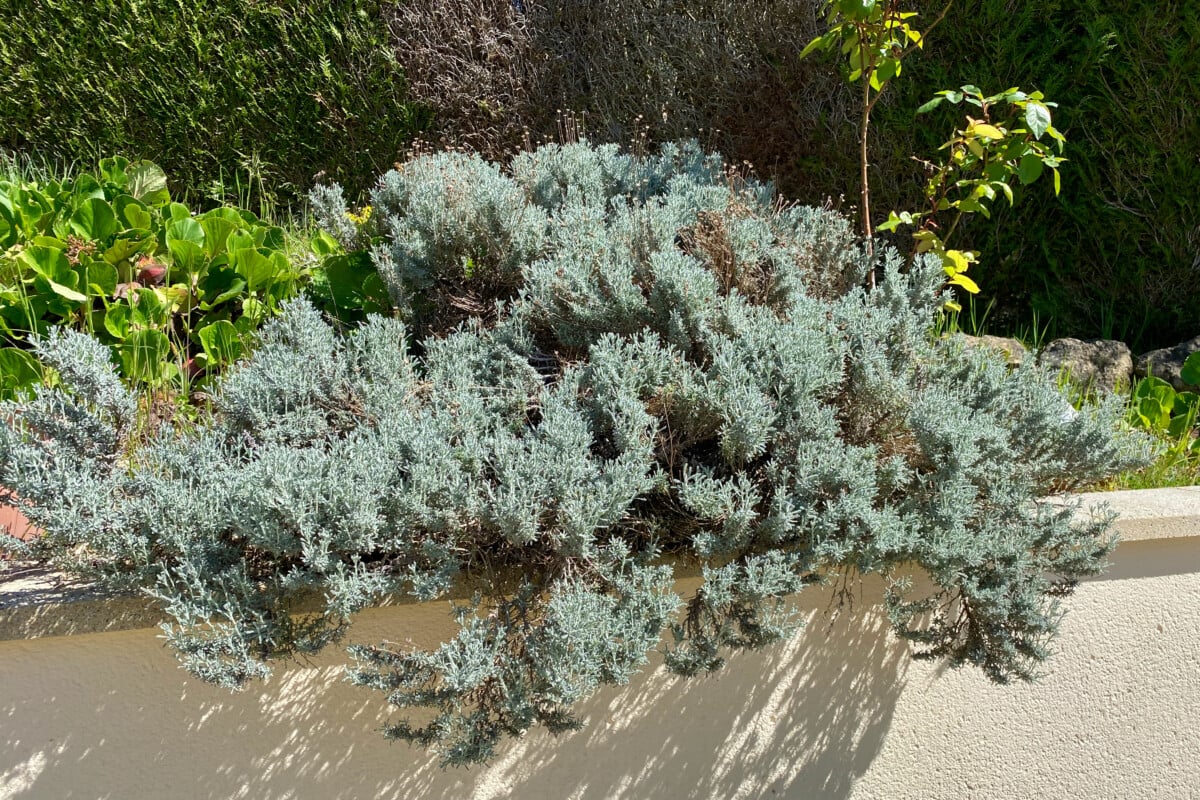
Does the shrub need full sun? Part sun? Will it do better in dappled shade?
Shade-loving plants will scorch in full sun, and sun-loving plants will struggle in the shade. In both scenarios, symptoms will be similar: leggy growth, weak branches that are quick to snap, and poor flowering even after the shrub has been in the ground for a few seasons.
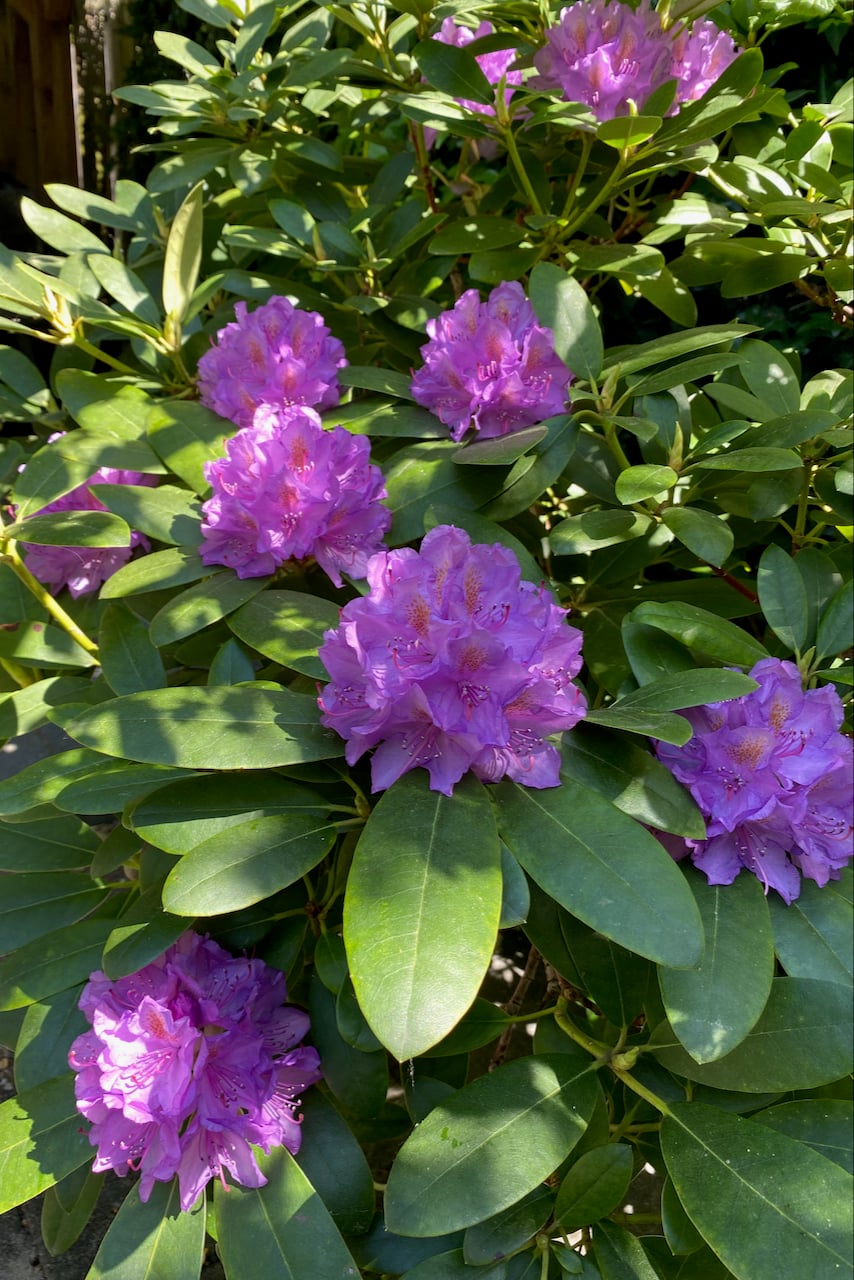
I almost made the mistake of planting an Oregon grape (Mahonia) in a spot that would get at least eight hours of sun at the height of summer. I love this shrub, and it was ticking all the right boxes for the spot I’d chosen for it – it was evergreen, bloomed in winter, would offer privacy, and the spiky leaves would make it impenetrable.
However, this is a shrub that thrives in part shade and would have struggled in the sunny spot I had chosen.
Back to the drawing board it was. I chose some pyracantha shrubs instead. They had the same characteristics, but they will be able to handle the sun at the height of summer.
6. Are you watering the shrub enough?
This is more of an after-care tip, but I think it’s worth mentioning because of this common misconception that shrubs are drought-resistant by default.
True, a lot of shrubs are more drought-resistant than herbaceous perennials and annuals. With one condition, though: they have to be established. They have to have been in the ground long enough to have grown roots deep enough to access the water deeper underground.
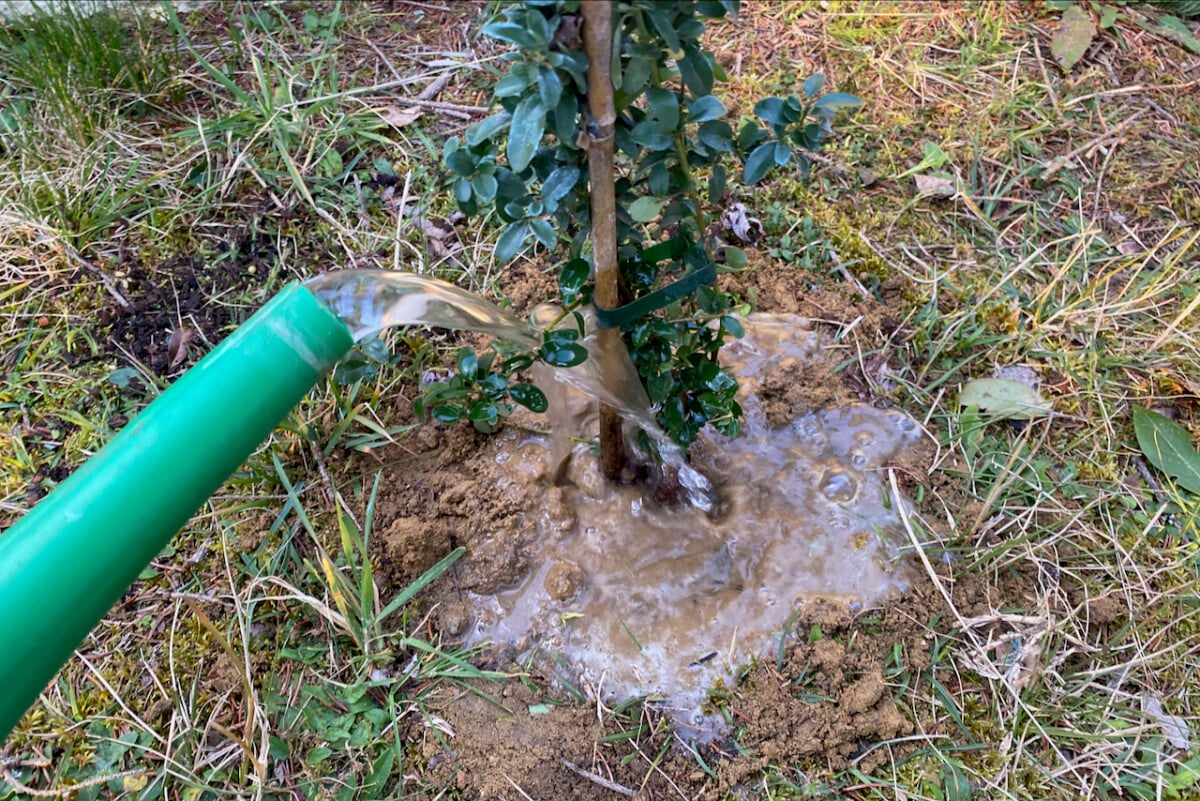
When we’re first planting shrubs, we must water them consistently. Not constantly, mind you, but consistently. This means deep watering every week (more often during drought), not just a shake of the watering can here and there.
Even if there’s rain on the forecast, you should still water newly-planted shrubs. If the rain doesn’t materialize, then we’re up to date with our watering game. If the rain does materialize, we can take a watering break.
I hope I haven’t made planting shrubs sound too complicated. Overall, I think it’s not just an easy gardening job, but one that will reward us more and more with every passing year.
Get the famous Rural Sprout newsletter delivered to your inbox.
Join the 50,000+ gardeners who get timely gardening tutorials, tips and tasks delivered direct to their inbox.