

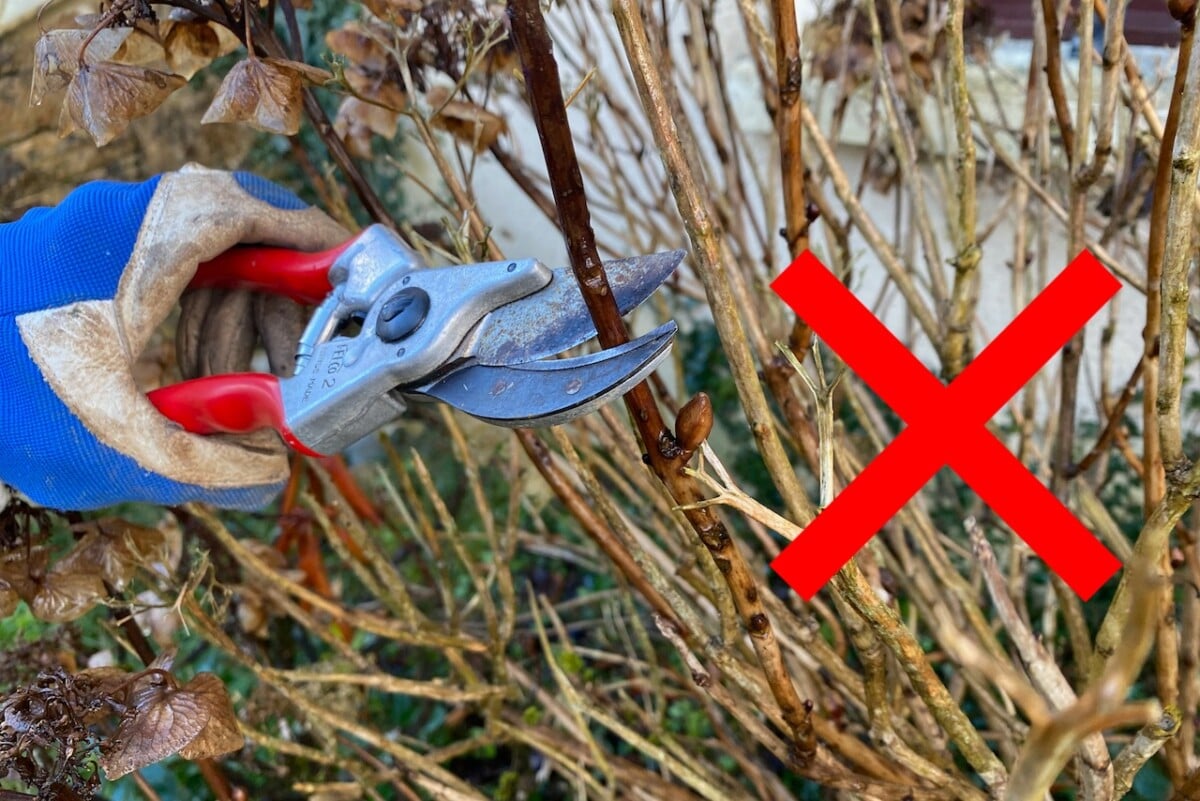
When I first started gardening, nothing intimidated me more than pruning. It felt so confusing and counterintuitive. And I constantly thought to myself, wouldn’t it be nice if there was a universal pruning calendar to tell me when I should and shouldn’t do it?
Alas, nature and our gardens fluctuate from year to year, depending on climate, season, weather and even micro-climate. So I found it more useful to learn just some basic rules about pruning, rather than the elusive hard cutoff dates I thought I needed.
And to my surprise, knowing when NOT TO prune proved equally as useful as learning the rules for when to do it.
Take, for example, late winter. There are so many popular plants that tempt us with their bare branches now. Should we cut them back?
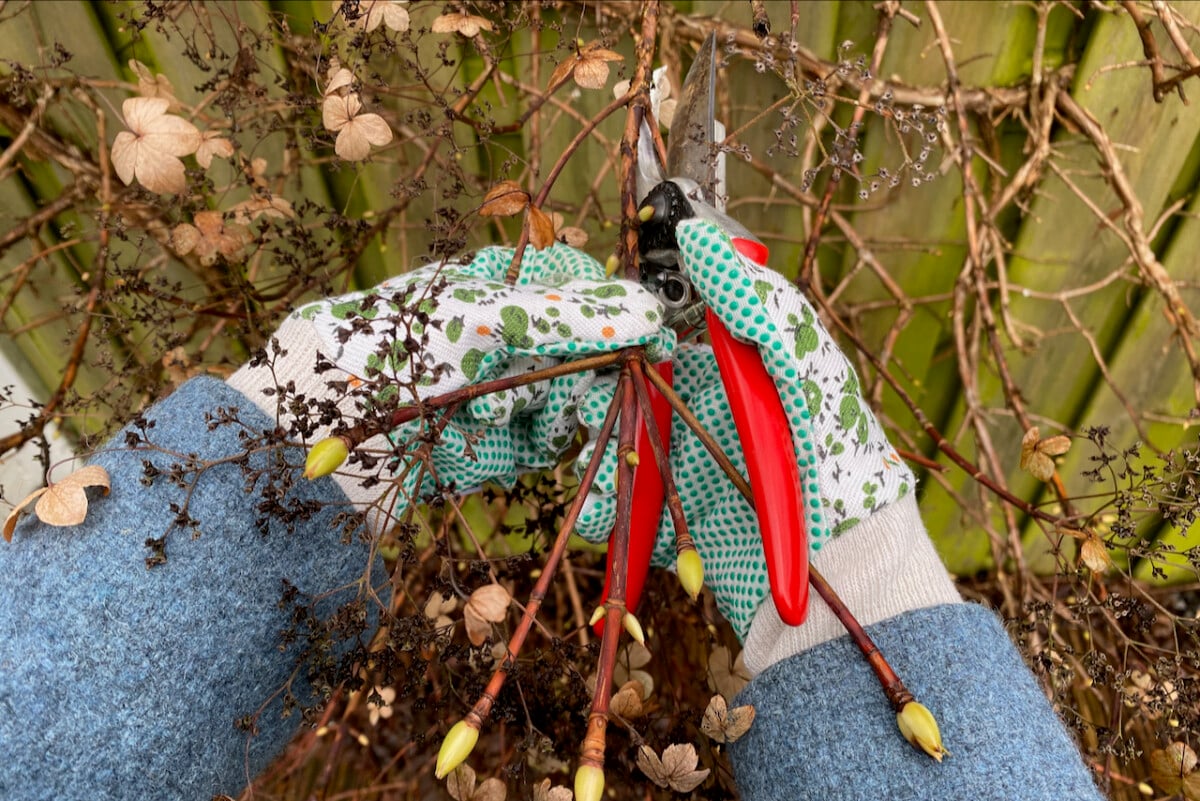
Some, we should. But for others, we must absolutely wait. They’re either just starting to bud or are in the middle of their blooming season. Not only are the flowers beautiful, but they are a much-needed early source of pollen and nectar for pollinators at a time when other perennials are still dormant.
Popular ornamentals, such as hydrangeas and clematis, barely have any buds visible, but if we prune them now, we end up compromising the entire flowering season.
I’ve made a list of the most popular plants I could think of that we should not prune in late winter. Not just yet!
1. Old-wood hydrangeas
Let’s start with the absolute superstars here at Rural Sprout: hydrangeas. I think there’s a lot of confusion about when to prune hydrangeas because there are so many types out there. I may have added a bit to the confusion myself by adding a specific variety of hydrangea to the list of plants to prune in January.
In reality, it’s not that complicated if we remember one important detail: there are two groups of hydrangeas.
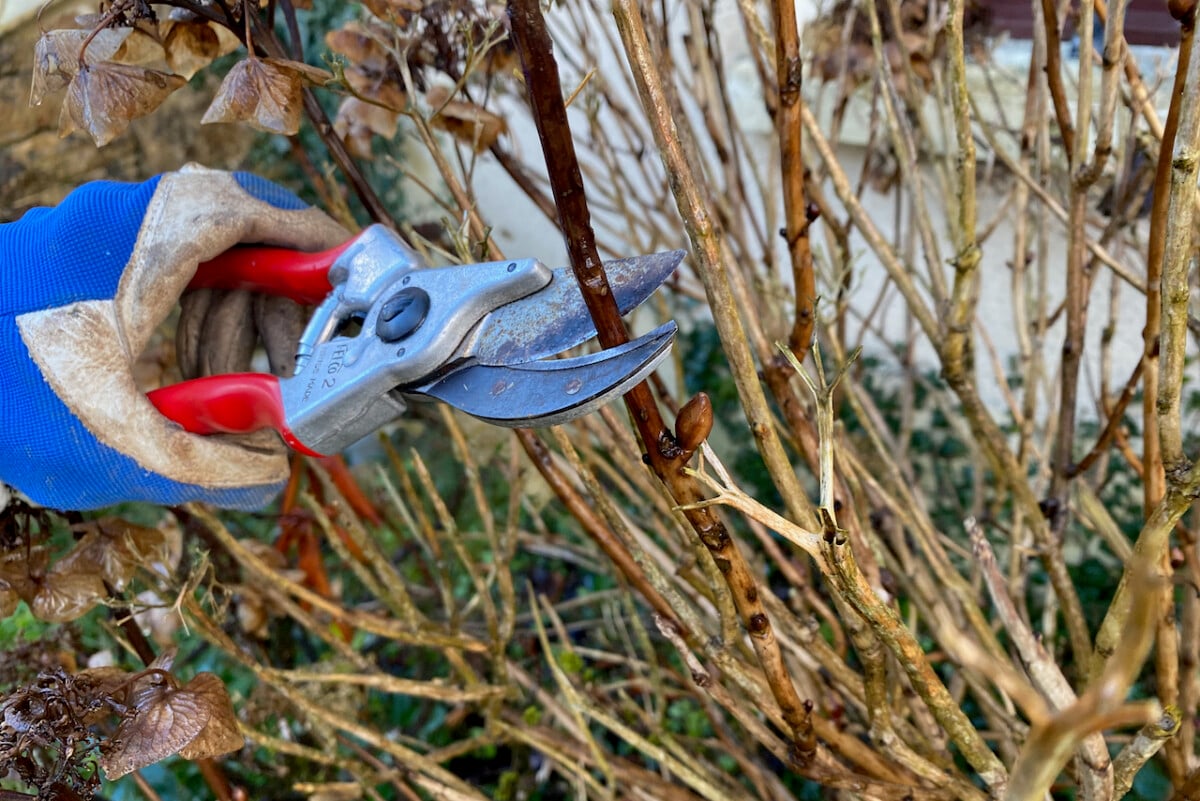
Those that bloom on new wood – this means their flower buds are formed the same year they flower.
And those that bloom on old wood – this means the flower buds are formed the year prior to them turning into flowers. Most hydrangeas fall into this category. So if we prune them in late winter, we risk removing this year’s flowers.
I came up with a mnemonic device on how to remember which hydrangeas bloom on old wood. Let me know if it helps:
Old rough French, climbing mountain oak!
(Just imagine an old scruffy man wearing a beret and climbing an oak. In the mountains.)
Let’s break it down:
Old = a hydrangea that blooms on old wood
Rough-leaf hydrangea (H. aspera)
French hydrangea (Hydrangea macrophylla)
Climbing hydrangea (H. petiolaris)
Mountain hydrangea (H. serrata)
Oak leaf hydrangea (H. quercifolia)
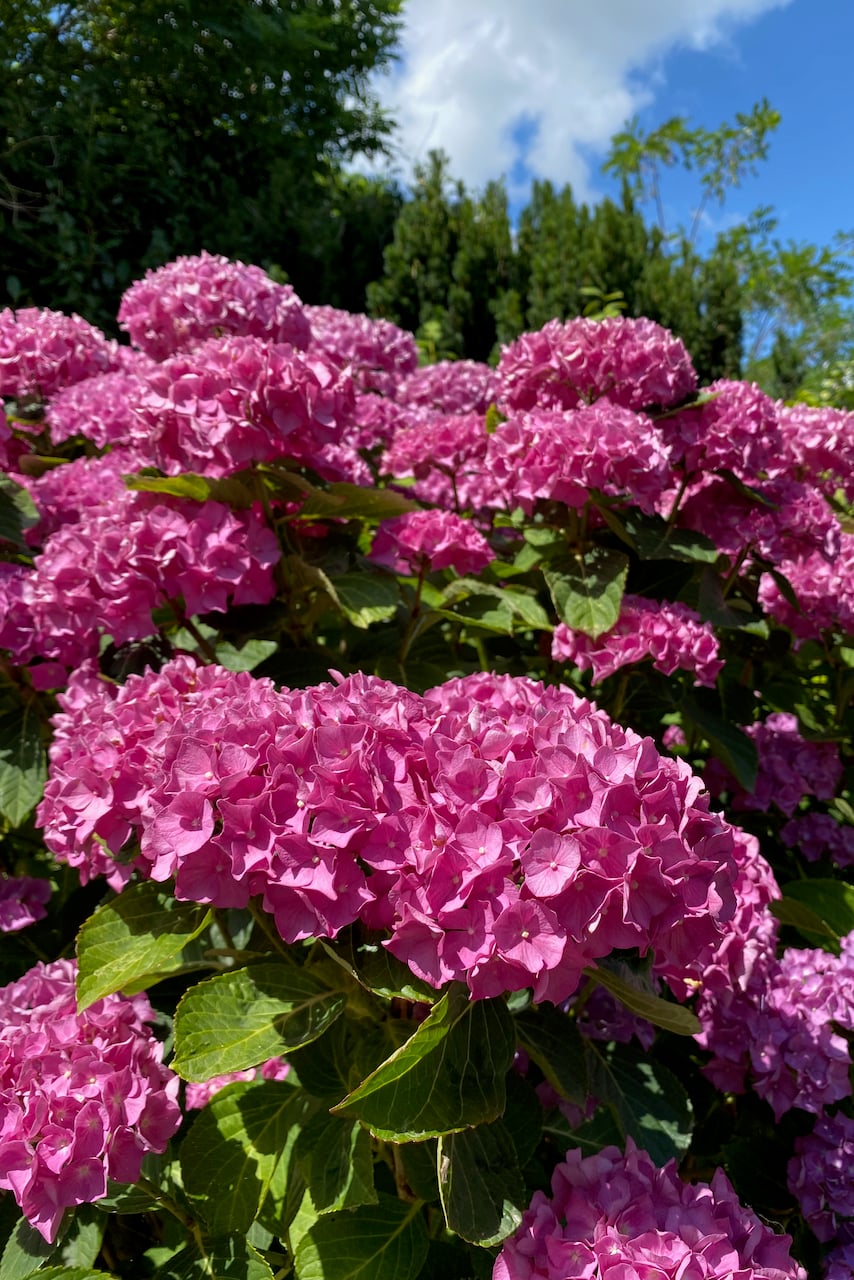
Et voilà! Now you know to leave them alone, at least until it’s time to deadhead them once the risk of frost has passed in your gardening zone.
2. Lilac (Syringa vulgaris)
Before I started writing this article, I stepped outside to have a look at the couple of lilac shrubs lining my driveway.
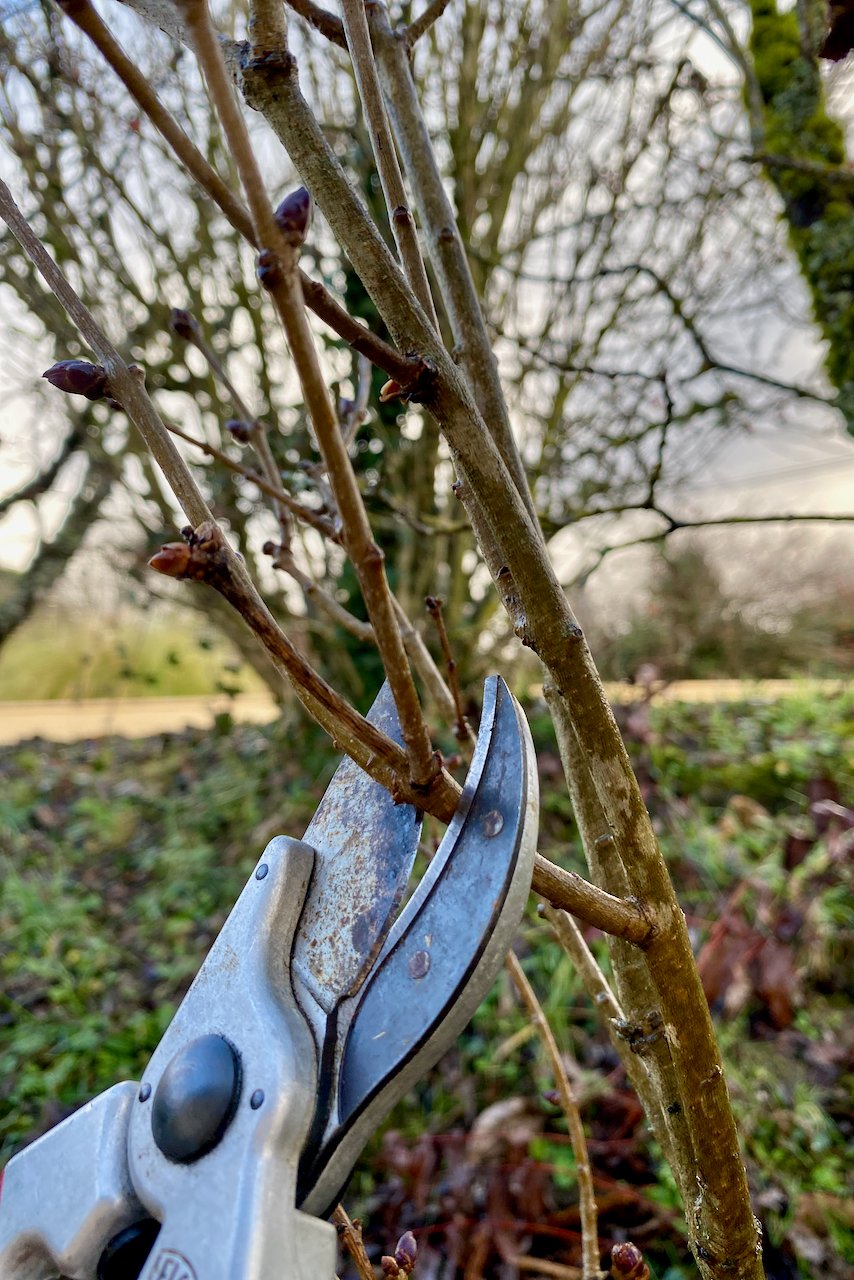
And just for fun, I took my gardening shears with me to pretend-prune. Just this mock pruning alone made my heart skip a beat as I couldn’t imagine why anyone would not notice these buds just forming. These are this year’s flowers, due to swell and open in May and early June in my gardening zone.
Were I to prune this shrub now, it would be bye-bye flowers! And while it is a nice shrub overall, I’ve never heard of anyone growing lilac ‘for the foliage.’ The flowers are the main attraction
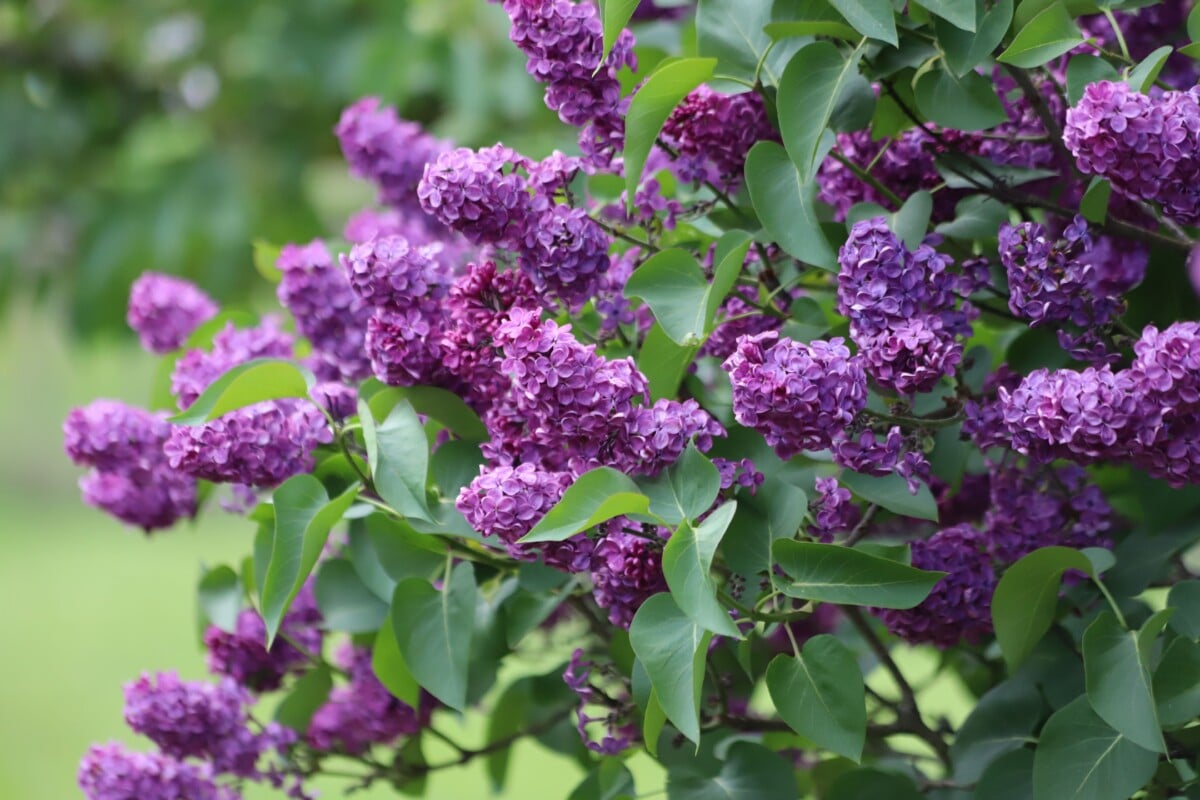
When do we prune lilacs?
Lilacs are pretty fast growers in the right conditions, so they do need occasional pruning (yearly or every other year), just to keep them in shape. Depending on the cultivar you’re growing and the weather in your zone, we prune them in early summer, usually starting in mid-June.
3. Magnolia
While it takes a while for the lilacs above to make it obvious why we shouldn’t prune them in the winter, it’s more clear cut with magnolias.
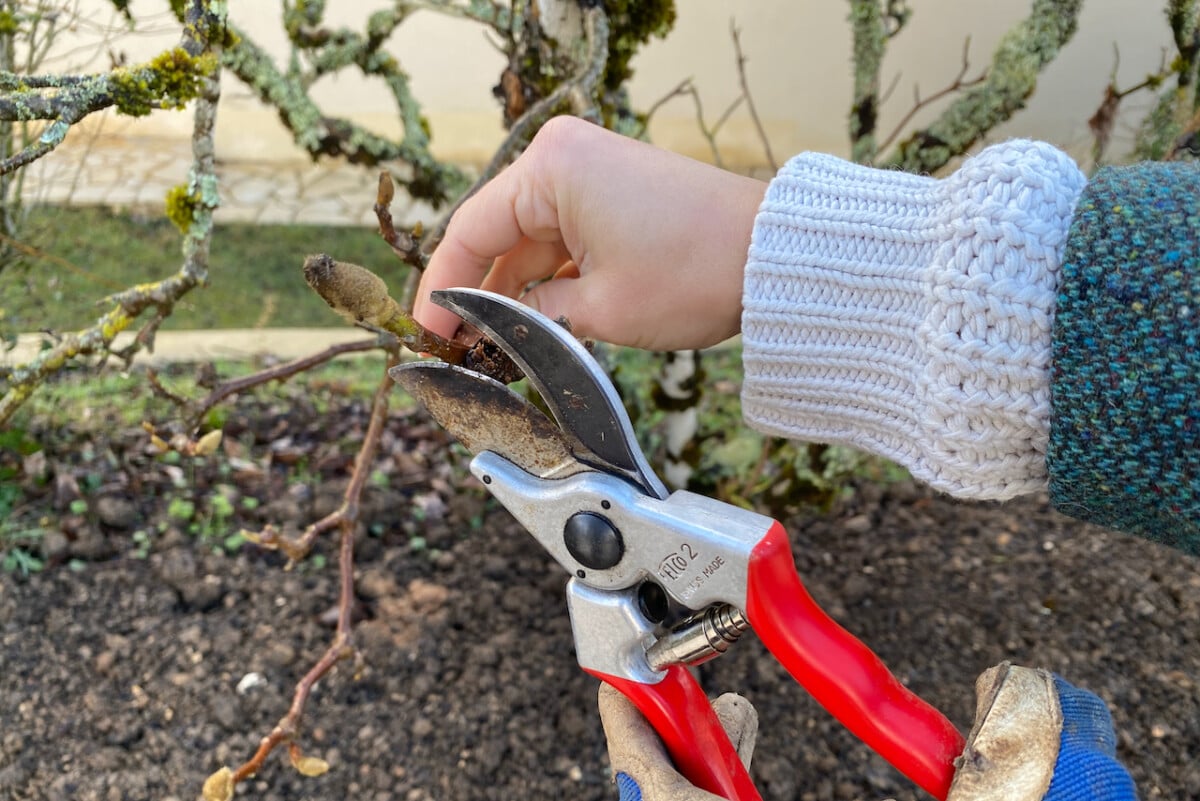
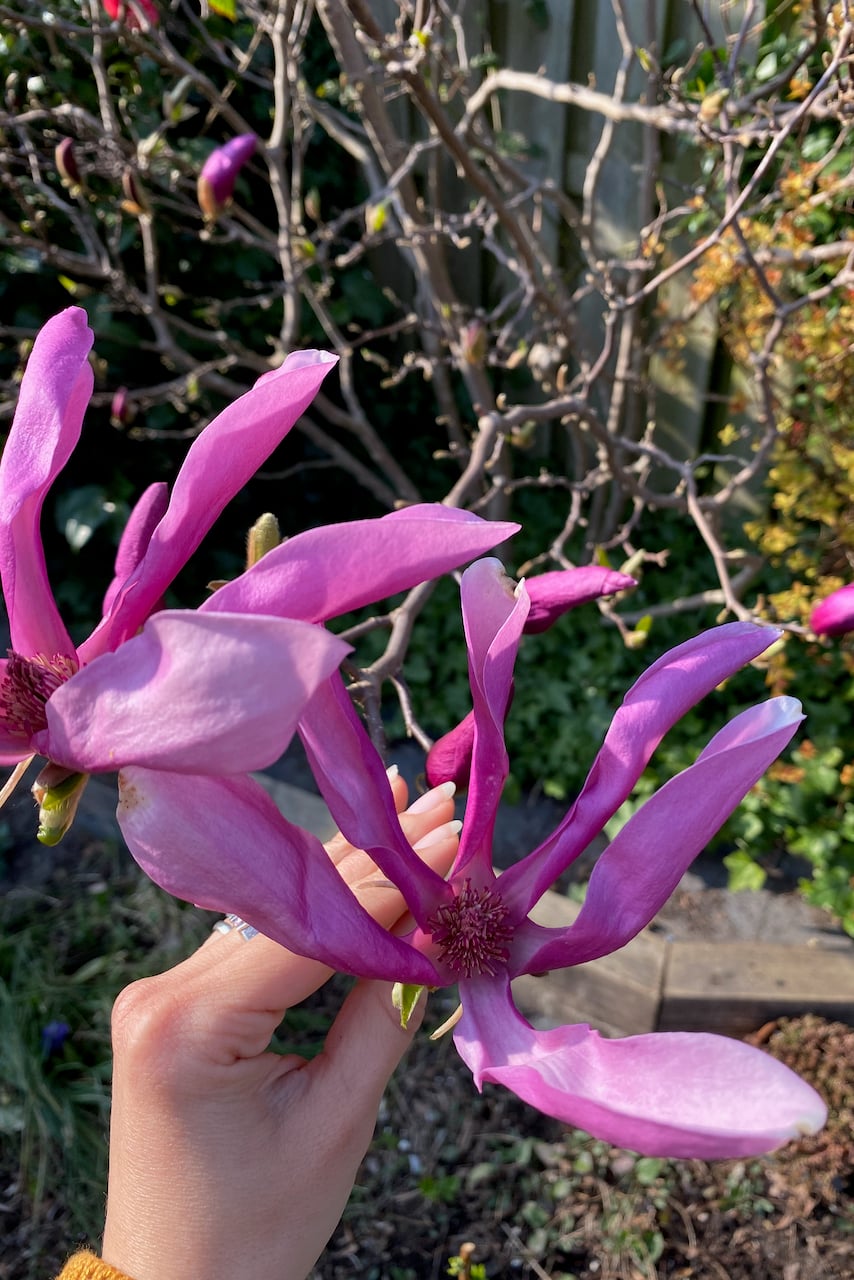
The buds are already starting to open up by late winter. By mid-spring, there’ll be a floral explosion in our gardens that I can’t fathom missing out on just because of hasty pruning.
Here’s how my tulip magnolia shrub looked like last year, in late March.
When is the best time to prune magnolias?
If you need to, it’s best to wait until after the flowers are done, but new buds haven’t started forming yet. Whether we’re talking about tree or shrub varieties, magnolias aren’t generally fast growers, so they’ll rarely need serious hard pruning.
Here’s how I pruned my magnolia in early May. By that time, I had tried everything to get rid of the fungal leaf spot that had taken over the shrub during a couple of wet summers. Nothing was working until I opened up the structure to allow for better airflow. Happy to report it bounced back quickly with no fungal leaf spot in sight.
4. Camellias (Camellia japonica)
Your camellias may already be in bloom as you’re reading this. If you’re growing Camellia sasanqua, for example, its flowers may have already started to open up way back in November. Even some cultivars of Camellia japonica can bloom in December and January.
So you’re thinking, Of course I won’t prune them yet, Mickey.
My camellia doesn’t fully open up until early March. In fact, here it is last year on March 25th, with plenty of buds yet to unfurl. I would have lost all of this beauty had I pruned it in February.
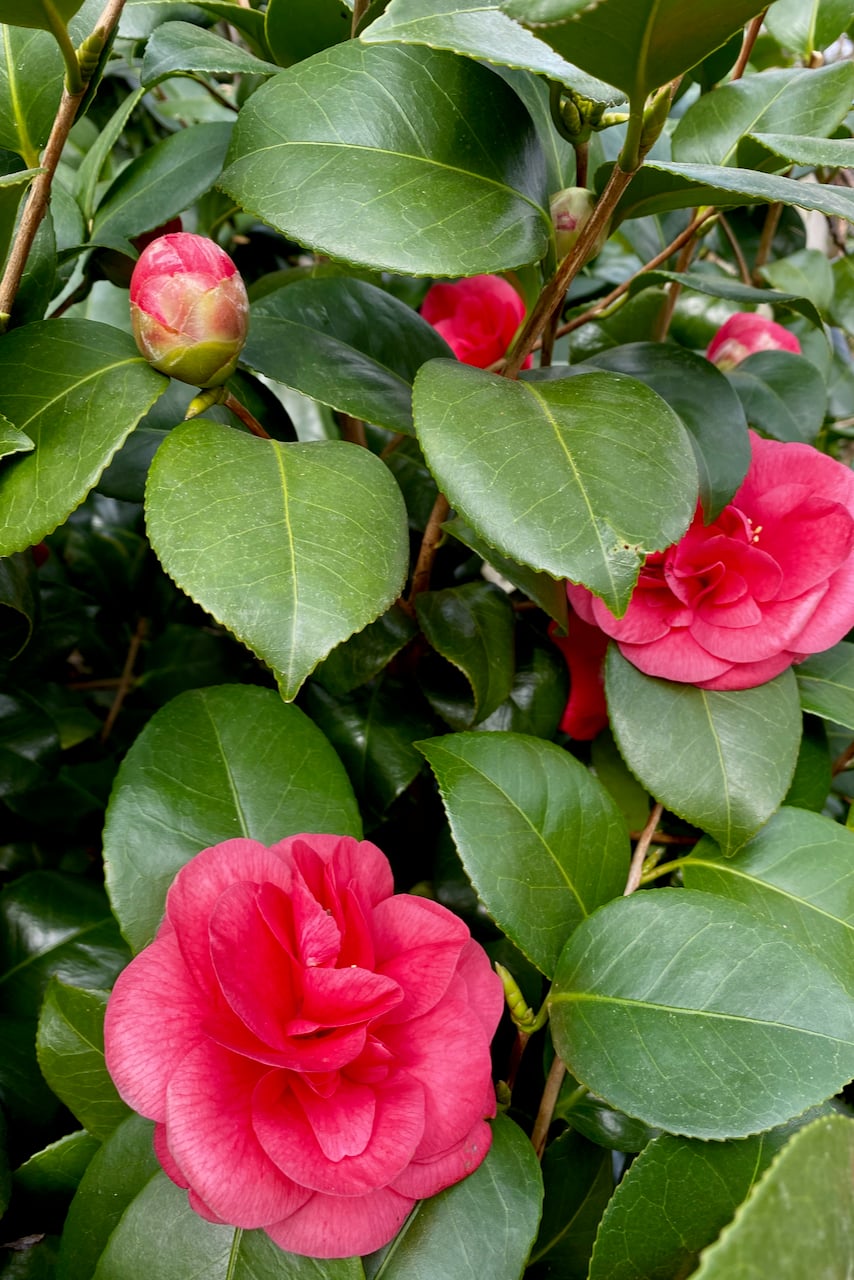
When’s the best time to prune camellias?
Camellia starts producing next year’s buds in late summer. So our pruning window is between when this year’s flowers are gone, but next year’s flowers aren’t yet formed. In my area, that’s May and June.
Camellias are slow growing shrubs, so they don’t need too much pruning. But every few years, I do shorten some branches that tend to outgrow the compact form I’m trying to keep for this shrub.
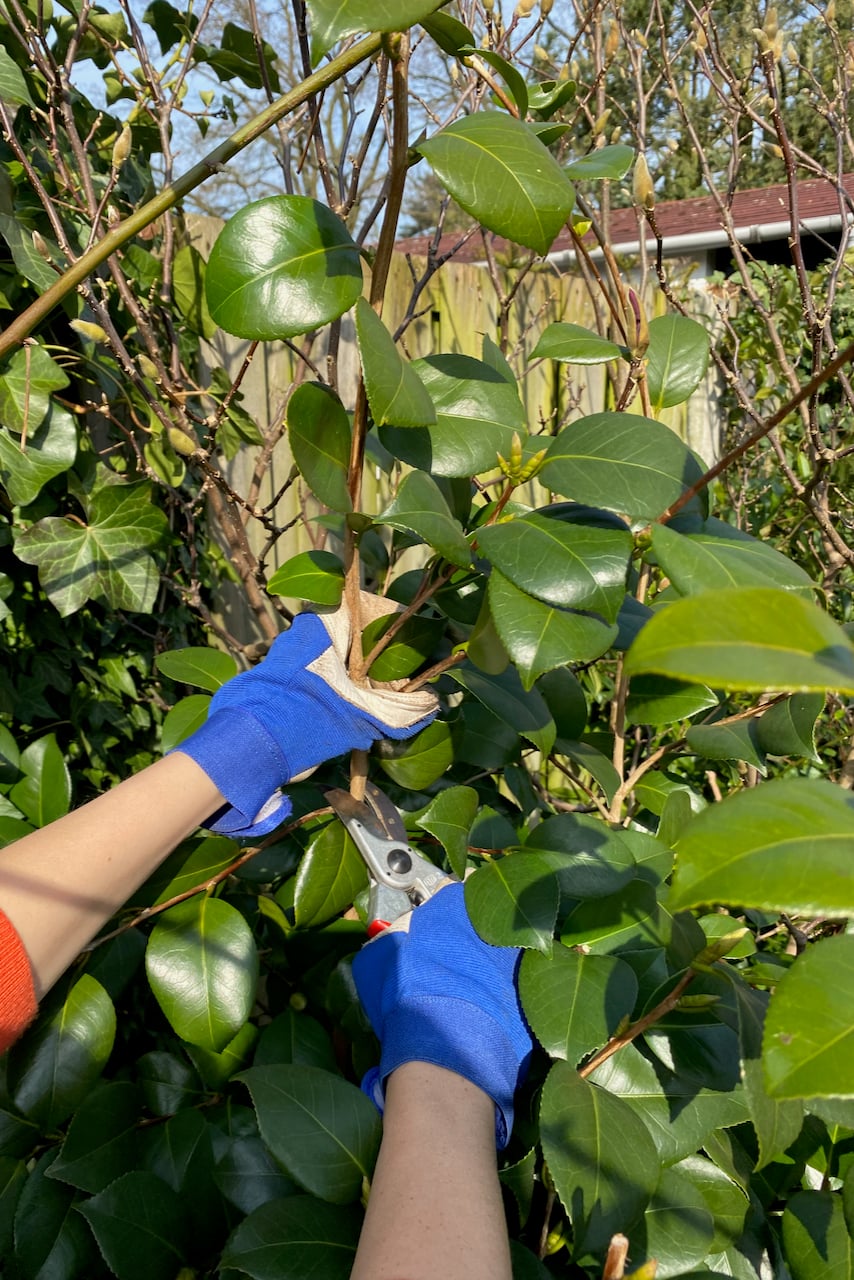
If you’re growing your camellia tree-shaped, you’d be doing the opposite and pruning the lower branches in order to encourage lengthening of the crown.
5. Rhododendrons
Just like camellias and azaleas, rhododendrons are evergreen shrubs that don’t require much pruning, due to their slow growing pace. I’d wager to say you shouldn’t even consider it at all, unless the shrub is getting too large and obstructing a window or other such structures.
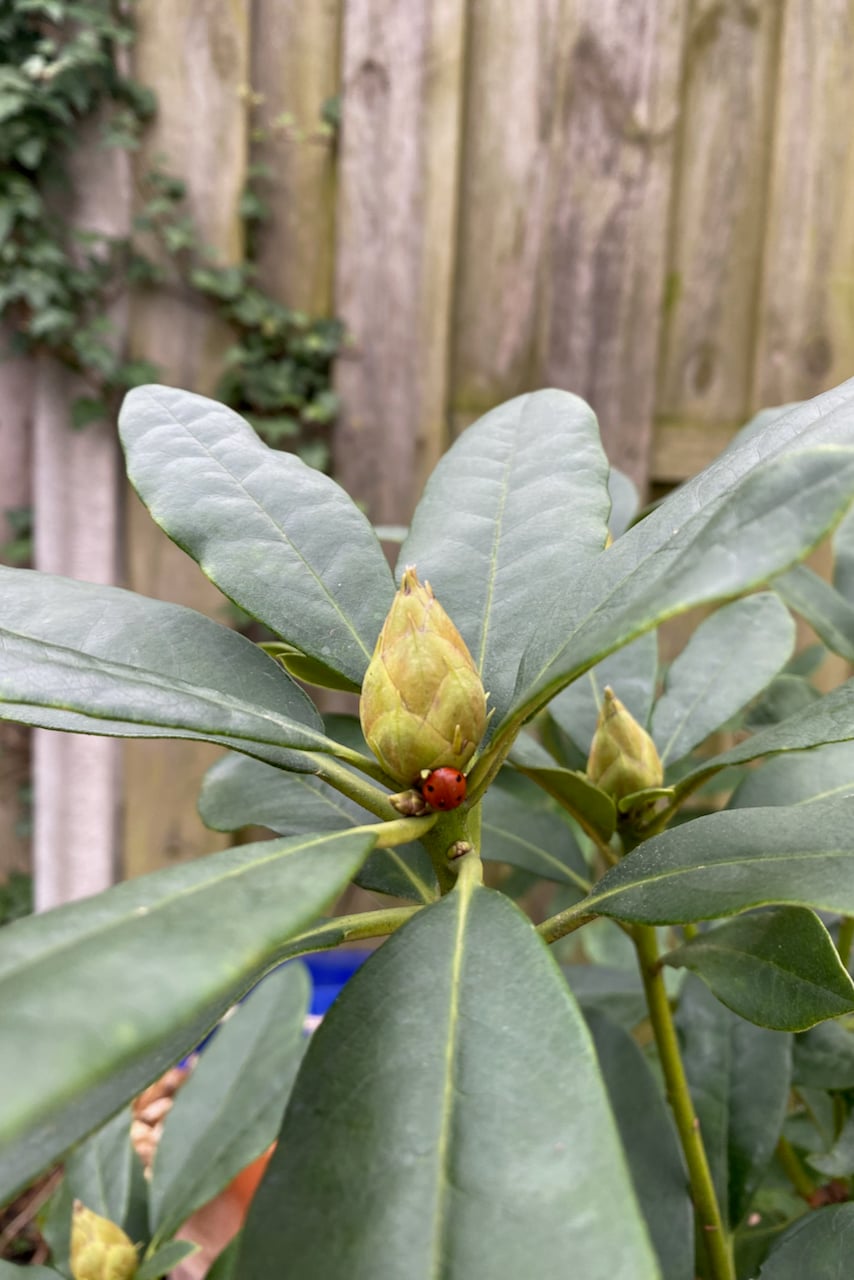
Another similarity between these shrubs is that rhododendrons also bloom on buds that were formed last year. In fact, the buds are quite evident in rhododendrons, making them impossible to miss. Their blooming time extends into late May to early June in my gardening zone.
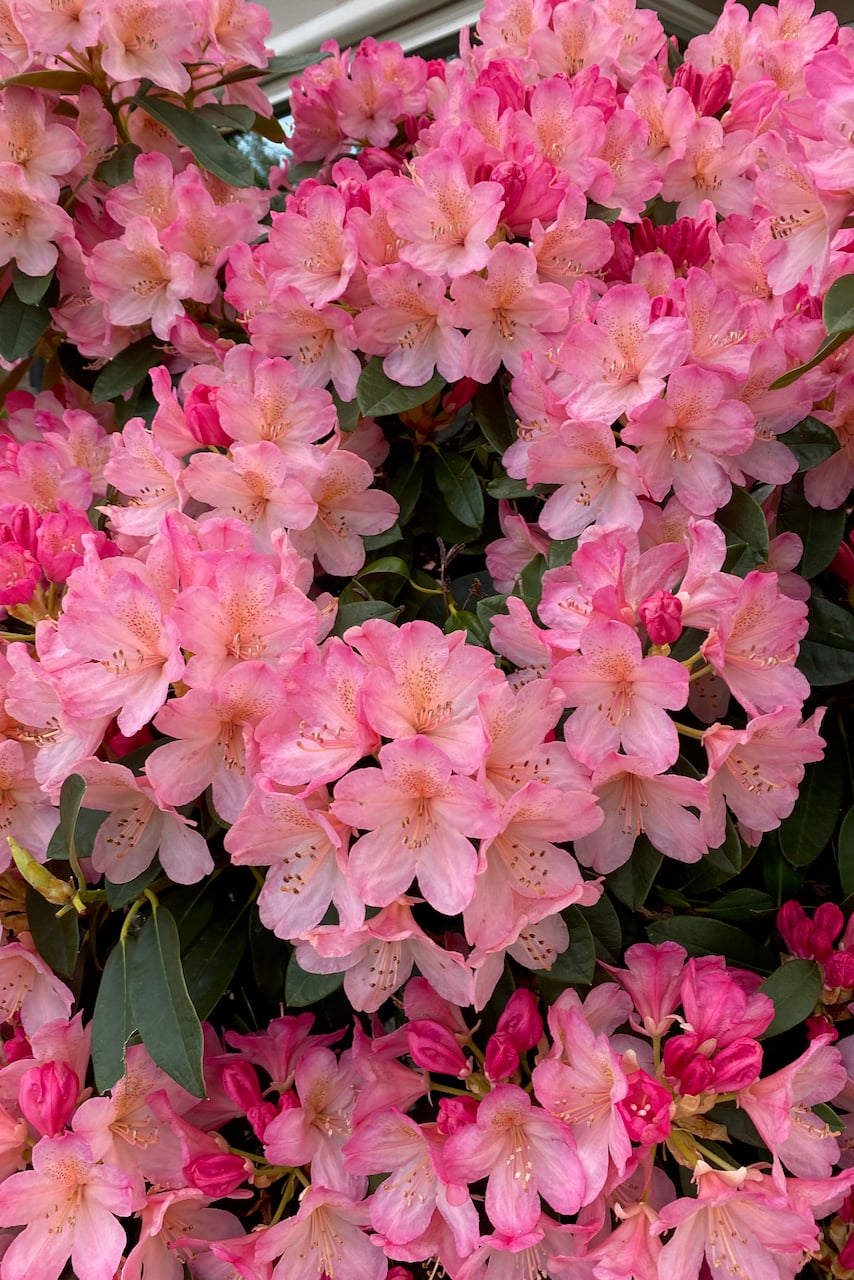
When’s the best time to prune rhododendrons?
If you absolutely must prune them, wait until they’re done with this year’s flowers, but haven’t yet put energy into next year’s buds.
It’s very likely that window falls smack dab in the middle of summer, so prune them in the morning when it’s cooler. And don’t forget to water them well, before and after pruning.
If you want to tidy them up a bit after the flowers have wilted, here’s a quick tutorial on deadheading rhododendrons.
6. Early-flowering clematis
Not to sound discouraging, but out of all the plants on this list, I think clematis is the hardest one to get right in terms of pruning at the right time. Yes, I would even place it above hydrangea in terms of difficulty.
It took me a whole article to explain the right time to prune each of the three clematis groups using the stoplight analogy. (Click this way and it will become clearer, I hope.)
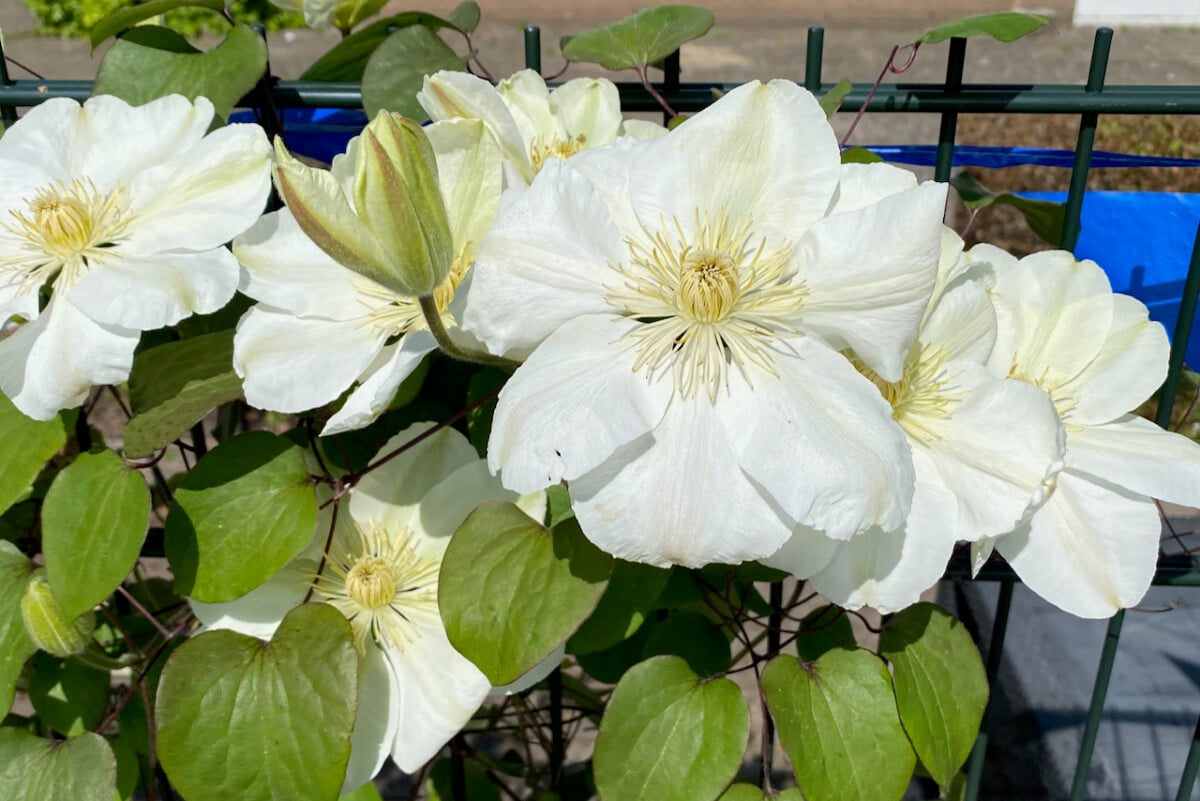
So for now, I’ll just stick to this hint. If your clematis blooms in the first part of the year (between now and early June), don’t prune. I took my clematis photo above in mid-April last year. Imagine if I had pruned all those buds in late winter. There would be no flowers to show you.
When is the best time to prune clematis?
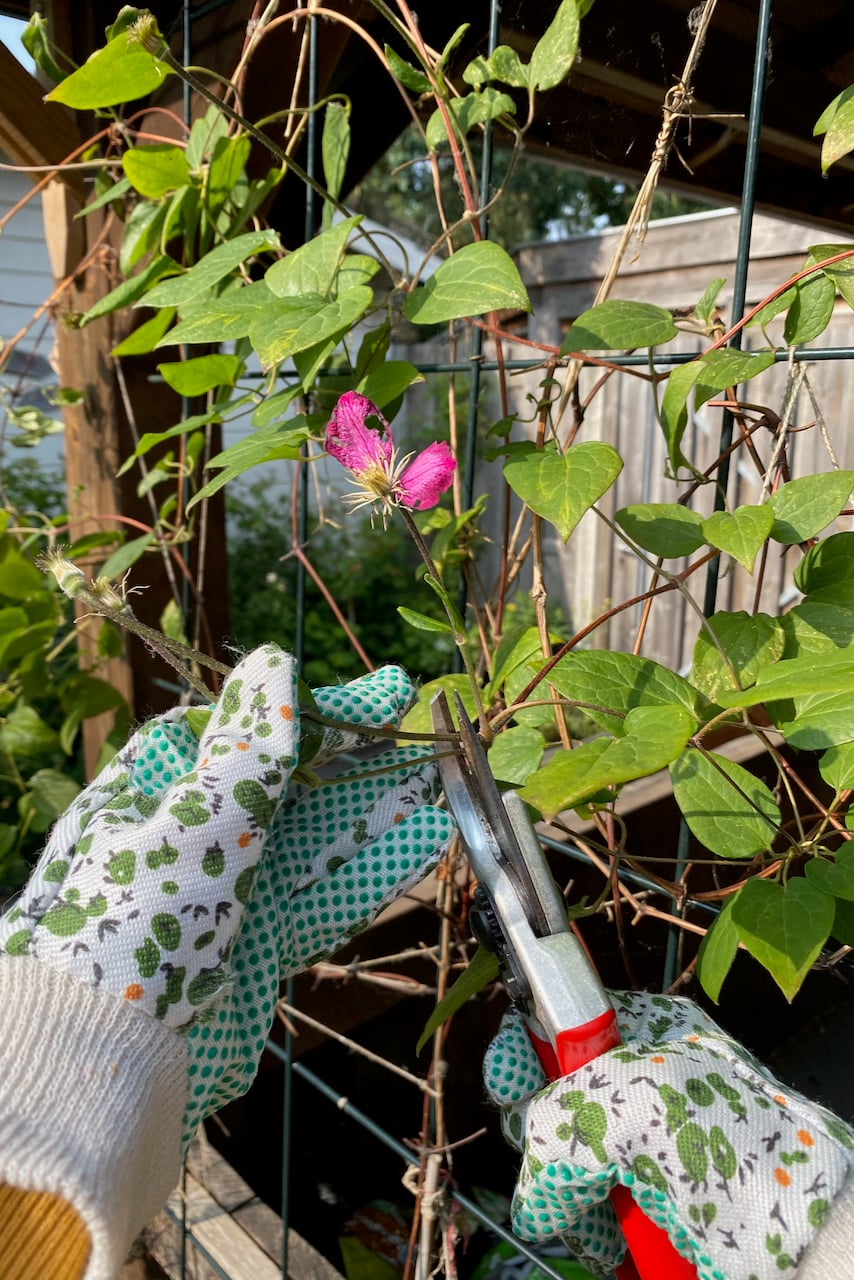
It depends on the group. The early-flowering clematis we’re talking about now should be pruned after they are done flowering, usually in June. There’s no need to go crazy with the shears, though. We can tidy and train Group 1 clematis plants, but they don’t require hard pruning.
7. Mock orange (Choisya)
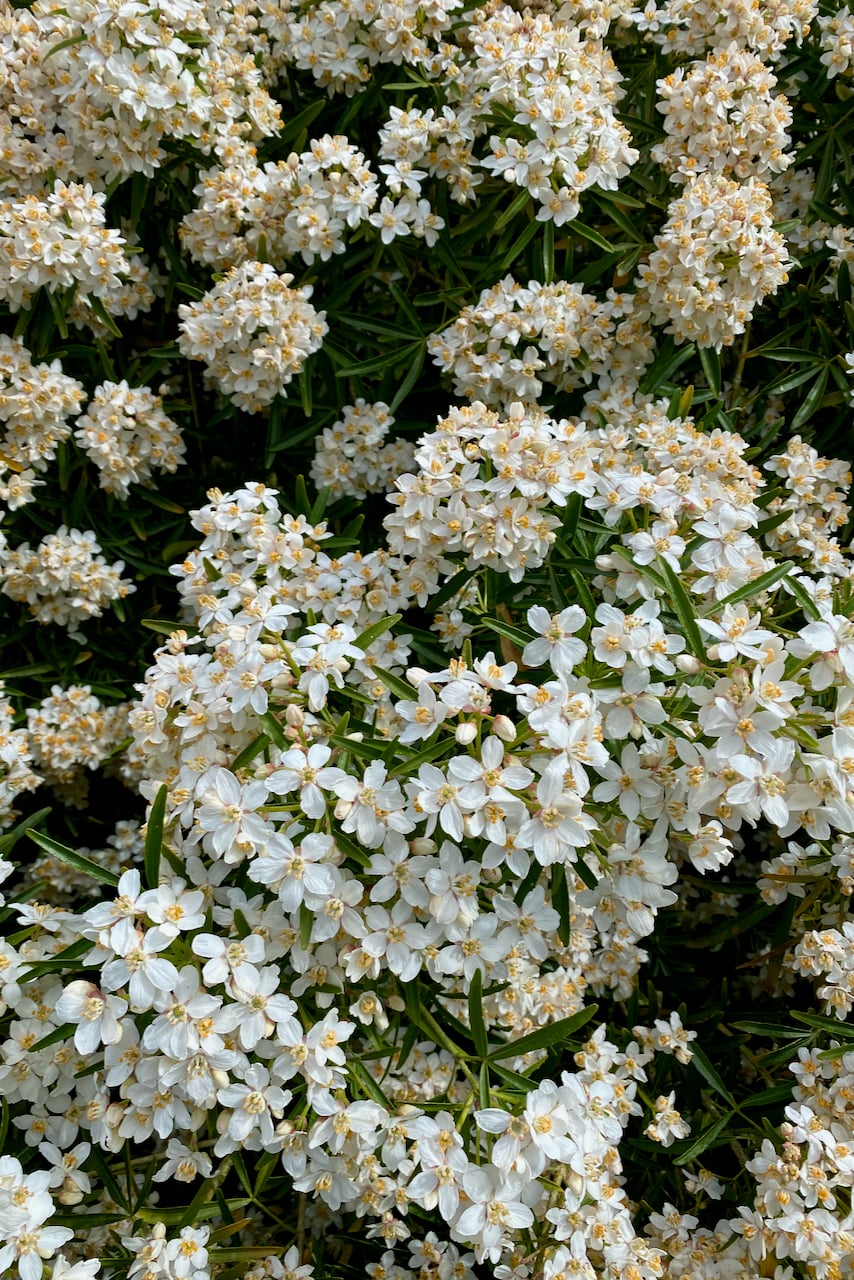
You may know this shrub as Mexican orange blossom or mock orange, due to the scent these clusters of flowers release when they’re in full bloom.
Have a look at this photo I took last April. It’s so covered in blooms, you can barely see the foliage. I wish I could upload the fresh, zesty smell, too.
If you’re gardening in a zone with milder winters, you should consider this evergreen ornamental shrub. It’s native to the Southwestern United States and Mexico.
When is the best time to prune the mock orange shrub?
We can keep up with deadheading the flowers as they die back, just to keep the mock orange looking tidy.
Just like rhododendron, mock orange doesn’t need yearly pruning. But every couple of years, we can cut the branches back, right above an outward-facing bud. This will encourage it to fill up and keep a more compact shape. Pruning is subjective, and it very much depends on what shape you’re going for.
8. Flowering quince (Chaenomeles)
If you think that I’m obsessed with this ornamental based on how often I mention it in my articles, you’re totally right!
Only a couple of weeks ago, I included flowering quince (aka Japanese quince) in my article on plants we can propagate in late winter. But please, once you’re done taking these hardwood cuttings, put down the pruners and step away from this shrub.
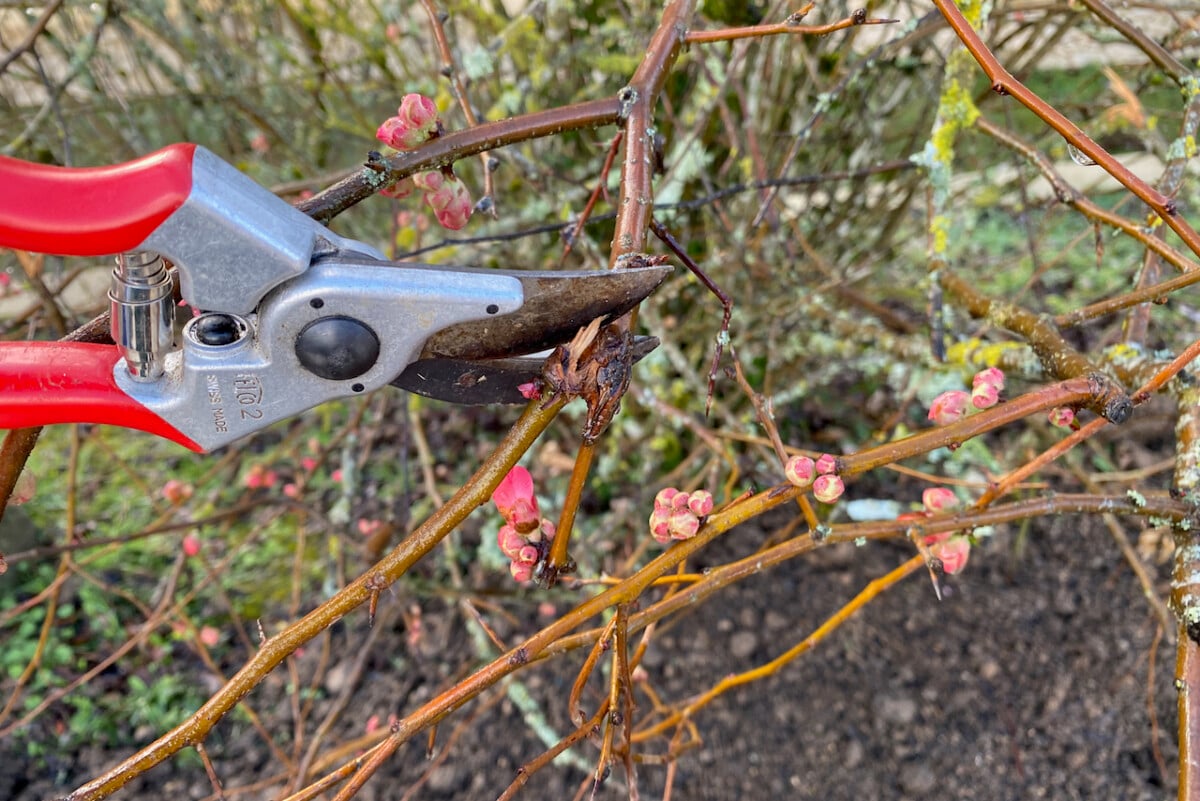
I took this photo of my flowering quince yesterday (entering the last week of January), and you can see that it’s only just starting to bloom. (Don’t worry, I only cut this branch that had snapped in the storm.)
If we prune this shrub now, we’ll miss out on all this beautiful, bright pink floral display. More importantly, at least for me, is not missing out on the fruit that these flowers will turn into, ready to harvest in the fall.
When do we prune Japanese flowering quince?
If you’re not interested in the fruit and are only growing it as an ornamental, you can prune this shrub in early summer. However, I think you should allow the fruit to develop at least once, just to give it a try
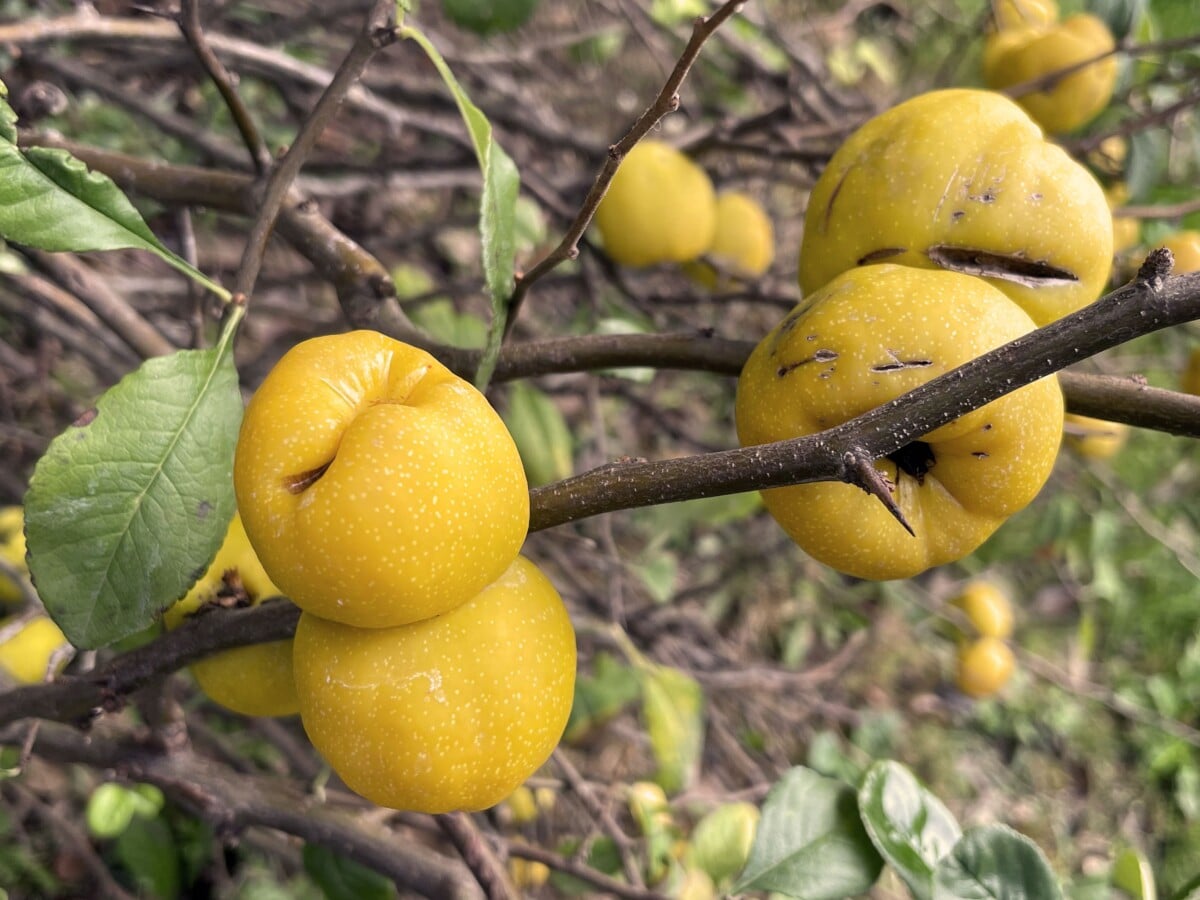
Fair warning that if you eat it raw, it will be a shock to the system. (It was for me!) It’s not as sour as Warheads candy, but definitely more tart than Sour Patch Kids. Is your mouth watering now?
Cook it in desserts or jams, and all the sourness disappears, leaving behind only the amazingly floral flavor.
9. Oregon grape (Mahonia)
Here’s another early-flowering shrub whose flowers will turn into edible berries (again, more palatable if cooked).
Mahonia is an evergreen shrub native to the West Coast of the United States. It bursts into yellow, scented flowers from November until March. It is amazing how many pollinators these flowers attract, from bees, butterflies and moths to hummingbirds.
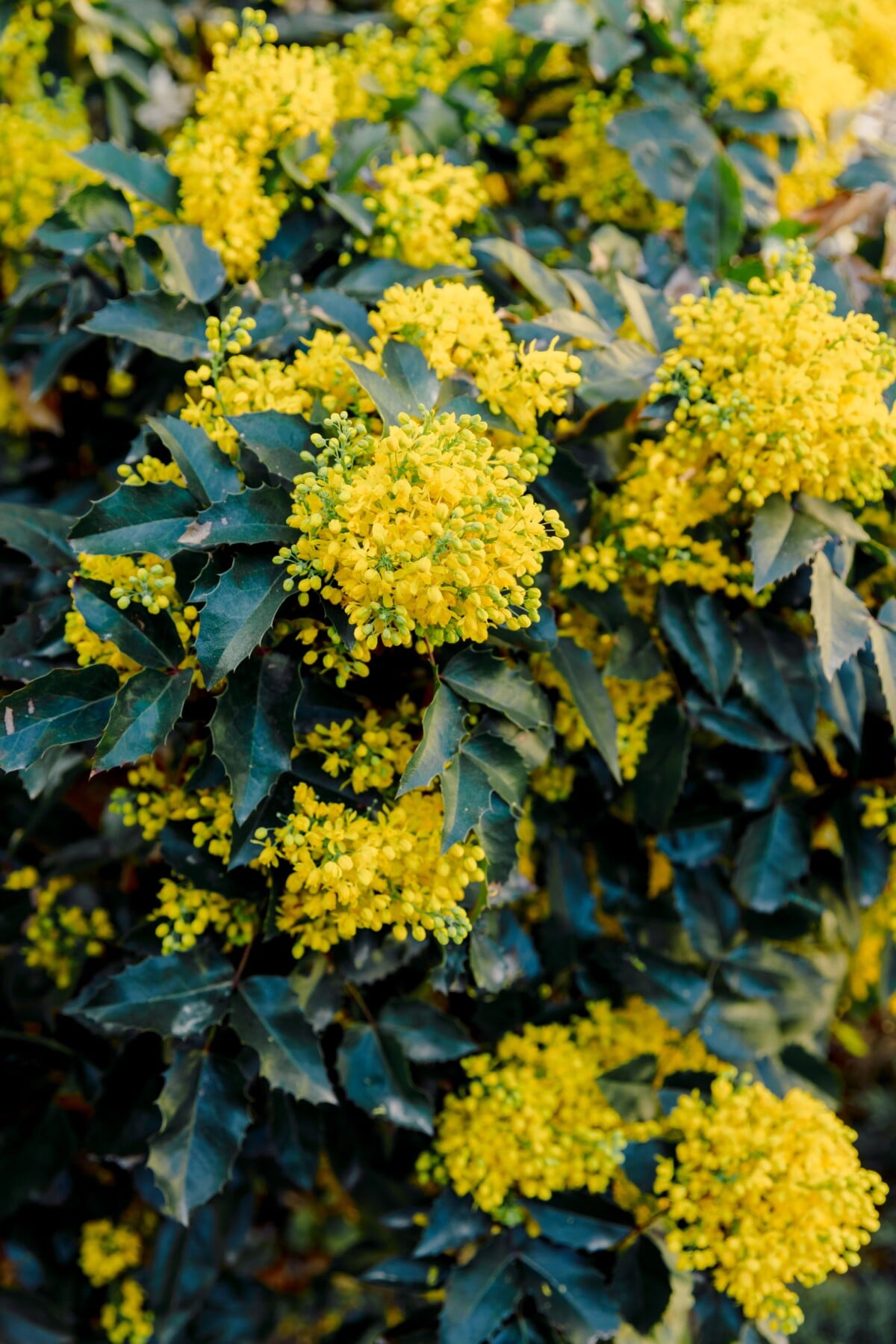
The flowers turn into berries. Be careful if you decide to harvest them, though, since the mahonia leaves are so spikey.
Even if you’re not keen on the taste of the berries, you should still leave them on the shrub for the birds to snack on.

When is the best time to prune Oregon grape?
Mahonia is a relatively slow-growing shrub, so we don’t need to prune it often. But we can shape it in early summer, once the berries are gone.
10. Early-flowering viburnum
Viburnum is a huge genus, encompassing about 175 species of flowering plants.
We could be growing different viburnum shrubs flowering in either winter, spring or summer. We could be growing evergreen viburnum or deciduous ones. Or we could have selected them based on our preference for either foliage, flowers or berries.
Or all of the above.
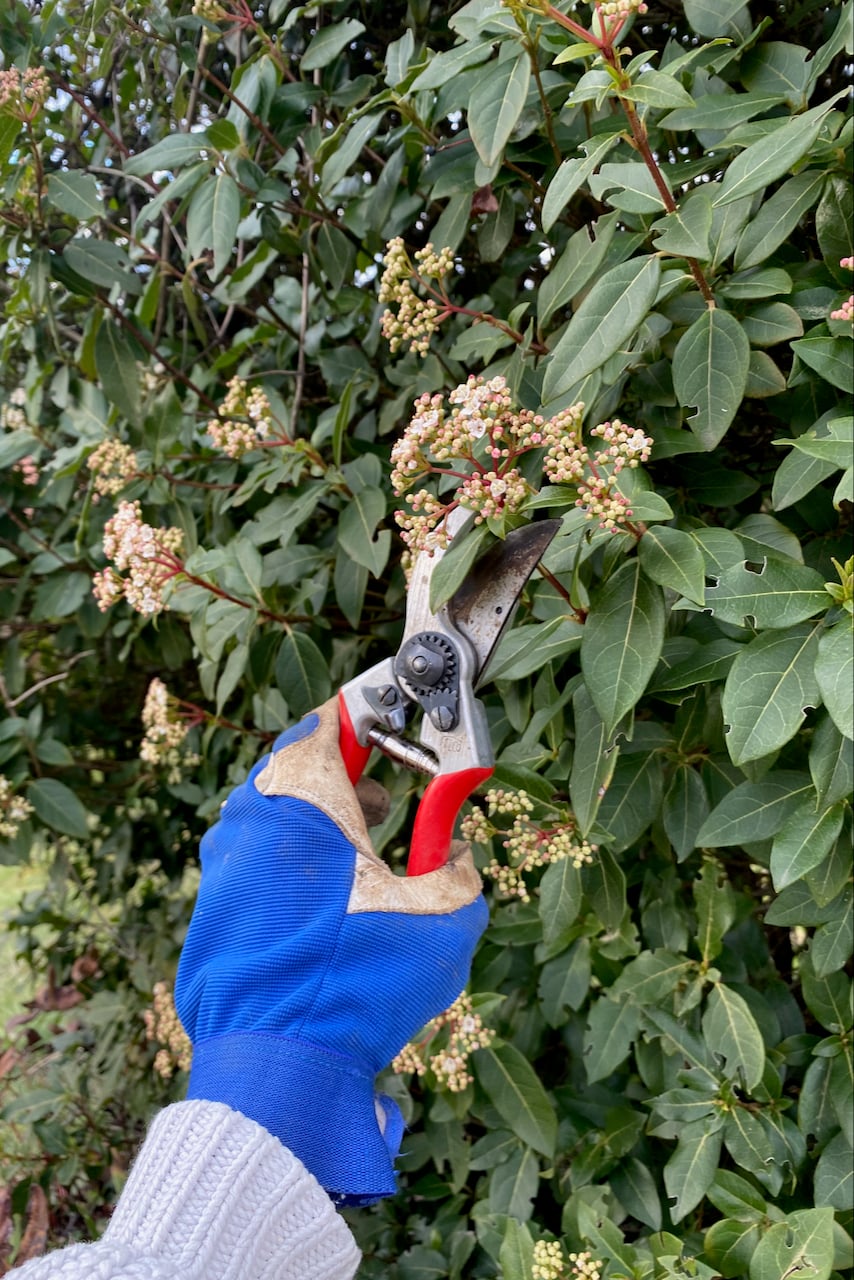
So my advice to delay pruning applies to early-flowering shrubs, where “early” can refer to either winter or spring. My viburnums start budding late in the year and keep their floral display on for months. They are an important source of food for the pollinators that wake up early from their winter slumber. It would be foolish to start pruning them now, wouldn’t it?
When can we prune viburnum?
Evergreen, early-blooming shrubs could use a trim once the flowers are gone, which is usually in late spring and early summer. We don’t need to prune viburnum hard, but it could benefit from a light trim to keep it tidy.
Are there any plants that we SHOULD prune in late winter?
Ok, so we have our gloves and gardening shears ready. And we could really use some time in the garden right now, since winter seems to be stretching like chewing gum, and cabin fever has well and truly taken over our mood.
Is there anything – anything at all – we could be pruning now?
Yes! Plenty of plants to cut back in late winter. In fact, I wrote about what plants we should prune at this time of year in this article. The window is closing on some of them, so have a look, go out there and start chopping away.
Get the famous Rural Sprout newsletter delivered to your inbox.
Join the 50,000+ gardeners who get timely gardening tutorials, tips and tasks delivered direct to their inbox.