

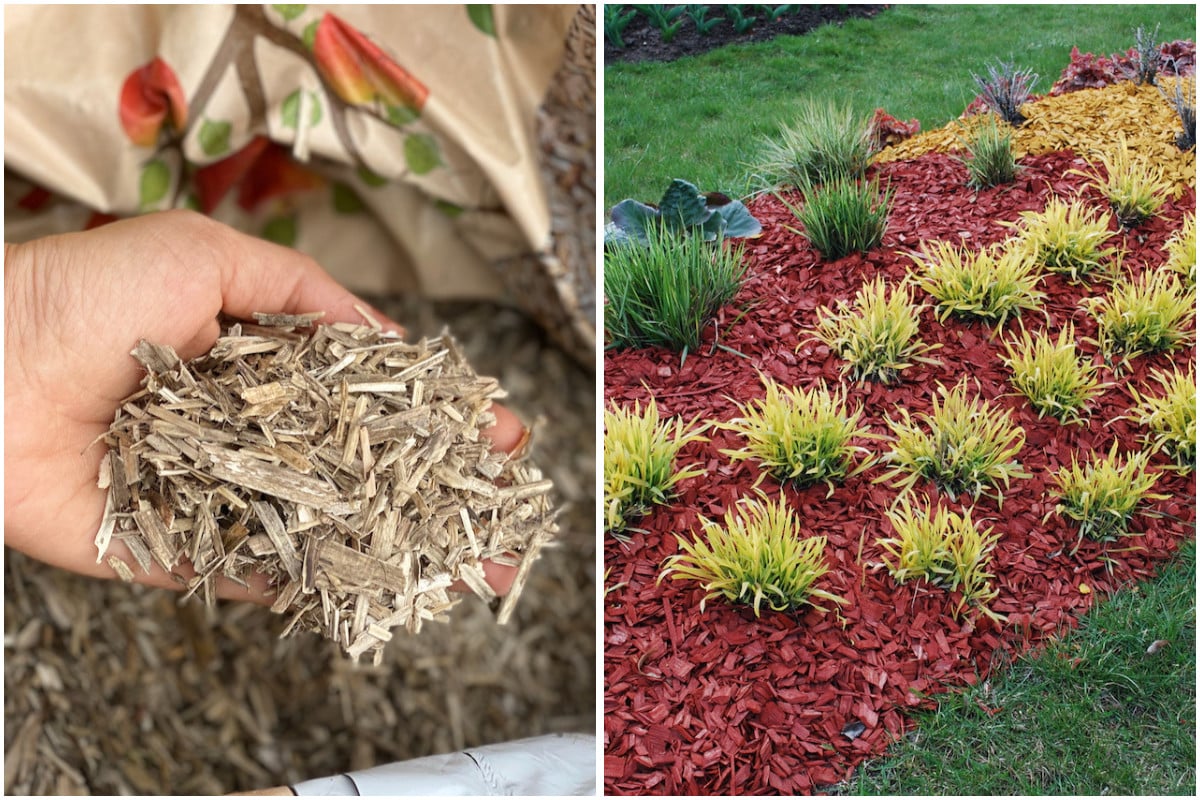
Many of my articles are inspired by real-life conversations I have with gardeners, and this one is no different.
I found myself in a … ahem … let’s call it “heated debate” with a gardener who proclaimed loudly, “I don’t see the point of mulching. It’s such a wasteful trend.”
Well, here I go!
I rolled up my sleeves, unloosened my tongue, and unleashed a checklist of all the benefits of mulching:
- keeping the soil covered. We know that bare soil becomes dead soil pretty quickly.
- locking in soil moisture;
- preventing topsoil erosion;
- blocking unwanted plants from growing;
- preventing temperature fluctuations around the roots of our plants;
- breaking down over time and adding organic matter to the soil.
On and on I went with my pro-mulching arguments until, taking advantage of my pause for breath, this other gardener countered with “ok, but it’s so ugly and such a waste of money. And it smells bad.”
Excuse me, you think mulch smells bad?
Reader, it did! It smelled so acrid, it almost made my eyes water. And it looked like this:
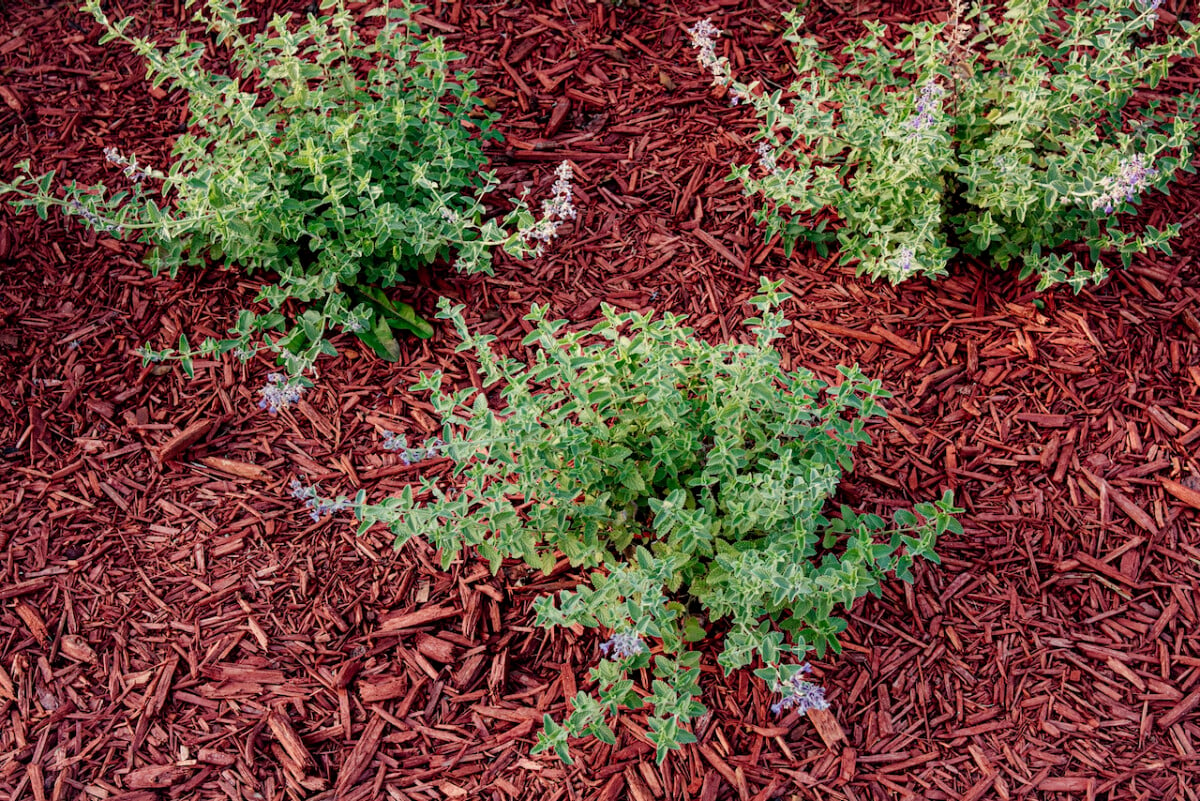
It turns out that we were actually on the same page when it comes to the act of mulching, but we had very different ideas as to the material being used as mulch.
What this gardener hated, in fact, was what we unlovingly call “mulchscaping” or the “lawn care company special.”
It’s just mulching for the sake of making it all look uniform and tidy. A finishing touch, if you will.
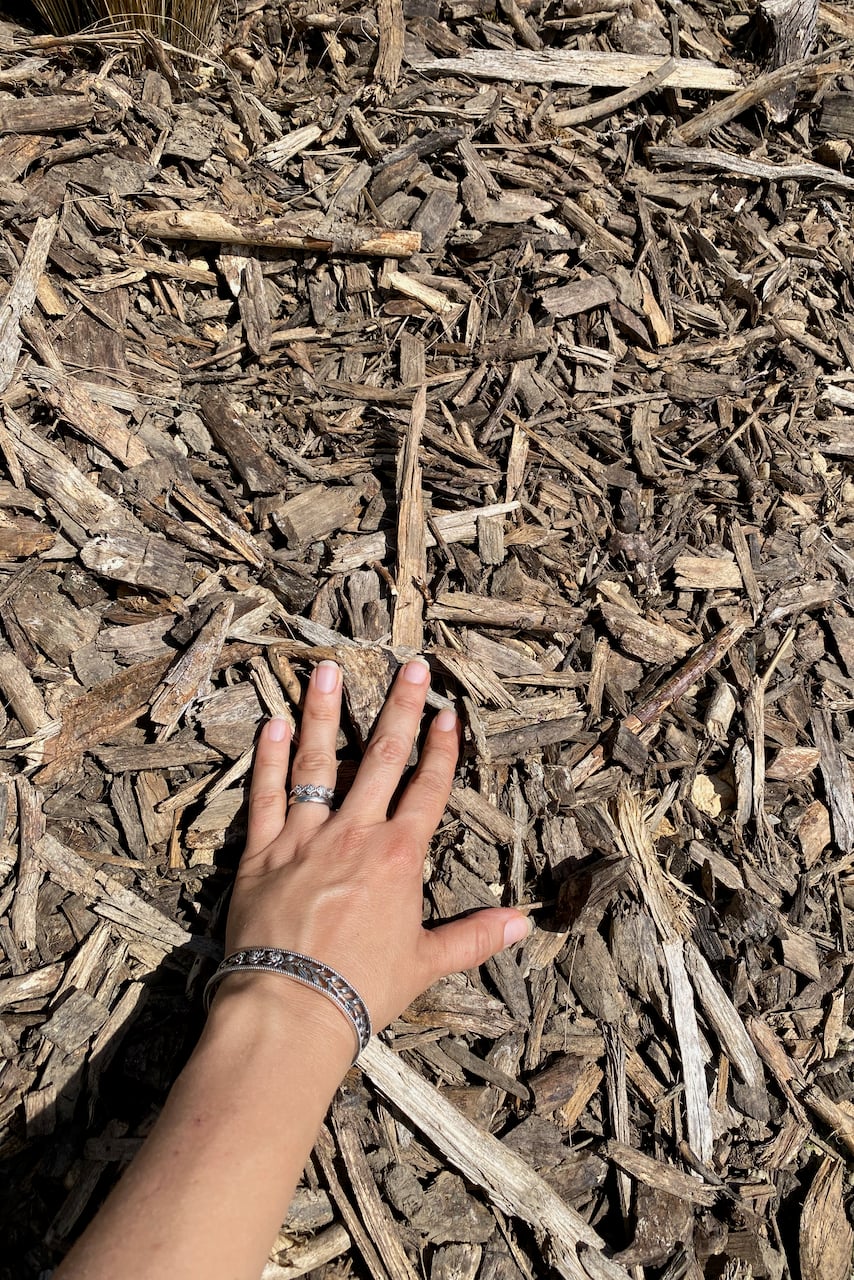
I would highly advise our readers to avoid this mulching mistake.
And like the inveterate list-maker that I am, I made a list of a few other mulching mistakes – or misunderstandings – that may do more harm than good to your gardens.
1. Using Dyed Mulch
Ok, let’s get this out of the way now, just so I can show you another ridiculous photo.
As gardeners, we work hard to make sure our soil is good, our plants are healthy, and there’s an ecosystem forming in our outdoor spaces. So I don’t understand why some gardeners choose to use dyed mulch and sabotage all their efforts.
First of all, you don’t know what it’s been dyed with, do you? There’s no such thing as bright red tree bark. Or turquoise. Or neon green.
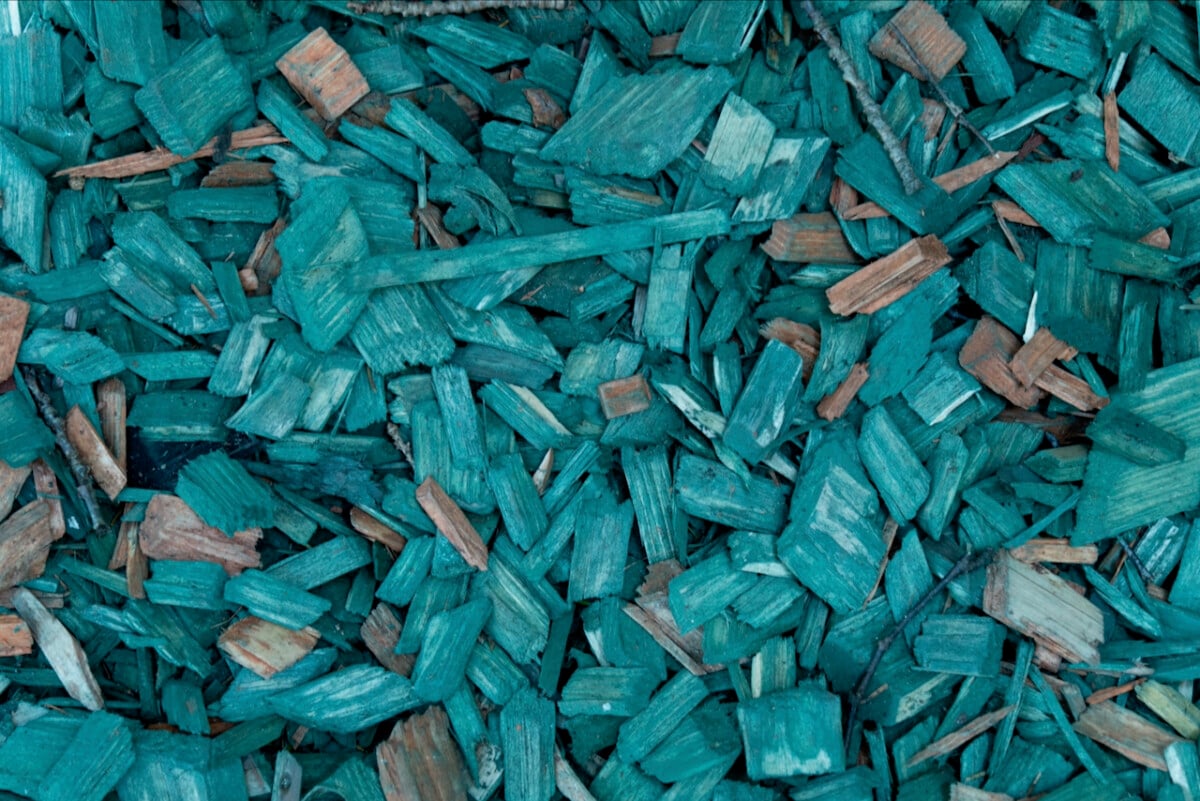
In addition, it’s hard to see what type of wood this novelty mulch is made of. Once, in a garden store, I saw bags of dyed mulch that proclaimed it’s more eco-friendly because it’s recycled wood.
Digging deeper, it turns out that in addition to wood scraps, they also use wood pallets and wood that comes from construction and demolition waste.
Fresh wood chips would not absorb the dye, but this reclaimed wood does, because of how dry it is. Also, it’s a good way to get rid of a byproduct of the renovation industry and make a quick buck on waste that would otherwise cost beaucoup bucks to get rid of.
But there’s a problem with using reclaimed wood from multiple, unidentifiable sources.
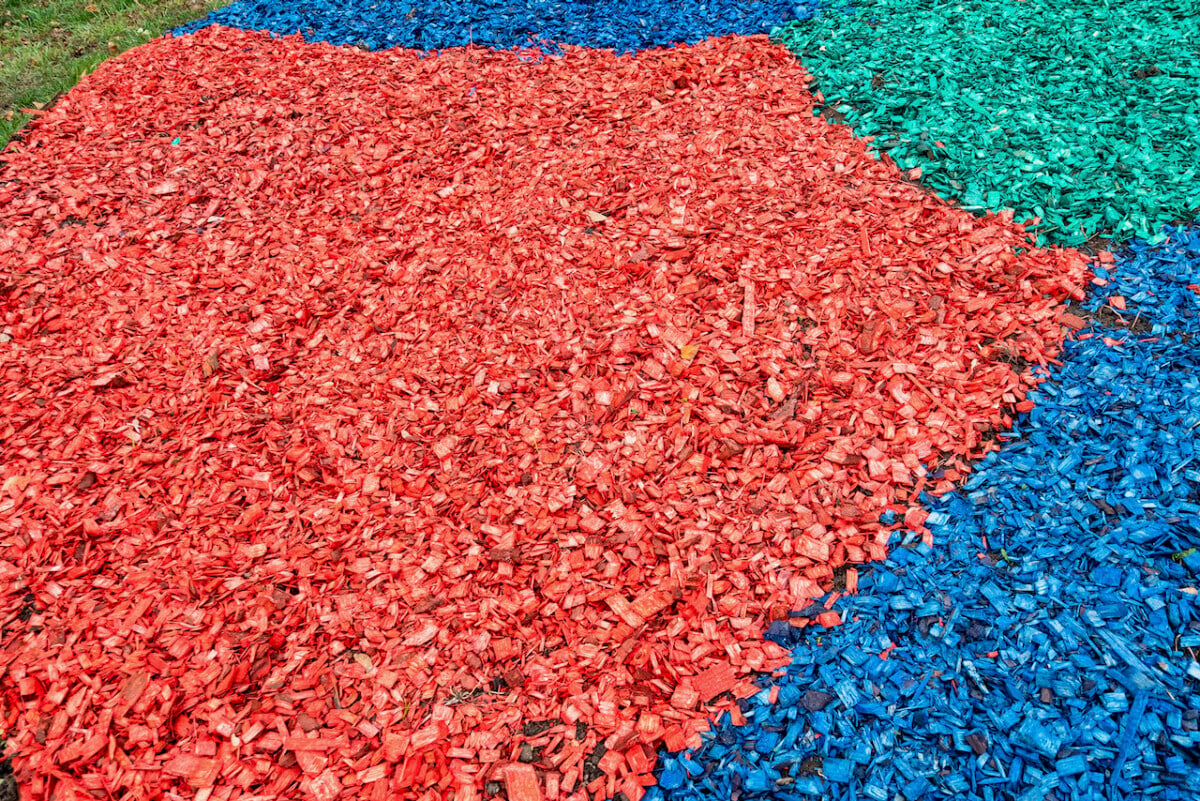
You have no idea what’s in your mulch and where it came from. We know that the days of buying pressure-treated wood covered in CCA – chromated copper arsenate are long gone, as the substance has been banned. But that only applies to new wood being sold. There’s a lot of the old CCA-treated wood still out there. As it’s torn down for new construction, guess where it ends up?
If you’re buying mulch made from recycled wood, there’s a chance it may contain wood treated with CCA, and you certainly don’t want to be spreading that on your garden. Remember when used railroad ties were a popular landscape edging for vegetable and ornamental gardens? These creosote-soaked relics have also found their way into dyed mulch.
You certainly don’t want to put that in your garden.
According to an article from the University of Massachusetts extension, “CCA and other toxic chemicals have been found to be contaminating soil where colored wood chip mulch has been applied. The most egregious source of the contamination appears to be CCA-treated wood recycled from C&D [construction and demolition] waste.”
Hmm, somehow they leave that part out when they call it “eco-friendly” on the bag.
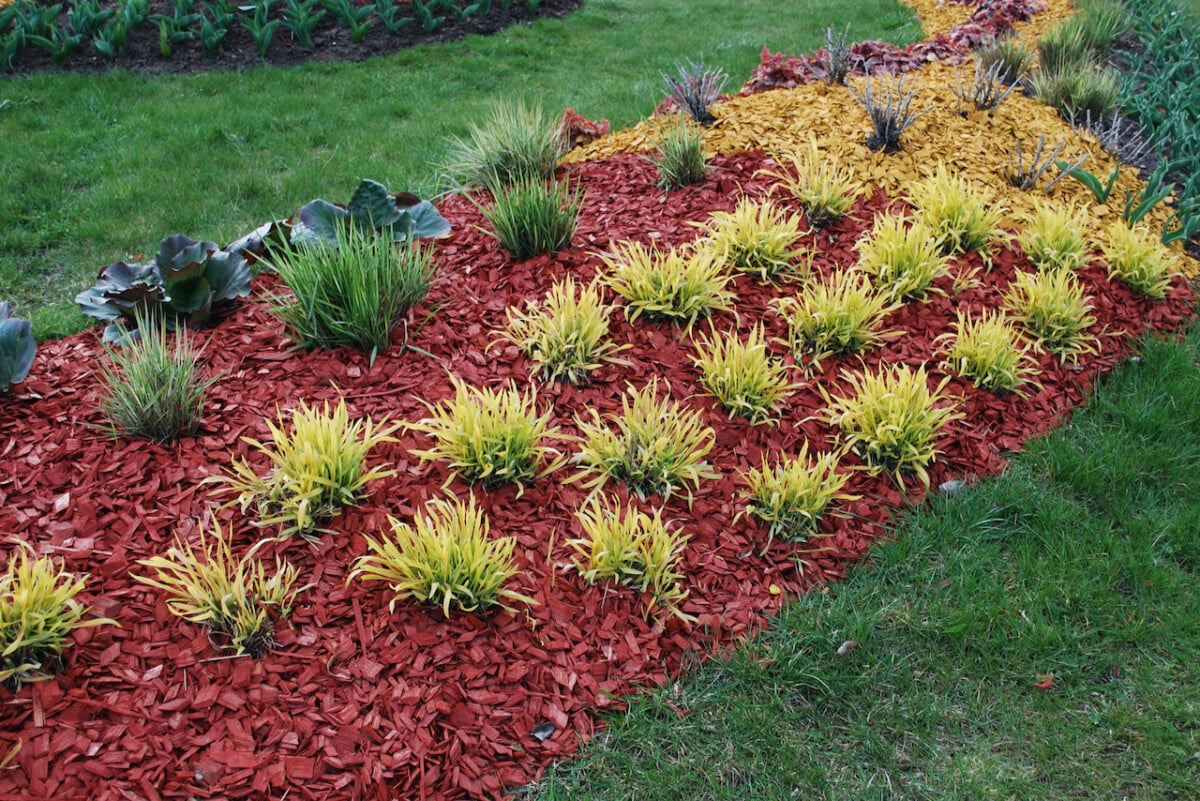
And, even if you’re buying it for the color, I guarantee that the colorful sheen will be either bleached by the sun or washed off by rain in a couple of months.
Here’s how I think of it. Just like everything we put on our skin gets absorbed into our bodies, everything we put on our soil gets absorbed into the ground over time. We have to treat our garden soil as a living organism, because it is.
2. Not Using the Right Weight Mulch
On to lighter topics. And a nice transition for me to show you this amazing type of mulch that did so well in my vegetable raised beds. I also used it in a flower border that I was trying to establish.
Can you guess what it is?
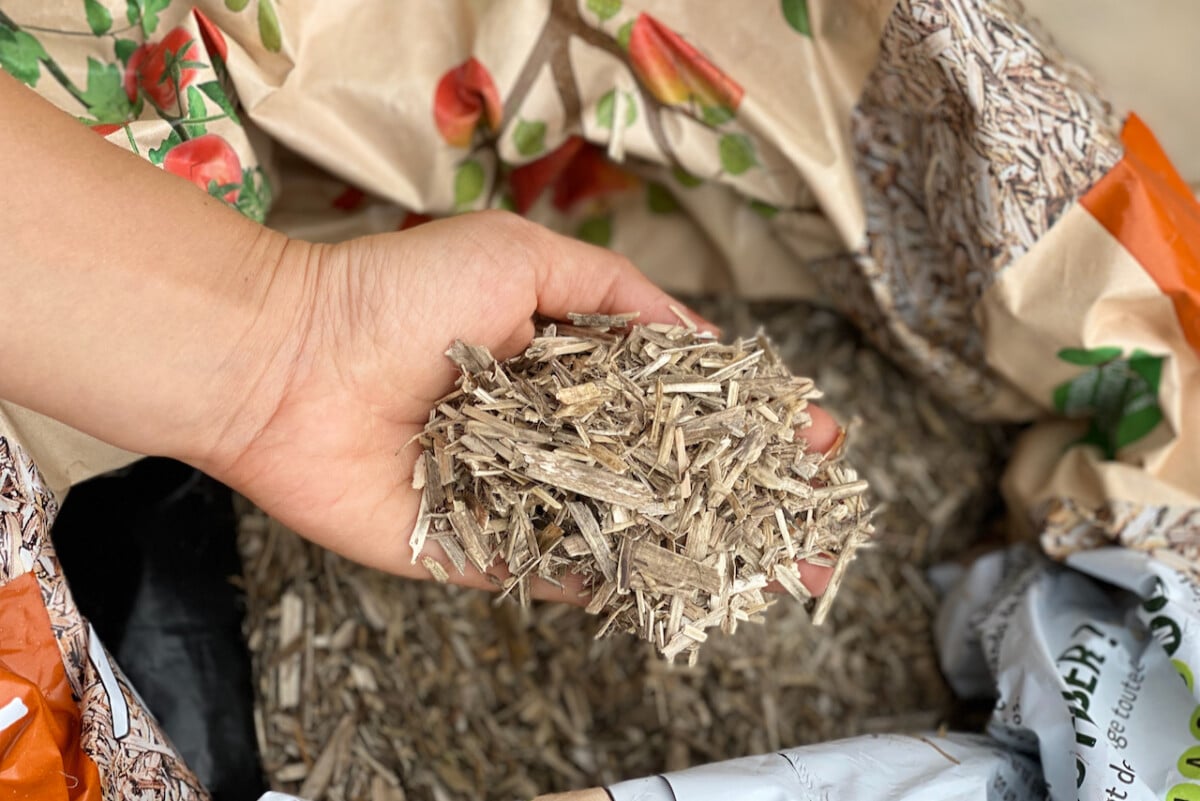
It’s flax mulch, a truly eco-friendly material because it’s a byproduct of processing flax for the textile industry.
Flax is rarely sprayed with pesticides or herbicides, since it’s not attractive to pests and it grows so thickly that weeds stand no chance. It has a low thermal conductivity, so it doesn’t get hot or cold very easily. And it has a high moisture absorption. As you may know, if you’ve ever worn linen in the summer.
I should clarify now that this is the flax fiber (Linum), from which we also get linen fabric and flax seeds, not the hemp fiber (Cannabis sativa), from which we also get textiles, hemp seeds and … gummies.
Although you can also get hemp mulch. It’s a byproduct of the processing of hemp fiber. You may also find hemp mulch sold as animal bedding under the name “hemp hurd.”
Using lighter mulches was a revelation.
As I said, the flax mulch worked a treat when applied in the spring on my vegetable beds. It did its job during the hot months, and by the end of the growing season, it had incorporated nicely into the soil.
The flax mulch worked even better on a flower border where I had a mix of perennials and annuals. I wanted my annuals, notably cosmos, zinnias and marigolds, to self-seed. So a fine mulch was perfect for retaining moisture while allowing for tender seeds to squeeze through and touch the soil underneath.
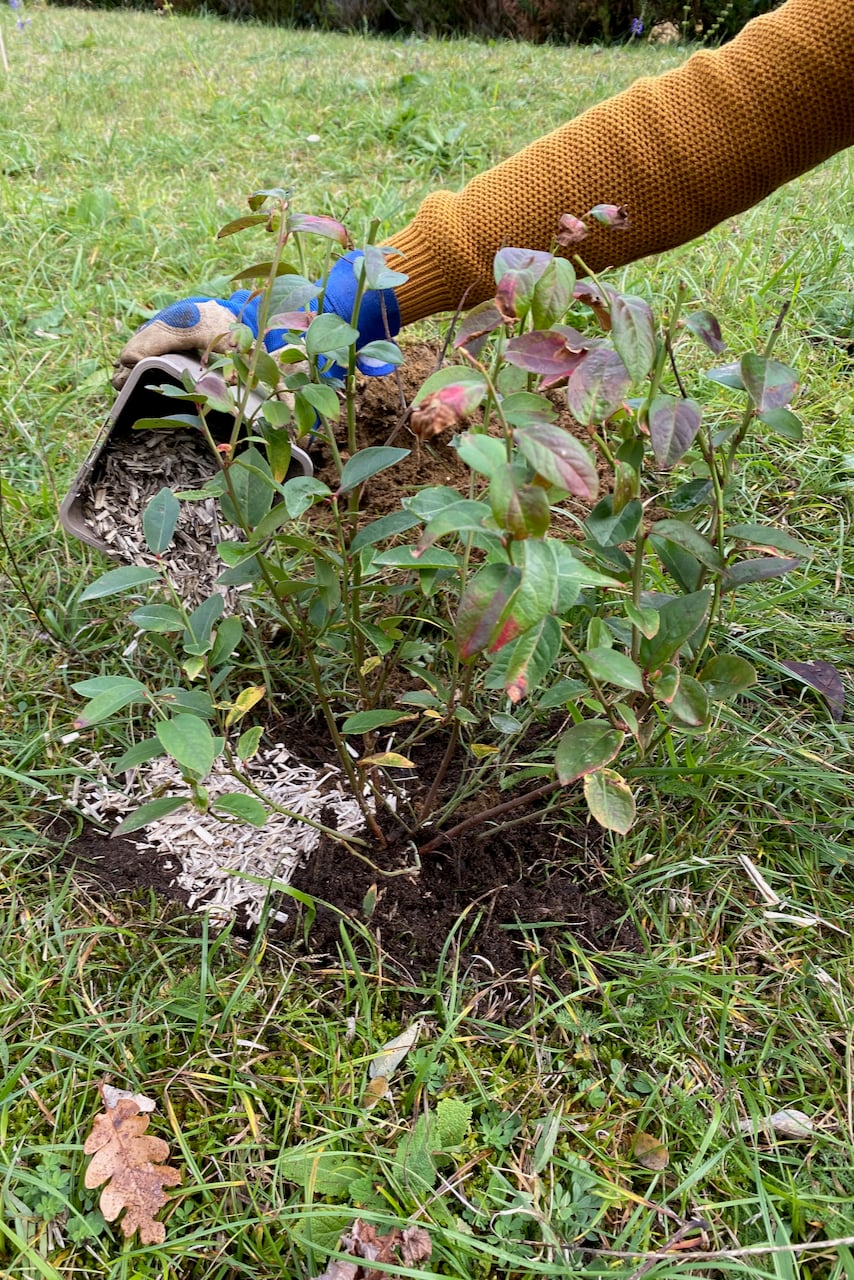
Can you guess what happened when I mulched with the same material when I planted blueberry shrubs in the fall? It kind of all blew away in the first storm. So I had to reapply and remember to get it wet a few times so it would stay in place.
Was it that big of a deal? No. But it was something I hadn’t thought of until it happened.
Here’s what I learned in the meantime about the differences between finer mulches and chunkier mulches.
A chunky mulch, such as bark, will allow the water to drain straight through and get to the root zone. It will also hold up better in a storm and will suppress weed seeds from below. It’s great for mulching shrubs, trees and established herbaceous perennials. It’s also perfect for areas that get some foot traffic, such as garden paths.
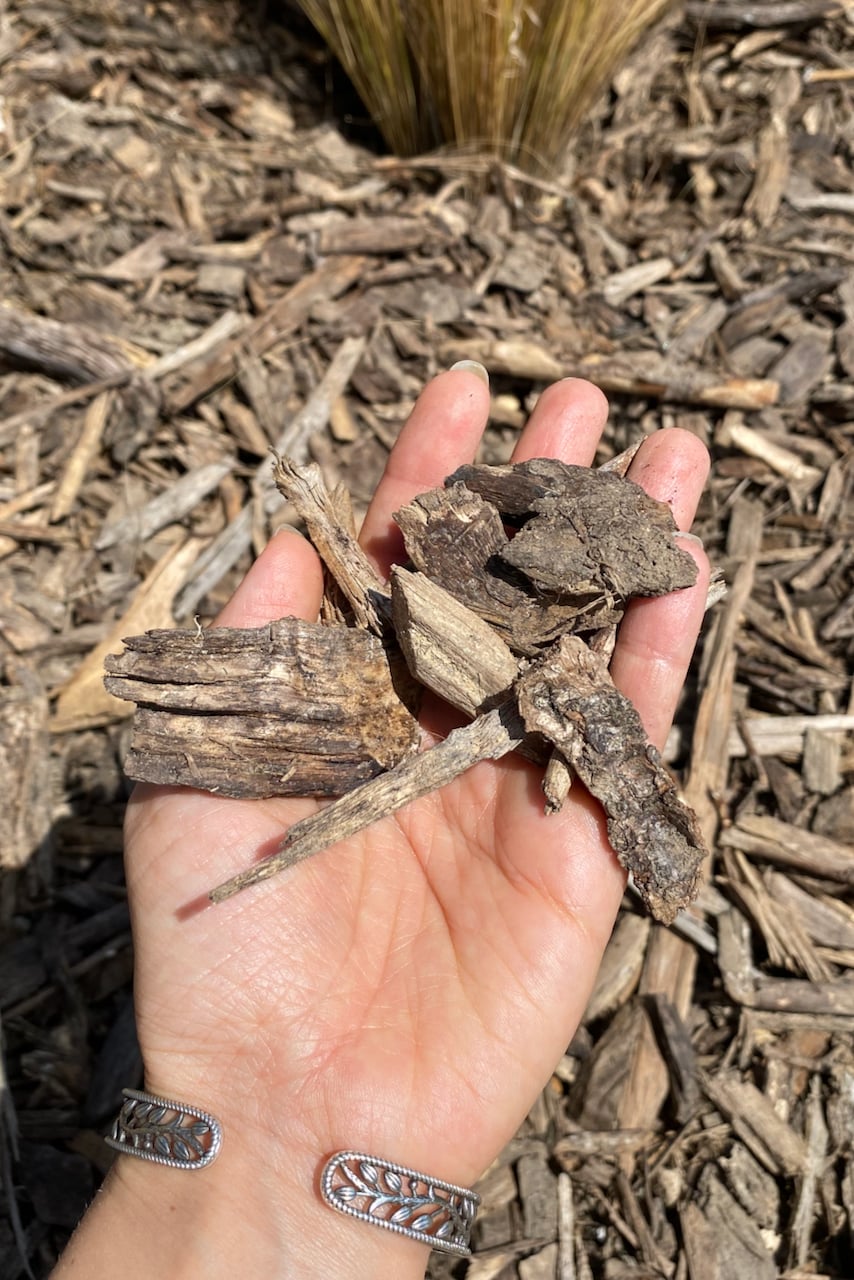
A lighter mulch, such as pine shavings, hemp mulch or even sieved compost, is good at letting the water through, while also helping with soil aeration and seed germination. So if we want plants to self-seed or if we’re planting straight into the veggie bed, we want to use this type of cover. It’s also a good cover for plants in containers, since we don’t want heavy mulch in such a small space.
Regular readers of Rural Sprout know that our editor, Tracey, is obsessed with using pine flake mulch in the garden. Here, you can find her singing its praises.
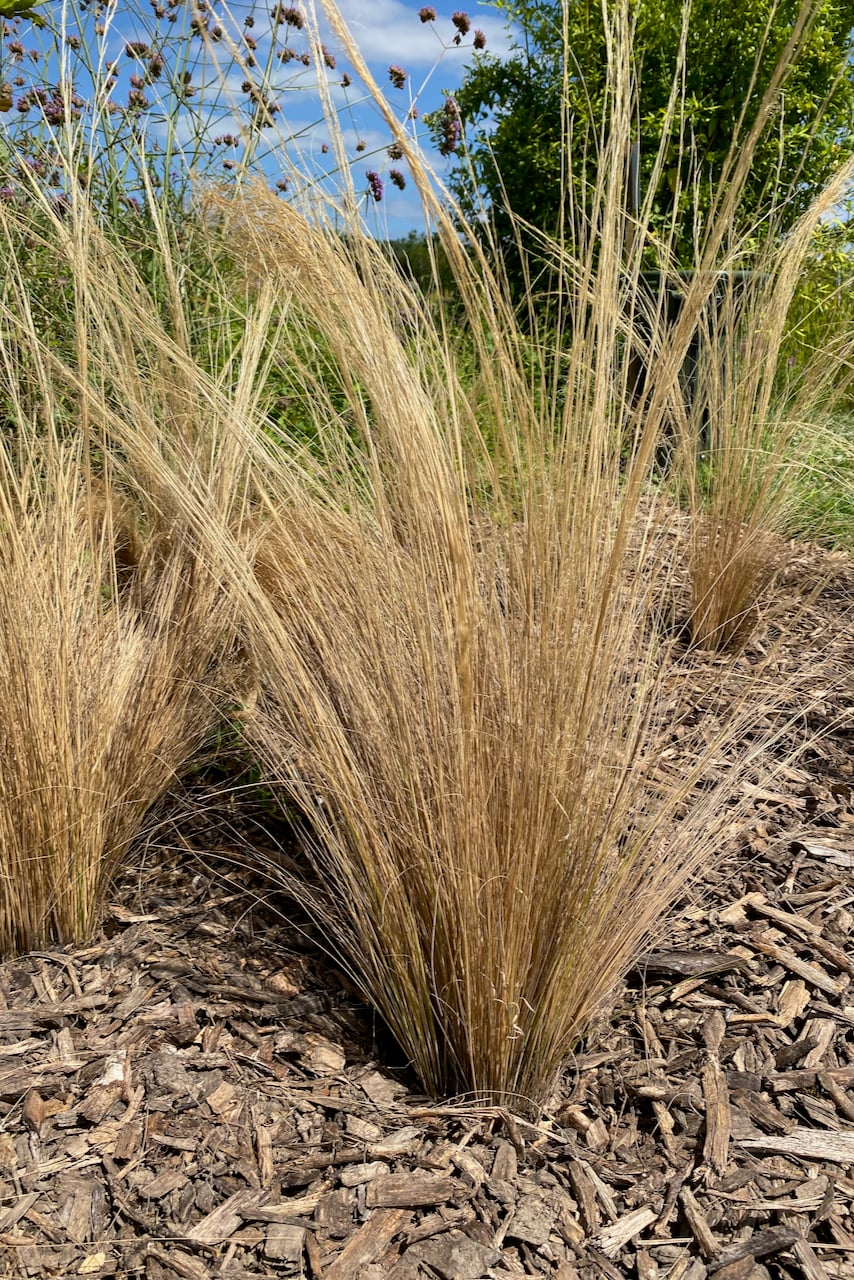
Lighter mulches are perfect in early spring, when there’s plenty of moisture around, and the temperatures are cooler. In the summer, though, a lighter mulch might dry up faster, while a heavier mulch will let the water permeate through (when we water the garden) and will lock it in when it gets hot and dry.
3. Not Using the Mulch You Already Have
Want to see the best type of mulch? It’s free. Here it is:
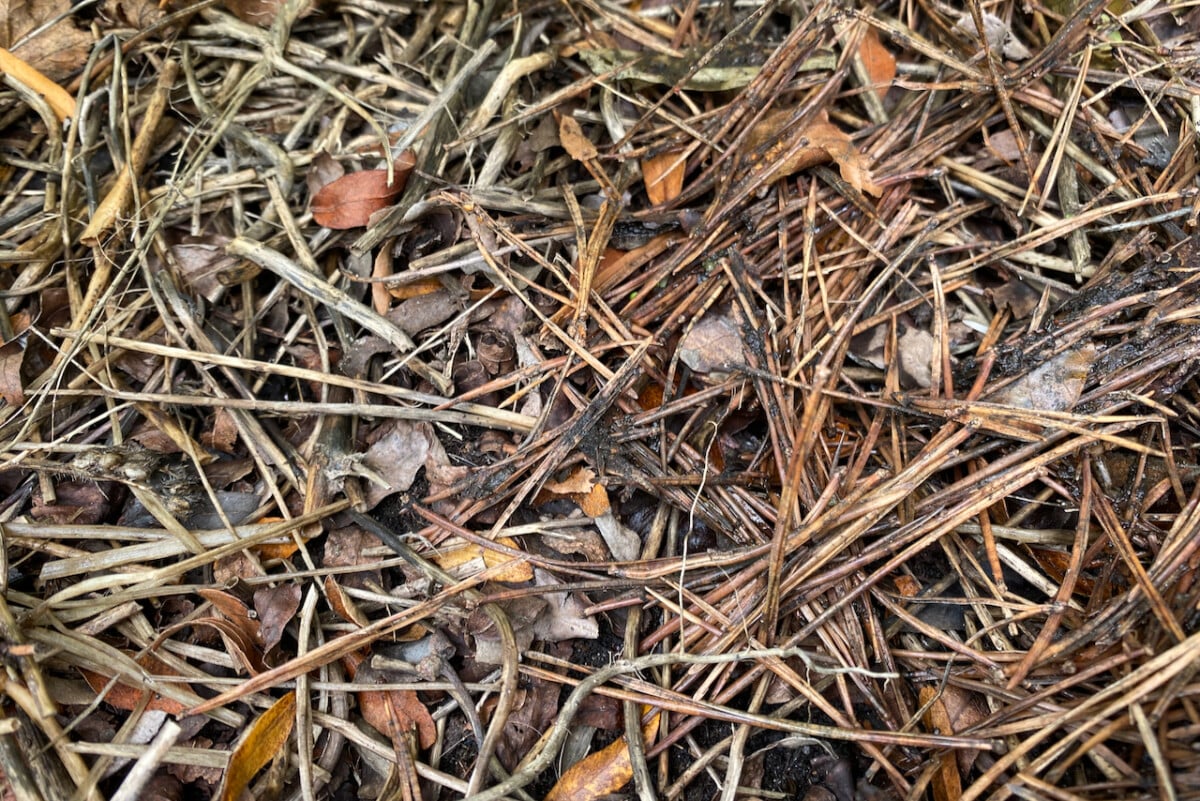
It’s pine needle mulch covering my raspberry and strawberry patches. My goal is to keep all the plant material created by my garden in my garden.
Dry leaves, pine needles, cones, chop-and-drop stems and twigs, grass clippings. All of these materials that we find in our own gardens can be used as mulch. They go a long way in retaining moisture and provide a great habitat for the insects in our local ecosystem. Plus, they’re free and easy to source.
The plants in our garden are already used to this local mulch, without having to introduce any other variables. All plants growing in their natural habitat are mulched by surrounding plants.
A couple of quick notes about mulching with what’s already in your own yard:
Pine needles do not significantly impact the acidity of your soil; they are safe to use everywhere. So, if you were hoping to acidify your rhododendrons or blueberries with them, I suggest you stick to what works best – elemental sulfur.
If you’re going to mulch with the chop-and-drop method, be sure to cut plants before they go to seed, otherwise you will end up with unwanted plants in that area.
You’d think this is a photo of the forest floor. But it’s actually a close-up of saffron crocuses growing in November in the raised garden bed that I mulched with dry leaves a couple of weeks before.
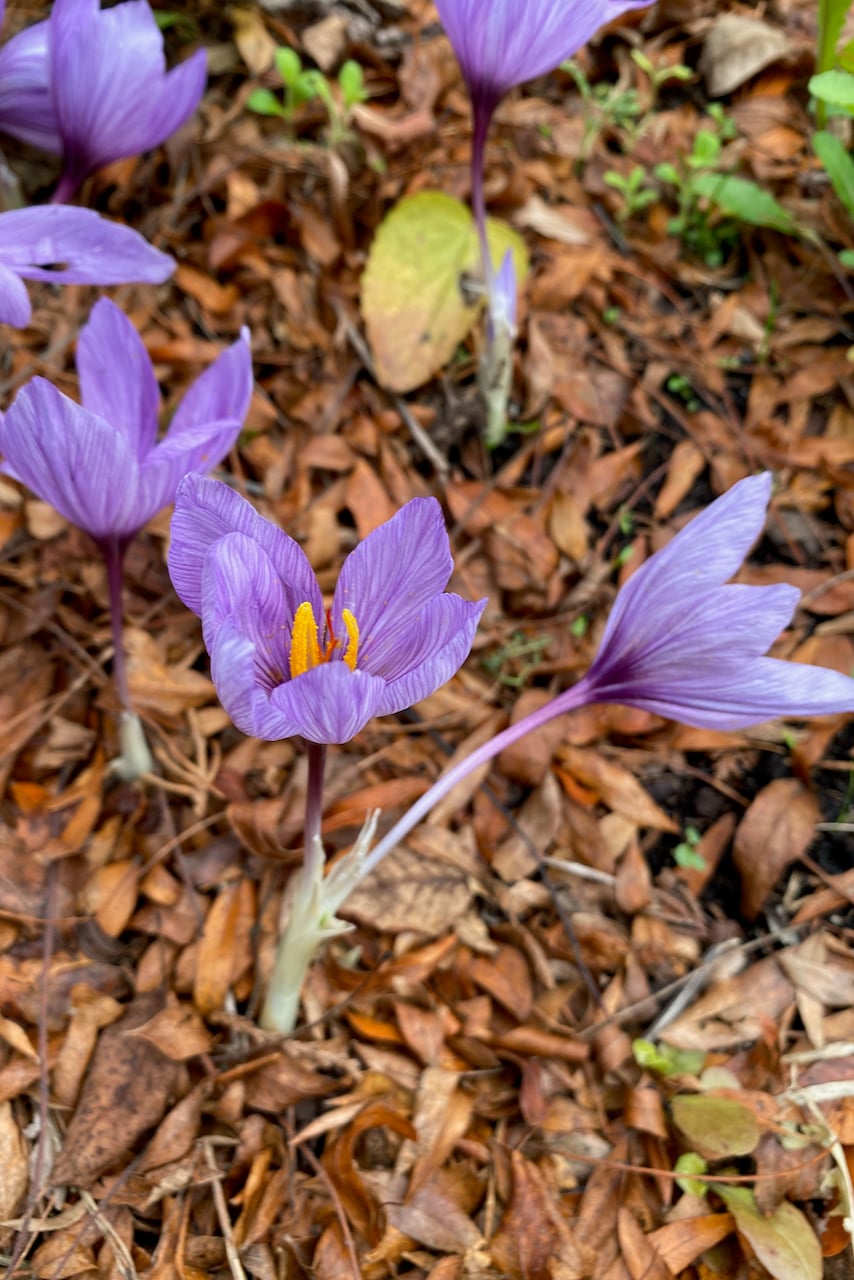
As far as I know, Mother Nature doesn’t spend Sundays dragging bags of mulch into the woods to make sure the soil isn’t bare.
4. Only Mulching Once Per Season
Mulching is not a once-and-done affair. It’s more of a “do it when you need to” and actually learn to recognize when you need to.
For example, in the summer, when the temperatures rise, the plants are in active growth, and the respiration rates increase, the bacteria in the soil will decompose the mulch much more quickly.
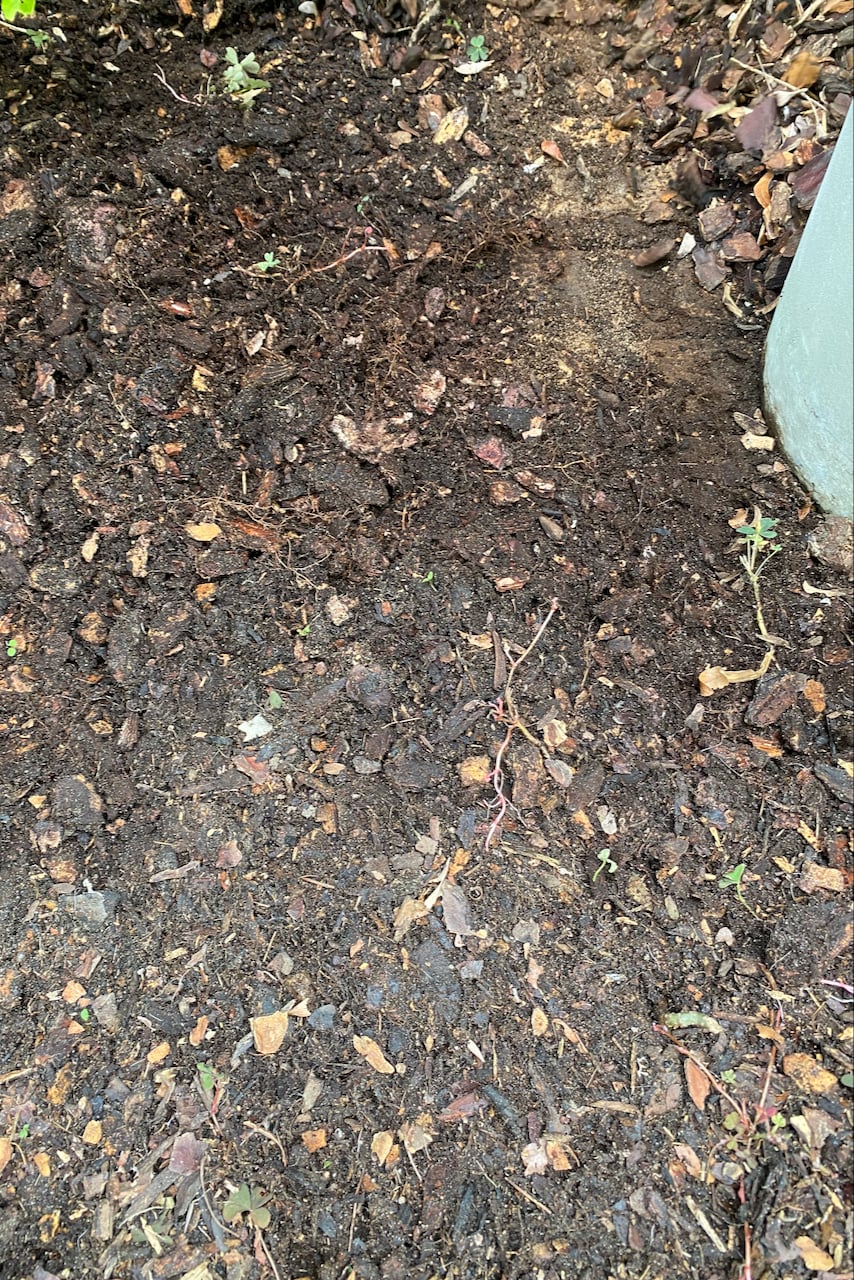
That’s a good thing, by the way! But it does mean that we might need to top up the mulch, even if we’ve already applied a layer in spring and plan on applying another one in late fall.
And here’s where some gardeners get in trouble. In an attempt to mulch “once and for all”, they add a thick layer of mulch. You know, to last the year.
Yeah, that’s not how this works.
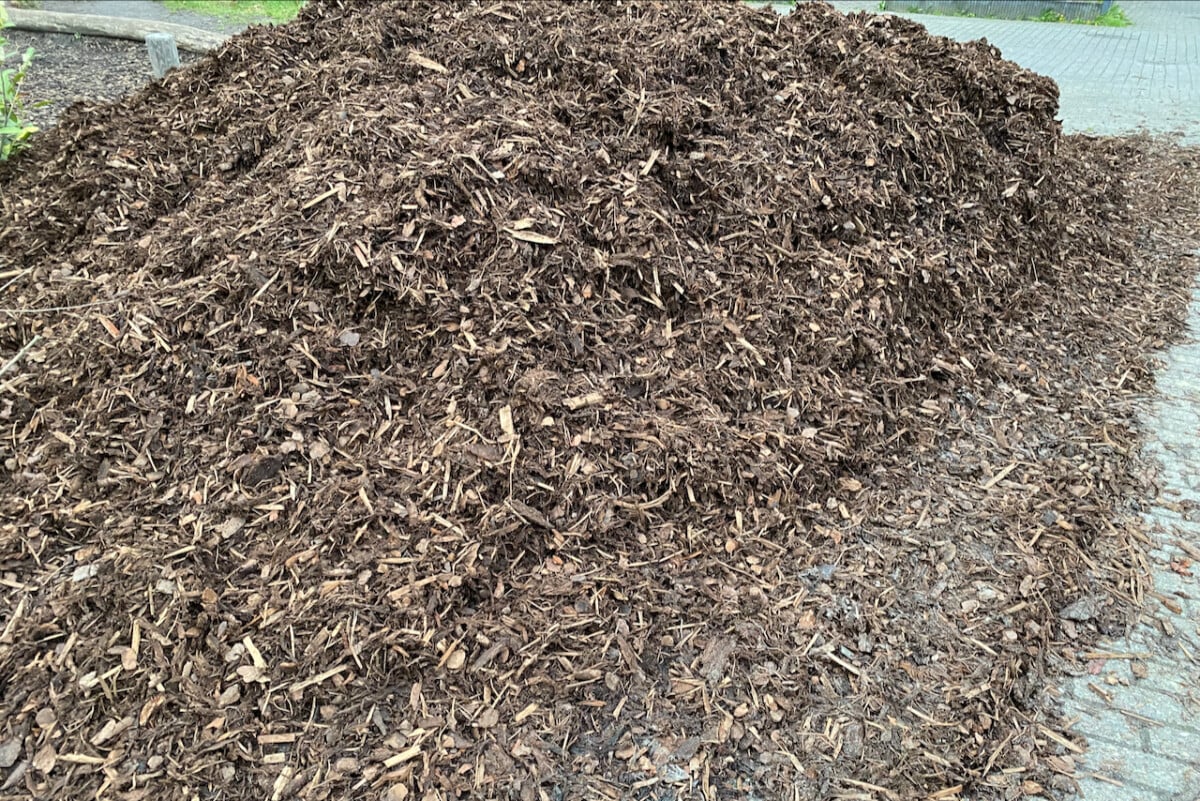
Overmulching as a shortcut to avoid repeat mulching is a recipe for disaster. A thick layer of mulch will retain excessive moisture around the roots. Over time, this can suffocate plant roots and may cause stem rot at the point of contact.
Ideally, a layer of mulch should be between two and four inches thick, so apply that and plan to reapply when needed. This is one of the things Tracey loves about pine flake mulch: it’s lightweight, so it can be applied thicker without putting too much pressure on the root systems.
5. Not Using Living Mulch
I think living mulch sounds a bit confusing, especially for newbie gardeners. Is it going to stand up and walk, zombie-style?
Some people call it “green mulch.” Nooo, luckily it’s not the dyed kind either.
It’s simply the practice of using groundcover plants as mulch. Living mulch fulfills the function of covering the soil, protecting it from evaporation, locking in moisture and crowding out unwanted plants.
Lots of plants can work as living mulch.
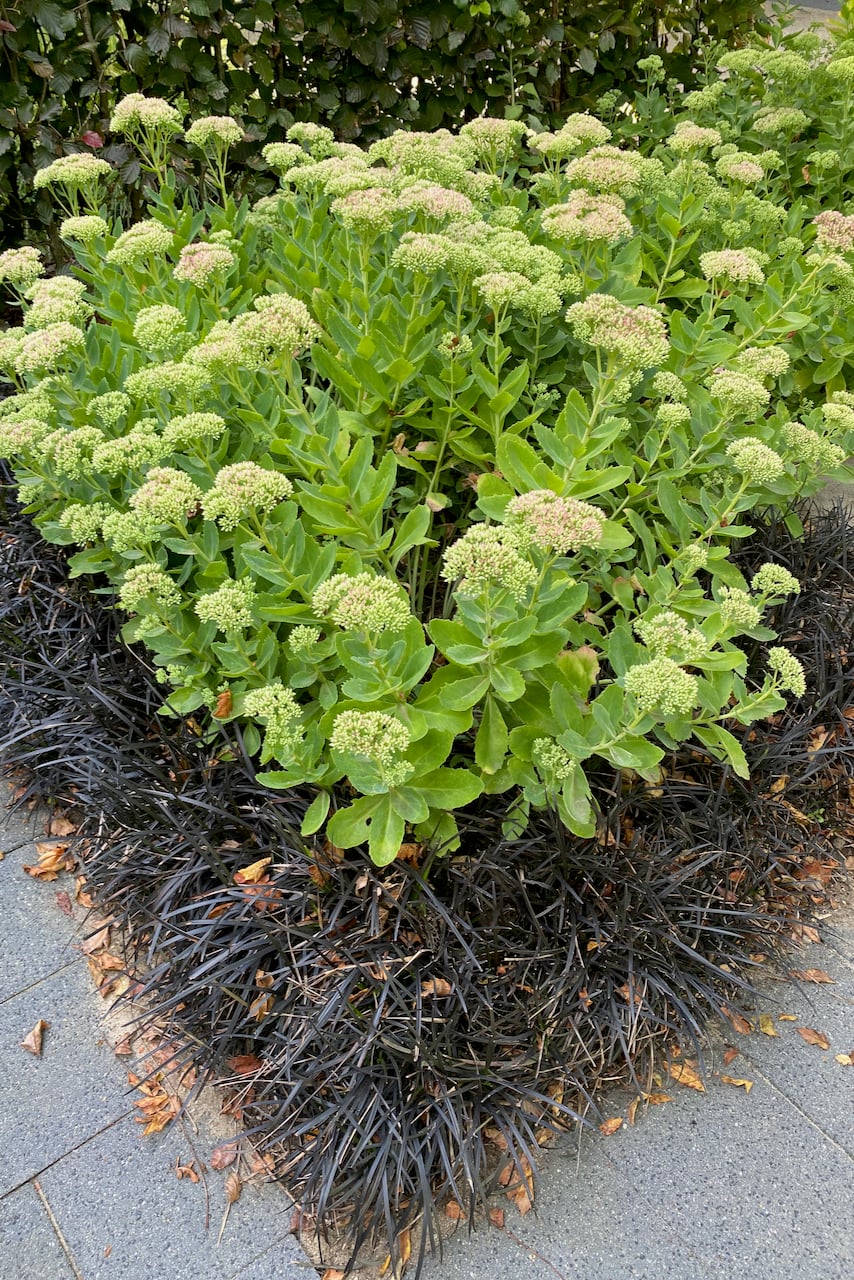
Let me give you a few examples to get you researching on the right track:
- Creeping thyme;
- Low-growing ornamental grasses;
- Clover;
- Wild strawberries (Fragaria vesca), one of my favorite edimentals;
- Low-growing sedums;
- Creeping phlox (Phlox subulata);
- Moss rose (Portulaca grandiflora) – neither a moss nor a rose;
- Rhizomatous geraniums (Geranium macrorrhizum).
The nice thing about using plants as a mulch is that it might actually turn out to be a “once and done” affair after all.
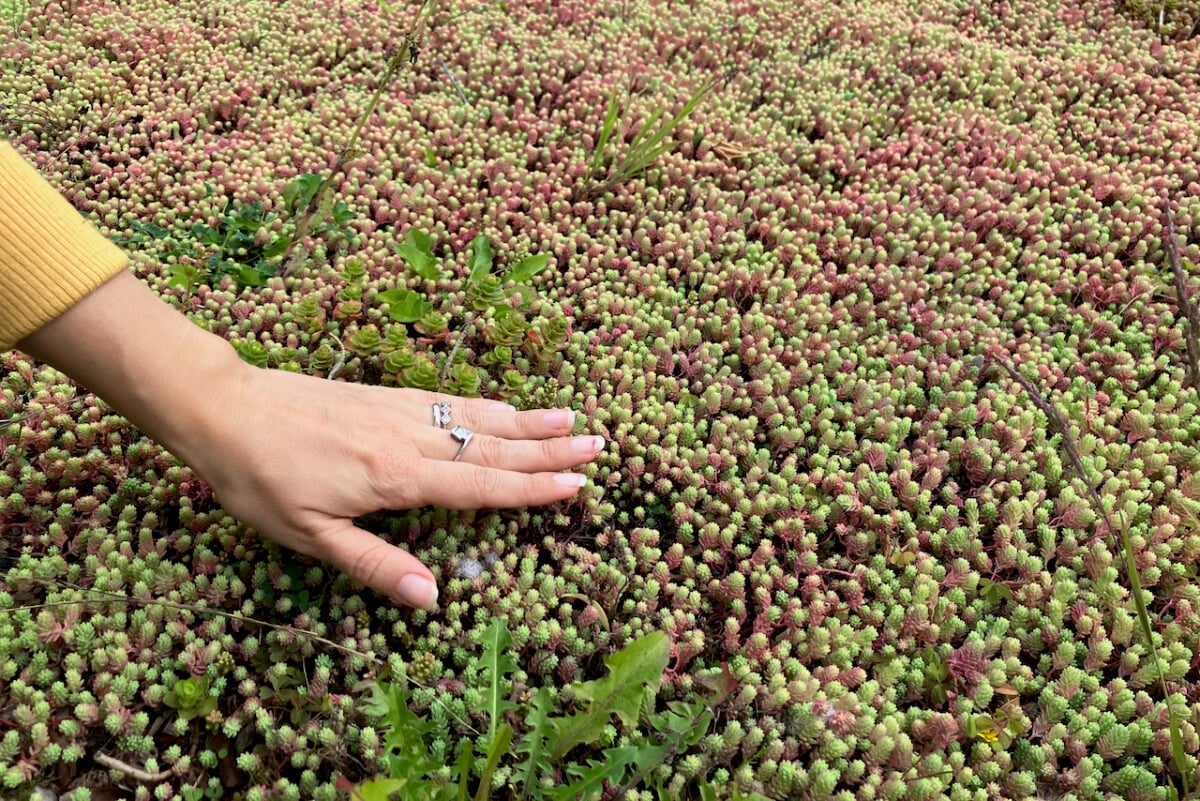
If they take well, we can say goodbye to lugging bags of mulch back from the store. Plus, I think it makes garden beds look more lush and less sparse.
At the moment, I’m using both in my garden. I’m using the wood mulch and planting living mulch as well. I hope that in a few years, as the groundcovers spread and mature, I will be able to wean the garden off wood chip mulch.
I’d rather invest in more plants than in more dead wood.
I hope my mulching deep dive didn’t make it sound too complicated. It’s really not. Just cover the soil with something that is or used to be alive. Ultimately, the second biggest mulching mistake is not mulching at all. The biggest mistake is still using that vile dyed mulch. But you already know why you shouldn’t do that.
Get the famous Rural Sprout newsletter delivered to your inbox.
Join the 50,000+ gardeners who get timely gardening tutorials, tips and tasks delivered direct to their inbox.