

I’m a big fan of garden troubleshooting guides.
You know the one: “What to do if your [insert plant here] is dying.” or “How to revive your [plant].”
I have even written my fair share of them, and I’d like to believe that I helped our readers save a few beloved plants from taking a trip to the compost pile.
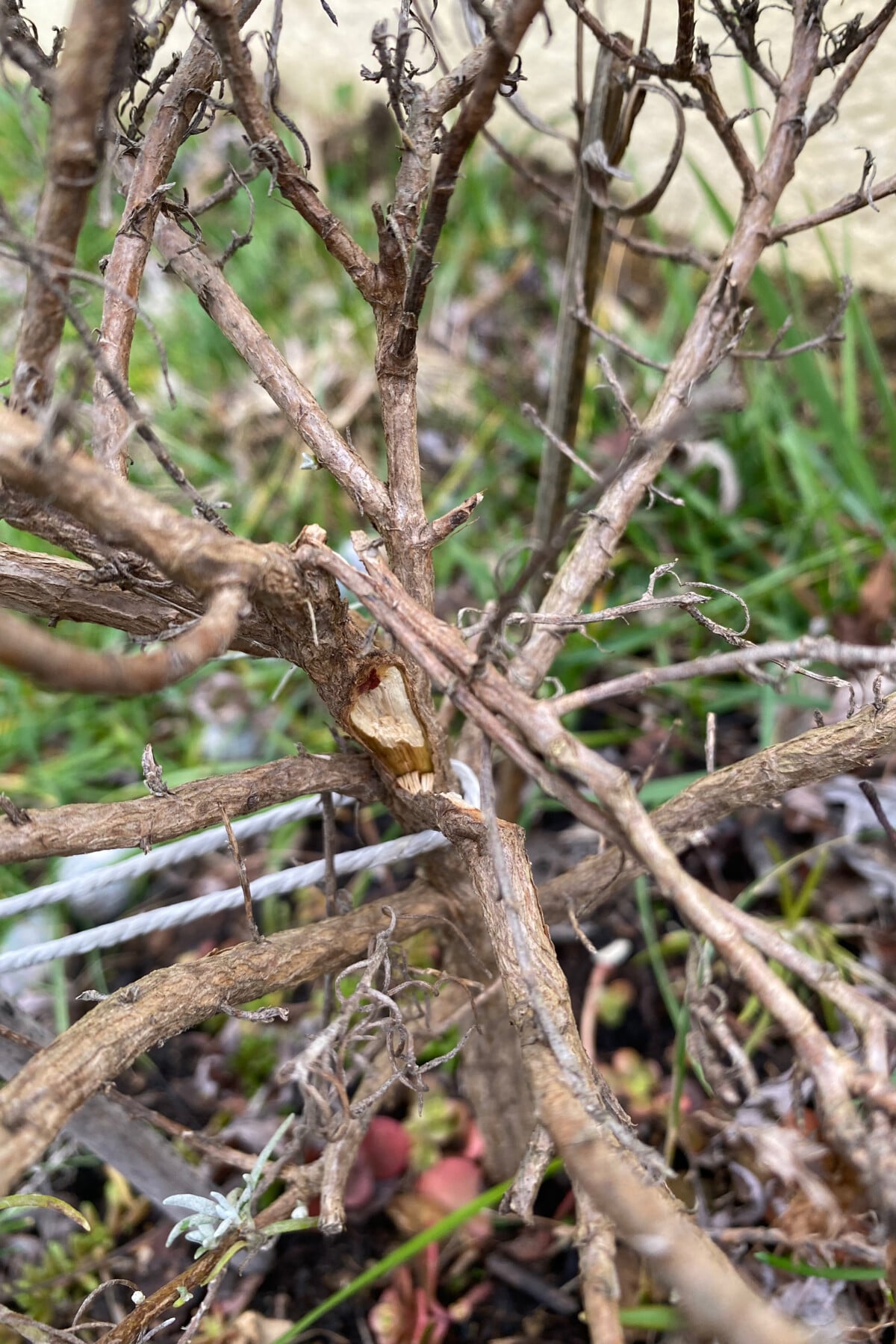
As gardeners, our first instinct when a plant looks sickly is to nurture and rescue. But sometimes, even in spite of our best efforts and latest trending hacks, no amount of rescuing efforts will heal a dying plant.
What’s even more baffling to me is when that plant is a regular on the “plants you cannot kill” lists.
For me, that’s lavender.
I’ve grown it successfully. I’ve also killed it successfully (albeit unintentionally). And I’ve had it in my garden in various stages on the “absolutely thriving” to the “hanging on for dear life” continuum.
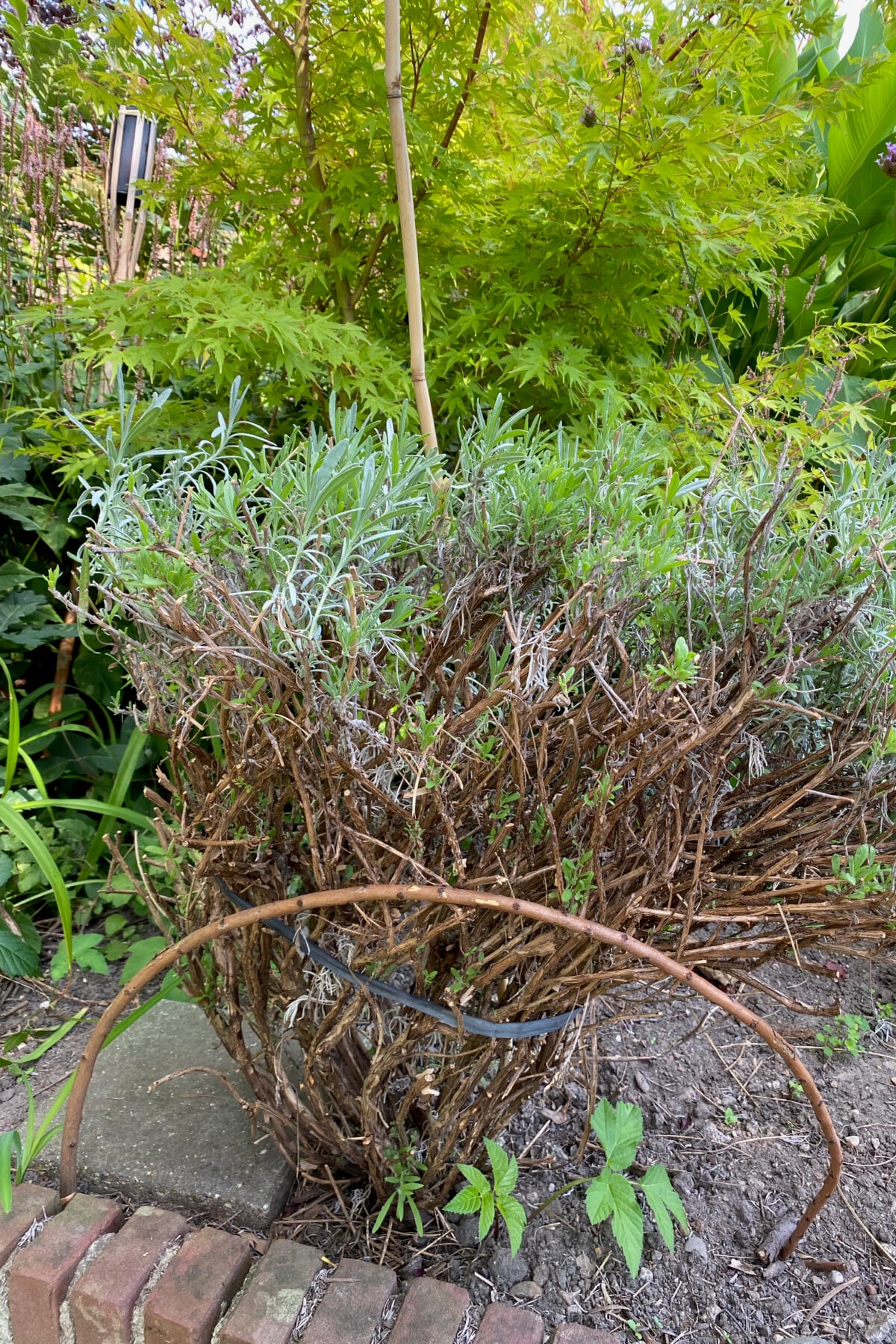
So I’m flipping the question from “what to do if my lavender is dying?” to “what can I replace lavender with?” Because I can’t possibly be the only gardener who has trouble keeping lavender alive.
Here’s my criteria for the perfect lavender replacement:
It has to be happy in full sun.
Lavender is a Mediterranean plant, so it will always soak up as much sun as we can give it. It can handle it, due to its waxy and tough foliage that helps lock in moisture and reduce transpiration.
What’s full sun? Generally, anything above six hours of direct sun a day is considered full sun.
So if you have a spot in your garden where everything else would be (quite literally) toast, lavender and its replacements in the list below will happily take over.
It has to be resilient to drought.
Lavender likes to live in the dry and forgotten corners of my garden, but thoroughly dislikes the spots where the water pools after a rainstorm. In fact, that’s how I killed one of my lavenders – by planting it in a spot that took too long to drain. The lavender roots were simply spending too much time in muddy soil, which led to root rot. I know better now!
I have plenty of thirsty plants (hello, peonies!), so I’m not interested in replacing lavender with a perennial that requires that amount of maintenance.
It has to be pollinator-friendly
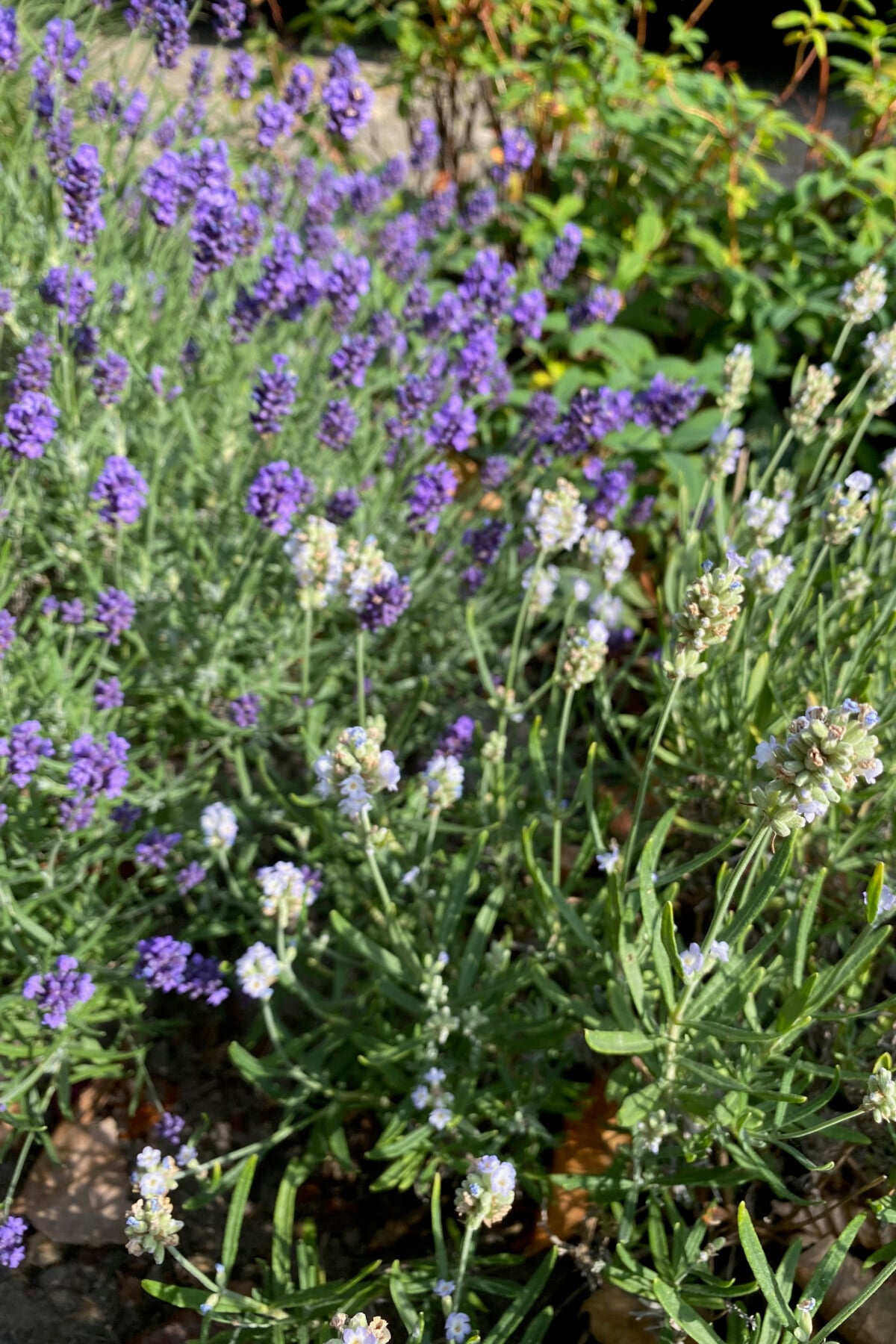
One of the reasons why I grow lavender is that it is full of pollinators all summer long. As soon as the first bud unfurls and until the last of the buds right at the tippy top of the stems go to seed, my lavender turns into a buzz bar with a bartender that’s always serving. It’s a spectacle to behold, and I don’t have to pay the price of admission.
So any perennial worthy of being a replacement would have to have the same appeal to wildlife.
By the way, if you’re still keen on saving your lavender, check whether you’re making any of the mistakes that I wrote about in this article.
Here are my top seven plants that serve well as lavender alternatives.
1. Lavender cotton (Santolina)
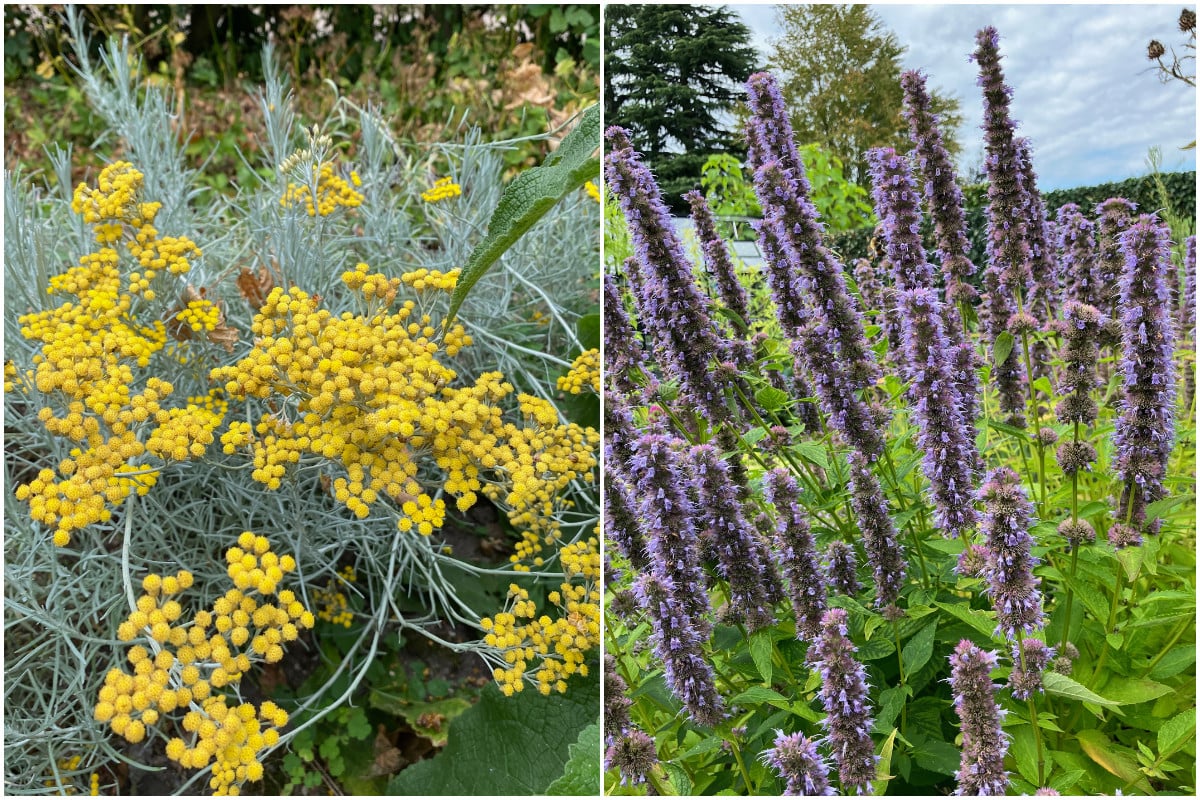
I’m a sucker for santolina. And yes, I may be biased, since I’m looking straight at a santolina shrub outside my window as I’m writing this article. It stayed evergreen throughout the winter, and the buds have been visible since mid-April.
Here’s what it looks like now, in late May, ready to burst into a sea of yellow buttons.
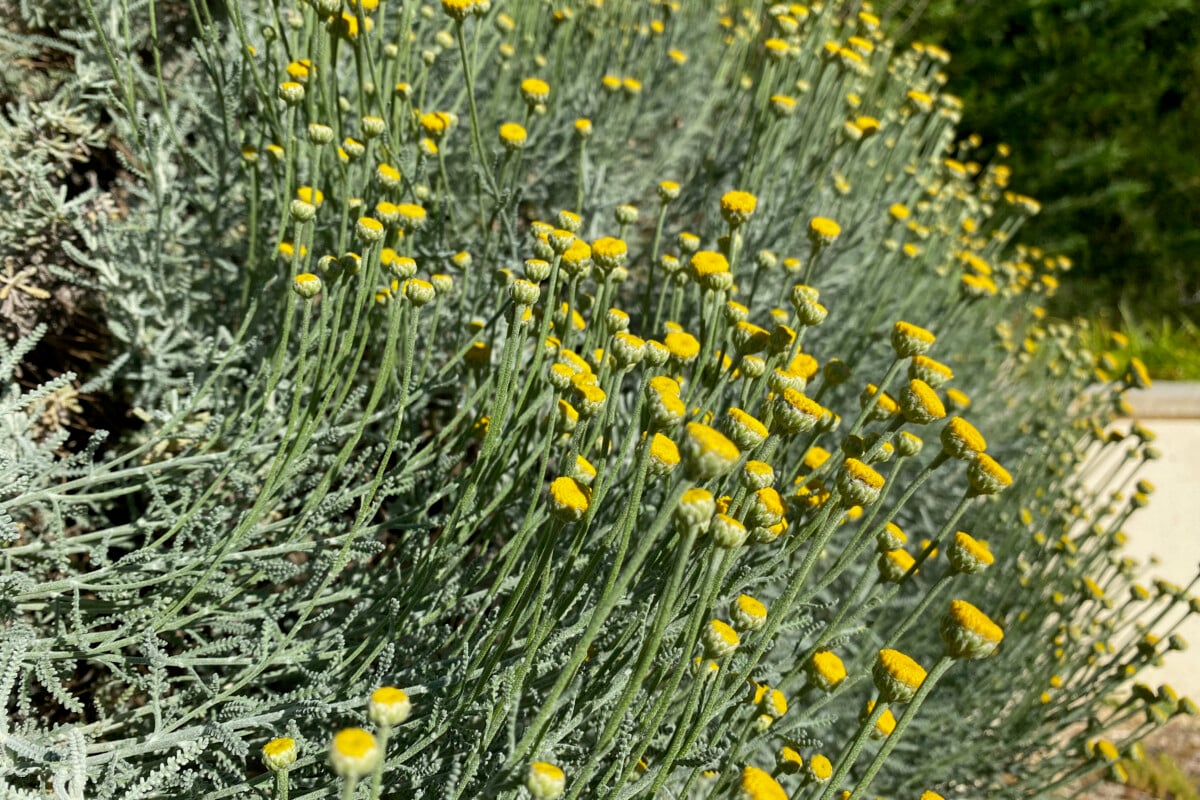
Santolina shares a lot of things in common with lavender: they both have the silver foliage, excellent resistance to dry soil and a gentle soothing fragrance.
And of course, they both have multiple seasons of interest in the garden.
As a Mediterranean native, Santolina can handle any type of soil, but will thrive in well-draining sandy soil. Although mine is planted in clay all the way down and seems to be doing just fine.
Lavender cotton is very resistant to drought, but you need to help it get established before it engages this superpower. Remember that young plants need a bit of help and extra water throughout the hot months until they find their footing. (Or rooting, as the case may be.)
2. Anise hyssop (Agastache foeniculum)
Another one of my darlings. I’m absolutely flabbergasted that it’s not more popular with North American gardeners.
Anise hyssop – the same as hyssop anise – is neither one nor the other. It’s not hyssop (Hyssopus officinalis), nor anise (Pimpinella anisum). It has a few other names too: fragrant hyssop, blue giant hyssop, lavender giant hyssop and fake licorice. Quite confusing, I think.
In fact, anise hyssop is the common name for Agastache foeniculum, but it got all these weird nicknames because it looks like hyssop and it tastes of anise.
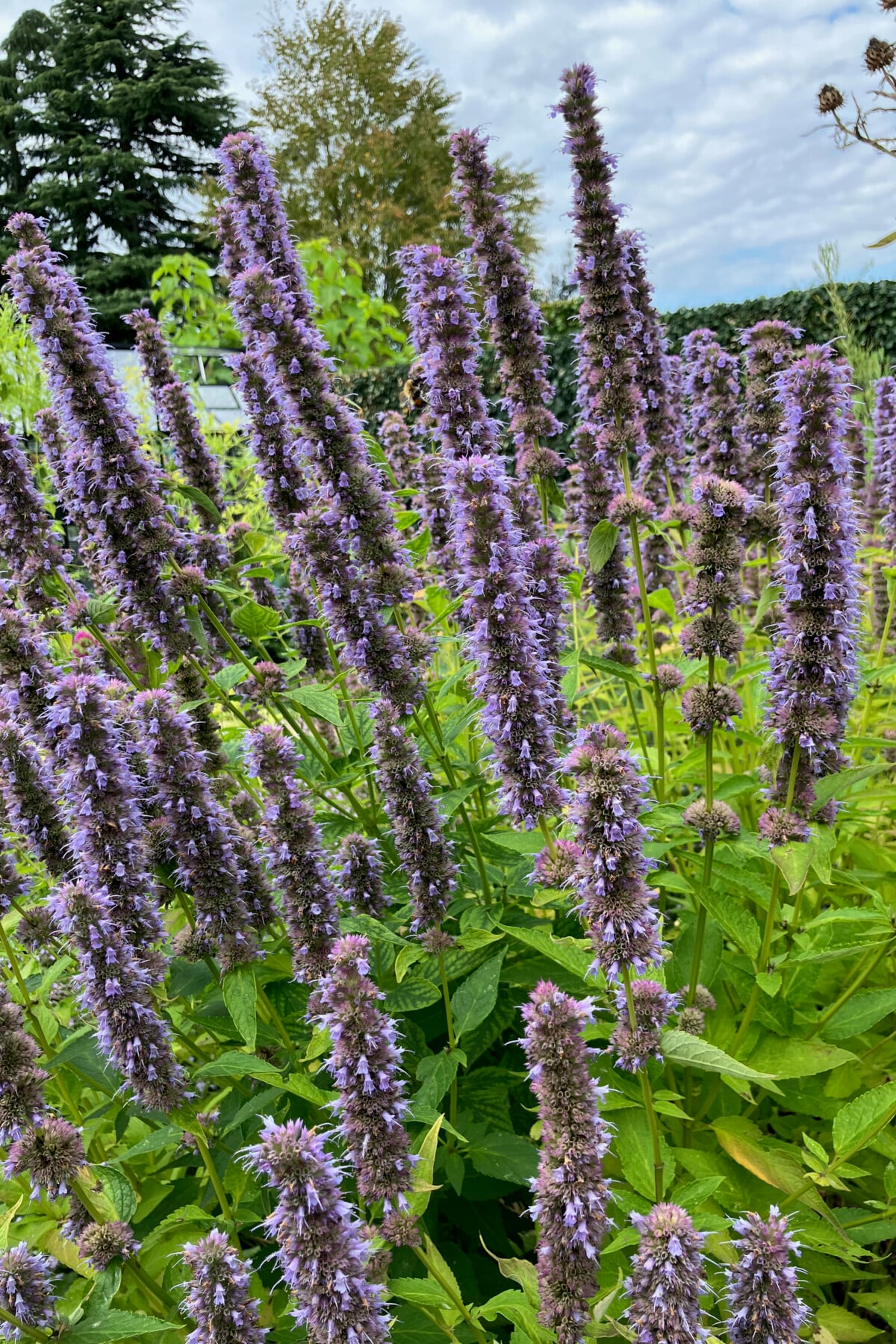
If you’re planning a pollinator garden, you must include an Agastache plant, since it is a very important source of nectar and pollen for bees, butterflies and hummingbirds.
Agastache stays in magnificently blue bloom for months (from late-June until September) if you remember to deadhead it. And it’s fully edible. Well, the leaves, flowers and seeds are edible. I wouldn’t start chewing on the stems.
If you allow the last batch of blooms to overwinter in place, the dry seed heads will be a good source of food for small birds during the cold months.
For even more reasons to grow anise hyssop and a few ideas of how I use it in cooking, have a look at this ode I wrote to this herb.
3. Catmint (Nepeta)
There are so many Nepeta choices on the market nowadays, not just the popular catmint (Nepeta cataria).
There’s Nepeta subsessilus, Nepeta nuda, Nepeta kubanica and even Nepeta nervosa and Nepeta sibirica. Not all nepeta species contain nepetalactone, the substance that binds to the olfactory receptors of cats and induces a temporary euphoria.
So there are plenty of options, even if you’re not keen on the neighborhood cats frolicking euphorically through your garden beds.
The one I took a photo of below is Nepeta faassenii, growing in a rock garden built on a stone wall. I dare you to find something more low-maintenance than that.
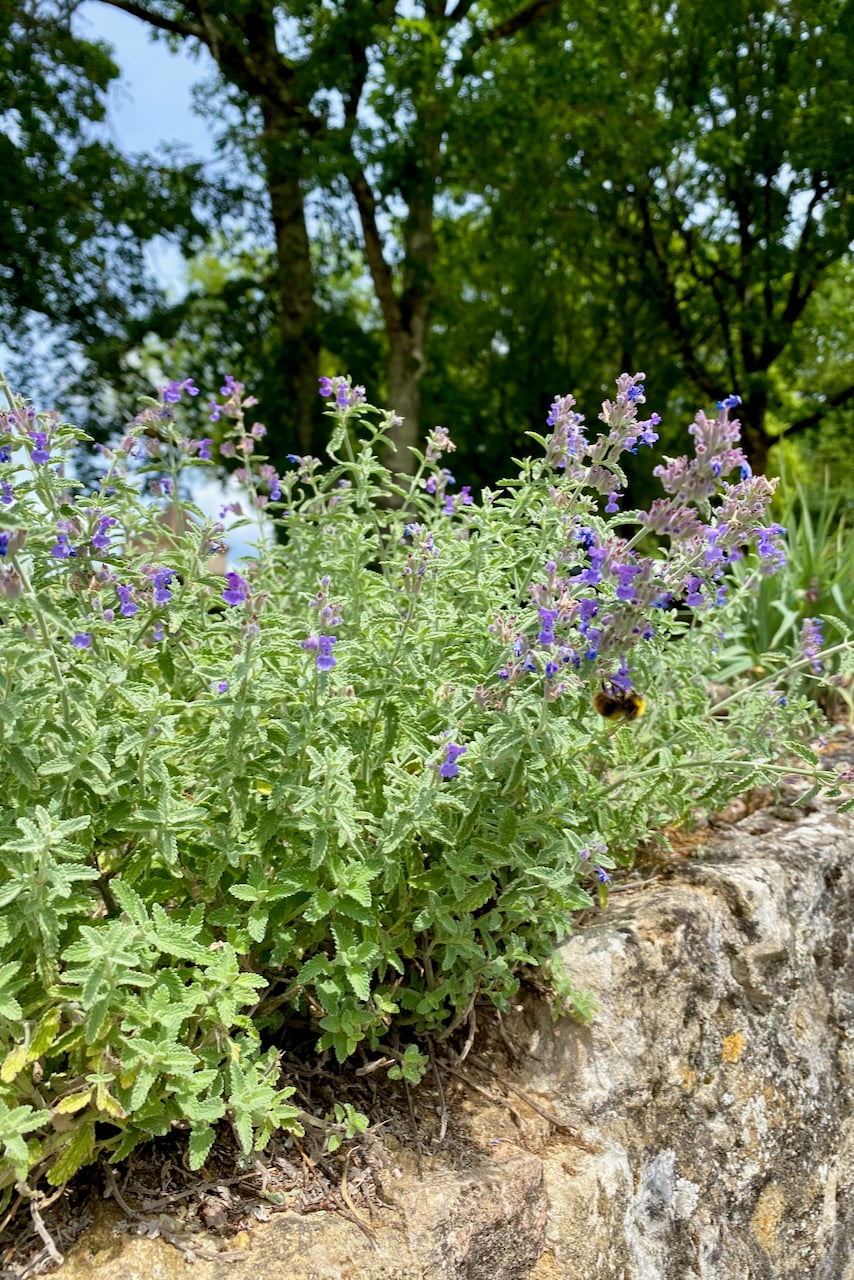
All of these nepeta will do well in the sun and can become drought-tolerant once they’re fully established. They’re not fussy about the soil you plant them in, as long as it’s well-draining. Nepeta blooms throughout the summer months in lavender-blue, white, purple or vanilla-yellow flowers.
And can you spot that large unit preparing for landing in the photo above? Yeah, nepeta brings all the pollinators to the yard.
4. Curry herb (Helichrysum italicum)
Curry plant – or curry herb – is the popular name for Helichrysum italicum. Other popular names include Italian strawflower (due to its Mediterranean origins) and l’immortelle, literally translated as everlasting or immortal. This last nickname is a nod to the essential oil extracted from the flowers of this plant that is used in skincare products.
Does it taste like curry? Not really.
Does it smell of curry? Most definitely!
Just rub a twig between your fingers and give it a whiff. This releases the oils that carry the scent. With older plants, you don’t need to come to them. They’ll come to you. You might get swept away by a delicious smell of curry stew – rather weird on a summer’s evening, but definitely hunger-inducing.
This perennial herb has needle-shaped silver leaves (like lavender) and yellow button-like flowers (just like santolina).
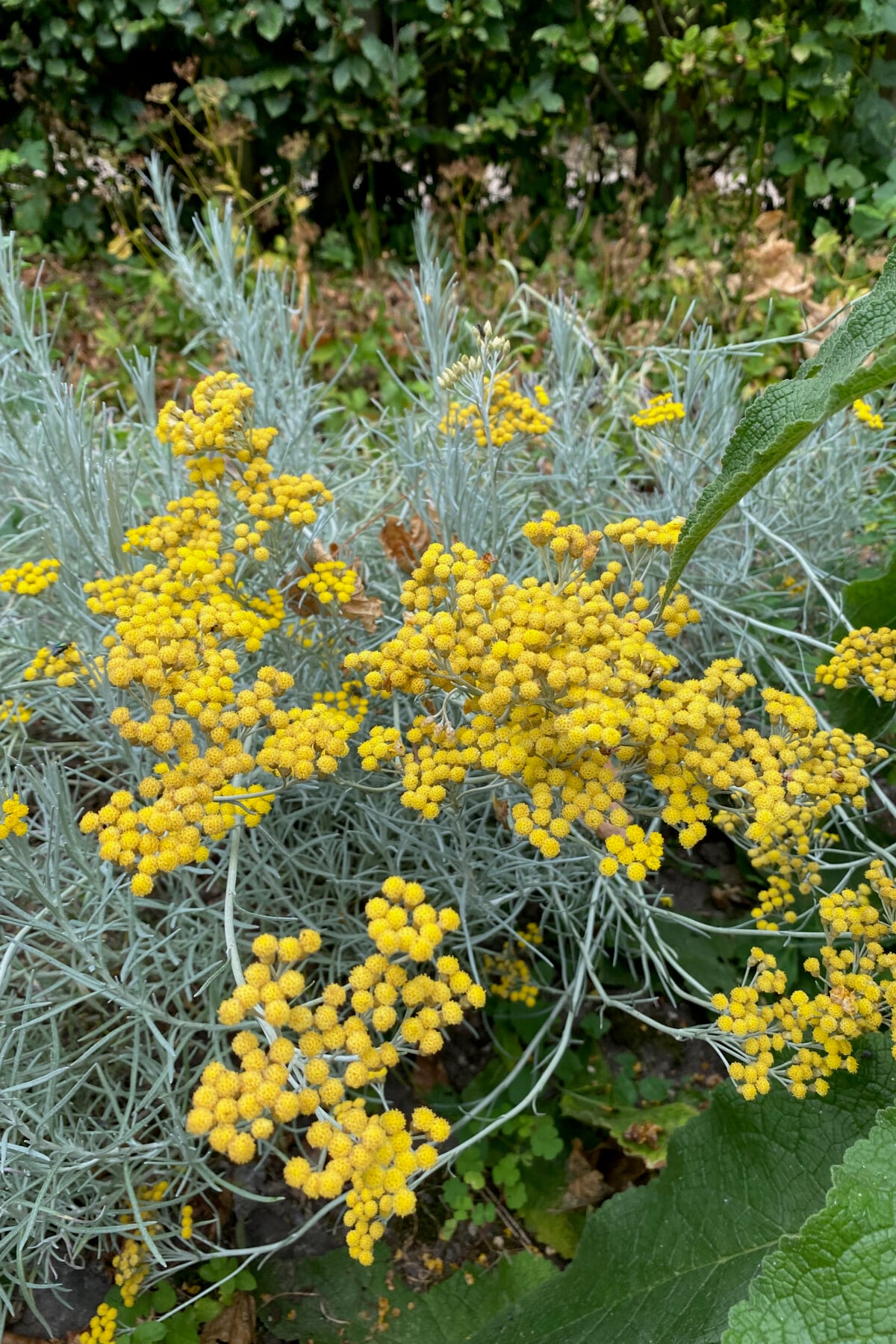
Since the curry herb is used to an arid and sandy soil in its native Mediterranean climate, it will thrive in any part of the garden that gets plenty of sun. It can also do well in part shade, though, with one condition: the soil needs to be well-draining. Curry plants don’t like moisture collecting around the roots.
If you want to know more about growing this weird aromatic herb, I wrote an entire article full of tips on how to make it thrive in your garden.
5. Cola herb (‘Artemisia abrotanum ‘Maritima’)
But Mickey, Artemisia is what we call southernwood, right?
Technically correct, but not complete. Artemisia can also be tarragon (Artemisia dracunculus), white sage (Artemisia ludoviciana) and Mexican sagebrush (Artemisia mexicana). It is a large genus of aromatic herbs. Some smell just as nice, of absinthe, licorice, lemon or camphor.
If you want to make sure you get the cola herb, you have to look specifically for the following cultivar names: ‘Artemisia abrotanum ‘Maritima’, ‘Maritima Pure’ or ‘Cola.’
And trust me when I say that you do want to look for it. Because it smells absolutely amazing, and yes, it does have a subtle taste of cola when you infuse it in water.
The feathery leaves of the cola plant release their oils when you rub them, just like the curry herb above. Their smell reminds me of old-fashioned cola with hints of anise and lemon.
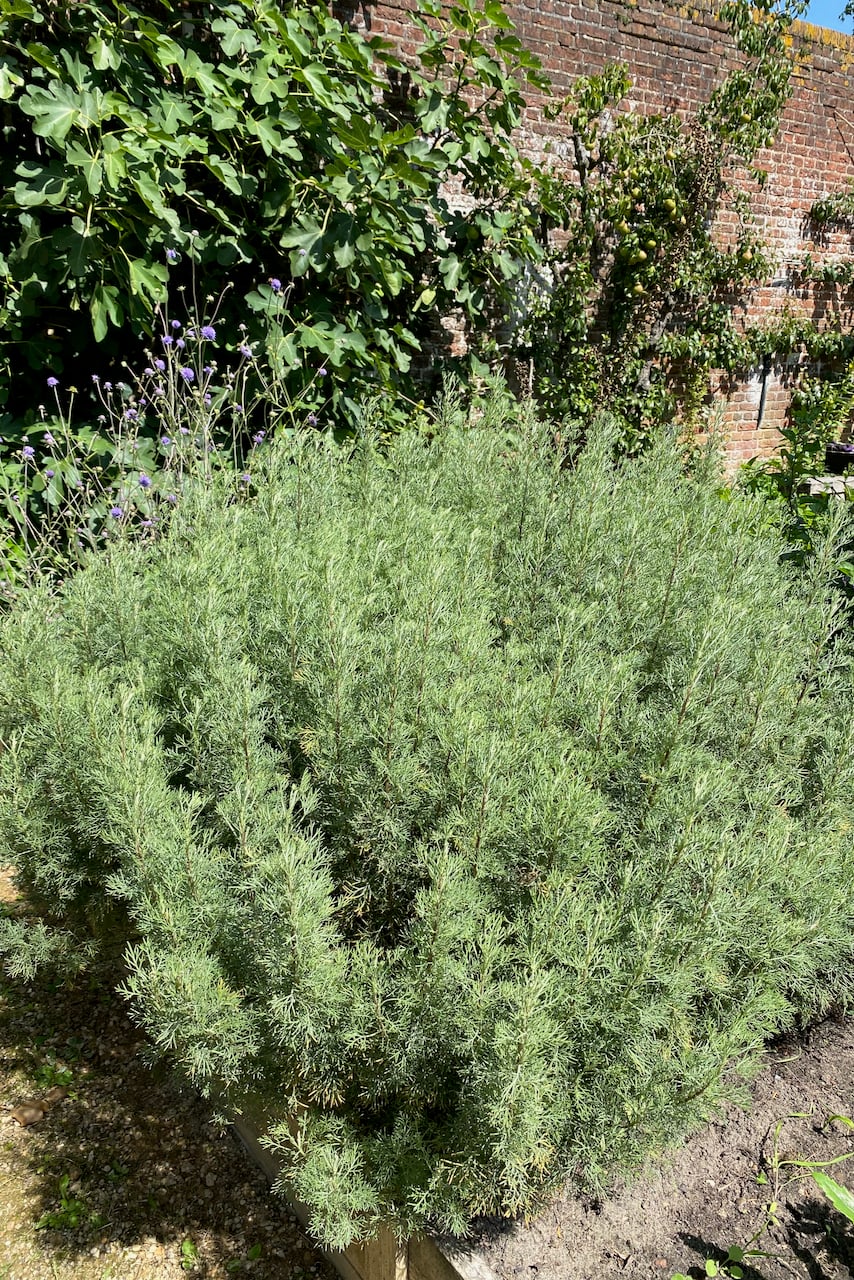
I took this photo (above) of a mature cola herb in the historic kitchen gardens of a castle. The garden brochure said that the plants on display nowadays would have been the same plants grown in the sixteenth century.
I’ve been growing my own cola plant in my garden. The one you can see in the photo below is the one I planted and tasted for this article. It thrives in a sunny location, but mine is planted in part shade, and it’s still growing nicely and lush. The trick with growing it in a shadier spot is to make sure it has well-draining soil.
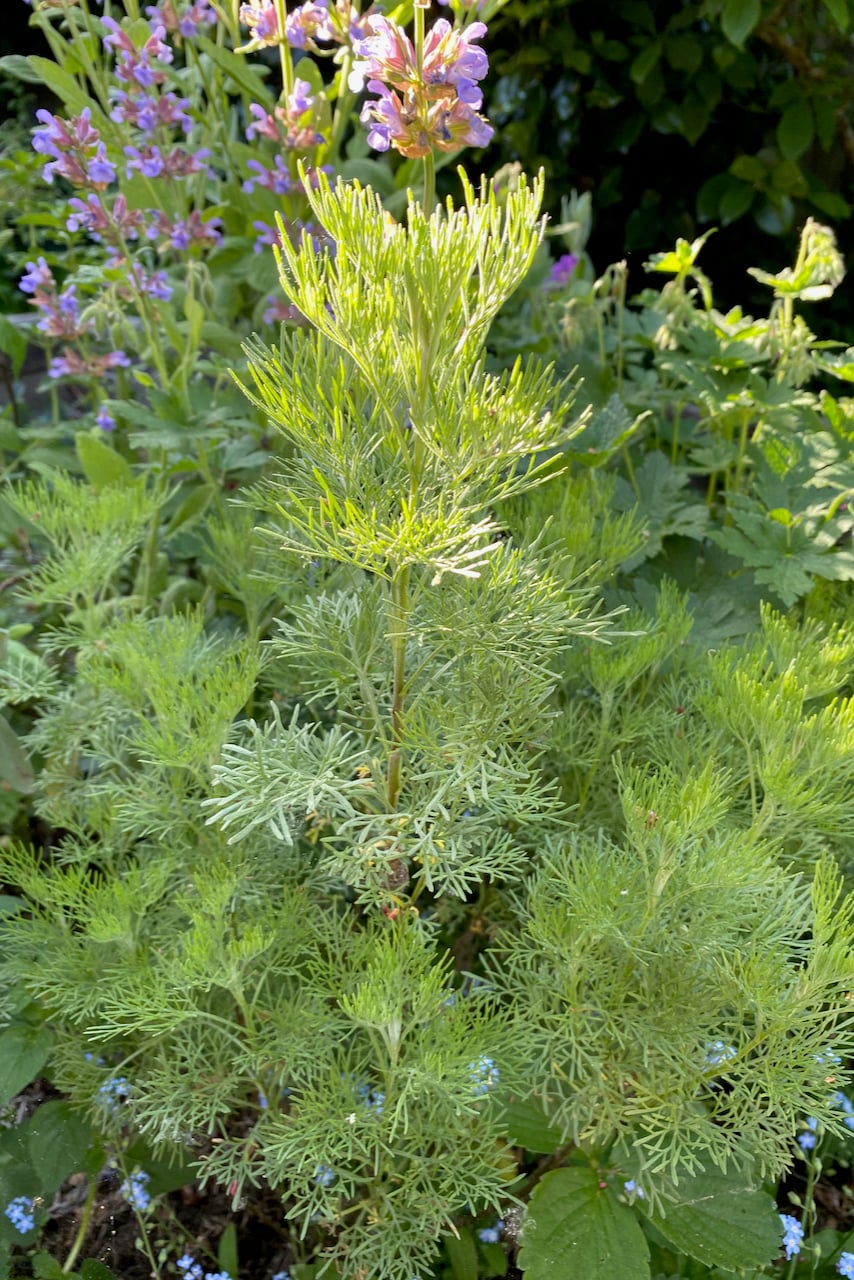
It’s the only plant on this list for which the flowers are a bit underwhelming. They’re tiny yellow flowers that start blooming in July (if it’s full sun) and stay put all the way through October. I think the fragrance makes up for this floral shortcoming.
6. Salvia
Just like the nepeta above, salvia comes in different shapes, sizes and colors. You have the uber-popular Salvia nemorosa, the true blue Salvia azurea, the vibrant purple of Salvia coccinea or the scarlet blossoms of Salvia elegans.
No matter which one you’re growing, you’re in good hands. The colorful spire-like blooms of salvia will flower over a long stretch of summer and all the way into fall. All of them will be buzzing with pollinators from sunrise to sunset.
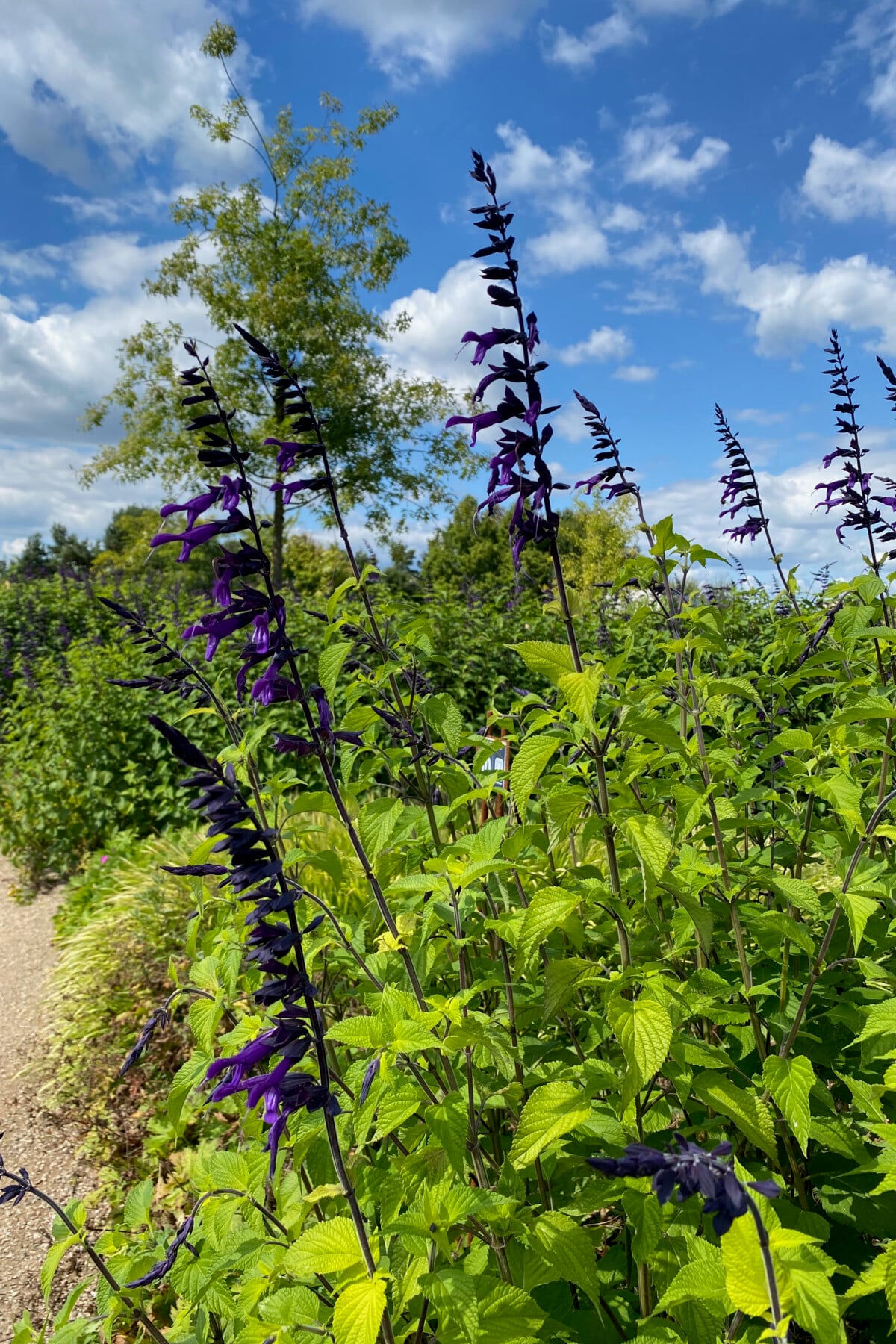
What makes it a good alternative to lavender? It is a low-maintenance but hard-working plant that definitely pulls its weight. Salvias are drought-tolerant, play well with others (meaning they won’t take over the garden) and can do well in full sun and part shade.
7. Russian sage (Perovskia)
Ironically, Russian sage (Perovskia atriplicifolia, more recently known as Salvia yangii) is not a real sage (Salvia officinalis), or Russian, or even a true salvia.
This low-maintenance perennial is native to Central and South Asia, but when it was first brought over to Europe, it was named by a Russian botanist in honor of a Russian state official. That’s how we ended up with Perovskia.
No matter what you call it, I think you’ll love it in the garden. It has a long blooming period (from July until October) and can fill up really quickly if you give it plenty of water while it’s young. Once it gets established, Perovskia is drought-tolerant.
Russian sage prefers a well-draining spot in your garden, and it doesn’t like having soggy feet. The critters don’t like to chew on it either, so deer, squirrels, bunnies and even slugs will leave it alone.
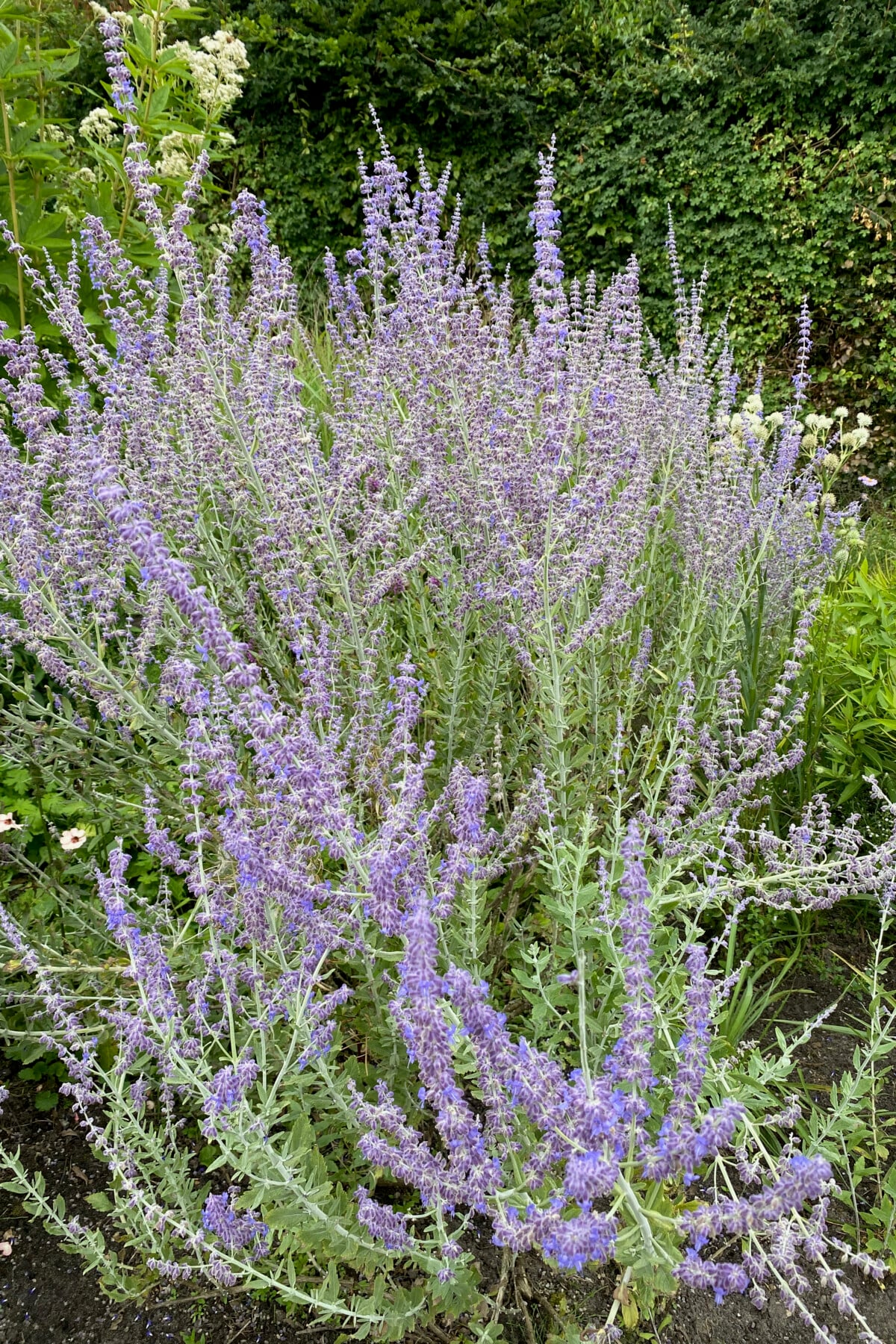
Even before it starts blooming, the silvery-green foliage of Perovskia adds plenty of interest to any garden border. And what a show it puts on when it’s in bloom! Bees, butterflies and hummingbirds flock to the colorful, fragrant spires.
Perovskia does have a tendency to flop, though, so it’s best to corral it while it’s still young.
And if you want to know how to get it to bloom profusely, here’s a handy guide.
What do you think of these lavender alternatives? Were they enough to assuage your guilt for killing this supposedly indestructible plant?
Here’s my absolute Go for it! advice. Don’t stick to just one of these lavender replacements. Try a mix of them, if you have the space. Since they have such similar requirements, you can plant them in the same corner of the garden and watch magic unravel.
Get the famous Rural Sprout newsletter delivered to your inbox.
Join the 50,000+ gardeners who get timely gardening tutorials, tips and tasks delivered direct to their inbox.