
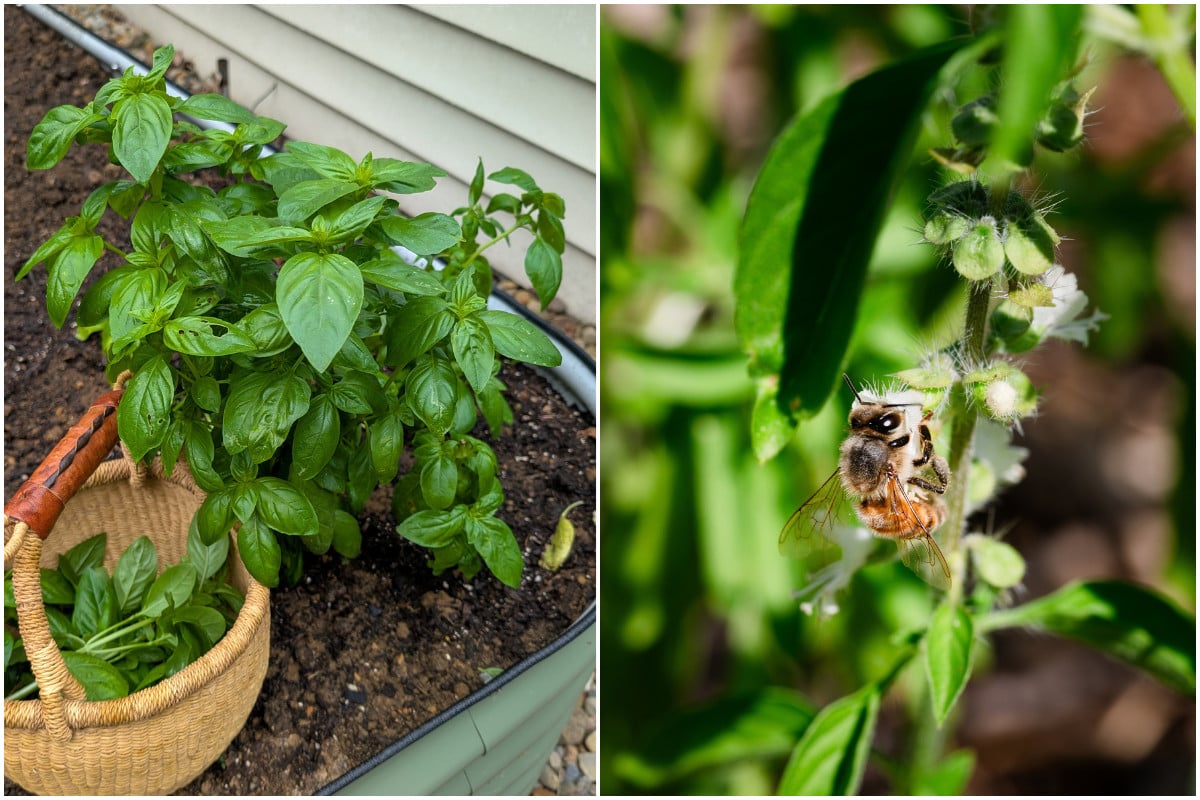
Pinch the flowers! Pick your basil often! I hear and see these gardening admonishments all over the internet, and for good reason. If you want a bumper crop of basil, then you need to make sure it doesn’t flower. That way it will keep cranking out new leaves and grow huge and bushy. Mmm, so much pesto!
Basil is part of the mint family, and anyone who knows the mint family knows they all have that tell-tale square stem. The way basil grows is by putting out new leaves on either side of the stem at a node. As long as you keep cutting your basil above those nodes, your plant will keep putting out leaves instead of flowers.
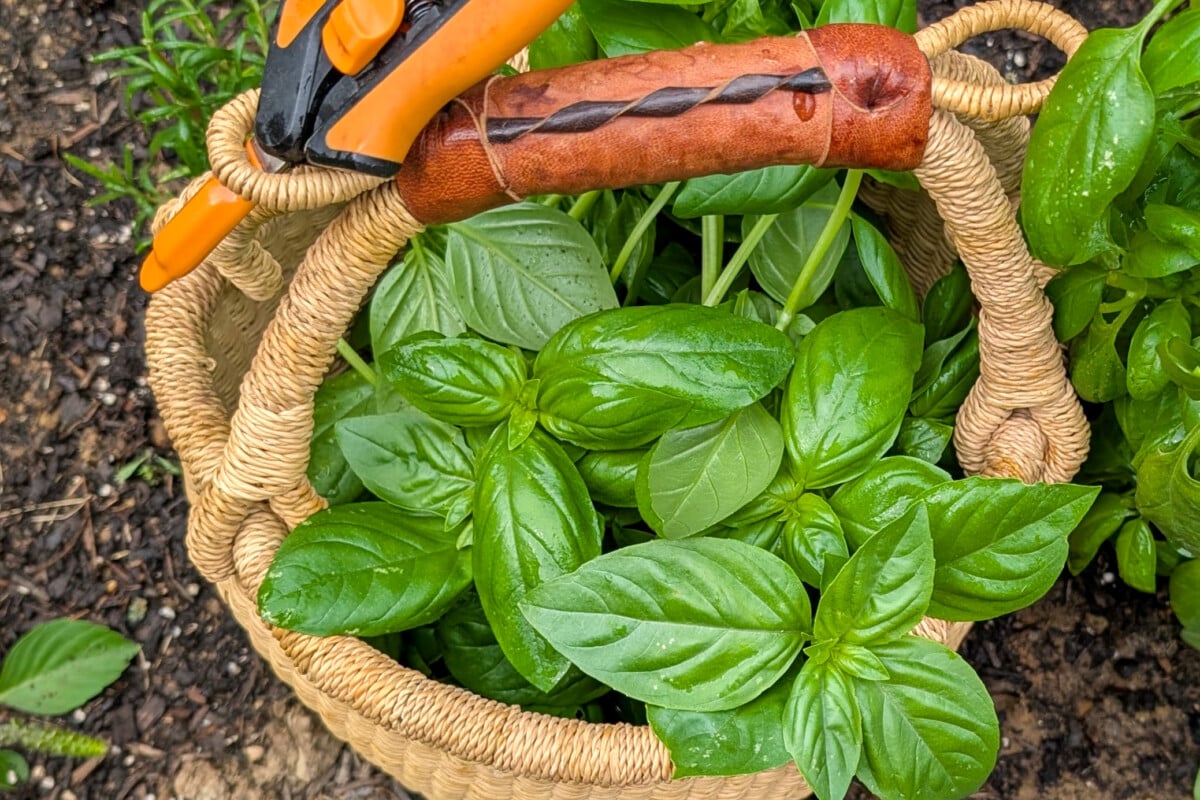
For a step-by-step basil pruning how-to, click here.
But what if I told you that ignoring this advice could be the best thing that’s happened to your garden since NPK?
Something really cool happens when you let your basil flower, and if you’re a serious gardener, you’re going to want to keep reading.
Using Basil as a Tool, Not Just a Culinary Herb
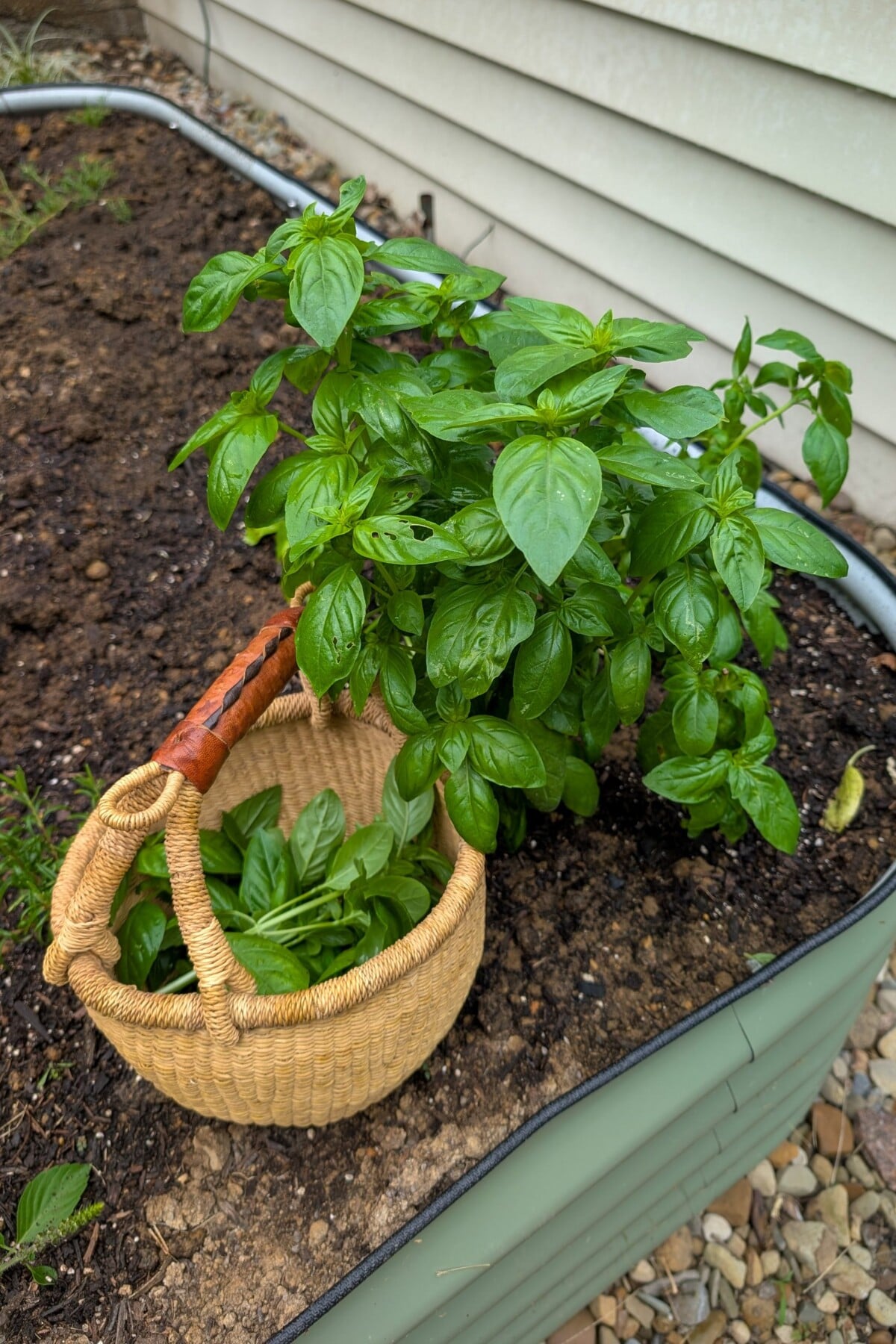
As a gardener, I understand the importance of bugs. I’ll bet you do, too. Seeing pollinators in my garden always brings a smile to my face. So, when I notice a particular plant that is absolutely buzzing with pollinators, I take note. For instance, I’ve noticed that my Autumn Joy sedum is always covered in native and non-native bees each fall. The same goes for my Russian Sage.
I would love to have these plants in my garden, but with my proclivity for moving things around each year, having perennials in my vegetable garden isn’t ideal.
I’ve also noticed, both in my garden and out in the wild, that mint, when left to flower, calls pollinators in from miles around. Here in Pennsylvania, we have a wild mint that grows everywhere in fields, pastures, ditches, on the edge of the woods, etc. It is absolutely crawling with pollinators in the summer. If I were to recommend one plant that would attract pollinators to your garden, it would be mint. Mint is even more attractive than sweet alyssum.
The problem with planting mint in your garden, or anywhere really, is that mint is aggressive.
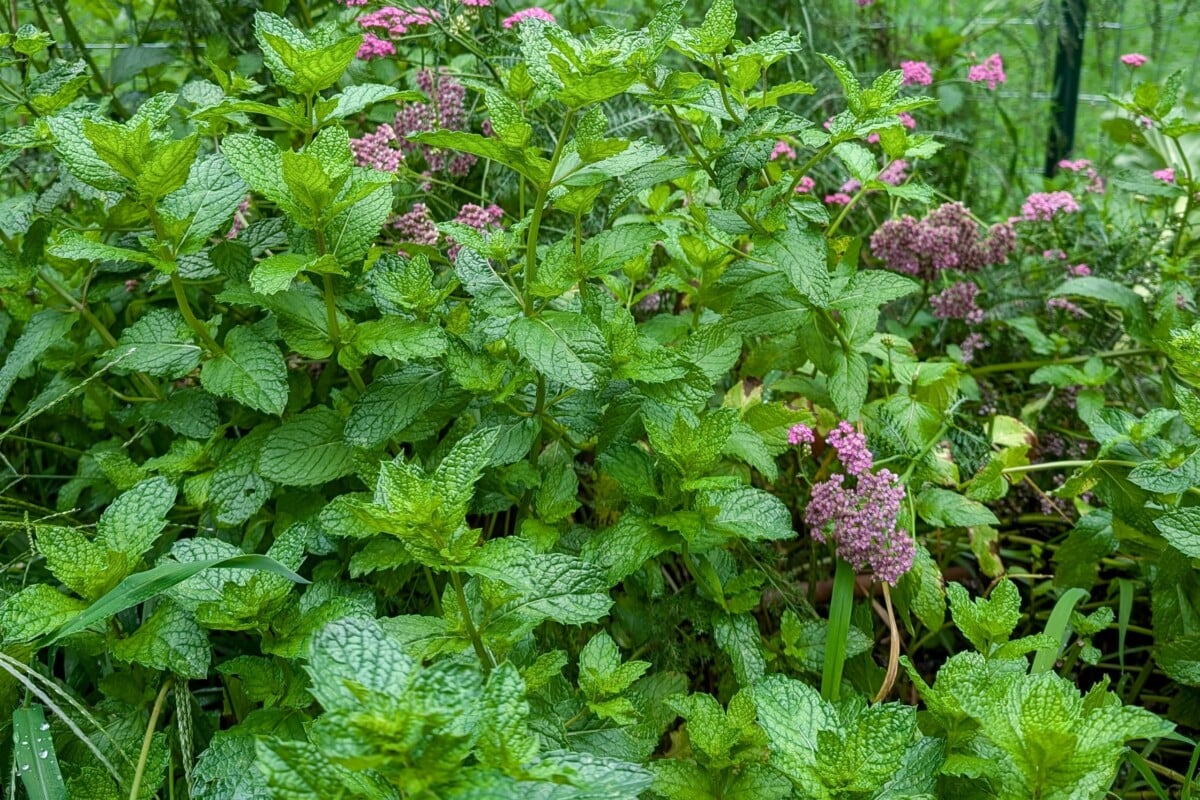
Like robocalls for a loan you’ve been pre-approved for aggressive. Mint doesn’t stop. In fact, I always warn fellow gardeners to think twice about planting mint directly in the ground. It spreads fast, with long, ropey runners that spread underground. You’ll find it popping up in the most unexpected places, nowhere near your garden. There is really only one way to grow mint safely and not have it take over your life.
Enter basil.
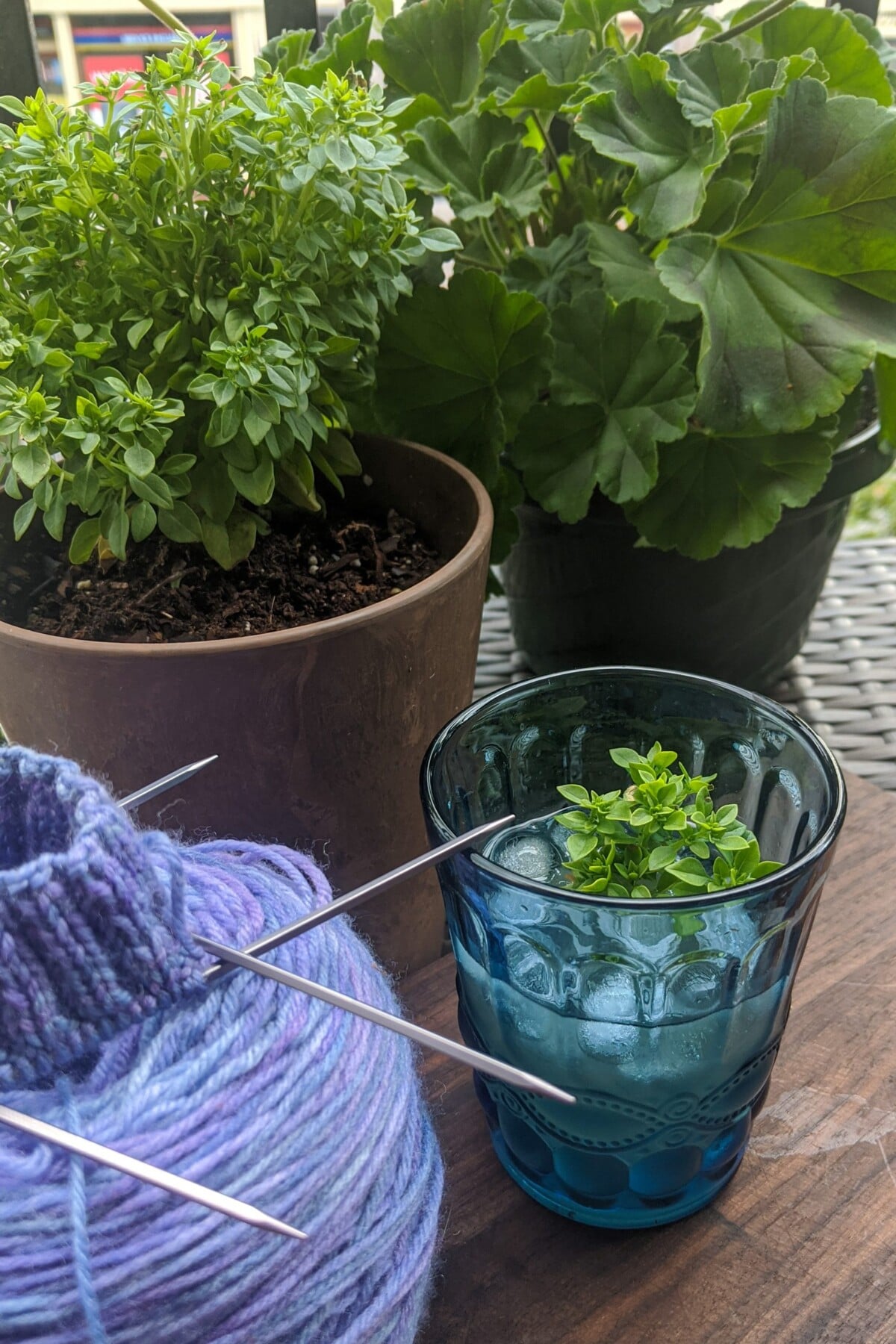
I had never even considered growing basil as a tool to entice pollinators into my garden before. After all, if I didn’t keep my basil properly pinched off so it would keep producing large, succulent leaves, the gardening police would surely show up at my door, right?
This past summer, I bought a house, which meant leaving my established garden behind while I moved from the old home into the new one. I was renting the old place, and rather than paying a small fortune for movers, I chose to pay an extra month of rent so that I could have a month to move. (It was only seven miles down the road.)
Needless to say, my garden became somewhat neglected.
One afternoon, when loading up my Subaru, I noticed that my kitchen garden was absolutely humming. Truly. You could hear the bees while standing in the kitchen. I went outside to find my herbs completely overgrown and loaded with flowers. Well, I thought, here come the gardening police.
As I stood in the sunshine watching my basil crawling with bumble bees, honey bees, hover flies and native bees, it dawned on me – duh, basil is in the mint family; no wonder the bees love it!
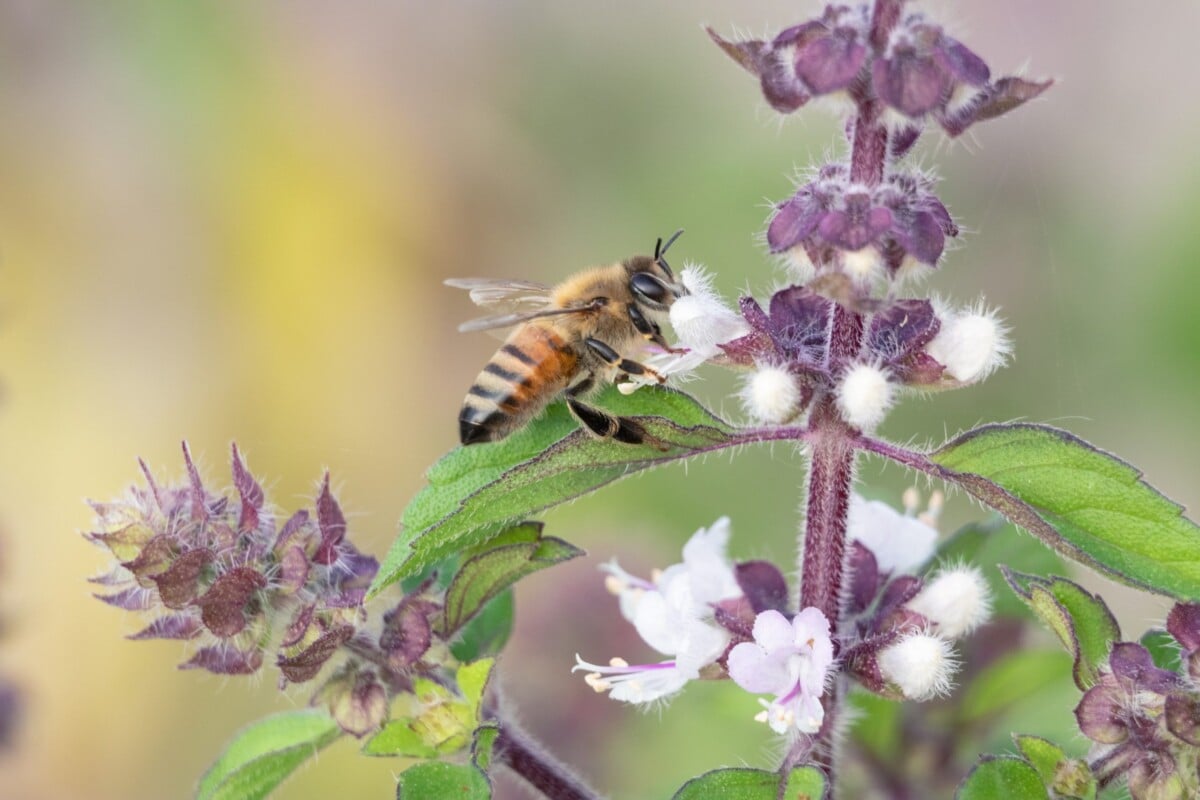
Another thought followed – basil is an annual. The frost kills it, so there’s no chance that it will take over my vegetable garden.
What if I planted basil specifically for eating, but then populated the garden with extra basil plants specifically to let them flower and attract pollinators? I know my squash and peppers could always use a few more pollinators in the garden.
Establishing Your Pollinator Basil
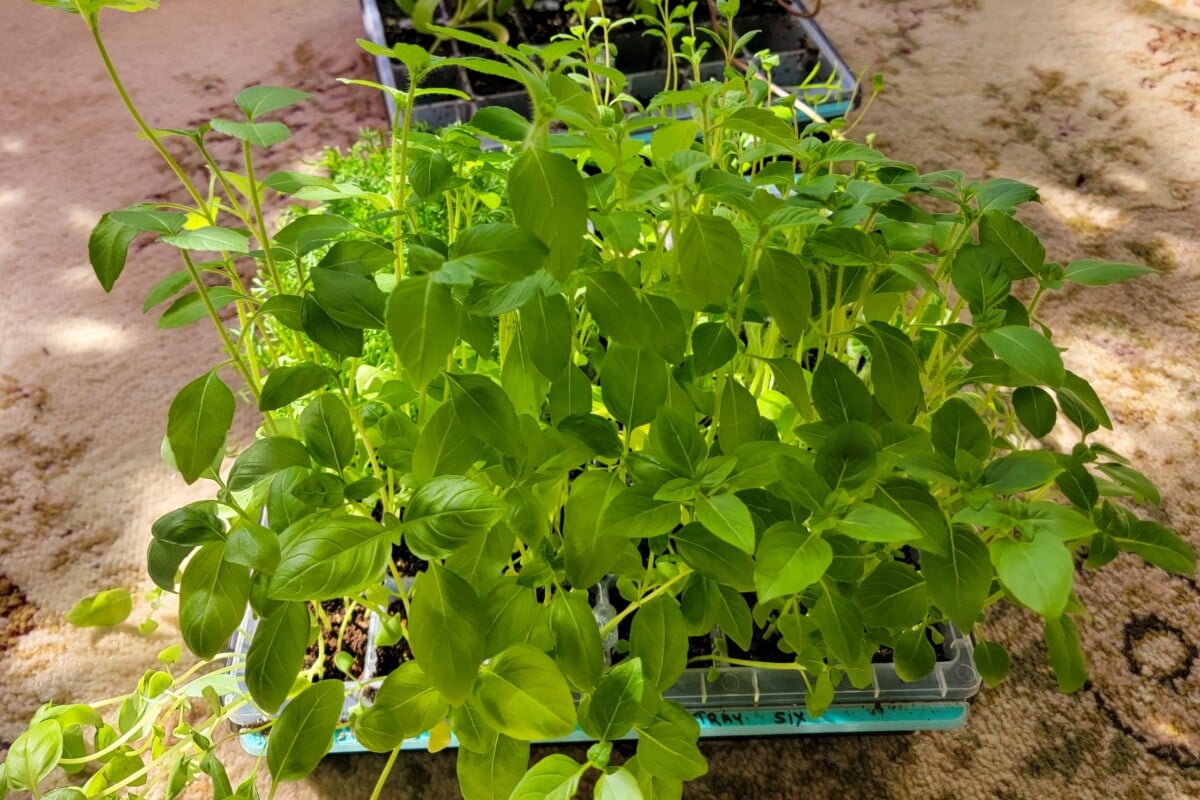
Naturally, you’ll want to cultivate the basil plants that you plan on using to attract pollinators to do the best job. That means we’ll want to allow them to grow large and full before we let them go to flower.
- In the spring, when you plant your basil, it’s a good idea to give it a good, hard haircut. I do this with a lot of my herbs, as it forces them to put out new growth and grow nice and bushy.
- Continue to harvest the leaves for eating and pinch off the top tips of each stem to encourage more lateral stems for the first 4-6 weeks.
- Around the 6-8 week mark, once your basil plant is well established and has filled out a bit. Go ahead and let it be. From this point on, we’re going to let it get a little wild and do its own thing.
- Basil needs consistent watering, so if you get a period without rain, you’ll want to step in and make sure it gets watered until Ma Nature takes over again.
- In a couple of weeks, your basil plants will be covered in flowers, and with that the pollinators will follow!
- If pollinator activity begins to die down, just cut back your basil plants a bit, and it will put out new leaves and then more flowers. You can even stagger which plants you do this with so that you’ve always got one or two flowering basil plants in the garden at one time.
I would recommend at least one basil plant for every row or large raised bed (4’x8’ or larger) or every two smaller raised beds (4’x4’). That will give you good pollinator coverage.
The nice thing is that along with the pollinators, you will also attract many other beneficial insects.
These insects will happily eat common garden pests, such as aphids, spider mites, and tomato hornworms.
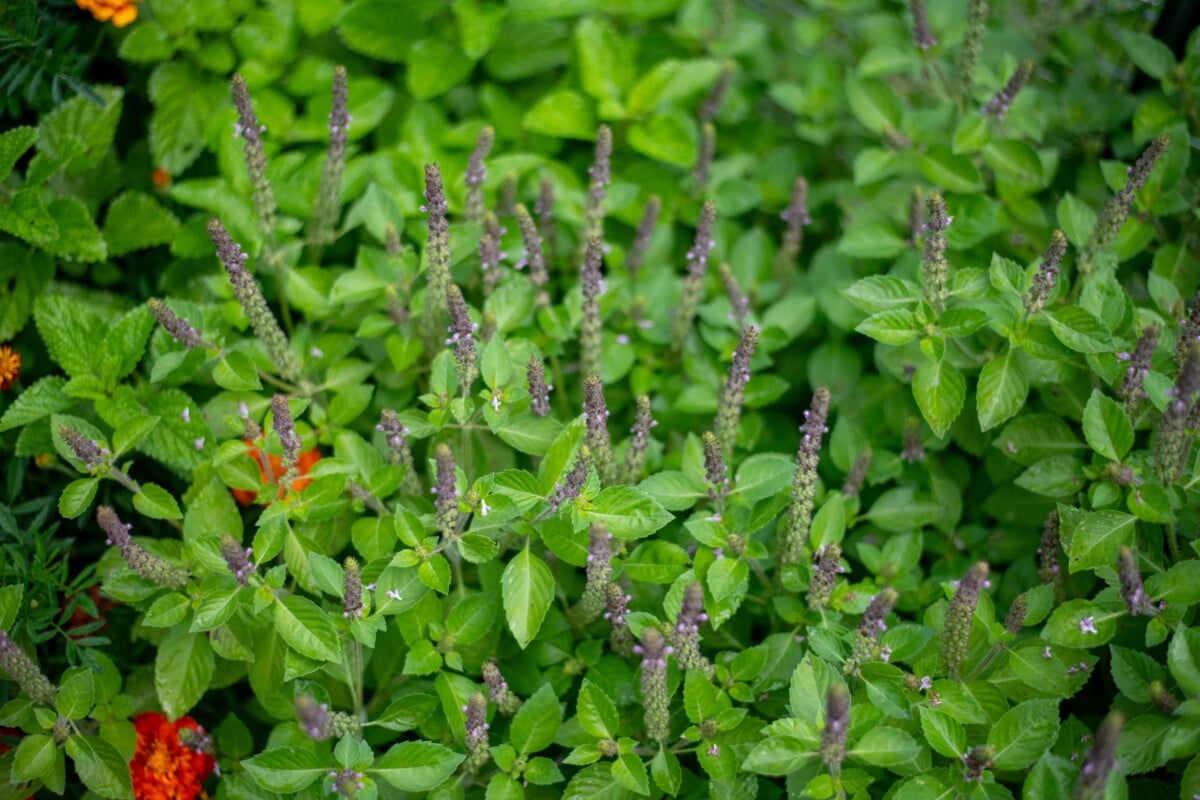
A note about varieties: I always grow three types of basil in my garden – Genovese basil, mini basil and tulsi (holy) basil. The bees love all three, but they are especially fond of Tulsi. It’s my favorite, too. It smells a bit like blueberries and makes wonderful tea.
Put the Flowers to Good Use
Those lovely basil flowers aren’t just for the bees. You can eat them. They have the same flavor profile as the leaves, but milder. They look lovely in salads and make a gorgeous edible garnish for all those pesto dishes you’ll be making. You can also dry the flowers and use them to make basil tea.
Get Garden Notes From Tracey, Right to Your Inbox
Pull up a chair on the front porch. Join 54,000+ gardeners who get Tracey\'s friendly notes, seasonal to-dos, and hands-on tutorials three times a week.