

This past weekend, we had some friends over. We sat around the fire pit talking, and I was telling the younger folks among us how awesome the long-necked butane lighters were. I recall many a summer night camping when some four-letter words would come from the general area of the fire ring, where an adult fumbling with matches or a small lighter was trying to get the fire started.
I don’t remember when these lighters came on the scene, but they’ve certainly made starting fires much easier.
Unfortunately, what hasn’t gotten easier is getting a fire going.
Handy long-necked lighter or not, there’s nothing quite so embarrassing as having a circle of guests around the fire pit or your partner sitting on the couch, anxiously waiting for the glowing orange of a toasty blaze, and all you can manage is smoke and a lot of sputtering.
Having a good fire starter can make all the difference.
There are tons of fire starters on the market, from your basic backyard-friendly fire starters to the more military-survival style. But part of the enjoyment of a good fire is the spontaneity of it. “Hey! Who wants to sit by the fire?”
Having something on hand to help get your blaze off to a good start makes the whole thing a lot easier. Luckily, there are a few things you already have in your home that will have you toasting marshmallows or toasting glasses in front of the fire in no time.
A Couple of Quick Notes
My dad was a firm believer in using one match to start a fire. He said that for a good fire you have to have enough tinder and kindling, so that all you need is a single match to start it. I’ve found this to be true over the years.
The most common reason people struggle to get a good fire going is that they don’t have nearly enough of the smaller stuff to support burning the bigger stuff.
Yes, a good fire starter and well-seasoned wood are both important. More importantly, to get a crisp, hot blaze with very little smoke is ensuring you have a large bed of tinder, with kindling standing by ready to go. You need to build a little fire before it can support burning something the size of your average piece of firewood.
Place your chosen fire starter among the bed of tinder and slowly add kindling as the tinder catches. If you go with larger pieces too fast, you’ll smother your fire.
On to the fire starters!
Citrus Peels
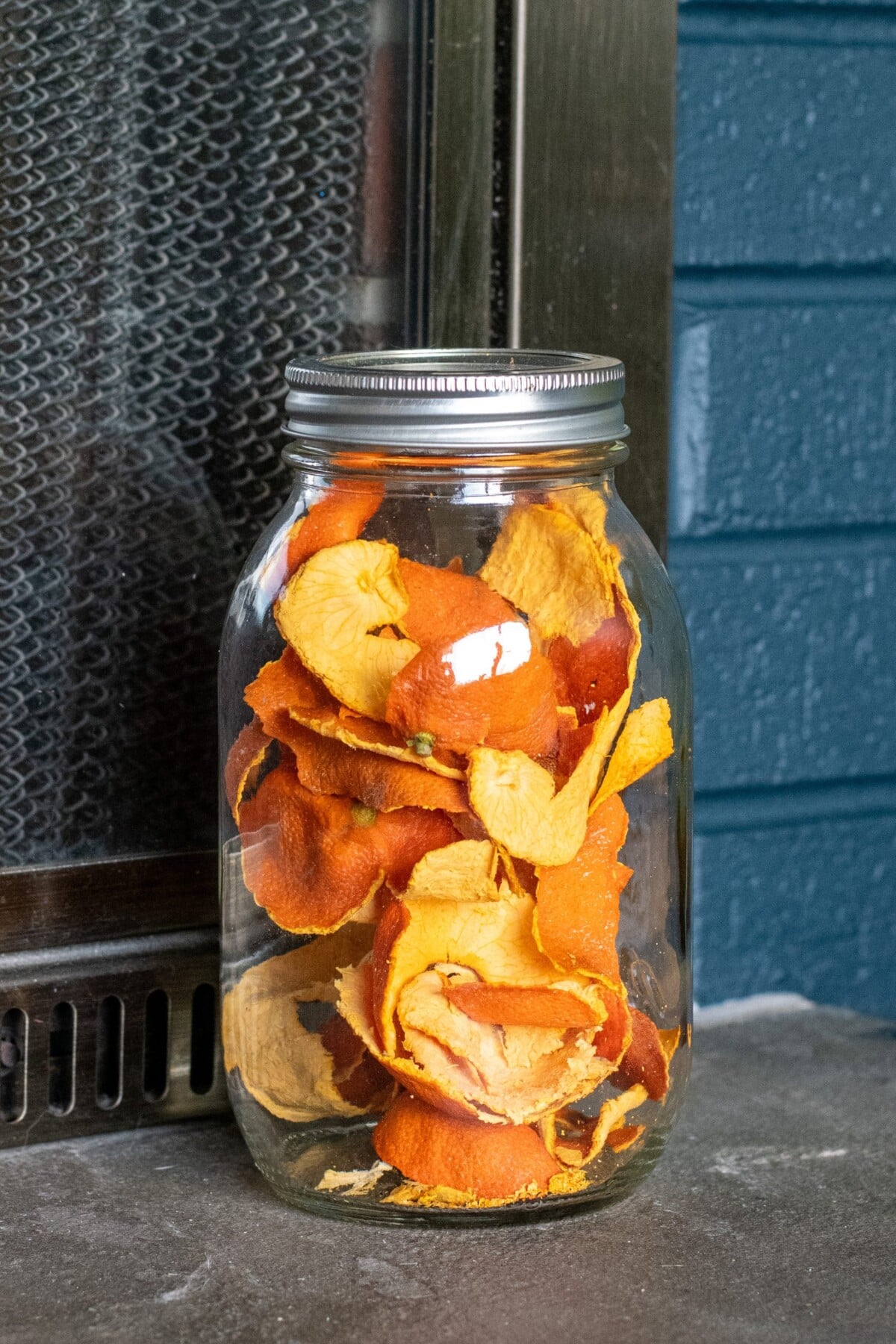
How appropriate that the citrus season here in the States coincides with the months in the year when you’re most likely to want a fire.
Instead of pitching your citrus peels, let them air dry for a week or so until they become brittle and snap easily. Store them in a jar (add a desiccant packet to keep out moisture).
It’s important to let the peels air dry. If you bake them or dehydrate them, you’ll cook off the natural oils.
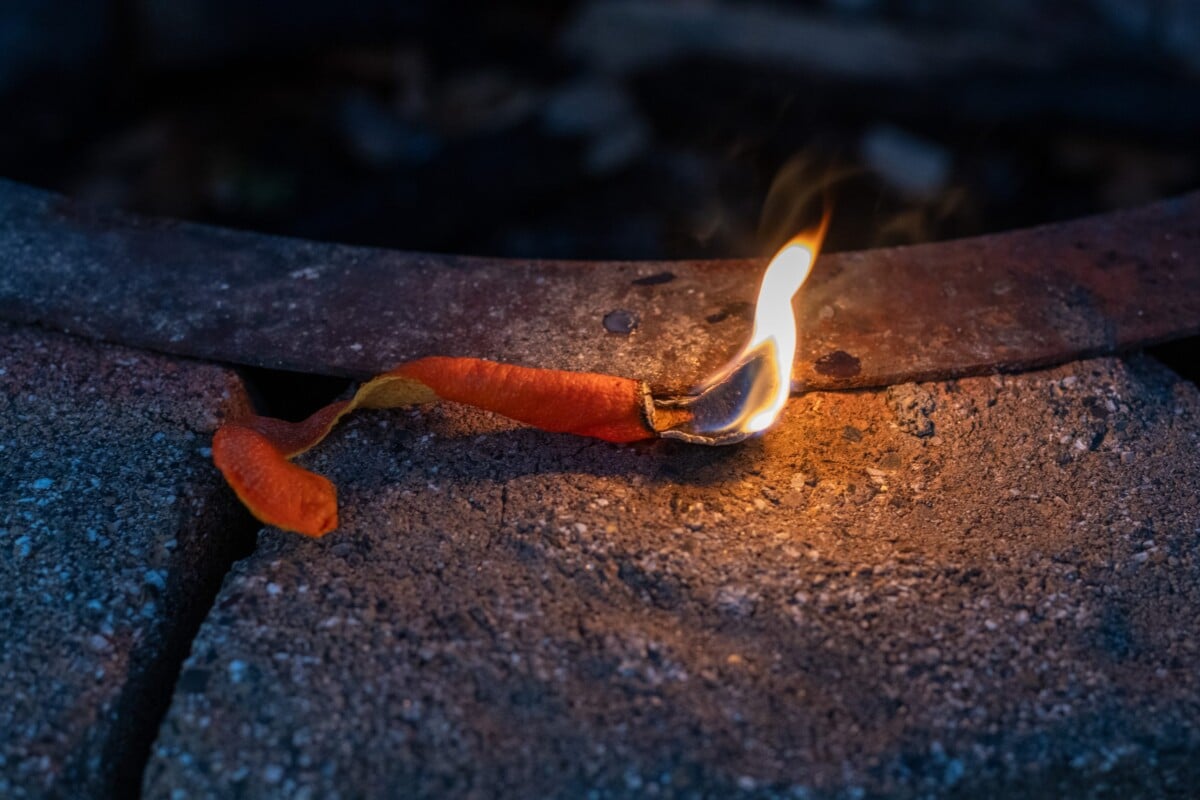
They catch quickly, and the natural oils in citrus (limonene) are highly flammable, with the bonus that your fire smells great when you burn the peels.
Cotton Balls & Petroleum Jelly
I’ll bet you didn’t know you had a fire starter in your bathroom. All you need are cotton balls and petroleum jelly (or as it’s called in our house, ‘dead dinosaur jam’). This one might seem a little unorthodox, but when you think of it, it makes sense. Swipe some petroleum jelly on a cotton ball or cotton pad.
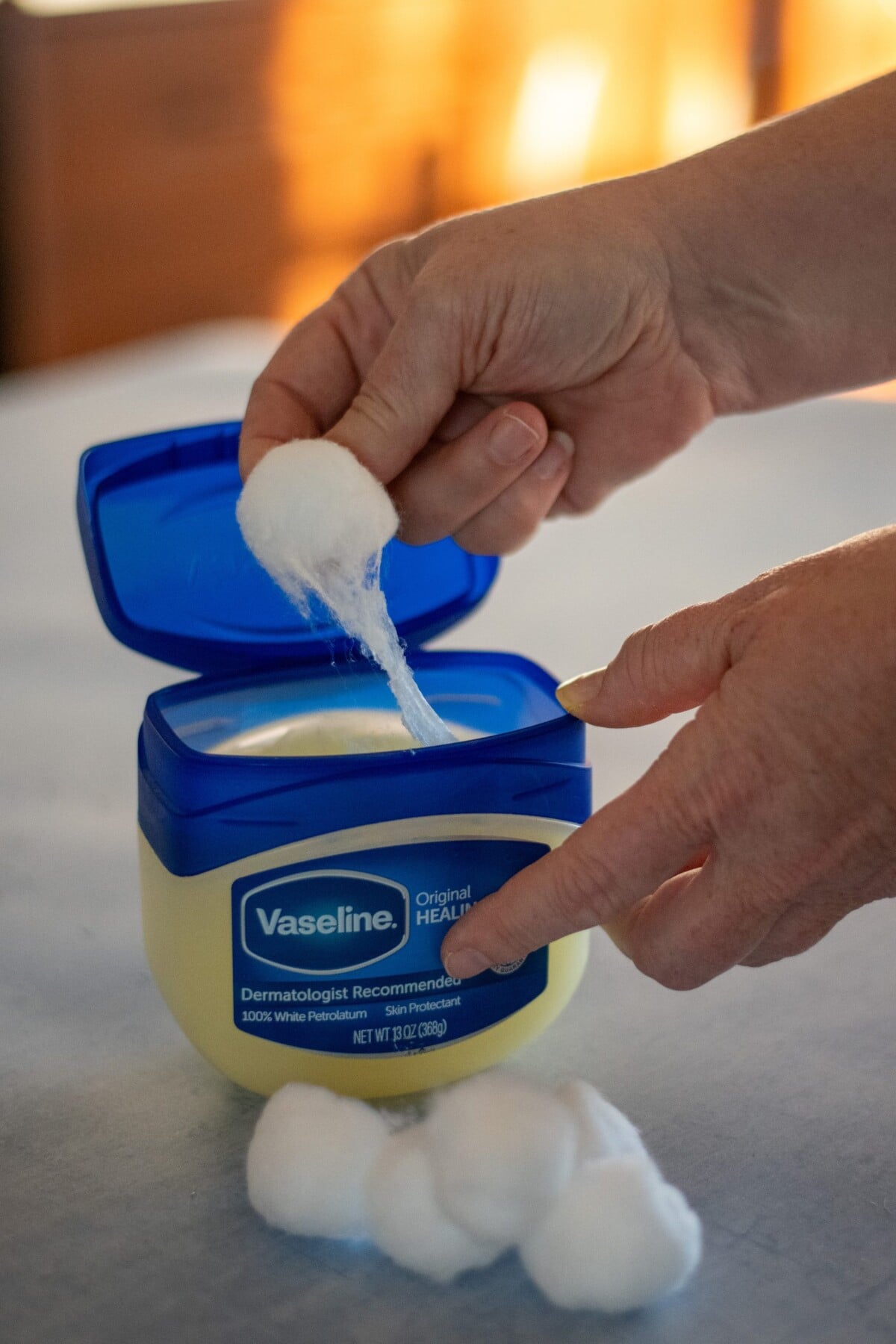
As it burns, the petroleum jelly melts into the cotton, which acts like a wick. These are great as they will burn for several minutes, even when wet. You only need one to get your fire started.
Not only are these excellent for getting a roaring fire going, but if you go camping or you’re a survivalist, these pack up nicely in a tin or plastic zip-top baggie.
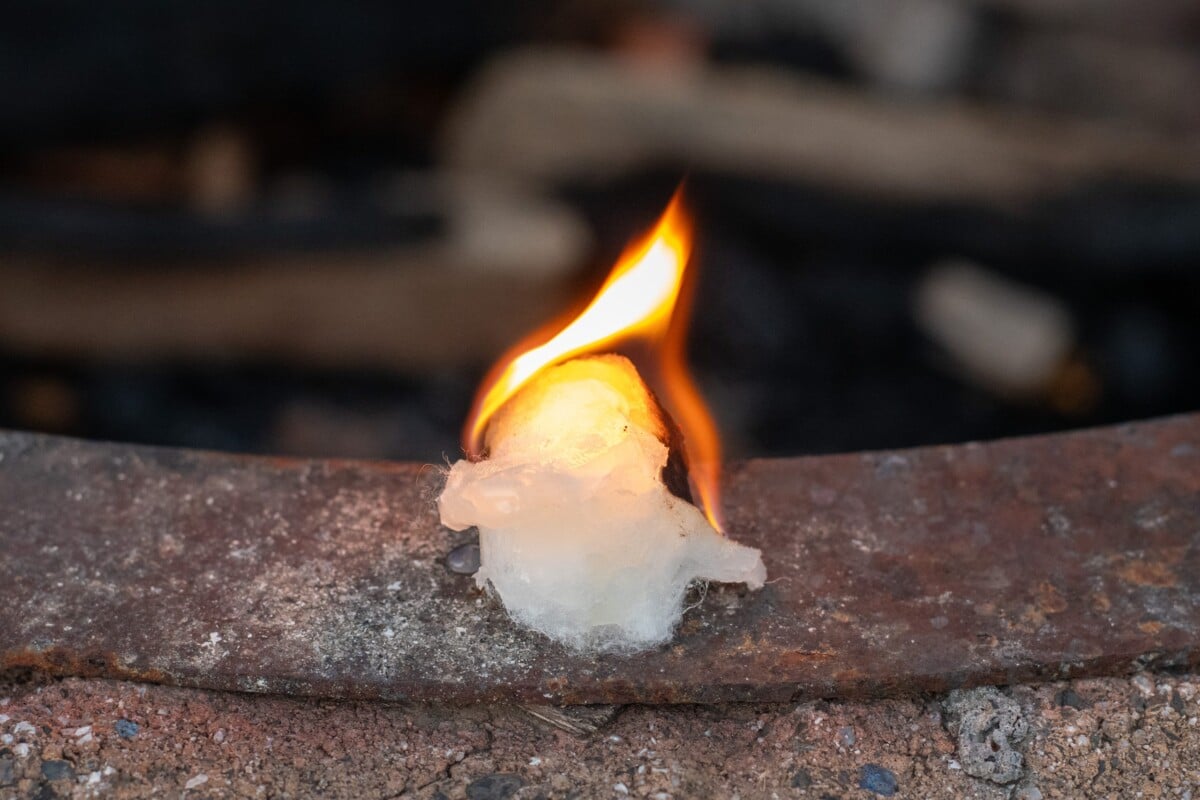
The following three are make-ahead fire starters, mainly because they all use paraffin to hold them together and as an accelerant. Yes, you can absolutely use the ingredients without the paraffin to start a fire; however, they will burn a lot longer with the wax, and on their own, you may need several to get a fire going.
These also make fun homemade gifts around the holidays for your friends or family members who:
- Have a fireplace
- Have a woodstove
- Like to go camping or backpacking
- Enjoy an evening around the fire pit
Put them in a decorative tin and voila, you’ve got a personal, yet practical gift that will actually get used. (Unlike those mason jars filled with cookie ingredients sitting in the back of everyone’s pantry since 2022.)
Paraffin
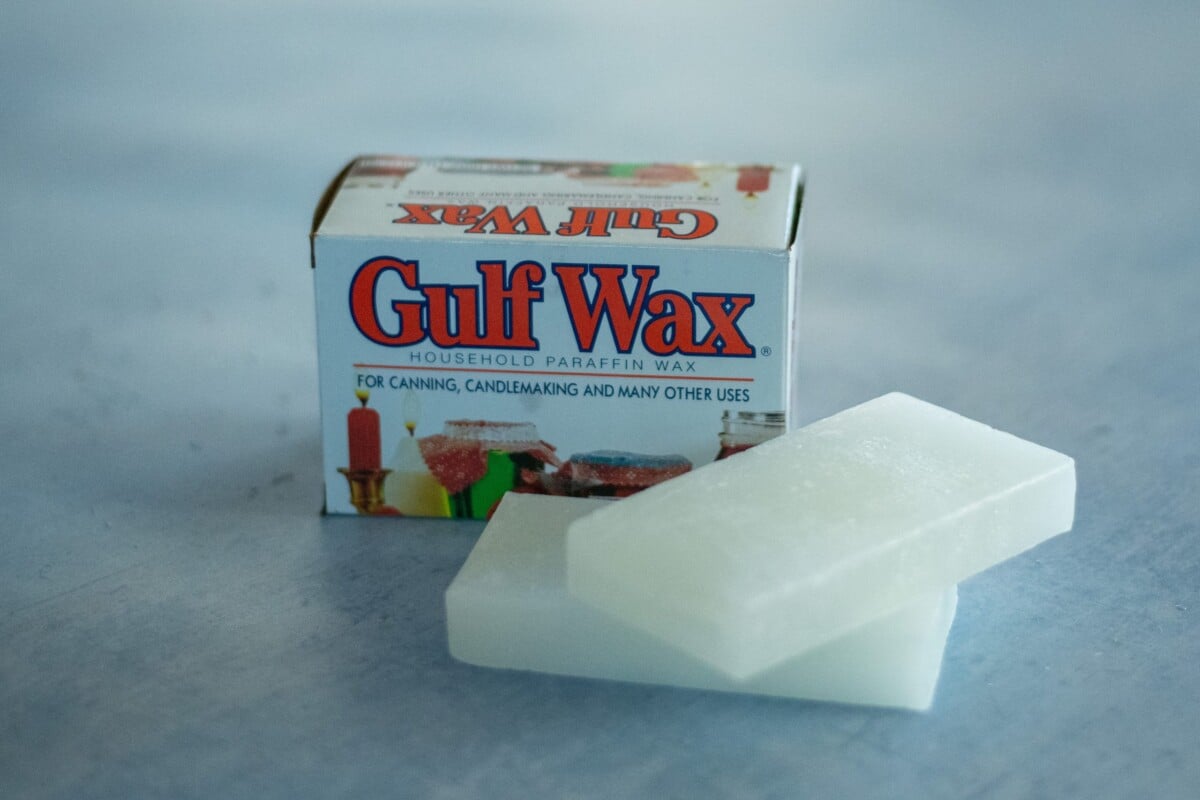
All three of these fire starters use paraffin wax, which you can get at any Walmart and nearly every store that has a canning section. If you can’t find it locally, you can always order some here.
Melt paraffin low and slow on the stove. Cover your working area with something to protect from splashes. I used parchment sheets.
Sawdust Cupcakes
Grab some cupcake liners and sawdust and put them in a muffin tin. Fill each with a generous handful of sawdust. I used my canning funnel to keep things tidy.
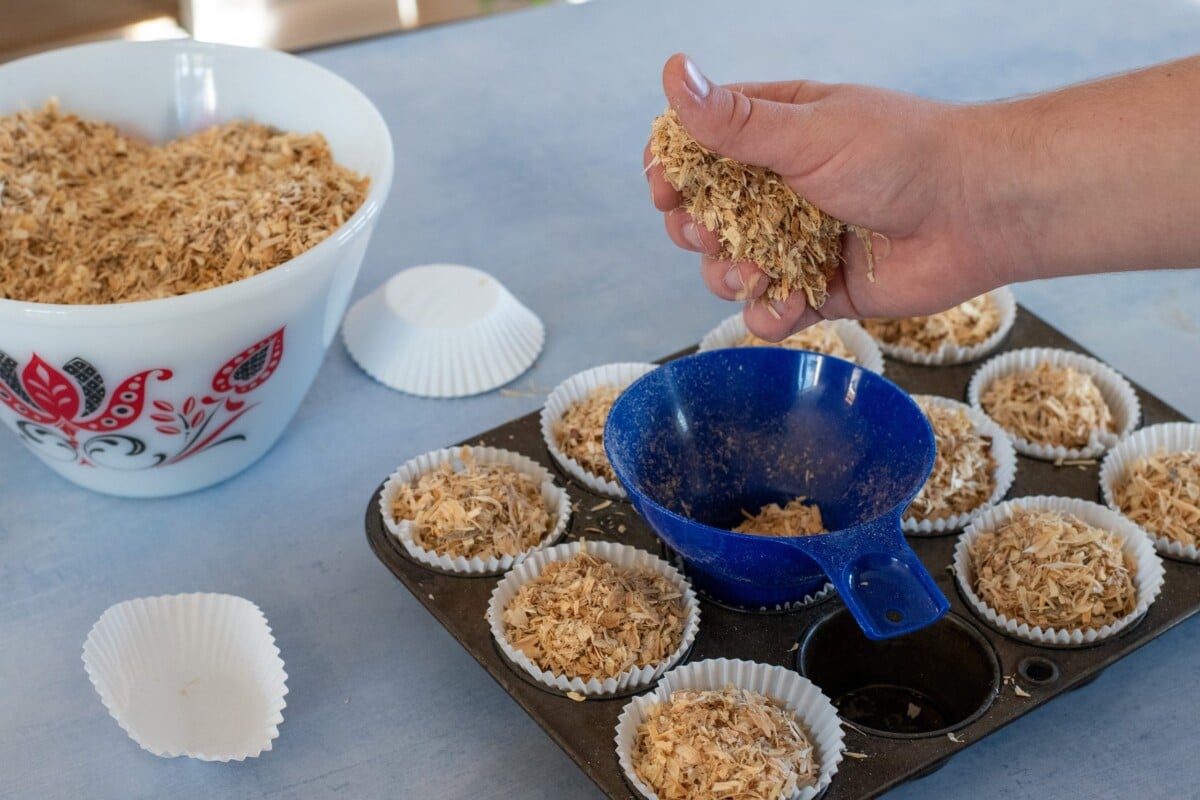
Once each well is filled, pour paraffin over each one, thoroughly soaking the sawdust. Now place the whole thing in the freezer for twenty minutes. Remove the pan from the freezer and the “cupcakes” will pop right out. If you dribbled any wax on the muffin tin, put it back in the freezer for a few minutes and it will flake right off when you take it out.
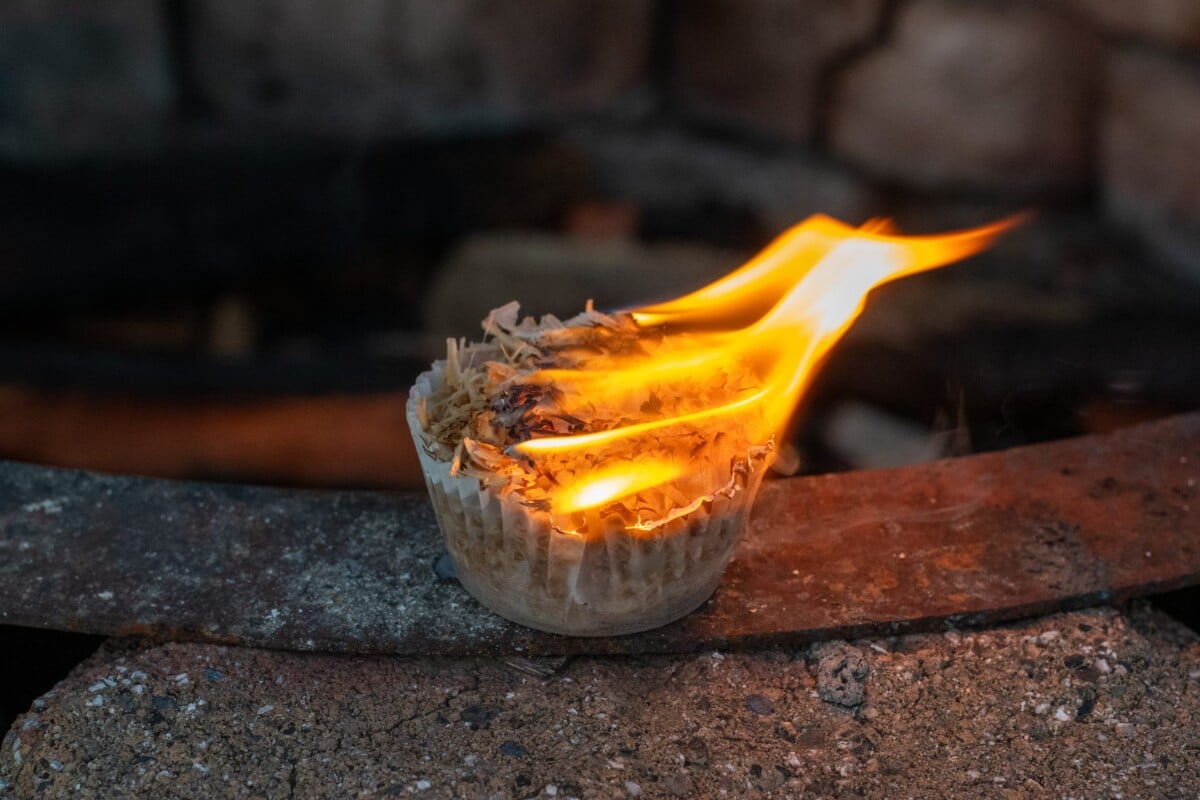
These sawdust cupcakes will burn for quite some time and do a bang-up job of starting a fire.

As these look nice when finished, they are also the best option for gifting. However, you’ll need to remind family members that they are not for eating. My eldest son got all excited when he saw the cookie tin and was thoroughly let down to find fire starters.
Paper Egg Cartons & Dryer Lint
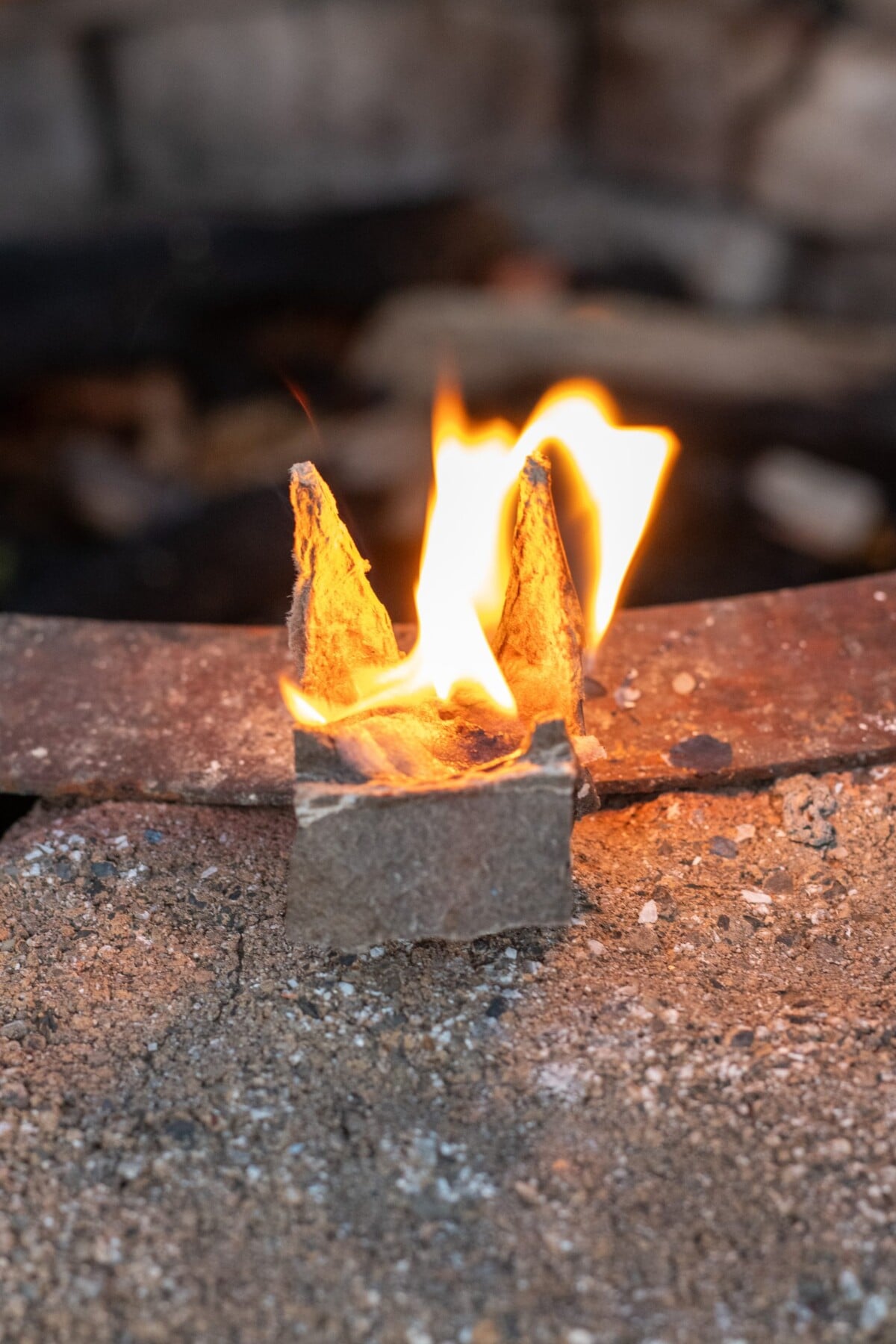
Save your empty egg cartons and dryer lint to make fire starters. For this one, you’ll pour the paraffin into the egg cups first and then press a ping-pong ball-sized wad of lint down into it. Be careful not to touch the hot wax. You can use a chopstick or similar tool to submerge the lint.
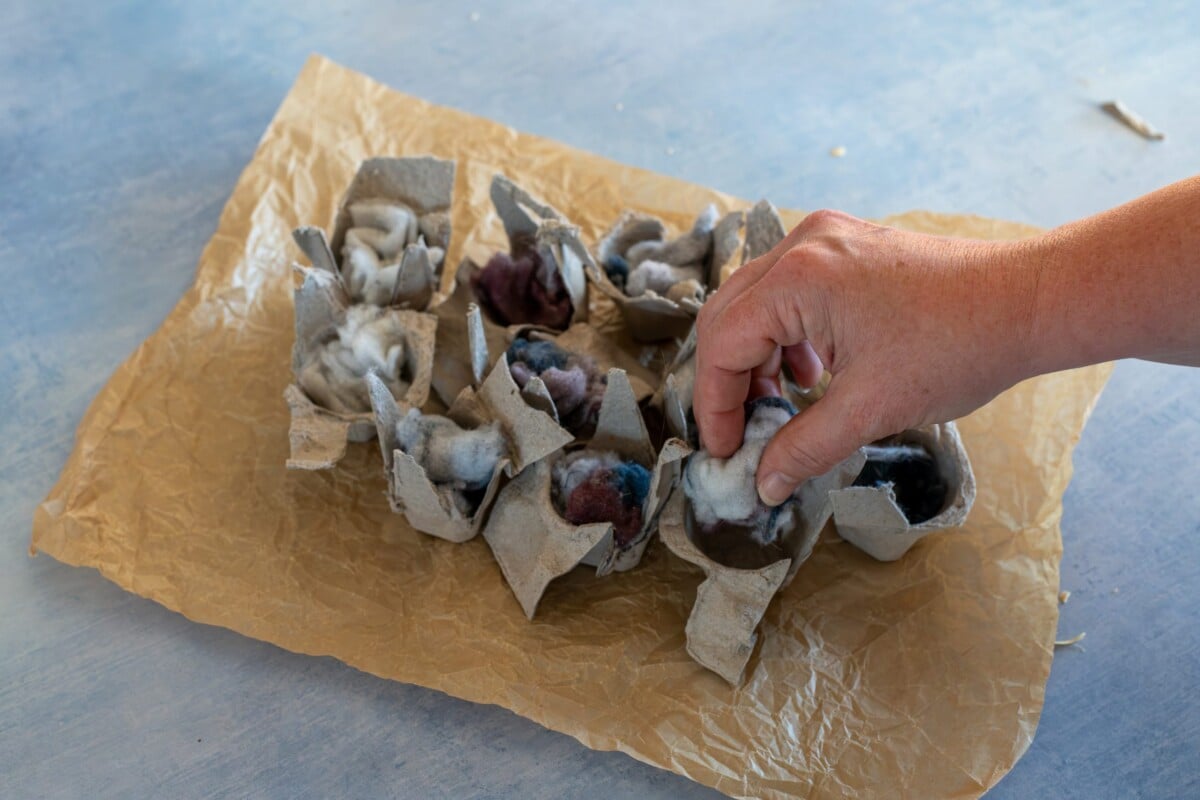
I cut the egg cups apart with scissors first before filling them, as I figured it would be more difficult to cut them apart after I had poured the paraffin. Of course, it was only afterward that I thought of using a serrated bread or steak knife to cut the individual fire starters apart, which would have meant I could have cut them after the paraffin had cooled and hardened. Ah well, next batch!
Toilet Paper Tubes Stuffed with Shredded Paper
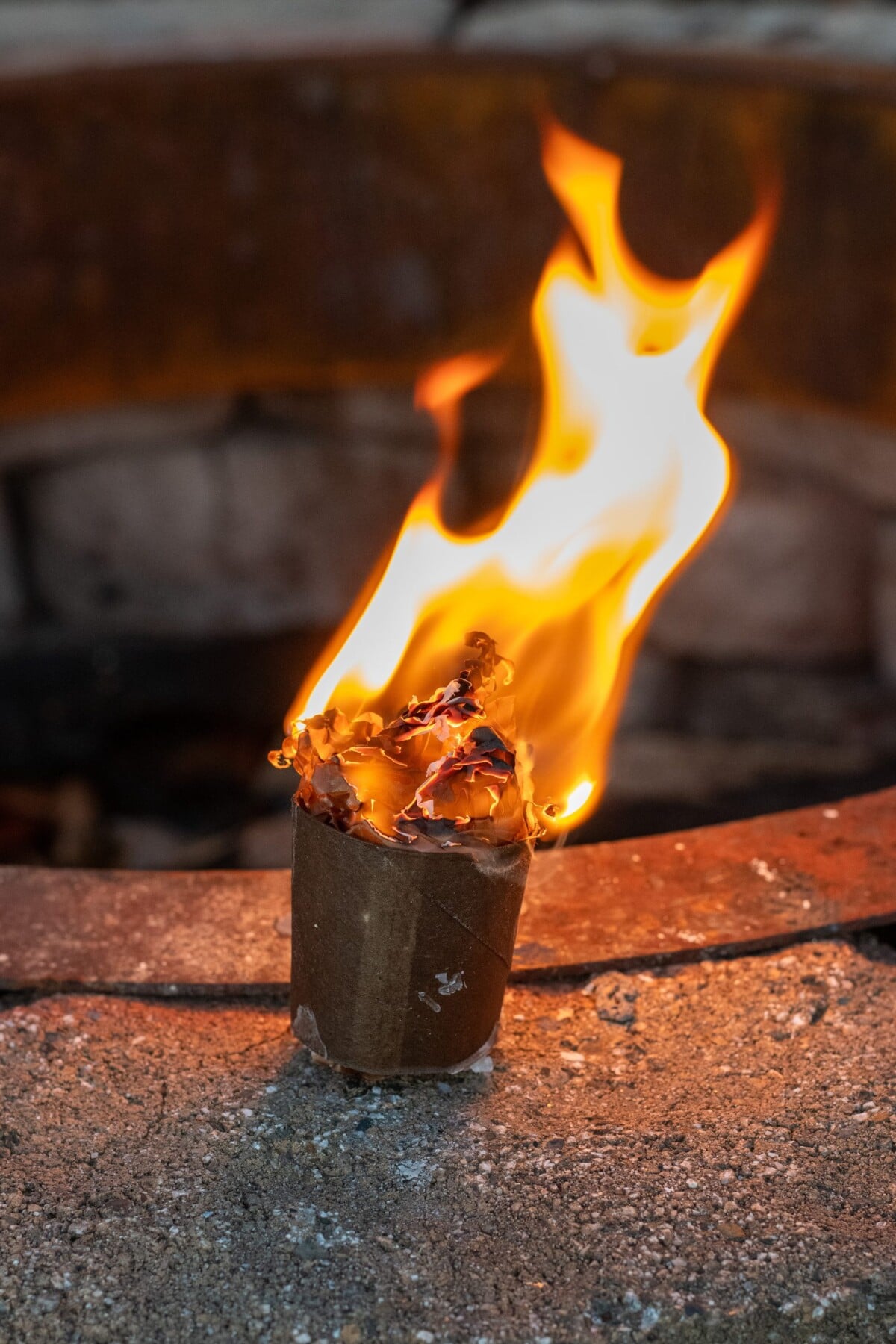
These are great if you own a paper shredder. You can also use the shredded paper that is often used for packing or gift bags. I moved this summer and still have quite a bit of honeycomb paper left after unpacking, so that’s what I used.
Line a square baking dish with parchment paper. Cut each toilet paper tube in half, so that you now have two short tubes.
Take a wad of shredded paper and gently pack it into the tube. Make sure you don’t pack it too tightly. You want the hot paraffin to be able to dribble down inside it. Leave some tufts of paper sticking up from the top of the tube and place it in the baking dish. Repeat until the baking dish is full of the little stuffed tubes.
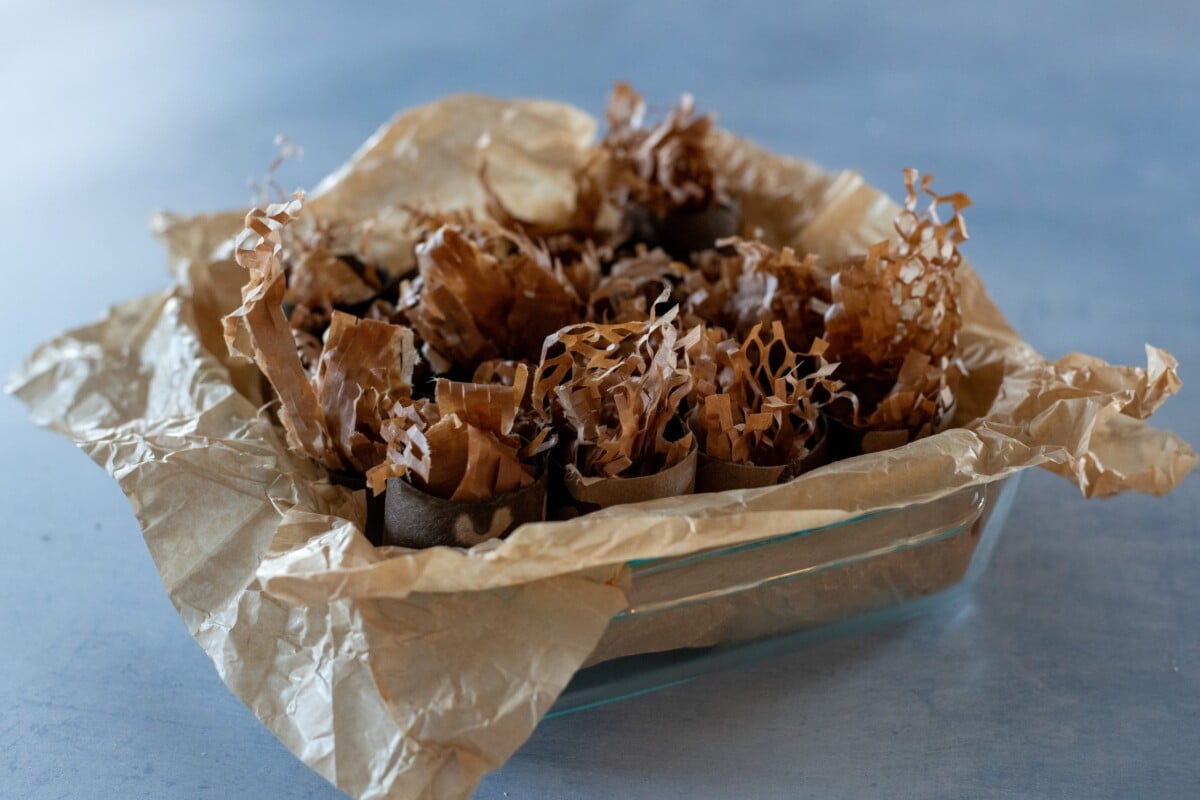
Carefully pour the hot paraffin down into and over the tubes. Once finished pouring, tilt the baking dish a little bit to each of the four sides to ensure the liquid paraffin coats and covers the bottom of each tube.
Let the paraffin cool and harden completely, then pop the whole thing out of the baking dish. Place the block of fire starters in the freezer for 5-10 minutes to make breaking apart the individual tubes easier.
Storing Your Fire Starters
For the paraffin-type fire starters, store them somewhere dry and cool.
Oh, and if you don’t want to mess with making your own fire starters, here are some I use for our fire pit and camping fires. These little buggers are incredible, and one box lasts me several years. I think it will be a long time before I need them again. I’ve got plenty of handmade fire starters on hand now, and they all work great!
Read Next: Is Your Firewood Seasoned and Ready to Burn? 3 Easy Ways to Tell
Get Garden Notes From Tracey, Right to Your Inbox
Pull up a chair on the front porch. Join 54,000+ gardeners who get Tracey\'s friendly notes, seasonal to-dos, and hands-on tutorials three times a week.