

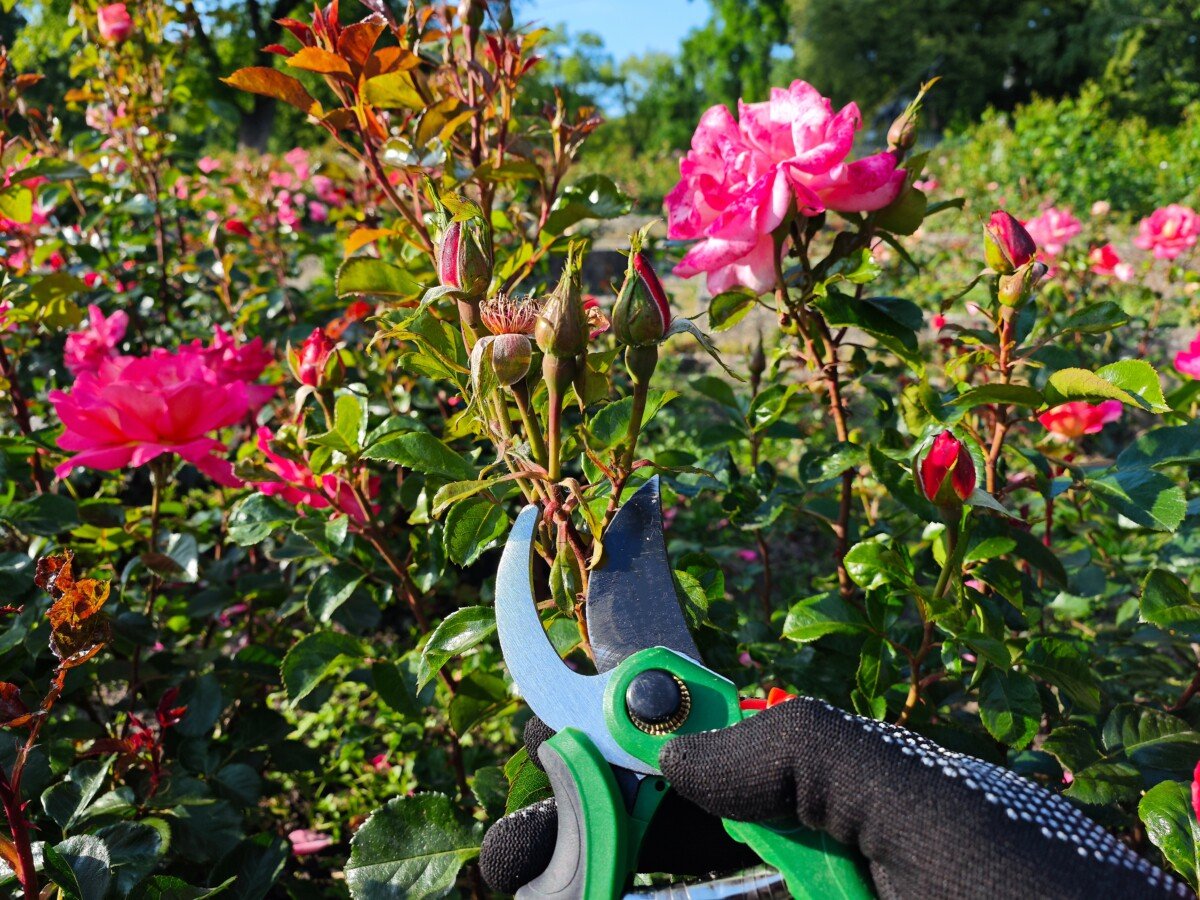
In a classic tale of taking over someone else’s choices when you buy a place, when we moved into our current home and garden, I inherited a rose plant. I say “plant” because I did not know at the time whether it was a rambler, a shrub, a climber or a shrub trained as a climber.
It was March and I waited and waited patiently for it to bloom to see what I got.
It … sort of bloomed. Only one lone bud made an appearance.
That’s ok. There’s always next year! I said to myself. Dear reader, let’s just say I set myself up for disappointment the following year as well.

The rose only got three blooms. Red, gorgeous, vibrant, but only three.
Has this ever happened to your roses? And were you as frustrated as I was?
More importantly, would you like to know the reason why my rose didn’t bloom – and perhaps yours won’t either?
Here it is, plus a few more, just to have a few paths for troubleshooting.
1. Your roses aren’t getting enough sun.
After two years of observing the rose that I had inherited, I concluded this was the problem I had to fix.
You see, roses need sun. And lots of it. Six hours of sun at the height of their blooming period are non-negotiable for said rose to reach its full flowering potential.

The rose in my garden had been planted by the previous owners right next to – and trailing up – a fence. It looked nice, but the fence itself was acting as a sun barrier, shading the rose from any penetrating sunlight. For all but one hour a day. Maybe two hours at the height of summer.
So while the plant kept shooting up to reach the sun, it never really succeeded.
How do I fix this rose problem?
I’m afraid there’s no other way but to dig out the rose and replant it in a sunnier spot. It’s not that hard to do it with younger roses. (And my guess is that, if you have an older rose, you’ve already placed it in an optimal spot anyway.)
The best time to transplant roses is in the spring and fall, when the temperatures are cool enough to make the transition smoother.
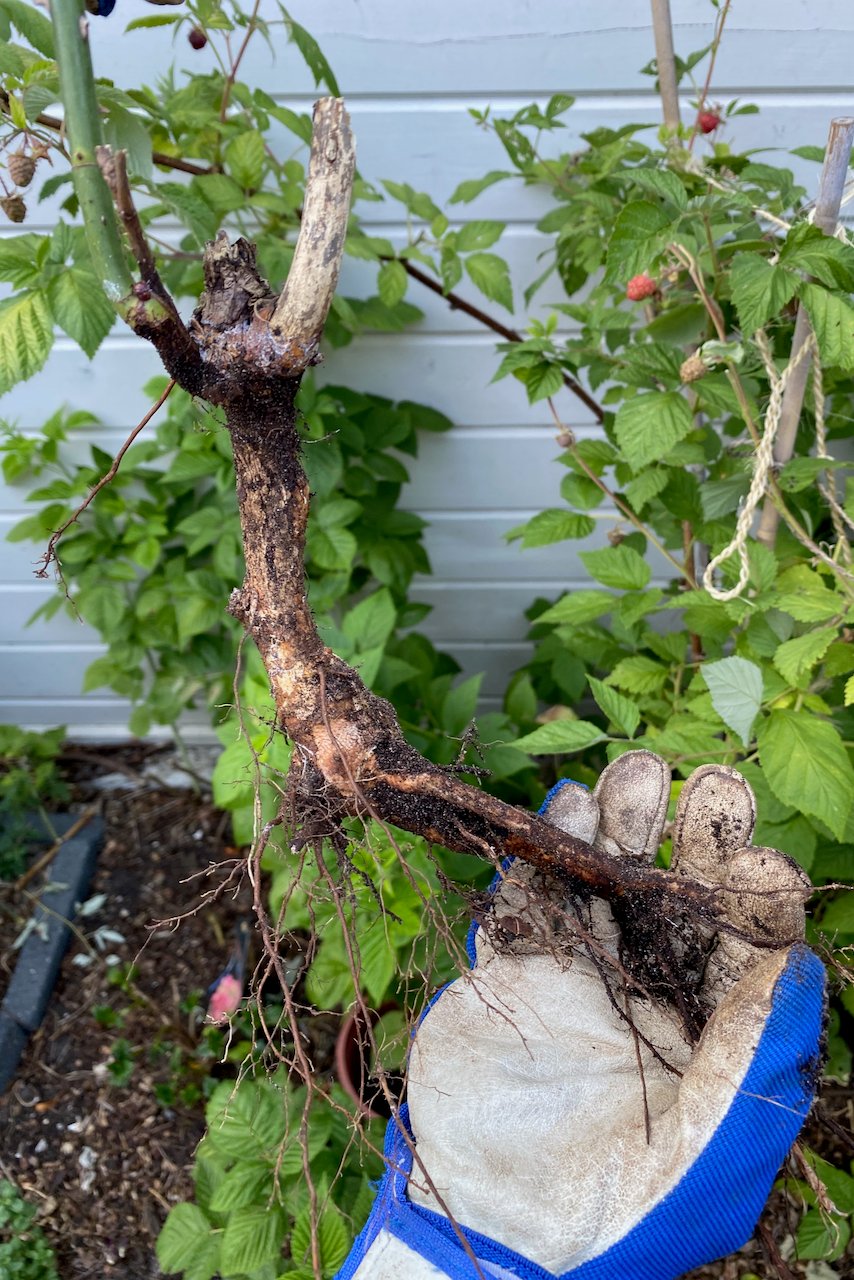
That being said, if you’ve already lost faith that the rose will bear much bloom this summer, you can move it now. Provided that (and please remember this as a very important detail) you keep it well watered.
So no transplanting it right before you go on vacation, ok?
2. Your roses are too young to bloom.
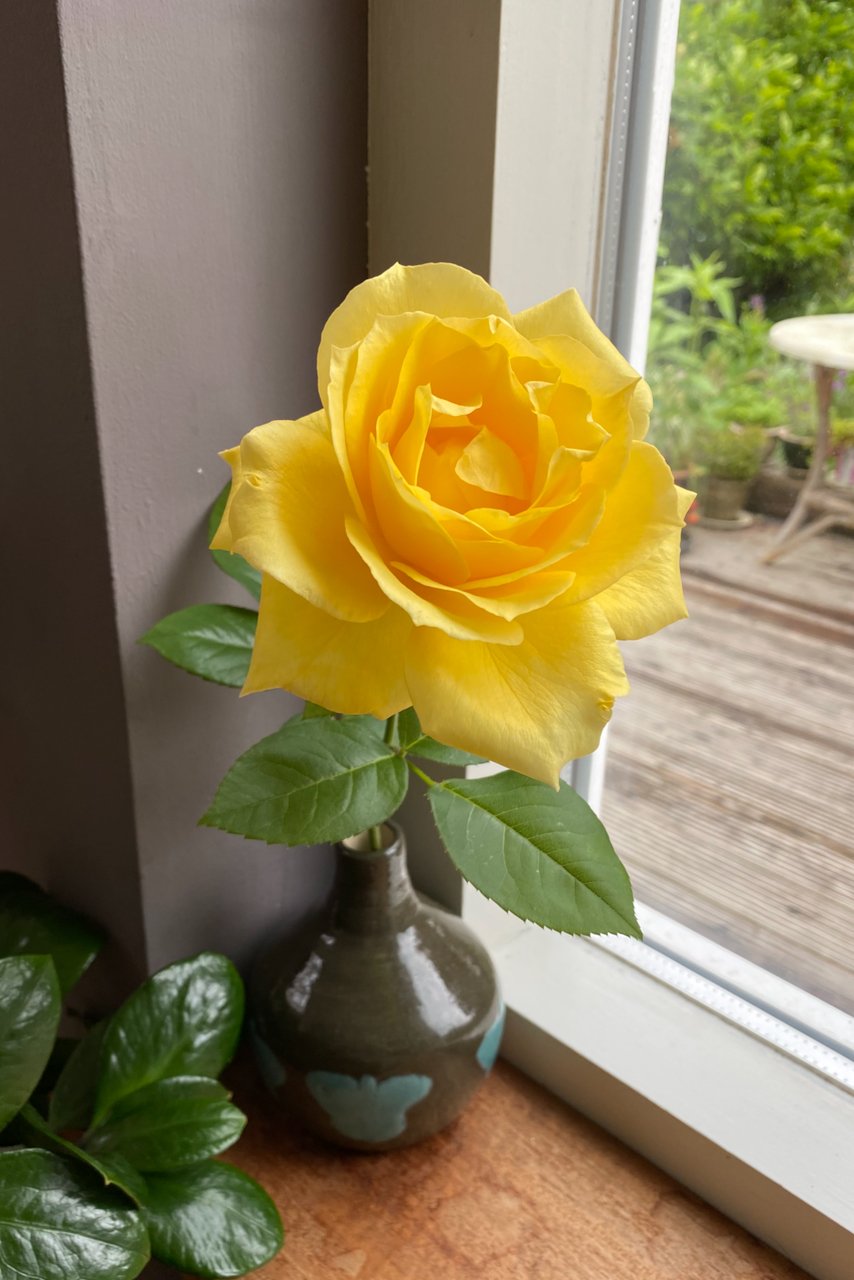
This was another hurdle that I hit with some of my heirloom yellow roses.
My parents have wonderful mature roses in their garden which, almost unimaginable to some gardeners today, they have never ever fertilized. My parents live far away from us, so a couple of years ago I coached them via video call on how to take rose cuttings.
They took a lot of heirloom cuttings that year, but only five survived. These five made their way back to me, riding shotgun in a car in the middle of July for two days.
Not ideal.
Of the five, only two survived when I put them in the ground. And of the two cuttings, only one bloomed after a year. But only one flower. Then two blooms the next year. Then an explosion of blooms by year three.
I’m telling you this whole anecdote just to put your mind at ease that, if your young roses aren’t blooming, all you have to do is wait another year or two.
New roses (whether they’re young or mature but newly planted) take a while to get established; and during this time, they’ll smartly redirect their energy towards their roots, not producing flowers.
Wait a couple of summers for your roses to get established. And in the meantime, keep up a good care routine: water them, mulch them and feed them.
3. You overpruned your roses and they’re not blooming (fast enough).
A few years ago, I wrote a guide covering the best way to prune your roses in winter. And perhaps more importantly, covering when to wait and not prune your roses.
In this guide, I mentioned that some roses, particularly some climbing roses and some rambling roses, bloom on last year’s wood.
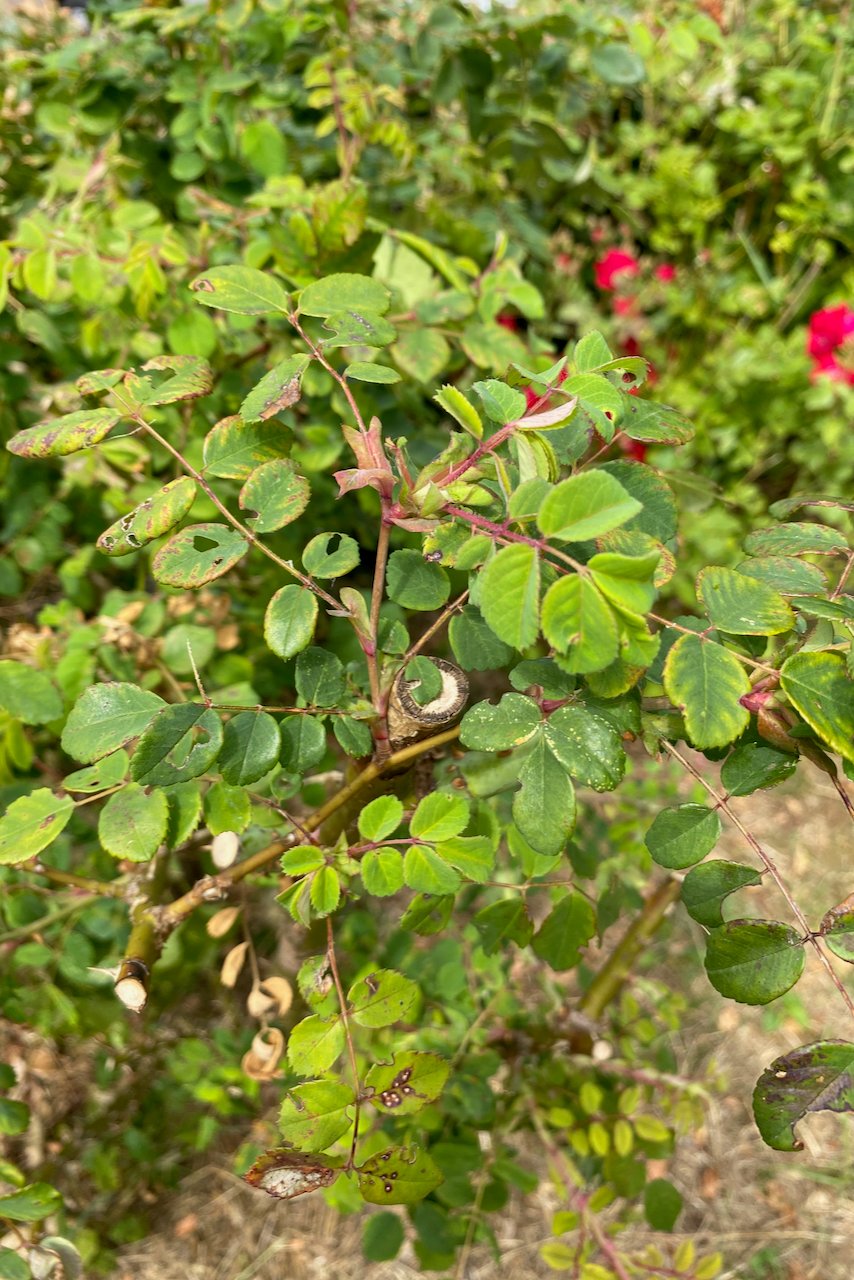
Now if you didn’t know that about your rose, and you happened to prune too low and too hard, then you’ve already removed this year’s buds. No biggie. You can clean it up next spring (removing dead and diseased canes), but don’t prune it all the way down. Just observe it for a year to see whether it blooms first on old canes.
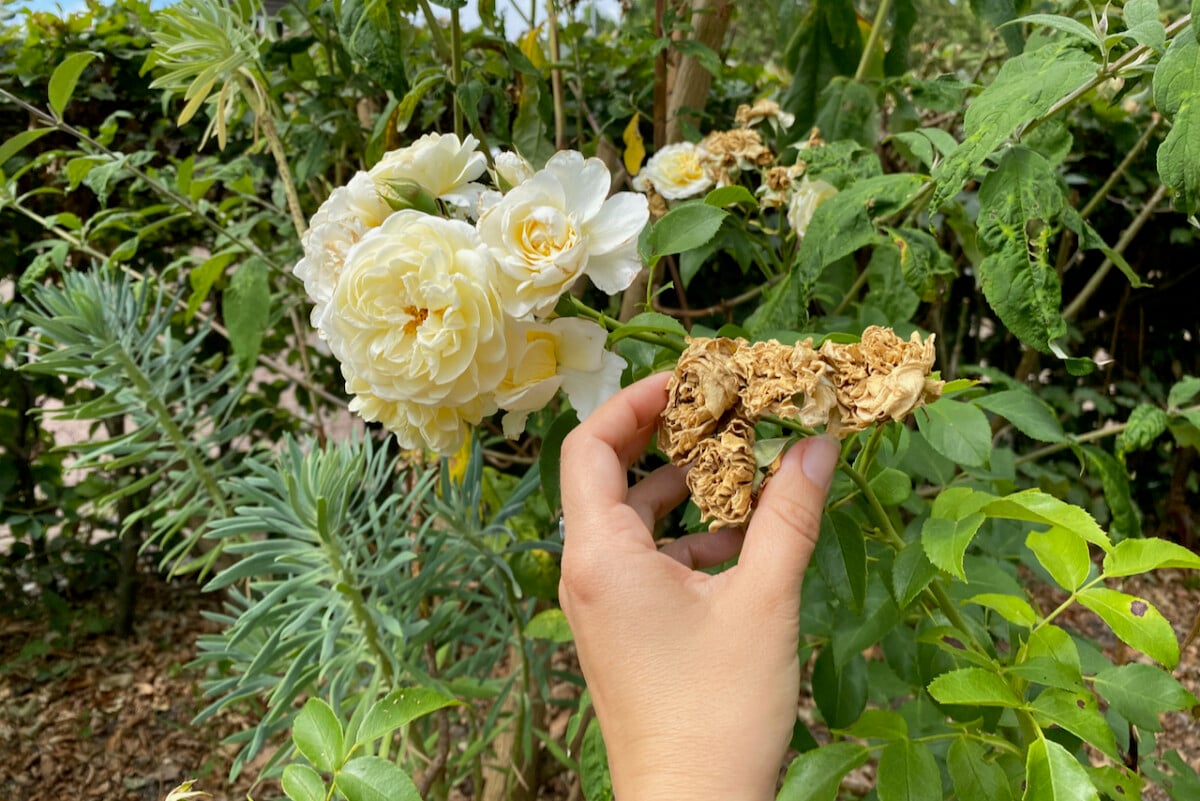
There are some reblooming roses that will flower twice. The first flush of the year comes on old canes. Then once those flowers are gone, they’ll flower again on new wood.
So you might be in luck this year if you’ve got a rebloomer. If you’ve mistakenly pruned down the first batch of blooms, a new one is on its way to save the day. Again, patience is the answer.
4. Your roses reverted back to root stock.
Luckily not a very common phenomenon, I think. But it’s always surprising when it does happen.
Here what it means when a rose reverts to rootstock, in a nutshell.
Most roses sold commercially nowadays are grafted. Very simplistically, this means that we grow one type of rose on top of a root of a different type of rose. The root is strong and hardy and can sustain the growth. While the growth itself (called a scion) is chosen for its beauty and popularity.

In essence, we combine the superpowers of two roses to form a new rose with the characteristics of the prettier of them.
What sometimes happens is that the root stock is not always happy to play second fiddle to the grafting that it’s fostering. So it keeps growing its own canes, usually from the root itself.

Eventually, if we leave this basal growth unchecked, it will crowd out the grafted rose and “revert to stock.”
And the stock itself is not a good bloomer and not a repeat bloomer at that. So while the rose looks really healthy and it’s all leafed up, it doesn’t put out the usual spectacular show of blooms.
How do we fix this rose problem?
First of all, we can prevent it, by diligently pruning any basal canes coming up straight from the root. But if it’s too late for that, then we can decide to either give the rootstock rose a chance or dig it all up and replace it.
If you want to try your hand at some gardening experiments, you can even try grafting a new rose cutting on the old rootstock.
The good news is that, if you decide to let the rootstock be its own rose, there is only a limited number of roses that it could bloom as. The most commonly used rootstocks in the United States are:
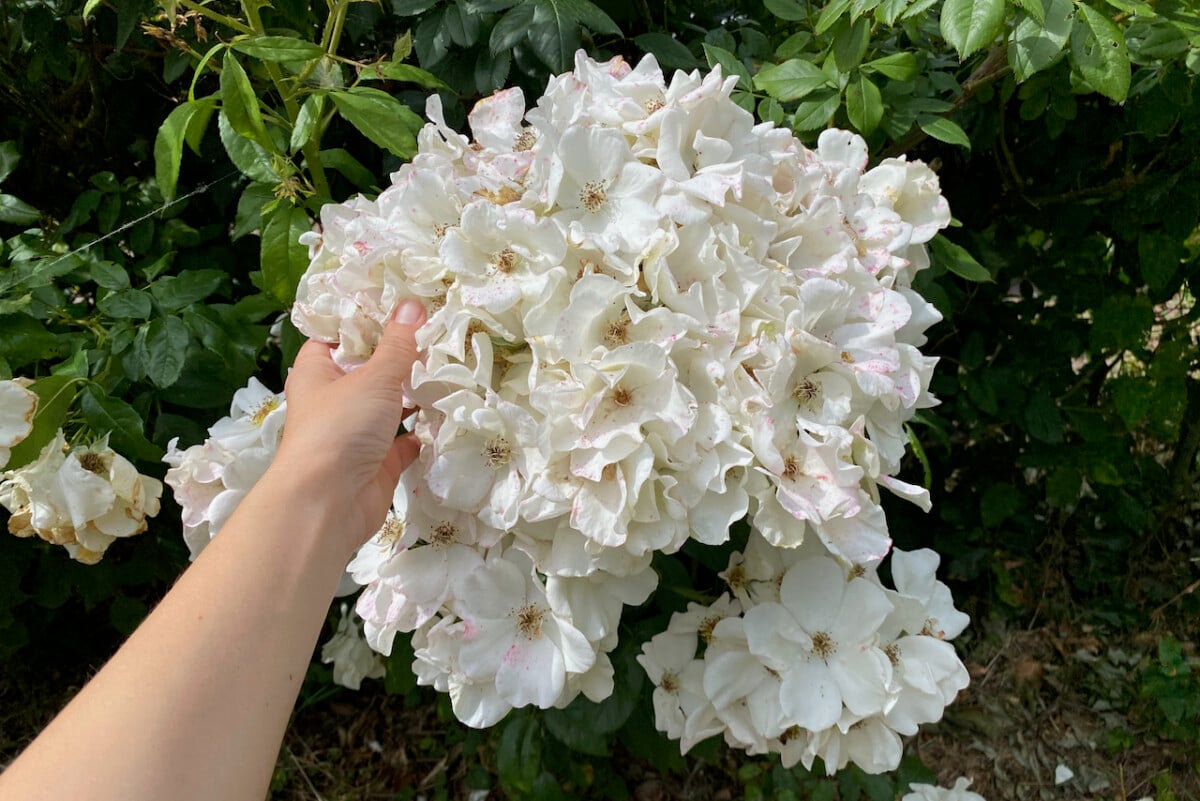
Dr. Huey – a dark red climber of old-world charm;
Multiflora – a vigorous yet elegant white shrub. It is an aggressive grower, so make sure to check local regulations before you let run rampant.
Fortuniana – a gorgeous bright white climber;
Manetti – a super-scented pastel pink rose with clusters of blooms;
Give them a chance. Who knows, you might end up liking them just as much as the grafted rose that stopped blooming.
5. You’re fertilizing too much or not enough.
You’ve probably seen the phrase “roses are hungry feeders” thrown around a lot in advice articles. I think so too, yes! But I just want to add to it the mention that it’s not just fertilizer that they feed on, but also sun and, for young roses, water.
Speaking of fertilizer, there’s not much you can do now once your roses haven’t bloomed, to force them. It may be too late to jumpstart the blooming cycle this far into the season.
However, make a note for next year to start feeding your roses in spring. A good layer of compost, right after you’ve pruned them, is ideal. And if you’re using fertilizer that comes in a bottle, there are some great organic options on the market.

But pay attention to this one detail: look for feed that’s lower in nitrogen (the first number in the NPK) but higher in phosphorus (the second number in the NPK).
That’s because nitrogen encourages leaf growth (good early in the season) while phosphorus promotes blooming (later in the season). So if you keep overfeeding your rose to boost foliage, you are taking away the energy from the blooms.
There are a lot of ways to fertilize your roses; but ultimately, I prefer a “feeding the soil, not just the plant” approach. And I do this using organic plant-based soil enhancers such as alfalfa pellets and seaweed extract.
6. You’ve trained your roses “too” vertically.
The tendency we have with climbing roses is to give them something to climb on, straight up.
Which they do.
And then they bloom. But only at the top. This unimpressive blooming pattern is partly on us, simply because we didn’t train the climbers right.
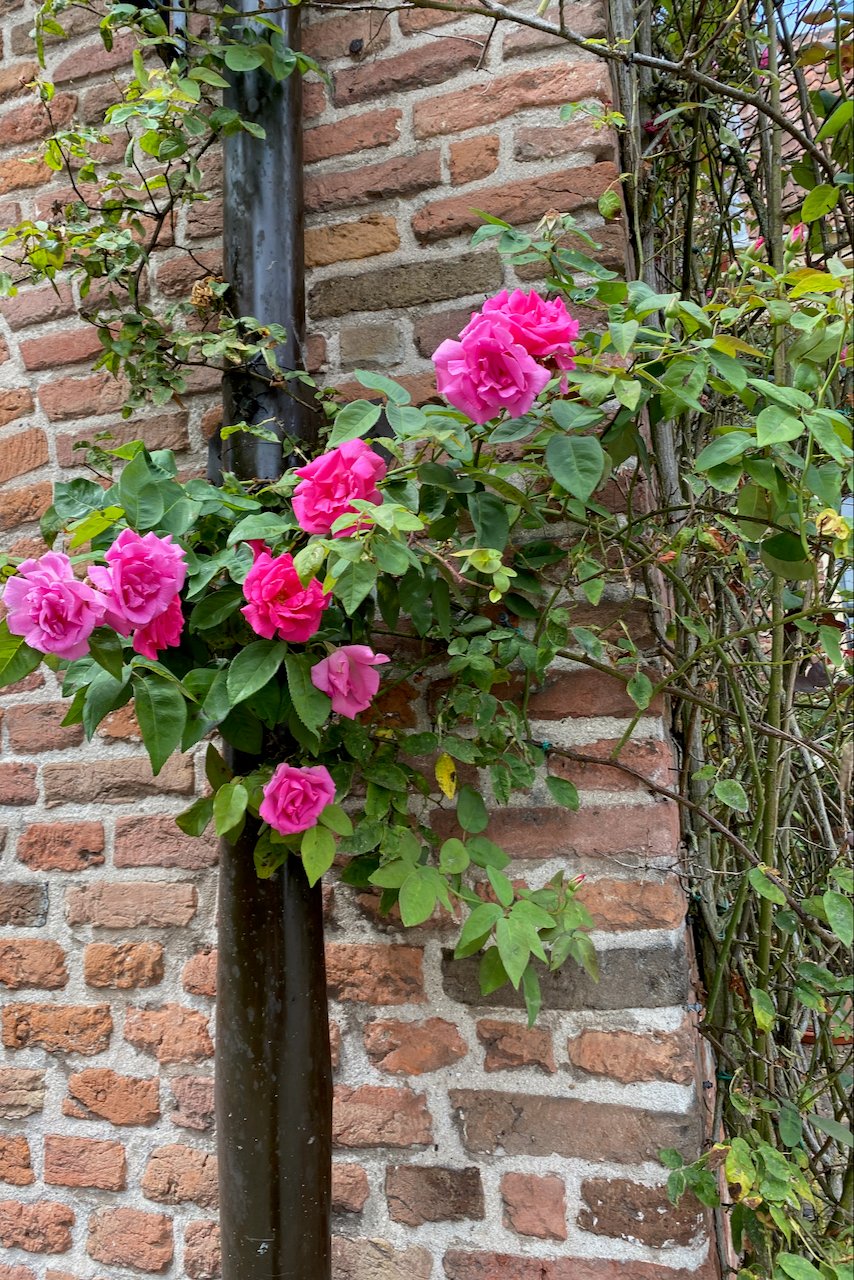
We can fix it by tying the canes horizontally along the trellis instead of vertically. The rose will start to grow lateral canes along the main cane; and each new cane will form their own blooms. So the singular top-heavy bloom will be replaced by a plethora of horizontal (or diagonal) flowers.
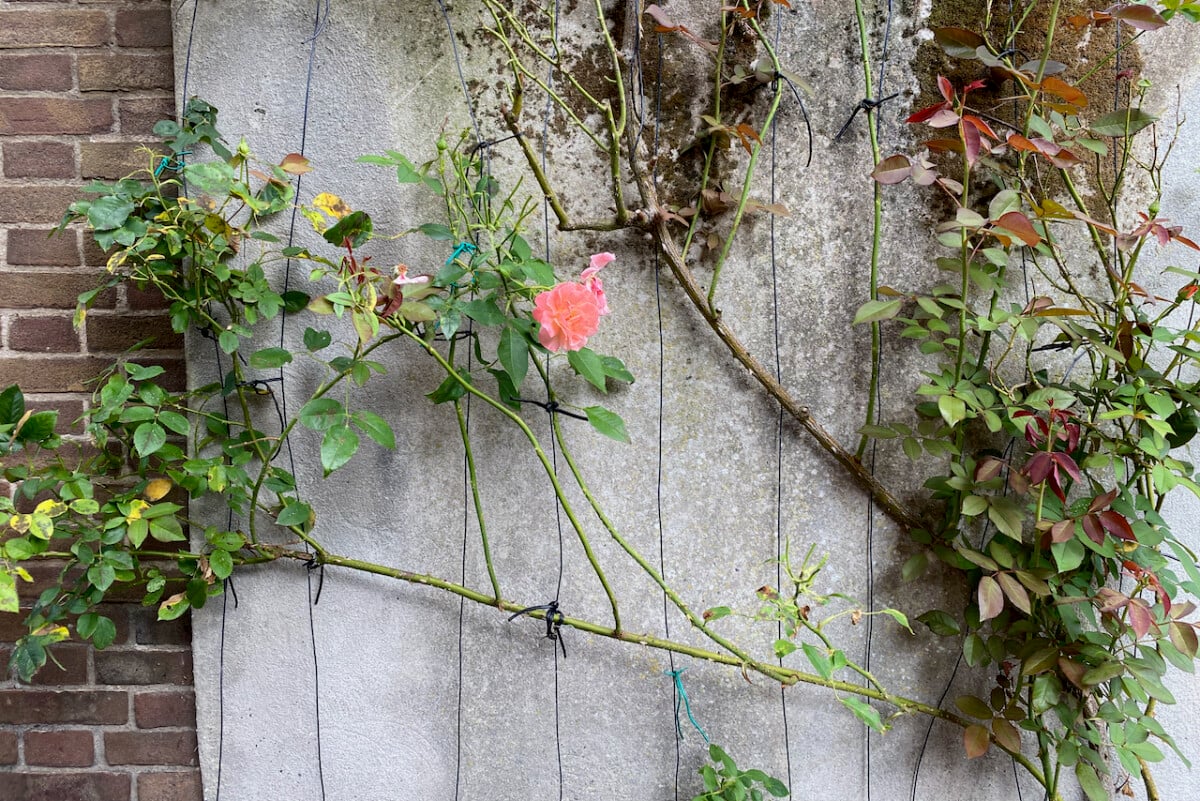
We usually do this kind of training a couple of months after the emergence of the new canes. If we try to train it horizontally too early, bending the young canes might snap them. Once they get a bit older, they’ll get more flexible.
I know from my own experience that it feels like a personal failure when roses – known as prolific bloomers – don’t flower in our own gardens. But there are ways to fix it for next year and most of the time all we need is a bit of patience.
Read Next:

Get the famous Rural Sprout newsletter delivered to your inbox.
Join the 50,000+ gardeners who get timely gardening tutorials, tips and tasks delivered direct to their inbox.