

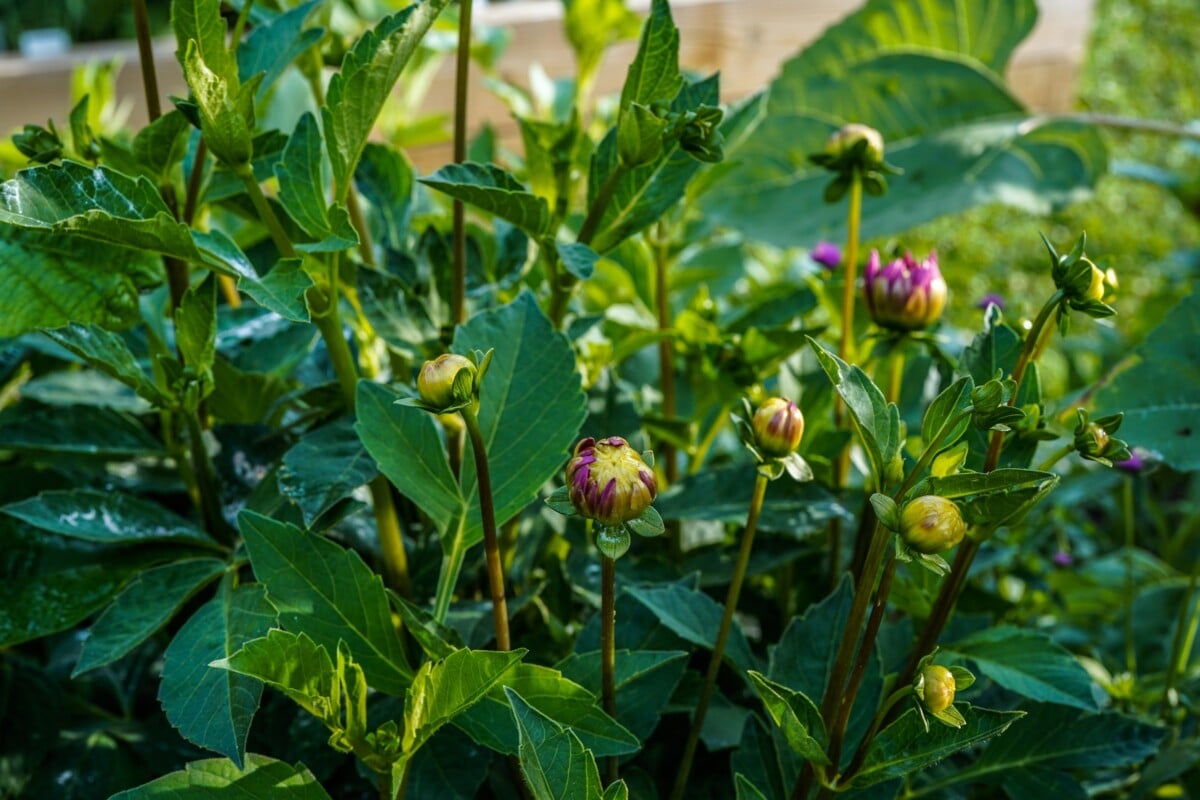
You’d be hard pressed to find a showier flower in your garden than a dahlia. With their colorful heads full of neatly arrayed petals, their blooms that never stop, and great cut-flower qualities, it’s no wonder they’ve got a following among home gardeners.
They’re not as easy to grow as other flowers, so you know they’re popularity means they’re worth all the fuss.
Except when, after all your hard work, they don’t bloom.
If your dahlias aren’t pulling their weight and have left you staring at a sea of green with only a bloom or two in sight this summer, I feel your pain. Let’s dig into why these garden divas sometimes refuse to flower and, more importantly, how to fix it.
Not Enough Sunlight
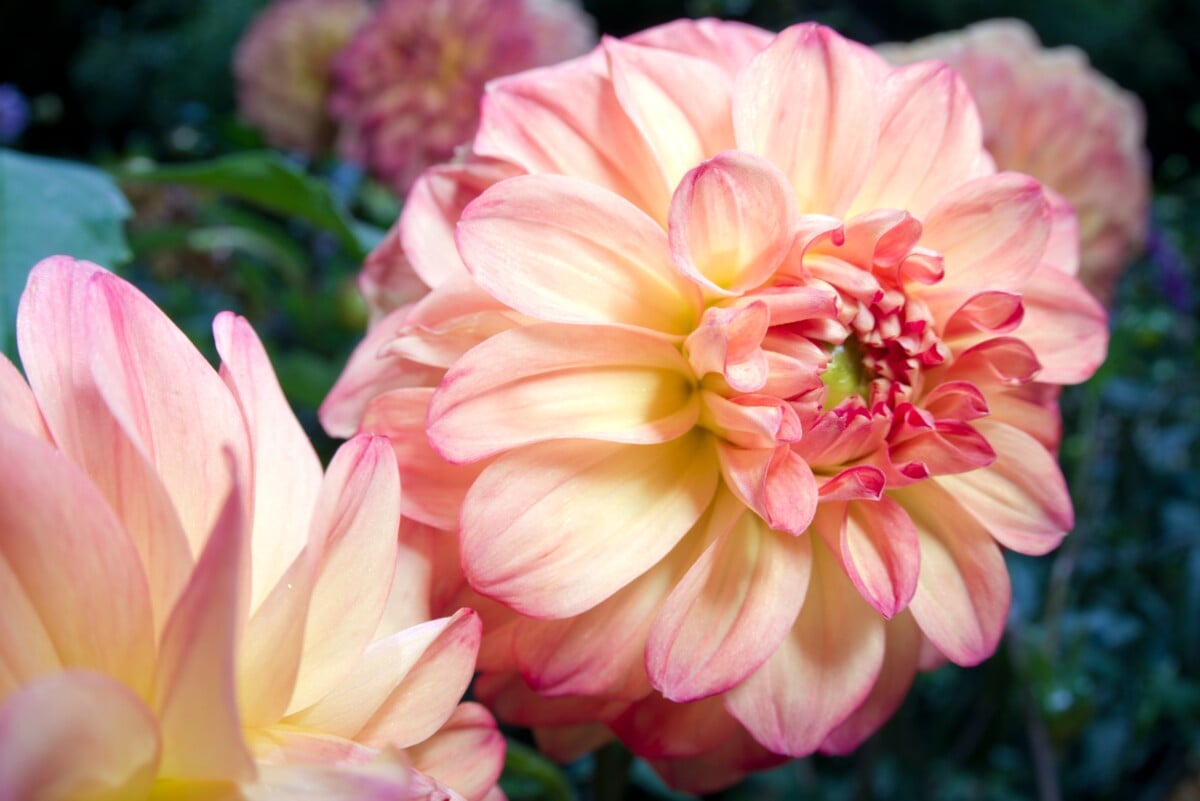
Let’s start off with the most common reason why you might be getting ghosted by your dahlias. These plants are sun worshippers. They need a solid six to eight hours of direct sunlight every day to put on their best show.
If your plants are hidden away behind a taller plant or in a location that only gets dappled sunlight, your dahlias won’t thrive.
A common problem we have as gardeners is that the shade in a specific location can change over the years without us really noticing. Trees and shrubs grow taller, casting longer shadows, and suddenly your flower bed that used to be full sun is now partial sun.
If that’s the case, you’ll want to find a new location for your dahlias when you dig them up this fall. Likewise, it might be time to break out the pruners and start cutting back whatever is casting the shadow.
Another consideration is container-grown dahlias. Obviously, one of the perks of growing them in containers is that you can simply move them where they will receive more sun.

Overdoing it with the Fertilizer
Not all fertilizer is created equal. It doesn’t take new gardeners long to learn that the NPK ratio rules their lives (and their plants). That tiny print on every package of fertilizer tells you, in essence, what part of the plant it’s going to feed.
Nitrogen (the N in NPK) encourages lush green growth, which sounds good until you realize your plant has turned into a shrub rather than a flower. Dahlias, like other flowering plants, prefer a lower-nitrogen, higher-phosphorus fertilizer (the P).
Don’t worry about the fertilizer’s name; focus on the NPK ratio.
Look for a product with lower nitrogen and higher phosphorus and potassium (K). Something with an NPK of 5-10-10 is perfect. Just remember, dahlias don’t need a ton of fertilizer; once or twice each season is plenty. (I really love Farmer’s Secret for my tomatoes, and their fruit and bloom formulation is just as good!)
Too Much Water
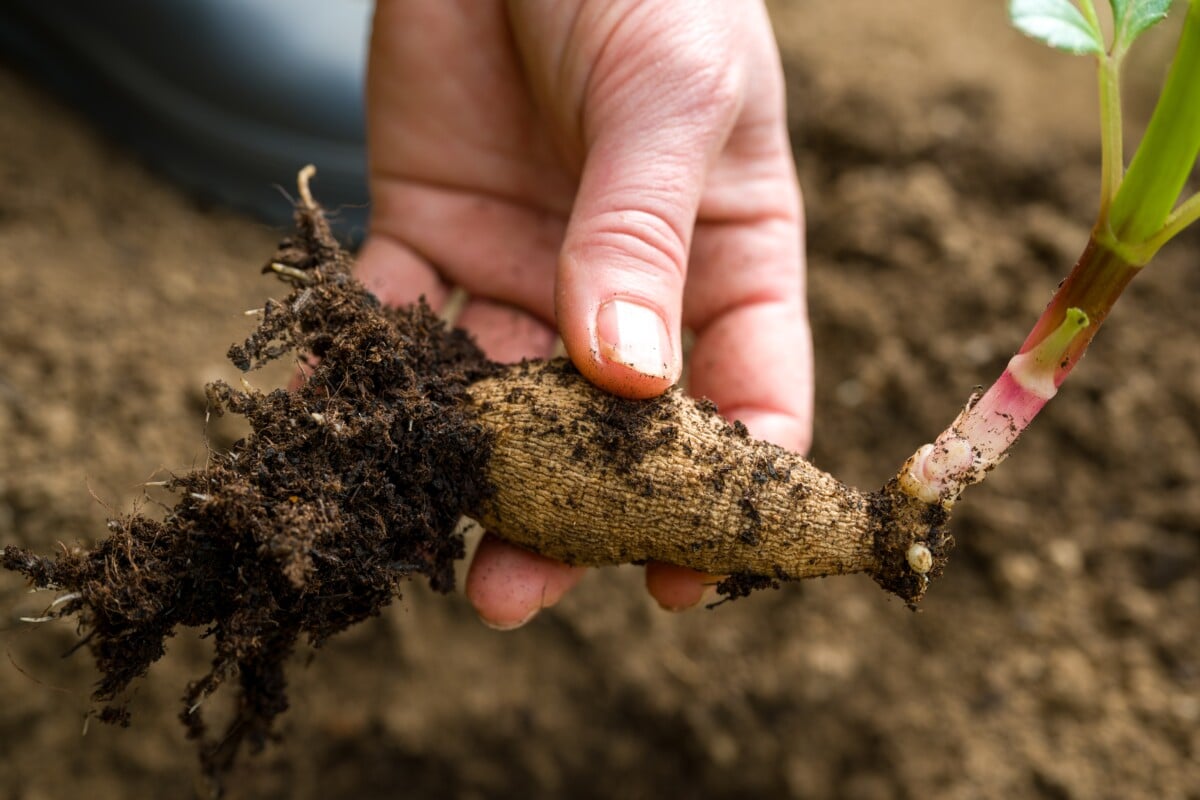
Dahlias are tubers, and tubers hate being left to sit in soggy, heavy soil. So, if you’ve planted them in a spot with heavy clay or compacted soil, their roots might be getting waterlogged.
In the end, those conditions lead to stress, tuber rot, and yes, far fewer blooms over the summer.
Overwatering can be just as problematic. If your soil stays soggy for days after rain or watering, you’re looking at the same host of problems.
It might be time to amend the soil with plenty of compost, coarse sand or even small gravel to help improve drainage.
If your dahlias are in pots, make sure they have drainage holes.
Your Dahlias Are Crowded
It can be tempting to plant heavily, after all, we want a lush flower bed filled with beautiful blooms. Unfortunately, if your dahlias are crowded, you end up causing yourself more problems. Your plants end up fighting for nutrients and sunlight, which means fewer blooms overall.
Dahlias need plenty of air circulation to prevent mildew and fungal issues, too. Planting too densely can invite disease, and that’s certainly not pretty.
If your dahlias are shoulder to shoulder with their neighbors, consider digging and spacing them out next season. Aim for at least 12-18 inches between plants, depending on the variety. There are smaller varieties that can be planted closer together.
Your Dahlias Are Immature
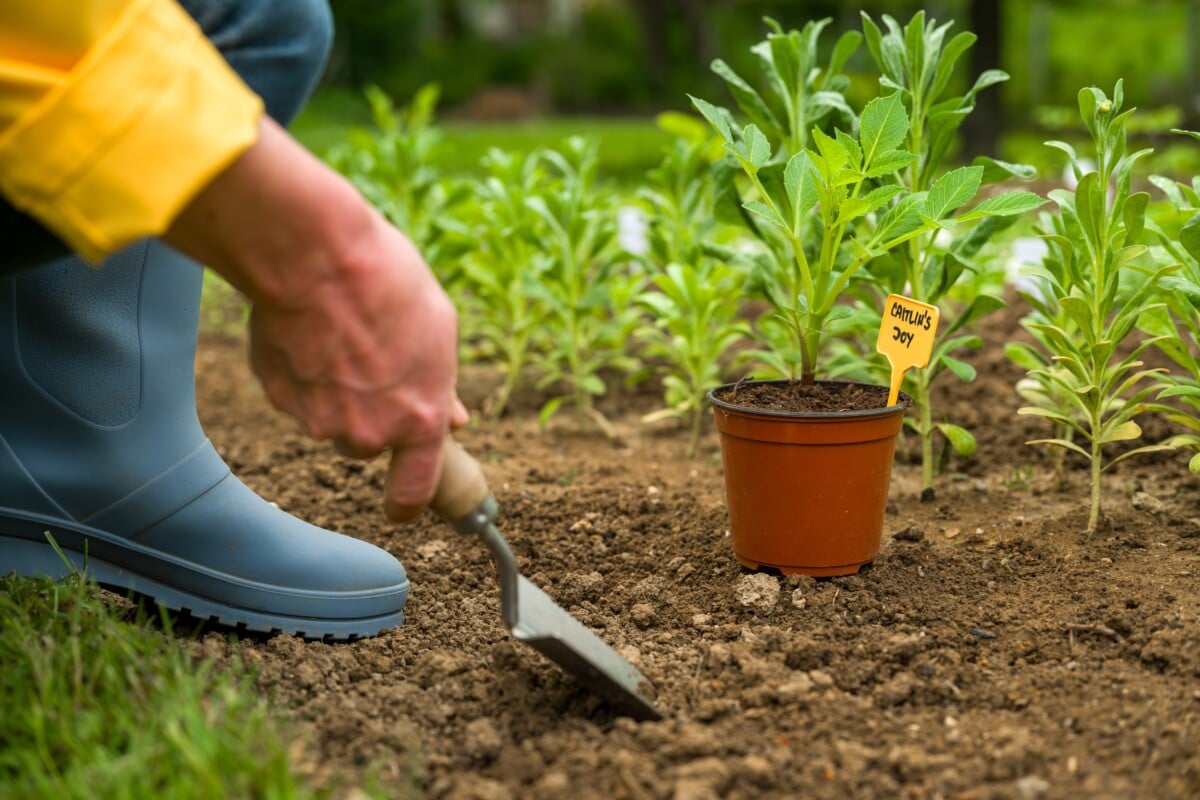
Sometimes, the issue isn’t anything you’ve done wrong. Sometimes, your dahlias are just like teenagers – rather immature. If you’re growing dahlias from seed or your tubers are newly divided and small, they may simply be too young to produce significant blooms in their first year.
Dahlias grown from seed typically take longer to mature and may not bloom until late in the season, if at all. Young tubers need time to bulk up and establish themselves before they’re ready to party. (Usually when they head off to college, away from Mom and Dad.) Give them a season of TLC, and next year, they’ll reward you.
Did You Pinch Them Back?
Pinching dahlias back early in the season is one of the best things you can do to encourage bushier plants and more blooms.
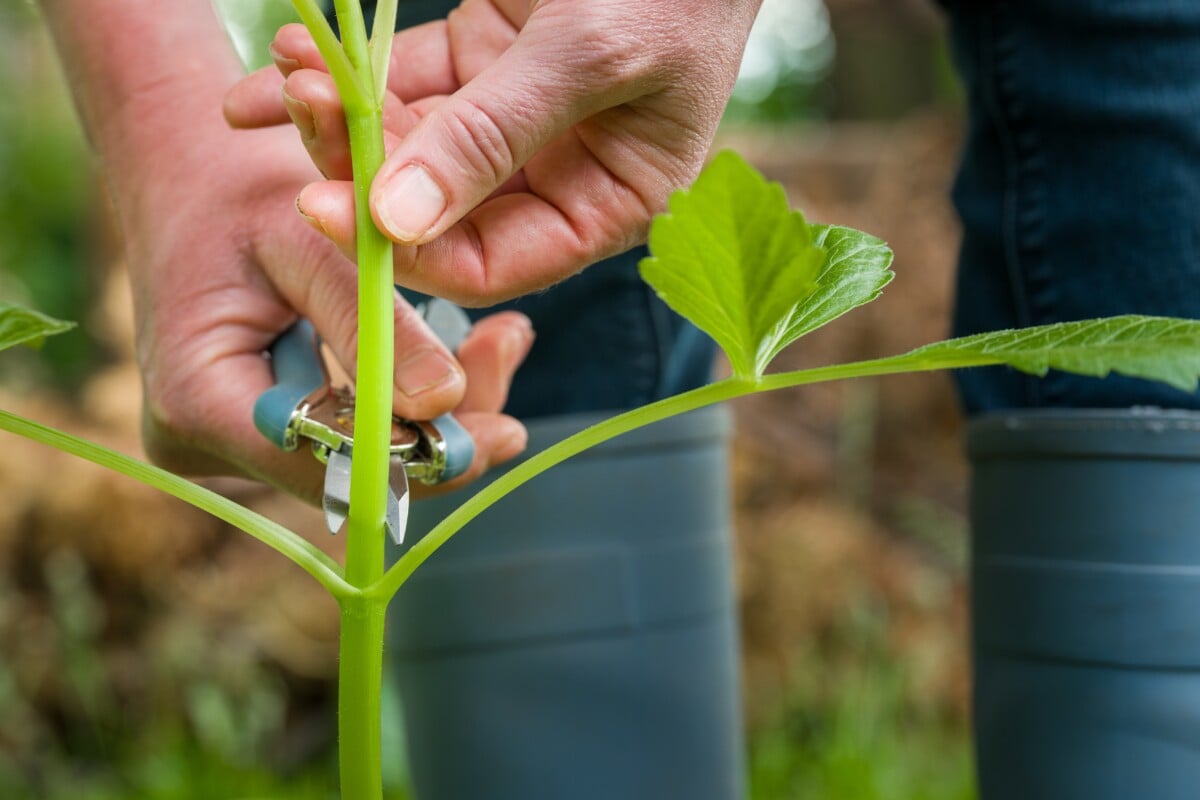
Once your dahlia is about 12 inches tall and has at least four sets of true leaves, snip off the top inch or so just above a leaf node. It feels brutal, I know. But that little snip sends a message to the plant to make more branches, and each of those branches means more blooms.
Funnily enough, this method works quite well for basil, too. So, you can have a bounty of basil and make enough pesto to freeze it and enjoy massive bouquets of cut dahlias on the table when you serve it!
Skip this step, and your plant may grow tall and spindly, with fewer flowers and more flopping.
Don’t Forget to Deadhead
Dahlias are incredibly generous bloomers, but only if we keep up our end of the bargain. Deadheading isn’t optional; it’s essential for getting lots of blooms. Letting old blooms sit on the plant tells it that its job is done. You need to keep removing the spent flowers to encourage new ones to form.
But there’s a trick to it! You’ve got to snip down the stem at the first set of leaves. Don’t just pluck off the faded bloom. Cut down to a branching point. Otherwise, you’re just leaving stubs behind, and that doesn’t do much to signal new growth. (I love these garden snips. They’re super sharp, so they make nice clean cuts, just watch your fingers!)
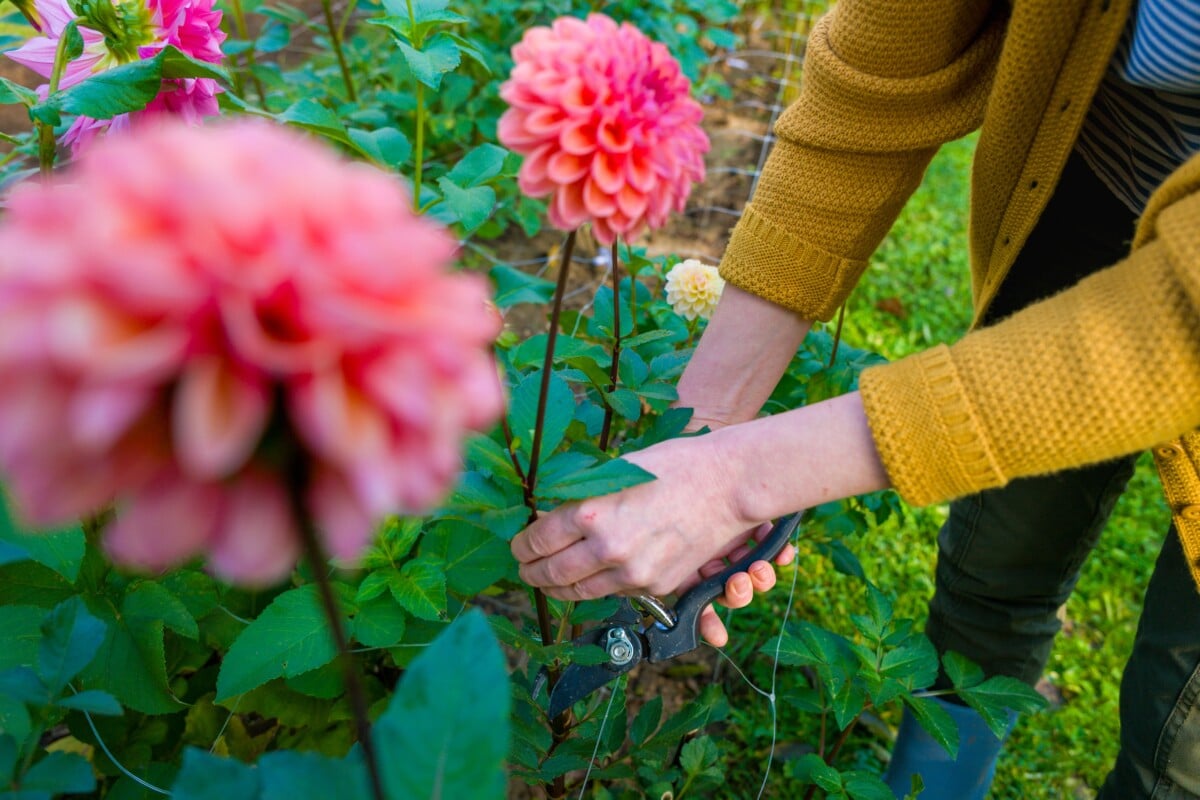
Pro tip: If you’re growing cut flower varieties, consider snipping blooms with long stems for arrangements. It doubles as a form of deep deadheading and keeps the plant producing.
The Dreaded D & P
Yup, diseases and pests.
Common pests like aphids, spider mites, and thrips can sap the plant’s strength and inhibit blooming. Dahlias are also susceptible to fungal diseases like powdery mildew or botrytis, especially in humid climates or poorly ventilated areas.
Make a habit of checking your plants regularly. (Who doesn’t want to go hang out with their flowers?)
Treat infestations early with insecticidal soap, neem oil, or a strong blast from the hose. And always sanitize your tools between plants to prevent spreading issues. Bad garden hygiene is a silent killer!
Dahlias Are Definitely Worth the Fuss
Dahlias can be finicky. But they’re also incredibly rewarding once you crack the code.
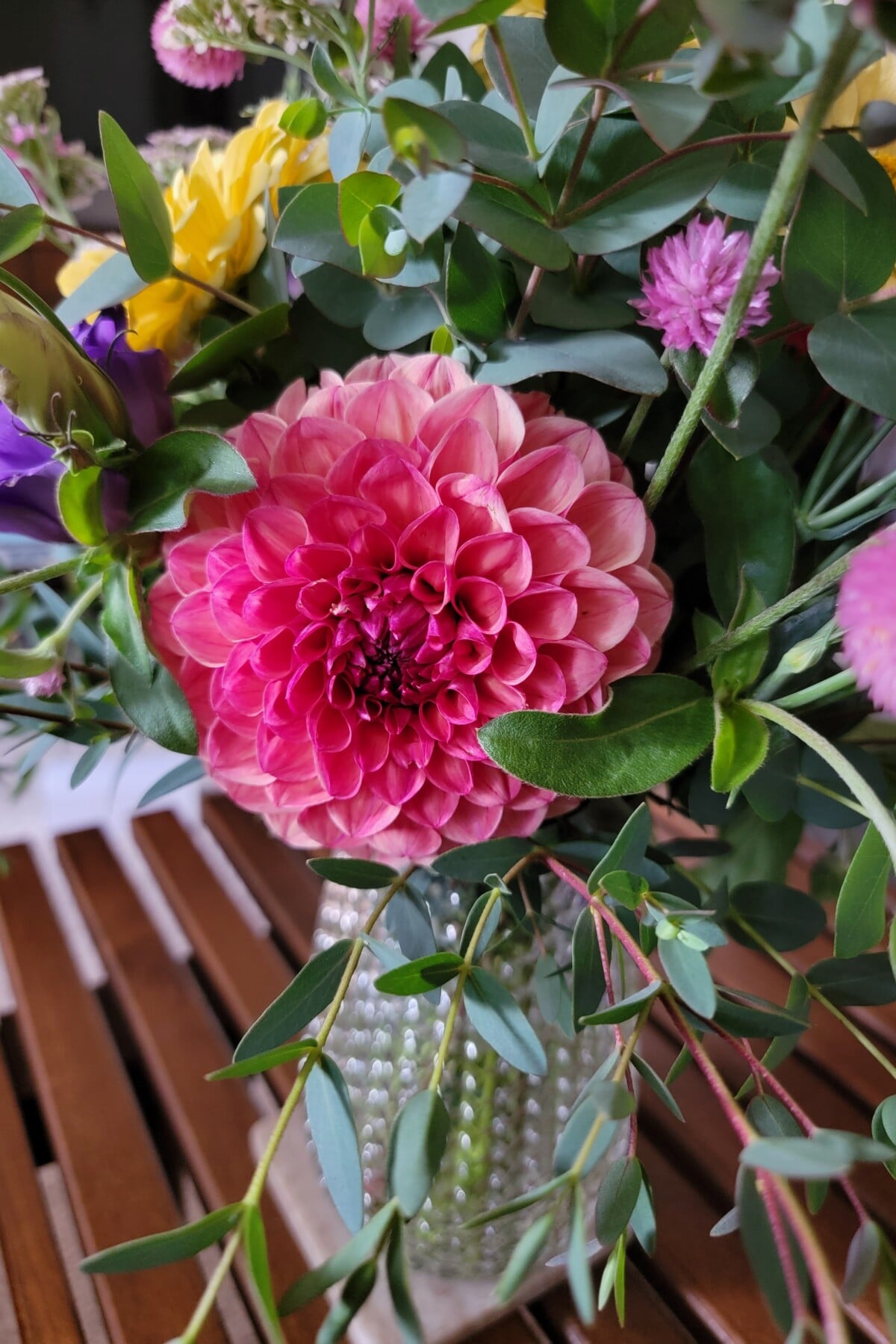
Dahlias are my favorite kind of fireworks: they burst open without an obnoxious and deafening boom, and they don’t fade into the night. At least, for a while anyway. If you want them to last longer, dahlias make gorgeous dried flowers, and it’s easy to dry them. All you need is some of this and my instructions here.
And with plenty of sun, some smart feeding, and the occasional tough love with your pruning shears, you’ll have your own dazzling display right in the backyard.
Get the famous Rural Sprout newsletter delivered to your inbox.
Join the 50,000+ gardeners who get timely gardening tutorials, tips and tasks delivered direct to their inbox.