

Did you know you might be contributing to the spread of diseases in your garden? We all like to think we would never be so careless. After all, we spend a lot of time taking good care of our plants. But there are a few things we all do without even thinking about it. These bad habits inadvertently spread disease and more among our plants this season and into the next.
Getting a grip on these silent killers will ensure healthy soil and gardens for years to come.
The Best of Intentions…
Sometimes, it’s not about how much you do for your plants but rather what you’re doing wrong without even realizing it. Some of the most common mistakes gardeners make have nothing to do with whether or not you have a green thumb and everything to do with hygiene.
Yeah, we’re talking about gardening hygiene. (No, you don’t need to shower before reading this.)
Good garden hygiene is not glamorous, but it’s often the difference between a bumper crop and a fungal flop. So, let’s talk about the gross little habits that are sabotaging your veggie patch. If you’re guilty of any of the following (no judgment, so am I), it might be time to break out the bleach and give your plants the clean start they deserve.
Not Washing Your Garden Gloves
Yup, those manky, crusty things you toss by the backdoor or in a heap in the garden shed without another thought. Yeah, those.

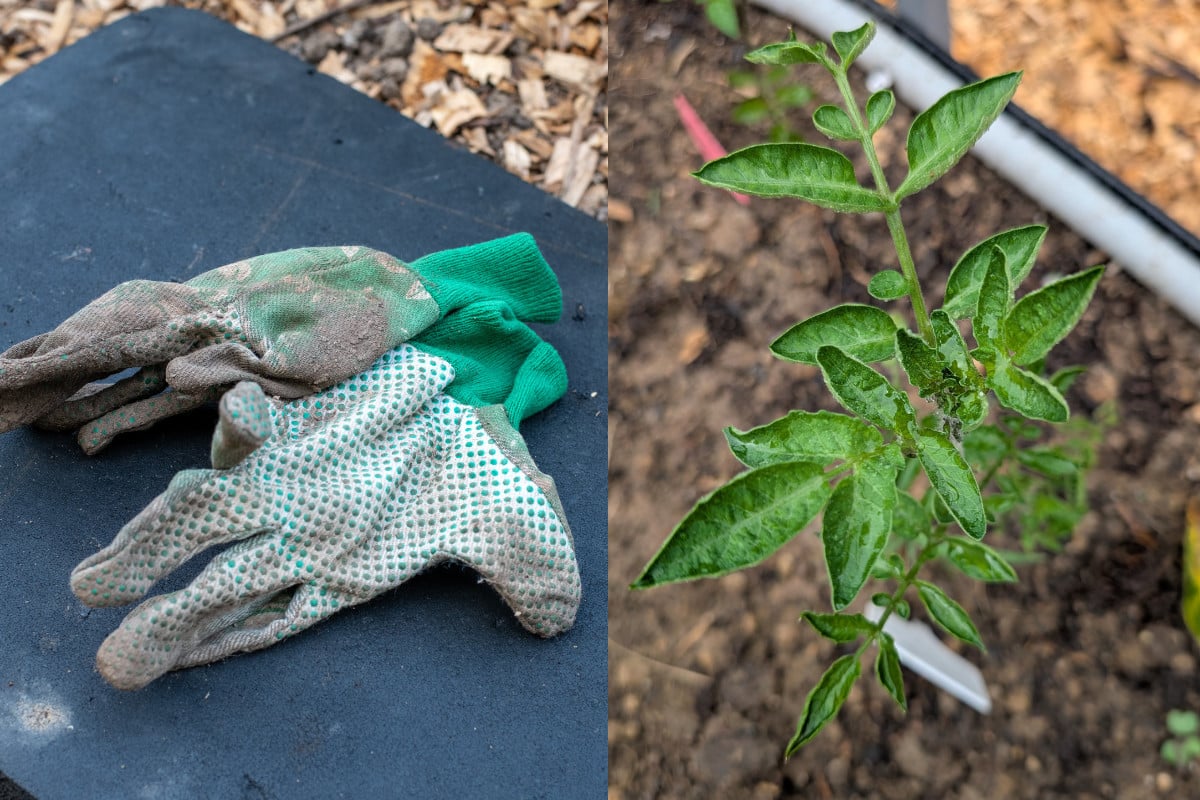
Garden gloves should be washed regularly throughout the gardening season. Fungal spores, bacterial nasties, and even insect pest eggs can hitch a ride on those gloves and spread from plant to plant.
It doesn’t matter how carefully you sanitize your shears. If you’re touching every plant in your garden with the same gloves you used to trim those tomato leaves that had septoria leaf spot last week. You’re asking for trouble. This is one bad habit I’m guilty of.
Wash them in hot water with regular detergent. Hang them to dry in the bright sun. You should generally wash your gloves every couple of weeks. If you’ve handled diseased plant material, wash them immediately after and change gloves before moving on to healthy plants.
By the way, I really love these cloth garden gloves. They’re inexpensive, so I bought five or six pairs, which means I always have a clean pair. They wash up well, and my hands don’t get hot and sweaty inside them like they do with the neoprene-dipped gloves that are so popular these days. Plus, I love all the pretty floral prints.
Related Reading: Handle With Care: Why You Need to Wear Gloves When Planting Fall Bulbs
Using Unsanitized Garden Tools
Speaking of tools, let’s move on to another big one. Not cleaning or sanitizing gardening tools. This is the cardinal sin of garden hygiene. Every time you snip a leaf, trim a stem, or deadhead a flower, your tools are exposed to plant sap and potentially, whatever invisible diseases that plant was carrying.
Without regular cleaning, your pruners and trowels can become disease vectors.
Wiping down your tools with a rag isn’t enough. They need to be sanitized regularly either with rubbing alcohol, hydrogen peroxide, or a diluted bleach solution. It takes mere moments. Your cucumbers will thank you.
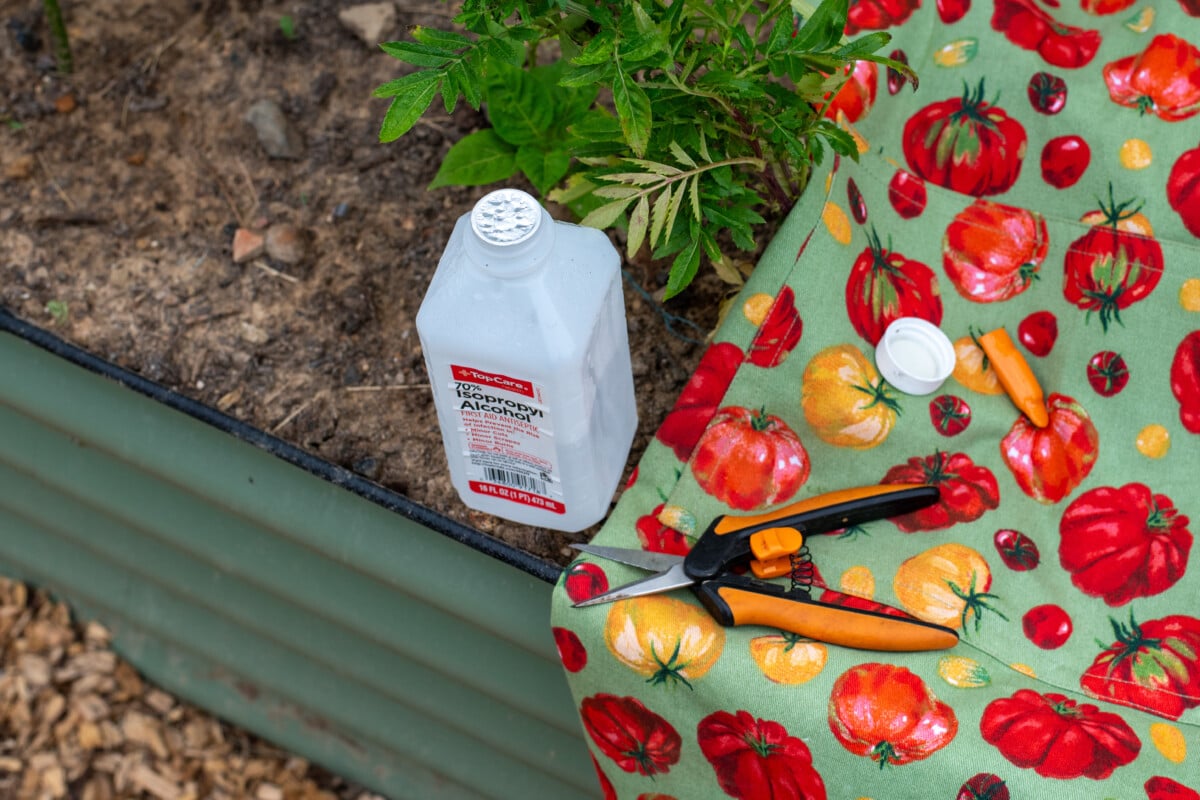
To make this task easier, I keep a bottle of rubbing alcohol in my gardening basket. I leave the foil seal in place and just poke tiny holes in it. Voila! I can sprinkle alcohol on my tools as needed. (And yes, I have a special apron I wear in the garden to keep my clothes clean. You can get it here. I love the pockets and the heirloom tomato design.)
Going to the Party When You’re Sick
There’s one in every family or friend group – that person who shows up to the event sick and doesn’t bother telling anyone until hours after they’ve been there.
“Oh, it’s just allergies. You always have a fever and cough like this with allergies, right?”
Within a week, everyone who attended the party is sick and miserable. Thanks a lot, Polly Plagues-a-lot!
Well, we have a habit of doing the same thing in our gardens.
How many times have you walked past a damaged leaf or plant with suspicious symptoms only to be shocked when it’s spread to an entire row a week later?

Grab your sanitized garden snips (these are mine) and remove damaged or diseased plant material as it appears. This does two things:
- First, it frees up the plant to focus its energy on growth and fruit production, rather than combating or repairing.
- Second, it prevents the spread of that issue to every other plant at the party.
One or two spotted leaves never seem like a lot when you see them, but plant diseases spread fast in hot, humid weather. It only takes a few days for something that could have been prevented to spread across an entire crop.
Related Reading: Tomato Blight: How to Spot, Treat & Prevent 3 Types of Blight
Don’t forget to wipe down your pruners with alcohol when moving from plant to plant and once again when you’ve finished. And wash those gloves!
What do you do with the stuff you’ve pruned off?
Composting Diseased Plant Material
Now let’s talk about your compost pile. We all love feeding our heap knowing it’s going to turn into beautiful black gold. But composting diseased plant matter is one of the most common mistakes even seasoned gardeners make.
That black-spotted tomato leaf? That zucchini vine with powdery mildew? That should not be going in your compost.
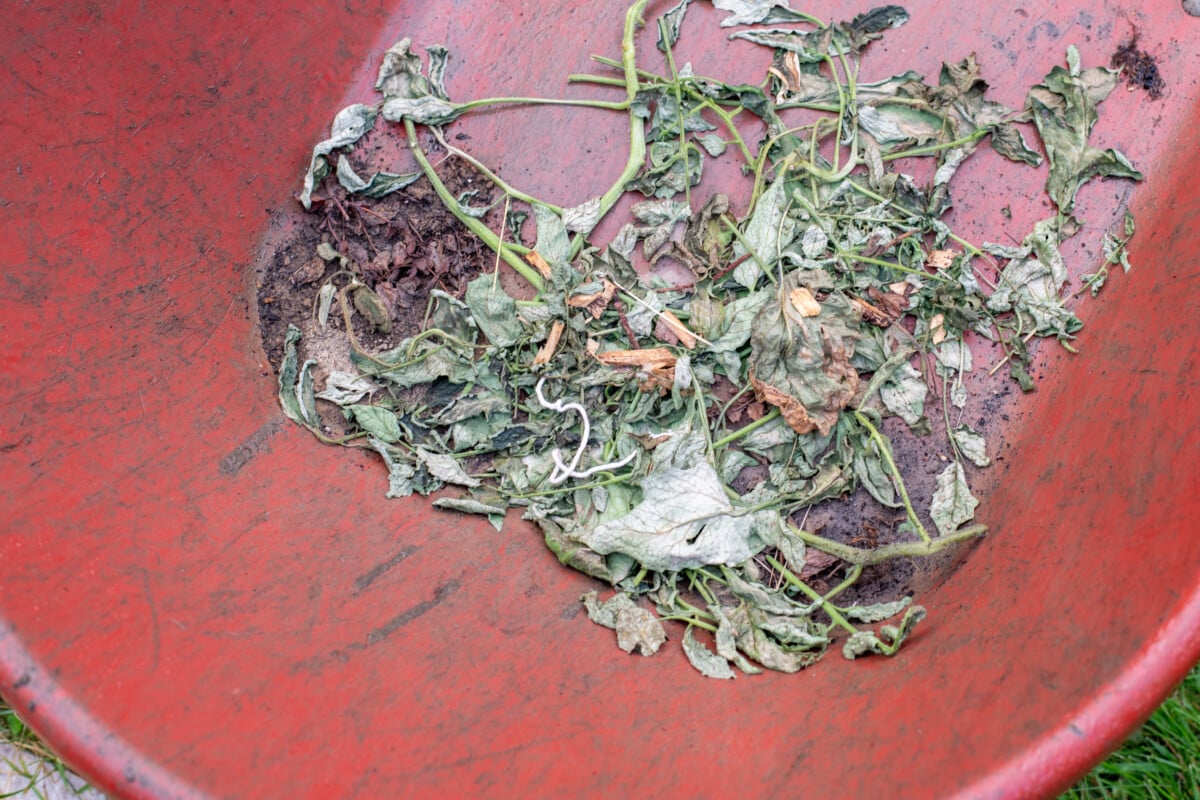
Unless you are 100%, absolutely meticulous about ensuring your pile gets hot enough (think 130 to 160 degrees Fahrenheit), it will not kill pathogens. Most backyard piles don’t reach those temperatures consistently; they simply don’t have the thermal mass that a commercial setup does.
If you have no idea how hot your compost is getting, it might be time for one of these.
In the end, you’re giving those diseases a lovely warm winter retreat and spa treatment before you spread them back into your garden next spring. Diseased plant material should be disposed of in the garbage, not added to your compost.
Related Reading: Hot Composting – Turn Food Waste Into Compost In Record Time
Sleeping In Someone’s Dirty Sheets
When you go to a hotel or Airbnb, you expect there to be fresh, clean sheets on the bed. There’s nothing that gives you the “ick” more than the thought of sleeping in someone’s dirty sheets.
Are you doing the same thing to your plants each season?
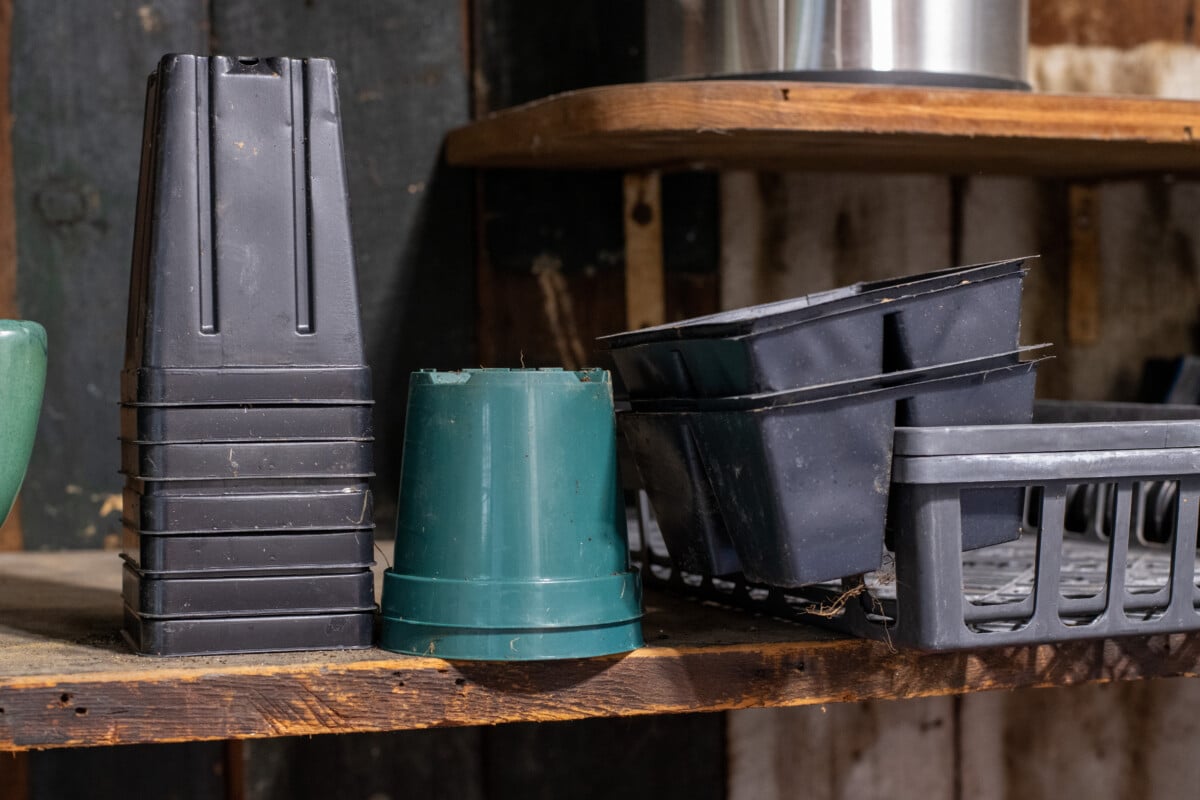
When it’s time to start seedlings, do you wash your pots, planters, and trays from the previous season? If not, your seedlings are sleeping in dirty sheets. And when it comes to plants, that can mean diseases get passed on to your new seedlings from the prior year’s plants.
Talk about generational trauma!
Once seedlings are transplanted into the garden, wash out the containers they were grown in. It’s much easier than it sounds.
Grab a 5-gallon bucket and fill it with warm soapy water. Give everything a quick scrub down to remove dirt and plant material, then rinse it off with the hose. Mix up a 10:1 water and bleach solution in a spray bottle. Liberally spray the surfaces of your containers with the solution and let them air dry. Then pack them all up for next year. It’s that simple.
Overcrowding
Overcrowding plants is another quiet destroyer. When your garden’s packed tighter than a rush-hour subway car, airflow drops, humidity rises, and fungal diseases throw a party. Powdery mildew, blight, and leaf spot all thrive in poorly ventilated spaces.
I get it, I do. We all want to make the most of every square inch of garden real estate.
But sometimes less really is more. Give your plants room to breathe and stretch their limbs. Follow spacing guidelines. I know this one can be tough. I’m so bad at remembering just how big zucchini gets when it’s mature.
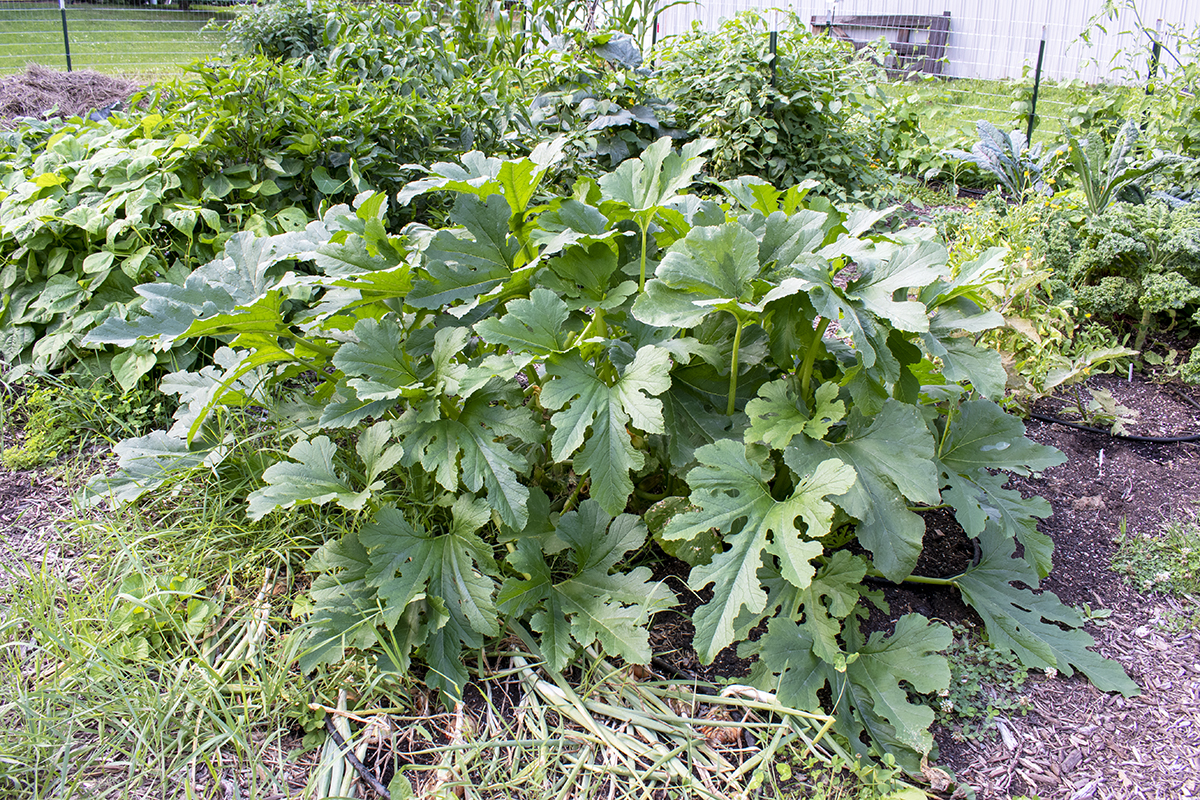
However, it’s worth it in the end, as your harvest will be healthier and usually larger in the long run.
The One No One Talks About
Finally, let’s talk about a sneaky one that slips quietly under the radar—working in a wet garden. Diseases such as early blight, septoria, and others thrive in moist conditions. As gardeners, we never really think about it, but we help spread fungal diseases if we’re not careful.

When you’re out there brushing against damp leaves with your pants or sleeves, spores cling to them, and you’re helping them spread. Wait until the area is dry before proceeding.
None of these habits make you a bad gardener. Most of them are simply things we rarely think about.
But now that you’re aware of their effects on your garden, you can make the changes necessary to fix them.
Healthy habits aren’t always glamorous, but they’ll keep your garden chugging along and cranking out produce all season long. So go ahead. Wash those gloves. Clean those shears. And maybe skip gardening right after a thunderstorm. Your veggies will thank you.
Get Garden Notes From Tracey, Right to Your Inbox
Pull up a chair on the front porch. Join 54,000+ gardeners who get Tracey\'s friendly notes, seasonal to-dos, and hands-on tutorials three times a week.