

Saving seeds from year to year is one of the simplest ways gardeners can save money.
As most of us can attest, buying seeds each spring can really add up. But lots of us find the process of saving seeds intimidating.
With some plants that cross-pollinate and some that don’t, it’s no wonder. So, most gardeners never get started and miss out on the savings and convenience. But there are six easy-to-save vegetable seeds every gardener should save this fall. No cross-pollination worries!
It’s Not as Tricky as It Sounds
I know quite a few gardeners who save flower seeds each year, but shy away from saving vegetable seeds in their gardens. (Mickey can get you started saving flower seeds here.) That’s because some vegetables tend to do weird things when it comes to their seeds. When they hang out too closely to someone in the same family, their seeds go full on Frankenstein.
Just for kicks and giggles, one year, I saved my butternut squash seeds. I grew three other types of squash in the garden that year. When I planted them next year, I ended up with these weird and wonderful (and tasty) crosses between a butternut and a cheese wheel pumpkin. Good fun!

But what if you don’t want experiments in the garden?
We buy seeds because we want that tomato or that particular bean. We don’t want a surprise when things start growing, which is why most of us are nervous about saving seeds. But you don’t have to be!
What is Cross-Pollination & How Does it Affect Seeds?
Okay, knowing what’s going on can help you determine which vegetables in your garden are more likely to cross-pollinate. So, we’ll have a short biology lesson.
Cross-pollination happens when pollen from the flower of one plant is carried by wind, insects, or even human hands to the flower of another plant of the same or a closely related species.
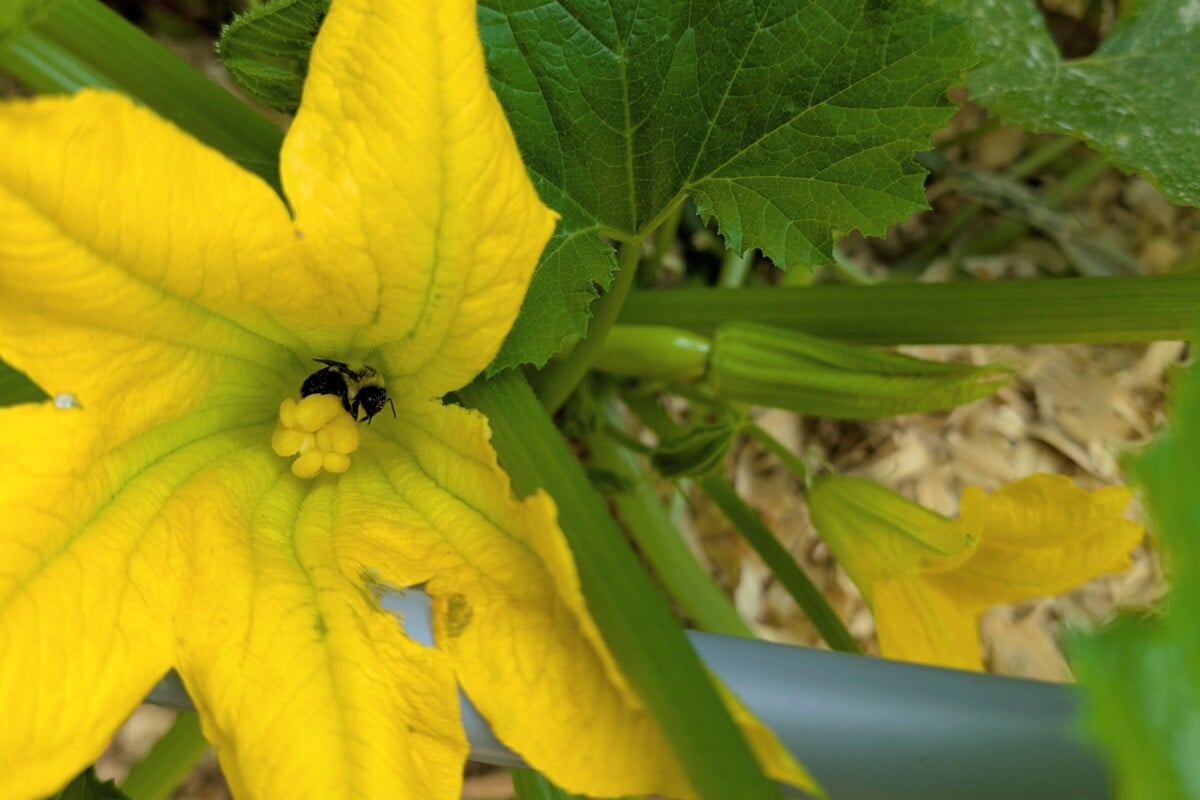
These pollen grains contain the male gametes of a plant, and when they land on the receptive female stigma of another flower, fertilization occurs and seeds are formed, which is great if you’ve got pollen and a flower from the same plant. But things start to get weird when you’ve got pollen and stigma from different varieties.
Let’s take my Frankensquash, for example.
Pollen from the cheese wheel plant was picked up by a bee and made its way to the female flower of one of my butternut squash. When the bee did its little pollination dance, I got a delicious butternut squash to eat from that female flower. But in that squash were seeds carrying mixed genetics – butternut squash and cheese wheel pumpkins.
Cross-pollination happens all the time in the garden, and we don’t notice it. That’s because the fruit you eat this year isn’t any different. It’s the seeds in the fruit that mean the next generation will be a Frankensquash.
This entire process is what gives us the incredible genetic diversity in plants, not to mention some fun new cultivars.
But if you’re trying to save seeds for next year, it can be a real headache. However, if you’re just starting out with seed-saving, there is good news. There are some self-pollinating vegetables that are incredibly easy to save without worrying about cross-pollination.
Here’s a guide to which seeds you can safely save this fall and how to store them. We’ll also look at which ones are harder to save and why.
It’s best to start in September because for the seeds you want to save, you need time to let those vegetables mature enough to create seeds. (Choose some you won’t eat and let them keep on growing.)
6 Vegetables Seeds You Can Save Without Worry
These crops are self-pollinating. That means the flowers pollinate themselves, often before they even open, making cross-pollination rare. If you save seed from these, what you plant next year will almost certainly grow true to the parent plant.
Beans (Phaseolus vulgaris)

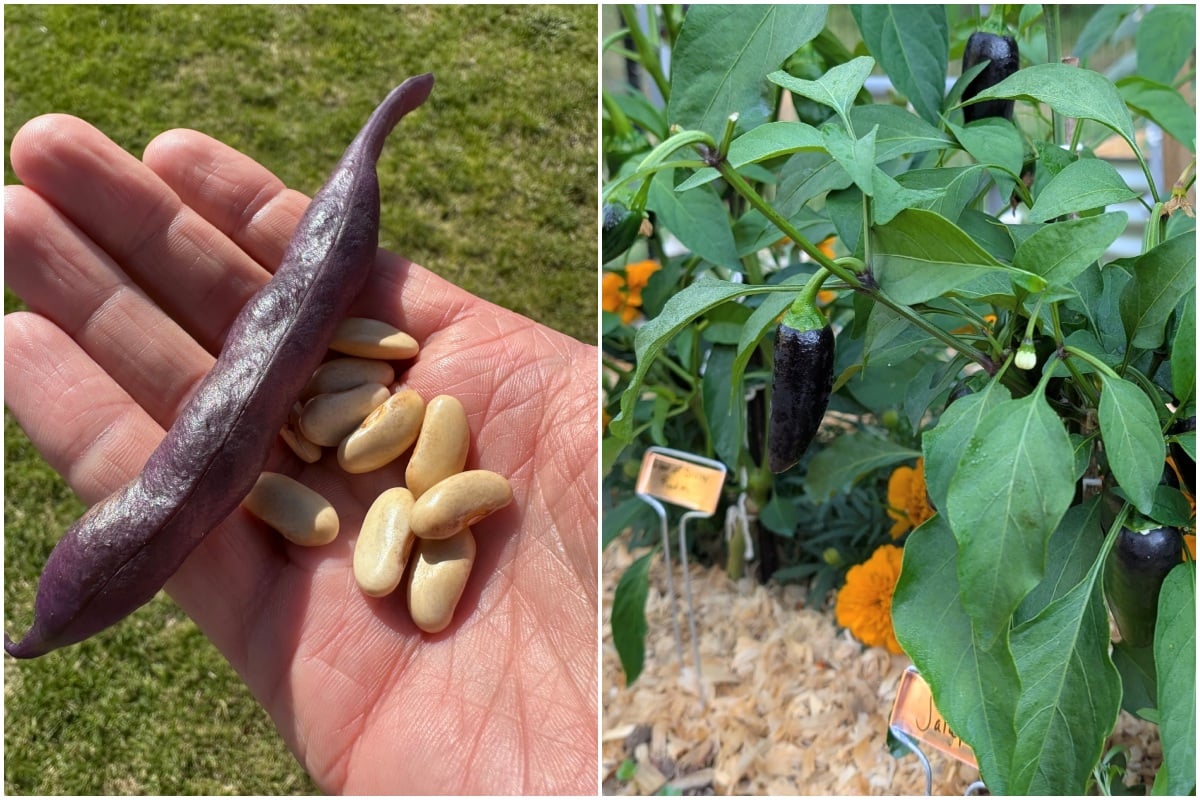
Beans are some of the easiest seeds to save. They even come in a handy wrapper! All you have to do is leave the pods on the vine or bush until they dry out and rattle. Then shell the dried pods (discarding any moldy or discolored seeds). Spread the nice ones out on a baking sheet for another week indoors. Store them in airtight jars or envelopes in a cool, dry place.
I like to set aside two plants for each variety I want to save and grow again next year. I succession plant beans every two weeks, so I go through about 40-50 seeds per season.
The method I use for choosing which two plants to save is highly scientific. I pick them based on which ones I’ve forgotten to pick recently, and now the beans are too large and won’t be tender for eating. Ta-dah! I meant to do that. These are now my seed beans.
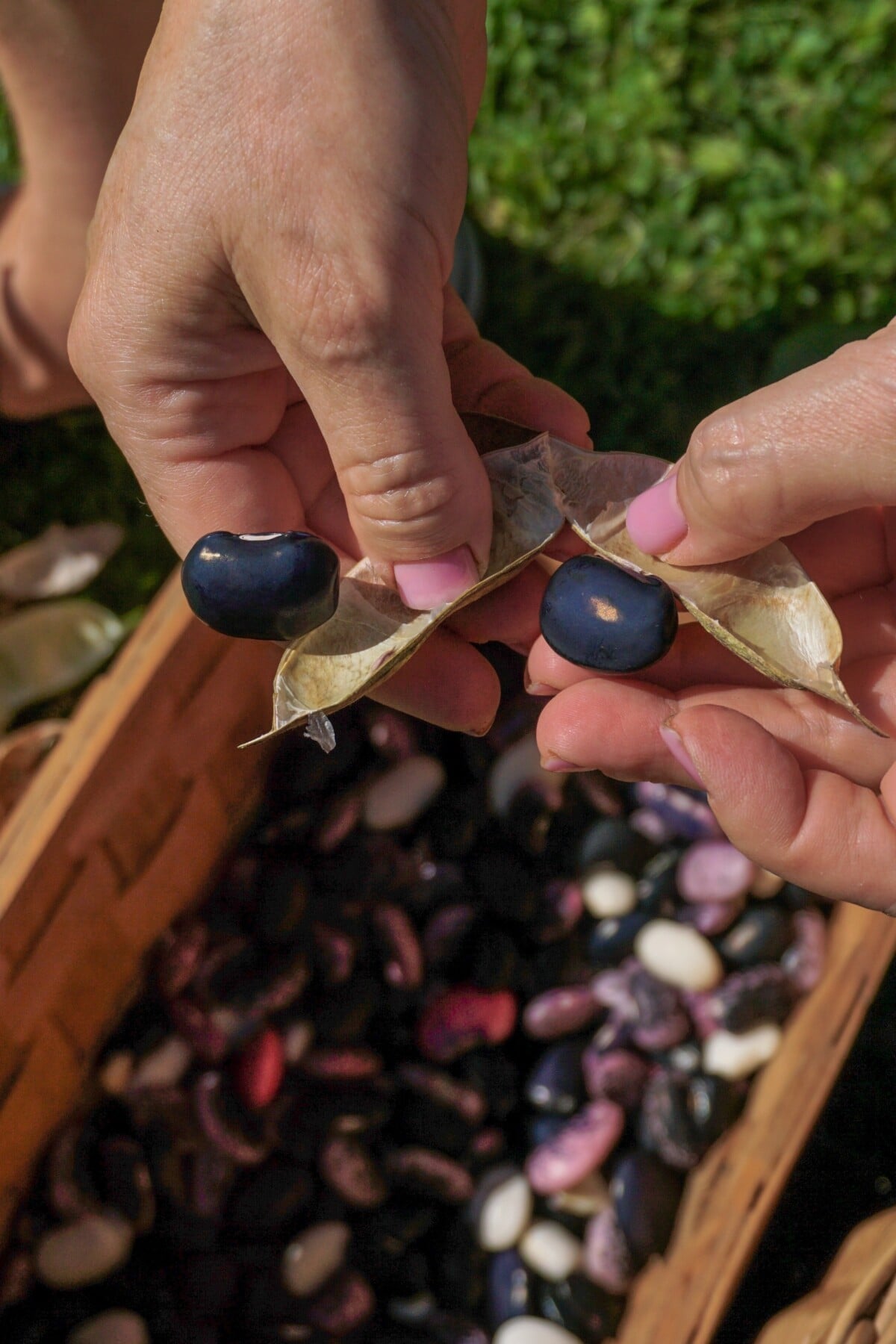
Bean seeds are viable for 3-4 years.
Peas (Pisum sativum)
With peas, it’s a little different. Obviously, they are usually a spring crop, so you can save them in the spring, too. However, I never remember to do that, so I find it easier to plant three or four peas in the fall, specifically with the intent of growing them for seed. That’s when I’m saving other seeds, so it’s easier to remember.
Don’t stop there, though, with the cooler temps of fall, you can plant a whole new crop of peas for eating and saving!
Peas are saved and dried exactly like beans are. Let them dry out on the vine, shell them, and dispose of any moldy peas. Then, let them dry for another week indoors before storing them in an airtight container. It’s, well, easy-peasy.
Pea seeds are viable for 3-4 years.
Lettuce (Lactuca sativa)
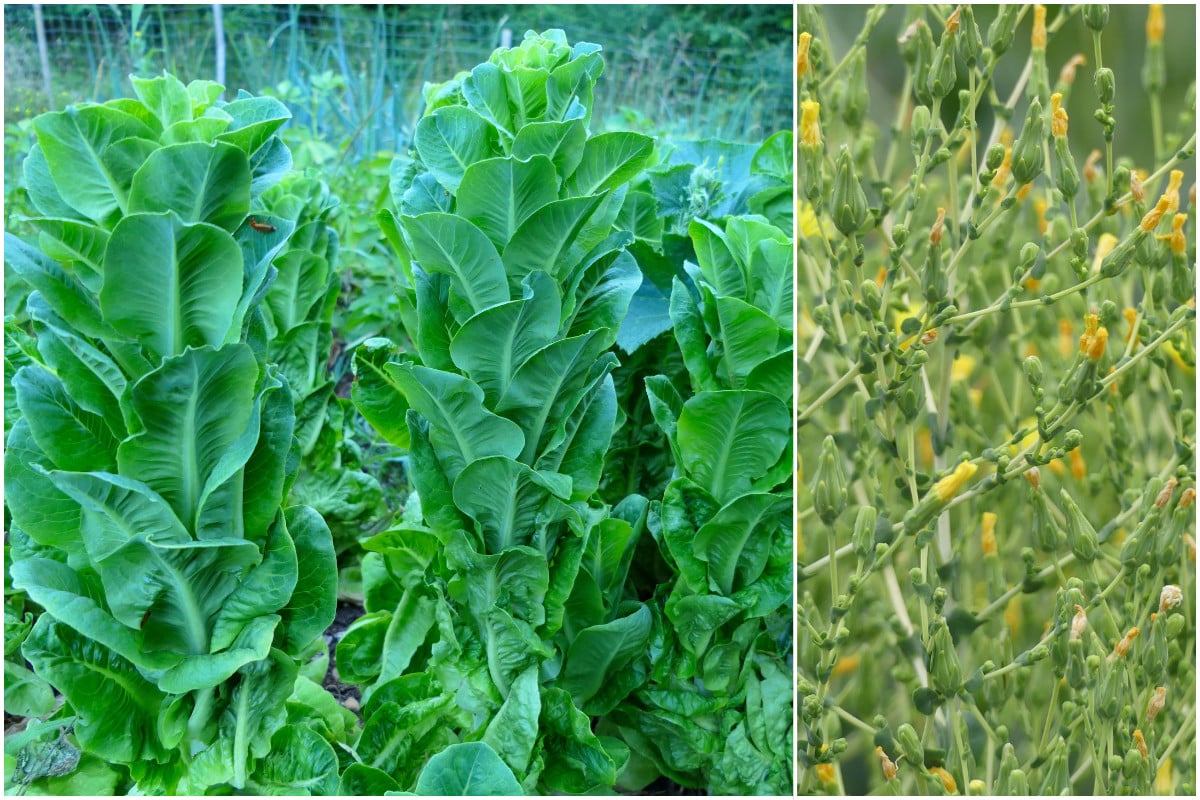
Saving lettuce seed is incredibly easy when you’ve had a hot summer. If your lettuce has bolted, just let it keep growing. (It’s kind of fun to see how tall it gets. The Leaning Tower of Lettuce.) Eventually, it will sprout fluffy flowering seed heads. Let them dry and then snip them directly from the stalk into a paper bag. Let the bag sit somewhere inside that’s warm and dry. Then give the bag a good shake after about a week. You’ll have plenty of lettuce seed for next year.
Lettuce seed is viable for 2-3 years.
Tomatoes (Solanum lycopersicum)
Oh yes, everyone’s favorite (well, almost everyone’s) is on this list, too. Tomatoes are some of the easiest, most foolproof seeds you can save. And the nice part is, you can eat the tomato as part of the seed-saving process. Choose one of your healthiest, most beautiful tomatoes. Take pictures of it, pose with it and post it to the ‘Gram.

Now scoop out the seeds with the gel and put them in a jar with some water for about 2-3 days. This will cause the gel to ferment and dissolve. Pour the liquid and seeds through a mesh strainer and rinse the seeds clean with cool water. Let them dry on a plate. Don’t let them dry on a paper towel or napkin. The seeds can stick to the paper, and you risk damaging them when trying to separate them. (You can get more detailed instructions on fermenting tomato seeds here.)
Once the seeds are completely dry, store them somewhere cool and dry.
Tomato seeds are viable for 4-6 years.
The next two seeds are quite easy to save; however, they come with a caveat. You can only save these two seed types if you have only grown one variety of each in your garden this year. If you’ve grown more than one variety, then there is a chance of cross-pollination.
Peppers (Capsicum spp.)
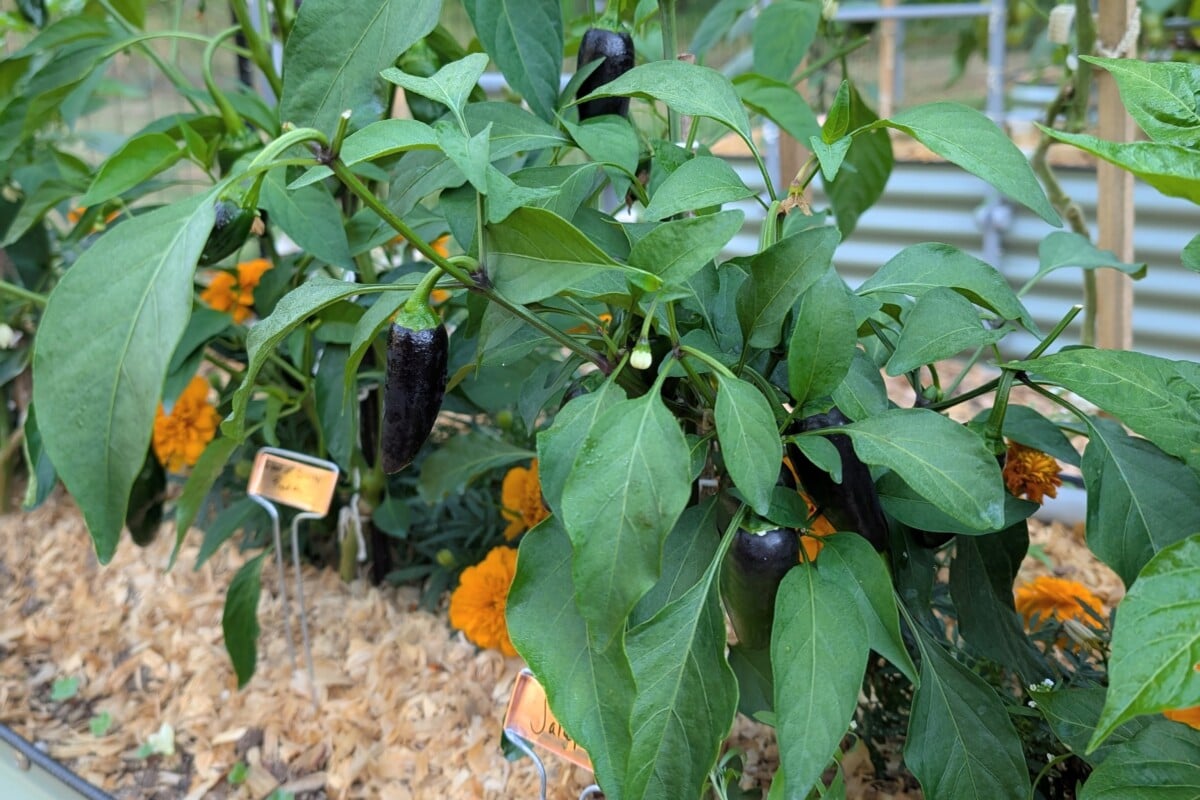
If you’re like me and you’ve got sweet peppers and hot peppers hanging out together, saving their seeds can lead to Frankenpeppers. However, if you only grow one variety of peppers, you can save the seeds. Choose a pepper and let it ripen on the vine completely. (Most peppers change color to red or orange if left to ripen fully. Yes, even green peppers.)
Once the pepper has reached full maturity, pick it, cut it open and shake some of the seeds out into a fine-mesh sieve. Rinse them with cool water, then set them aside on a plate to dry. Discard any brown or misshapen seeds. Once the seeds are dry, store them somewhere cool and dry.
Pepper seeds are viable for 3-4 years.
Eggplant (Solanum melongena)
Most gardeners only grow one variety of eggplant each year. If that’s you, you’re good to go as far as saving seeds. If you love eggplant as much as I do and you have more than one variety, there is a chance of cross-pollination.
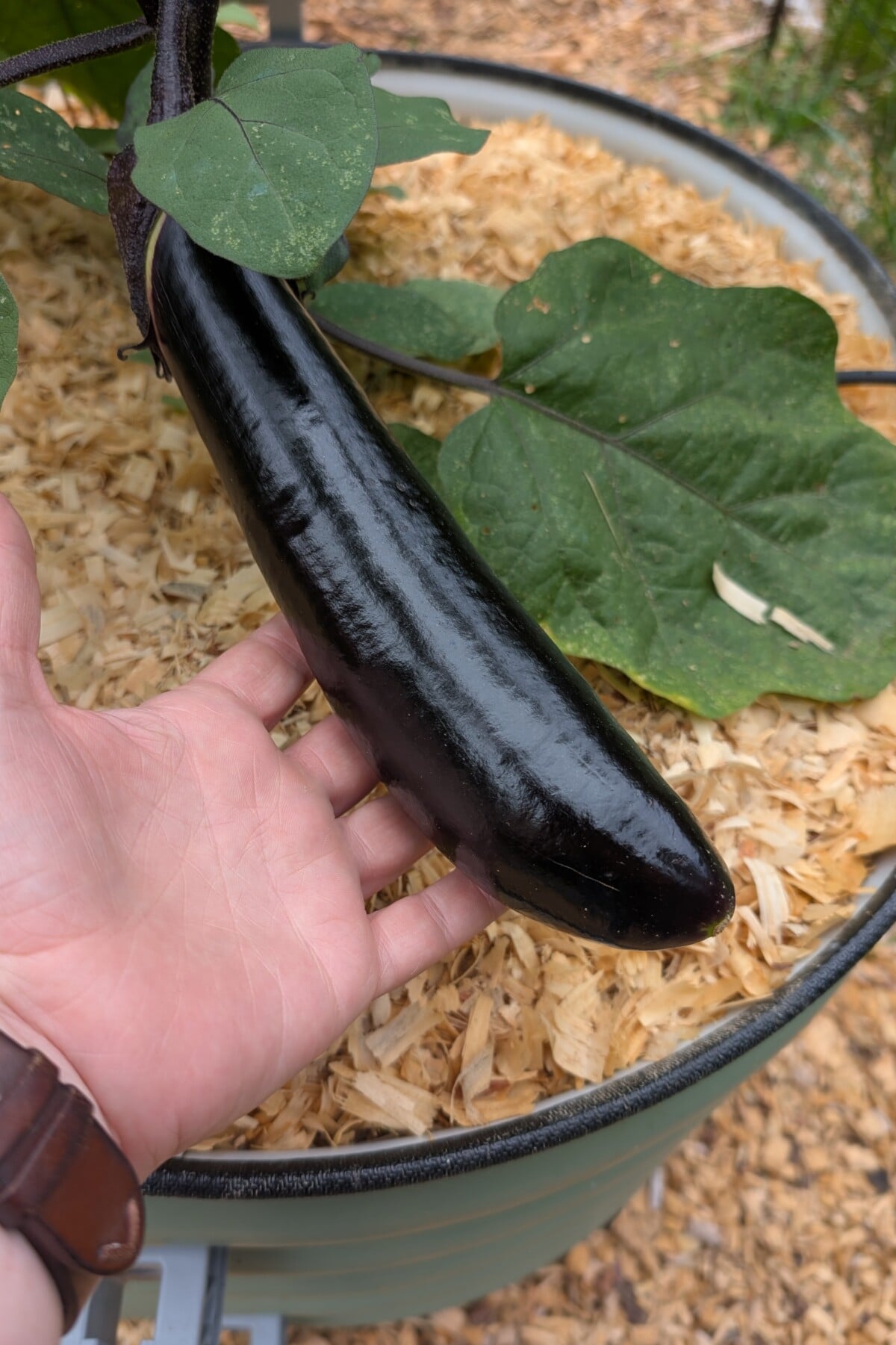
For those only growing one variety, choose a particularly nice-looking eggplant. Don’t pick it! You’re going to let it keep growing. And growing. And growing. Once it turns brown and wrinkly, looking like something you wouldn’t eat in a million years, it’s ready for you to harvest seeds.
You’re going to use the same process you would for saving tomato seeds – fermenting the seeds in water for a few days. The seeds that sink to the bottom are viable, and the ones that float should be discarded. Dry them thoroughly for a day or two after you’ve rinsed them, then store them in a jar or envelope.
Eggplant seeds are viable for 3-4 years.
And that’s it. All the other vegetables in your garden cross-pollinate readily or grow in a biennial growth pattern, which means it takes longer to get seed from them. That doesn’t mean you can’t save seeds from these other vegetables; it just requires a bit more planning earlier in the season and some special practices to protect the fruit from cross-pollination.
Storing Saved Seed

No matter what you’re saving, it’s important to store saved seed properly. Here are a few simple tips that will ensure seed saving success.
- Dry your seeds thoroughly. Any remaining moisture will cause moldy seeds and a quick end to your seed-saving adventure. I store all of my seeds in an airtight case with a desiccant packet. (I use these.)
- Store your seeds in a cool, dark place. Keeping your seeds in the fridge is great, as long as they are in a container that won’t allow moisture in, such as a jar with a tight-fitting lid. (This is also a great way to cold stratify seeds.)
- Label and date your seeds clearly with the variety and the year. Hoo-boy. Yeah, this one is important. I can’t tell you how quickly I forget what these seeds are in this packet on the counter if I don’t label and date them immediately after packaging them. If you want to get really fancy and crafty, we’ve got a fun PDF you can download so you can make your own printable seed packets.
- You’ll notice that most of these seeds are viable for 3-4 years when stored properly. Keep in mind that germination rates decline slowly each year, so consider testing or planting extra seeds as they get older.
Seeds You Shouldn’t Save This Fall
The following crops are notorious cross-pollinators, or they are biennial plants, which means a very different seed saving routine. If you save these seeds without isolating them, you’ll likely get some crazy Frankenvegetables the following year.
You can save most of these seeds, but they require some extra steps and are less beginner-friendly. So, if you do get bitten by the seed-saving bug, know that the following veggies aren’t off-limits; they just require a bit more work.
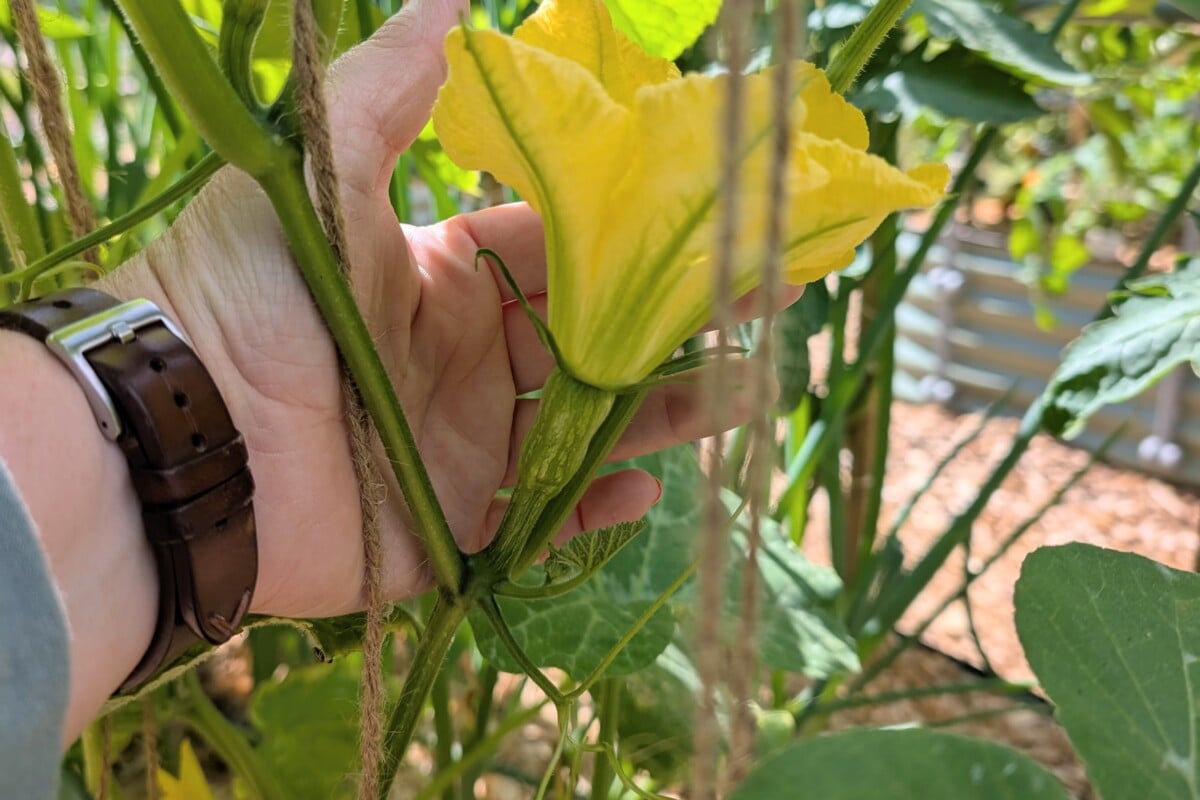
- Squash, Pumpkins, Cucumbers and Melons (Cucurbitaceae) – If it’s in the squash family, it plays well with others, which is great if you want high-pollination rates in your garden. It’s not so great if you want to save seeds.
- Corn – Corn is the one vegetable that’s pretty tough for home gardeners to save. Corn is wind-pollinated, which means you need acres if you want to avoid cross-pollination. This is one seed that’s better to buy.
- Brassicas (Cabbage, Broccoli, Kale, Brussels Sprouts, Cauliflower, Turnips, Radishes, etc.), Carrots, Beets, Swiss Chard and Spinach – All cross with each other and their wild cousins (that yellow mustard growing in the ditch), and they are also biennial. Hence, they need a second year to set seed. (Unless you get a scorching hot summer, in which case your radishes will bolt and go to seed when you don’t want them, too.) Saving these seeds is next-level seed-saver ability, not impossible, but hard enough that buying them is easier.
If you’d like to branch out into saving the trickier crops, here’s what you need to plan for in the future:
Isolation: Squash, cucumbers, and melons can be saved easily by bagging blossoms before they open and then hand-pollinating them to control the process. This is doable on a small scale, negating the need for so much space, but it requires daily attention.
Biennials: Brassicas, carrots, beets, and chard need to overwinter, then flower in their second year. This means either leaving them in the ground (if your winters allow) or digging and storing roots, then replanting in spring and allowing them to flower.
Grow Only One Variety: If you want to keep seed saving simple, commit to growing only one type of cucumber, one type of squash, etc., per season. That way, whatever pollen transfer happens, it’s all the same variety.
Saving seeds isn’t nearly as scary as it sounds, and come next spring, there’s a sense of pride that comes from poking your own saved seeds in the ground.
Get the famous Rural Sprout newsletter delivered to your inbox.
Join the 50,000+ gardeners who get timely gardening tutorials, tips and tasks delivered direct to their inbox.