

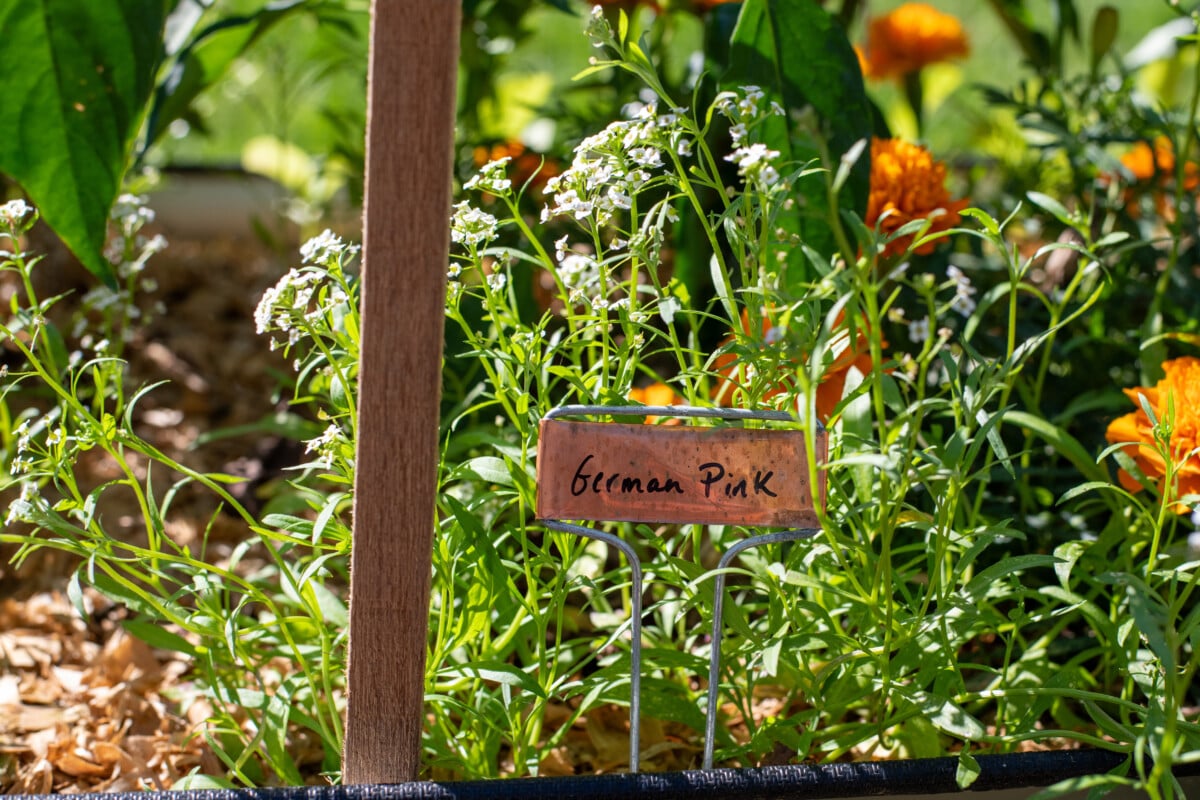
Marigolds always hog the spotlight when it comes to tomato companion plants. Unfortunately, most of their tomato-protecting traits are severely over-hyped, yet they continue to be the gold standard when it comes to companion planting lore and tomatoes. Well, not anymore.
How many of you have been planting marigolds with your tomatoes for years because that’s what the popular gardening wisdom says to do? I know I have.
But I’m also a born skeptic. (Much to my teacher’s and employer’s chagrin, “Why?” and “Show me how?” have always been popular refrains with me.)
So, I’ve always been a little dubious about planting marigolds. But hey, they look nice and don’t seem to hurt anything.
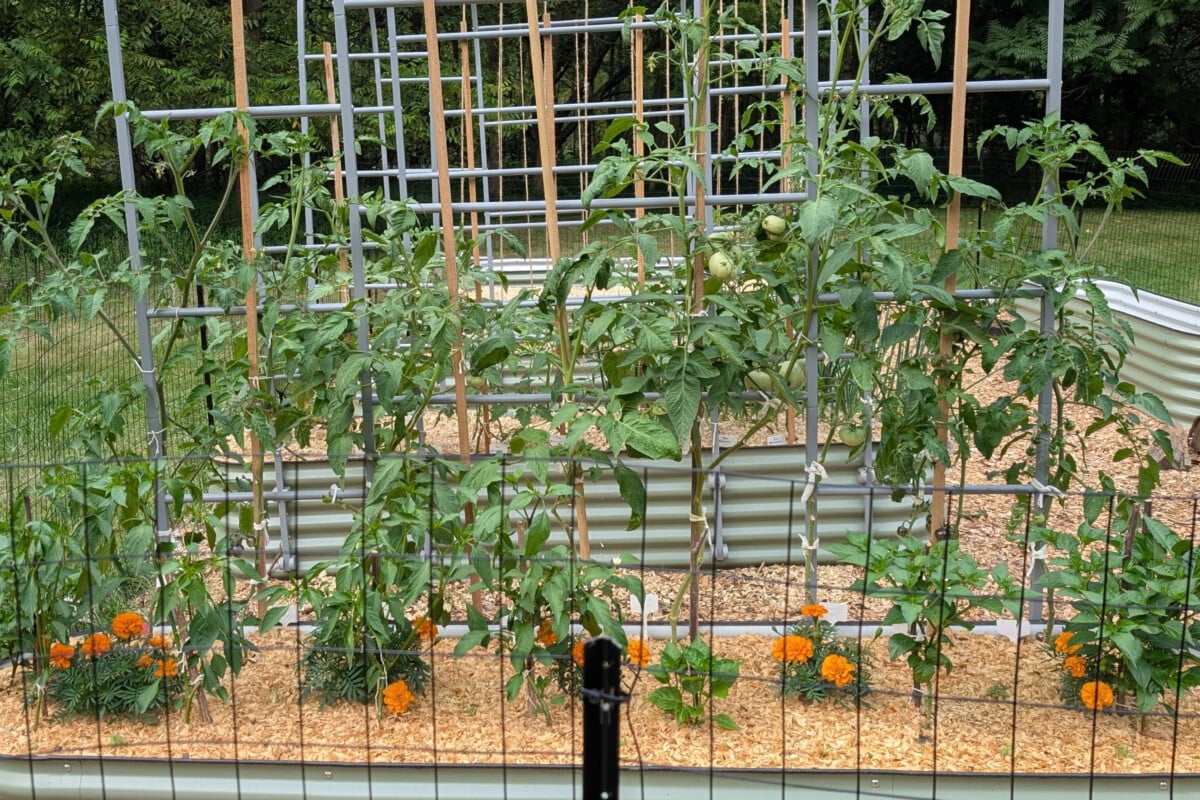
Then, last year, I came across a YouTube video in which commercial greenhouse growers were explaining a string-training method for growing tomatoes that I was interested in trying. (Two leaders grow from the base of a single plant in a V instead of a single leader. Twice the tomatoes, from one plant.) In the video, they happened to mention the masses of white flowers that grew at the base of their tomatoes.
I hadn’t really noticed them until the guy pointed them out. But they were everywhere, growing like a fluffy cloud of white and pale green at the base of row upon row of tomatoes.
Sweet alyssum.
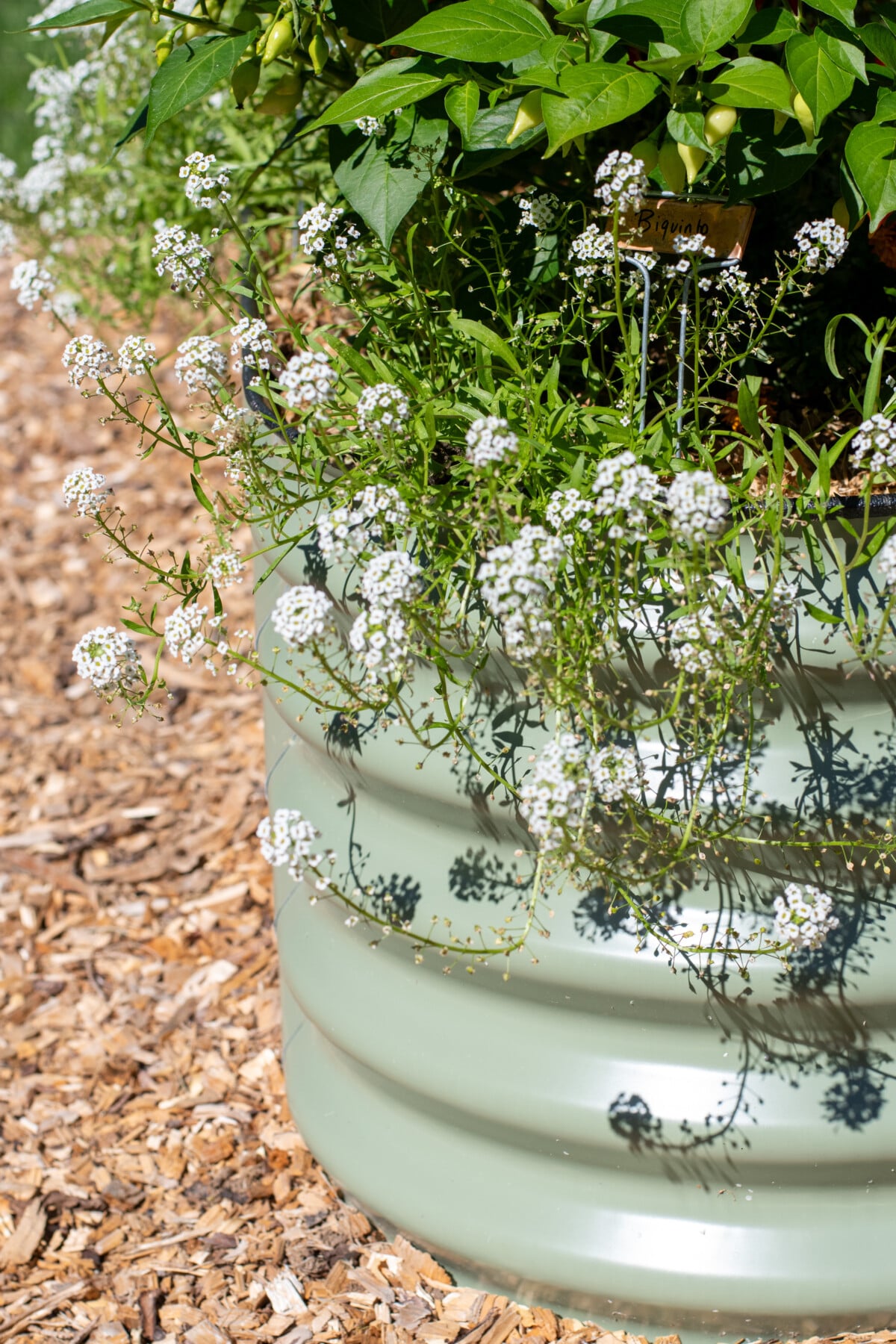
Yup, sturdy, easy-to-grow, somewhat boring, sweet alyssum. The guy in the video mentioned that they were going to do a separate video about the benefits of using sweet alyssum for pest control, and that was all I needed to hear. I was off to the races, string-trained tomatoes forgotten, looking online for more information about how sweet alyssum helps tomatoes.
Holy cow, folks. We got it all wrong.
Marigolds can get stuffed for all the good they do in the average person’s garden; sweet alyssum does so much more!
Gardeners have been spoon-fed the notion that marigolds are the perfect tomato-growing companion for decades. But rarely are we given the information that backs up that claim. Probably because you would quickly learn that you have to use specific types of marigolds, and they need to be grown in the soil well before you plant your tomatoes. Not to mention, they really only help with two pests.
What?
Yup.
I won’t go into great detail; you can read the studies yourself, but the two biggest claims to fame marigolds have are defense against whiteflies and nematodes.
The first, whiteflies, is laughable as whiteflies are rarely a problem for the home grower.
You know who they are a problem for? Commercial greenhouse growers. Whiteflies love the warm, moist, sheltered environment of a greenhouse. It allows them to produce like wildfire all year long. Because they are living in an enclosed environment, they have no natural predators. Outdoors, most whiteflies are taken care of by other insects and cold weather before they can become an infestation of epic proportions. (PubMed Central)
So yes, if you are a commercial greenhouse grower, then marigolds are your friend.
But only French marigolds.
And only if you plant them at the same time as you plant your tomatoes. Yes, they must be planted together.
And finally, marigolds don’t do anything to prevent whiteflies from showing up, rather they help slow the spread of existing infestations like those found in commercial greenhouses.
Yeah…I feel a little duped myself, friends.
Then there are the nematodes.
Now, in this case, yes, marigolds do provide a measurable defense against root-knot nematodes. However, only when you grow tomatoes in the same spot you planted marigolds the previous season. And again, this was only shown to be effective with one variety of marigold – Tagetes patula var. Single Gold. (Canadian Journal of Plant Science)
Huh. Well, then.
I was curious about the sweet alyssum, but equally skeptical.
In my experience, most companion planting is never anything more than pleasant folklore that doesn’t add up to results in the garden.
It didn’t take much digging around, though, to find enough information to leave me slightly hopeful.

When it comes to tomatoes, pests are usually the biggest complaint, and pests are what companion planting is supposed to help with. There are quite a few insects that like to munch on tomatoes:
- Aphids
- Cutworms
- Flea Beetles
- Stinkbugs
- Thrips
- Tomato Hornworms
Just to name a few, and marigolds don’t do anything to help with those. But sweet alyssum does.
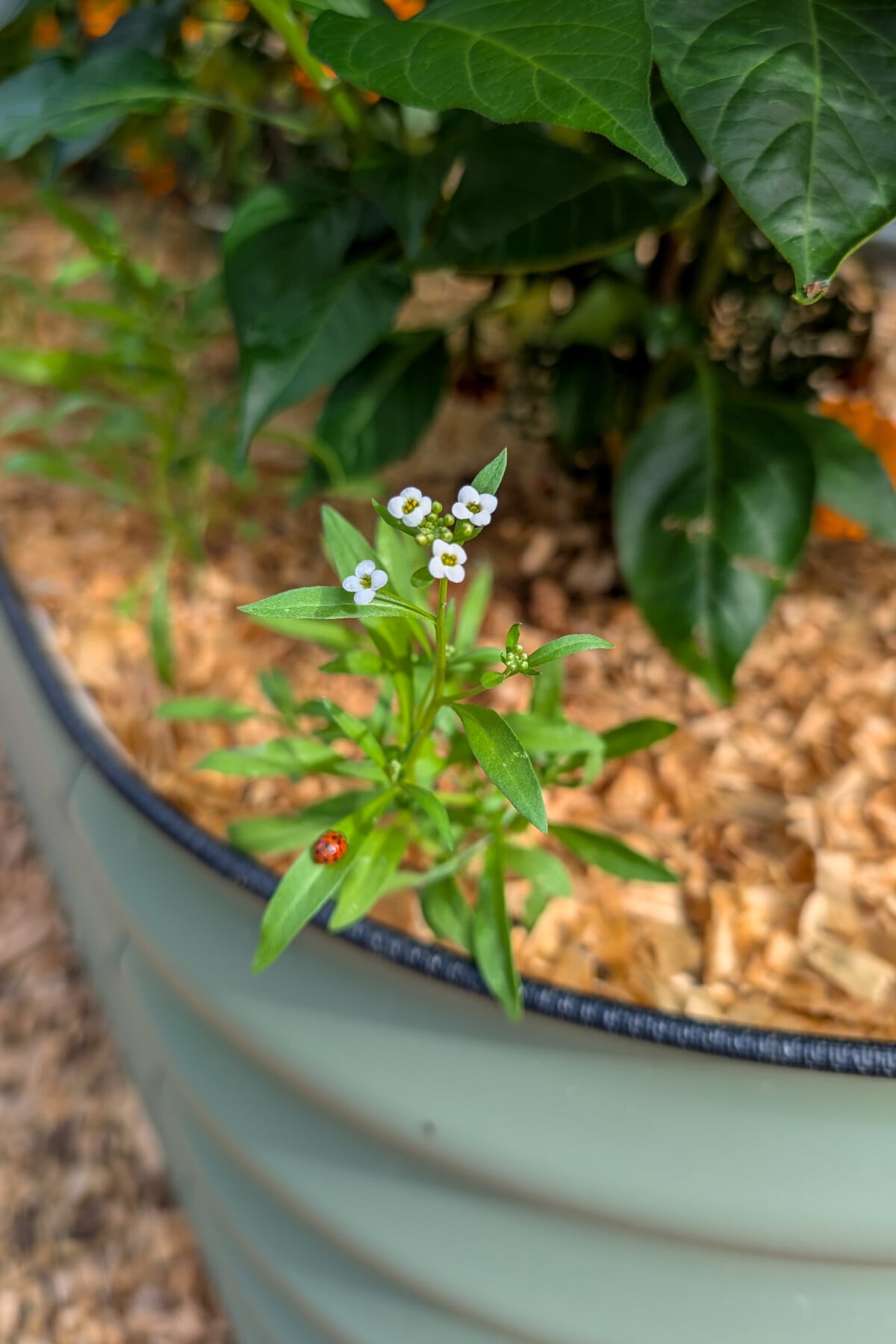
Lobularia maritima, or sweet alyssum, goes above and beyond when it comes to helping your tomatoes. And it does so in the simplest way – nectar power. Despite their size, these tiny flowers of white and pink are loaded with nectar, much more than other plants with larger flowers. Think of it as a matter of surface area. There are a lot of flowers in a small space.
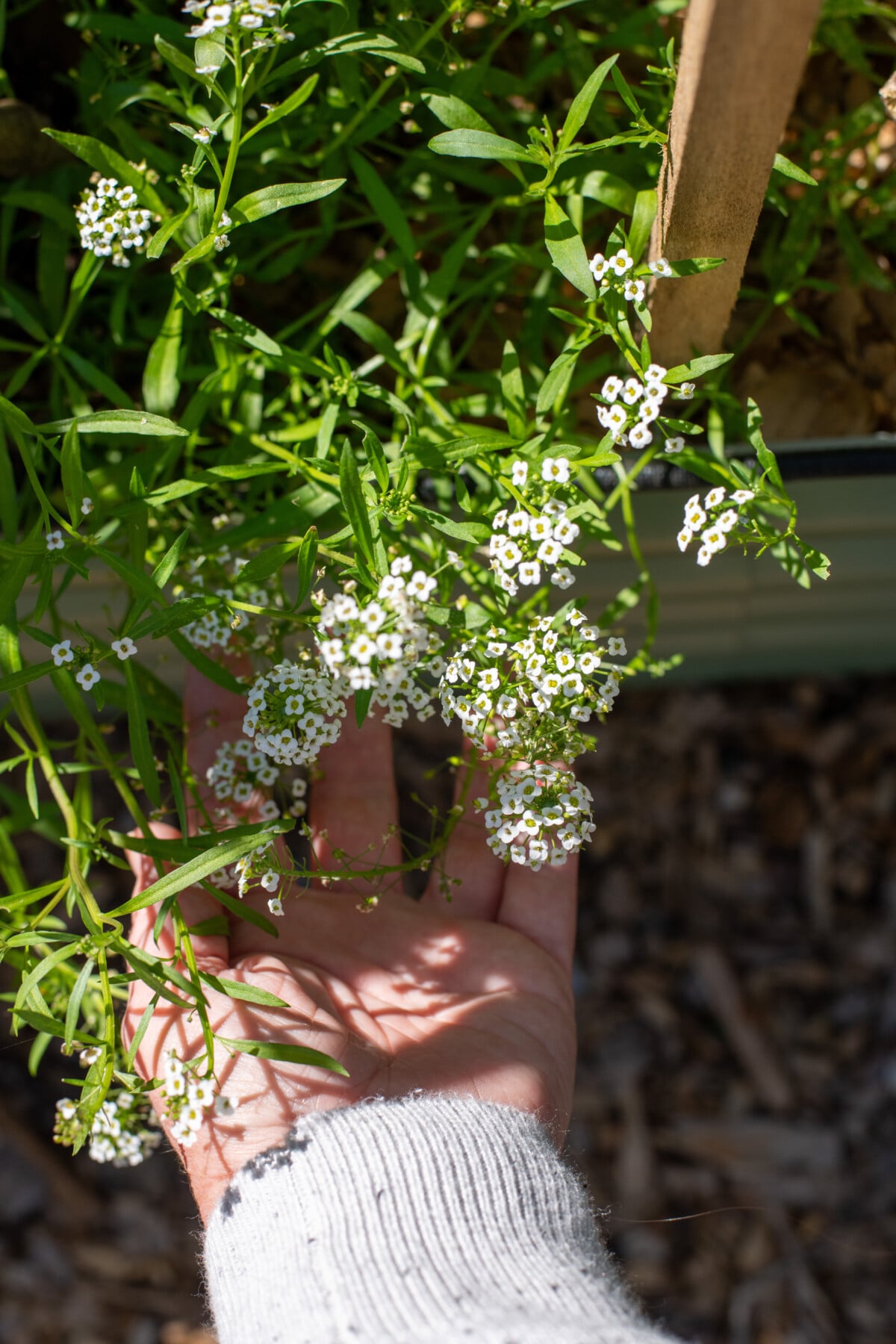
By planting sweet alyssum around the base of your tomato plants, you’re essentially setting up an all-you-can-eat nectar buffet for beneficial insects. The scent is carried on the wind, and the pollinators come running. Or flying, I guess.
Many of the insects that prefer these nectar-rich flowers are also natural predators of the most common tomato pests.
Aphids? Oh, I don’t think so, ladybugs adore snacking on sweet alyssum.
Cutworms, thrips, spider mites, leafhoppers, and yes, even whiteflies don’t stand a chance because sweet alyssum also attracts lacewings, and they love to eat all of those bugs as well as aphids.
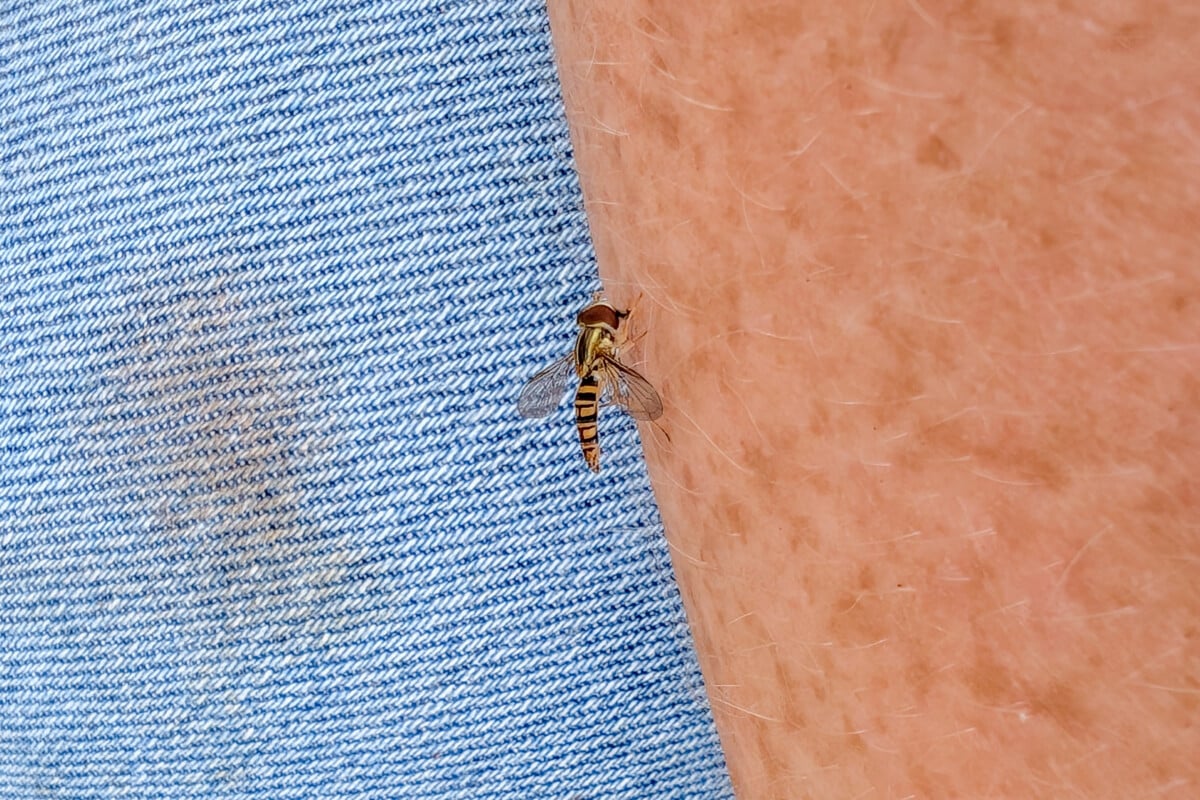
My favorite insect that shows up among the sweet alyssum is the hoverfly. These little insects are sneaky and efficient. They dress themselves up to look like bees, but they are actually little flies who have a big appetite for pests.
And nothing sends tomato gardeners running for their UV flashlights faster than finding a chubby tomato hornworm hanging out on their plants. You know there is never just one.
But braconid wasps also enjoy the rich nectar of sweet alyssum, and once they’re finished sipping, they will quietly and efficiently dispatch nearby tomato hornworms. It’s like something out of a horror movie. The female wasp lays her eggs inside the tomato hornworm. After they hatch, they kill the hornworm by eating it alive from the inside out. Lovely!
Nature is nothing if not efficient.
So yes, sweet alyssum doesn’t rely on some vague woo-woo folklore to be your tomatoes’ new bestie. It relies on its nectar to bring all the best bugs to the yard. The beneficial insects take it from there, patrolling your tomatoes and taking care of pests before they can get a foothold.
I’m Never Going Back to Marigolds
Look, I like the rustic charm of French marigolds as much as the next person, but I don’t have a huge garden. Every square foot of my raised beds is spoken for, and marigolds get pretty big as the season goes on.
So, for something that has little to no real science backing up its beneficial claims, I just don’t think it’s worth growing marigolds. Especially not after I tried growing sweet alyssum last summer instead. It was nuts!
My garden buzzed.
I could hear it as I got closer. I couldn’t walk through my garden without hover flies landing on me. They were everywhere! And I have never seen so many ladybugs in my entire life.
I didn’t see a single aphid all season long. The couple of tomato hornworms that showed up were quickly dealt with. I had more issues with septoria leaf spot than I did with insects last year. I’ve never had a tomato growing season that wasn’t punctuated by pests attacking my plants before.
This year, I’ve got an entire flat of sweet alyssum seedlings started in my grow tent, ready to be planted as soon as the weather allows.
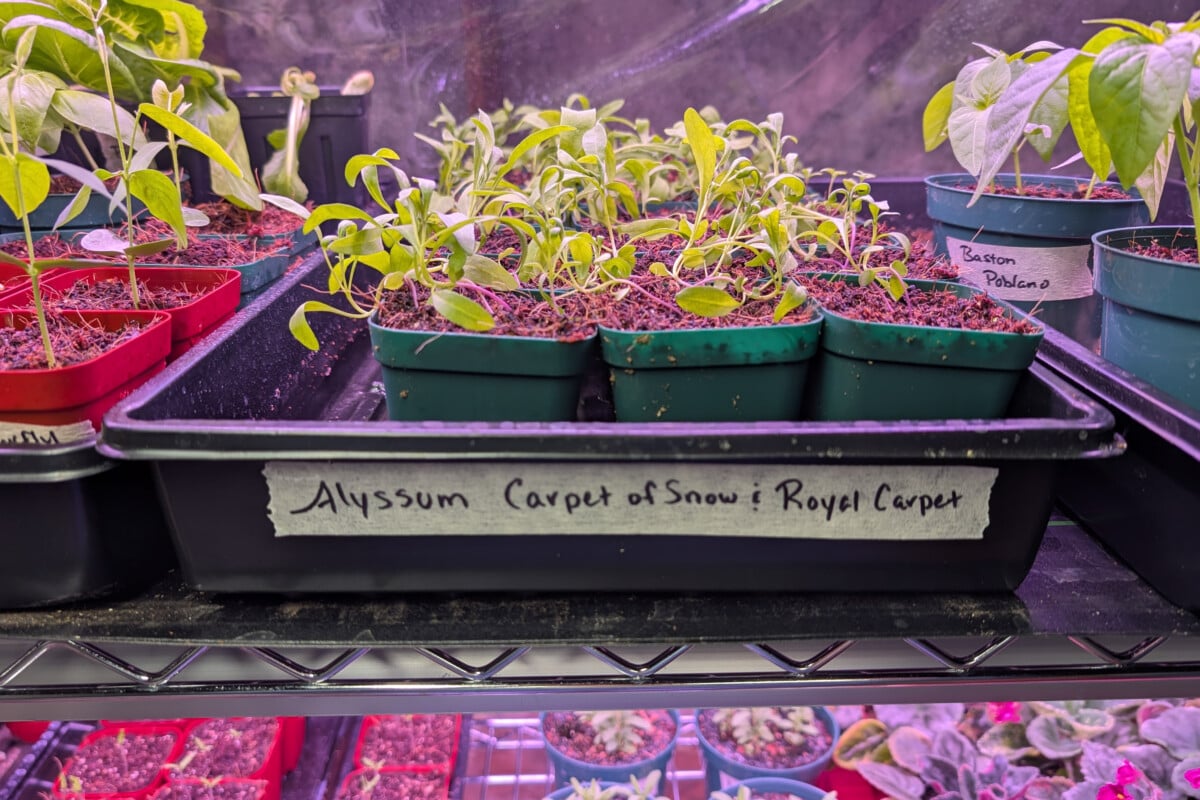
I don’t see the point of going back to marigolds. They take up too much room, you have to deadhead them to keep them flowering, they don’t even smell nice, and there isn’t much compelling evidence that they do anything for tomatoes.
I could see with my own eyes the evidence all over my garden that my sweet alyssum was working hard, along with all the beneficial insects it reeled in. For me, marigolds will be relegated to the flower bed from now on. Not to mention, it’s already proven that sweet alyssum produces higher amounts of nectar than the average flower and attracts all the right insects to deal with tomato pests.
Growing Sweet Alyssum
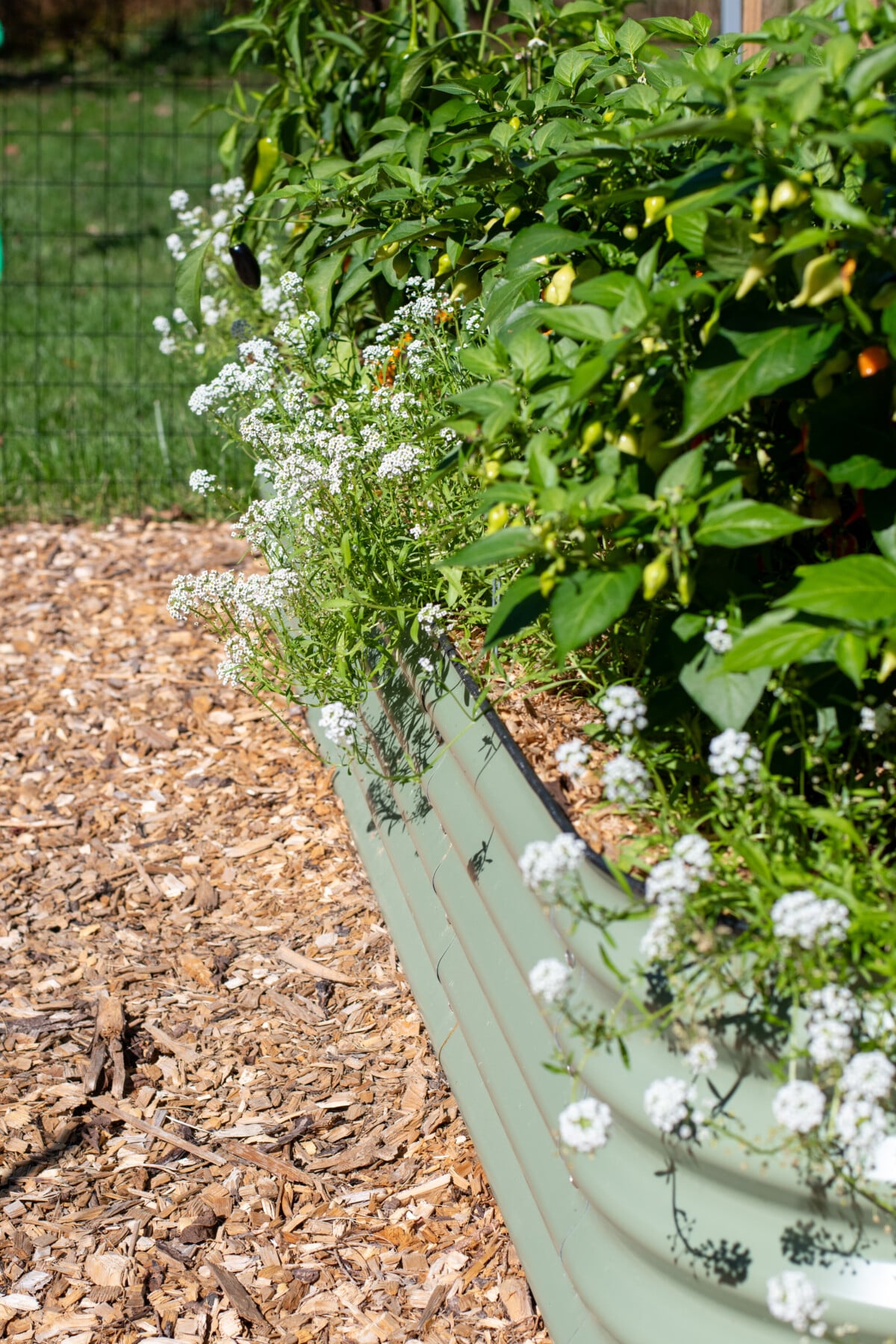
A great feature of growing sweet alyssum is that, much like the humble marigold, it’s a sturdy, no-nonsense, easy-to-grow flower.
It’s a ground cover, so it will spread easily, covering the soil like a living mulch around your tomatoes, yet it’s not dense enough that you can’t also grow other vegetables in it.
Sweet alyssum is extremely drought-tolerant, which means it will keep on growing even if your tomatoes shut down from the heat. It’s quite frost-tolerant, too. My sweet alyssum was the last thing standing in my garden last year, growing well into November and through several hard frosts.
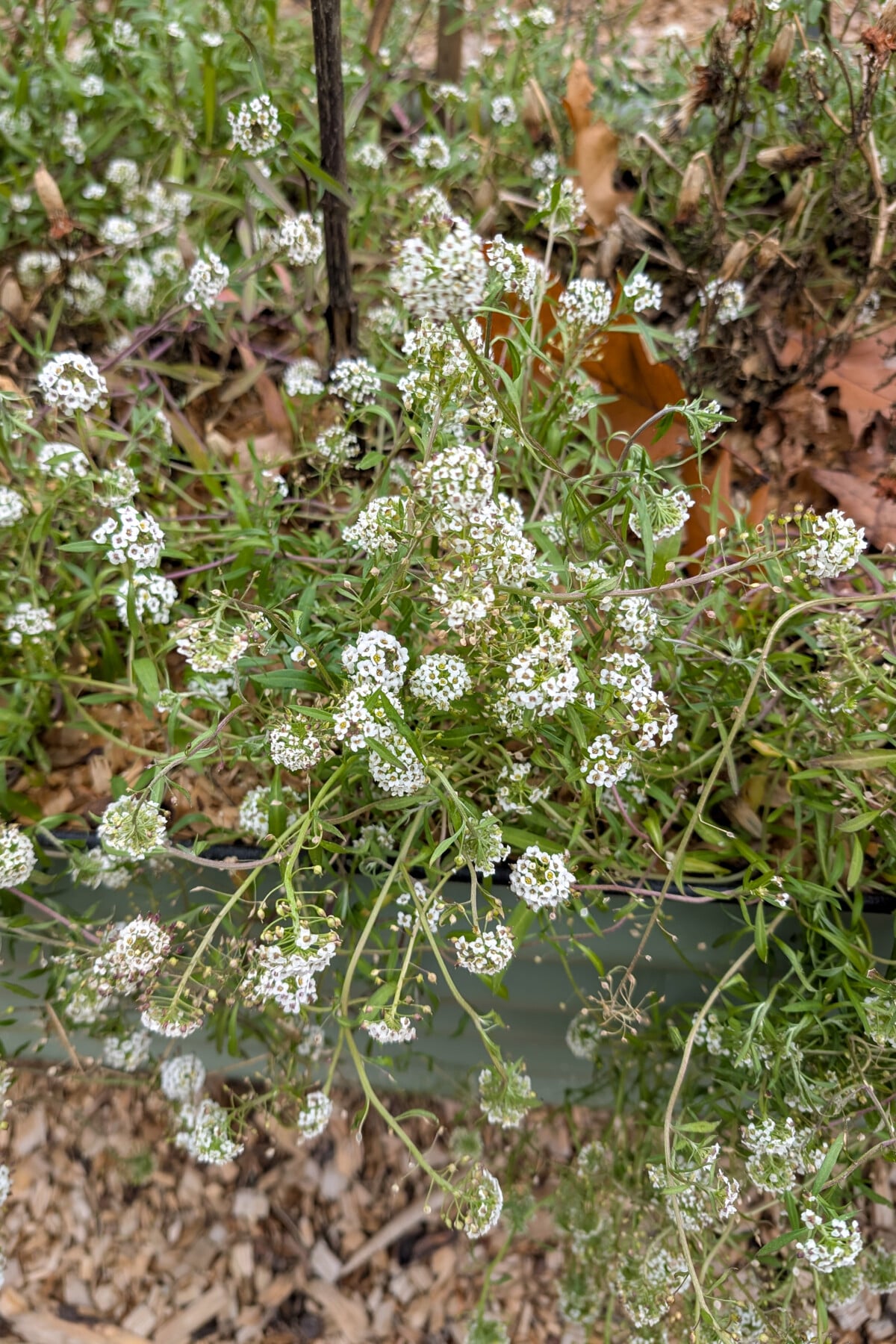
It’s an annual, so you don’t have to worry about it taking over and spreading like some perennials.
It’s cheap! You can grow it from seed easily or find it at nearly every garden center.
Sweet alyssum doesn’t require fertilizing or deadheading (ahem, looking at you, marigolds), so once you plant it, you can forget about it for the rest of the growing season while it does its thing.
But Wait, There’s More…
If you’ve been paying attention, you can already see two more benefits of growing sweet alyssum with your tomatoes. And they benefit your entire garden, not just your ‘maters.
I had zero pollination issues last summer growing sweet alyssum as a beneficial ground cover below my tomatoes. As I already mentioned, there were hover flies everywhere, and hover flies are pollinators. Because sweet alyssum produces so much nectar, growing it really is like ringing the dinner bell for local pollinators.
The other benefit was inherent in the way sweet alyssum grows: it’s a ground cover.
The sweet alyssum spreads, acting like a living mulch. It helped keep the soil cool during the hottest part of the summer, it was dense enough to help prevent evaporation, but not so dense that I couldn’t grow other vegetables right in the middle of it. I don’t think I would forgo my usual application of mulch at the beginning of the growing season, but the sweet alyssum was a whole lot prettier than wood shavings and shredded leaves.
Sorry, marigolds, you’re a charming old flower, but there’s someone else better equipped for the job. I think my tomatoes have found a new BFF.
Get Garden Notes From Tracey, Right to Your Inbox
Pull up a chair on the front porch. Join 54,000+ gardeners who get Tracey\'s friendly notes, seasonal to-dos, and hands-on tutorials three times a week.