

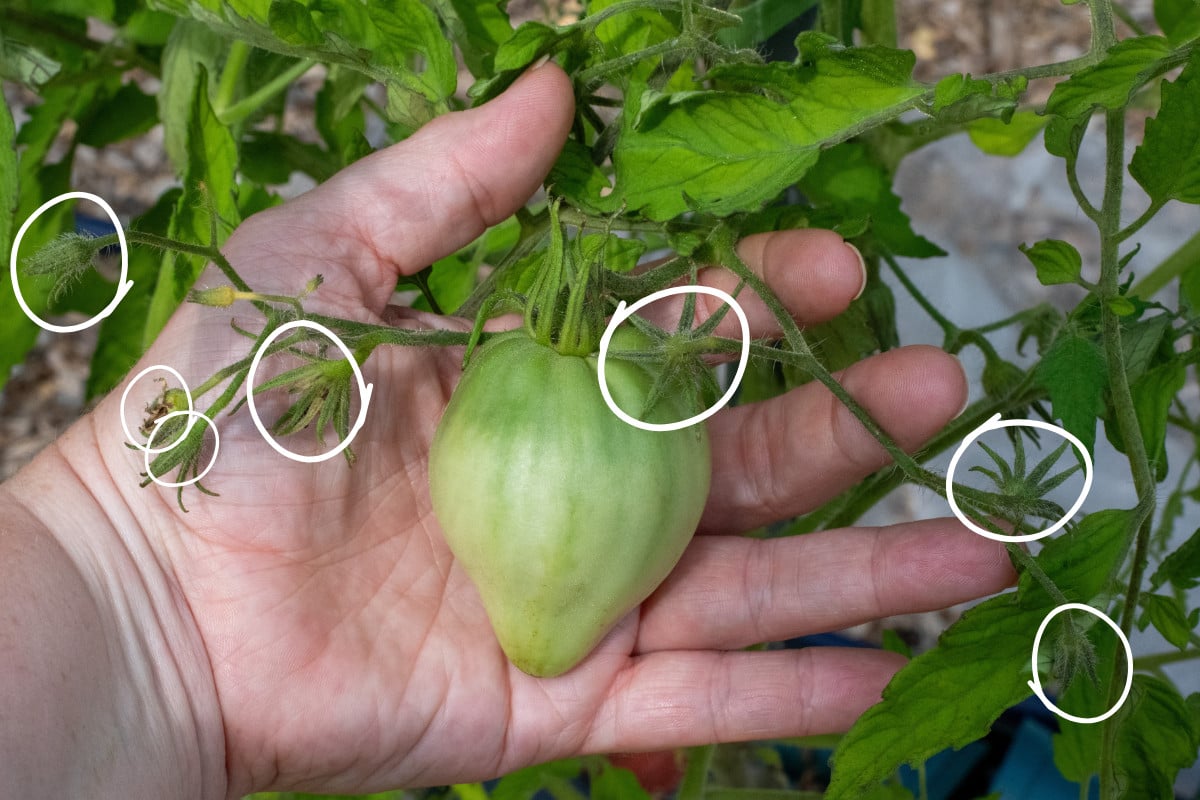
Even if you’ve been growing tomatoes for years, you may have never heard about trusses or a ‘king fruit.’ That’s because it’s the lingo commercial greenhouse gardeners use to describe the first tomato on every truss. And what you do with that tomato can change how the rest of them grow. If you want to maximize your tomato harvest this year, it’s time to learn about the almighty king fruit.
Who Knew One Tomato Held So Much Power?
If you’ve been growing tomatoes for any length of time, you know that they vary widely in shape and size, even on the same plant. It can be kind of fun to watch that one tomato and see just how big it will get. But those random whoppers might be holding the rest of the plant back, and that can mean fewer tomatoes over the growing season.
And that’s where this trick from commercial tomato greenhouses comes in.
When it comes to growing tomatoes for the market, overall productivity and uniformity are the goals. So, these guys know a thing or two about how to get the most tomatoes from each plant, and it all comes down to the king fruit on every single truss. What’s a truss? What’s a king fruit? Let’s take a quick look at how tomatoes grow.
Indeterminate Tomatoes
Indeterminate tomatoes are stuck on repeat. They know only one pattern. Grow some stem, grow a branch with leaves, push out a truss with flowers, then grow some more stem, grow a branch with leaves, push out a truss with flowers. You get the idea. Indeterminate tomatoes will keep at this until pruned or killed by the frost. They are very persistent plants.
Determinate Tomatoes
Determinate tomatoes spend most of their life growing bushier and bushier, until they finally push out trusses with flowers at the end of all of that growth. You get a large harvest, all at once.
The Truss
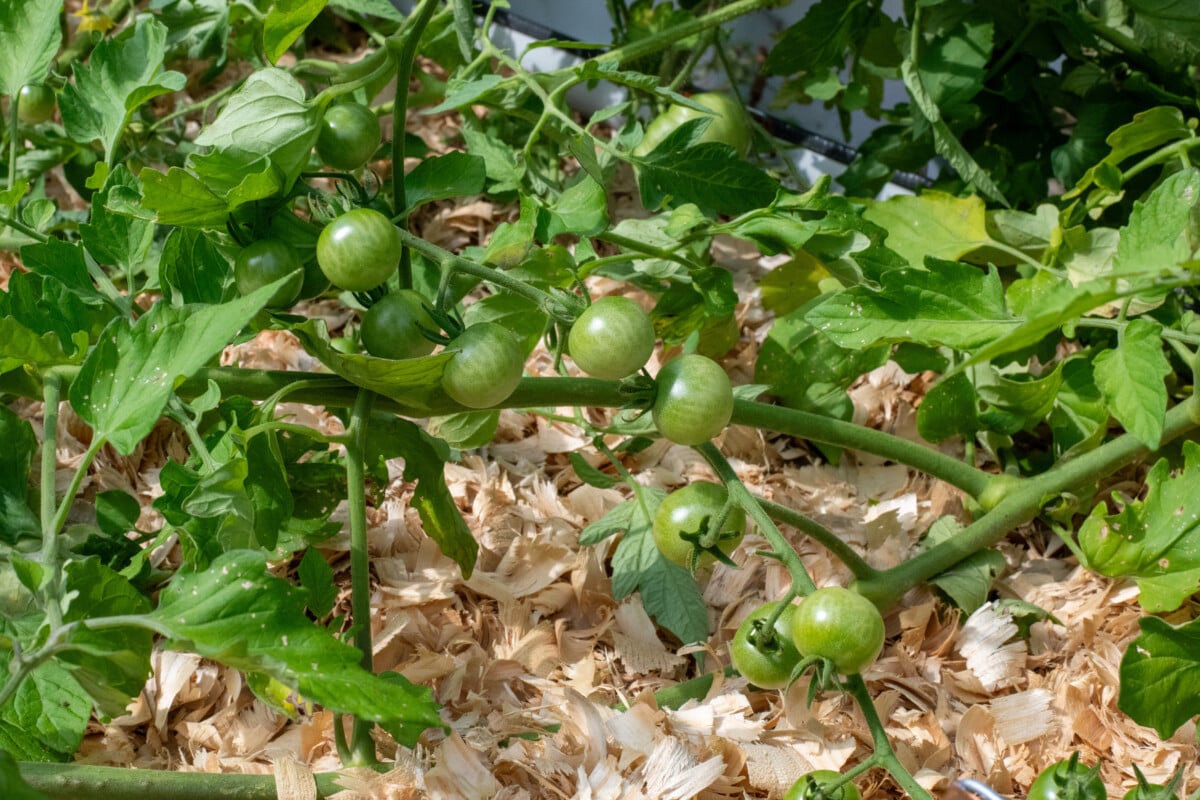
The truss is simply the part of the stem that bears the flowers, which turn into fruit. It’s a bit like a bunch of grapes.
King Fruit
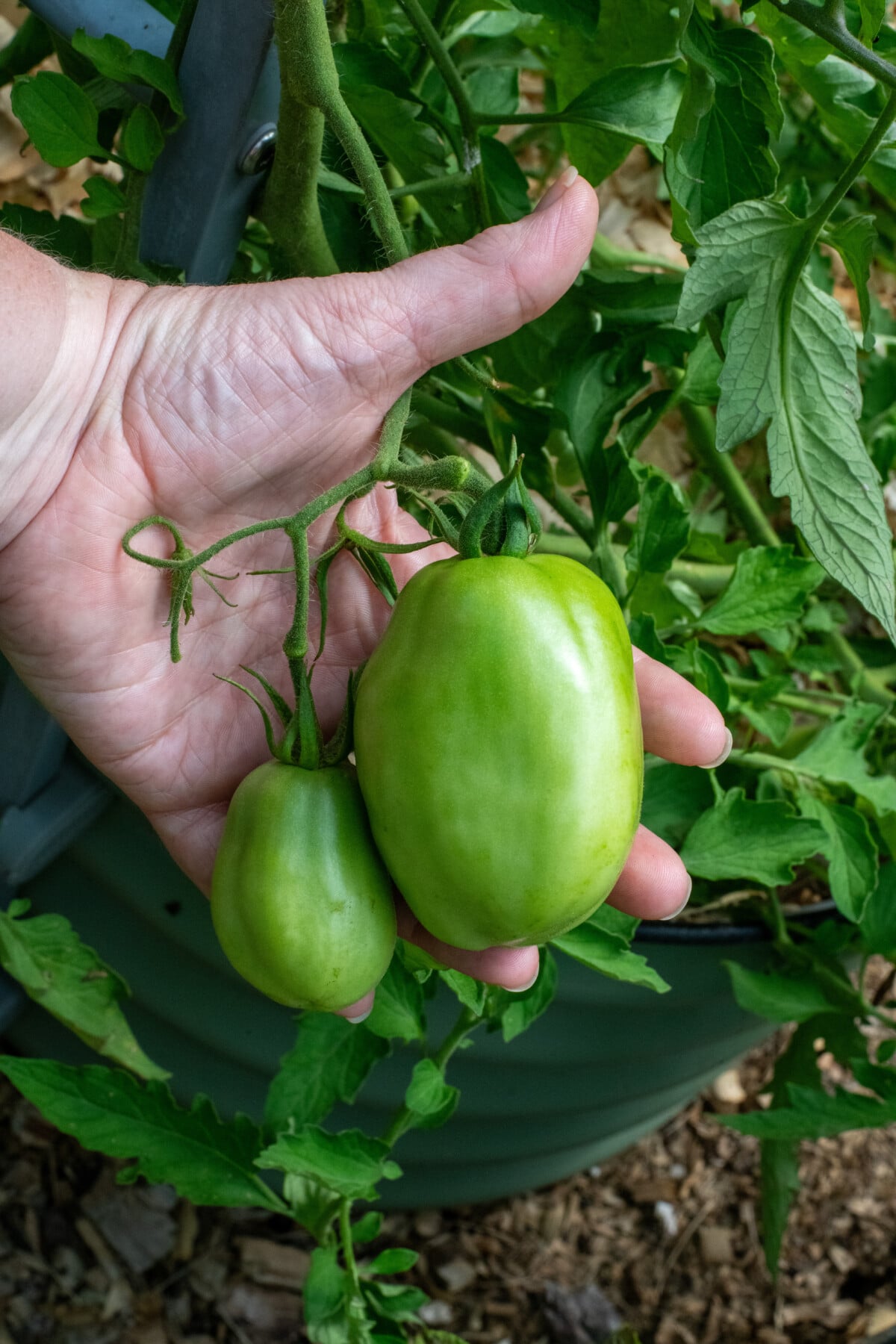
The king fruit is the very first flower on each new truss. Because it’s the first to develop, it gets the best of both worlds. It often gets the most nutrients and water, which means it’s the largest tomato on the truss. But because it’s the first to develop, it also gets hit the hardest with any issues the plant is dealing with. If the temperatures at night are too cool, it will develop catfacing. If your plants aren’t being watered consistently it may develop blossom end rot. King fruit blossoms are often fused into megablooms.
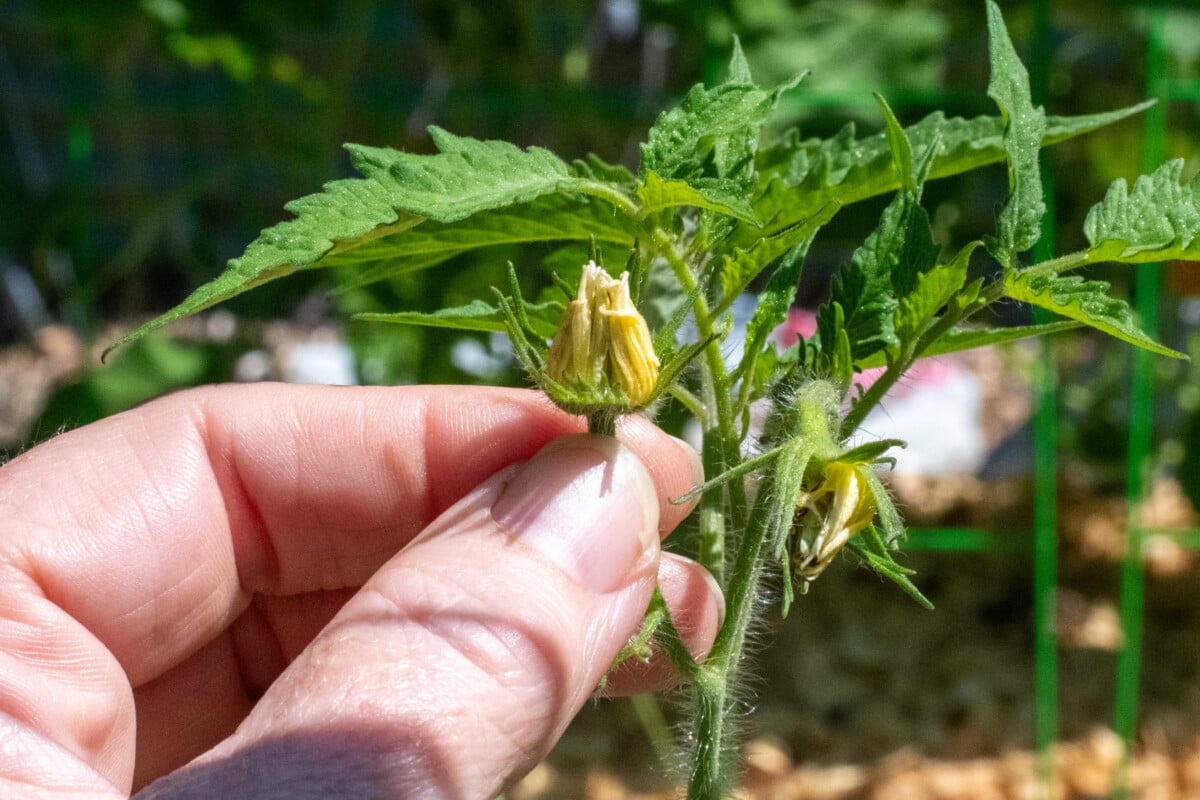
In the end, this one tomato affects the rest of the tomatoes growing down the line on that truss.
Using the King Fruit to Change Your Tomato Yield
Now, here’s where the fun begins. What you do with that king fruit on each truss can dramatically affect your entire harvest. You have to ask yourself:
Do I want a modest tomato harvest with a few giant tomatoes thrown in for good measure? Or do I want, pound for pound, a plentiful harvest of tomatoes all roughly the same size?
Here’s What the Pros Do
As we’ve already discussed, that king fruit gets all the best and all the worst from the plant. So, it means the king fruit is often significantly larger than the other tomatoes on the truss. It’s also usually misshapen. That’s fine, as home gardeners, we all know that ugly fruit is just as tasty as the perfectly uniform ones. But here’s the rub.
That king fruit is preventing all of the other tomatoes further down the truss from receiving an equal amount of water and nutrients.
This is why when you look at a truss of tomatoes in your garden, they grow from the top of the truss down, from bigger to smaller.
But if you head to the grocery store and pick up a package of Flavor Bombs, you’ll notice that they are all uniform in size. (Those things keep me going in the winter when my garden is asleep. Aren’t they great?)
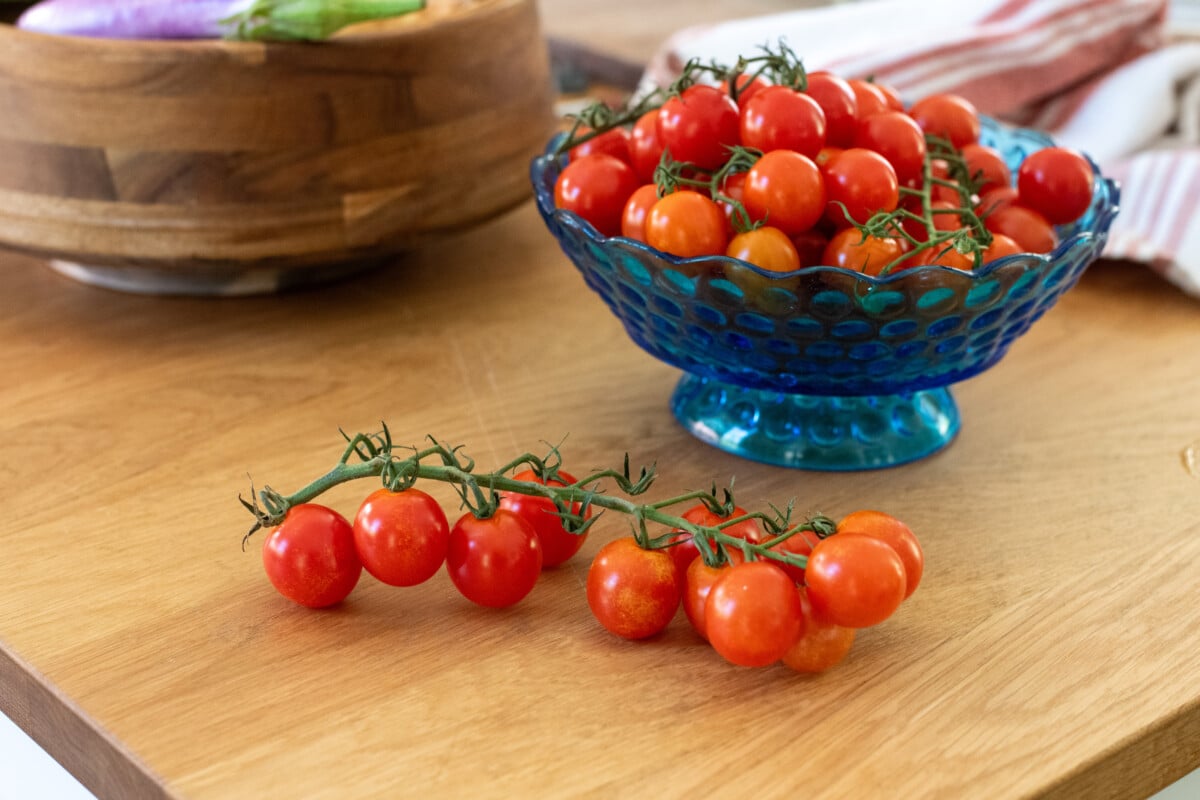
That’s because commercial growers almost always pluck that king fruit off the truss. With that one energy hog removed, the rest of the tomatoes on the truss receive plenty of water and nutrients and grow to be relatively the same size. Not only that, but you’ll get more flavorful tomatoes overall.
Removing the king fruit also means your tomatoes will ripen at around the same time, as well.
When I first read about this practice, I thought it couldn’t make that much of a difference. So, I went out to my garden to get a closer look at my tomatoes.
Cherry Tomatoes
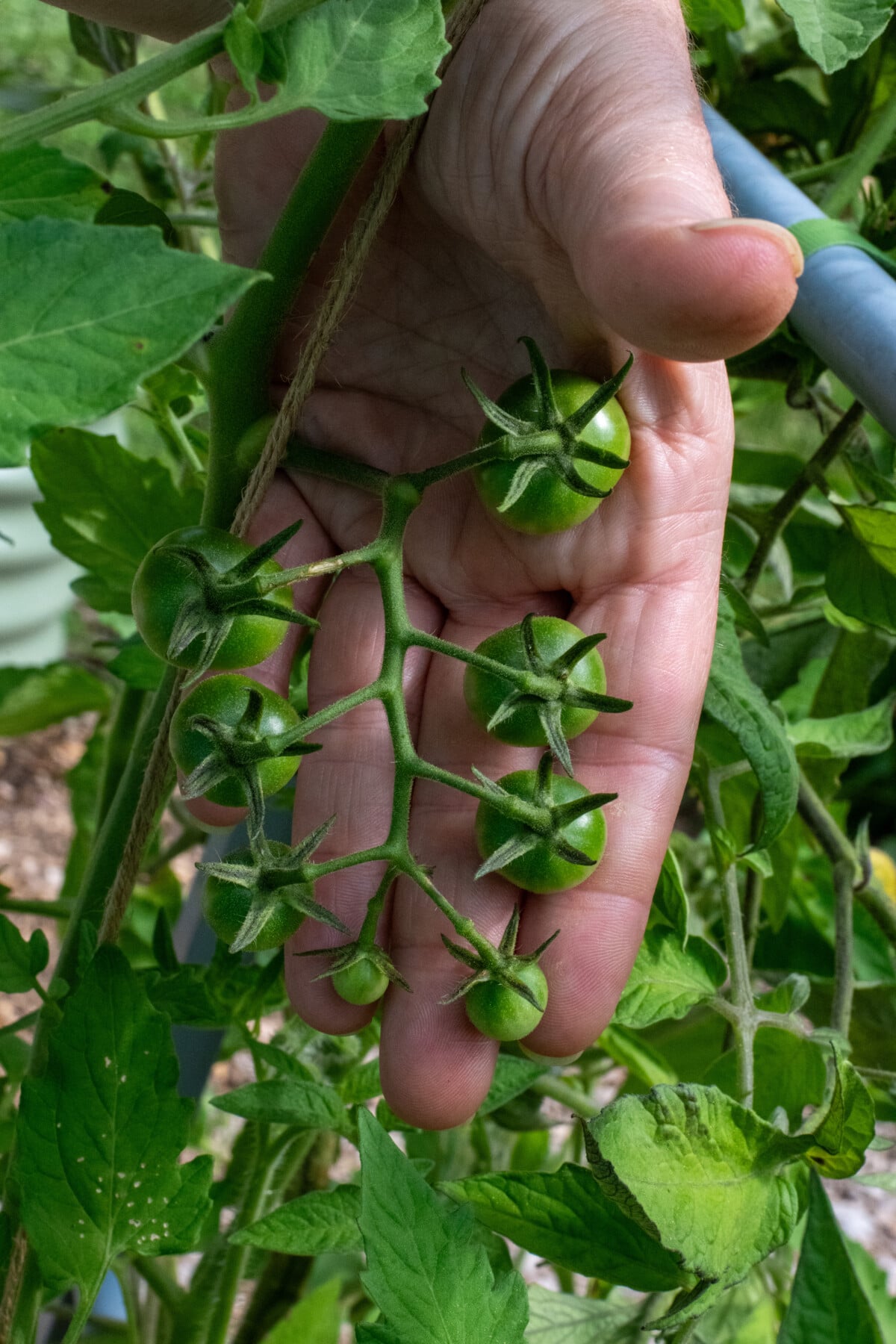
I perused my Sungolds first. And yes, I could see a taper from the largest tomato to the smallest at the tip of the truss. But the thing is, cherry tomatoes grow so darn fast, and they’re so prolific that for most of us home gardeners, it doesn’t matter. We’re going to be up to our eyeballs in cherry tomatoes, whether we bother removing the king fruit or not. (And let’s be honest, no one has the time to pinch off as many king fruits as those guys crank out!)
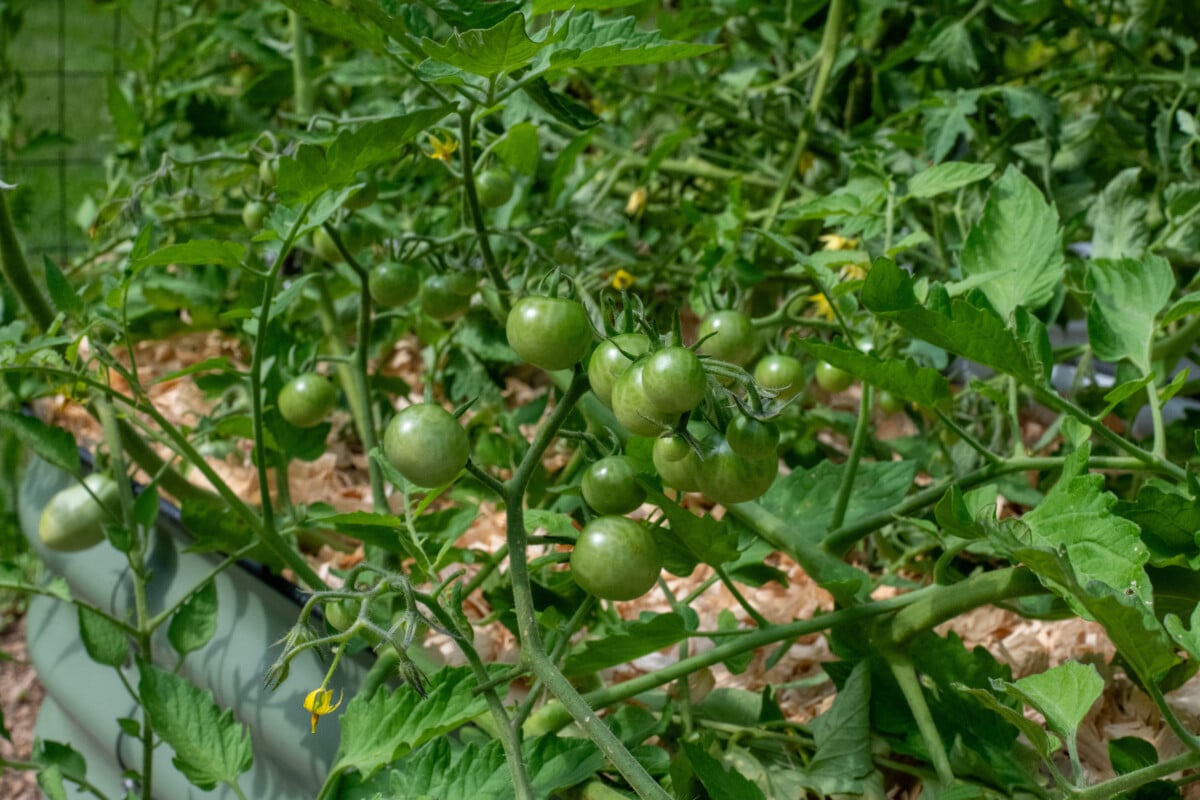
Larger Tomato Varieties: Slicers and sauce tomatoes, etc.
The real eye opener came when I started looking at the larger tomato varieties I was growing, the slicers and sauce tomatoes.
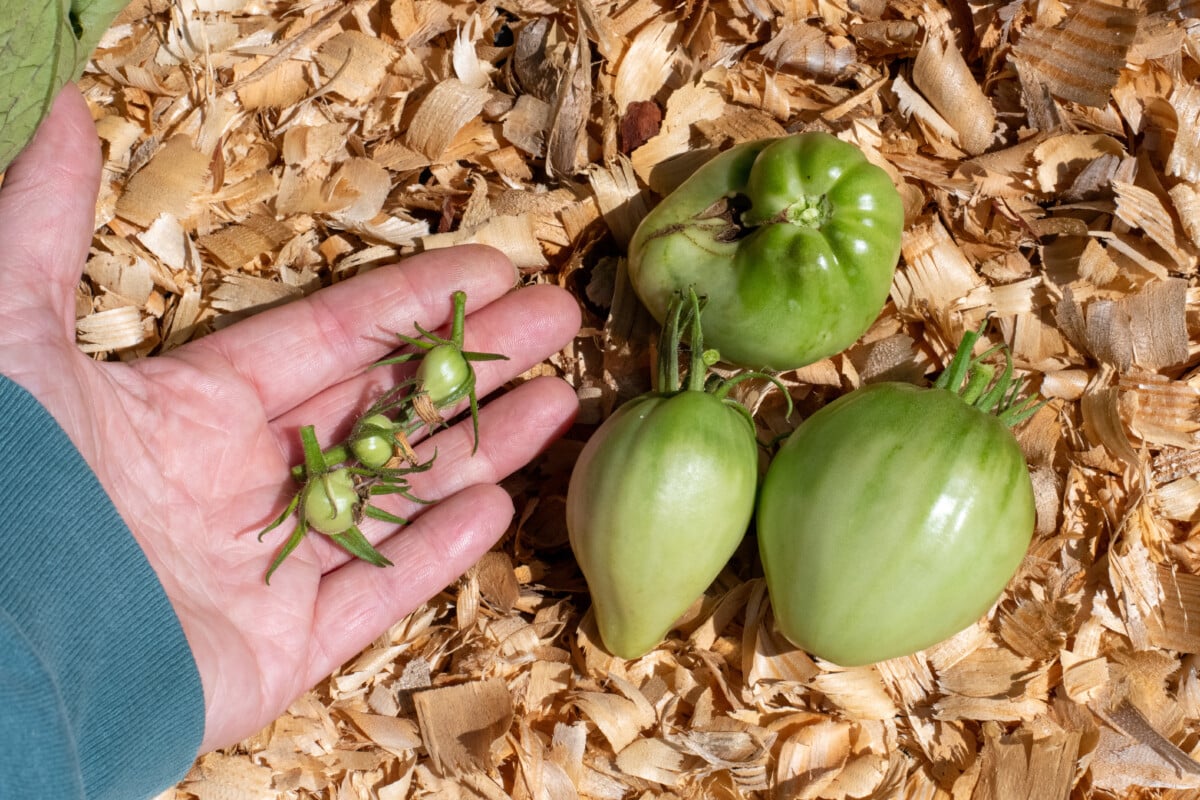
Take my Cuore di Bue tomatoes, for example. I was shocked to see how many huge king fruit I had growing next to an almost bare truss further down. Upon closer inspection, I could see that the other flowers on the truss had been fertilized, but that one king fruit was sucking up all the energy. And I do mean all the energy.
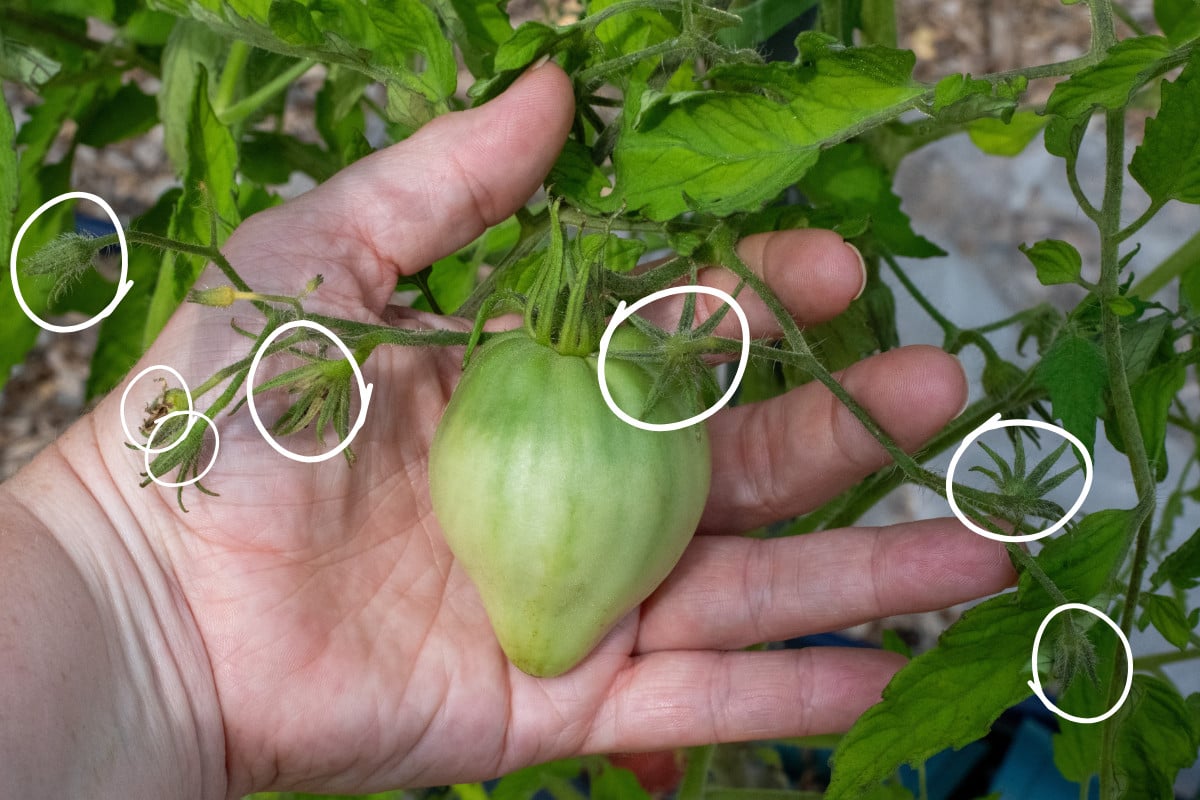
Well. That was enough for me. Snap! Snap! Snap! Looks like I’m having fried green tomatoes for dinner tonight. I went through and snapped off the king fruit from every truss that had fertilized tomatoes on it. I love a nice big tomato, but I love having a nice big tomato harvest even more.
Letting the King Fruit Go
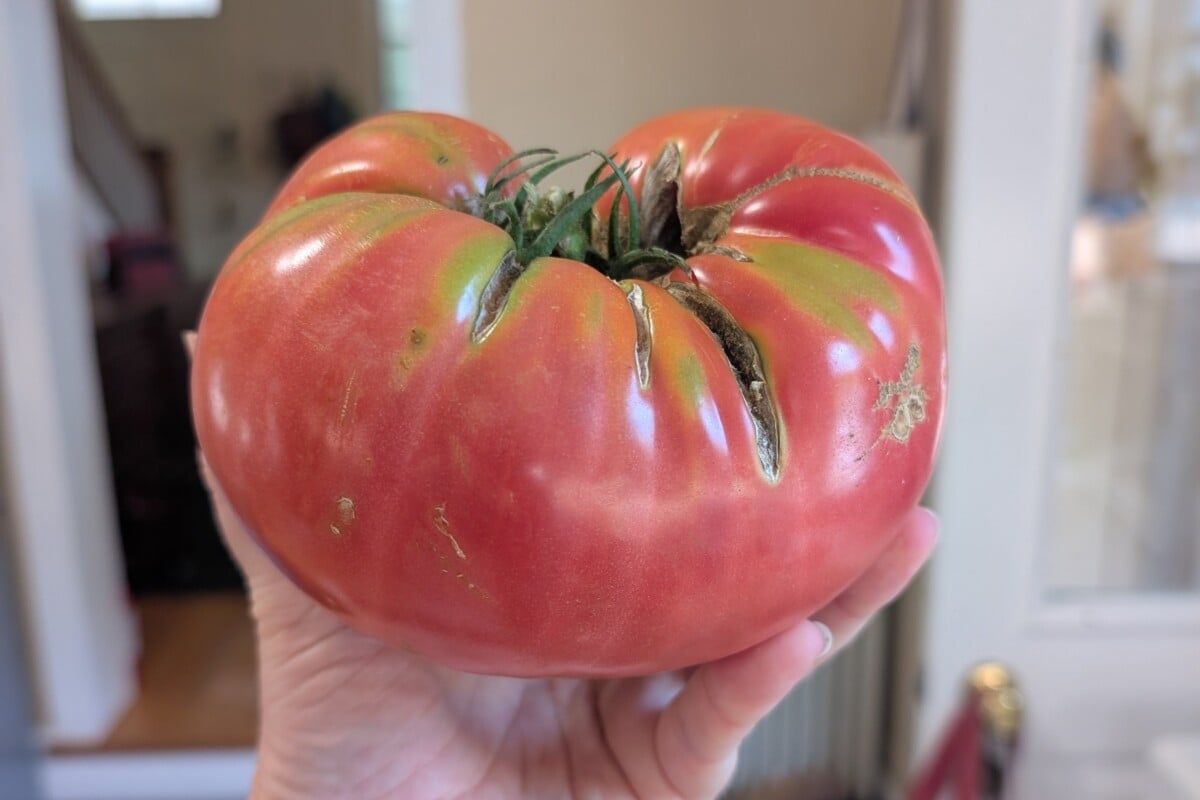
Now, if you grow beefsteak or other massive tomatoes, it is fun to let one of these big boys go and see just how big you can grow it. My suggestion in that case is to remove all of the other flowers/tomatoes further down the truss and let it ride. Naturally, you need to send me a photo once you harvest your massive king fruit, so we can both ooh and ahh over it.
The thing to keep in mind with this tidbit of commercial grower wizardry is that most of us have been growing tomatoes successfully for years. So, you don’t have to adopt this practice. But it is another handy way to get the most bang for your buck out of your tomatoes.
Who Will Benefit Most from This Tip
Of course, at the end of the day, most of us aren’t commercial greenhouse growers, and we’ve been growing tomatoes successfully anyway. This is just one more way you can tweak the way you garden to maximize your harvest in the space you have available. And that’s always a good thing.
The gardeners who will benefit from pinching off the king fruit the most are the gardeners who don’t have a long gardening season.
My friends in the north might want to get into the habit of pinching the king. Also, those of us who got a late start in the season and dragged our feet planting our tomato seedlings this year. Ahem, not me, of course. I would never.
Are you a canner who enjoys row after row of gleaming jars filled with tomato sauce or canned tomatoes? You also may wish to nip the king fruit in the bud. You’ll end up with more uniform tomatoes that are ready all at once, rather than waiting for the smaller tomatoes beyond the king fruit to catch up.
Get Garden Notes From Tracey, Right to Your Inbox
Pull up a chair on the front porch. Join 54,000+ gardeners who get Tracey\'s friendly notes, seasonal to-dos, and hands-on tutorials three times a week.