

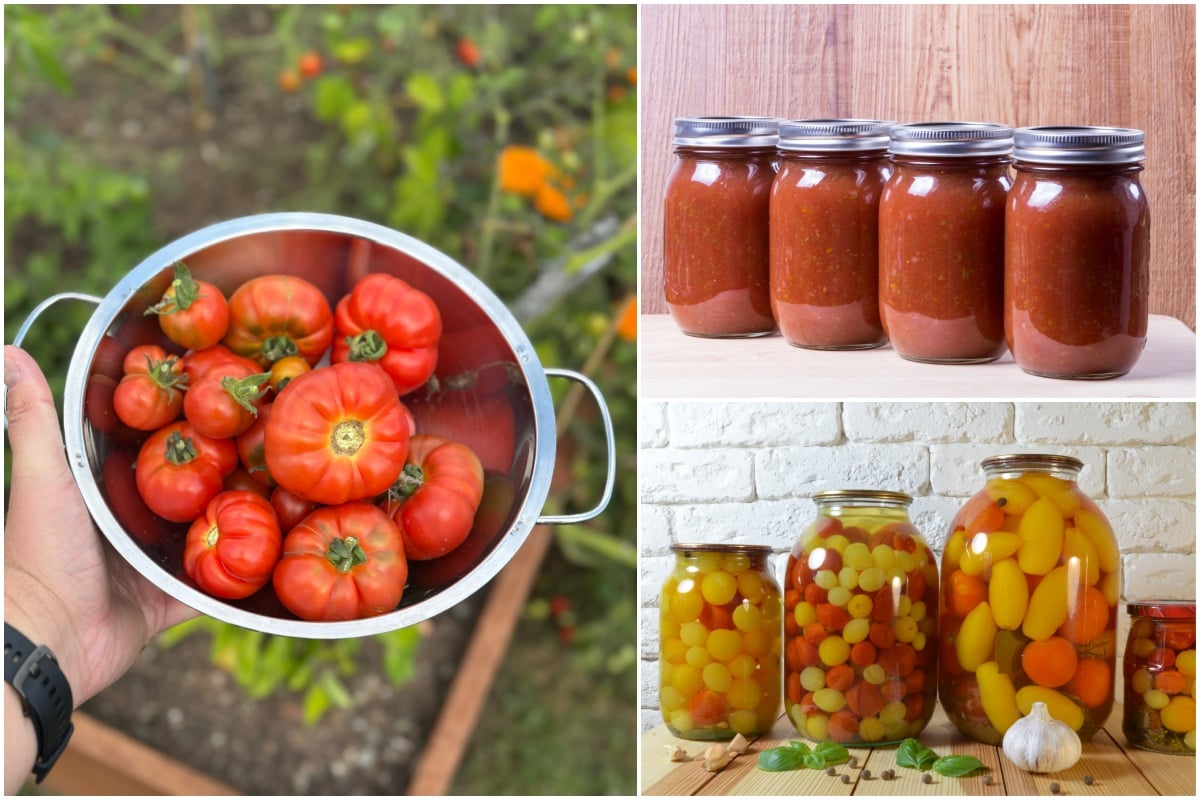
At the beginning of the season, we’re all guilty of sweating our tomatoes. We continually peek at them, waiting for that first tomato to ripen to perfection. And when we get that first bite?
It’s the epitome of summer.
But by the time August rolls around, every flat surface in your kitchen, dining room and maybe your living room is covered in tomatoes. If you’re like me, you’re looking for ways to preserve a ton of tomatoes fast. From canning classics to quick and easy freezing, I’ve got you covered.
Let’s dive in, reclaim those counters and feed the family!
Preserve as You Go or All-in-One Get It Done?
A lot of times, I will preserve as I go, based on what’s ripe in the garden, even if that means halving a recipe. From August to September, my canner lives on the stovetop. But sometimes you need quite a few tomatoes for a recipe, and that means picking and holding tomatoes over a few days until you have enough.
If you’re hanging on to tomatoes until you have enough, it’s important to store them correctly for peak flavor and freshness.
Always pick your tomatoes for processing at the breaker stage. This gives you a little wiggle room for ripening. You can read more about what the breaker stage is and how to recognize it here.
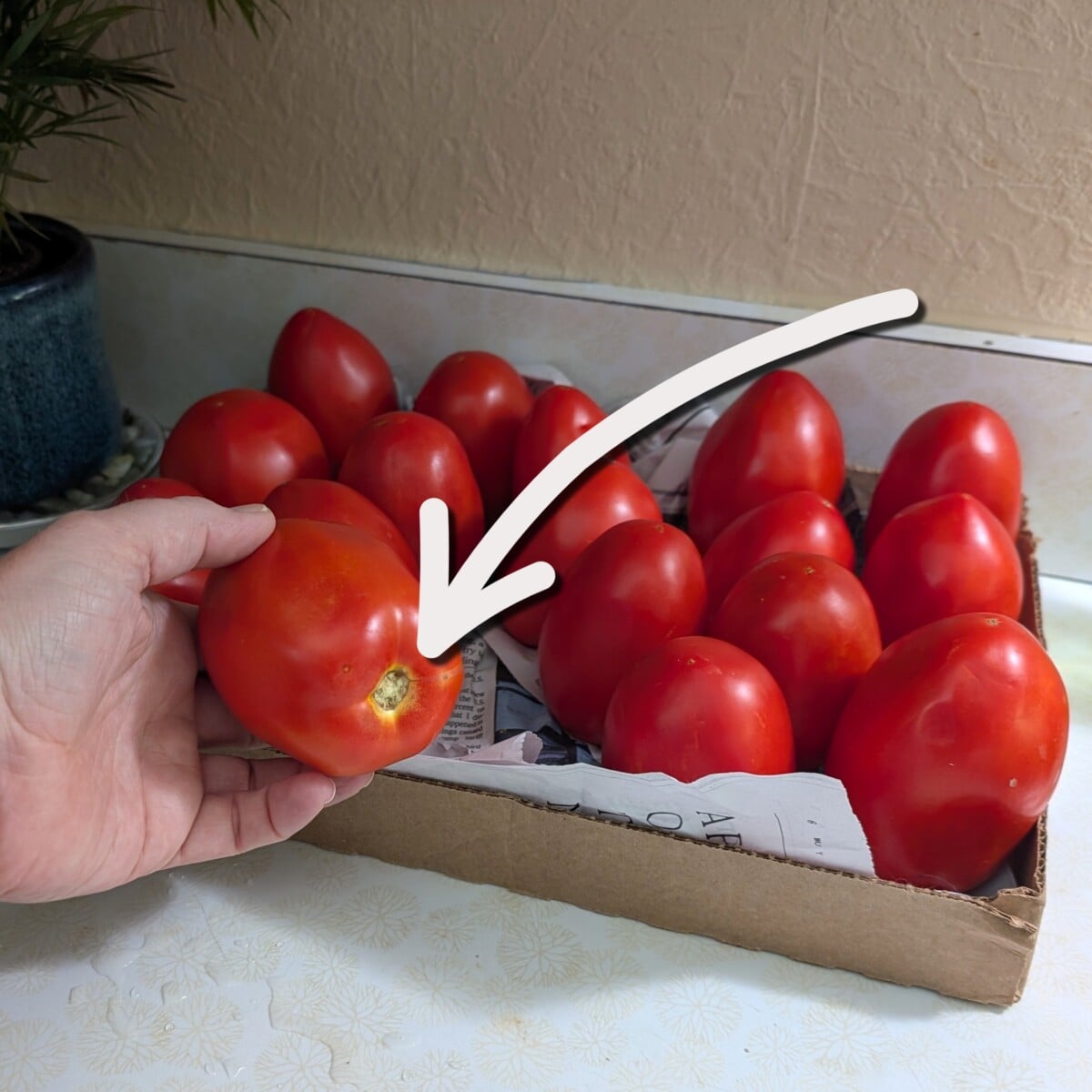
To store them so they finish ripening off the vine and stay firm and fresh, place them in cardboard boxes, with the stem scar down (to prevent moisture loss) and with crumpled newspaper in between each tomato. They shouldn’t be touching. (I always feel bad telling folks to use newspaper, as most people don’t get the paper anymore, use this instead.)
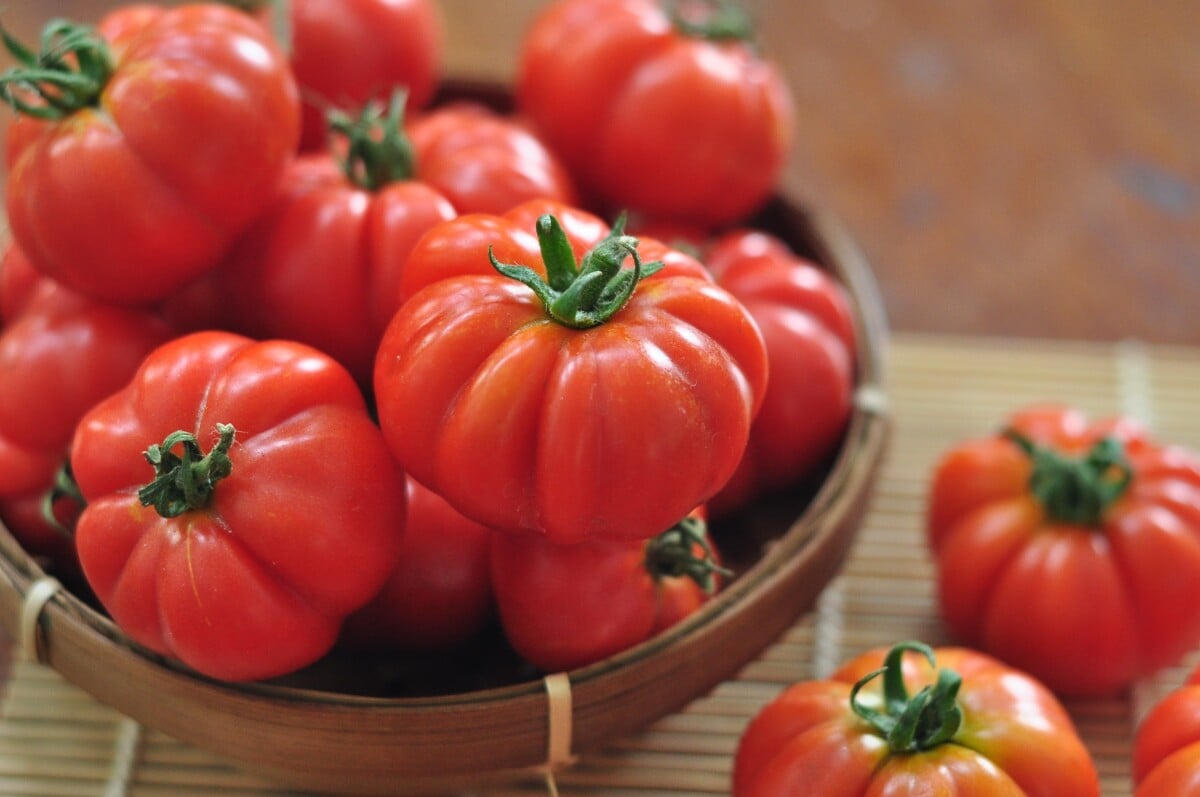
If you need a little help nudging your tomatoes along to ripen up, we can help with that, too.
If you really want to preserve tomatoes for the coming months, but you had a bust season, hit up your local farmers’ markets. You’ll often find tomatoes sold in bushels or half-bushels specifically for preserving.
Canning Tomatoes
We’ll start with this tried-and-true method for preserving tomatoes. There’s a reason why everyone’s grandmother knows how to can tomatoes, and they’re one of the first things people learn to can – they’re easy and versatile.
Canned tomatoes are great to have on hand because they’re shelf-stable, even if the power goes out after a tornado goes through your backyard and leaves you without electricity for a week. Ask me how I know.
Even if you prefer to freeze the majority of your produce, it’s a wise idea to can a little, too.
1. Whole peeled tomatoes

By far, this is one of the easiest ways to can tomatoes. Beyond removing the skins (Lindsay shows you an easy way to do that here), there’s very little prep work involved. Likewise, this is a great beginner-friendly way to learn how to water bath can. Learn how to can whole tomatoes here.
Because you’re canning the tomatoes whole, that gives you more options on how you can use them later when you open that first jar! Grandma’s red sauce with pasta? Soup? Winter ratatouille? The possibilities are endless.
2. Diced tomatoes
Like whole tomatoes only, well, ya know.
Canned diced tomatoes are by far my favorite way to preserve tomatoes. In my opinion, they are the most versatile option for canned tomatoes. A jar of these gets added to countless recipes around the kitchen: chili, red beans and rice, soups, stews, eggs, the list goes on and on.
No matter how many jars I can, they’re always the first thing I run out of toward the end of the winter. Diced canned tomatoes are the perfect blank canvas for cooking.
3. Tomato juice
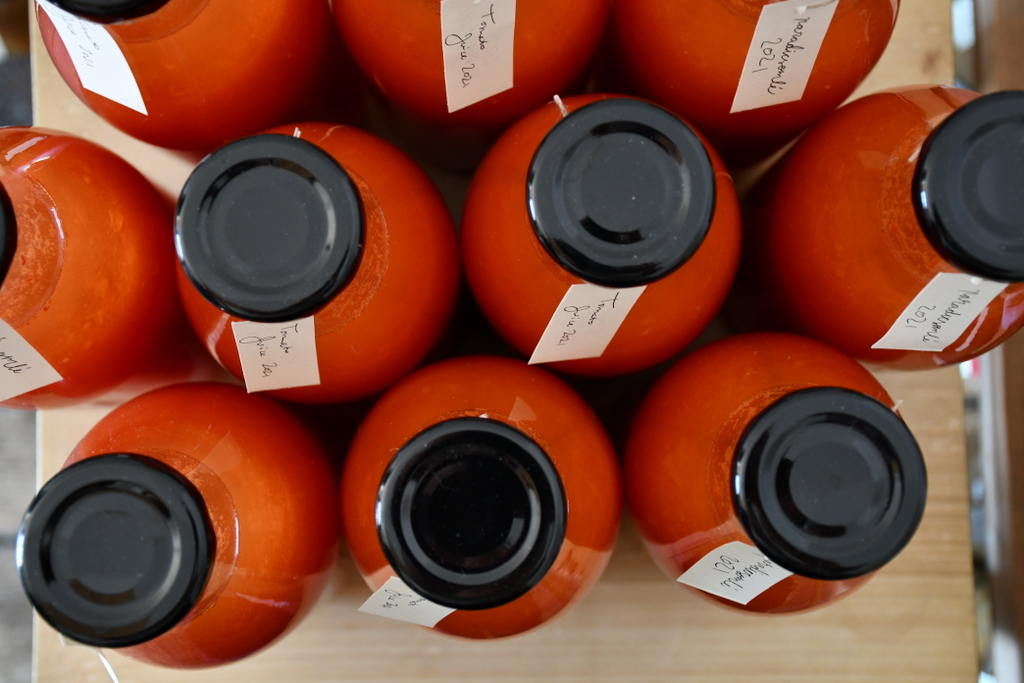
Those store-bought brands can’t compete with the flavor of homegrown tomatoes and your own blend of herbs and spices.
Tomato juice is another easy way to preserve a lot of tomatoes fast. Our own Cheryl walks you through making and canning homemade tomato juice, step-by-step.
4. Tomato sauce
Homemade tomato sauce is the best way to elevate your tomato-based pasta sauces. Especially when the tomatoes were grown in your garden. The flavor easily surpasses anything from the store.
This is another easy-to-can option to use up a lot of tomatoes at once. The nice part is you can keep it simple by canning straight tomato sauce, or dress it up with herbs and spices.
Lord Byron’s Kitchen has a great recipe for canned tomato sauce.
5. Tomato paste
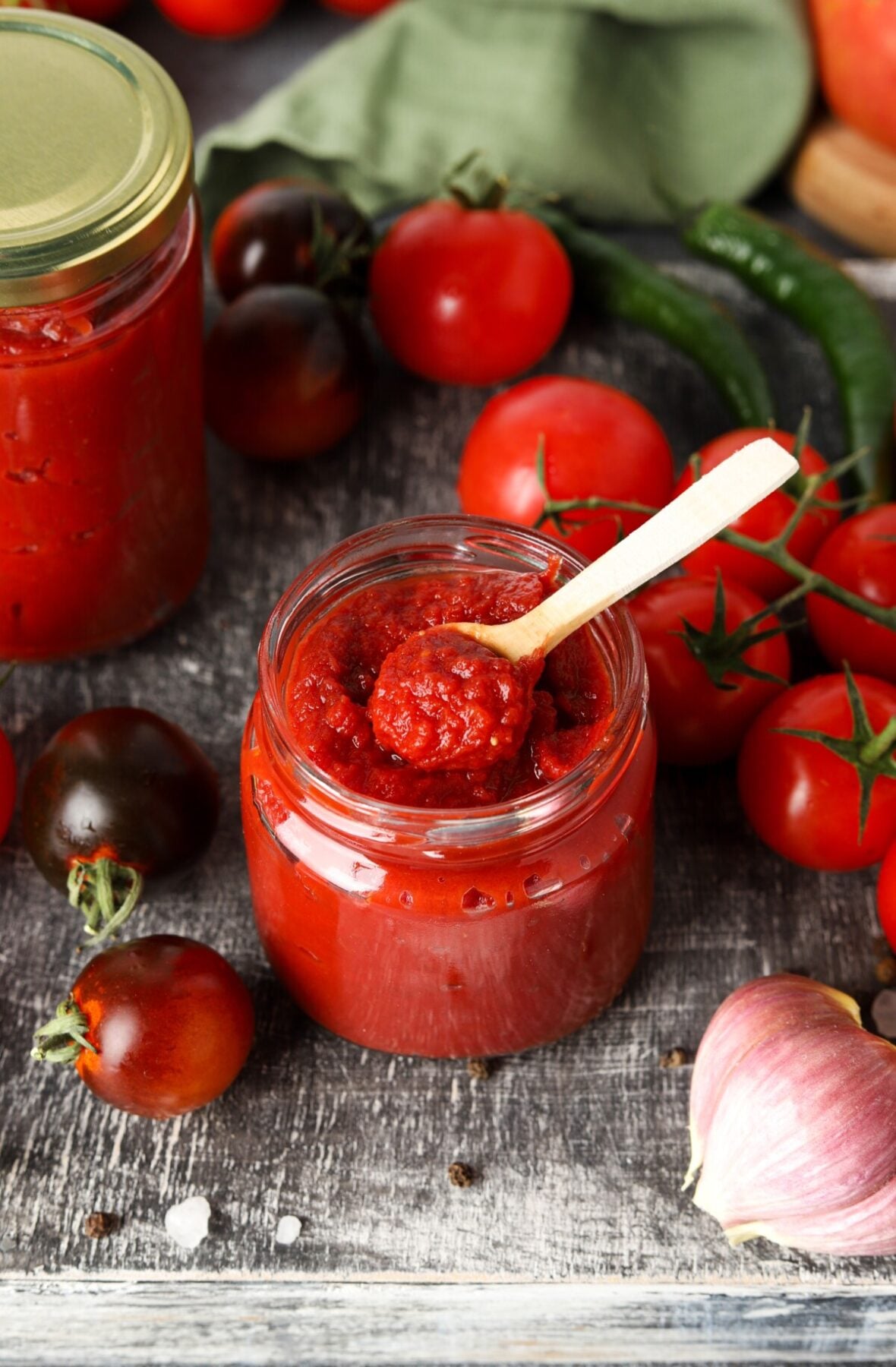
Again, this is one of those pantry staples that’s just so much better than what you can get at the store. The flavor doesn’t even compare.
If you’ve got recipes that need big tomato flavor, tomato paste is where it’s at. Ashley, over at Practical Self Reliance, can show you how.
6. Tomato soup
Let’s be honest, tomato soup is just a grilled cheese dipping sauce. But that’s part of why it’s so beloved. While you can’t can grilled cheese sandwiches, you can make and can homemade tomato soup. (Say that three times fast!)
Do I even need to remind you of how much better it is than the stuff in the red and white label at the grocery store? The Frugal Farm Wife has an easy and delicious recipe with canning instructions.
7. Pizza sauce

Pizza is the perfect food. No, really, I will die on this hill. It’s infinitely customizable. Everyone has their favorite variation. It’s served everywhere in the world. And at the end of the day, the best pizza always starts with great sauce and great dough.
Having homemade canned pizza sauce ensures you’re always halfway to the best pizza without ever having to tip the delivery guy. Here’s a great recipe to stock your shelves with.
8. Ketchup
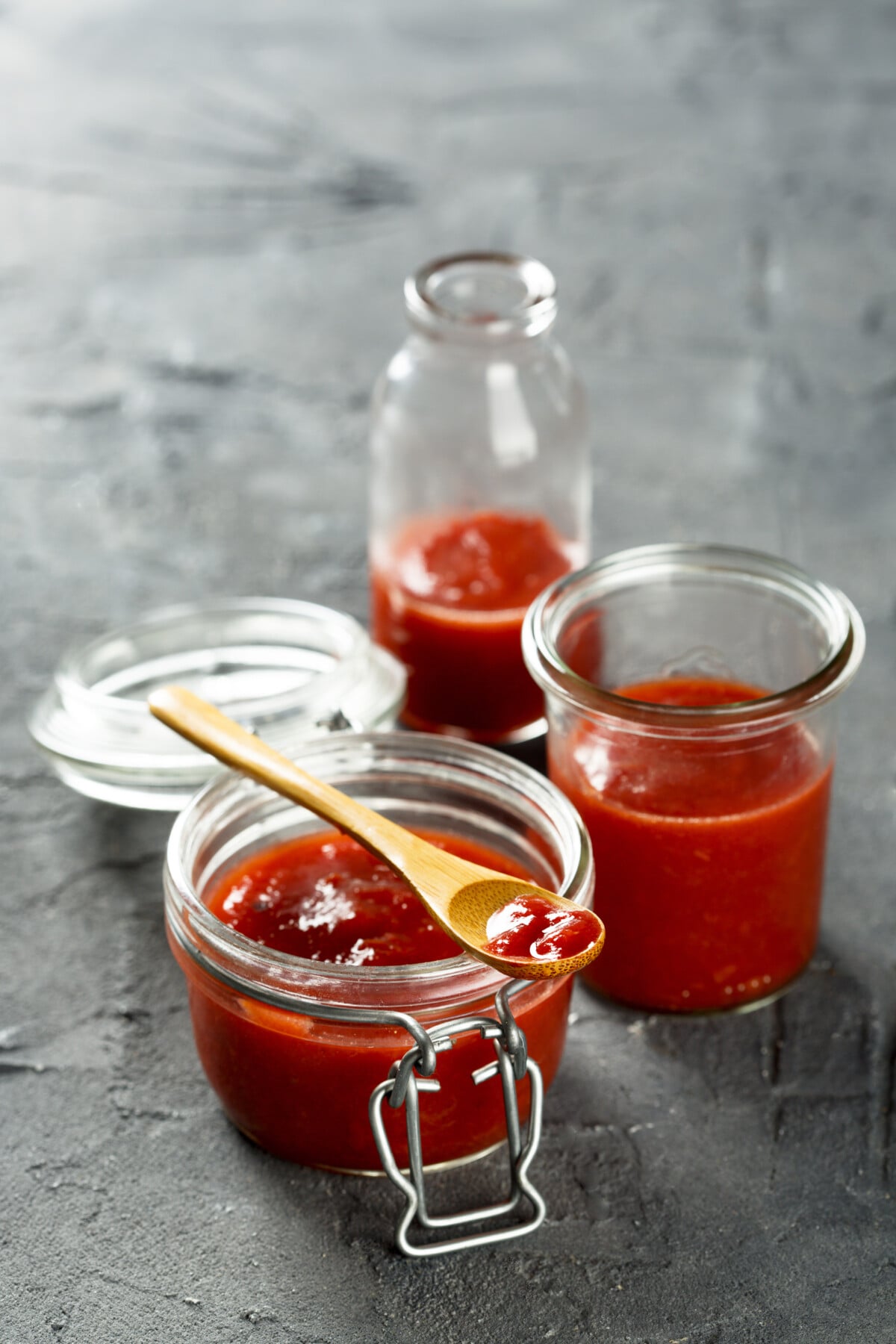
Okay, as a Pennsylvanian, home to Heinz, I feel a little guilty saying this, but you need to make homemade ketchup at least once in your life.
Of course, once you do make it, it’s unlikely that you’ll ever go back to using the stuff from the grocery store. Home-canned ketchup has a depth of flavor you just can’t get with mass production.
9. Salsa
Salsa is one of those things that sounds intimidating to make, but it’s surprisingly easy. It’s also another one of those things you’ll likely want to can more of next year because you eat your way through it quickly the first time you make it.
And if you’ve got onions, garlic and jalapeños in your garden, you’re well on your way to homemade canned salsa. This is an easy recipe to try, whether you’re a beginner or an old hat at canning.
10. Tomato chutney
I’ve said it before, and I’ll say it again: if you’ve never tried chutney, you don’t know what you’re missing. Chutney is jam’s savory, tangy cousin. It’s great spread on crackers, used as a glaze on roasted meats, stirred into rice for extra flavor, or brushed on chicken when grilling.
The star of any charcuterie, chutney also makes great Christmas gifts. And tomato chutney is a great place to start your chutney journey. Initiation begins here.
11. Barbecue sauce

I generally stay away from the grill. This is one area of cooking that’s too competitive for even me. Barbecue masters take their equipment and their sauce seriously. Well, what could be more serious than homemade barbecue sauce?
Get creative with the recipe, and you could end up with the next blue ribbon-winning sauce. Just be sure you keep it a secret. You can start with this basic recipe.
12. Tomato jam
Move over, ketchup, you’ve got competition. Slightly thicker and stickier than ketchup, but equally good on everything, tomato jam is a fun way to use up a bumper crop of tomatoes from the garden.
Strawberry and blueberry aren’t the only superstars at the breakfast table; sweet and tangy tomato jam is great on toast or English muffins.
13. Pickled cherry tomatoes
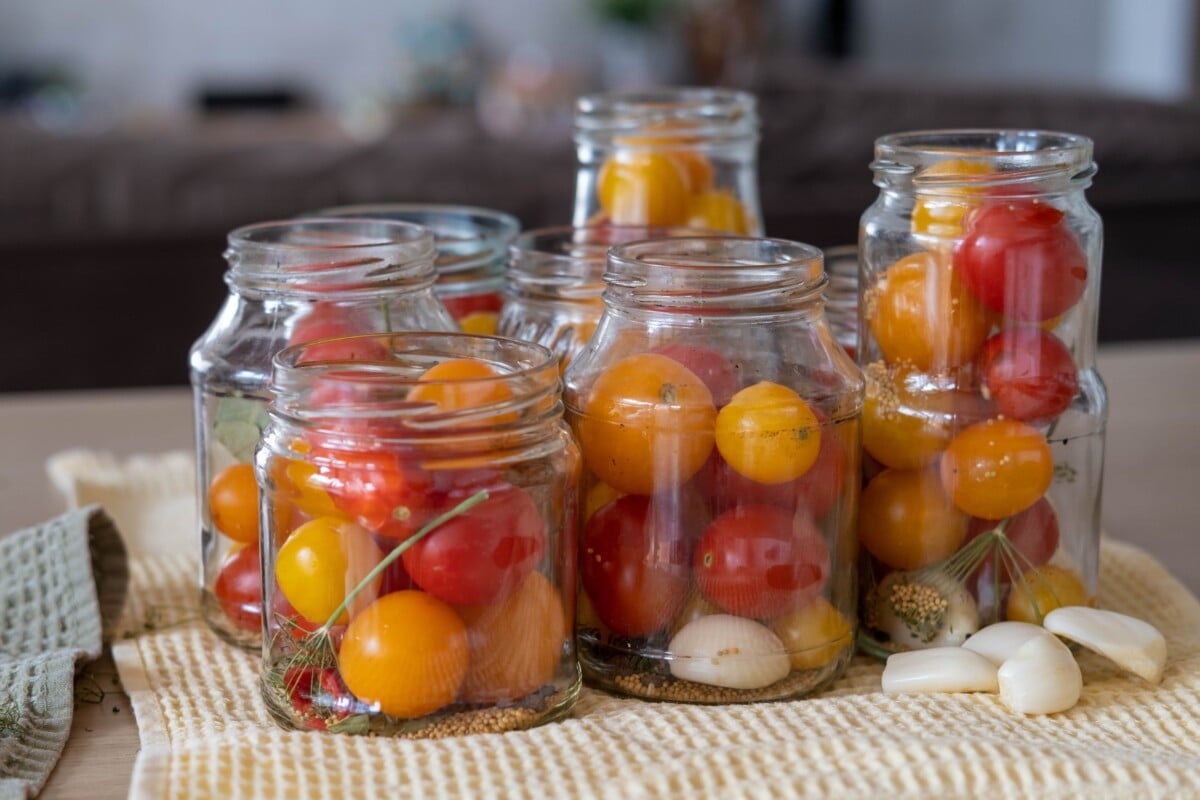
Most of the previous canned recipes work great with larger tomatoes. But what do you do with all those cherry tomatoes? Pickle them, of course.
If you’ve never experienced the delight of biting into a pickled cherry tomato, make sure you change that this year. These are great as refrigerator pickles or canned for a longer shelf life. Not only are pickled cherry tomatoes the perfect complement to a cheese board, but they also make a tasty and beautiful garnish for dry cocktails.
Freezing Tomatoes
Now that we’ve run the gamut of canning, let’s consider giving our tomatoes the big chill this season. Freezing tomatoes is a great way to preserve your bounty, especially if you aren’t super chuffed about a hot and steamy kitchen in August.
14. Whole tomatoes

Freezing whole tomatoes is a great way to preserve your harvest as is, or even as a way to put it on hold until you can get back to canning. It’s often as easy as popping them right into the freezer on a baking sheet. Once frozen solid, store tomatoes in a plastic freezer bag to keep them fresh. This works with all sizes of tomatoes.
Here’s a secret.
All of those basic tomato canning recipes above? Juice, soup, sauce, paste, etc. They can all be frozen rather than canned. You can even freeze them in mason jars, provided you leave enough room for expansion (usually 1-2” is enough). Always freeze without the lid on, then put the lid on once the contents have frozen.
Dehydrating Tomatoes
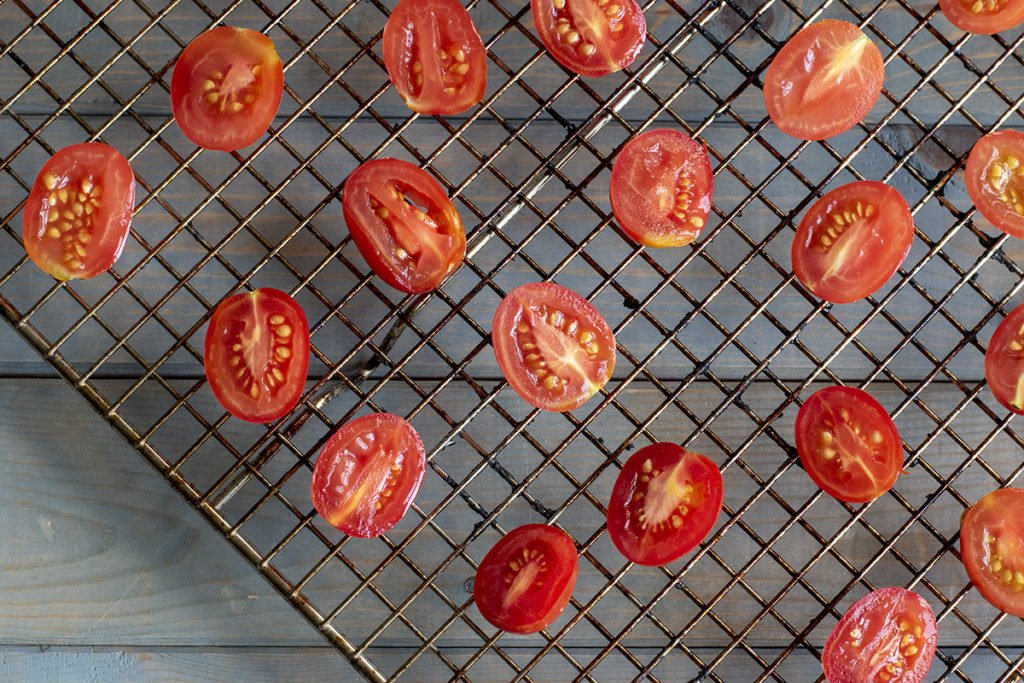
If you want a truly intense tomato flavor, drying is one of the best (and oldest) ways to get there. Cherry or grape tomatoes are generally better suited for this purpose due to their exceptional flavor and small size.
15. Sun-dried Tomatoes
Cheryl’s written up how to sun-dry tomatoes here. There are also instructions for drying (dehydrating tomatoes) in the oven, as well as using a food dehydrator. (Don’t get one of those plastic ones, they’re awful and mine melted. The Cosori is the way to go!)
16. Tomato chips
If you’ve got a food dehydrator, you might want to try tomato chips. Aside from snacking, they make a lovely addition to salads, as well as garnishes for roasted meats, veggies and cocktails.
17. Tomato powder

This stuff is intense, which is why I love it. For all the flavor it packs, it uses up so little pantry space. You can learn to make homemade tomato powder here. I walk you through how and, more importantly, what to use it for. When you’ve pushed the limits of your pantry shelves and freezer with preserved tomato goods, this is a great space-saving option.
Fermentation
While most fermented products don’t last as long as canned tomatoes, fermenting part of your harvest is still a good idea for the wonderful flavors you get. Not to mention, fermented foods are good for our gut.
18. Lacto-fermented salsa
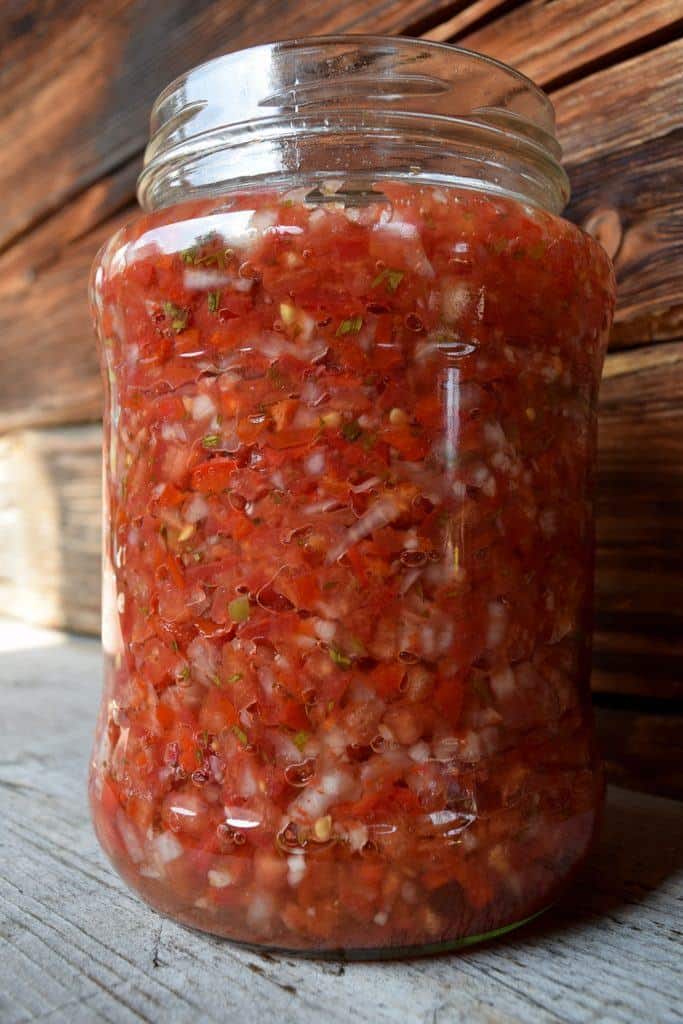
It’s salsa that zings! Think pico de gallo with a zippy tang. The Lactobacillus bacteria do magical things to the flavors of tomatoes, garlic, peppers and onions. If you’re going to snack on salsa, why not snack on a recipe that loves you back with probiotics? Check out Cheryl’s recipe here.
19. Fermented cherry tomato bombs
Pickled cherry tomatoes are wonderful, but fermented cherry tomato bombs are on a whole other level. Why “bombs?” Because once fermented, the tiny cherries have an almost effervescent pop when you bite into them. Again, these really shine on a charcuterie board or at a cookout. Check out Colleen’s easy recipe.
20. Green tomato olives
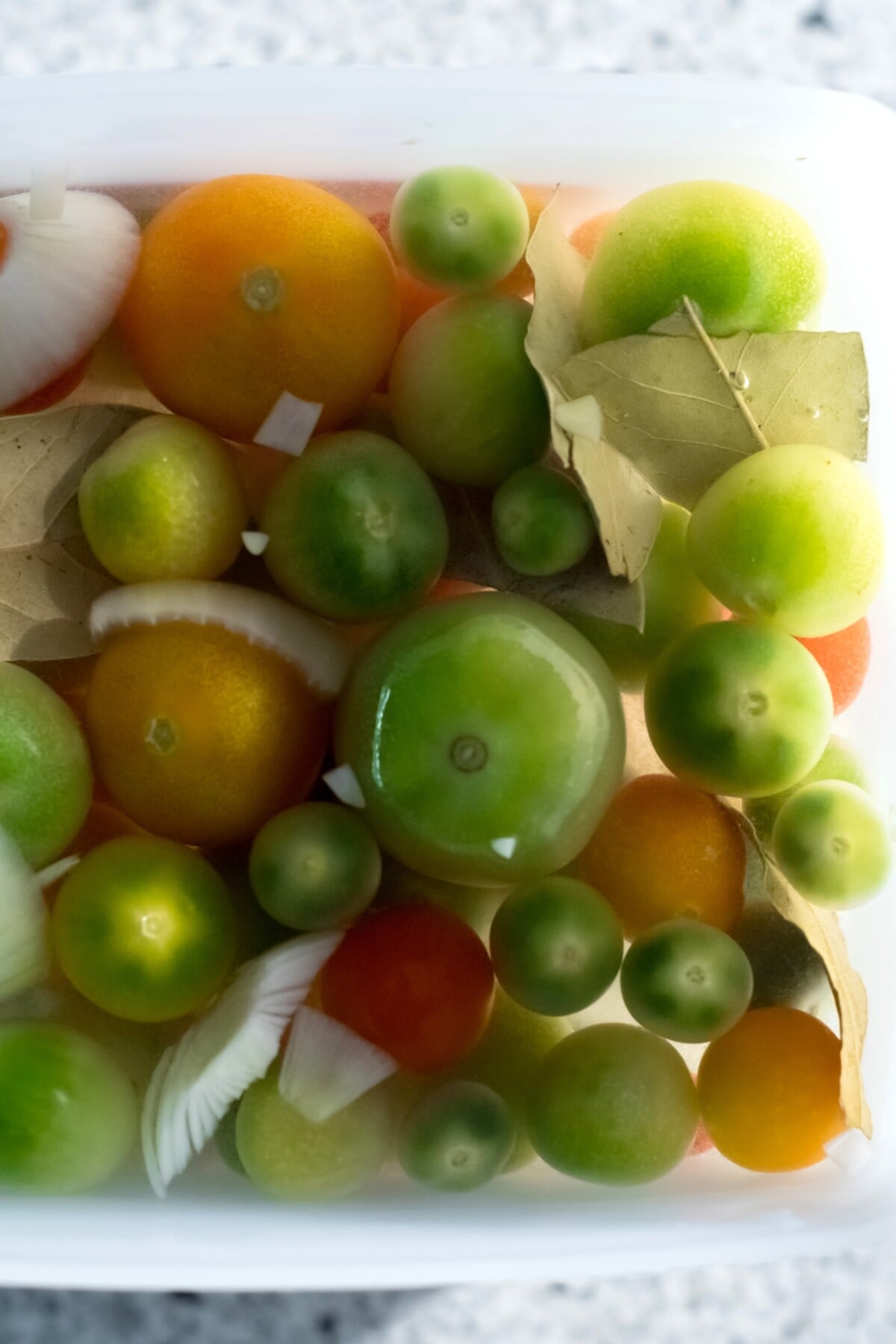
It happens every year, we run out of gardening season long before our tomatoes are ready to quit. So, what do you do with all those green tomatoes? Why make green tomato “olives”, of course. By fermenting them, they take on a slightly sour and salty flavor, very close to olives. Once you make a jar, you may find yourself hoping for more green tomatoes than red. You can find easy-to-follow instructions here.
And if you need more ideas for using up green tomatoes, here are 21 of them.
21. Fermented ketchup
Finally, if you’ve ditched the store-bought ketchup in favor of homemade, you’ll likely be up for trying fermented ketchup, too. Fermented ketchup is a great introduction to fermented foods, especially if you’ve tried them in the past and were a little overwhelmed. Sometimes, starting with familiar territory is a much easier way to dip your toe in the water.
With so many options, I’m sure you’ll make short work of preserving your tomato harvest, no matter how large.
Get the famous Rural Sprout newsletter delivered to your inbox.
Join the 50,000+ gardeners who get timely gardening tutorials, tips and tasks delivered direct to their inbox.