

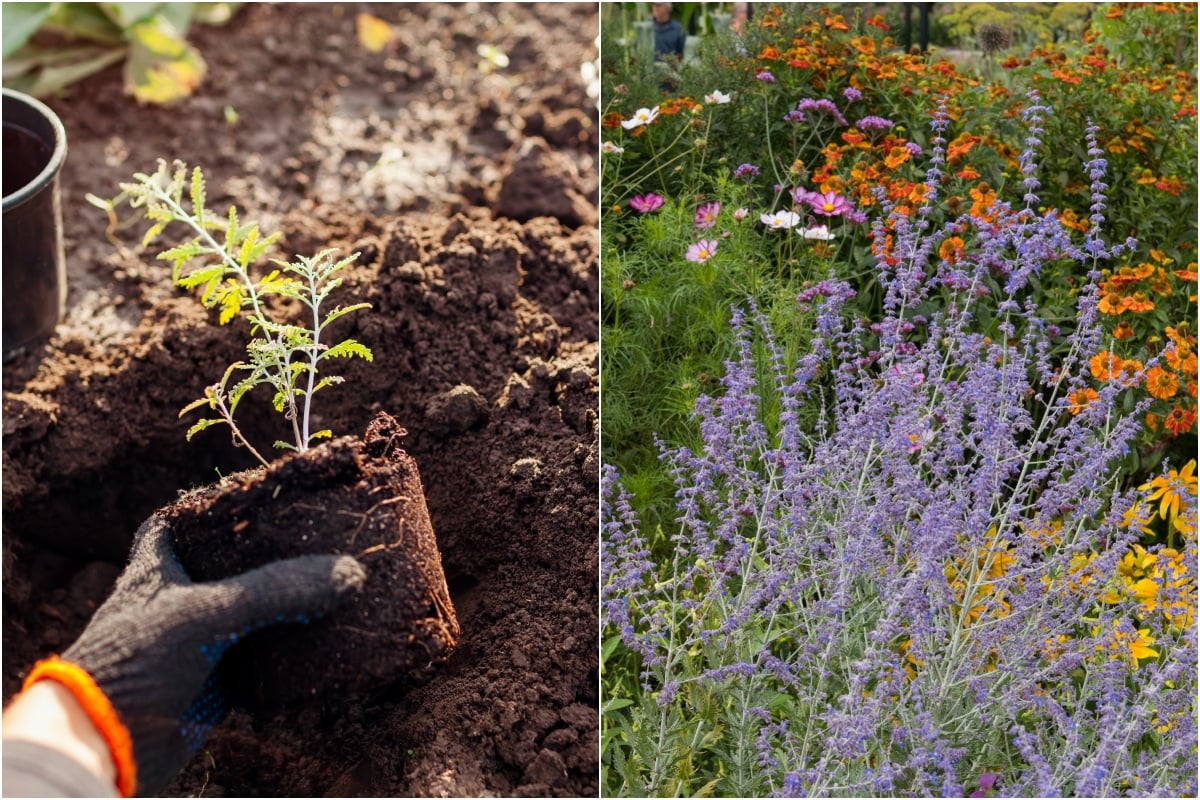
October is the best month to plant perennials, especially if you prefer gardening on easy mode. So, I’ve rounded up some of the easiest perennials you can grow.
Get them in the ground now, and by the time the Easter Bunny pays a visit, you’ll have a spring garden full of beautiful blooms without all the fuss.
Why Plant Perennials in October?
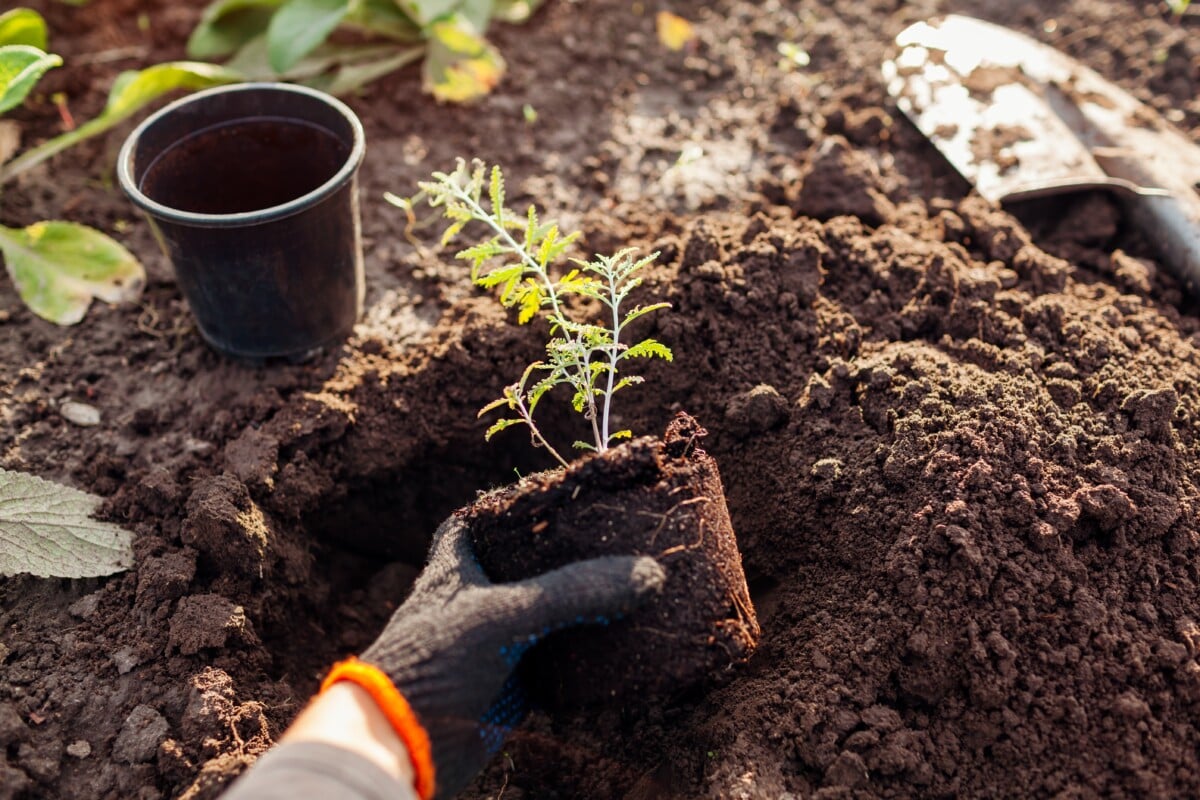
I am a huge fan of planting perennials in the fall and October seems to be the perfect sweet spot. In fact, I don’t plant them any other time of year. Here are a few good reasons why October is the best month for planting perennials:
- Most perennials are discounted this time of year.
- The weather is cooler, so it’s much nicer working outdoors.
- Fall is less hectic than spring, so there’s more time to work in the garden.
- It’s actually a great time of year for the plants, too:
Again, the weather is cooler, so you don’t have to worry about new plants getting heat-stressed.
- The ground is already warmed from the summer, so roots grow much faster in the fall.
- The plant can spend the entire fall and winter growing a vast root system, rather than focusing on foliage and flowers. Ultimately, this results in significantly larger plants with more blooms the following spring.
- Fall is usually rainy, so you don’t have to water your newly planted perennials as often.
As someone who is a self-professed Lazy Gardener, it just makes sense to plant perennials that practically grow themselves in the easiest part of the year to do it in.

What Makes a Perennial “Easy-to-Care-For”?
I chose these perennials, taking into account five factors. Each must be:
Easy to find.
Nothing exotic that can’t be found at your local home improvement store. We’re not driving all over the place looking for plants! We’ve got hot apple cider to drink.
Drought-resistant.
Oh sure, it’s all fun and flowers until there’s a drought and all your plants die. No, thank you. Only tough scrappers need apply for residency in our gardens! (Beautiful tough scrappers, though.)
Not fussy about soil.
Look, as the t-shirt says, “Bloom where you’re planted.” If it’s good enough for humans, it’s good enough for these perennials. Easy-to-care-for doesn’t include adding four different soil amendments to the dirt to get a flower to grow.
Pest-resistant or tolerant.
I want perennials that are easy to grow, but can also fight back if needed. These nine perennials are generally unbothered by pests, even if they do show up.
No Fussy Fertilizers or Pruning
Do most perennials benefit from the occasional feeding and pruning? Yes, absolutely; even some of these. But I specifically chose perennials where these two care items were optional. I want plants that will thrive on a little neglect.
Now, let’s get gardening.
9 Easy Perennials to Plant Now to Burst Into Life Next Spring
Catmint (Nepeta)

Catmint grows easily, without a lot of hand-holding. Your neglect is rewarded with mounds of delicate, emerald-green, scalloped leaves and spires of purple flowers buzzing with bees. They’re lovely on their own or make wonderful borders along walkways.
Catmint prefers full sun, but it won’t turn its nose up at partial shade. Depending on the variety, they are between 1’ to 3’ tall. Hardiness zones for catmint are 3-8.
Daylily (Hemerocallis)

For as delicate and beautiful as day lilies are, they are tough as nails. If ever there were a perennial whose care instructions were “set-it-and-forget-it”, it’s daylilies. And if you like color, these are the easy-to-grow perennial for you. There are too many colors to list: peaches, burgundies, creams with purple centers, pinks with purple centers, some with ruffled edges, and some with lacy edges. The variety is incredible.
Daylilies prefer full sun but can grow in partial shade. They can grow 1’ to 3’ tall, variety depending. Hardiness zones are 4-9.
Hosta

If you’ve got a shady area that could use a little greenery, hostas are the answer. There’s a reason they are a tried-and-true favorite perennial. Even if you’ve grown them before or already have a few, I encourage you to take another look. There are tiny hostas, with leaves as small as a silver dollar and hostas with leaves as big as your head. And for color, they cover every shade of green imaginable, with creamy white and golden yellow thrown in as well. (And you can eat them! The shoots taste like asparagus.)
Hostas prefer full to partial shade, and can be anywhere from 8” to 24” tall, depending on the variety. They are hardy in zones 3 through 9.
Lamb’s Ear (Stachys byzantina)

While not known as a flowering plant, lamb’s ear is a favorite among children and those of us who love to touch our plants. Named after the soft, animal ears they feel like, lamb’s ear has lovely silvery-green, almost platinum foliage that’s fuzzy to the touch. They add structure, drama and even a bit of whimsy to your easy-care garden.
Lamb’s ear will grow between 8” and 18”, does well in partial shade to full sun and is hardy in zones 4-9.
Peony (Paeonia)

For a flower that looks delicate, peonies are ridiculously unfussy perennials. In fact, they’re one of the few perennials that do best if you don’t divide them. (Here are a few more perennials you shouldn’t divide.) They will bloom for decades if left to their own devices. In colors of creamy white, pastel pink, shocking fuchsia and dreamy peach, their big, blousy blossoms are a lazy gardener’s dream.
Peonies have a shrub-like growth habit, and can get as tall as 3’ and 4’ in diameter. They prefer full sun and are hardy in zones 3-8.
Russian Sage (Salvia yangii)
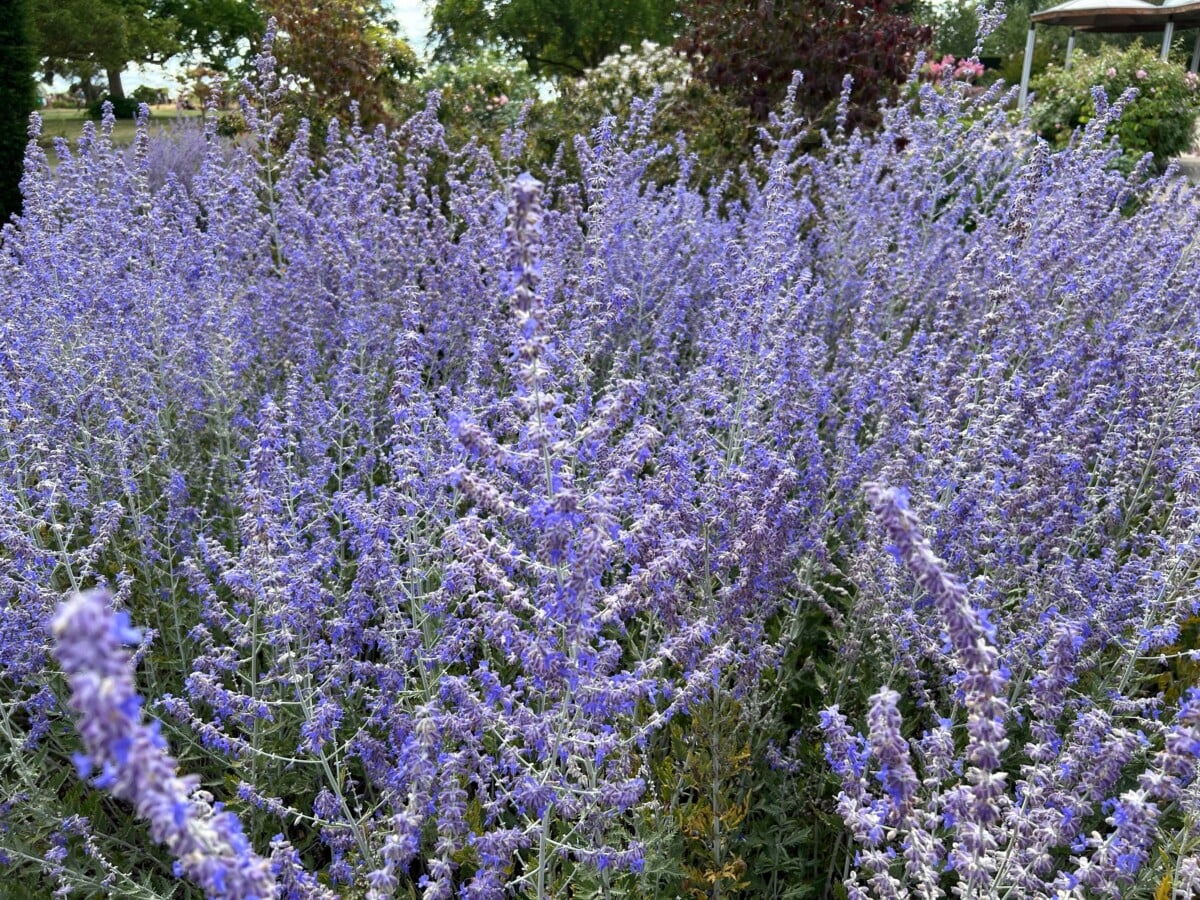
I wrote an entire article about how to grow Russian Sage, but, really, I could have summed it up in one sentence: Plant it in lean soil and forget about it. Russian sage prefers to be planted and then left alone, whereupon it will thrive and grow tall, silvery stalks covered in fragrant, purple-blue flowers. This is another wonderful pollinator magnet. (And you can read all about how to grow it properly here.)
Russian sage prefers full sun; the longer the better. It is hardy in zones 4-9 and can grow to roughly 3’ high and as wide as 4’.
Sedum

There’s a reason sedum is a favorite for rock gardens; these are tough plants. Whether you opt for a low-growing sedum, such as Stonecrop or the fall, fiery, Autumn Joy that turns burgundy in the fall, there’s a sedum that’s right for your garden. Most offer beautiful silver-green foliage throughout the spring and early summer and begin flowering in late summer or fall.
If you want to attract pollinators on easy mode, then plant Autumn Joy. Every warm, sunny fall day, my Autumn Joy literally buzzes with all the bees snacking on it. In fact, I took a short video of it.
Sedum prefer full sun, and their height varies depending on the variety. Most are hardy in zones 3-9.
Switchgrass (Panicum virgatum)

You can’t have an ornamental garden without at least one ornamental grass. This prairie grass features tall, feathery growth with airy seed pods that birds love to eat during the leaner months of the year. If you want to add four-season interest to your garden without a ton of fuss, then switchgrass is a great choice.
Switchgrass prefers full sun, grows 3’ to 6’ in height and is hardy in zones 3-10.
Yarrow (Achillea millefolium)

Many are familiar with the white wild yarrow that shows up in meadows and along the edges of woods. But yarrow comes in many colors: white, orange, yellow and pink. These tall, statuesque plants have feathery, fern-like foliage in emerald green, and the clusters of tiny flowers always remind me of clouds. You can plant seedlings or seeds this fall for yarrow next season.
Yarrow is a veritable hoverfly magnet, an efficient and important pollinator. So, if you have a vegetable garden, too, you’ll certainly want to grow yarrow.
Yarrow prefers full sun and is hardy in zones 3-9. Depending on the variety, it can grow anywhere from 6” to 24” tall.
Planting in the Fall

Like with all gardens, some work is required to have healthy, blooming plants. You’ll want to give them time to get established before the first hard frost, so get plants in the ground four weeks before your first frost date.
Since we’re planting in the fall, mulch your new plants well around the base and even cover them with a layer of mulch after the first frost to protect them from cold damage. If you’re having a dry fall, you’ll want to water new plants to help them get established.
I’ve written up a handy guide about planting perennials in the fall. You can read it here.
Get the famous Rural Sprout newsletter delivered to your inbox.
Join the 50,000+ gardeners who get timely gardening tutorials, tips and tasks delivered direct to their inbox.