

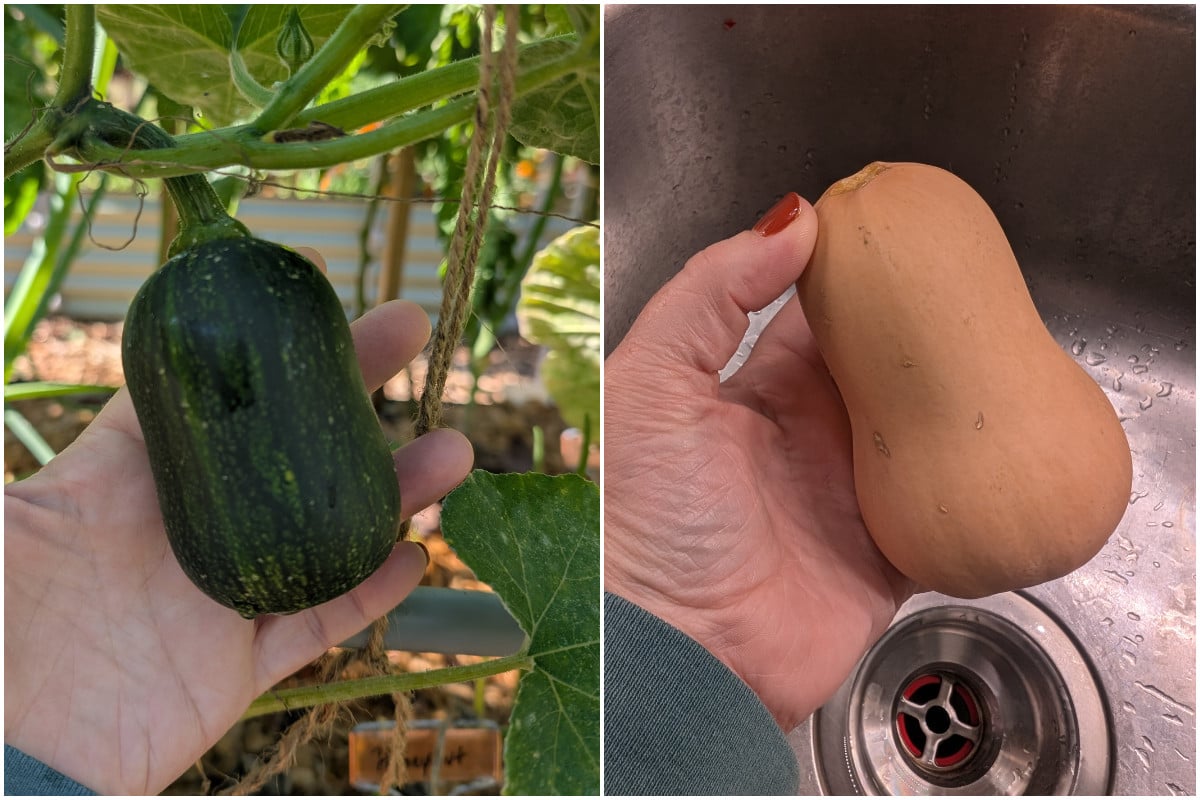
For the most part, knowing when a vegetable is ready to harvest is pretty easy. Tomatoes turn red, beans fill out and lengthen, lettuce becomes full and glossy. But for some vegetables, such as those that grow underground or melons and winter squash, it can feel like a guessing game.
Get it wrong, and you’ve just lost a season’s worth of hard work.
When it comes to winter squash, that can be an awfully long wait only to end in disappointment. Thankfully, with a little practice, there are three easy visual cues you can use to tell when a winter squash is ready for harvest. So, you always know you’ll be picking your squash at the peak flavor.
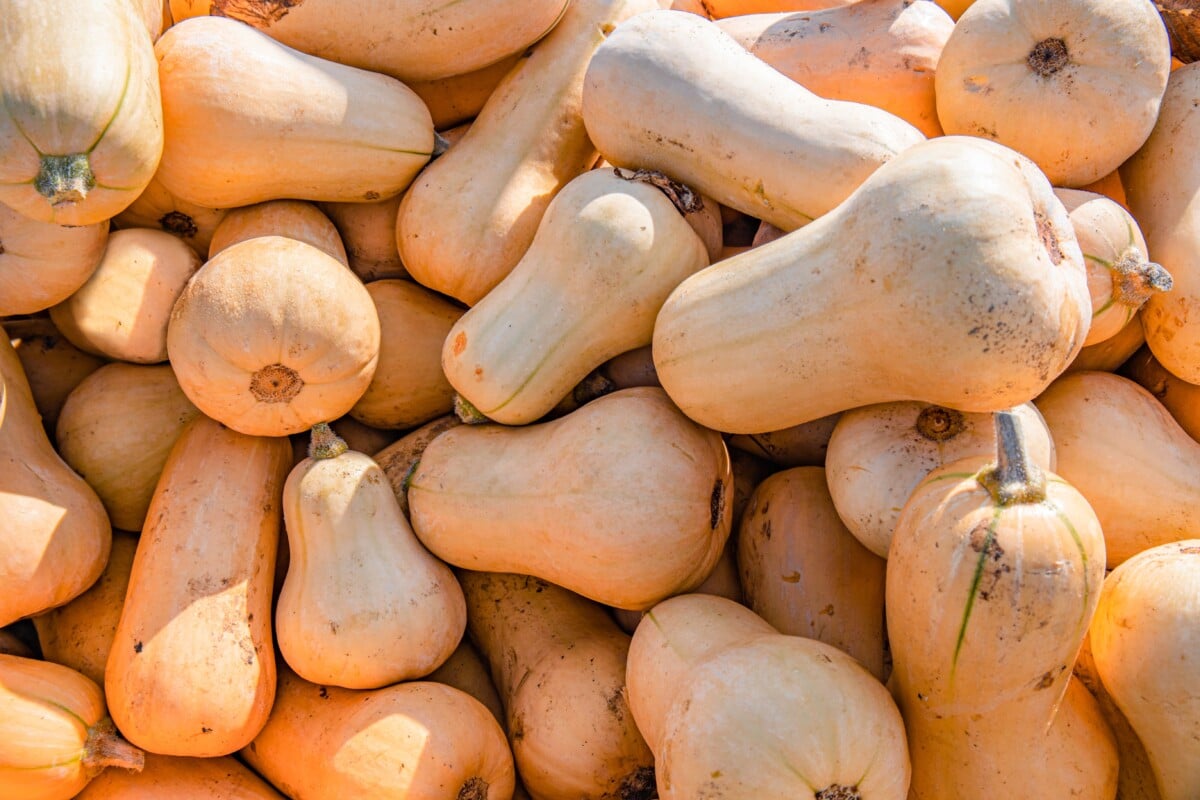
“Can I Pick It?”
When I walk into my garden, basket in hand, A Tribe Called Quest’s “Can I Kick It” is usually playing in my head, only it’s “Can I pick it?” And with each vegetable I come across that’s ready to be picked comes the reply, “Yes, you can.” As I write this, I’ve currently got two butternut squash I’m keeping my eye on. They’re getting close, but they aren’t quite there yet. So, the chorus is, “Can I pick it? No, you can’t.”
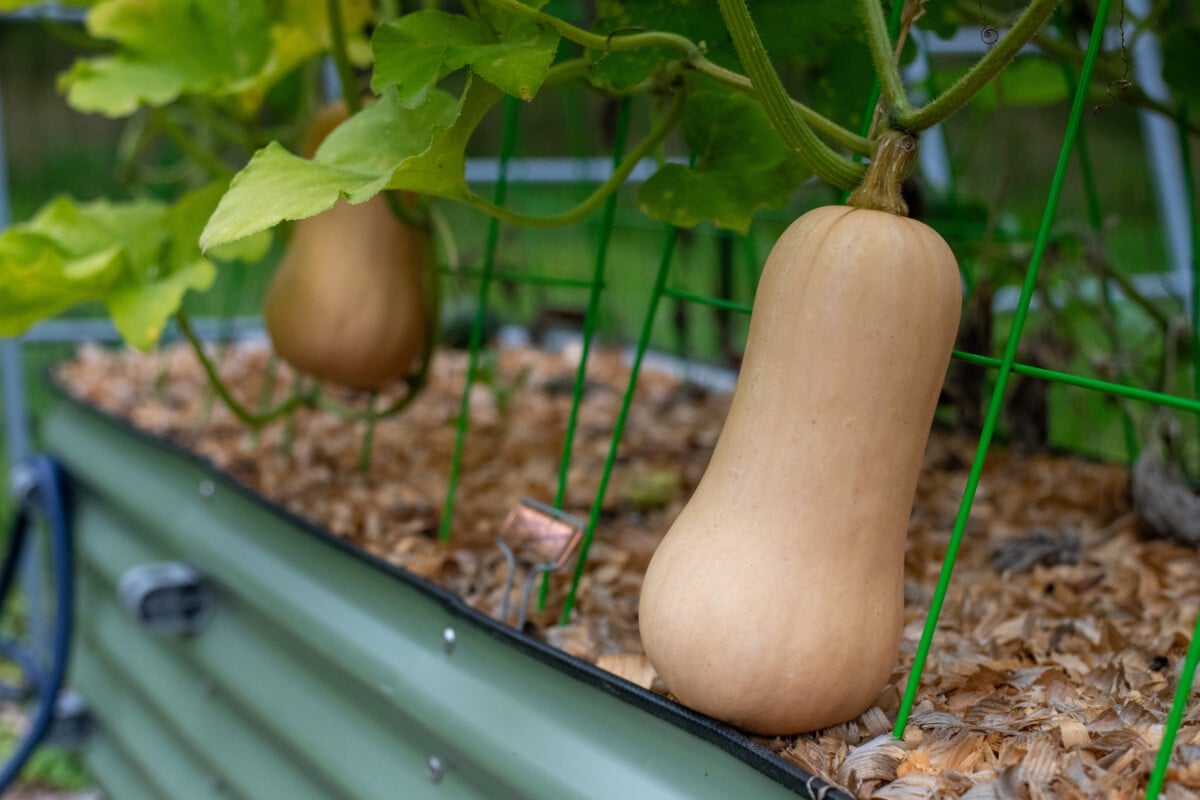
But very soon it will be, “Yes, you can.”
And I know that based on three easy visual cues I’ve learned over the years.
Most often, the advice you hear, when it comes to picking winter squash and pumpkins, is to use the fingernail test. (And it’s cue number one on this list.) But I’ve found it’s not always a reliable indicator on its own. So, I look for two other things going on with the squash, and when I find all three, I know…
“Can I pick it? Yes, you can.”
Cue #1 – Rind Hardness aka the Fingernail Test
Immature squash is thin-skinned and can easily be pierced and dented. Think about one of those huge zucchinis you find in your garden that looks more like a baseball bat than something you can eat. The skin on these is always much thicker and tougher than a smaller zucchini, but it’s still edible. That’s roughly what an immature winter squash rind feels like.
A mature winter squash has a hard rind that is no longer edible. (At least, it’s not something you want to eat anyway.)
Use your fingernail to try to make an indent in the skin. If you can pierce the flesh of the squash with your fingernail or easily leave deep marks that look slightly wet, it’s not ready.
If you can leave a light fingernail mark in the skin, but there’s little give to it, then you’re good to go. But keep reading, as I said, this isn’t always the best indicator to rely on alone.
Cue #2 – The “Bloom” & Color
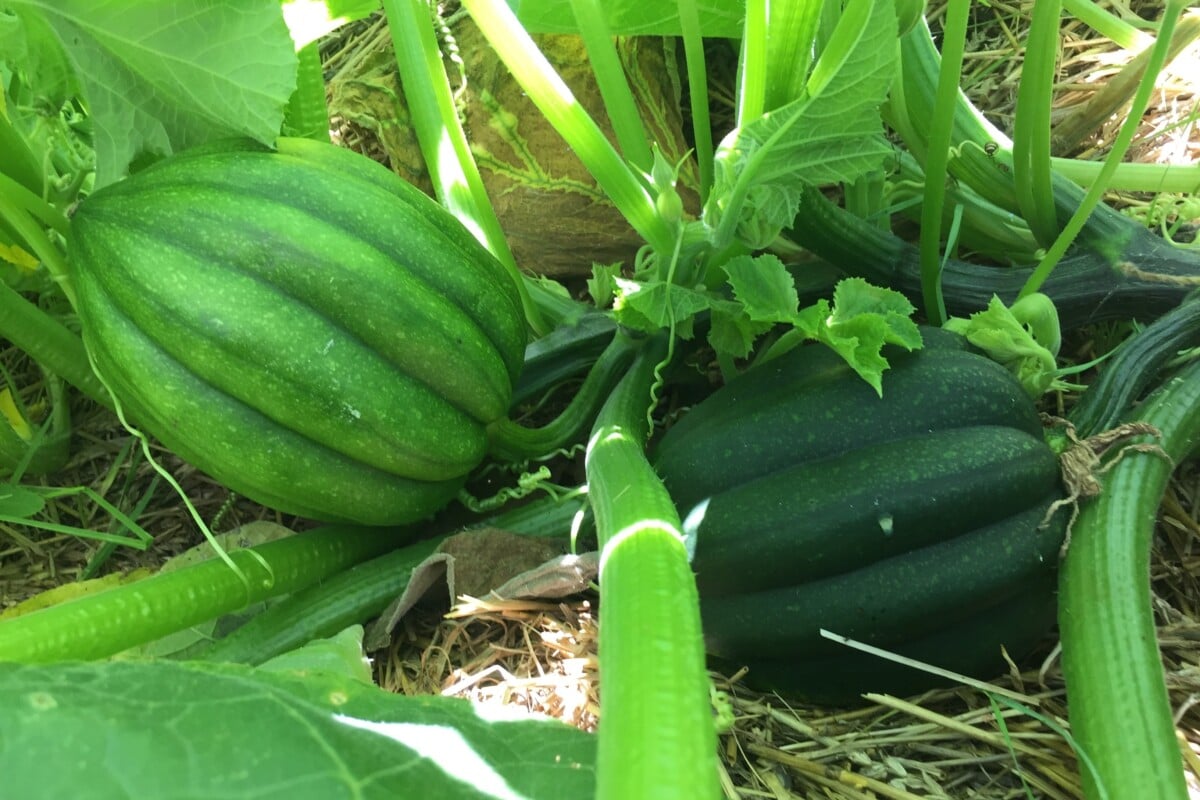
Check the color of your squash; it should be the mature color for that particular variety. Deep orange for pumpkins, hunter green for traditional acorn squash, etc. It’s important to know what the color is for the variety you’ve chosen to grow. But aside from the mature color, you want to look for a waxy bloom over the skin.
If you’ll indulge me for a minute, I love going all plant nerd.
Your winter squash, grapes and blueberries all have something in common. They all develop a natural waxy coating on the mature skin that helps prevent moisture loss, protect from disease and, in the case of the squash, prevent punctures. (It appears they’re on to the fingernail test.)
As the squash matures, this waxy outer cuticle thickens and leaves the overall squash somewhat matte. The squash loses that soft glossy sheen that most have while still growing. You can see the waxy bloom by gently breathing on it with your mouth in the same way you would to clear ice from a frosty window or clean your glasses. Lean in close and give the squash a quick ‘huh-huh’ of warm air, and you’ll see the whitish layer sort of fog up briefly before returning to the normal color.
That bloom is what you’re looking for, and this is a far better indicator than mature color. Squash will sometimes develop its final mature color before it develops the waxy bloom.
Cue #3 – Peduncle Corking
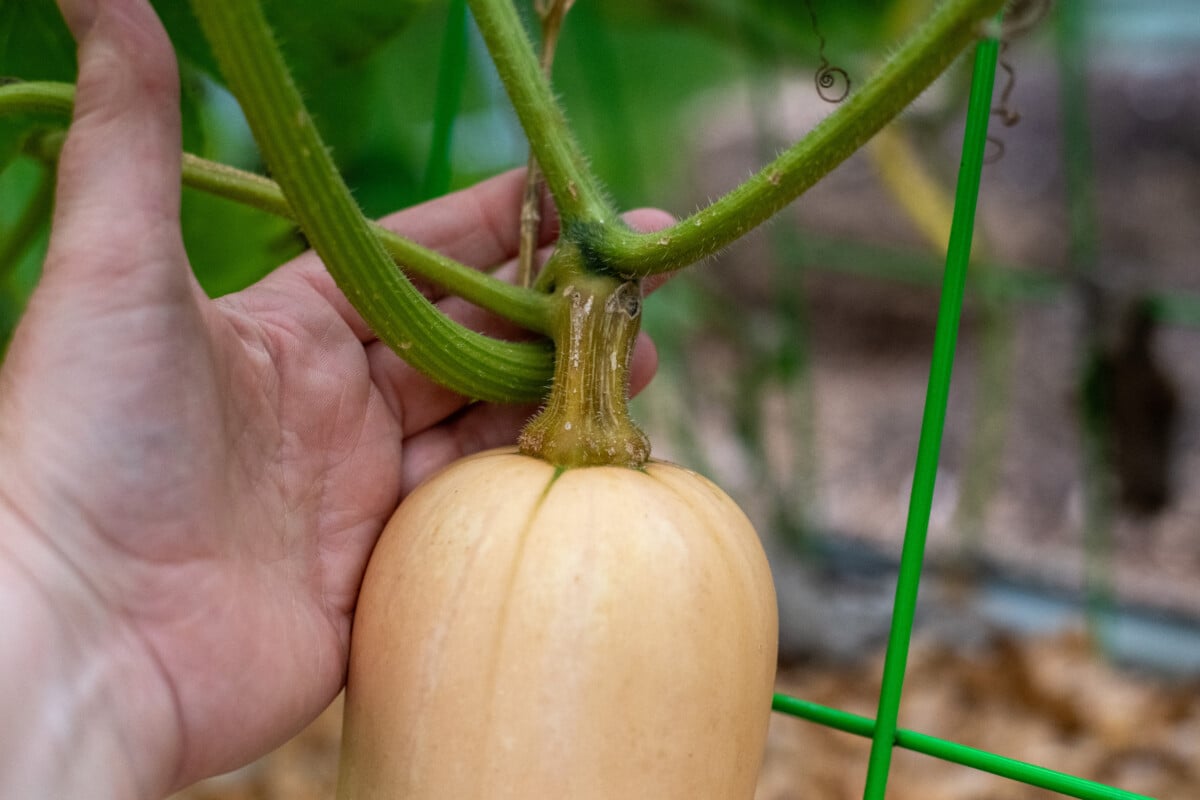
Your squash is ready to be picked when the peduncle shows obvious corking.
“That’s great, Tracey. What the heck is a peduncle?”
The peduncle is just the fancy botanical name for the stem that connects your squash to the main vine. It’s a pretty great word.
“Excuse me, dear, I need to go out to the garden and check on the pumpkin peduncles today.”
I think it would make a great name for a cat.
When a winter squash is fully mature, the peduncle will begin to seal itself off from the main vine.
It will turn brown, and if there is a tendril on the peduncle, it will also turn brown. The stem will lose its green coloring and will start to look cork-like. Peduncle corking is another obvious sign that winter squash is ready to be picked.
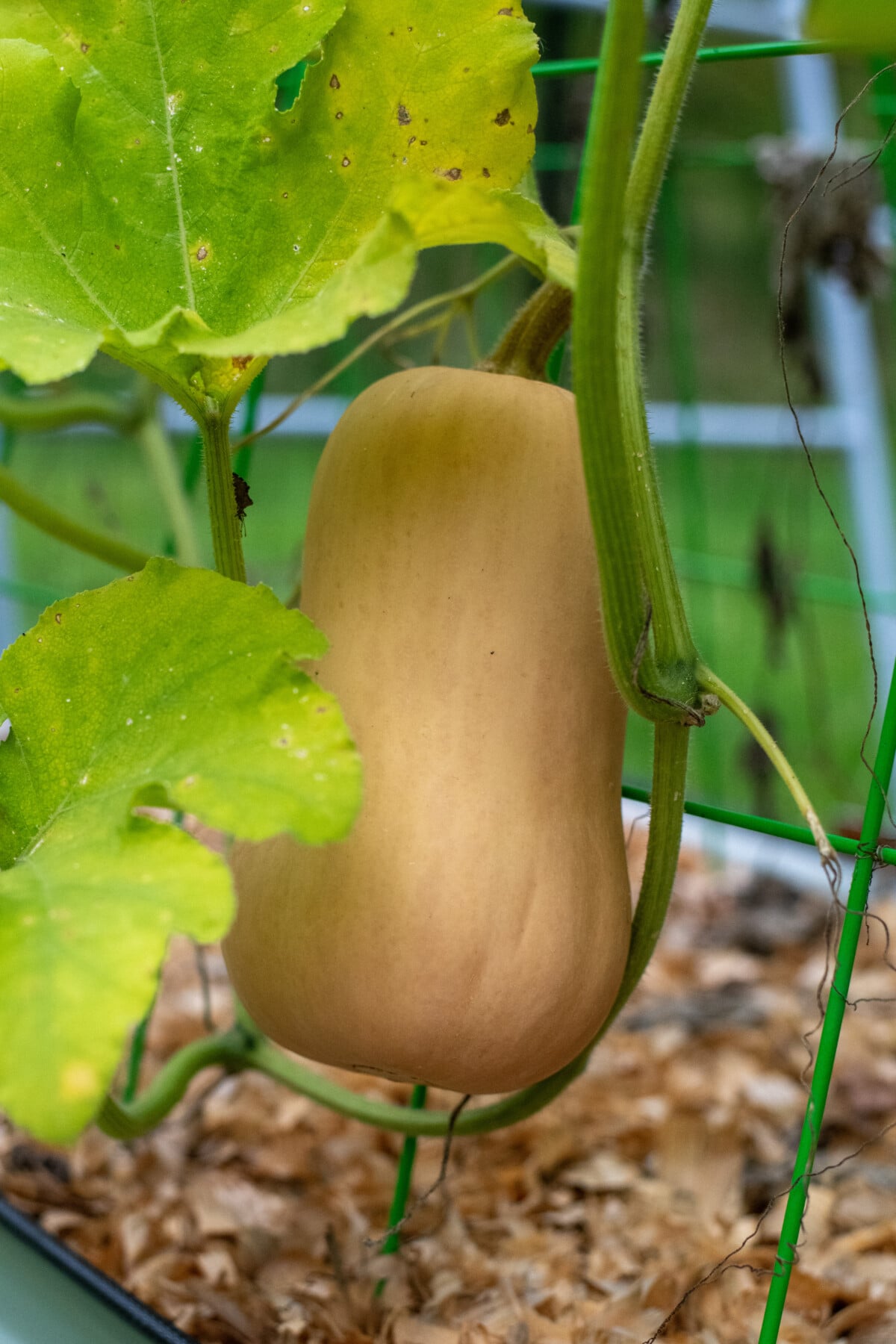
It may take a little practice, but when you start using all three of these visual cues together, you’ll be able to tell in seconds when a winter squash is ready to be harvested. And that means better-tasting squash that can be cured and stored longer. You’ll no longer be disappointed when you pick a squash and find it’s not ready yet.
Get the famous Rural Sprout newsletter delivered to your inbox.
Join the 50,000+ gardeners who get timely gardening tutorials, tips and tasks delivered direct to their inbox.