


There are some pretty great reasons to grow perennial vegetables. For one, having access to things like fresh asparagus and rhubarb, you’ll always have better quality than what you can buy at the supermarket. But probably the smartest reason to grow these set-it-and-forget-it vegetables is that once established, you can harvest them for years, sometimes decades after that initial planting.
Adding Perennial Vegetables to Your Garden is the Smart Thing to Do
I’m a lazy gardener, which is funny when you consider what I do for a living. Repetitive tasks make me crazy. (I’m looking at you, laundry.) So, I’m constantly looking for ways to make Sisyphean chores easier. For many of us, gardening is the most enjoyable repetitive task there is.
In its simplest form, we’re growing a bunch of annuals that will die, so we have to start them all over again next year.
But when you add in vegetables that will come back on their own year after year, that’s a win all of us can appreciate.
Most of the vegetables we grow in our gardens today are annuals, meaning you need to replant them each year. But if you trace them back to their origins, the wild varieties that we decided to cultivate started out as perennials. Tomatoes are a great example. We swapped hardiness for improved size, flavor and the ability to grow them in a much wider range of climates.
Naturally, the perennial vegetables we can grow are much tougher than their pampered cultivated cousins. If you struggle with a green thumb, perennial vegetables can be a sure bet once you get them started. Most grow themselves.
Some of these are great at filling “the hungry gap.” Traditionally, the hungry gap is that period in late winter when your stored supplies run low, and nothing has begun growing yet. Granted, the grocery store has made the hungry gap moot for most of us.
But a number of these hardy perennials make an early showing, allowing home growers to put something fresh and green on our tables, even when there may be snow on the ground. Likewise, quite a few will keep producing well into the fall, and some even in the winter. I know my boys are always thrilled when I harvest fresh kale for Christmas dinner. (Okay, I’m the only one thrilled about it.)
Keep in mind that because these plants come back year after year, they will need their own dedicated growing space. Some will happily grow among your garden around larger vegetables. Others, you may wish to grow in containers to prevent them from taking over. I will note these accordingly.
True Perennials
First up on the list are the true perennial vegetables. These vegetables grow from rhizomes or a crown that lives permanently below the soil, emerging again each spring.
1. Asparagus
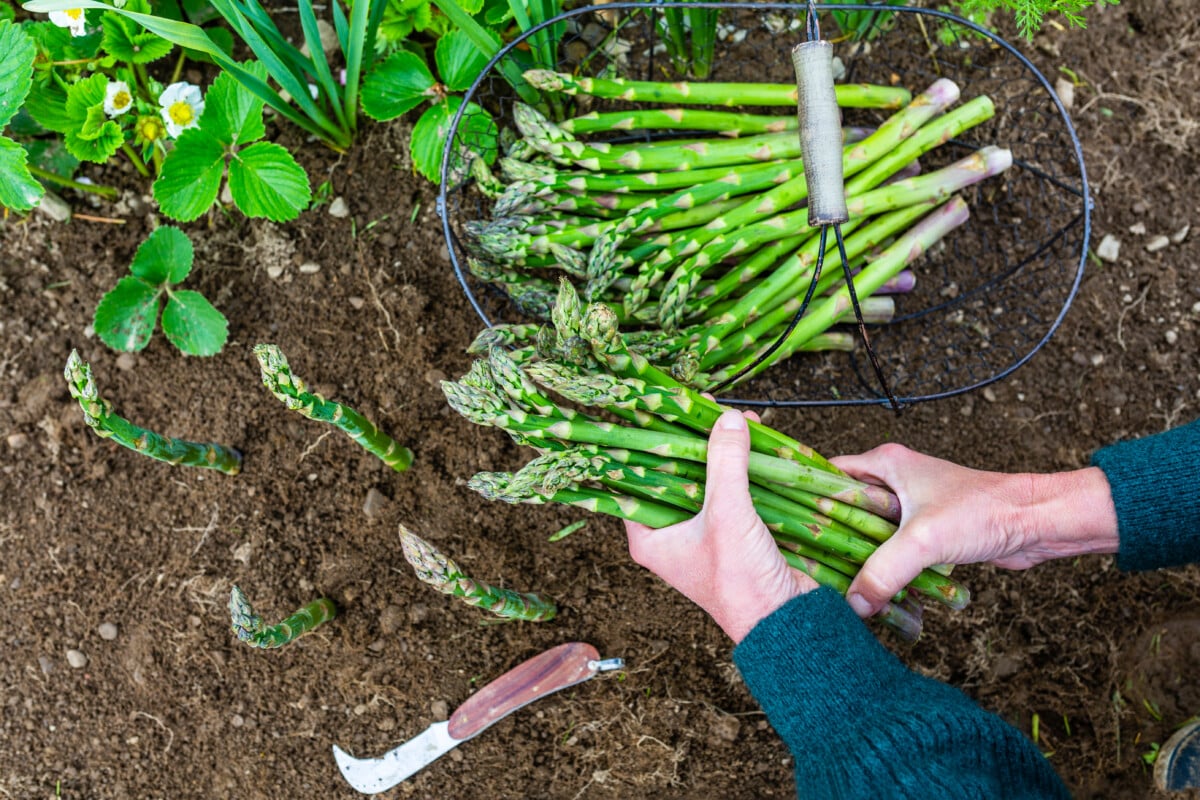
We’ll kick off this list with the most easily recognized perennial vegetable there is – asparagus. Growing asparagus takes a little patience, as it can take around three years for the plants to become established, and you shouldn’t harvest them during that time.
But that patience pays off in the long run, as an asparagus bed can provide twenty years or more of tasty spears every spring.
“But Tracey, I can buy asparagus at the grocery store. Why would I bother planting my own?”
Oh, my friend, I am glad you asked. Sure, spring asparagus at the grocery store is pretty nice, but the rest of the year, that asparagus has made a long trip to get to you, and it’s less flavorful and can be woody or dried out.
Asparagus is at its peak flavor when picked and cooked on the same day.
And if you’ve never had asparagus fresh from the garden, I can’t begin to explain how much of a difference there is in the flavor. It’s indescribably better. If you love asparagus, it’s well worth planting.
You can learn how to start an asparagus bed here. Learning how to store your fresh asparagus is important for the best flavor, and freezing it for long-term use is a good idea as well. Finally, these quick asparagus pickles are incredible!
2. Rhubarb
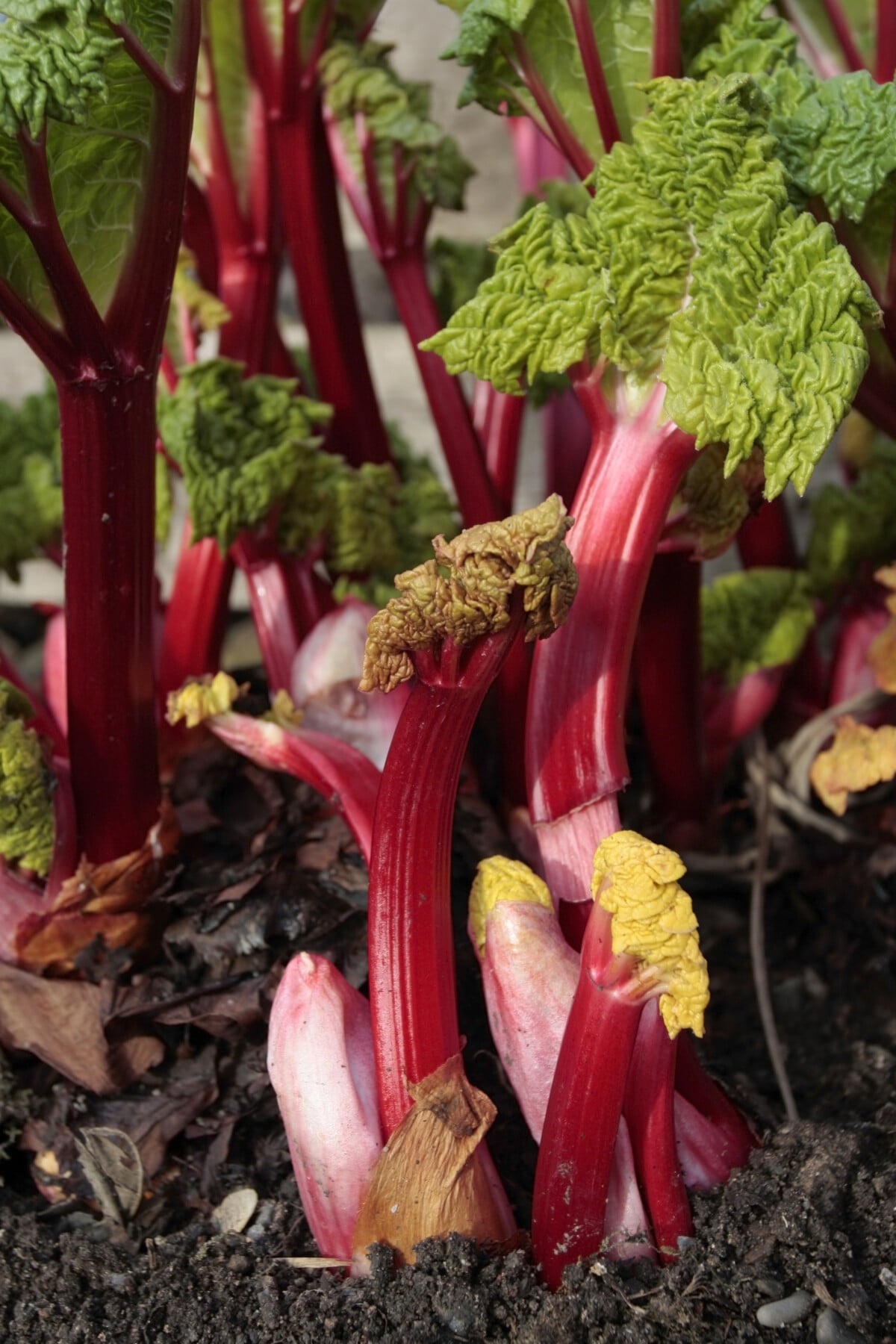
Next up is another easily recognizable perennial – rhubarb. The bright red stalks and bright, tangy flavor show up in early spring, loudly declaring the end of rich, heavy winter foods. We treat rhubarb like a fruit, but it’s really a vegetable.
If you’ve never grown rhubarb, there is one important rule you need to be aware of: never, ever eat the leaves. They are highly toxic. It’s always a good idea to cut the leaves off as soon as you’ve harvested the stalks.
Much like asparagus, rhubarb takes a couple of years to become a permanent member of your garden. Unlike asparagus, you can harvest some of it the very next year you plant it. I’ve written up a handy little piece on how much rhubarb you can pick each year while it settles in.
Get your rhubarb started here and learn the funny way to harvest it here. Finally, for the sweetest rhubarb, learn how to force rhubarb.
3. Artichoke (Globe)
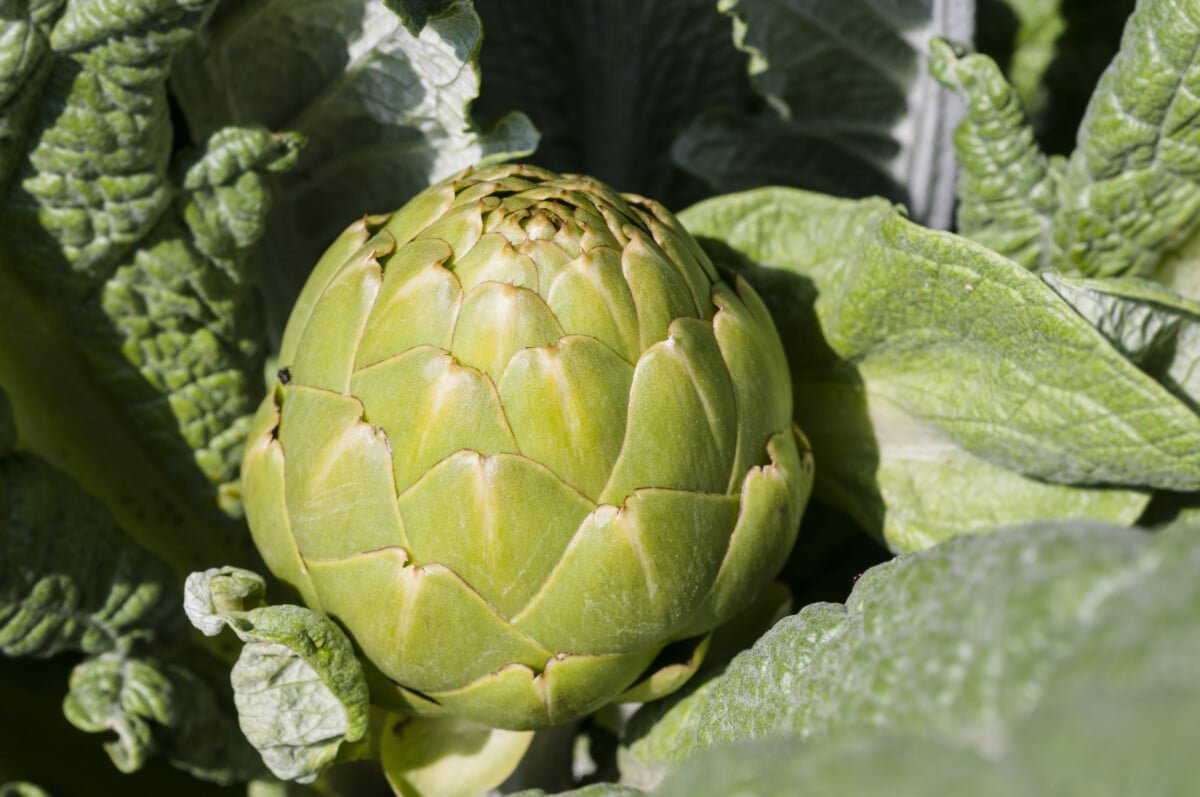
Here is where things get a little tricky. Artichoke is technically a perennial, but only if you live in certain hardiness zones. But don’t worry, if you live in a zone that’s too cold, I have an artichoke cheat code for you!
If you live in USDA hardiness zones 7-11, you get to grow this fancy vegetable as a perennial. They love sandy, but loamy soil with plenty of well-draining organic matter and need 6-8 hours of full sun each day. These guys are heavy nitrogen feeders, which makes sense when you consider all the layers of leaves they need to produce, so feed them with a high-nitrogen fertilizer regularly throughout the growing season.
Now, where I live (zone 6b), I can grow artichokes as a perennial with lots of protection each winter.
Cut the plant back hard and then wrap it well in burlap, insulating it by mulching heavily around the wrapped plant during the winter. But the easier thing to do is to grow it in containers and bring the container into a sheltered spot like the garage during the winter. You’ll need to water it once a month or so (it’s dormant, so it needs far less water), but it’s worth it because you don’t have to start the entire plant over again each year.
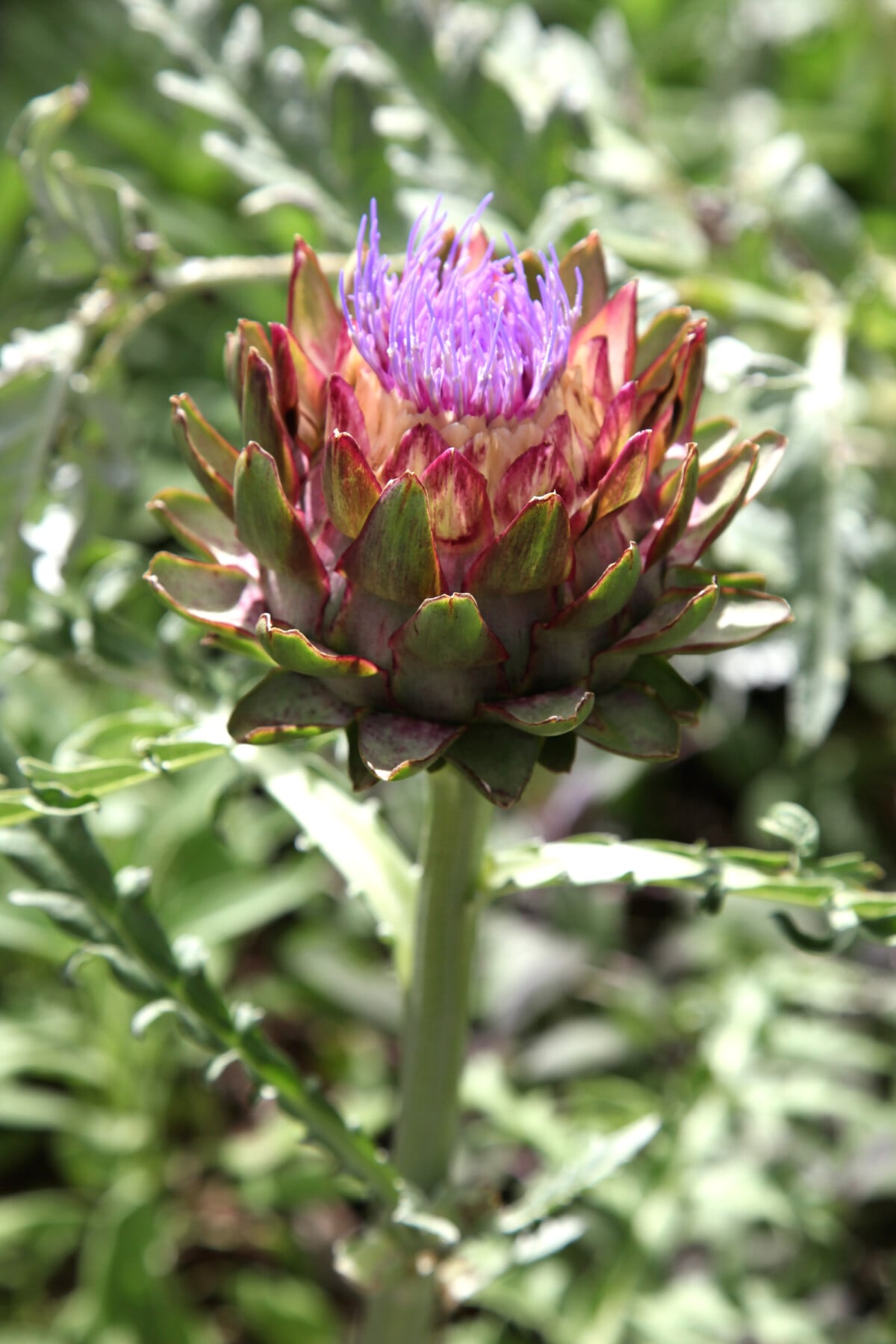
Not only are artichokes delicious, but if you leave a few to keep going past their time to harvest, they turn into the most beautiful and unique flowers.
4. Horseradish
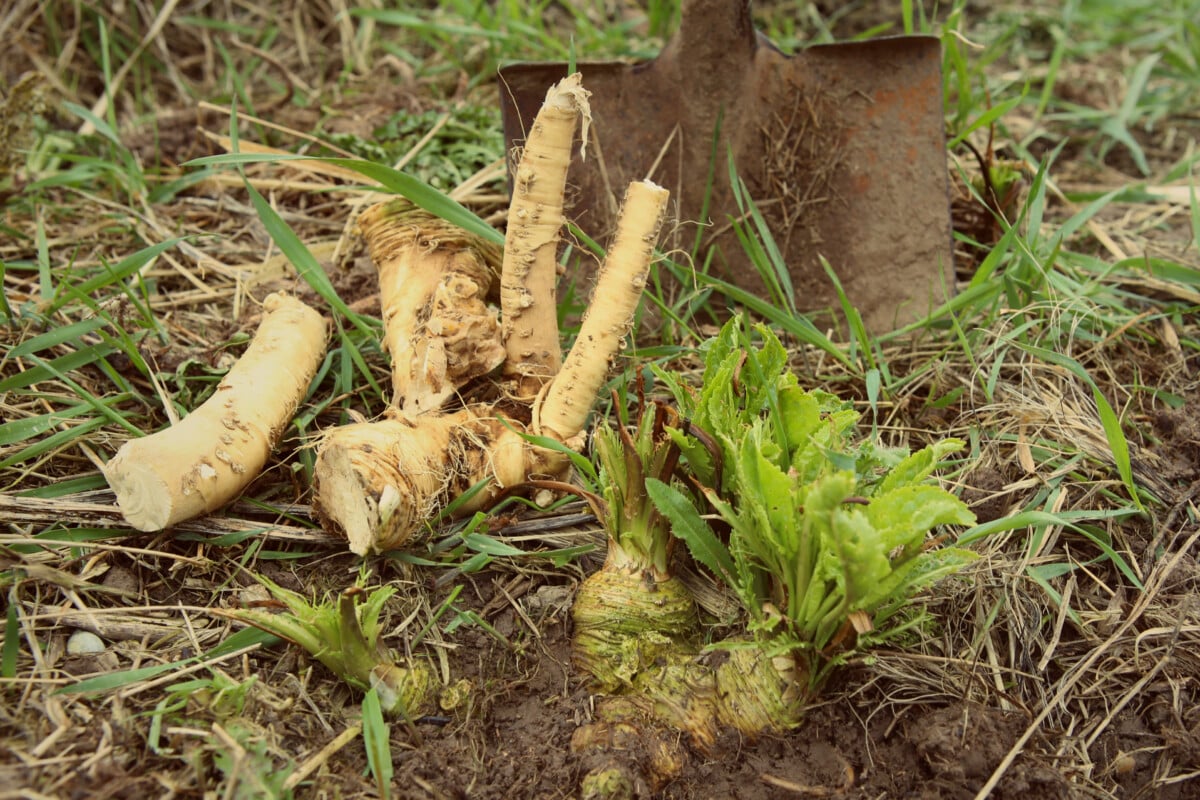
Horseradish is incredibly easy to grow. It’s definitely on my list of set-it-and-forget-it vegetables. It grows as a root beneath the ground. But it comes with an all-important caveat: always grow it in a container. Horseradish is one of those plants that, the minute you turn your back on it, it will try to take over your entire garden.
Rather than give up on the amazing quality of homemade horseradish, I’ve found the easiest way to keep it in check is to grow it in a large container.
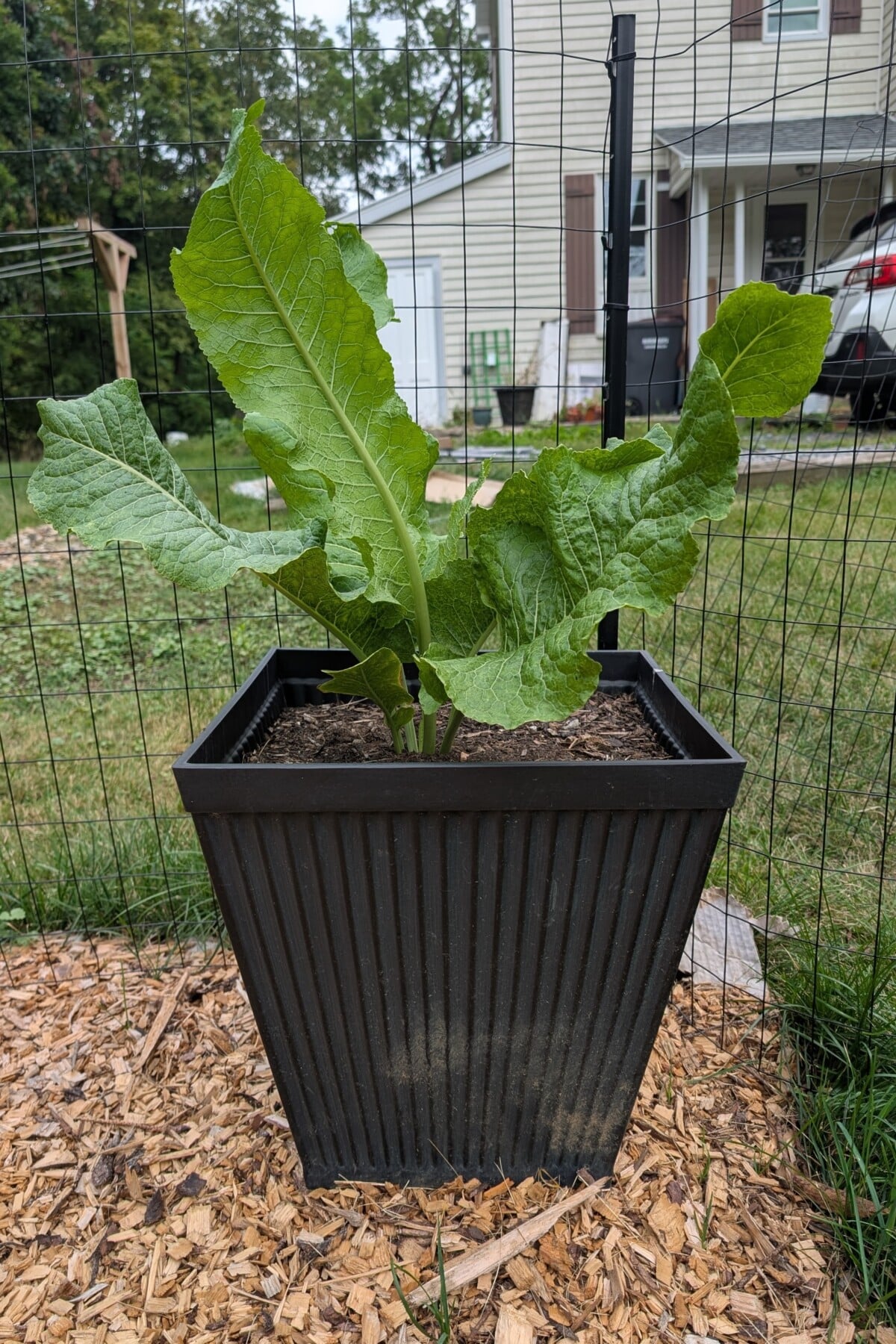
This way, it can take over its own tiny little dominion and every few years, when it starts to get cramped, I can give roots to friends and family who also enjoy the nasal-opening qualities of good horseradish.
Because horseradish does best in rich, moist, loamy soil, that’s just another great reason to grow it in its own container. I top mine up with some compost or well-aged manure (like a fine wine?) each spring. Growing horseradish is so easy, and your horseradish aioli will be world-class from now on.
Now, we’re going to start wading into unfamiliar territory. We’ve covered all of the well-known perennials; let’s take a look at some of the lesser-known ones.
5. French Sorrel
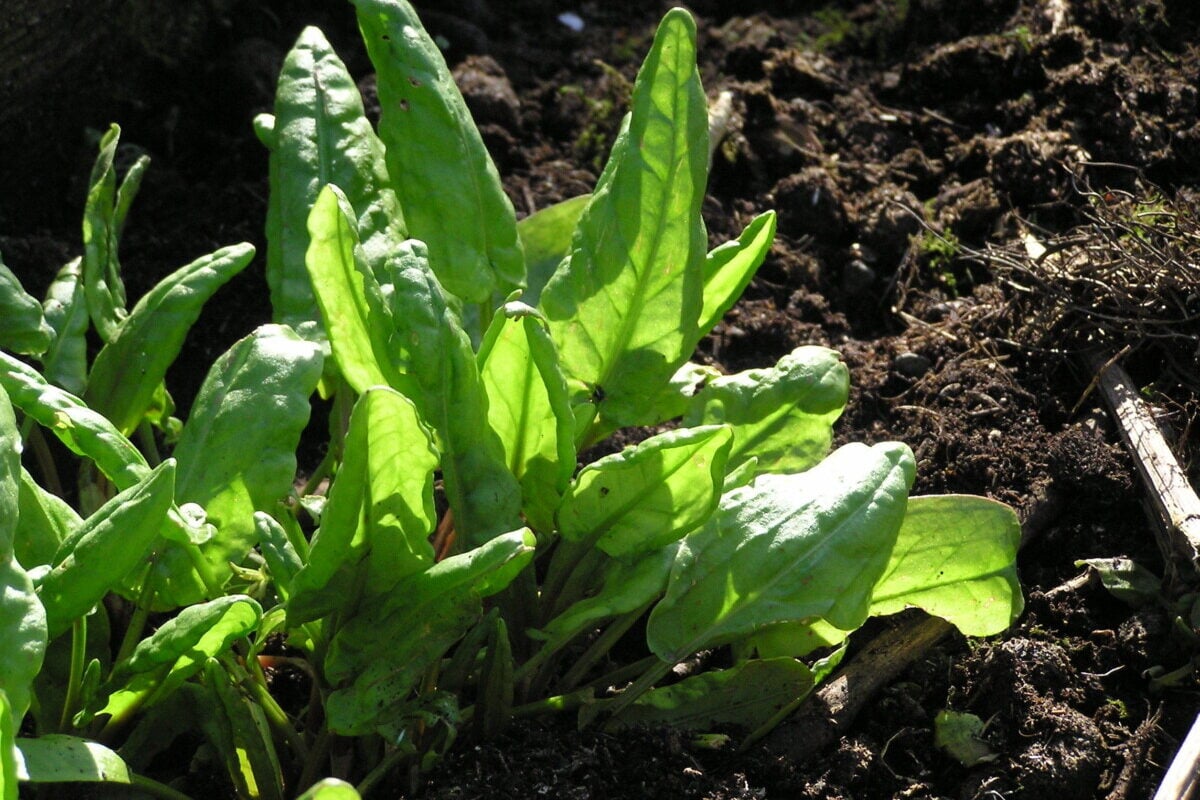
When you start looking at perennial vegetables, especially the ones that arrive first on the scene each spring, you begin to notice a trend. These vegetables pull no punches on the flavor front. They are bright, they are fresh, they are not here for more winter blah. Sorrel certainly falls into that category.
Sorrel is a leafy green perennial that you can start from seed, and it will come back each year.
French sorrel has a very distinct flavor. It’s citrusy, leaning more toward lemony, and it’s got a tart, acidic note. There’s a kind of fruitiness to it, too, like you find in kiwi or a tart green apple. Now that I’m trying to describe it, it’s actually quite similar to rhubarb, but in a salad green form. It really brightens up even the most boring salad.
I find that the biggest hindrance for gardeners who want to branch out with an unusual vegetable is the age-old: What the heck do I do with it?
Sorrel goes amazingly well with fish, especially oily fish, like salmon. It’s a staple in many French soups and plays well with leek and potato soup. Use it as you would most salad greens. But you can also treat it like a citrusy herb and use it to add a bright splash of flavor to eggs, chicken and more.
6. Jerusalem Artichoke/Sunchoke
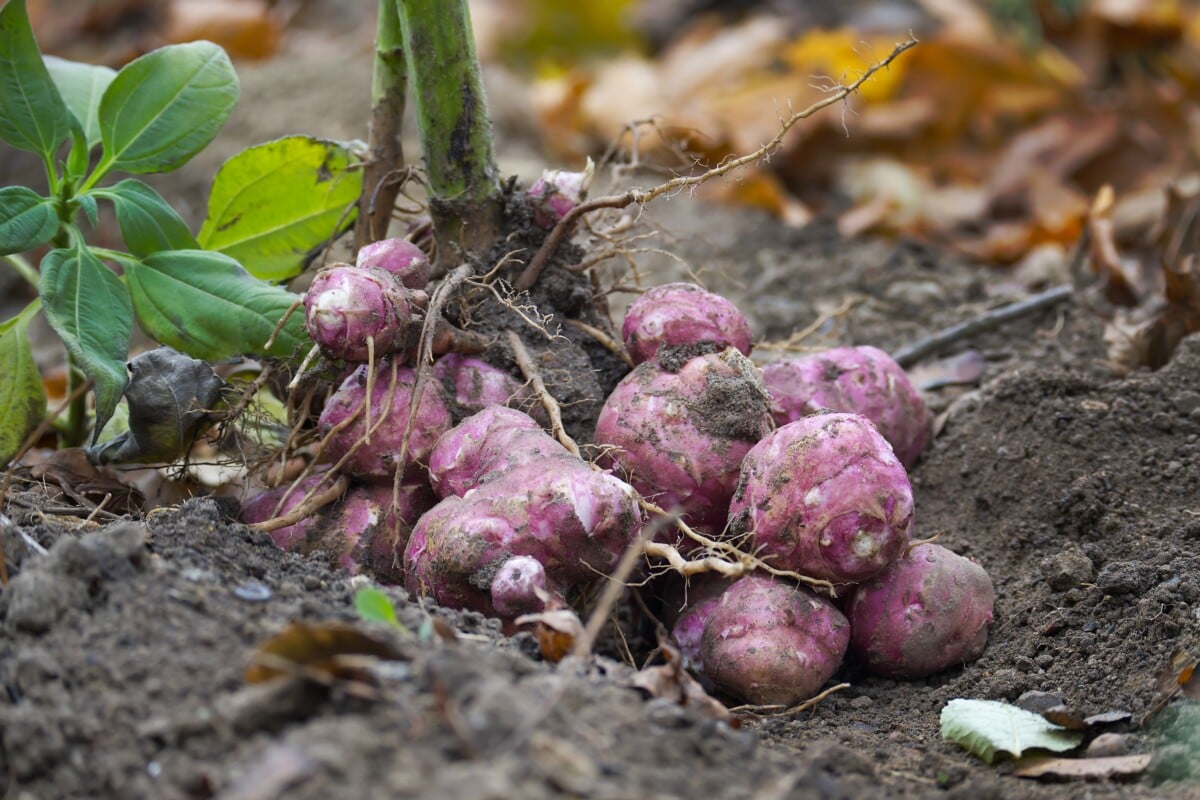
Before we go any further, do not plant sunchoke in the ground. This is another highly aggressive perennial that will slowly creep out of bounds and take over your entire garden. I’m convinced that the only way to truly get rid of it would be to nuke it from space.
But if you plant this rhizome in its own container, it will behave like a good little vegetable.
These sunny flowers are grown for their tubers beneath the soil, which, when peeled and eaten raw, have a lovely crisp crunch and a flavor a bit like a water chestnut. Boil them like a potato, and they take on a flavor reminiscent of artichokes.
7. Sea Kale
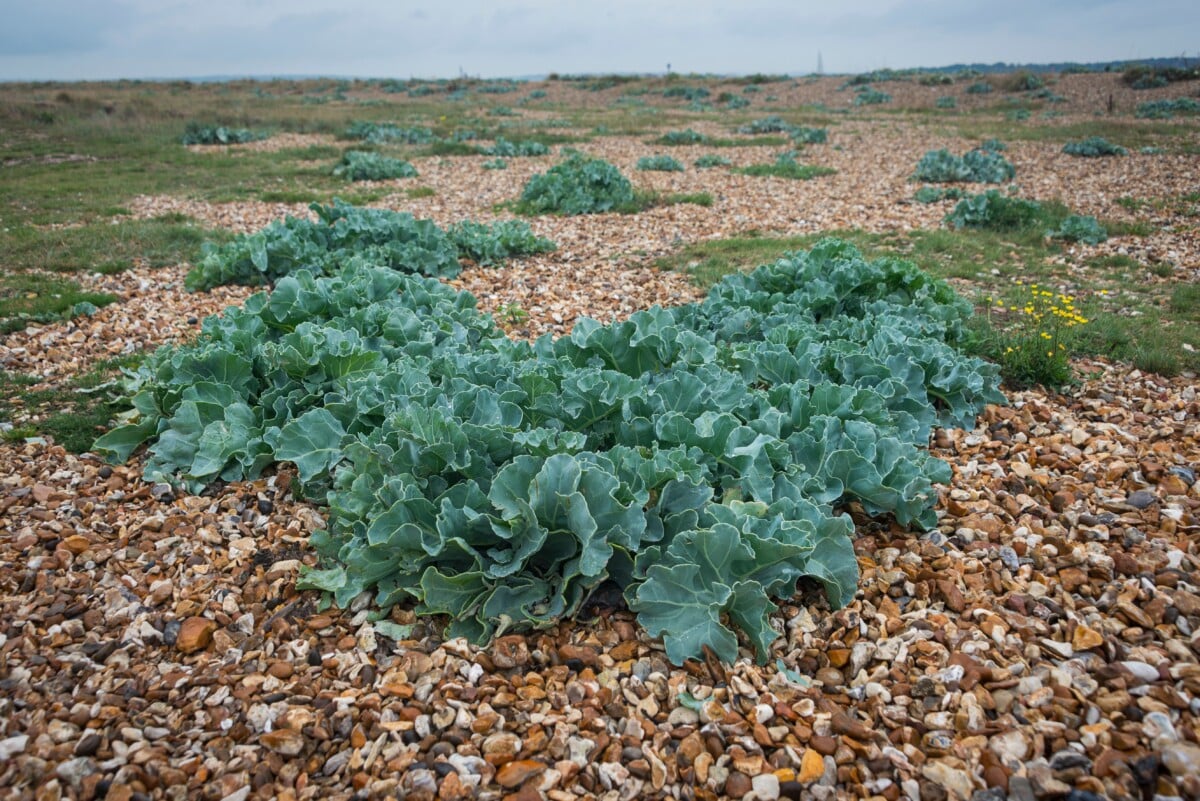
If you’ve never heard of sea kale before, you’re not alone, and you can thank your local grocery store for that. This perennial green that acts like a cross between cabbage and kale was popular among gardeners here in America in the 19th century. But it never made the leap to the grocery store because the delicate leaves and roots couldn’t take being battered around during shipping.
However, it’s got an almost cult-like following among gardeners in the know.
Sea kale has a lot going on for one plant. You can peel and boil the roots like a rutabaga. In the spring, you can blanch the roots (block out the sun) and steam or braise them like asparagus, the flower buds can be eaten like broccoli if you cut them before they open, and the young tender leaves are a bit like spinach. Hmm, maybe we should just grow sea kale and skip the rest.
8. Walking Onions
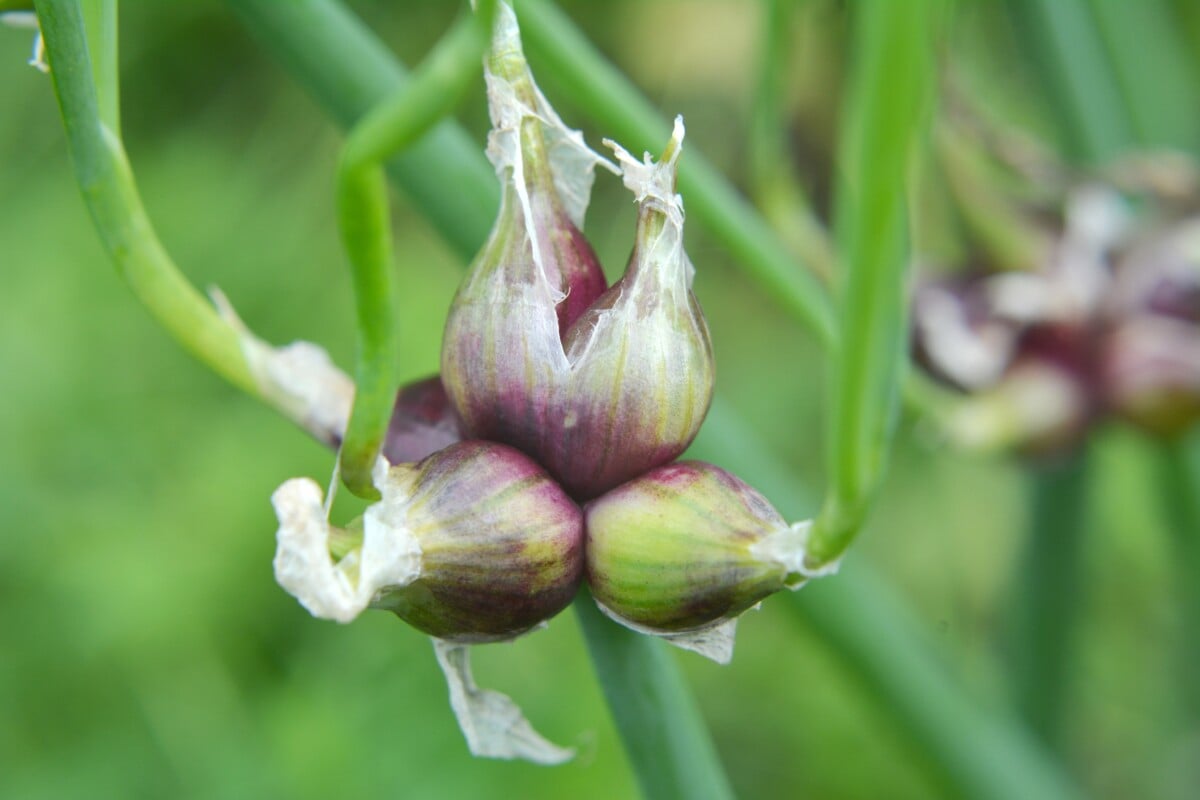
Okay, let me explain. If you’ve ever seen an onion go to seed, you know that it produces a flower on the top. Well, these onions produce new bulbs at the top instead of flowers. As the bulbs grow, the top becomes heavy, and the stalk bends to the ground until the bulbs make contact with the soil, where they grow, producing next year’s onions. So yeah, they sort of “walk” across your garden.
These are so much easier to grow than standard onions. You can treat them like chives or eat the bulbs or both. Granted, these onions are much smaller than the ones we normally grow, and they are a bit spicier, but you can’t beat the fact that they grow themselves.
9. Watercress
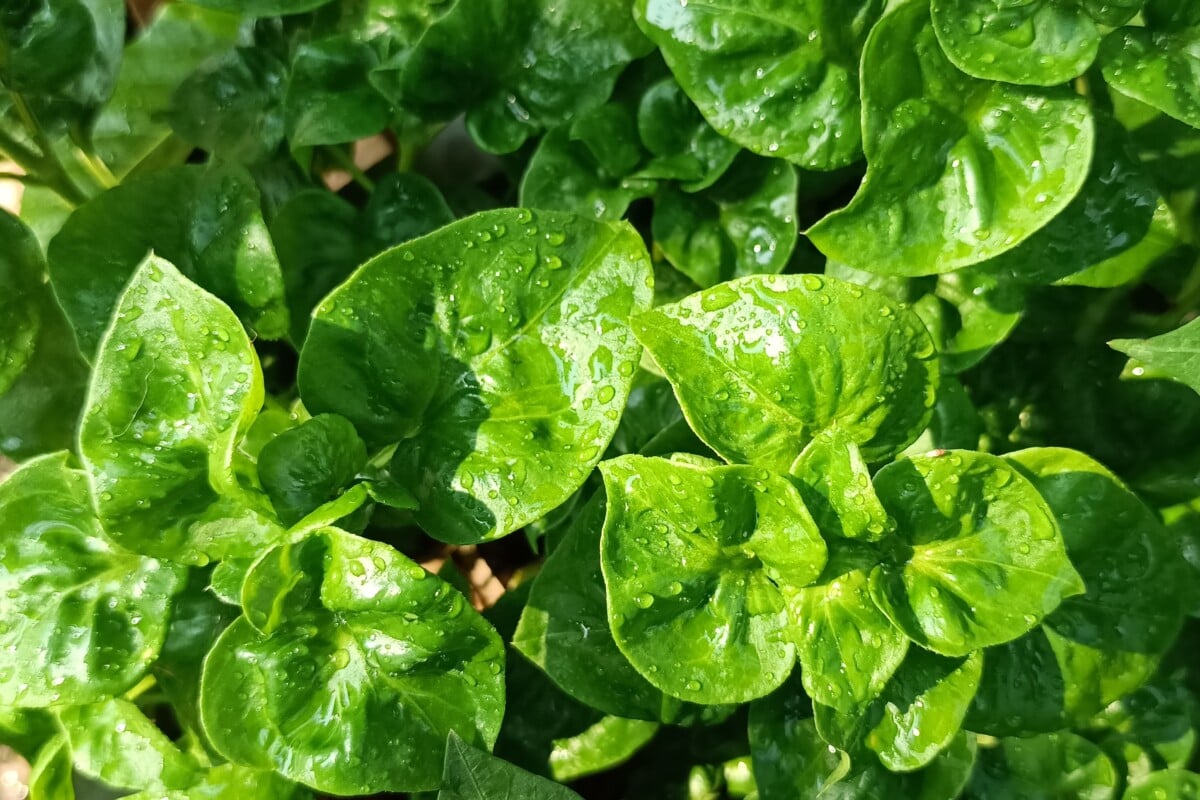
It’s hard to talk about watercress without thinking about fancy sandwiches. I typed that sentence with my pinky in the air. But yes, watercress is a hardy perennial. It’s best eaten when young. The raw leaves have a nice spicy kick, a bit like a radish, but when you cook them, that attitude settles down quickly into a warm, green flavor.
Watercress is incredibly easy to grow.
In fact, you don’t even need to buy seeds. You can buy watercress from the store and poke the stems in a glass of water until they root. However, there is one watercress must: they have to be grown in somewhat boggy soil. This is actually pretty easy to do by growing watercress in a pot and then placing that pot inside a larger pot that you keep consistently filled with around 3-4 inches of water.
Faux Perennials
You’ll notice the previous section was titled ‘True Perennials.’ This next section of plants, while not true perennials, is well known to be prolific self-seeders. That makes them the next best thing to an actual perennial.
As long as you always allow a few of the plants to flower and go to seed, these plants will continue to start next year’s plants with no help from you.
These are all basically greens in one form or another. Perfect for salads, soups and adding some fiber to your morning smoothie.
Here are a few tips for growing these plants as self-seeding “perennials.”
- The first time you plant them, pay close attention to what the emerging seedlings look like. You might even want to take photographs to reference. That way, you aren’t yanking up your veggies along with weeds the following year when they come back. I accidentally pulled up my wasabi arugula because I thought it was a weed.
- You can take a couple of approaches to where you grow these in your garden. I like to keep my self-seeding greens in the same raised bed; that way, they can all mix and mingle, and I don’t have to worry too much about them. I have some lettuces and herbs that I grow in tidy rows in the same bed. These faux-perennial greens just fill in around them, creating a sort of salad garden.
- However, most are low growers, so planting them among tomatoes, peppers, etc. is another approach. Depending on how densely you plant them, they can even act as a living edible mulch, leaving less space for weeds to get a foothold.
- As you harvest, don’t forget to let some of the plants go. They will eventually bolt and drop seeds where they are, setting you up for the next harvest.
The Faux Perennials
10. Miner’s Lettuce (Claytonia): A small, succulent green that has a mild, sweet, and earthy flavor reminiscent of spinach. (I recently discovered this and love it. Not only is it a tasty addition to your salad, but a beautiful one as well.)

11. Corn Salad: Also known as Mâche, very hardy, growing well into winter, and features a delicate, buttery texture with a mild, nutty taste reminiscent of buttercrunch lettuce.
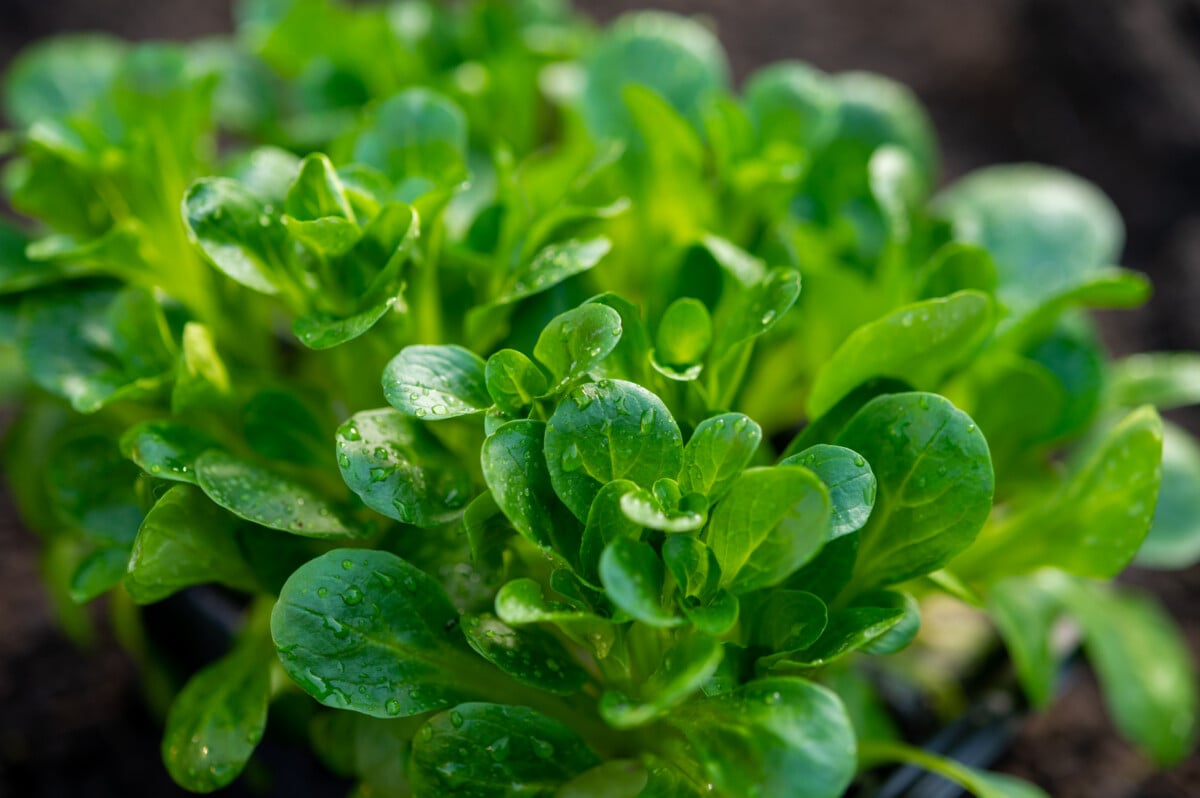
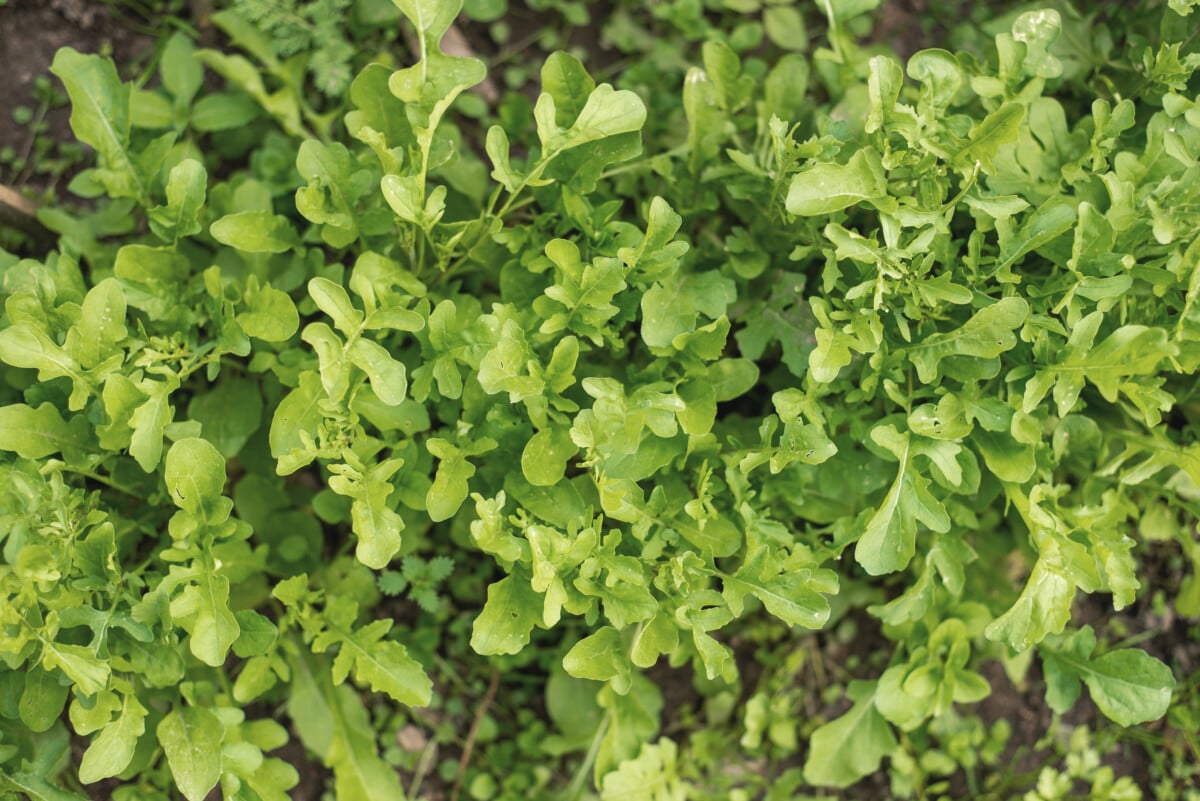
12. Arugula: A cool-season annual in the mustard family, known (and prized) for its peppery and slightly nutty flavor.
13. Radicchio: A member of the chicory family, this perennial (often grown as an annual in some areas) has a great crisp crunch with that classic pleasant bitterness that rounds out a good salad.
14. The Ultimate Bonus ‘Faux Perennial’ – Cherry Tomatoes

Now look, before you get too excited, this one depends on where you live. While our cultivated tomatoes are not true perennials, their native cousins are. So, tomatoes are naturally excellent self-seeders. We’ve all seen volunteer seedlings in our gardens each spring and thought, “Oh, if it were only that easy.”
For almost half of the USDA Hardiness zone map, it is.
Unlike the rest of us, who have to start our tomatoes quite early indoors because our growing season is too short, zones 7-11 have the long growing season needed to direct sow certain tomato varieties.
(I know, Zone 6b over here getting jealous, too.)
Cherry tomatoes are the fastest-growing variety of tomatoes. They’re also the best self-seeders. These small tomatoes often fall from the vine and rot in place until the next season, when they pop up. While all of us get volunteer tomato seedlings in our garden, the difference is that if you live in USDA Hardiness zones 7-11, you can just let them grow as they emerge and still have a season long enough to enjoy a bountiful harvest.
To ensure you have new seedlings every year, be sure you leave a few tomatoes around the stem of the old plant to rot in place. (I like to cut my tomatoes off at the base and leave the roots to rot in the soil for extra organic matter.) If you pull up your plants at the end of the season, you can just plop a couple of tomatoes just below the surface of the soil.
A caveat: You need to grow heirloom/open-pollinated varieties if you want them to breed true each year. Black Cherry, Gold Nugget and Purple Bumble Bee are all great options. And if you really want to get wild with ‘perennial’ tomatoes, give Everglade Tomatoes a try. This wild variety will keep cranking out tomatoes even in the craziest heatwave.
Get Garden Notes From Tracey, Right to Your Inbox
Pull up a chair on the front porch. Join 54,000+ gardeners who get Tracey\'s friendly notes, seasonal to-dos, and hands-on tutorials three times a week.