

Ah, good! You’re here! I hope you’re wearing your comfiest pair of shoes, dear reader, because today, we’re going plant shopping. I’d like to take you with me and point out a few questions we should ask ourselves when we’re buying perennials.
If some of my tips may seem obvious to you, just remember that we were all beginners once, and if you only learn one thing from this article, it’s still worth it to avoid the annoyance of yet another plant dead on arrival in your yard.
Here are a few things to look for or mistakes to avoid when buying perennials this spring. (Or fall, it totally applies in the fall too.)
1. Are you buying the largest plant available?
Let’s say your heart is set on covering a sunny corner of your garden in ornamental grasses. You see a large pot with a plant ready to take over the garden. And a few feet away, you see a small starter plant.
Which one would work best for your future lush patch? Surely, the large plant, right?
In my experience, bigger isn’t necessarily better when it comes to buying perennials.
Larger plants that have matured in a grower’s greenhouse are more likely to be pot-bound or permanently stunted in other ways.
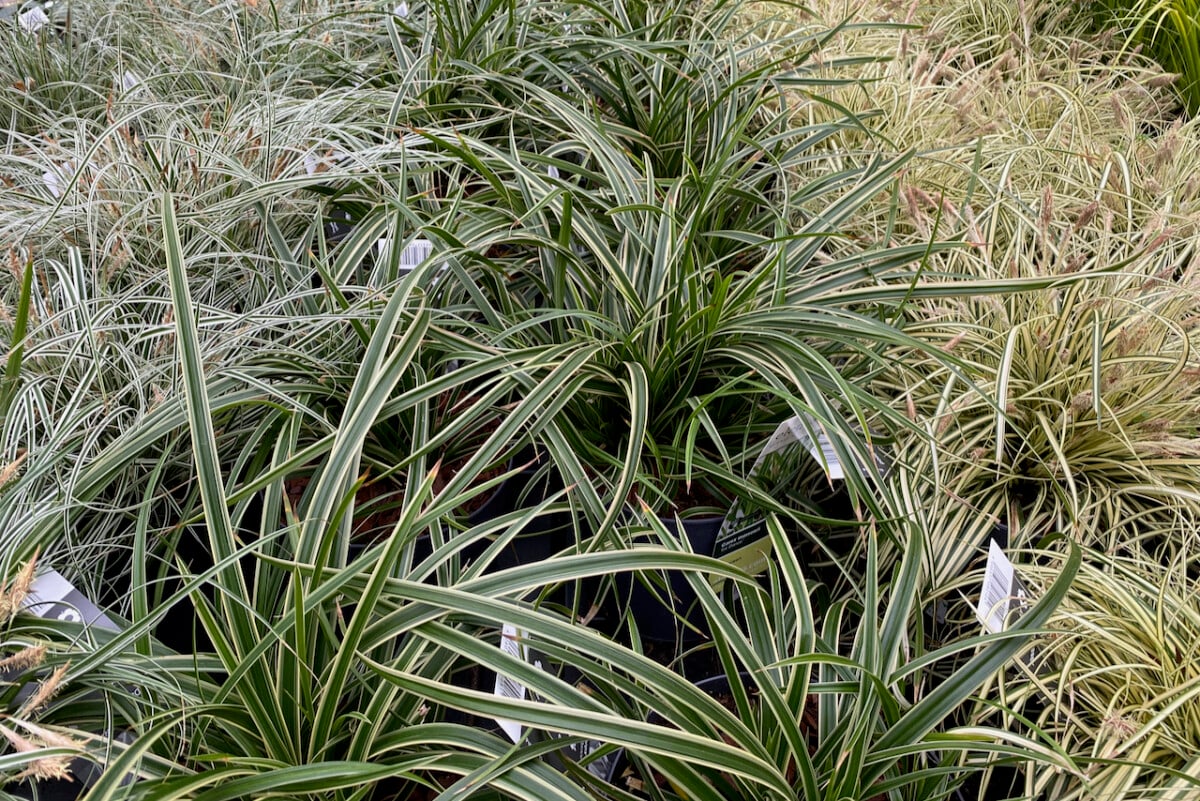
They have spent the past couple of years (often longer) being forced into looking their best in preparation for being sold. They were grown in temperature-controlled and humidity-controlled greenhouses. Fertilized on a schedule. And pruned to perfection.
Large plants make a lovely display in the store, and we sometimes think we’re tricking the system by buying perennials that have already reached maturity. But they are more likely to not adapt well to being transplanted and not bounce back from the stress of leaving that controlled environment.
The one scenario in which I would choose the larger plant is if I were planting in containers. Containers are temporary, and we focus more on the display rather than on the longevity of the plants.
On the other hand, smaller perennials are younger. They are grown to be starter plants, not just showy plants. They will generally recover faster when we transplant them in the garden. And once they do, they’ll catch up to the more mature plants. I’m willing to bet they even come with a lower price tag.
2. Are you buying a second-year biennial?
This is a lesson I had to learn a few times when I first started gardening before I truly knew what I was doing.
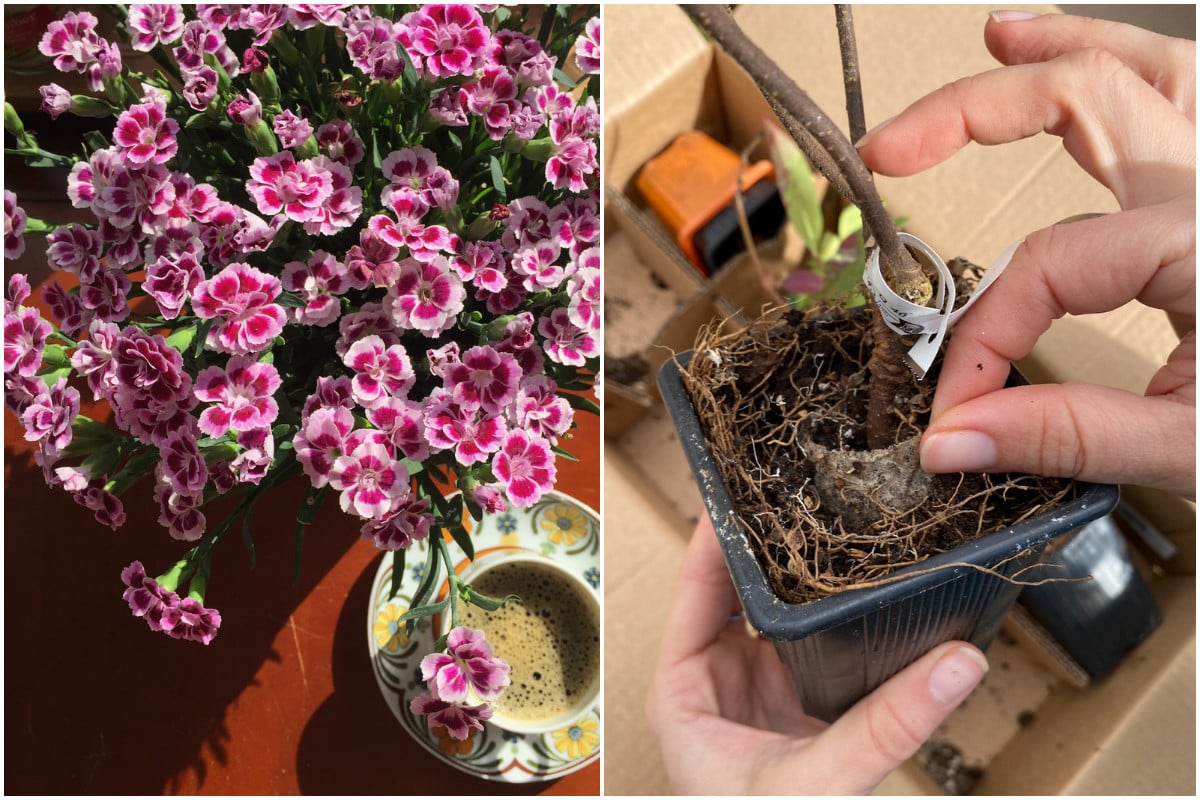
The one time I still remember making this mistake is when I bought a large pot of Sweet William (Dianthus barbatus) in vibrant pink and white colors. I was sold the second its sweet nostalgia-inducing fragrance hit my nostrils.
I found the perfect spot for this Sweet Willian in the garden, in a raised border wrapping around my gazebo. Getting a whiff of perfume on balmy May days whenever I brought my laptop to work there in the shade sounded dreamy.
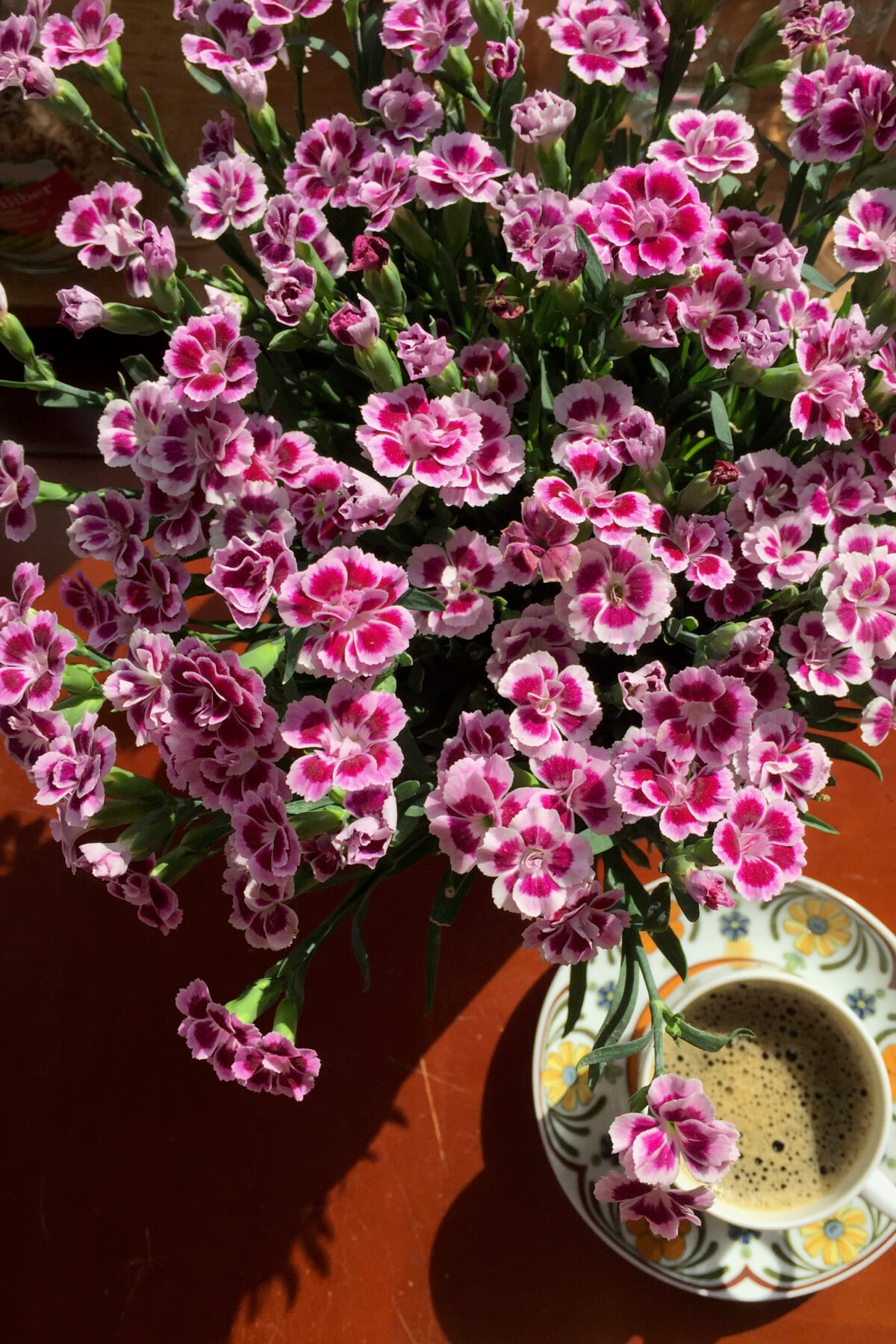
Well, I did get a whiff of perfume for about a month. Then watched my dianthus slowly deteriorating with no chance of recovery.
“It’s ok, it will bounce back next spring,” I said to myself, not realizing how silly I sounded. Because what I had bought was a dianthus in its blooming year. And this particular dianthus was a biennial, so the first blooming year is also its last year. (Blooming or otherwise.)
You see, the garden store had labeled this plant as a perennial, so I had no idea what I had done to kill it so quickly. Yeah, it wasn’t me. Its life cycle was over, just as nature had intended it, and there was nothing that I could have done to encourage it to rebloom.
What I had bought was a month of blooms followed by compost fodder.
The only whiff I was getting by that point was remorse with an afternote of failure.
I wrote an entire article on biennials, their growth patterns and their role in the garden. Here’s the link, if you’d like to learn more.
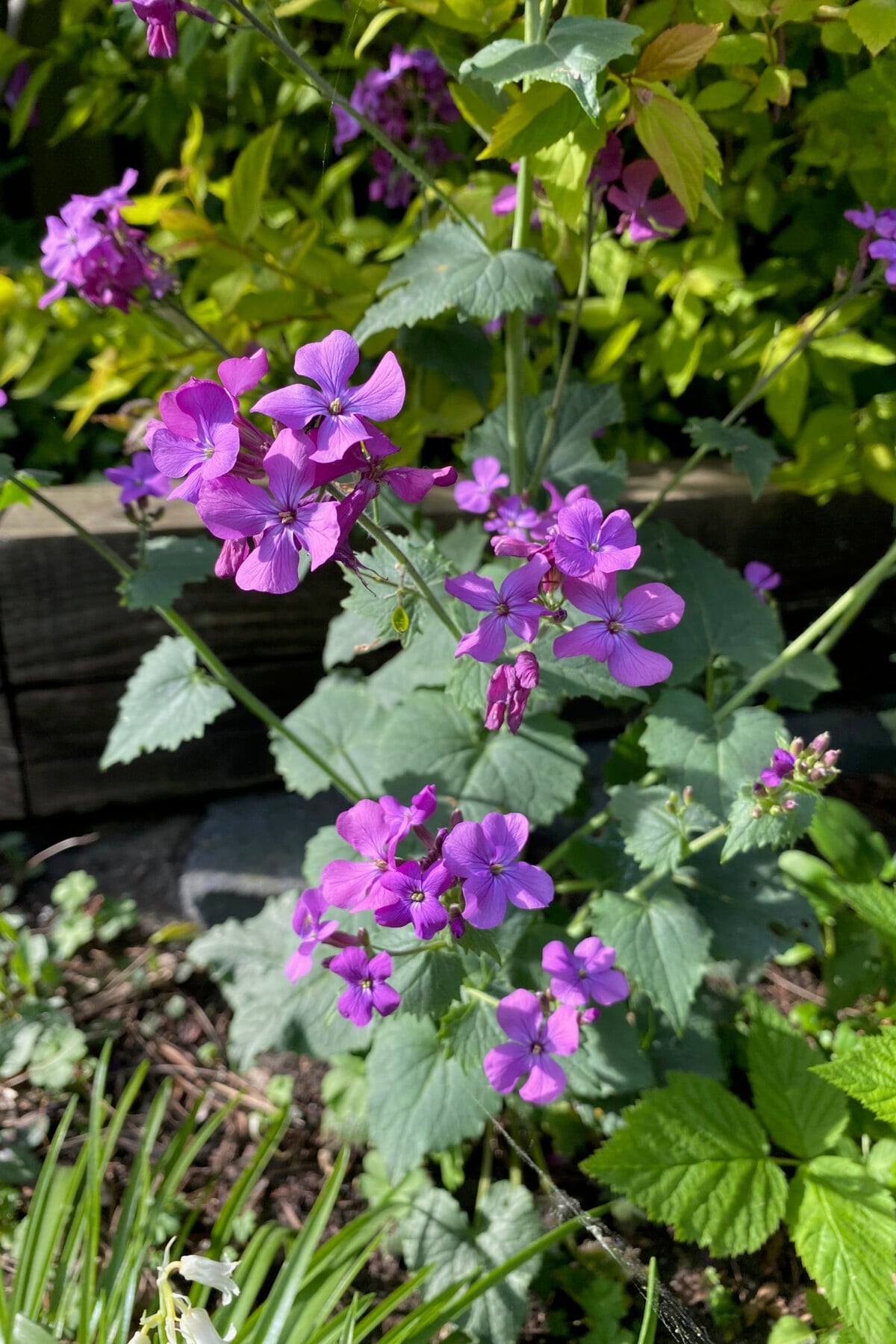
In a nutshell, biennials are plants that spend the first year sprouting and developing a strong root and foliage system. Once they have enough energy, the second year is dedicated to flowering. Once this life cycle is completed, they die.
The trouble at the garden store is that I have never ever seen a “biennial plants” section. There’s an annual section and rows of perennials. But never a single sign or labeling that clearly states “this plant may look like a perennial, but it will die soon muahahahaha!” Or something along those lines.
Just as an fyi, the most popular flowers that are biennials include: foxgloves, snapdragons, silver dollar plants (Lunaria), night-scented stock aka queen of the night (Nicotiana sylvestris) and hollyhocks.
3. Did you inspect for root mesh?
Root mesh is the devil! I know it sounds a tad dramatic, but I have no good things to say about it. From a gardener’s perspective, it causes nothing but trouble.
Here’s what I mean when I say root mesh:
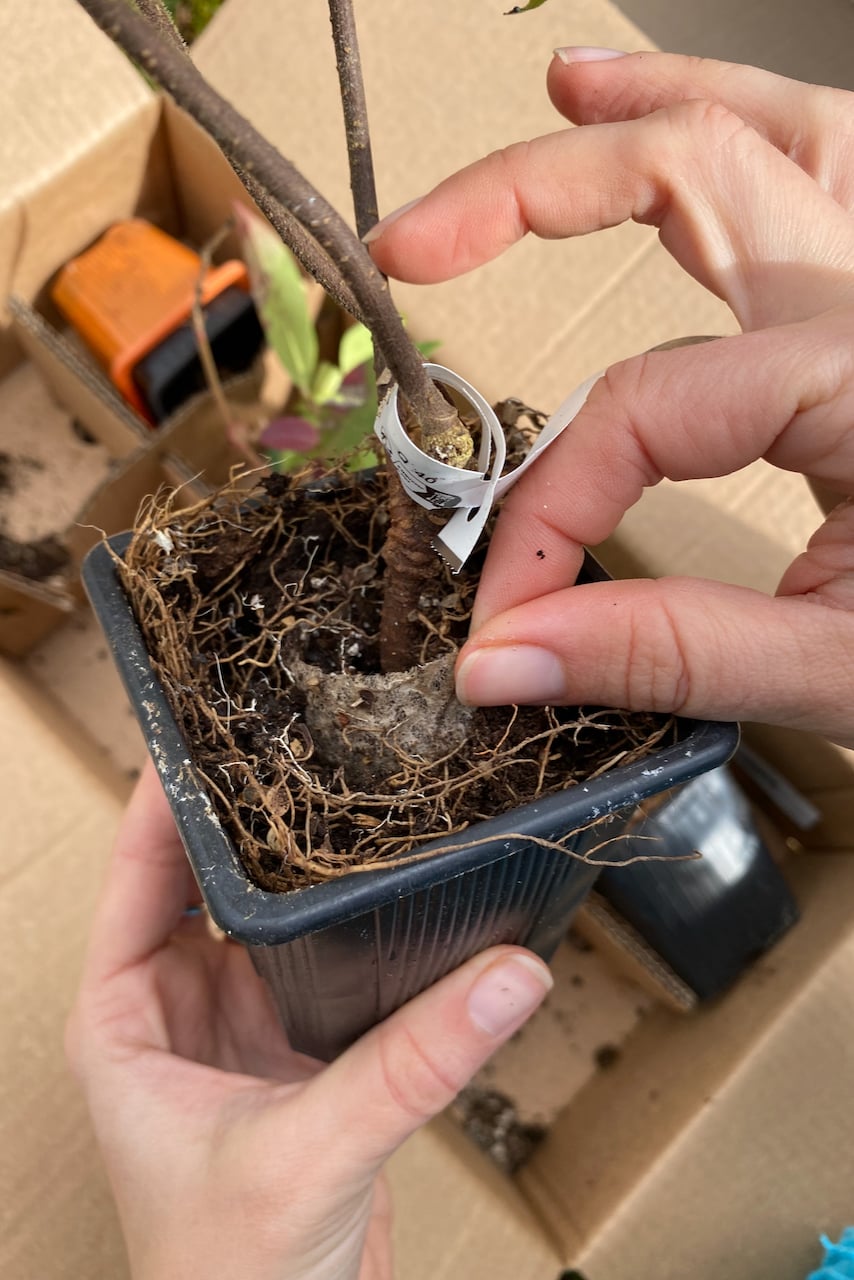
Do you see that little plastic wrapper around the roots? That’s the mesh.
Root mesh serves a purpose for plant growers and sellers.
When perennials are propagated in the nursery, usually from the cuttings of mature plants, the root mesh helps regulate moisture around the baby roots. It also helps with constricting root growth, which means more of the plant’s energy goes to growing what’s above ground.
That’s what’s visible when we purchase the plants, after all, and that’s what will make money for the growers. (Nothing wrong with that, by the way. It’s a legitimate business model.)
The root mesh also makes it easier for growers – always in need of more space – to start with a small pot and upsize it as their plants grow. It’s also easier to combine several plants into a single arrangement (more on this below).
Then once the perennial get to the garden center, the plastic fabric wrapped around the roots also limits the plant’s growth and maintains moisture around the roots while the plant is on display.
So the root mesh does have its use. Unfortunately, not for us.
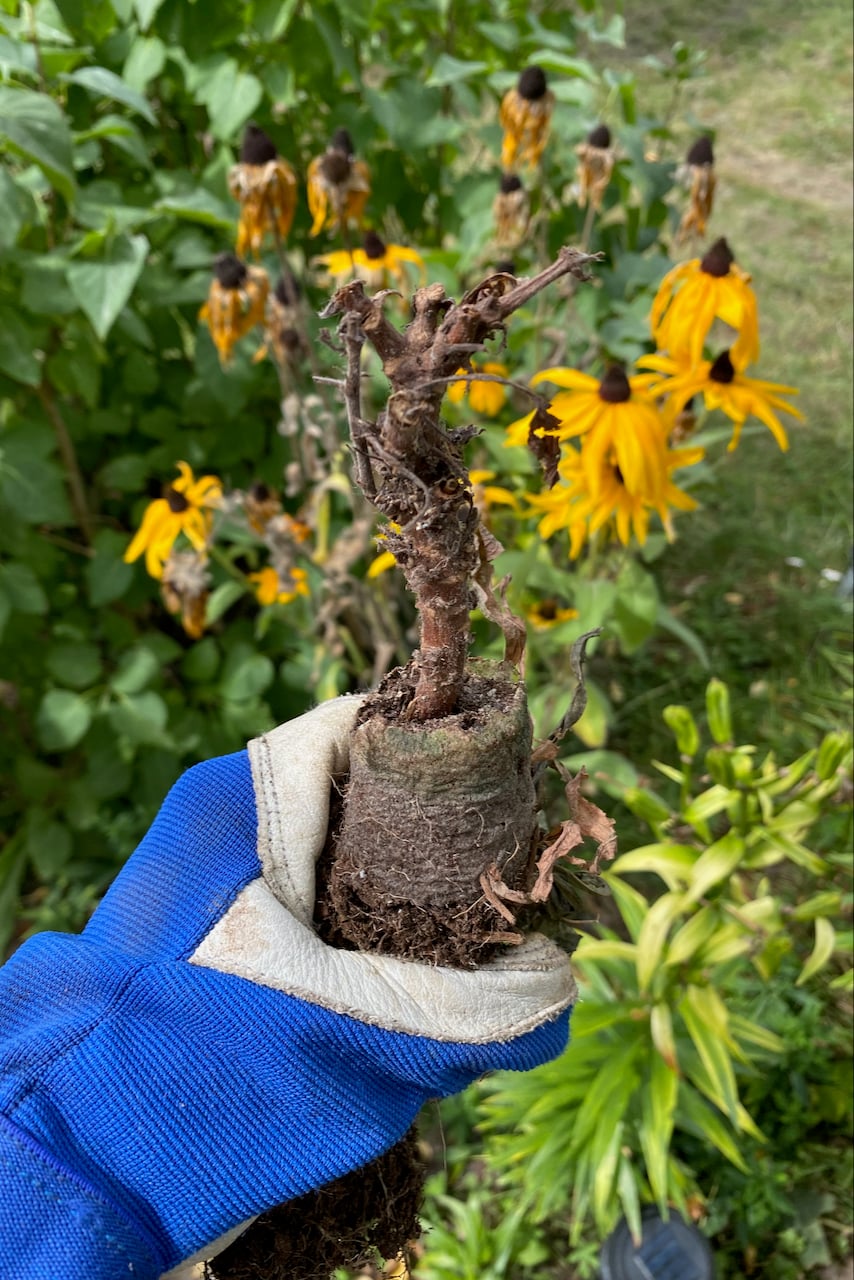
In my experience, as the perennials mature in our garden, the mesh interferes with root growth, but also with water absorption. As the roots grow more and more packed inside the mesh, they start circling and never really try to spread.
This, in turn, creates soil and root compaction, which interferes with water absorption. So no matter how much you water the plant, the water goes right through, without being absorbed by the roots.
So are you telling me I should avoid buying perennials with root meshes altogether?
Not at all. It’s becoming such a common sight that you wouldn’t have many choices left to buy.
What I’m saying is that we should plan for it. And by that I mean plan to remove it as soon as we’ve brought the plants home. Or at least before we plant them in the garden.
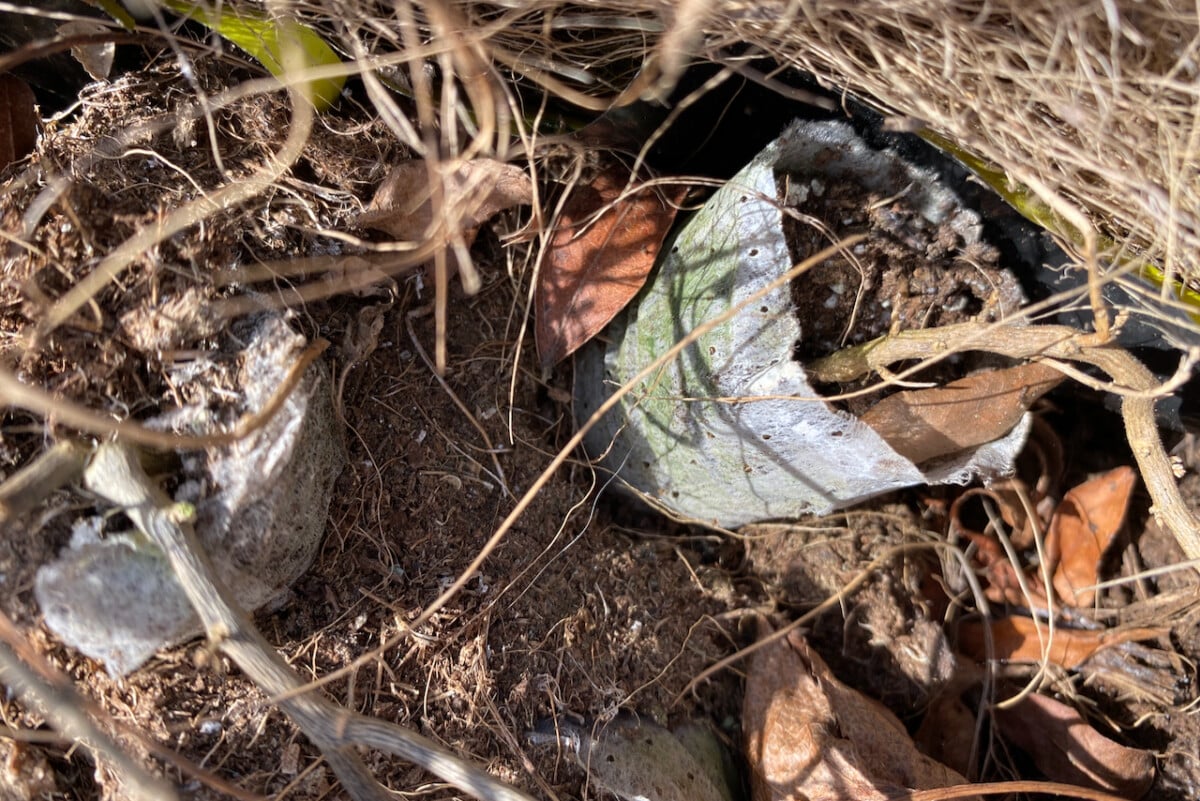
Be extra vigilant if you’re planting your perennials in containers. It’s happened to me multiple times to take out a plant that was struggling to grow in a container only to realize I had forgotten to check for root mesh. I’d say about seventy percent of the struggling perennials that I had planted in containers had the dreaded mesh wrapped around their roots on their deathbed.
4. Is the plant’s season almost over?
That’s not a bad thing, but we have to be aware of it.
I know we’re talking about perennials here, so how can the season be over since they’re … well … perennial. I mean their “season of interest.”
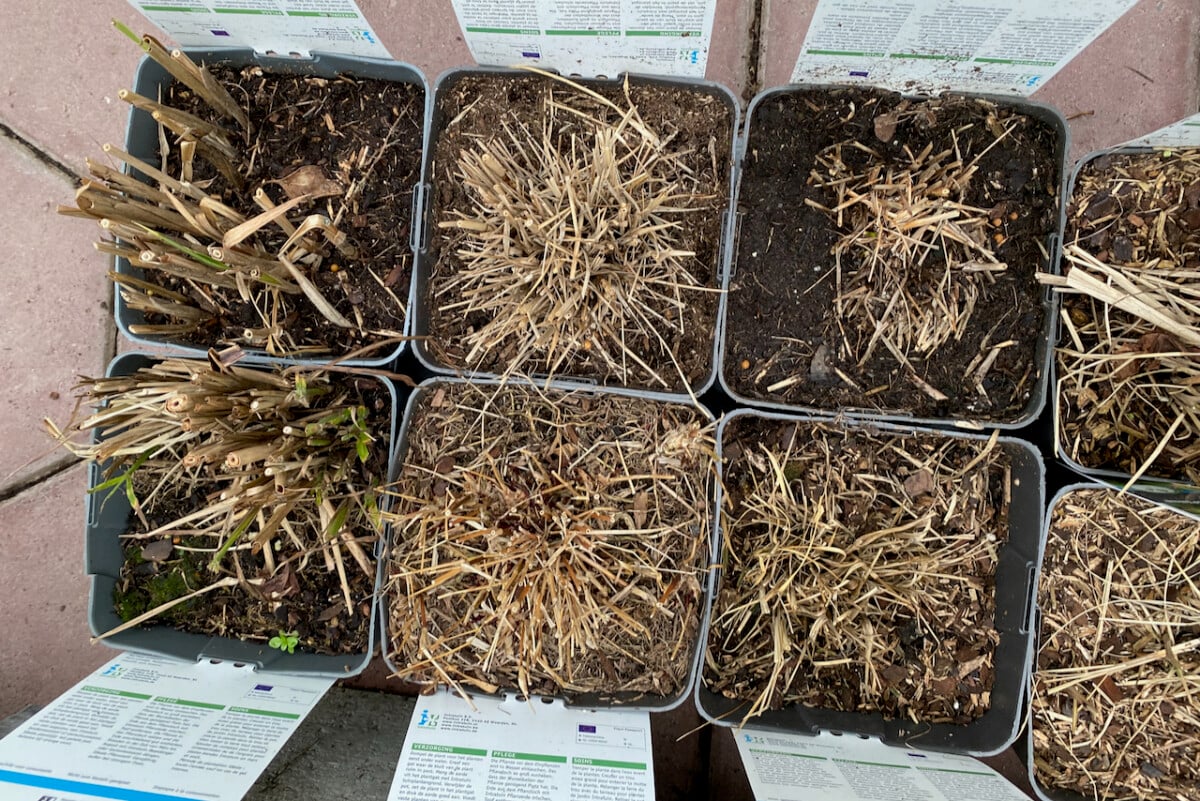
Sure, you might be missing out on a pretty display this year. That’s the downside. But a savvy gardener knows that buying perennials off season might turn out to be cheaper than buying them pre-season or in season.
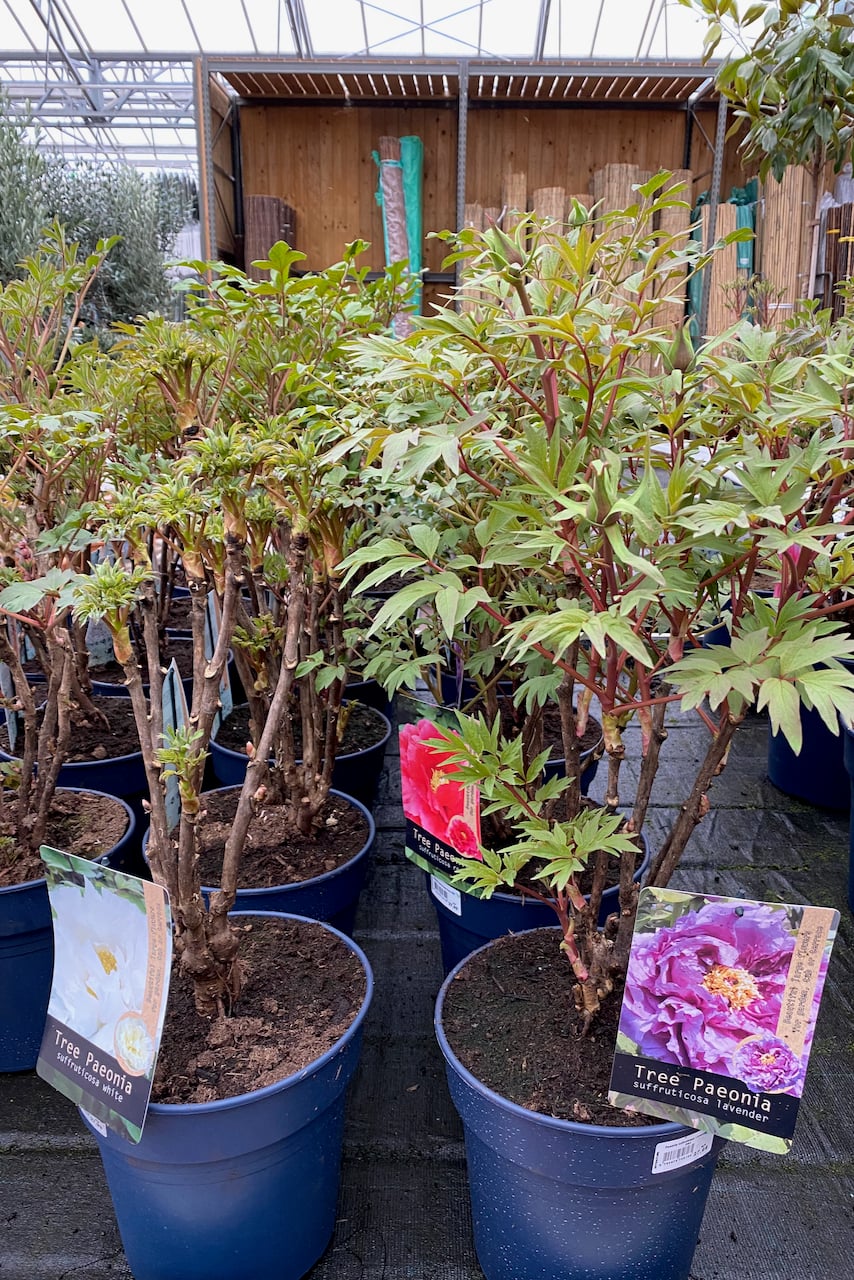
One of my best scores was buying a peony in the middle of summer. It was hanging on for dear life on a discount shelf. It had already bloomed in the store. And it was probably on the chopping board for the next shelf clean-up. Luckily, I found it first.
The downside is that I was missing a season of bloom by buying it this late. The upside is that the early blooms are not that rich anyway, AND I got a hefty discount.
By the way, here are my tips on how to plant peonies.
5. Are you buying a mixed container?
There’s nothing wrong with buying a potted plant arrangement. I’ve been tempted a few times myself. And I totally understand why they’re becoming more popular. The choice has often been made for us; they’re pretty to look at, and they make an excellent centerpiece for a dinner party or a gift for the host.
But we have to know what we’re buying and adjust our expectations and our plans accordingly.
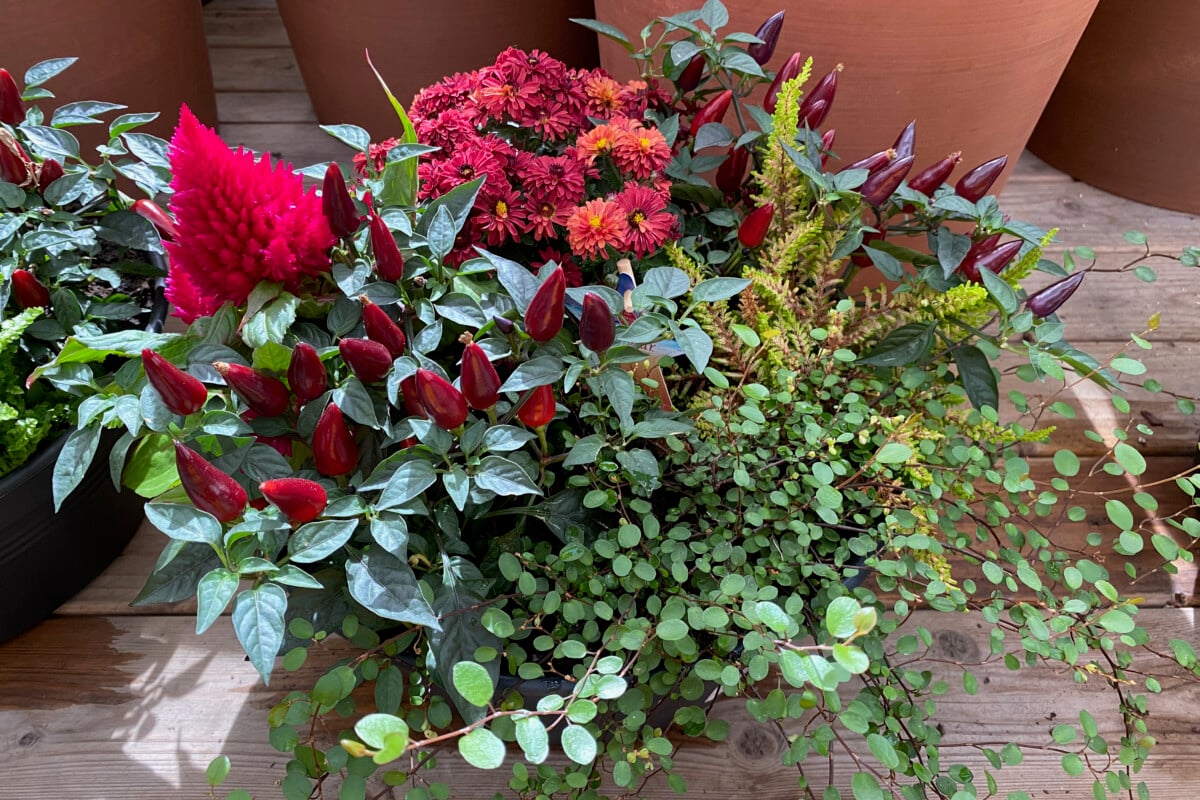
Look at this one below. I took this photo at the garden center in September.
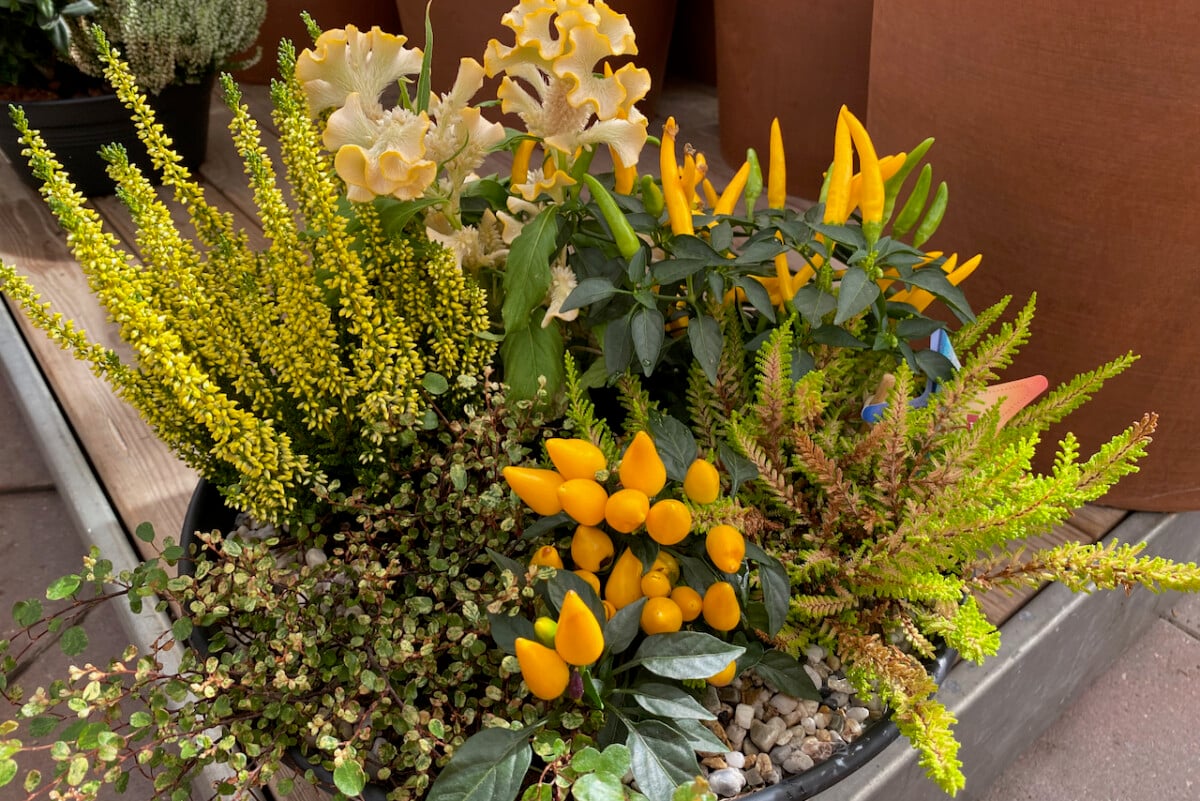
It looks gorgeous and I’m a big fan of color-themed arrangements. Here’s what we have here, starting from the top and going clockwise:
- a mature celosia plant (the one at the top; it looks a bit like a rooster’s comb) – an annual, loves heat, will die in the cold;
- an ornamental pepper (Capsicum) – an annual; loves sun and heat, will die in the cold;
- a fern – a perennial; hates sun and heat; needs shade; can overwinter;
- another ornamental pepper – same as the pepper above;
- a peperomia – a perennial, but sensitive to cold; better kept as a houseplant;
- a seastar yellow heather – a perennial; prefers the sun but needs moisture.
Can you see why this container would struggle?
We have so many plants with so many different requirements jammed into a single space. It would look nice for about a month. But eventually we’d have to take it apart, discard the dead annuals and re-plant the perennials in the appropriate spot depending on their light and moisture needs.
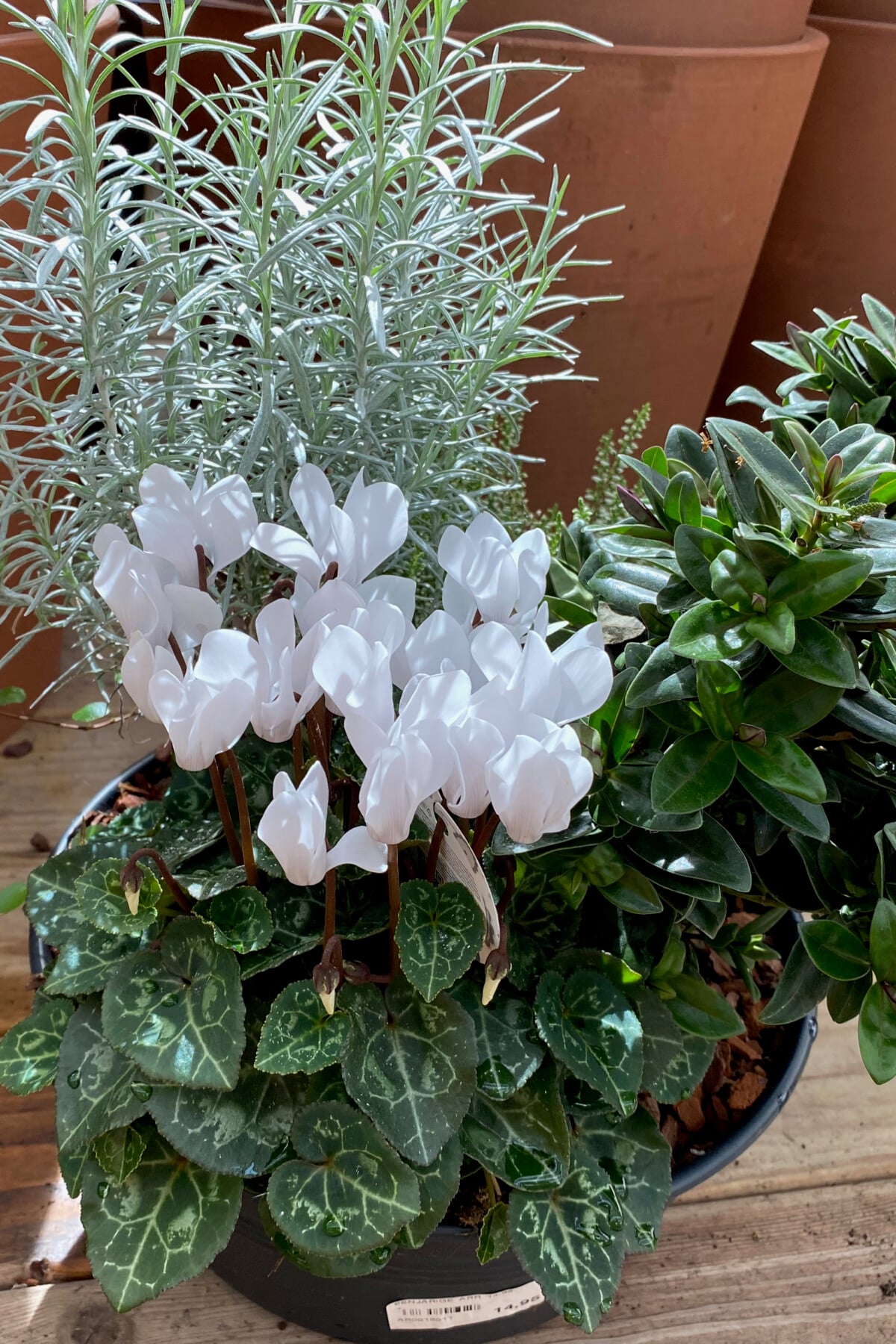
What I would do instead is plant my own container and match plants with better-suited needs. If you want a jolt of inspiration, have a look at this article I wrote. I collected twenty plant combinations for stunning container displays for every season. And I added photos too. (Invaluable for visual learners.)
Ok, class dismissed. I hope you learned a few things about buying perennials. It’s been nice hanging out on this beautiful May afternoon.
Get the famous Rural Sprout newsletter delivered to your inbox.
Join the 50,000+ gardeners who get timely gardening tutorials, tips and tasks delivered direct to their inbox.