

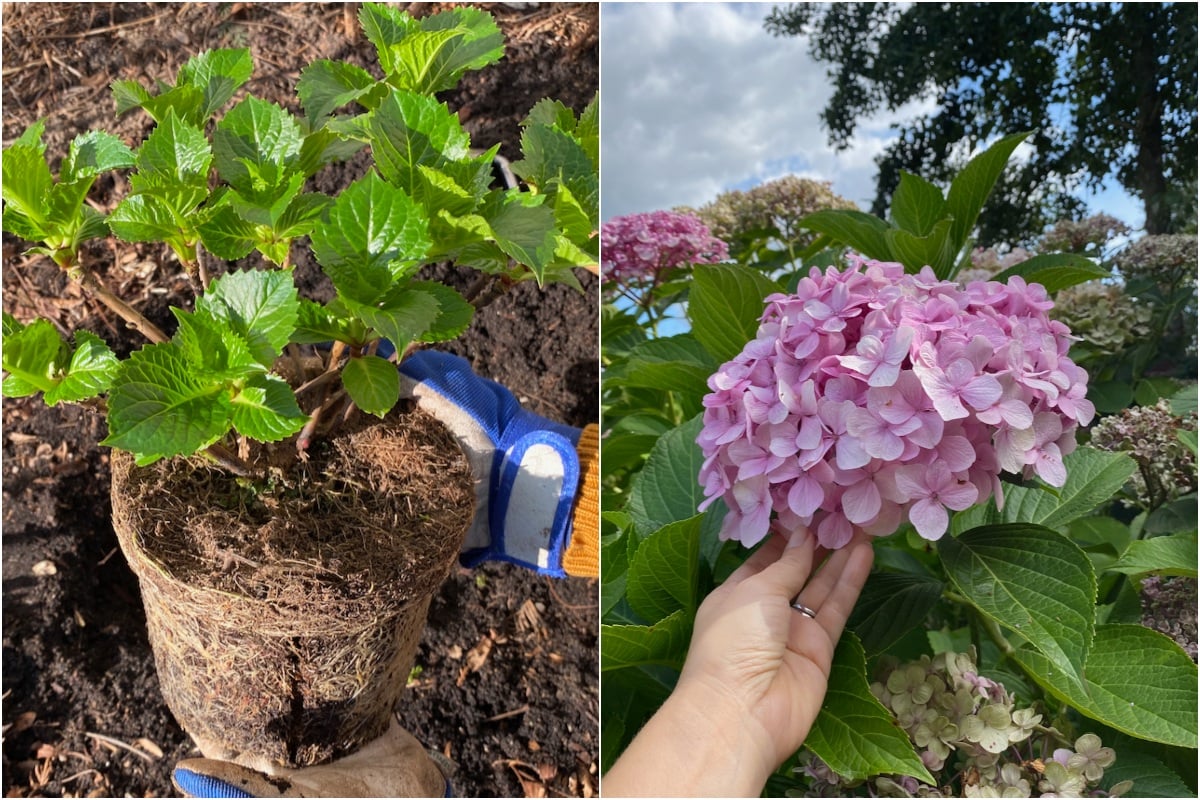
Hydrangeas have to be one of the most beloved and popular ornamental shrubs, don’t you think? You don’t even need to be a gardener to know a hydrangea when you see one.
I think hydrangeas are up there with roses and lilacs as one of the most recognizable perennials, even by people who don’t spend most of their waking hours consumed with the state of their shrubbery.
If you’re growing hydrangeas in your garden, or even just thinking about planting one for the first time, I’ve put together a little “must-know” list. We’re not just scratching the surface here, but setting you up for success and possibly even winning a trivia pub quiz if the topic happened to be “romantic oversized flowers.”
1. Hydrangea flower heads come in four shapes.
Let’s start with the beauty factor, since I assume none of us are growing hydrangeas for the foliage, right? (Ok, perhaps just the oakleaf group whose leaves undergo a stunning color transformation in the fall. But I’ll get to them later.)
If we go solely by the shape of the flower heads, we can classify hydrangeas into four groups.
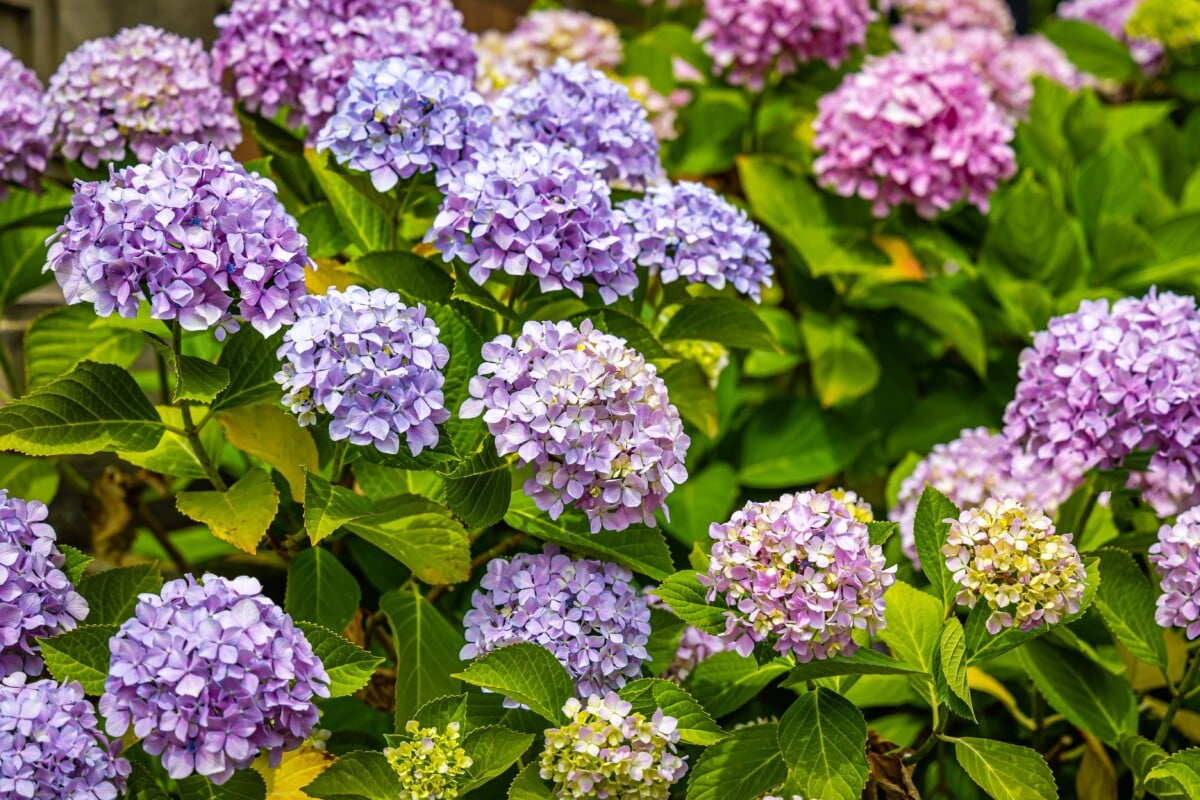
Mophead hydrangeas – These are arguably the most commonly found in gardens due to the popularity of the French hydrangea (Hydrangea macrophylla). The round flower heads look like fairground cotton candy and come in bright pink, purple or blue.
The book Marvelous Mopheads, written by Joan Harrison, is an excellent source of information and inspiration on the myriad mophead cultivars.
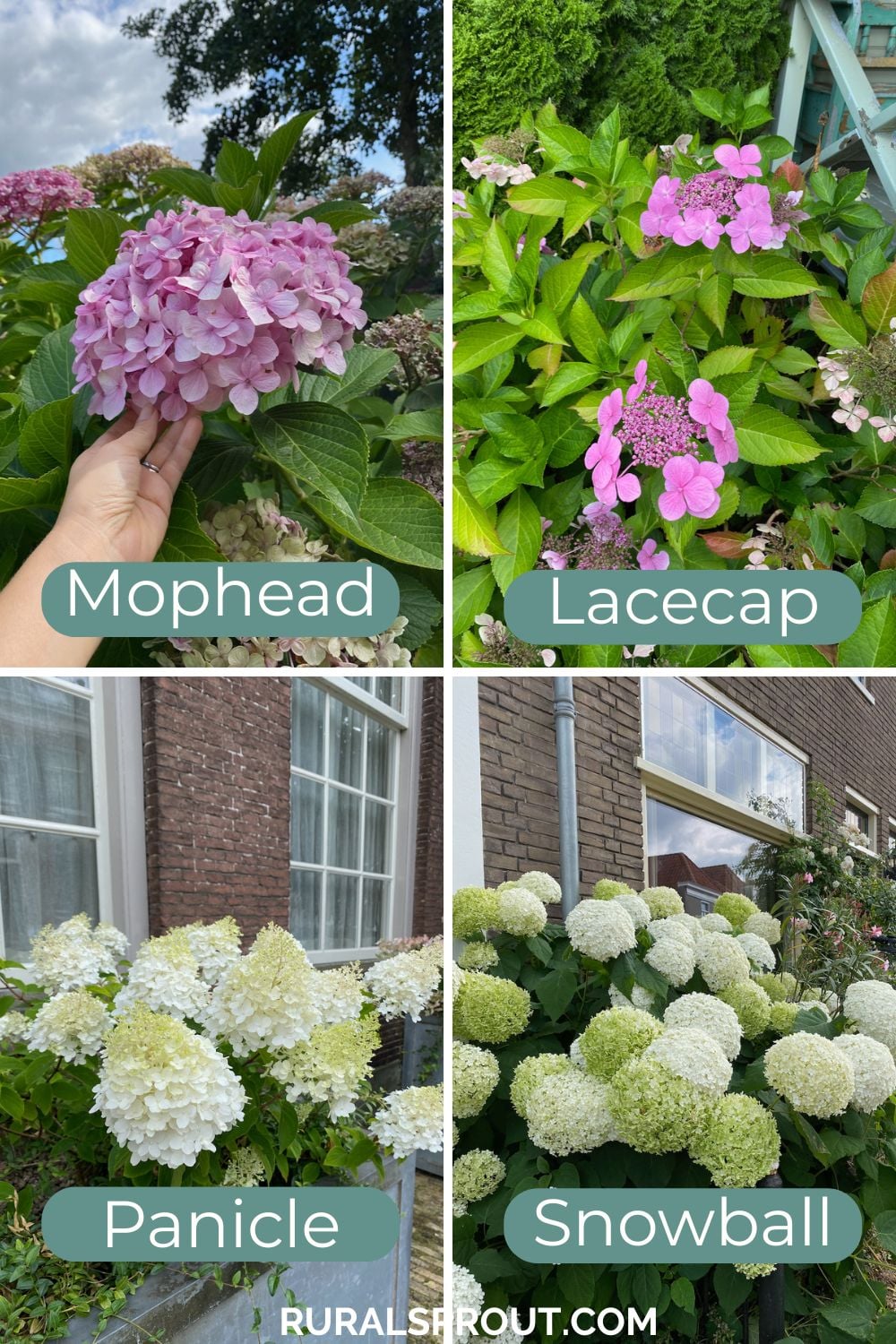
Lacecap hydrangeas – Their blooms are flatter than those of mopheads. The flower heads are not as symmetrical, as they consist of a combination of tiny fertile flowers towards the center of the flower head, surrounded by sterile showy flowers all around the margins.
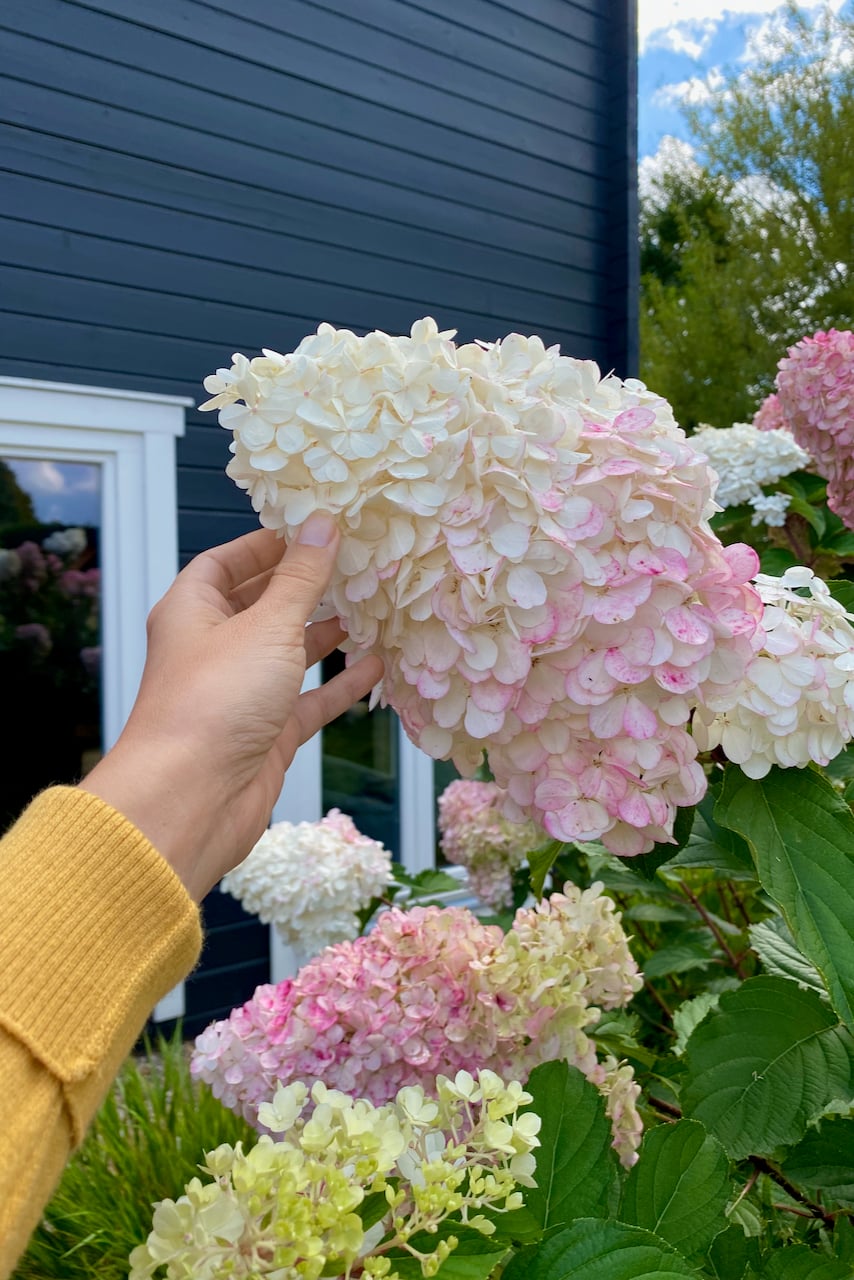
Panicle hydrangeas – These pointy hydrangeas are hard to miss. The classic Hydrangea paniculata are usually white (and won’t change color), but newer cultivars come in hues of pale pink, lime and peach. The flowers turn darker shades of red and burgundy as they reach the end of their blooming cycle in the fall.
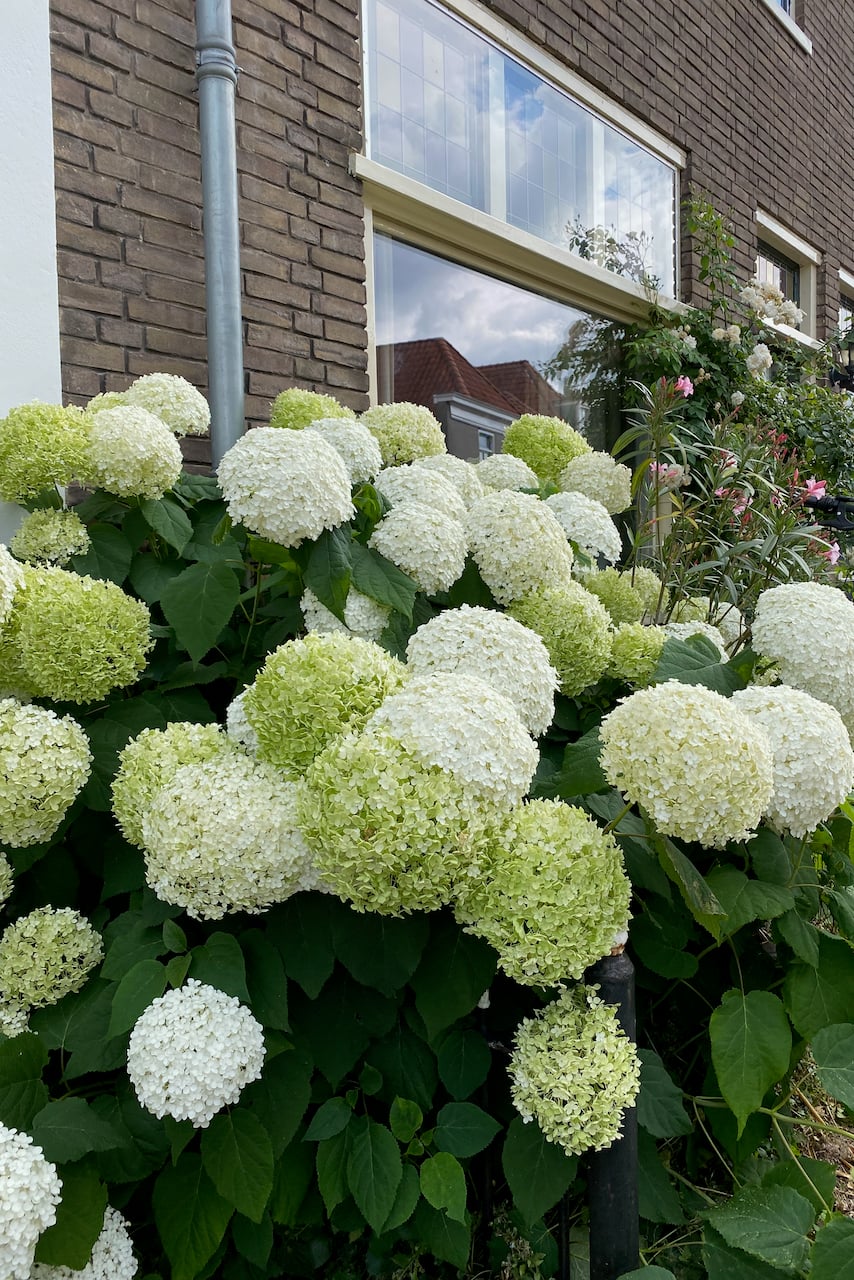
Snowball hydrangeas – This name often refers to smooth-leaf hydrangea (H. arborescens) and to the ‘Annabelle’ cultivar in particular. The flowers remain white throughout the growing season.
2. There are roughly seven groups of hydrangeas.
Go grab a notebook or your gardening journal. (You do have a gardening journal, right?) Things are about to get a bit more technical. It’s not because I want to throw Latin names at you, but because knowing what kind of hydrangea we’re growing will make all the difference when the time comes to prune it.
And if you’re more of a visual learner, I highly recommend the gorgeous book Hydrangeas: beautiful varieties for home and garden, written by Naomi Slade and photographed by Georgianna Lane.
If you can get your hands on any of the hardback coffee table books created by this duo, grab it and don’t look back. If not, ebook versions are always handy to take with us for reference when we go plant shopping.
In a nutshell, we can group hydrangeas into seven groups.
5 Old Wood Hydrangeas
French hydrangea (Hydrangea macrophylla) is also known as bigleaf hydrangea. It blooms on old wood. And the flowers can change color according to the pH of the soil (pink in alkaline soil, will turn blue in acidic soil). Most French hydrangeas are mopheads, although there are some lacecap cultivars.
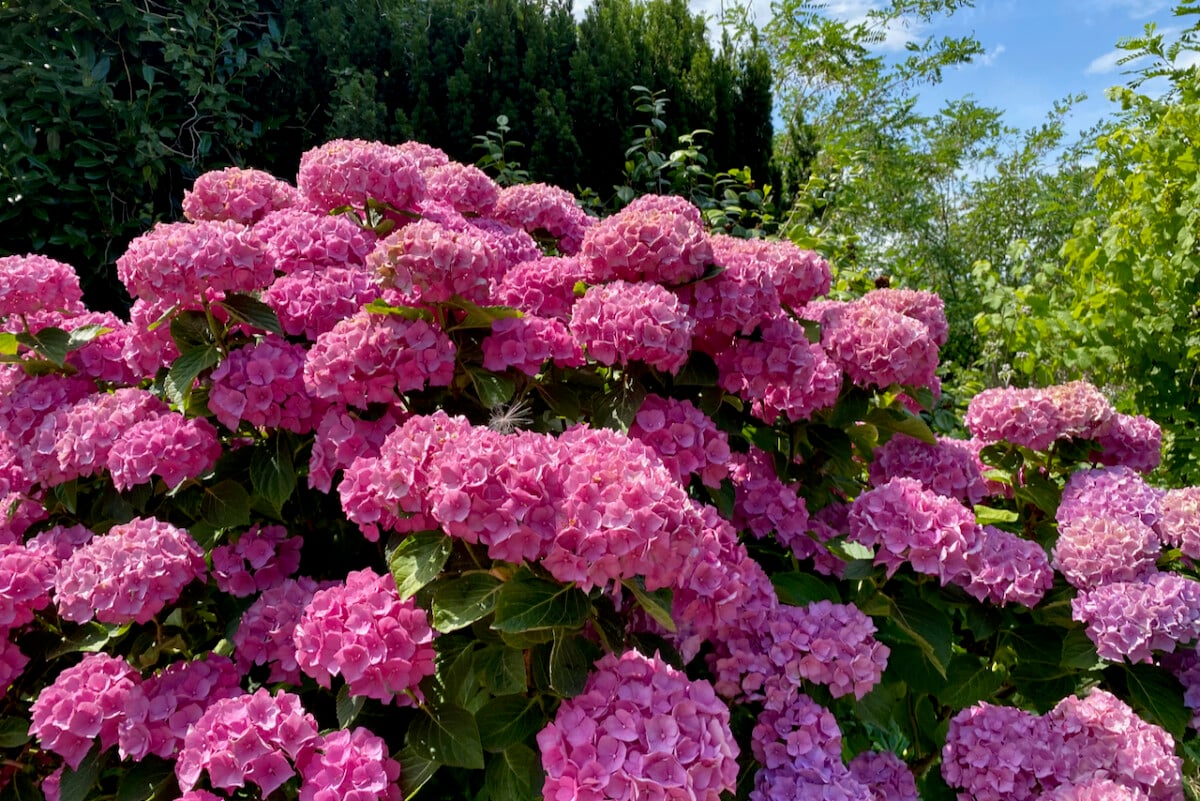
Mountain hydrangea (H. serrata) has lacecap flowers that bloom on old wood in shades of pink, blue or purple. They are the only other type of hydrangea that can change color in reaction to the acidity of the soil.
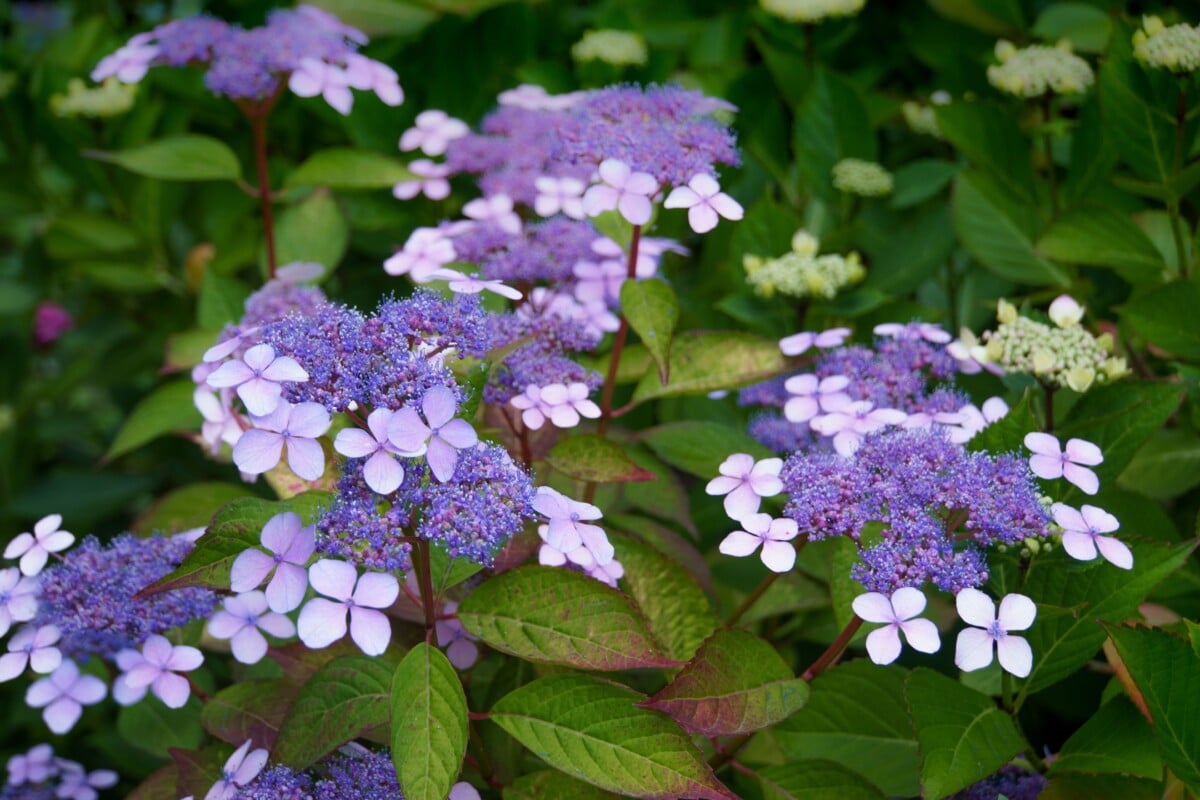
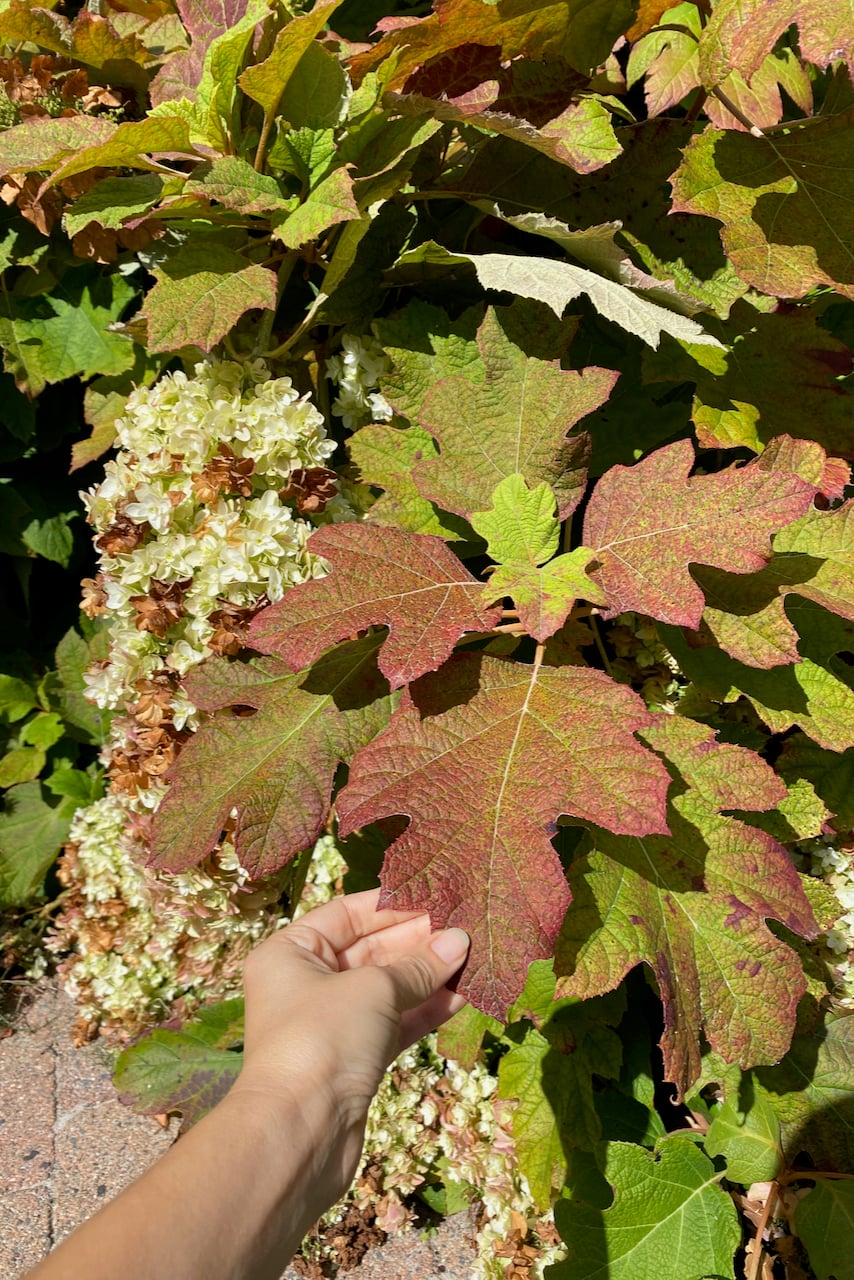
Oak-leaf hydrangea (H. quercifolia) is easily recognizable by the shape of its leaves. And if you can’t tell what the big deal is, just wait until you see it in the fall. It adds spectacular color to the garden when temperatures drop at the end of summer. The white cone-shaped flowers (that bloom on old wood) will usually age into shades of dusty pink, rusty orange and burgundy.
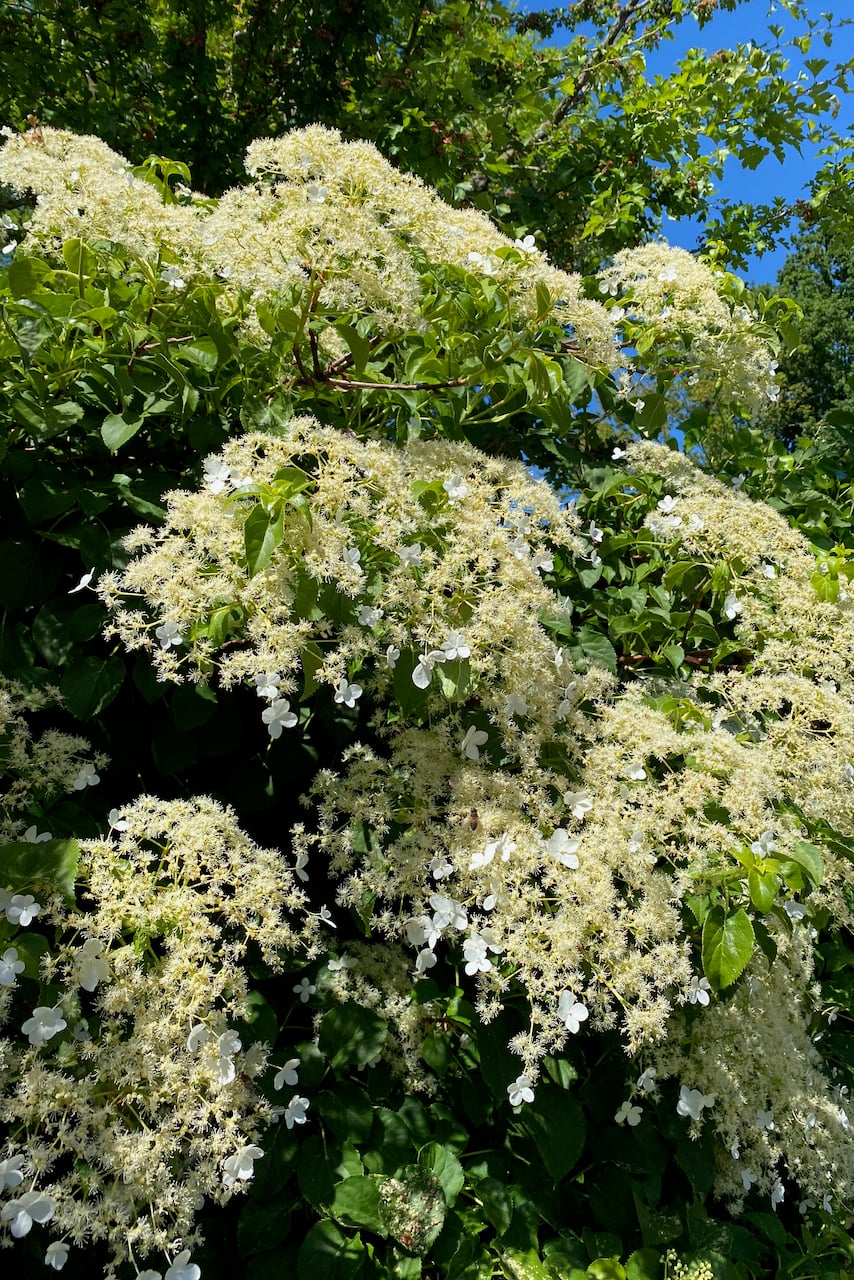
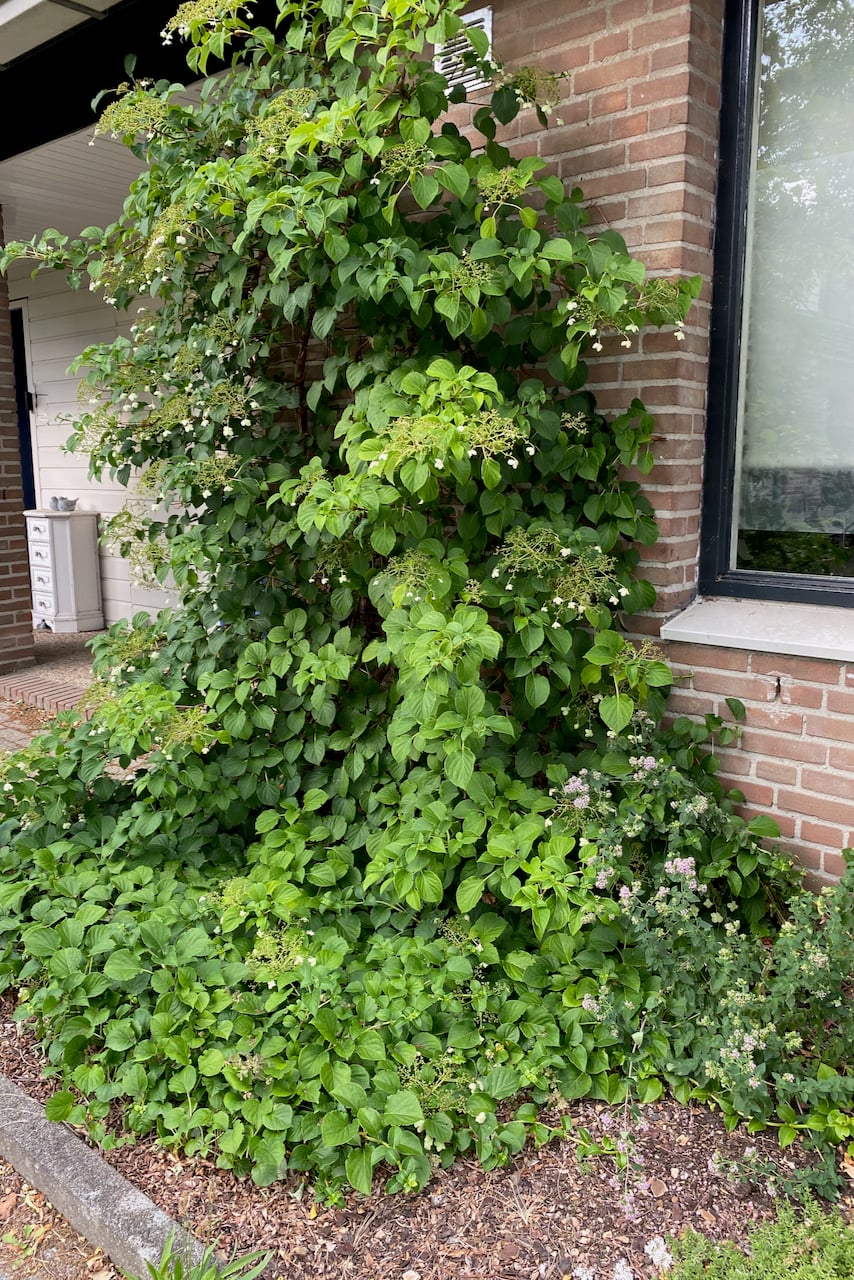
Climbing hydrangea (H. petiolaris) is the only hydrangea that grows as a vine, but its tendrils are not destructive to walls or fences. They glue to surfaces, rather than digging into them. It’s still a good idea to give it a sturdy trellis or supports to climb on. The lacecap flowers are white and bloom early in the season, usually in May. The buds form the previous year, so this is another old wood bloomer.
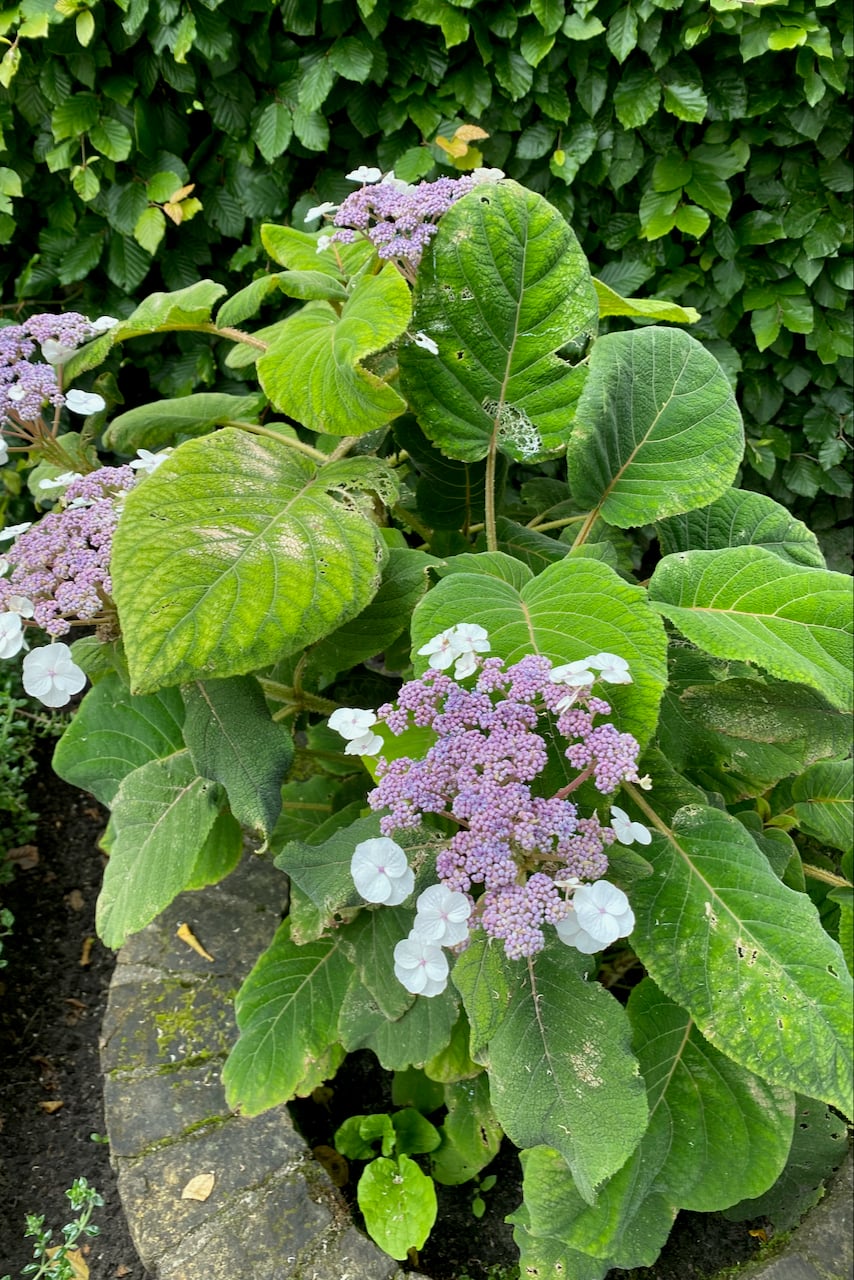
Rough-leaf hydrangea (H. aspera) has leaves similar to those of bigleaf hydrangea in size and appearance. However, the leaf texture is velvety. The lacecap flowers bloom on old wood in shades of white, pale pink or pale purple. In their native India, Nepal and southern China, rough-leaf hydrangeas grow at higher altitudes.
+ 2 New Wood Hydrangeas
Smooth-leaf hydrangea (H. arborescens) flowers are white pom-poms that bloom on new wood from June to September. This type of hydrangea is native to eastern North America.
Panicle hydrangea (H. paniculata) – you’ll recognize it by its cone-shaped flowers. It is the only other type of hydrangea that blooms on new wood. It is cold hardy and will also flourish in sunny sites.
3. Not all hydrangeas have the same pruning schedule.
Time for me to make good on my previous statement and prove that knowing the type of hydrangea you’re growing pays off.
If you’re growing one of the first five groups I mentioned above, know that they bloom on old wood. Meaning this year’s flowers have already formed on the plant last year. So there’s no need to prune them this spring, and doing so will risk removing this year’s flowers.
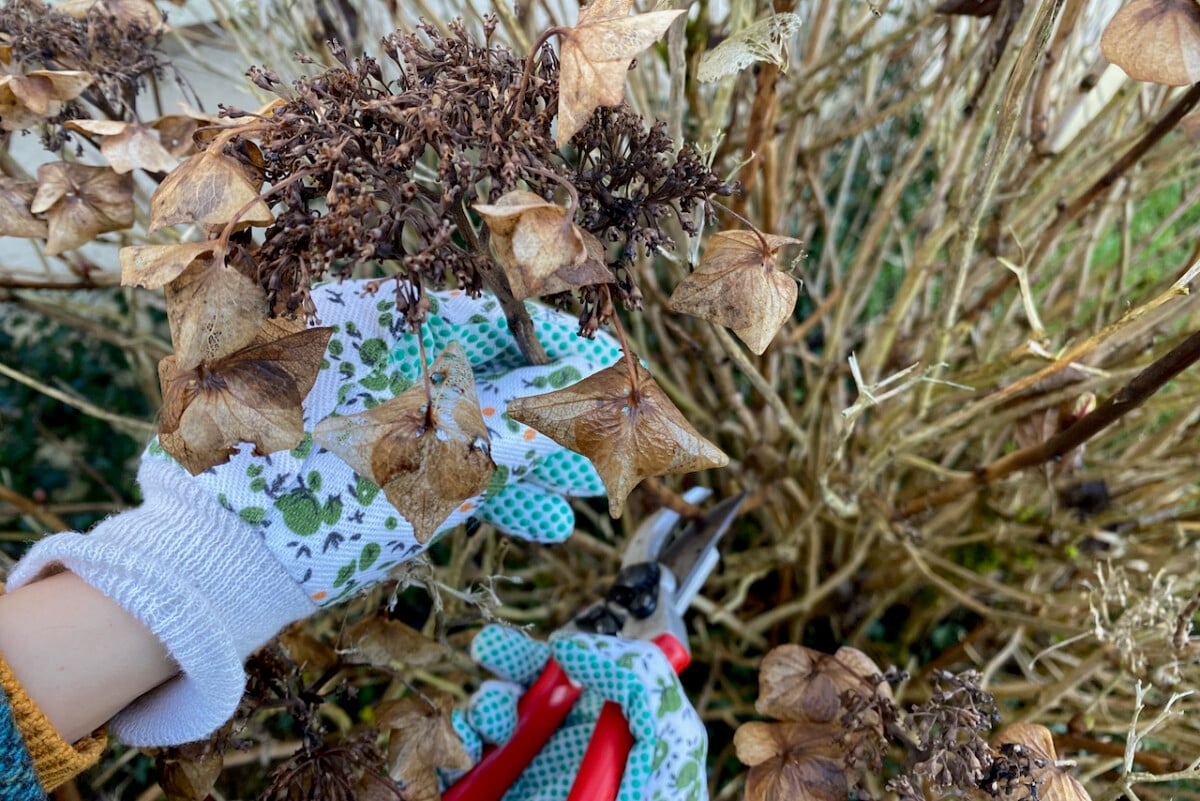
We can just tidy up old wood hydrangeas by deadheading them as the new shoots start to emerge. Here’s an in-depth tutorial on how to do it.
Then we’ll only prune them (if needed) after they’ve bloomed this year. Old wood hydrangeas rarely ever need hard pruning. They generally only need a light prune to keep them in shape.
If, on the other hand, you’re growing the last two types on the list (smooth-leaf and panicle hydrangeas), you’ll have to prune them hard in late winter or early spring. Both types bloom on new wood, so this year’s buds haven’t formed yet.

For all types of hydrangea, cutting right above a bud at a forty-five-degree angle is the best way to prune them.
4. These three hydrangeas grow best in the shade.
There’s a hydrangea for even the shadiest corner of your garden. If you have a north-facing wall, plant a climbing hydrangea along it and let it do its magic. It will be slow to get established, but once it does, it’s incredibly long-lived.
If you want a more shrub-like growth pattern, two other hydrangea will do well in the shade: oakleaf hydrangea and mountain hydrangea.
In general, hydrangeas prefer morning sun and afternoon shade. For some popular groups, such as the French hydrangea, getting the right sun balance can make a huge difference in the number of blooms it produces. More sun equals more blooms, but only up to a point.
Keep in mind that hydrangeas will never be full sun plants.
They will tolerate more sun in cooler climates, as long as they get enough water. Full sun will scorch the leaves and give the blooms a droopy appearance.
Out of all the groups, panicle hydrangeas prefer more sun.
5. Some hydrangeas will rebloom.
Before we get all giddy about endless waves of hydrangea blooms, please know that re-blooming ones are a relatively new development (mid-90s to early 2000s). I dove deeper into how plant breeders made the discovery in this article.
Here are some of the cultivar names to look for. These hydrangeas bloom once on old wood, followed by pruning and a second bloom on new wood. They’re the best of both worlds, but they come with some caveats.
Endless Summer – the original reblooming series that has now reached six cultivars;
BloomStruck (sold as BloomStar in Europe) – a heat-tolerant hydrangea with colorful stems;
Blushing Bride – a white, pink or blue mophead hydrangea;
Pop Star – the quickest macrophylla to rebloom;
Let’s Dance – a series sold by Proven Winners in several cultivars, all with musical names such as Rave, Arriba! and Big Band;
Twist-N-Shout – pink or blue large lacecaps;
Summer Crush – a smaller and more compact mophead hydrangea;
Cherry-Go-Round – a compact cherry-red hydrangea suitable for containers;
Alternatively, look for the words “remontant” or “repeat-bloomer” in their description before you buy them.
In the article I mentioned above (here’s the link again), I added a list of where you can buy reblooming hydrangeas. Keep in mind that these are all patented cultivars and they’re sold by licensed resellers. They’re usually pricier than single-bloom hydrangeas, and it may take up to three years for them to get established and get on a reliable reblooming schedule.
6. Avoid buying “gift hydrangeas” for the garden.
Speaking of novelty hydrangeas, I’ll end this article with a word of warning. Do not be tempted into buying a “gift hydrangea” if you want to plant it in the garden.
Gift hydrangea (also known as florist’s hydrangea, Mother’s Day hydrangea, Easter hydrangea or grocery store hydrangea) is the foil-wrapped, pot-planted version of a cut flower bouquet. At grocery stores around me, they start appearing on shelves in March. In full bloom.
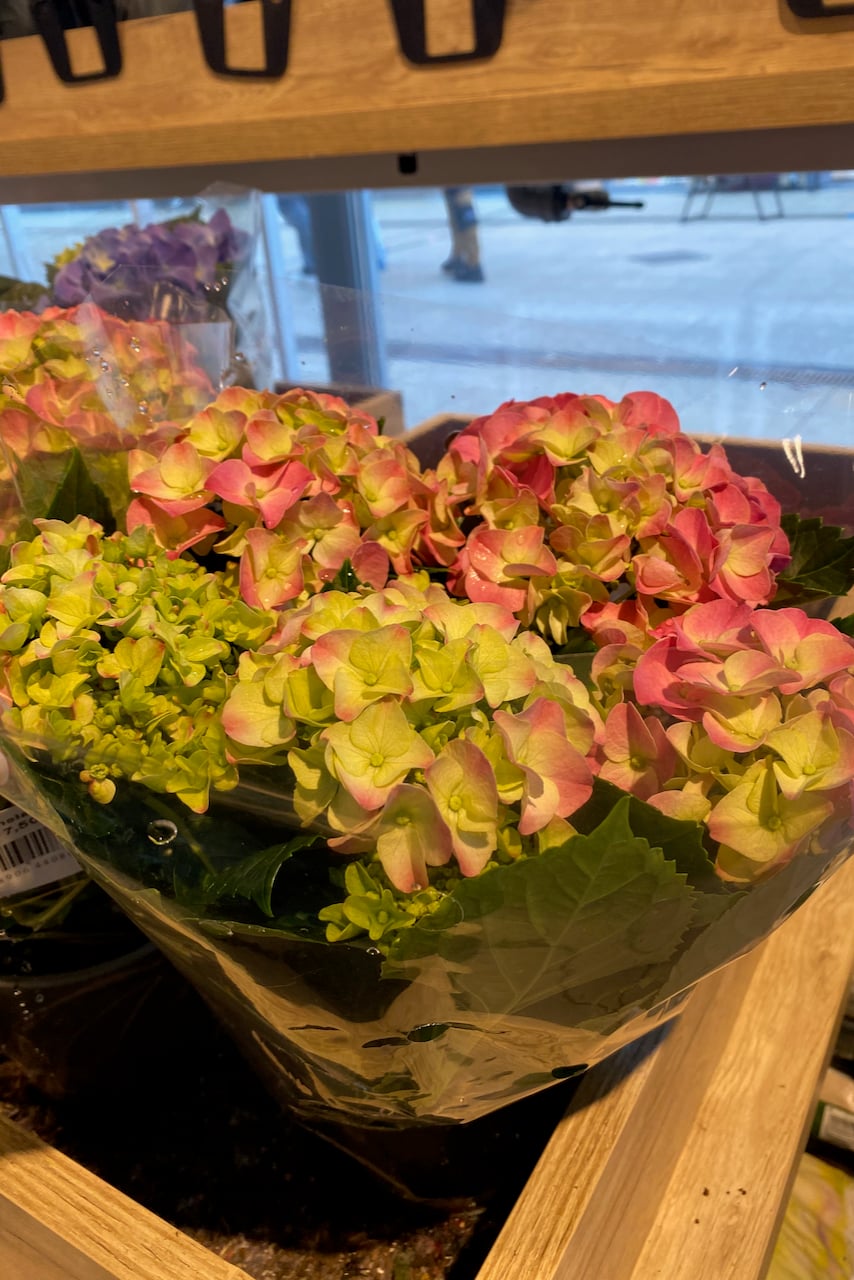
Do hydrangeas really bloom in March? No, these are forced to bloom in March. And October. And sometimes even December.
How? They are grown in a heated, temperature-controlled greenhouse while being heavily fertilized and selectively pruned.
Gift hydrangeas have been bred specifically to have a single show-stopping blooming period, and they’re putting all their energy into it. But since all natural processes have been artificially manipulated in order to present us with a ready-to-gift plant, it’s almost a guarantee that it will not live long enough to adapt to our garden. It will make a very pretty centerpiece, though.
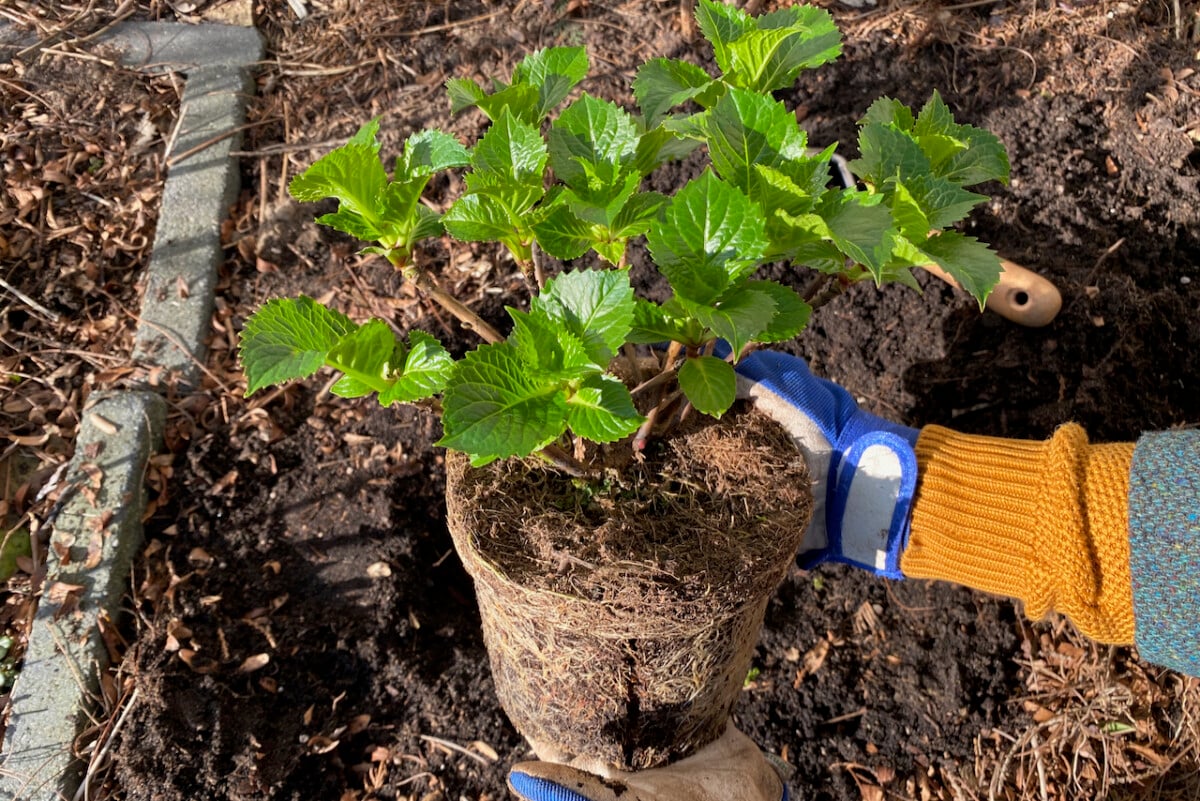
If you’ve received a gift hydrangea or bought one yourself, thinking you’ve found a shortcut for the garden, all’s not lost. Have a look at this article for my best advice on how to (possibly … hopefully) plan its transition to the garden. Or at least not have it succumb to the compost bin in a couple of months.
If you want to plant a hydrangea in your garden, buy one that’s specifically meant for planting outdoors. Here’s an easy tutorial (+ the magic dust I use) to make sure you get your hydrangea off to a good start.
Get Garden Notes From Tracey, Right to Your Inbox
Pull up a chair on the front porch. Join 54,000+ gardeners who get Tracey\'s friendly notes, seasonal to-dos, and hands-on tutorials three times a week.