

Hydrangeas are such precious plants to me. And even though they’ve proven to be a resilient shrub in every garden I’ve ever tended to, I still get an unexpected pang of anxiety when winter is around the corner.
Should I be doing anything to prepare my hydrangeas for the winter?
If you feel the same, I’m hoping to reassure you with this article. We’ll go through a few do’s and don’ts of hydrangea winter care that will ensure this beloved shrub makes it through the cold months unscathed.
1. Most hydrangeas are winter-hardy in most gardening zones.
Are hydrangeas winter-hardy?
How long is a piece of string, you ask?
The answer is, predictably, it depends. I would say that most hydrangeas are winter-hardy in most growing zones. However, there are a few factors that will influence how well these shrubs fare in the cold months:
- the age of the hydrangea and how established it is. A newly planted hydrangea will be more vulnerable to cold. Here’s an easy tutorial (+ the magic dust I use) to give my hydrangea a good start in my garden when I plant it.
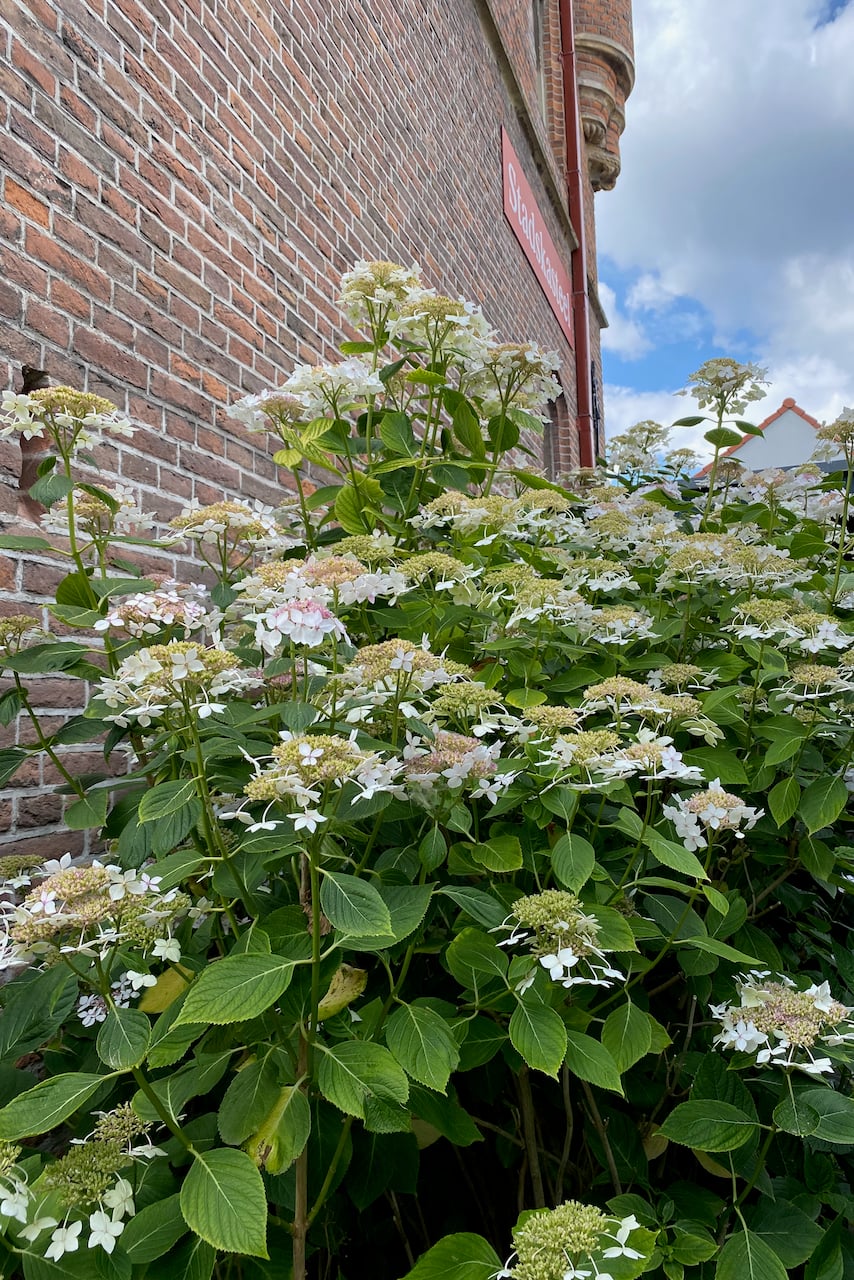
- the shrub’s location in your garden. A sheltered position will protect it better than being planted in the middle of the lawn exposed to the elements. Being protected by a windbreak, such as the house, a hedge or a shed, will help create a better microclimate.
- whether the hydrangea has already been experiencing stress. With water-loving plants such as hydrangeas, stress is common after hot and dry summers.
Are some hydrangeas more resilient in the winter than others?
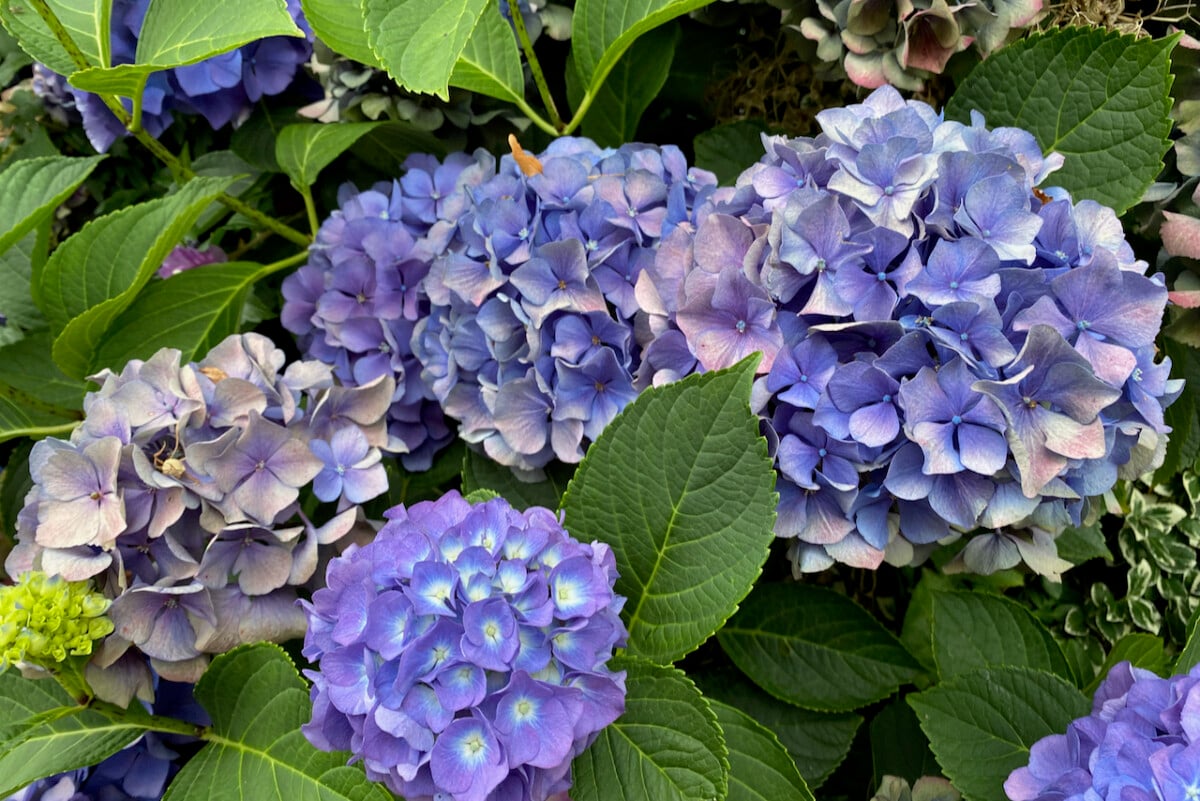
Hydrangeas that bloom on old wood, such as bigleaf hydrangea (Hydrangea macrophylla), oak-leaf hydrangea (H. quercifolia) and mountain hydrangea (H. serrata) have a sturdy and resilient root structure. So they can withstand temperatures as low as -10F (about -23C)
Hydrangeas that bloom on new wood, such as panicle hydrangeas (H. paniculata) are equally resilient, but they have an extra advantage.
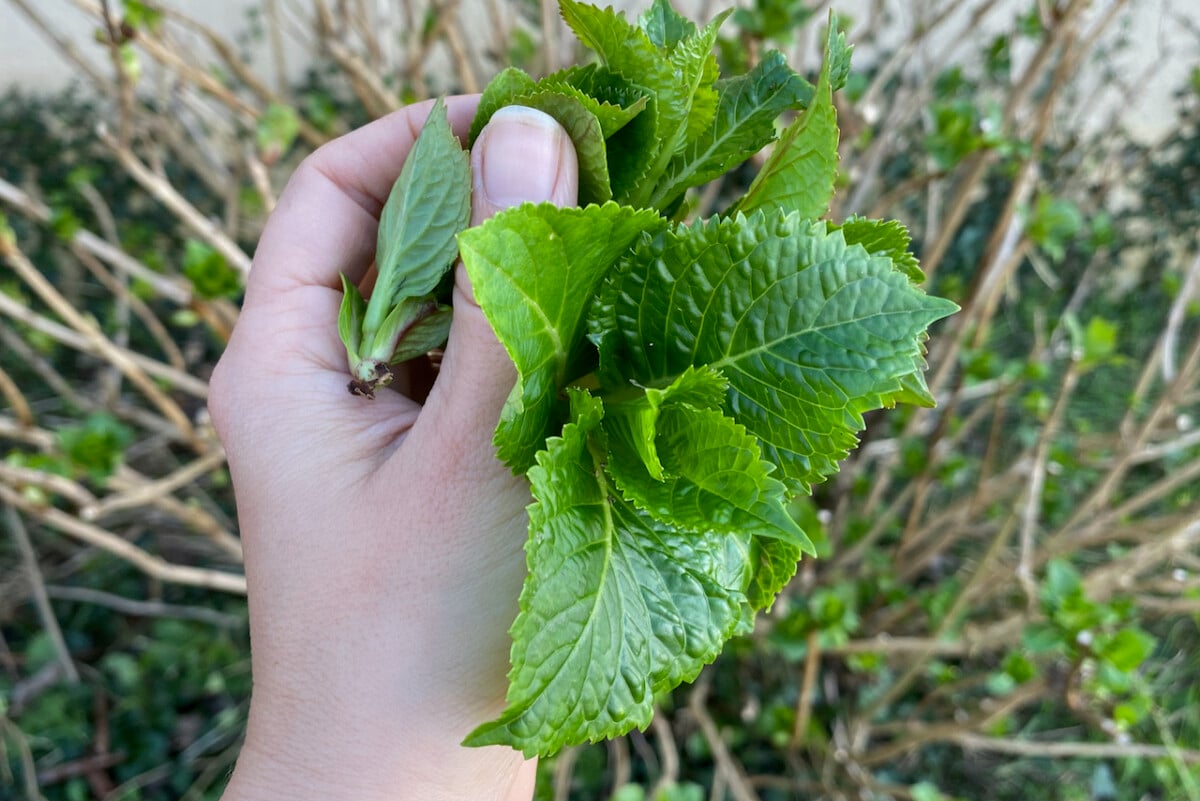
In my experience, the main risk factor in hydrangea winter resilience is the buds that form on old-wood hydrangeas.
So while the whole plant might not die from the root up, it might shed some young buds when a deep freeze hits.
This is more likely to happen at the end of winter, when the buds have already plumped up in anticipation of opening and an unexpected late freeze hits. It won’t harm the plant, but it will severely diminish the flowering for that year.
Planting a new-wood hydrangea would be the best way to mitigate this risk. Panicle hydrangeas and smooth-leaf hydrangeas (Hydrangea arborescens) are the two most popular new-wood hydrangeas.
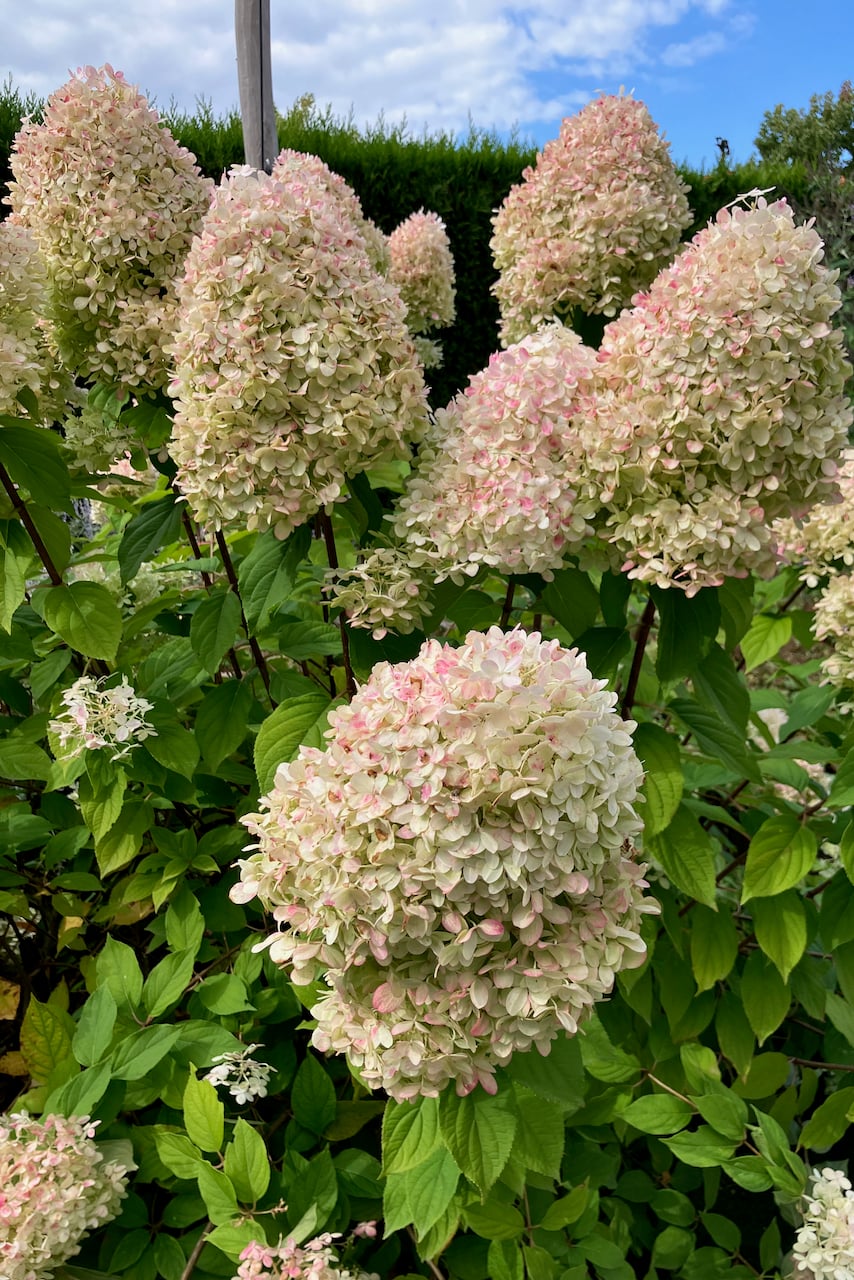
But even so, the popular French hydrangeas which bloom on old wood would still fare well through a cold winter if they’re planted in a sheltered location. Even if the stems are damaged, the plant will still recover. We can remove the damaged canes in spring.
2. Absolutely do not prune hydrangeas before winter.
Should we prune our hydrangeas before winter?
This is a question we get asked every fall. The answer is still no!
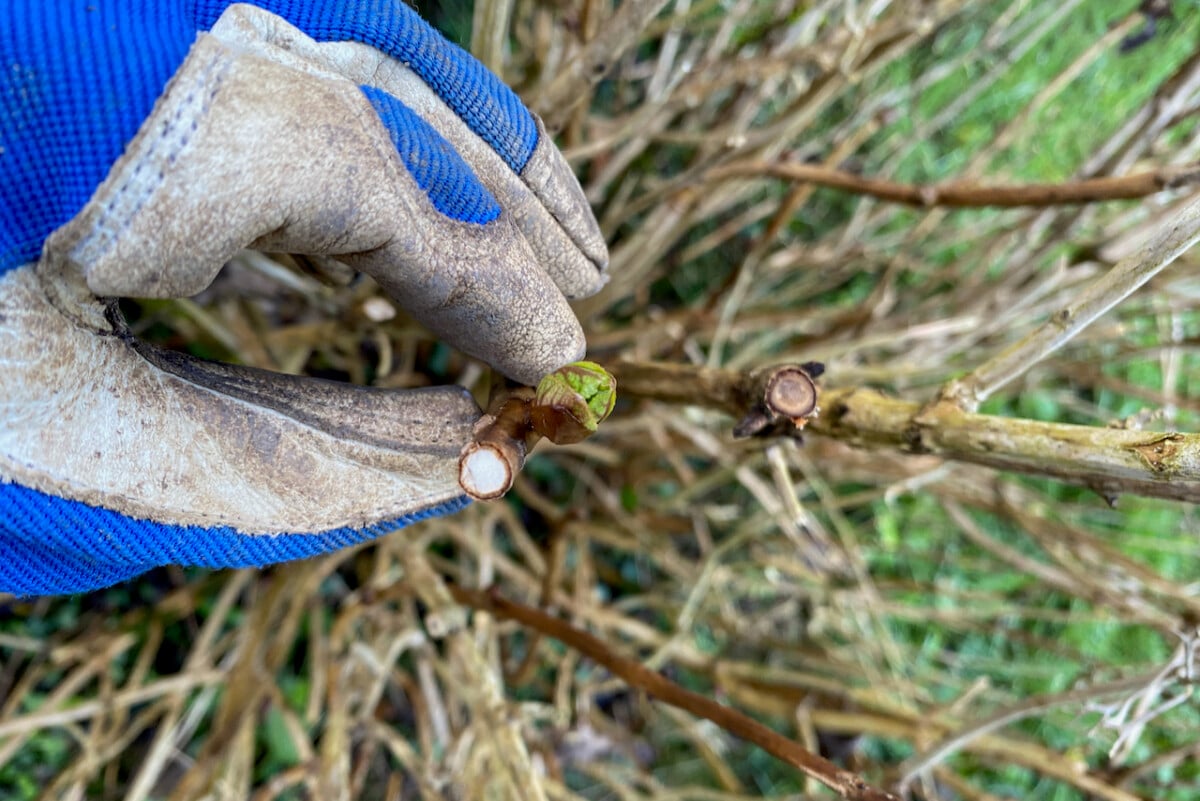
Cutting into the wood right before the cold months would leave our shrubs susceptible to cold, freeze and excessive moisture right when they go into dormancy.
Don’t even think of deadheading them either. The spent flower heads act as a little extra protection for the plant and the crown underneath. Some of them even add their charm to the winter garden, shining in the low sun covered in winter frost glitter. Have a look at my climbing hydrangea laced in diamonds below.
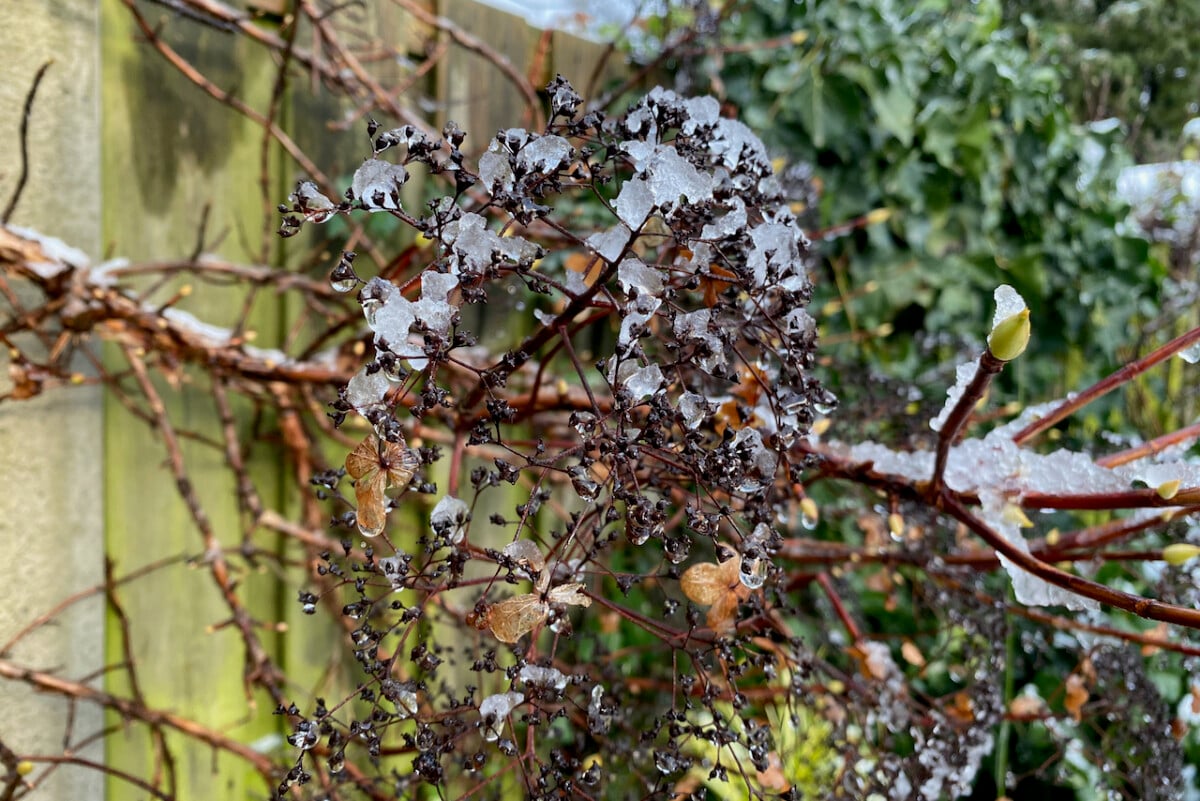
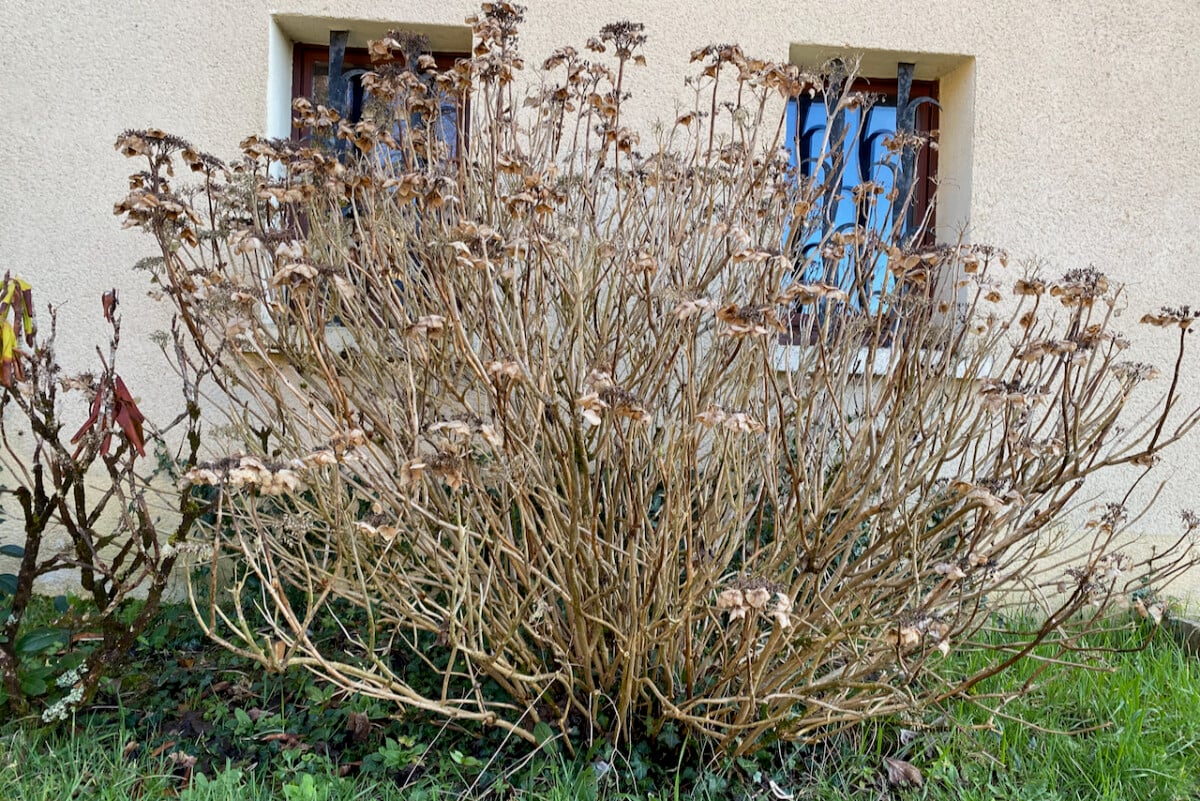
My mophead French hydrangeas, on the other hand, look like they’ve given up the ghost. And maybe the ghost of Christmas future too. But they’ll be perfectly fine next spring. What’s important at this point in the year is the health of the plant, not the looks.
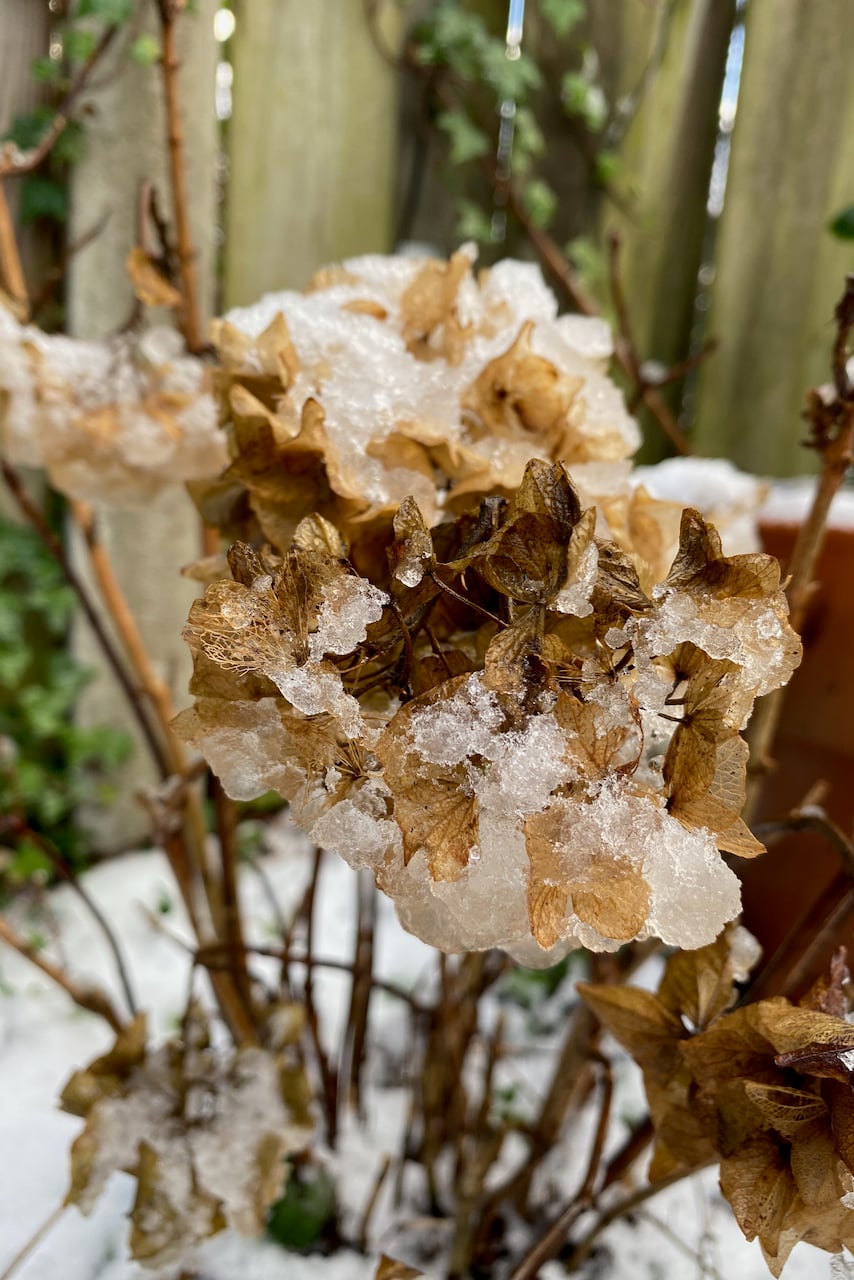
When are we supposed to prune hydrangeas then?
I’ve written a much more extensive guide on when and how to prune hydrangeas, depending on what type you’re growing. So have a look here when you have the time. You might want to click on the link and bookmark it or save it to Pinterest for easy reference in spring.
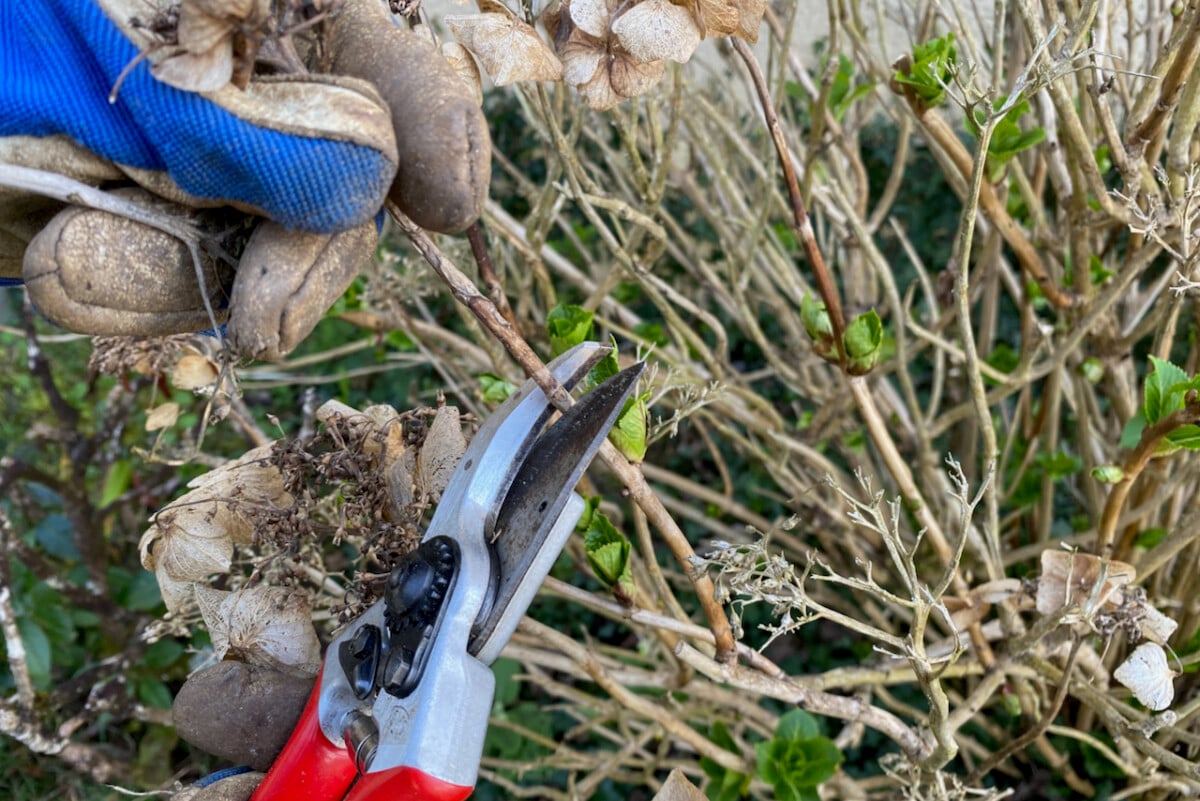
In a nutshell, if the hydrangea blooms on old wood, it means that next year’s buds have already formed (have a look below). We will prune it in early spring, cutting at an angle just above the first bud (from the top). We can wait until the tiny green leaf buds start to emerge.
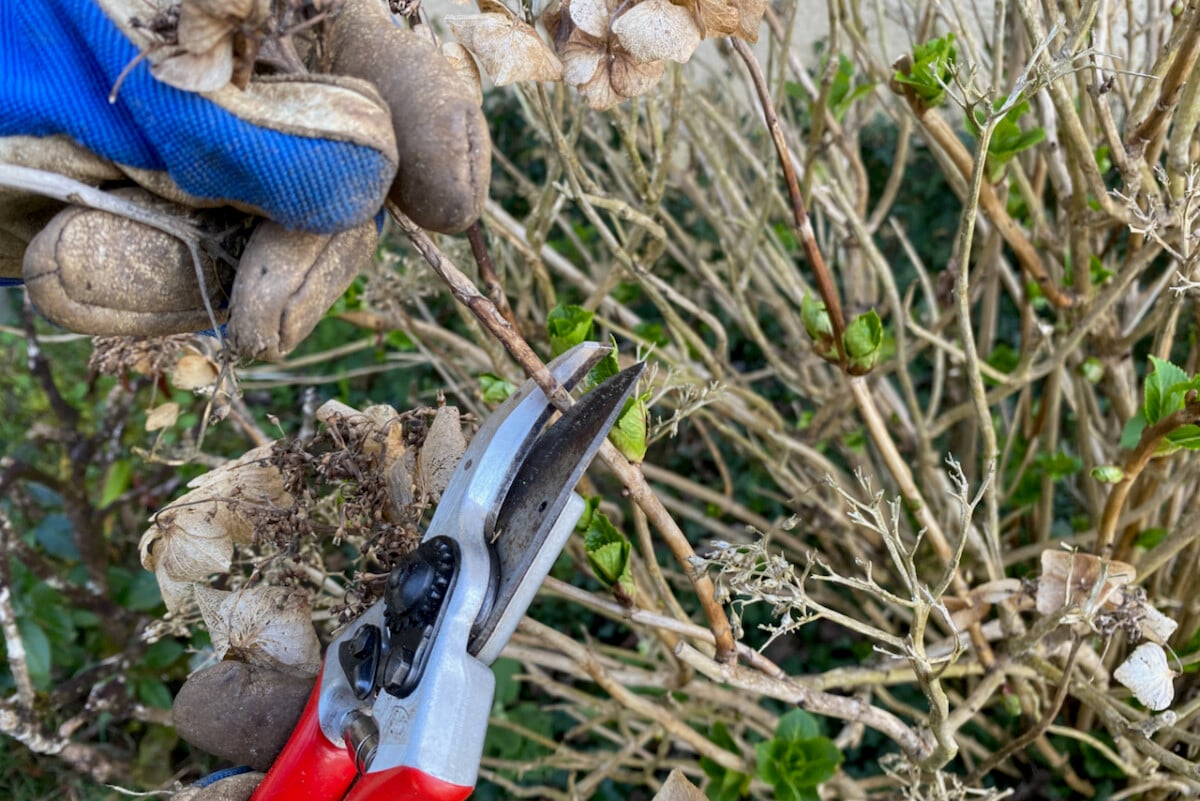
If the hydrangea blooms on new wood, it will form its buds next spring. This means we can cut it a bit lower, either at knee-height or closer to the ground. But we should still wait for spring before we tuck into it.
3. If you’re growing hydrangeas in containers, think about protecting them.
My advice for winter care varies slightly if we’re talking about hydrangeas that we keep in containers. Again, this will depend on where the container is located.
The challenge with container hydrangeas is not about protecting what’s above ground (fresh buds), but protecting what’s below ground (the root structure).
First of all, is your hydrangea planted in a pot that might crack when it freezes (such as terracotta – especially a thinner one)? We will not only lose the container, but when it splits apart, that will leave the hydrangea roots exposed to the cold.
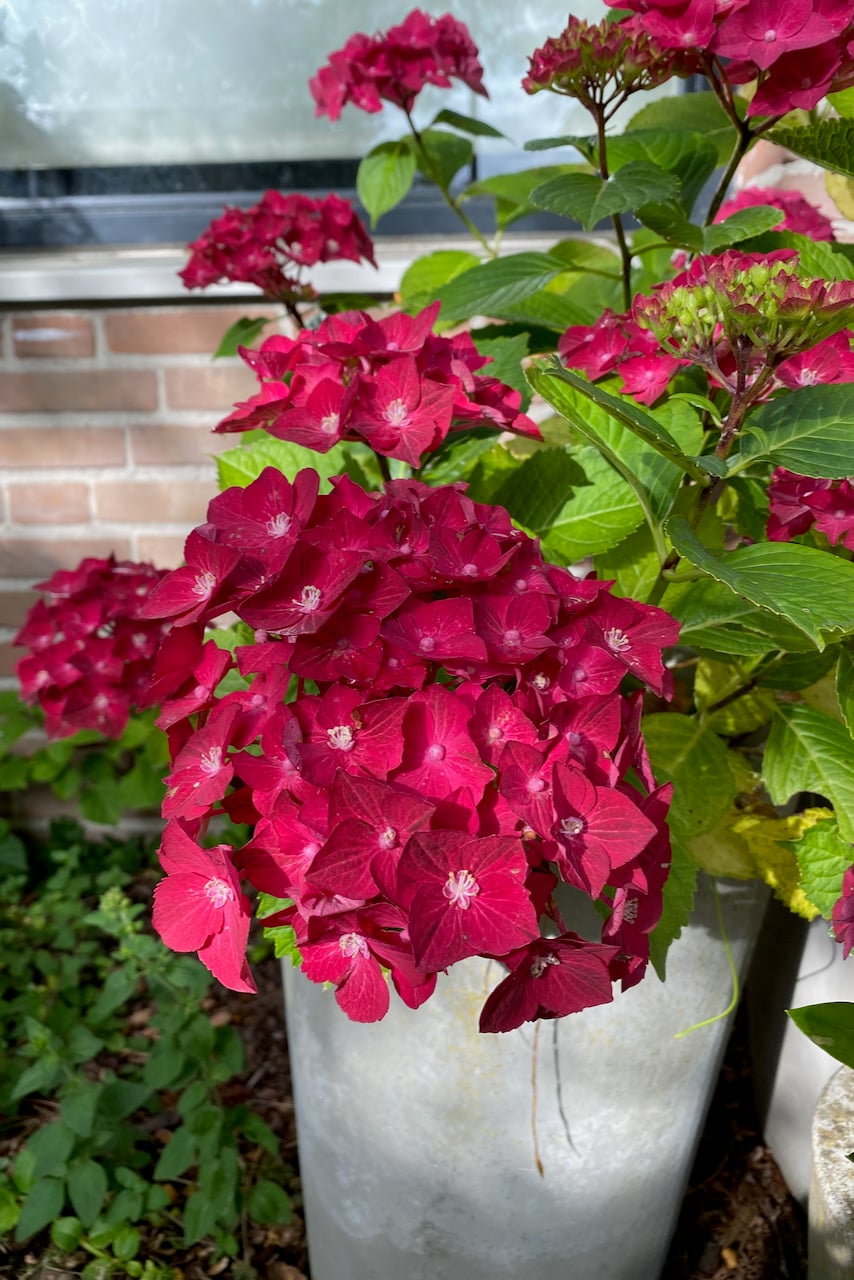
The best prevention is to move the container somewhere where the temperatures don’t dip below freezing.
At this time of year, hydrangeas are dormant, so they don’t need sunlight. Tuck the pot away in a corner of the porch, garage, shed or sunroom if a deep freeze is on the forecast. Wherever you move them, make sure that room stays unheated. We don’t want to confuse our hydrangeas into exiting dormancy too early.
If you don’t have the space, you could try to mitigate the risk by covering the entire container (plant included) in bubble wrap and/or a burlap cloth if it gets too cold. In a pinch, even regular blankets will do.
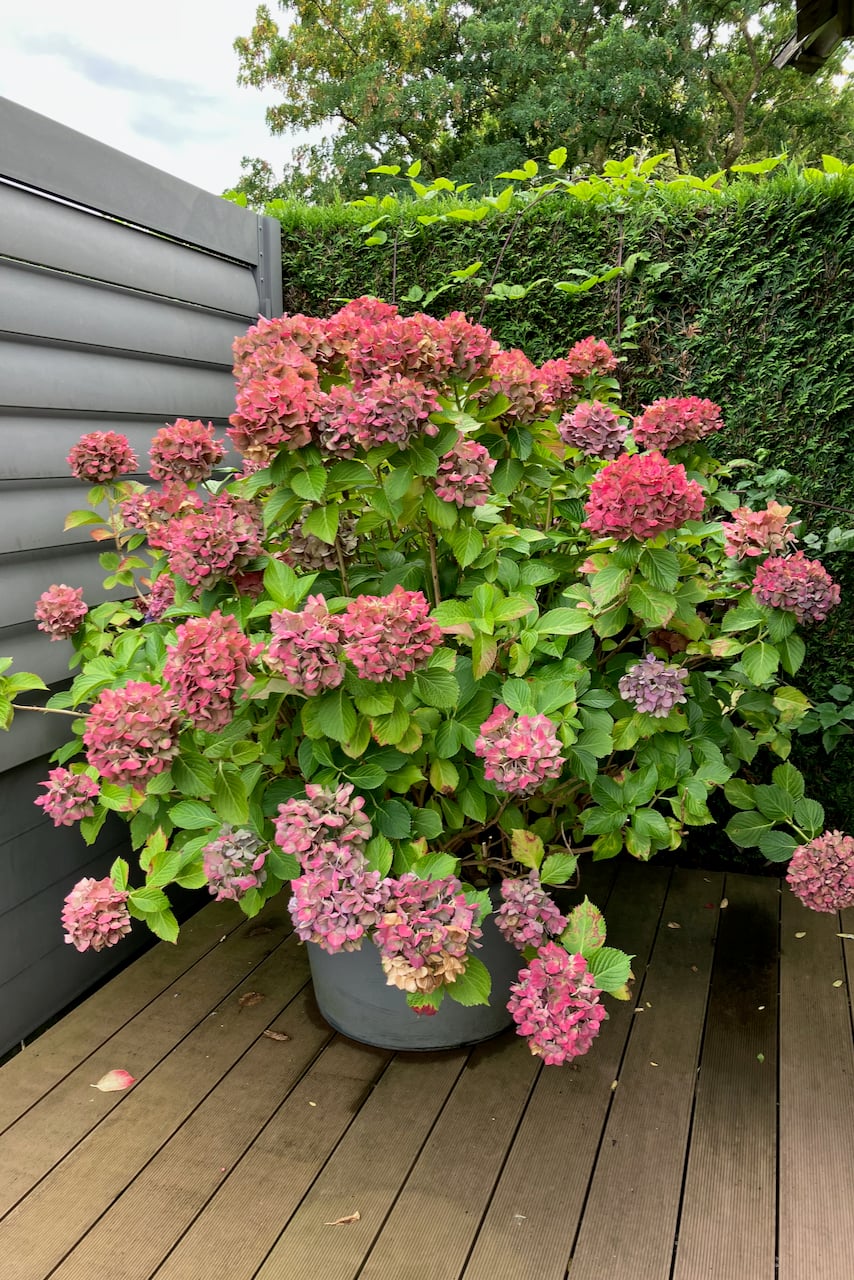
With your hydrangea safely tucked in, write a note-to-self to repot it into something less prone to cracking. Stone, wood or composite containers look pretty and are more resilient to the cycle of hot and freezing.
Don’t repot the shrub now, though. Wait until spring. We don’t want to shock it at its weakest.
4. Covering your hydrangeas might do more harm than good.
Ok, so I mentioned covering hydrangeas in winter with blankets. Let’s not take that out of context here. I was just talking about protecting potted hydrangeas. As a last resort.
Before you go around the house nudging all the cats off the spare blankets, let’s think this through. Should we be covering all our hydrangeas to protect them from the frost? I’m talking about the hydrangeas planted in the ground, of course.
Personally, I have never covered in-ground hydrangeas for the winter.
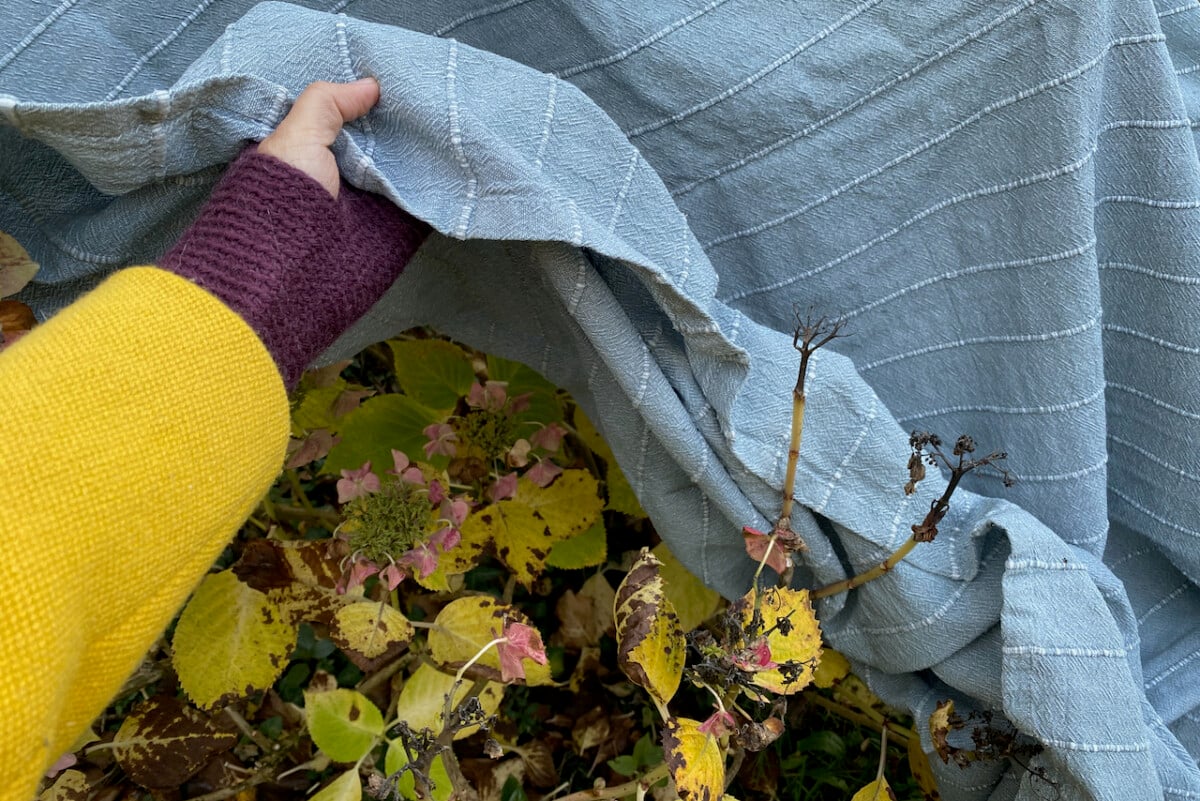
I used to have a neighbor who draped huge swathes of burlap on his hydrangea shrubs. Then you’d walk a few houses down the street and see another hydrangea, toughening it out in the elements. Mind you, we were in gardening zone 6b in Pennsylvania.
I did not see a difference in flowering or size between these two approaches come summer. I think it was more of a mental comfort thing.
Think of the downsides of covering plants in fabric.
On the one hand, a blanket keeping our hydrangeas sheltered isn’t a bad thing, right? But what happens in a snowfall? All the snow will accumulate on the cover instead of going through the branches and hitting the ground or coating the shrub in natural insulation.
Unless you’re planning on going out there a few times a day to shake off the weight. I can think of more fun ways to spend a snow day.
And what happens when the blanket/burlap stays wet for two months at a time around the branches? It’s not just the added weight that puts pressure on the stems, but also the repeated cycles of thawing and freezing of the fabric attached to the branches.
A layer of mulch is the most effective cover.
Again, we have to protect what’s below ground, not above it. So a layer of mulch will be much more effective than a burlap sack.
In the winter, mulch helps to keep the soil-level temperatures from yoyo-ing too much. And it prevents the soil from losing moisture due to dry winds.
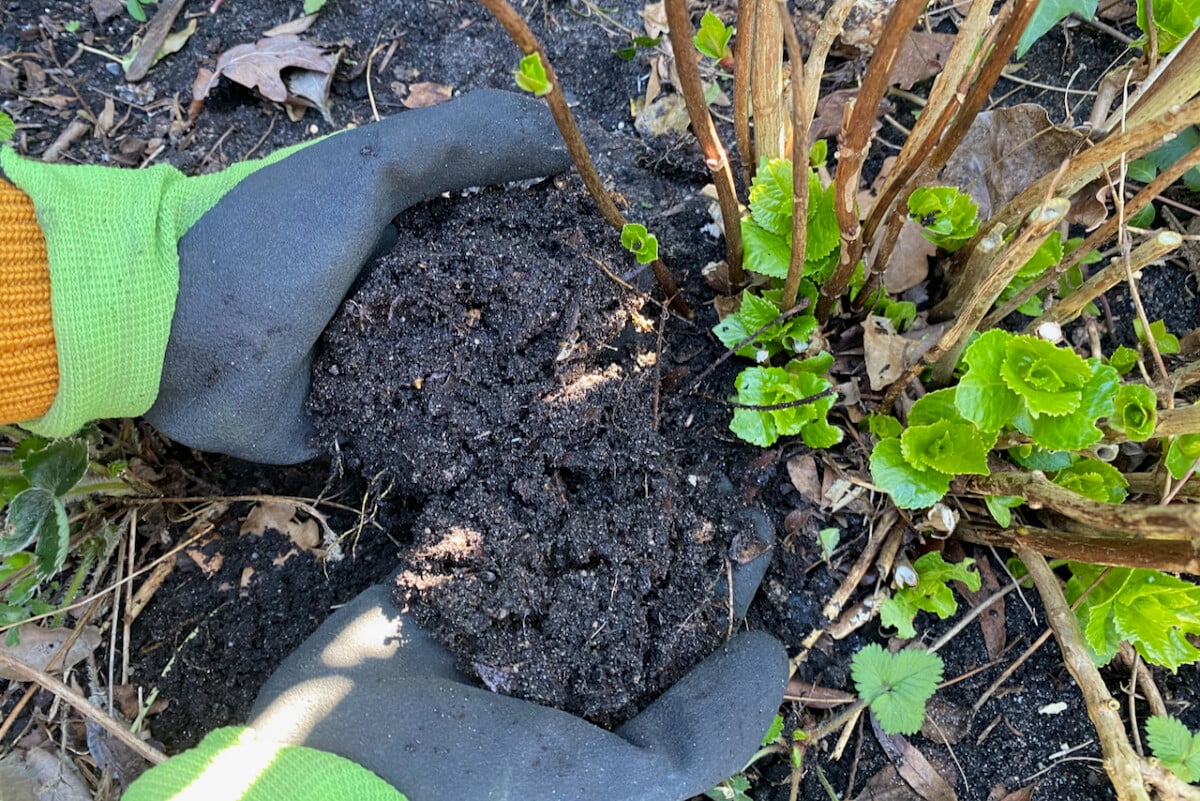
We can mulch with anything that will gradually decompose and add to the topsoil. My favorite fall mulch is dry leaves and good organic compost. Wood bark and wood chips are two other excellent options for mulch.
I hope my advice has reassured your hydrangea winter care anxiety. There are a few plants that we need to keep an eye on in winter, but luckily hydrangea is not one of them. Plant it in a sheltered spot, give it a bit of mulch, and it will bloom for decades.
Read Next: 6 Things Everyone Growing Hydrangeas Needs to Know

Get Garden Notes From Tracey, Right to Your Inbox
Pull up a chair on the front porch. Join 54,000+ gardeners who get Tracey\'s friendly notes, seasonal to-dos, and hands-on tutorials three times a week.