

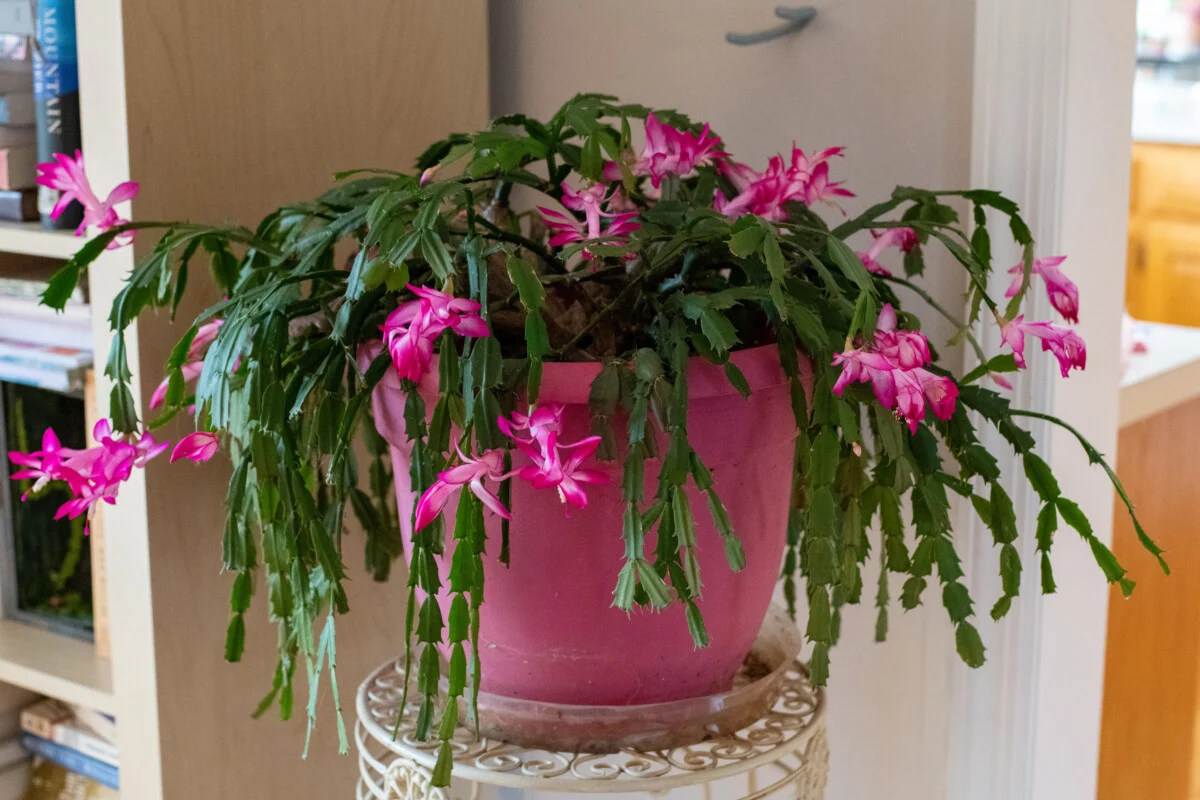
As the editor for Rural Sprout, I handle all of the emails that come in asking for gardening and houseplant advice. And it never fails that every October, I start receiving emails from folks asking what they need to do to get their Christmas cactus to bloom.
And I always feel awful answering them.
“Well, these plants have specific needs that must be met throughout the year for them to have enough energy to bloom. At this point in the cycle, there isn’t a whole lot you can do. However, I’ll happily walk you through what you need to do next year to ensure you have plenty of blossoms come Christmastime.”
Want to know a little behind-the-scenes secret?
That time of the year is also when internet searches for the words ‘Christmas cactus bloom’ are at their highest.
I believe this is where Christmas cactuses get their (unearned) reputation for being difficult bloomers. It’s as if we collectively realize one afternoon each fall, “Oh yeah, shouldn’t this thing be getting ready to bloom soon?”

As I mentioned, by that point, all you can do is prepare for next year. Like many plants that bloom during a specific period each year, Christmas cactuses need specific care throughout the whole year to get to that stage.
That care starts now, in late winter and early spring.
I’m speaking from the experience of someone who also used to have a completely bloom-free Christmas cactus each year.
But once I took the time to get to know these (seriously cool and underappreciated granny) plants, all of my holiday cactuses bloom every year.
Before you scroll away in defeat, let me ease your worries. Yes, Schlumbergera, or holiday cactuses, need specific care at different times throughout the year, but none of it is taxing or time-consuming.
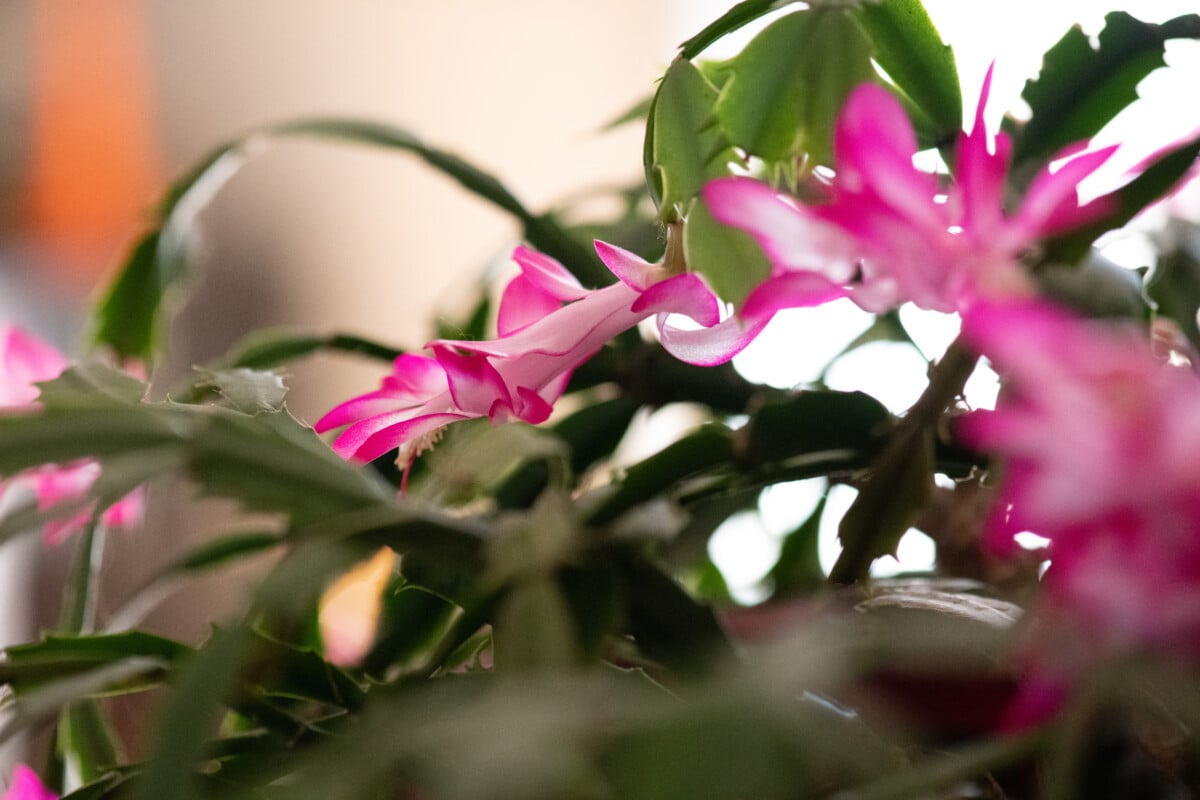
I like to think of taking care of Christmas cactuses in the same way some of us save up for Christmas each year. I am not one of these mythically organized people myself, but I am inspired by your dedication.
Post-holidays Through Deep Winter
At this point in the year, your plant is a lot like everyone’s bank account after the holidays – empty.
Schlumbergera naturally enter a state of dormancy shortly after they bloom (or fail to), triggered by the short days and long, cool nights.
Because the plant isn’t actively growing, it needs far less water than usual. More Christmas cacti meet their doom in the winter from well-meaning over-watering. Since the plant is dormant, it uses very little water.
During the short days of winter, let the soil dry out between waterings, and water sparingly when you do. Since the plants aren’t actively growing, excess water sits in the soil. If it doesn’t evaporate fast enough (over-watering), the roots will rot, or the plant can develop crown rot at the base of the crown.
The same goes for feeding at this time of year. The plant is resting, so no fertilizer is needed. If you fertilize at this point in the year, you run the risk of burning the roots and killing the plant.
Late Winter – Early Spring – Time to Start Saving
Around this time, both you and your plant have significantly recovered from the holidays enough to start thinking about next year. This is when those amazing budgeteers begin saving up for the holidays. Funny enough, so do Christmas cactuses.
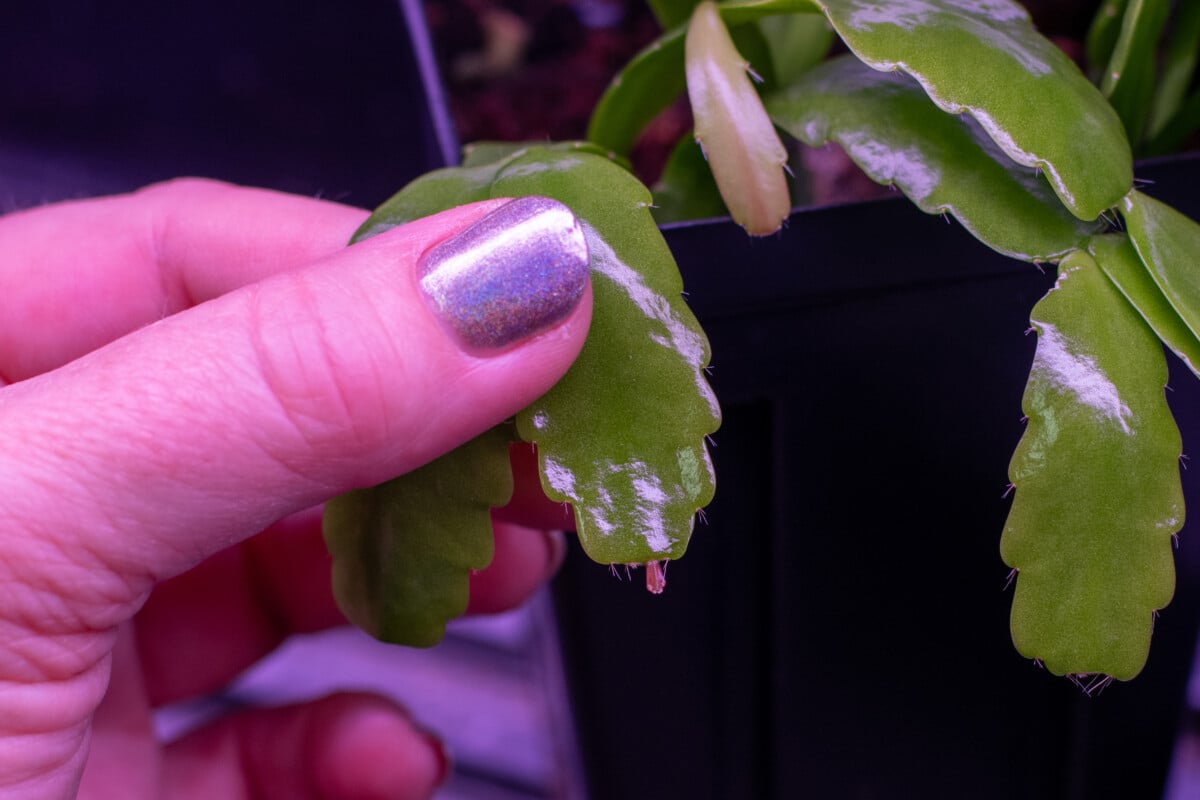
As the days start to lengthen, you may notice a few tiny, new leaf segments on your plant. This is your cue that the plant has broken dormancy and is starting its natural growth cycle again. If your plant is especially low on nutrients, you may not see new growth at first. Instead, you may notice that it starts needing to be watered more frequently.
Now, we can start putting money back in the bank account, so to speak.
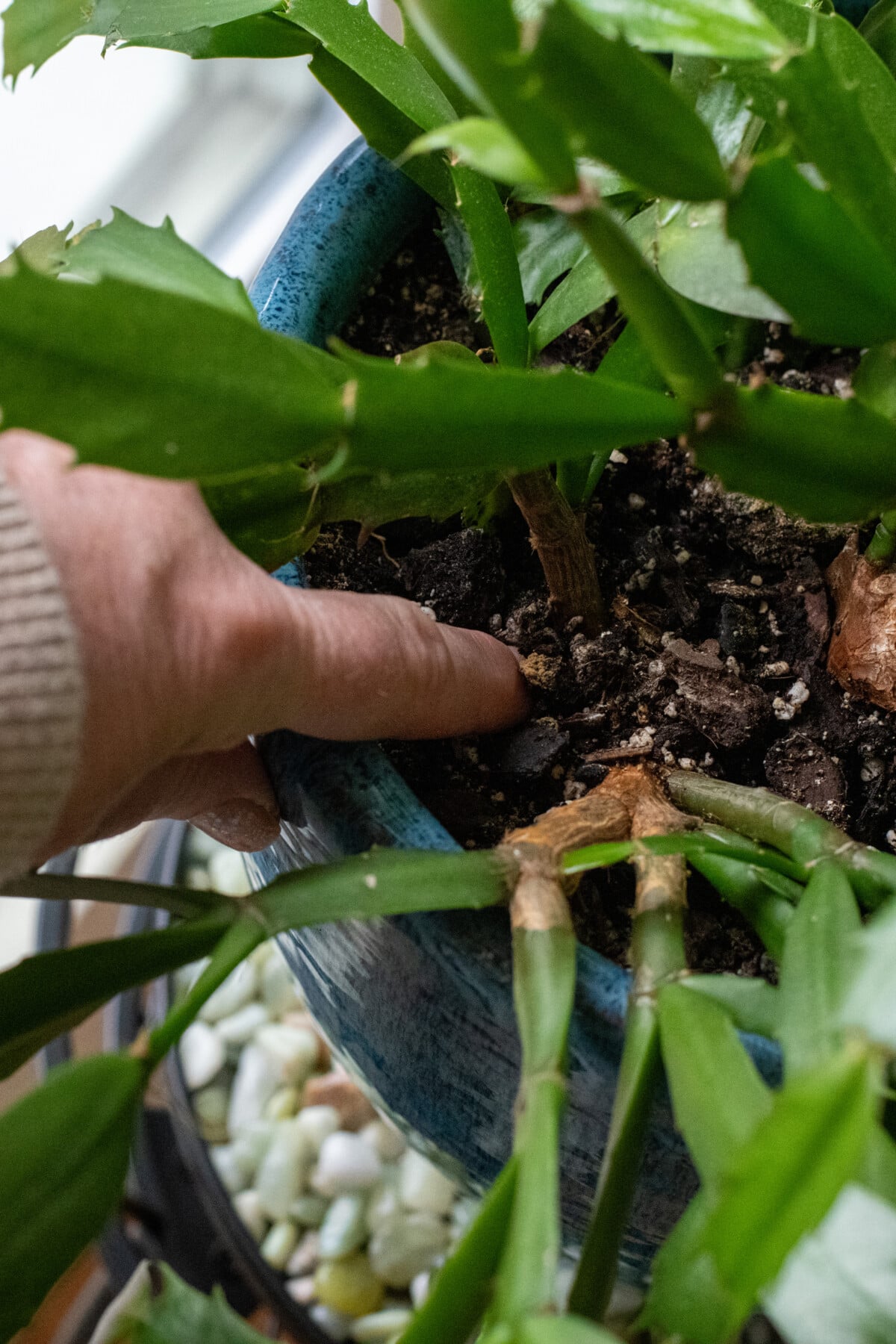
In early spring, we can start watering our plants more often. You don’t need to do anything fancy, just return to your normal watering routine. For instance, I always water on Mondays. I check the soil first by sticking my finger in it down to the first knuckle. If it’s dry, it gets water. If it’s damp, I’ll hold off and check again next Monday.
We can start fertilizing again now, too. In this way, we’re adding to your plant’s Christmas account. Your plant is going to need nutrients to put out new growth (the first stage of its annual cycle). You can’t spend from an empty bank account.
I’m a big fan of Superthrive Grow Liquid Plant Food. It has an NPK ratio of 7-9-5, which seems to work really well for my African violets and Christmas cacti. I like it because it’s got enough nitrogen for good foliage growth, but still has plenty of phosphorus and potassium for blooms.
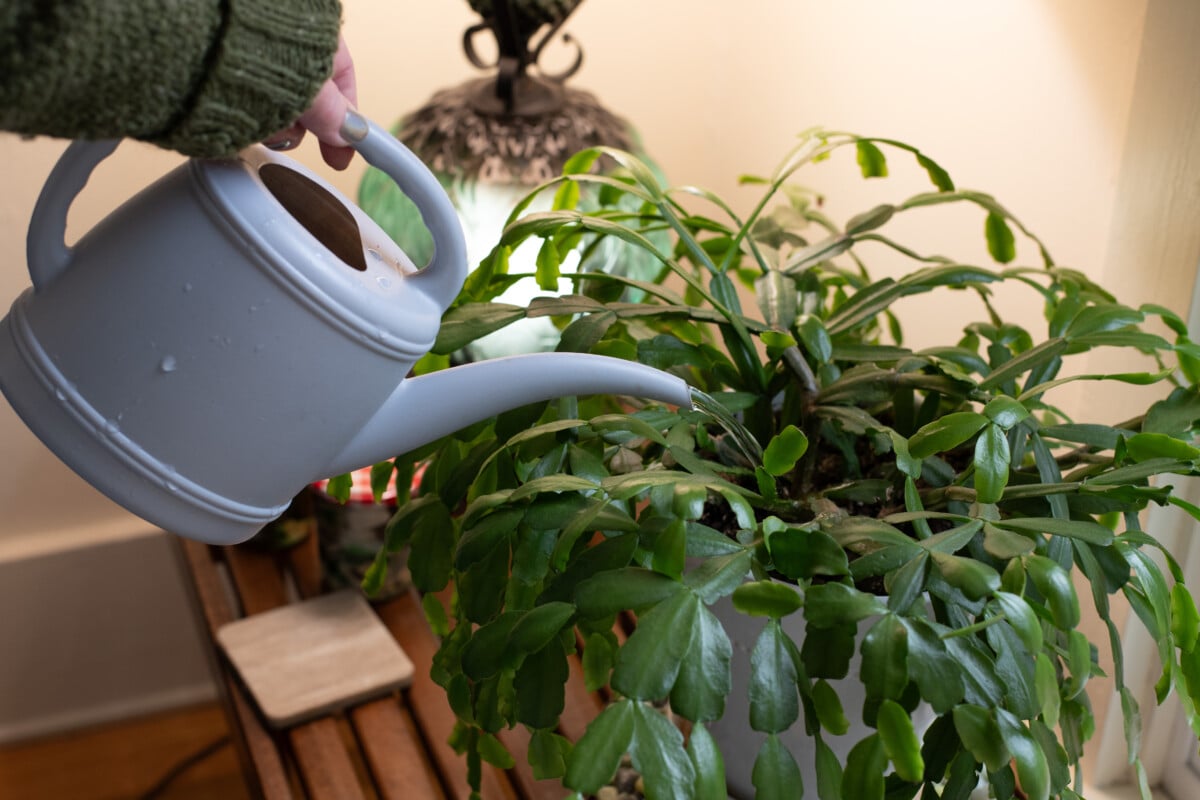
Choose a good, balanced fertilizer and use it regularly. Don’t forget to flush your plant once a month, using only pure water.
Account Maintenance
Two important things need to happen in early spring: pruning and repotting. Think of this as your bank calling to make sure you’re happy with your accounts and service. You want to time any pruning or repotting before the cactus is well into the growing cycle.
Pruning
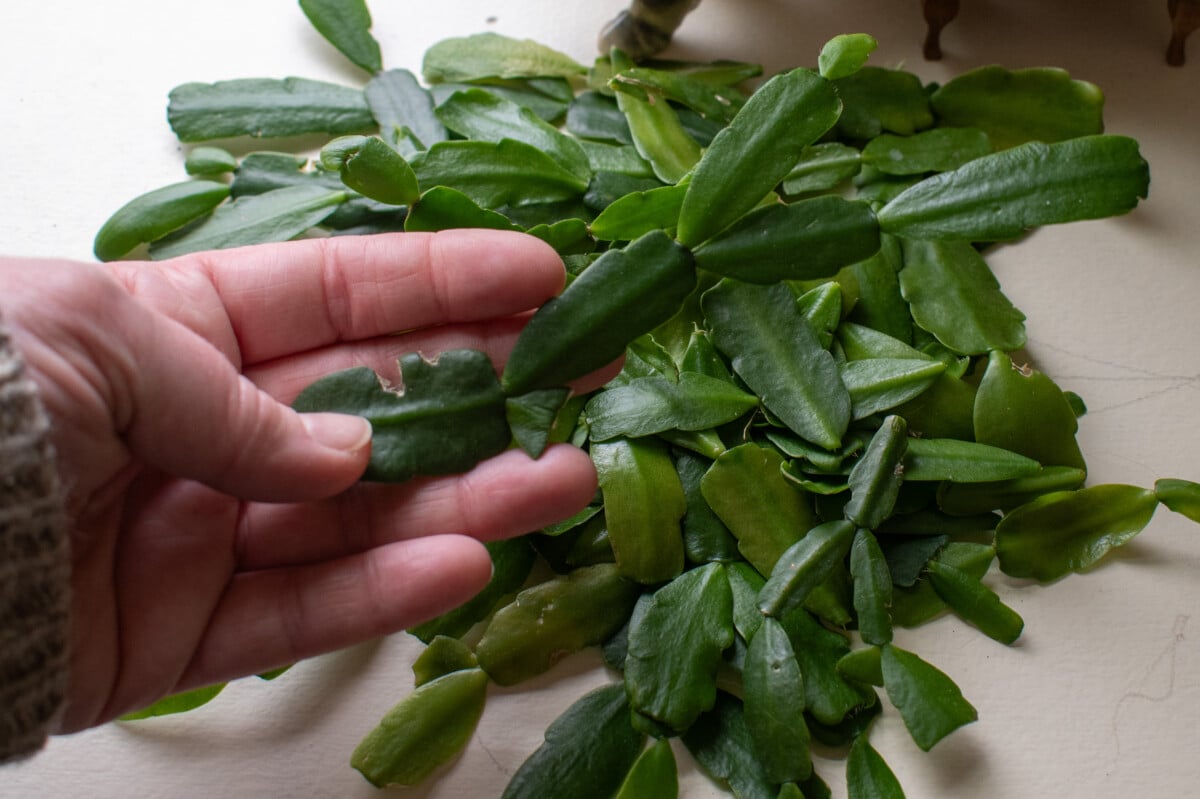
For older, well-established plants, pruning is more cosmetic. You can prune your Christmas cactus to even it out and give it a more natural waterfall shape. If you have a newer plant, pruning is a great way to encourage more branching and fuller plants overall. If you like the shape and fullness of your plant already, you don’t need to mess with it. I’ve written a step-by-step pruning tutorial for you to reference if you need a little guidance. (It’s quite easy.)
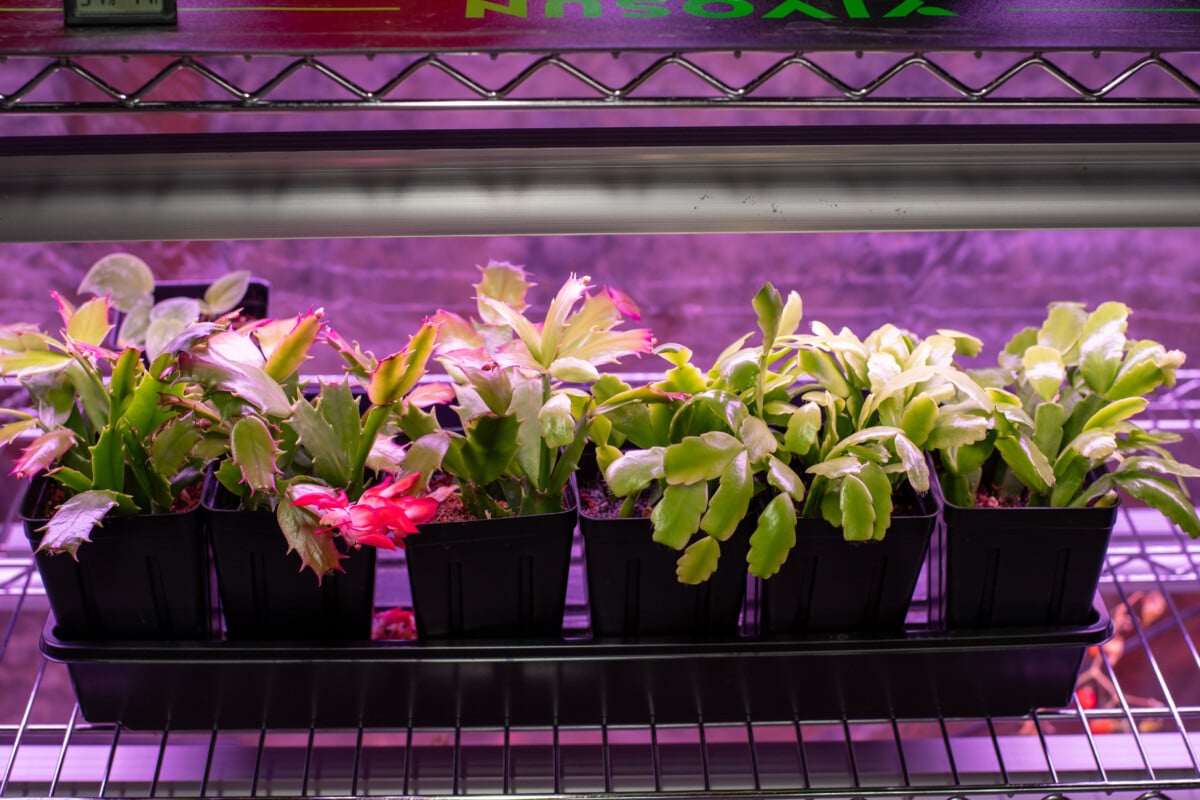
This is also the right time of year to propagate new plants that will be ready for gift-giving when the holidays roll around.
Potting up or Repotting
This is important! Christmas cacti prefer to be somewhat root-bound to bloom. The root systems tend to be quite shallow and slow growing, so Schlumbergera don’t need to be potted up or repotted often.
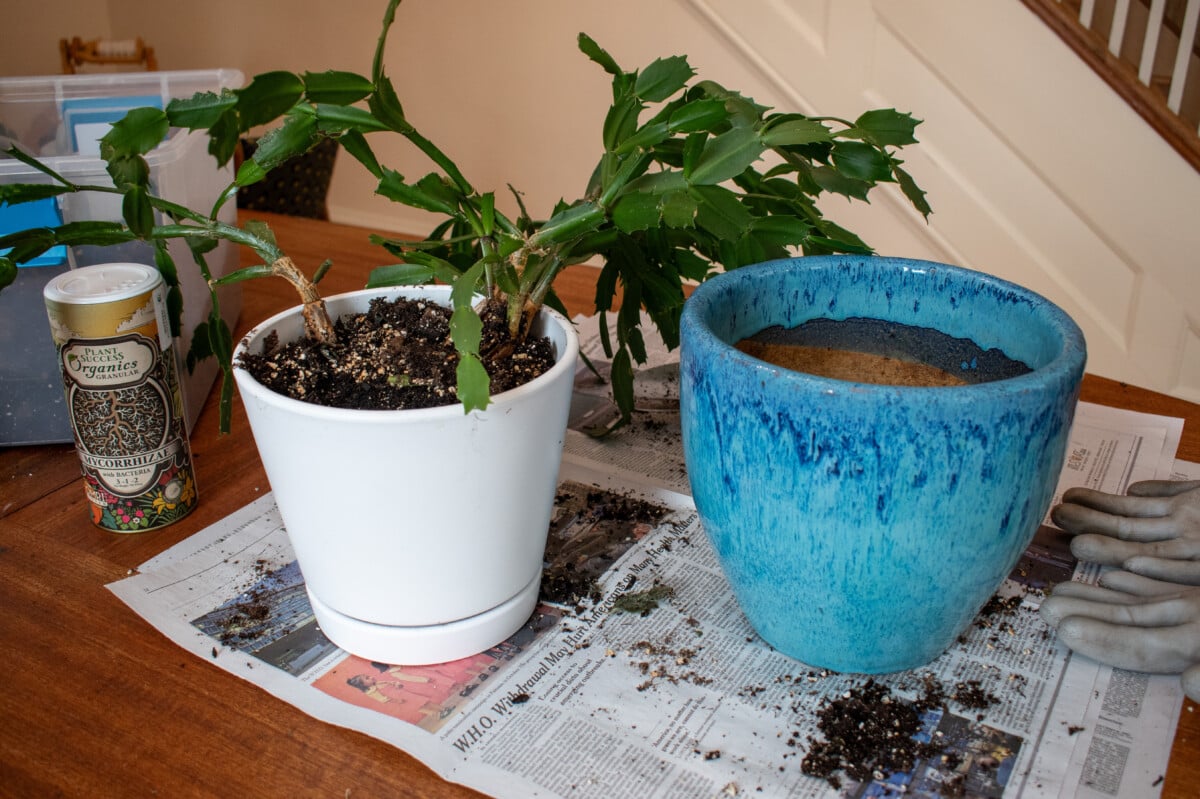
Personally, I repot mine every five years or so, and rather than going up a pot size, I trim the plant back a little. However, if you want a bigger plant, only go up by one pot size when potting up. Making the leap to a significantly larger pot means you’ll have to wait for the plant to grow into it before it blooms again, and that can take a couple of years, as the roots like to be snug.
Need help with repotting? I’ve got you covered right here, my friend.
Taking care of all these things early in the growth cycle allows the plant to settle in again and get serious about cranking out new growth.
Late Spring – Summer – Stash That Cash!
Okay, this is the time of year when your plant is getting what it needs to make flowers in late fall. While growing, your plant is actively creating and storing sugars via photosynthesis. It will use these sugars for the energy needed to bloom.
Think of this as the time your plant is actively stashing cash in that bank account.
If you aren’t giving your plant what it needs throughout the summer, then you’re probably looking at getting a sad email from me in the fall.
Schlumbergera need lots of bright, indirect light all summer long.
You know that one family member who has a Christmas cactus that blooms easily every year, and they swear they “don’t do anything special” to it? They probably don’t. They likely water and fertilize it normally. But they probably have found the best spot in their home for their Christmas cactus and parked it there.
If your Christmas cactus is currently in a spot in your home where it isn’t receiving a minimum of 6-8 hours of bright, indirect light each day, it’s time to move it. In keeping with our banking theme, it’s time to find a better savings rate.
One of the easiest ways you can do this is to move your Christmas cactus outside for the summer. The sun has the best APY going.
But you need to be careful where you move it. You have to wait until nights are consistently 55F and above, and if your holiday cactus gets too much sun, it will easily burn. You’ll notice the edges of the cladodes (the leaf segments) will turn red, or even the entire cladode. So, don’t just take your Christmas cactus outside and forget about it. Check on it for a few days at first and move it if needed.
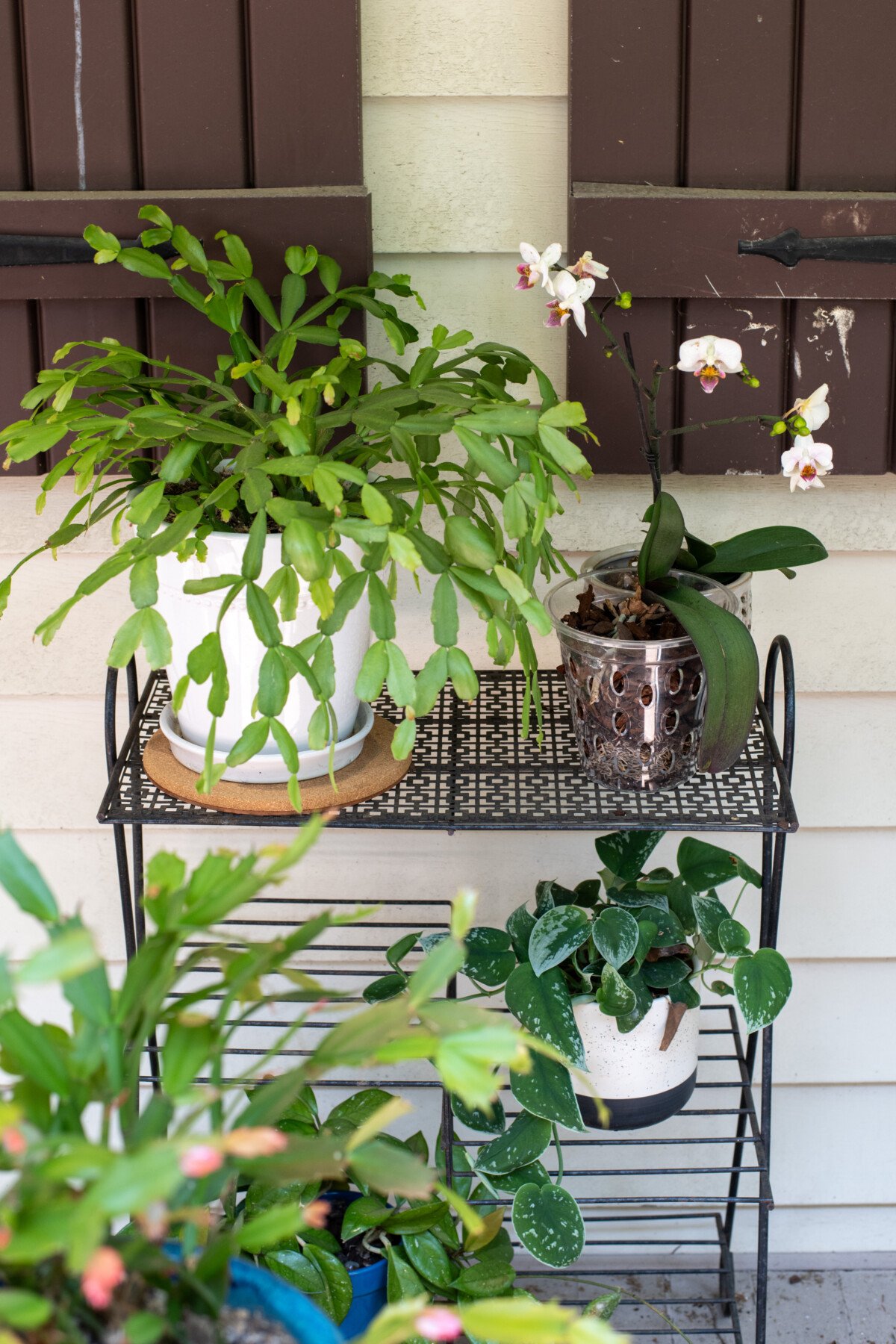
My mom used to hang her Christmas cactus underneath her huge lilac bush each summer. It received plenty of light, but was protected from the most intense rays of the sun. Mom couldn’t grow much, but she always had a glorious Christmas cactus.
Again, I’ve written up a tutorial on how to make sure your Christmas cactus has a lovely vacation outside all summer.
While your Schlumbergera is outside, check it more often as it will dry out faster. You will likely need to water it more frequently. Stick to a regular fertilizing schedule, so your plant can keep storing up all the energy and nutrients it will need.
See? I told you it wasn’t anything difficult or time-consuming. But each of these stages is important when the holidays roll around.
Late Summer – Early Fall
So far, your holiday cactus has been storing up energy throughout the year, much like our Christmas budgeting example. We’ve reached the point where it’s time for all that hard work to pay off.
When summer begins to wind down, it’s time to start paying attention to the weather. Bring your Christmas cactus indoors before nights fall below 55F, if it’s spent the summer outdoors.

A couple of things will happen this time of year. The days will start to grow shorter, and we will all start getting a little stressed as the holidays loom over us. We’re going to stress our plants a little bit, too. (Hey, why should we be the only ones freaking out over the holidays?)
The natural change in light will trigger your plant to slow down and stop growing. It’s reaching the end of its annual growth cycle, and that means – flowers!
Because you fed your plant and made sure it had plenty of sun all year, it’s got a full bank account to spend on blossoms. But to ensure you get the most flowers, we stress the plant a little. To do that, we’re going to start watering it less in the fall.
This signals to your plant, “Um, there’s a chance we could die, so let’s pull out all the stops and make all the flowers to ensure that the next generation carries on.”
You will also need to make sure your plant is kept where it’s cool. The key to getting a Christmas cactus to use its stored energy to make buds is cool temps, long nights and a little bit of stress. Sounds like most of us around the holidays. (If you want more detailed instructions for what to do in the weeks leading up to the holidays to ensure your plant sets buds, click here.)
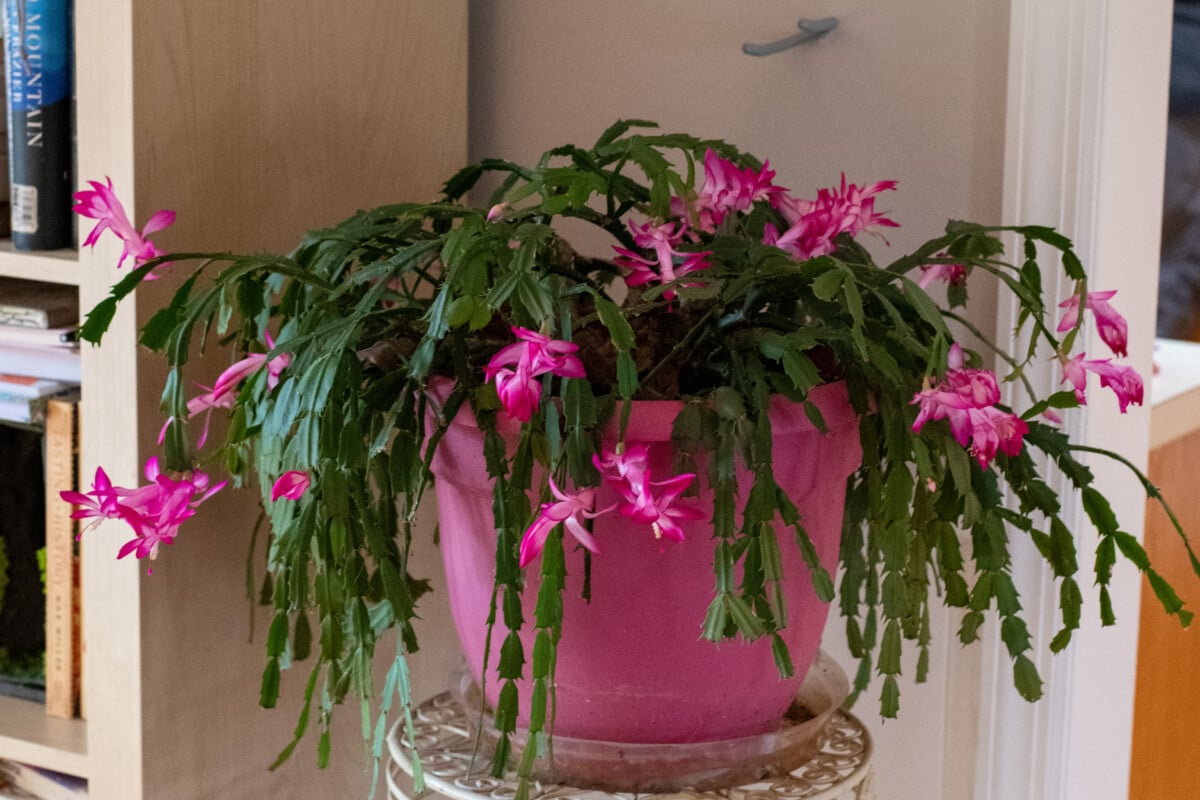
Now you know the key to getting your Christmas cactus to bloom later this year, and it’s so easy to get started. But the best part is, you also know how to ensure your Christmas cactus blooms every single year from now on. You get to join the club of people who casually say, “Oh, I don’t do anything special to it” when someone gushes over your blooming Christmas cactus.

Get Garden Notes From Tracey, Right to Your Inbox
Pull up a chair on the front porch. Join 54,000+ gardeners who get Tracey\'s friendly notes, seasonal to-dos, and hands-on tutorials three times a week.