

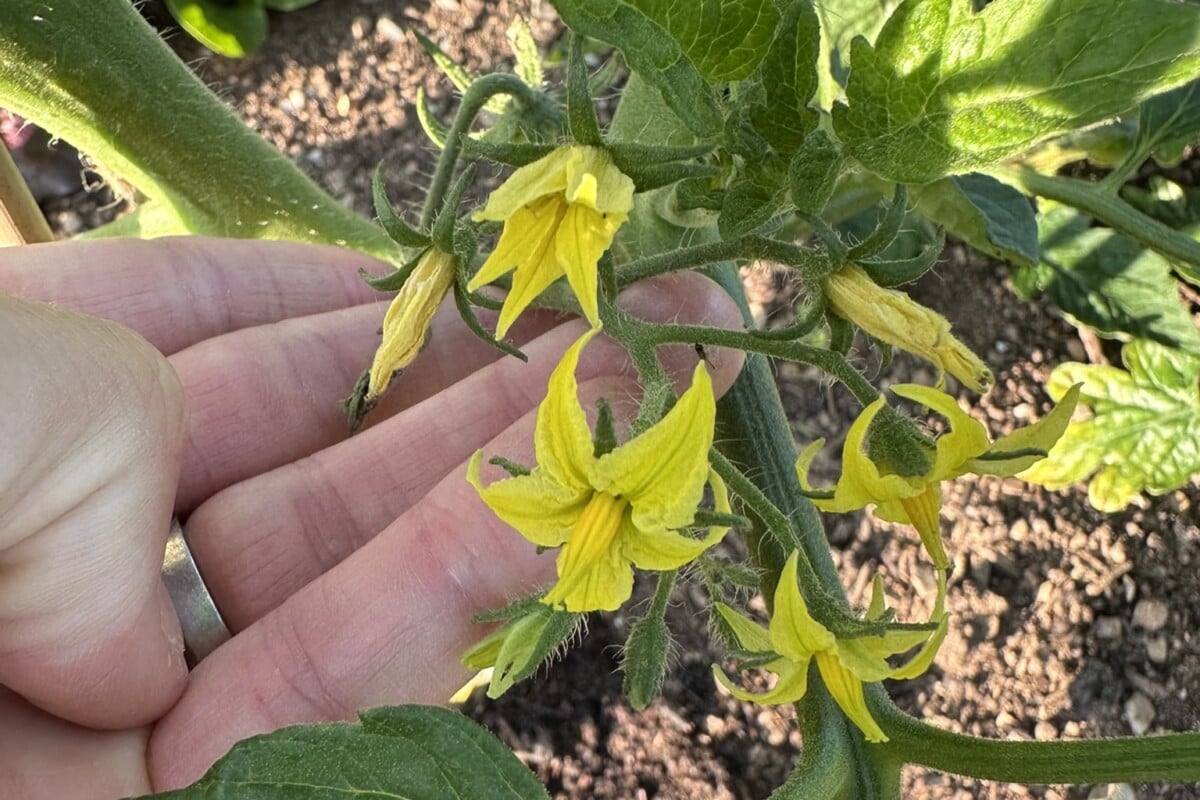
Your tomatoes are doing great! They’re filling out and growing sturdy and strong, and you’ve got blossom clusters popping up. It won’t be long until you’re enjoying fresh tomatoes. But for some reason, you keep finding the blossoms shriveled up on the ground. What’s going on?
Tomato blossom drop can be incredibly frustrating.
Plants will always prioritize saving themselves over producing more fruit. So if an external or internal issue is stressing the plant, the first thing it will do is drop its blossoms to conserve energy.
Dropped blossoms are an important clue because they’re often the first sign that something else is wrong.
Luckily, there are a few easy-to-diagnose reasons behind it. With a little troubleshooting, you can put a stop to blossom drop and be eating fresh tomatoes soon.
1. Poor Pollination
This is by far the most common reason why tomatoes drop their blossoms. Tomatoes are self-pollinating, which can sound a bit misleading. The term implies that they pollinate themselves.
What it actually means is that each flower contains both male and female sex organs. The flowers still need some sort of external agitation for pollination to occur, whether that’s via the wind or insects. Pollination needs to occur within 50 hours of viability; otherwise, the blossom will drop off the plant.
If you suspect low pollination to be the issue for your dropped blossoms, there are some easy things you can do to help nature out.

The first involves a cheap, battery-powered toothbrush to induce buzz pollination. (You can read what to do here.) In addition to buzz pollinating by hand, consider planting more flowers in your vegetable garden, as it will attract more pollinators who will do the work for you. (Among other benefits.)
Finally, are your plants crowded? This one is less obvious but can hinder pollination.
If you plant your tomatoes too close to one another, it makes it harder for insects to find the flowers among their dense foliage, and less likely that the wind will do the job. Likewise, if you’re growing indeterminate tomatoes that have gotten out of hand, pruning them can increase airflow and make flowers more visible to pollinators.
2. Temperature Stress

This one is the second most common reason why your tomatoes may be ditching blossoms. It’s also the easiest to diagnose.
Daytime temperatures that consistently exceed 90°F (32°C) or nighttime temperatures that stay above 70°F (21°C) for too long can hinder the flower’s development. These hot temperatures cause issues with everything from the way flowers metabolize carbohydrates to how pollen tubes grow. This results in a flower that will abort because it’s not viable.
If you’ve got a real scorcher of a summer on your hands, you’ll want to invest in some shade cloth. Not only will this help blossoms develop properly, allowing them to be pollinated, but it will also help any existing tomatoes to ripen, as high temps can also slow tomato ripening.
Of course, on the flip side, temperatures that are too cool can also cause blossom drop. This usually happens at the beginning of the season, when spring is on its way out, and your tomatoes are just starting to set blooms. Temperatures below 55°F (13°C) can cause blossoms to drop, as the cooler temps prevent pollen inside the flowers from being released.
In these cooler temperatures, the blossoms are more likely to abort. But be patient. As the weather warms up, your tomato plants will sort themselves out.
From here on out, the causes for tomato blossom drop are less obvious but not all that difficult to diagnose.
3. Inconsistent Watering
Tomatoes like moist, slightly damp soil, but never soggy, and they don’t like to dry out completely either. Pfft, divas. Of course, Mother Nature doesn’t care what your tomatoes like or want. She’s gonna do what she’s gonna do. If conditions are too wet or dry, your tomato plant will abort blossoms.
You’ll find that water issues and temperature stress go hand in hand.
That means you may need to step in and lend a helping hand.
It’s much easier to mitigate a dry season with the occasional deep soak. (Much better than frequent, shallow watering.) But if you’re dealing with an exceptionally rainy season, there isn’t a whole lot you can do except wait for Ma Nature to turn off the tap.
4. A Nutrient Imbalance
Sometimes, we get a little excited and go a bit heavy-handed on the fertilizer at the beginning of the season. If you’re using a fertilizer with a high nitrogen count, this can backfire once it’s time for your tomatoes to set fruit. Here’s a guide on how to fertilize tomatoes properly at the beginning of the growing season.
Too much nitrogen can cause your plants to focus most of their energy on growing foliage and less on flowers. Likewise, if you forget the phosphorus and potassium needed to produce healthy blossoms, your tomatoes will likely abort or not grow them at all.
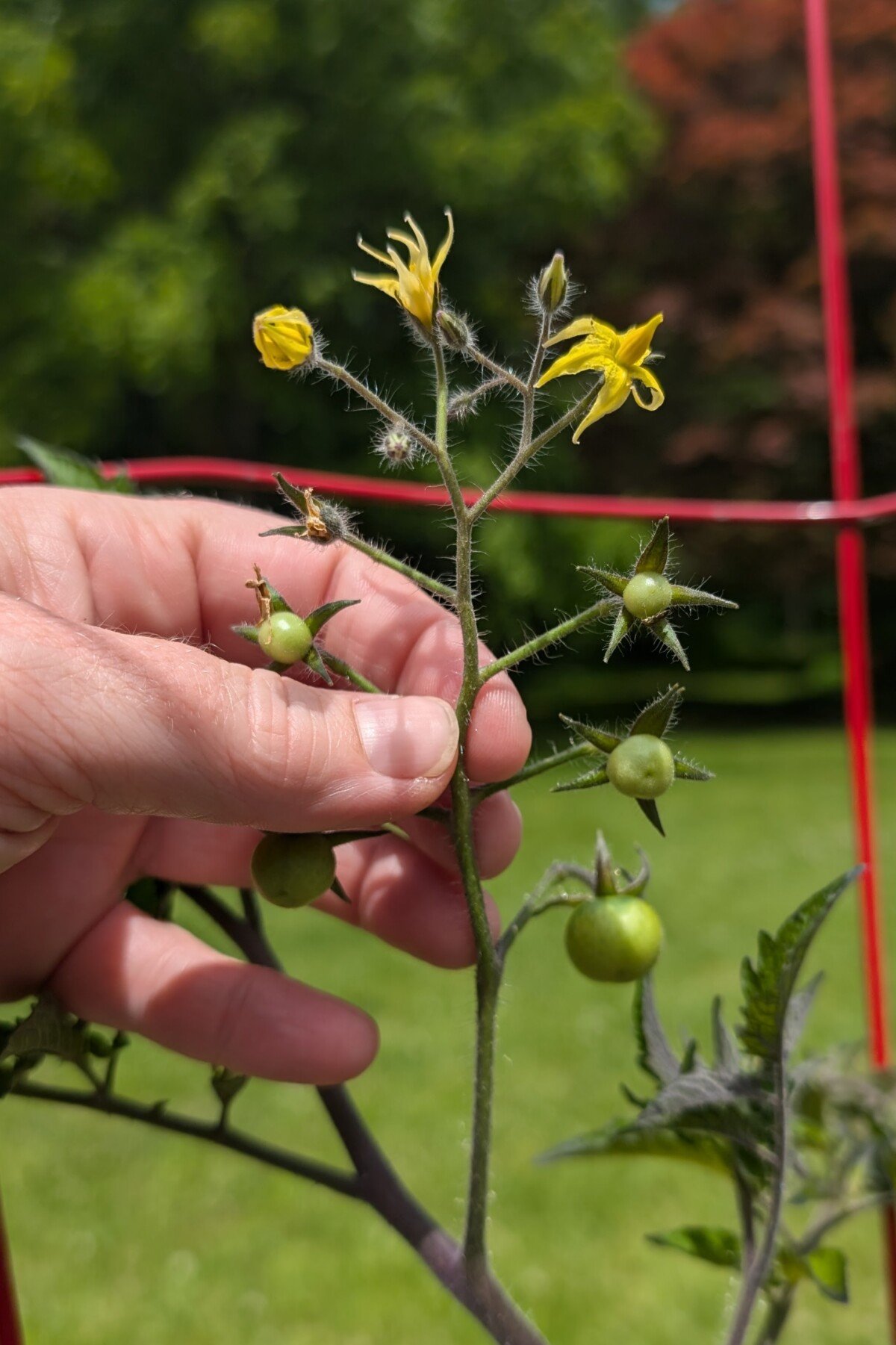
Here’s the thing: in the past, I focused on a high-nitrogen fertilizer right at the beginning of the season. Then, as my plants started to set blossoms, I would switch to a formula specifically designed for flowers and fruit, which is typically low in nitrogen but higher in phosphorus and potassium. I don’t do that anymore.
These days, I use a balanced fertilizer (I really like this one) from the beginning to the end of the growing season. This way, the nutrients my plants need are there in the soil, ready to go whenever they need them. Plants are a heck of a lot smarter than we are about accessing nutrients when they need them. I make sure they have an all-you-can-eat buffet, and I’ve had much better luck.
5. Pest or Disease Damage
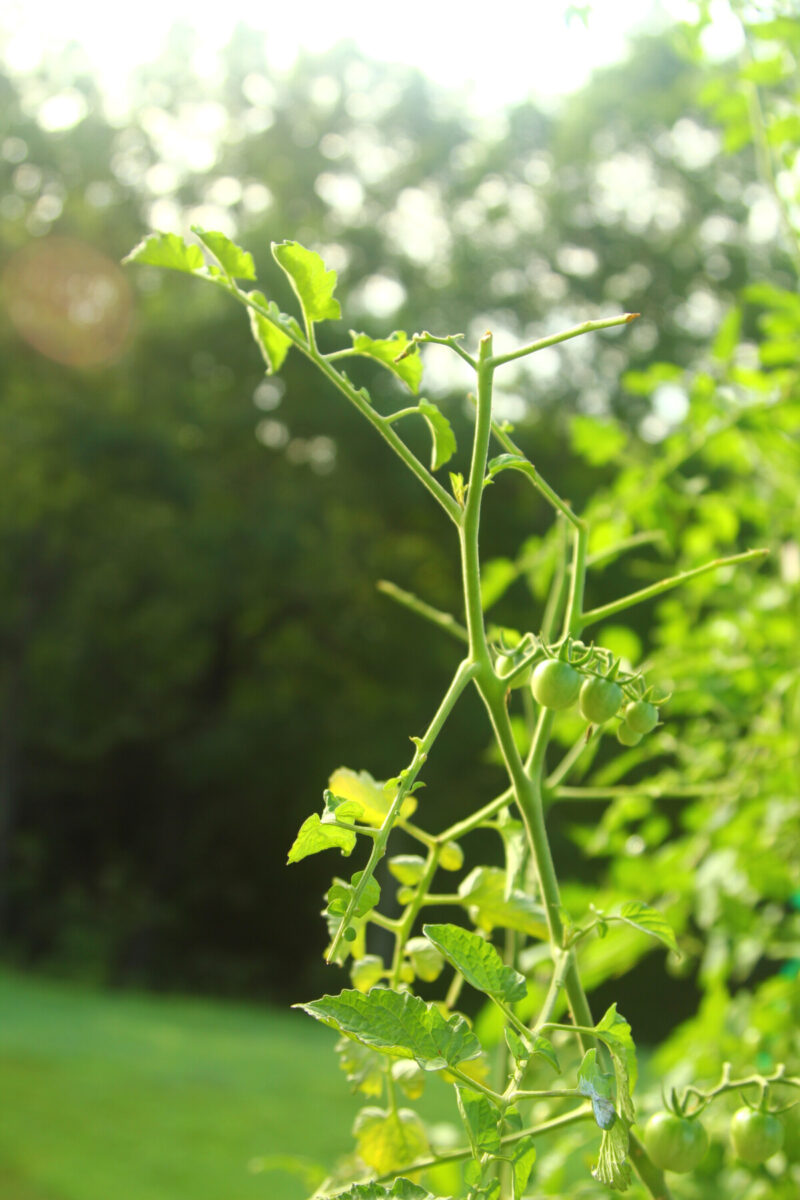
Common tomato pests, such as aphids, thrips, hornworms or whiteflies, can damage developing tomato blossoms. What’s worse is that they can also prevent pollination from occurring. Fungal and bacterial diseases can stress and weaken the plant, causing it to drop flowers.
It’s best to catch pests and diseases early when they’re easier to deal with rather than finding them when they’re full-blown.
The only way to do that is to inspect your plants often throughout the growing season. Keep an eye on unexpected changes in leaf color or growth and look for obvious pest damage. Strip the bottom 12” of your tomato plants of leaves and branches to prevent soil-borne diseases from being splashed up onto the plant when it rains. Plant tomatoes so that they receive plenty of airflow and light, as this will also help prevent disease.
6. Not Getting Enough Light

This one is less likely, as most gardeners understand that tomatoes are sun worshippers. However, if your plant isn’t getting a minimum of six hours of full sun a day, it may not have enough energy to support the growth of flowers. In that case, it will abort blossoms.
Despite the many issues that can crop up with tomatoes, they are still one of the easiest and most enjoyable vegetables to grow. Thankfully, blossom drop is a piece of cake to figure out and fix. If you’ve made it this far, you probably already have a good idea which one of these issues is affecting your plants. And that means you’re also a week or so away from having the problem resolved.
Get Garden Notes From Tracey, Right to Your Inbox
Pull up a chair on the front porch. Join 54,000+ gardeners who get Tracey\'s friendly notes, seasonal to-dos, and hands-on tutorials three times a week.