

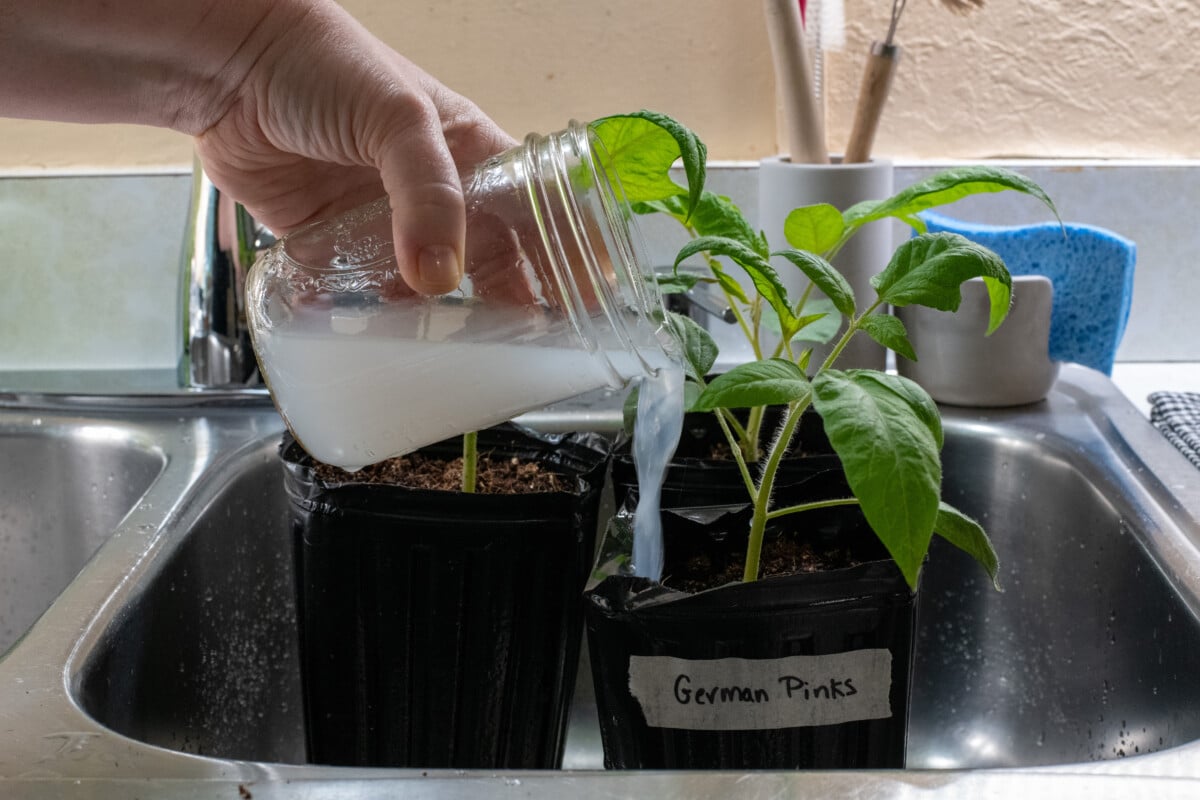
You’ve probably seen this popular hack on social media recently. You save the rice water from rinsing and soaking rice and water plants with it. (You do soak your rice, right?)
This powerful, nutrient-rich potion is supposed to boost plant productivity. But what nutrients are in rice water? Do you still need to fertilize? Does this helpful hack really benefit your garden and houseplants?
Here’s everything you need to know about this recent gardening trend.
I’ve seen this hack pop up on social media quite a bit recently. I know a new garden tip is getting big when I start getting emails from readers and texts from friends and family.
“Trace, have you seen this? What do you think? Is there anything to it?”
As someone who eats rice at least once a week and always rinses and soaks it, this caught my eye. I always feel a little guilty over how much water is used to wash rice, so if I could do something with it and it benefits my plants, that’s a win.
First, yes, if you aren’t already, you should always rinse your rice before cooking it.
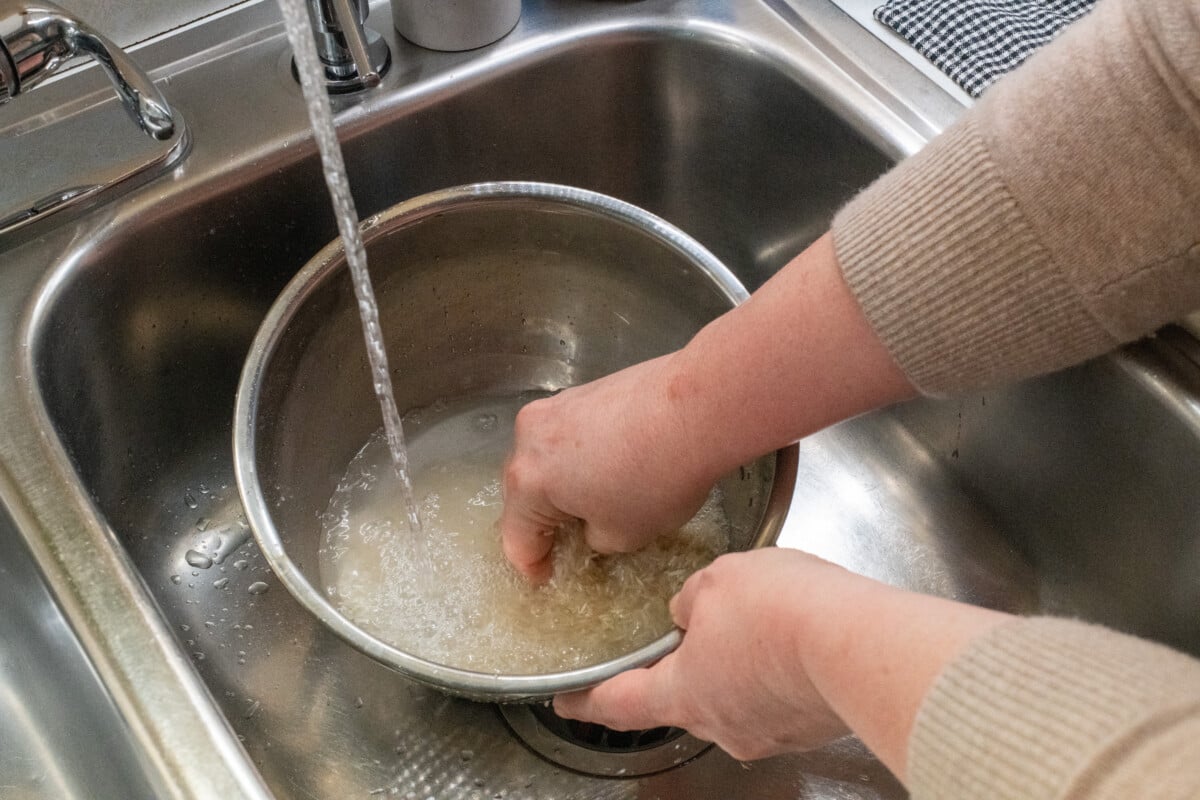
Not only does it remove dirt and debris, but if you rub the rice well with your hands while you rinse, the cooked rice is less sticky.
When I finally wised up and started washing and soaking my rice, I picked up one of these inexpensive rice rinsing bowls. It makes the entire task super easy as it has a small colander on one side, and a flat edge so you can let the water drain out of it without losing all your rice down the drain, too.
What’s In Rice Water?
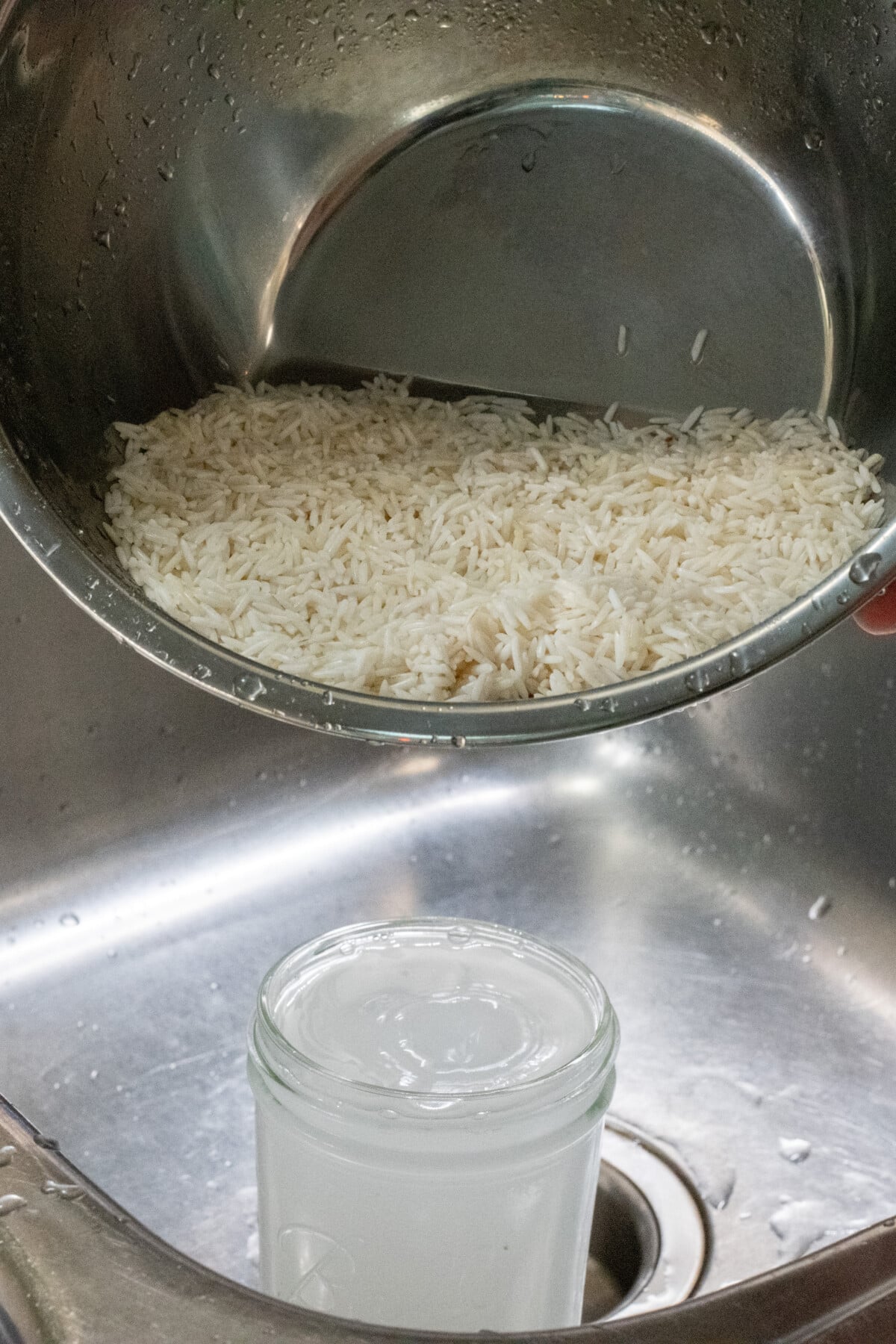
Most of the videos or articles I’ve seen vaguely reference ‘nutrients and trace minerals’ in rice water; rarely do they say what those nutrients and minerals are. But, oh my goodness, they are never short on the uh-may-zing results you’ll see if you use this trick. Huge plants! Massive flowers! Tons of produce!
Mmm-hmm.
Luckily, I found a paper where they analyzed research papers that have studied rice water. Although, spoiler alert, the paper noted that there is very little research involving the wastewater from washing rice and its uses. But they also analyzed what’s in the wastewater after you soak and rinse rice.
Here’s what you’ve got swirling around in that milky-white water after you’re done washing and soaking your rice:
- crude protein
- crude ash
- sugar
- starch
- crude fat
- Iron
- Copper
- Zinc
- Nitrogen
- Manganese
- Magnesium
- Potassium
- Sodium
- Calcium
- Chlorine
- Phosphorus
- Selenium
- And the vitamins VB2 and VE
You’ll notice right away that there are quite a few minerals in there that plants use, including the big three: nitrogen, potassium and phosphorus. That’s great news! That means there might be something to this after all.
As the paper said, there really hasn’t been a lot of research into using this leftover water to feed plants. It’s been studied as a use for a natural cleanser and degreaser, and for its hair-strengthening properties.
However, I did find a study in 2023 that looked at using fermented rice wastewater on fields alongside traditional NPK fertilizers. Like most of these studies, they determined that more research was needed, but there were positive results in plant growth overall. So, there is something to this hack! Just remember, you can’t skip out on a more traditional fertilizer as well.
Take Your Rice Water with a Grain of Salt
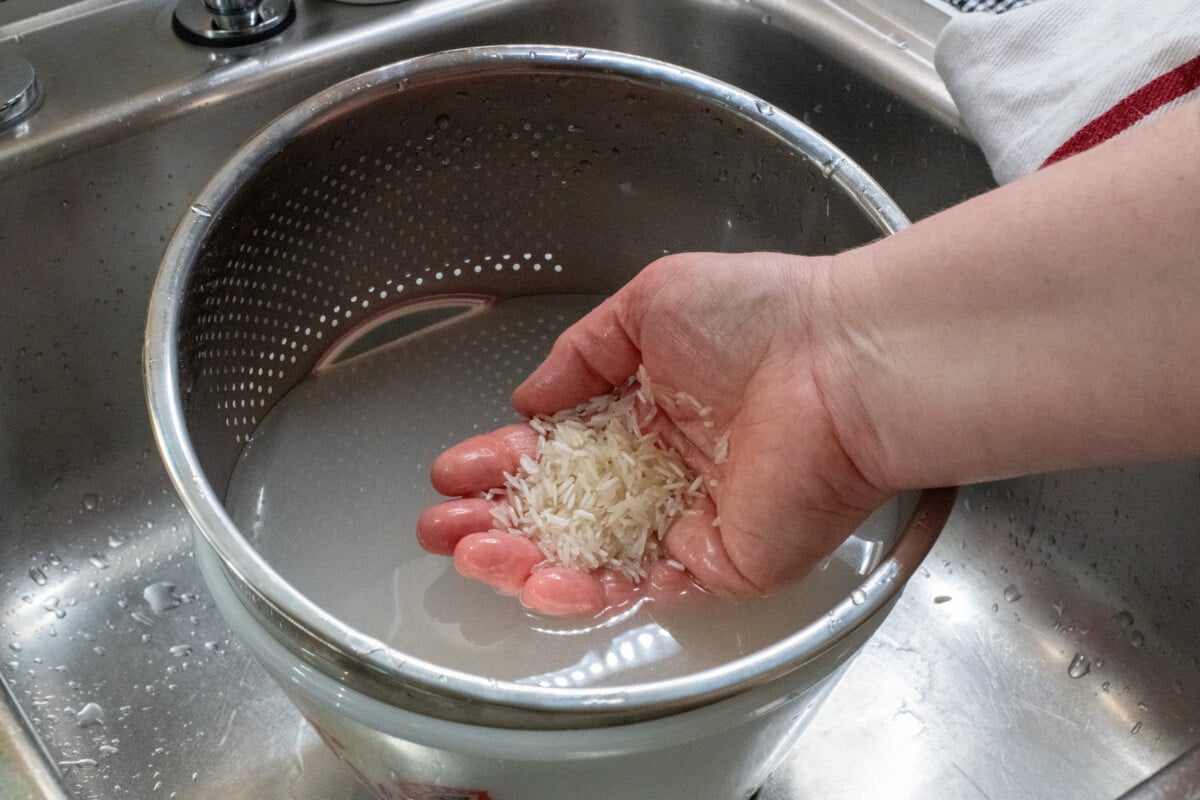
Here’s where we get realistic about this. Most of what’s in rice rinse water is starch. That huge list of nutrients? Most are found in very small amounts.
But Tracey, plants use starch!
Yes, they do, but they won’t be using the starch from your rice water. Plants don’t absorb starch from the soil. They create their own using the sugars they make during photosynthesis.
Also, what nutrients and how much of each are in your rice water varies greatly depending on the type of rice (brown, long grain, etc.) and where it’s grown. So, there will always be some nutrients, but not consistency. You have no way of knowing what your plants are getting and how much.
Interestingly enough, one of the things of note about rice water was its prebiotic and probiotic nature after letting it ferment. While this doesn’t help out your plants directly, it does feed the microbiome of the soil your plants are growing in, which can indirectly benefit plants. This can be especially helpful in your garden.
Rice water tended to boost the growth of two different types of fungi commonly found in the soil – Verticillium lecanii and Metarhizium anisopliae. The Metarhizium anisopliae in particular is important as it’s a well-known biological control for insects such as thrips, aphids, whiteflies, ticks and root weevils. Not a bad thing to have growing out in your garden, right?
In the end, yes, it would appear that using rice water on your plants does offer benefits to your plants. The downside is that there really aren’t enough nutrients in the water to forego fertilizing completely. So, if you were looking for a cheap, natural fertilizer that would give you monster houseplants and a lush garden, this isn’t it.
But that doesn’t mean you should throw this hack out with your rice water.
It only means you need to limit your expectations. If you look at it as a great way to reduce wastewater, while providing your plants with extra nutrients in addition to your regular fertilizing routine, then whatever benefits you do see are a bonus.
Using Rice Water on Your Plants – Do This First
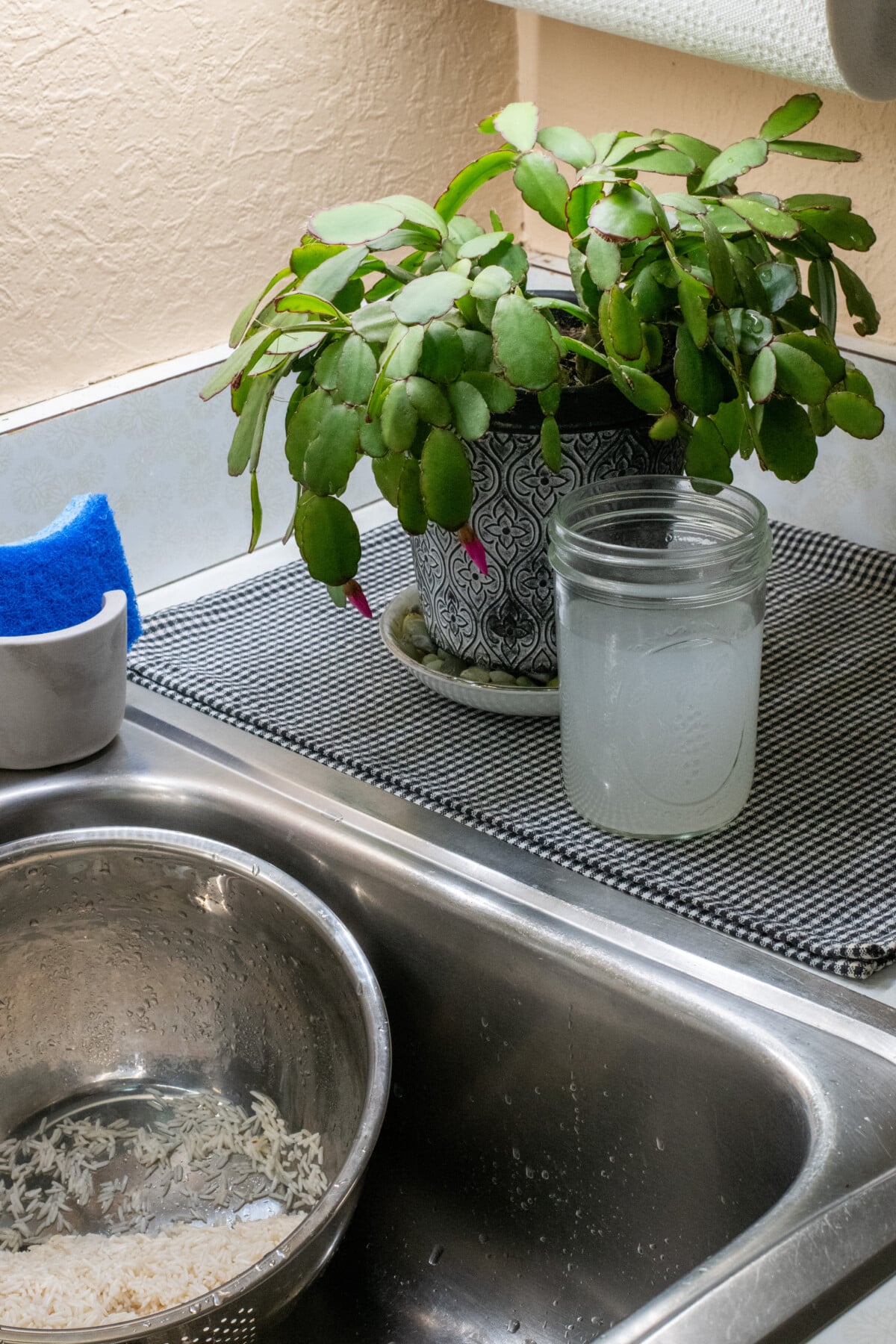
Of the few studies using rice water on plants, they used fermented rice water. So, I would suggest doing the same. Collect your rice water in a jar and put a loose lid on it. Leave it out on your counter for 24-48 hours.
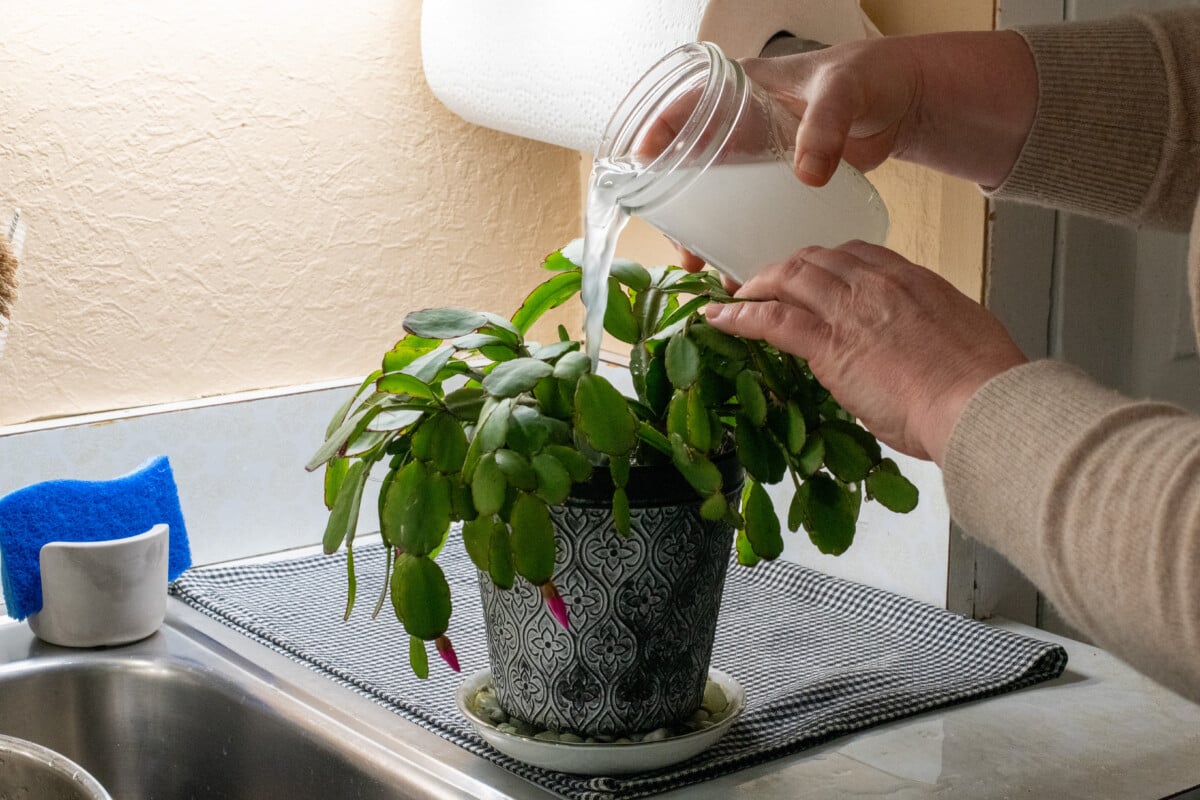
It should smell pleasantly sour. Store it in the fridge after that for up to a week. Mix it in with clean water when you water plants.
Something to keep in mind if you choose to use rice water on your plants indoors, it may smell if you use too much, too often or encourage mold growth. It can also attract fruit flies or fungus gnats if you use it too often. You’ll have to experiment with how much you use and how often.
Out in the garden, use it to water plants and as a soil drench to encourage the growth of those beneficial fungi.
Even though there isn’t a whole lot of research, what is there does seem promising, so why not give it a shot?

Get Garden Notes From Tracey, Right to Your Inbox
Pull up a chair on the front porch. Join 54,000+ gardeners who get Tracey\'s friendly notes, seasonal to-dos, and hands-on tutorials three times a week.