

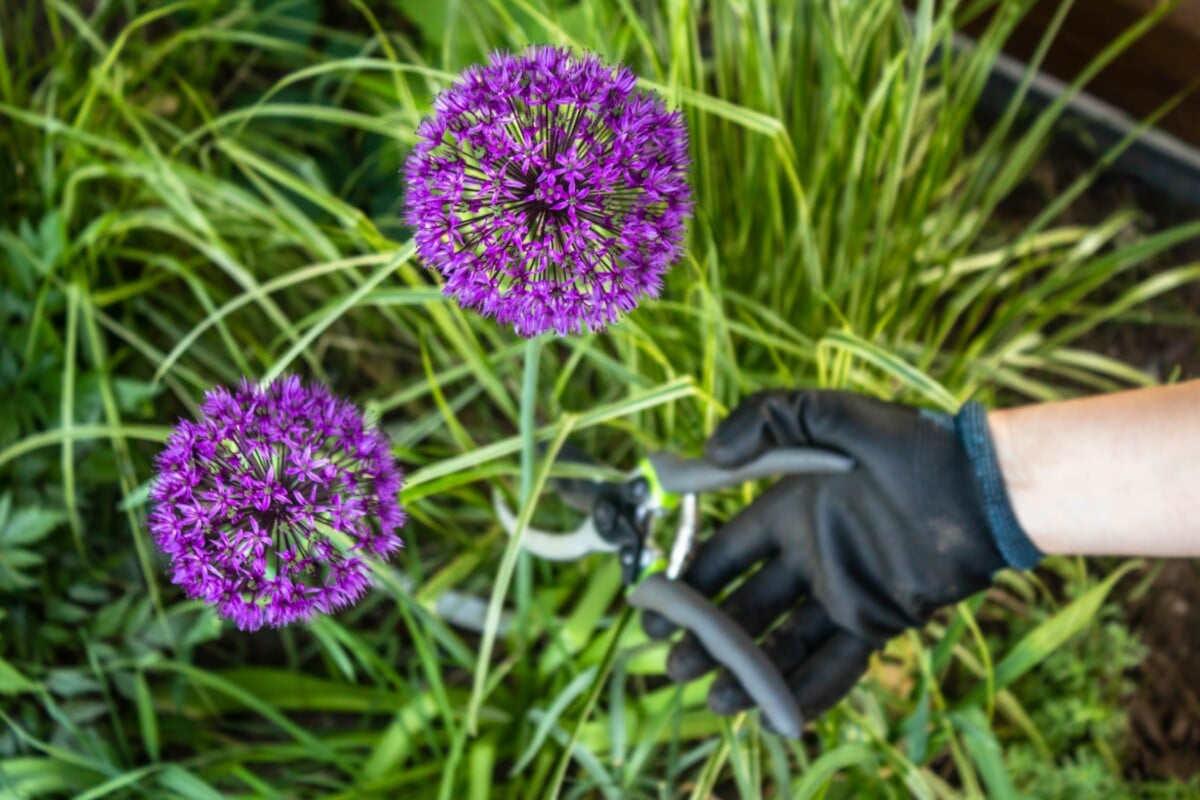
Alliums are stunning in the late spring and early summer garden. Their tall, architectural blooms hover over the rest of the flowers like purple fireworks. They’re the kind of blooms that have people stopping to ask, “What are those?” But once their season is over, the awe-filled question becomes more of an ugh-filled question.
“What were those?”
Of course, that begs the question, “Now what?”
Let’s talk about basic post-bloom care for your alliums that leaves them looking neat and tidy and sets them up to be show-stoppers again next year.
One of the great things about blooming alliums is that they aren’t particularly fussy flowers. While they do need a little attention, it’s nothing that’s going to take up your Saturday afternoon.
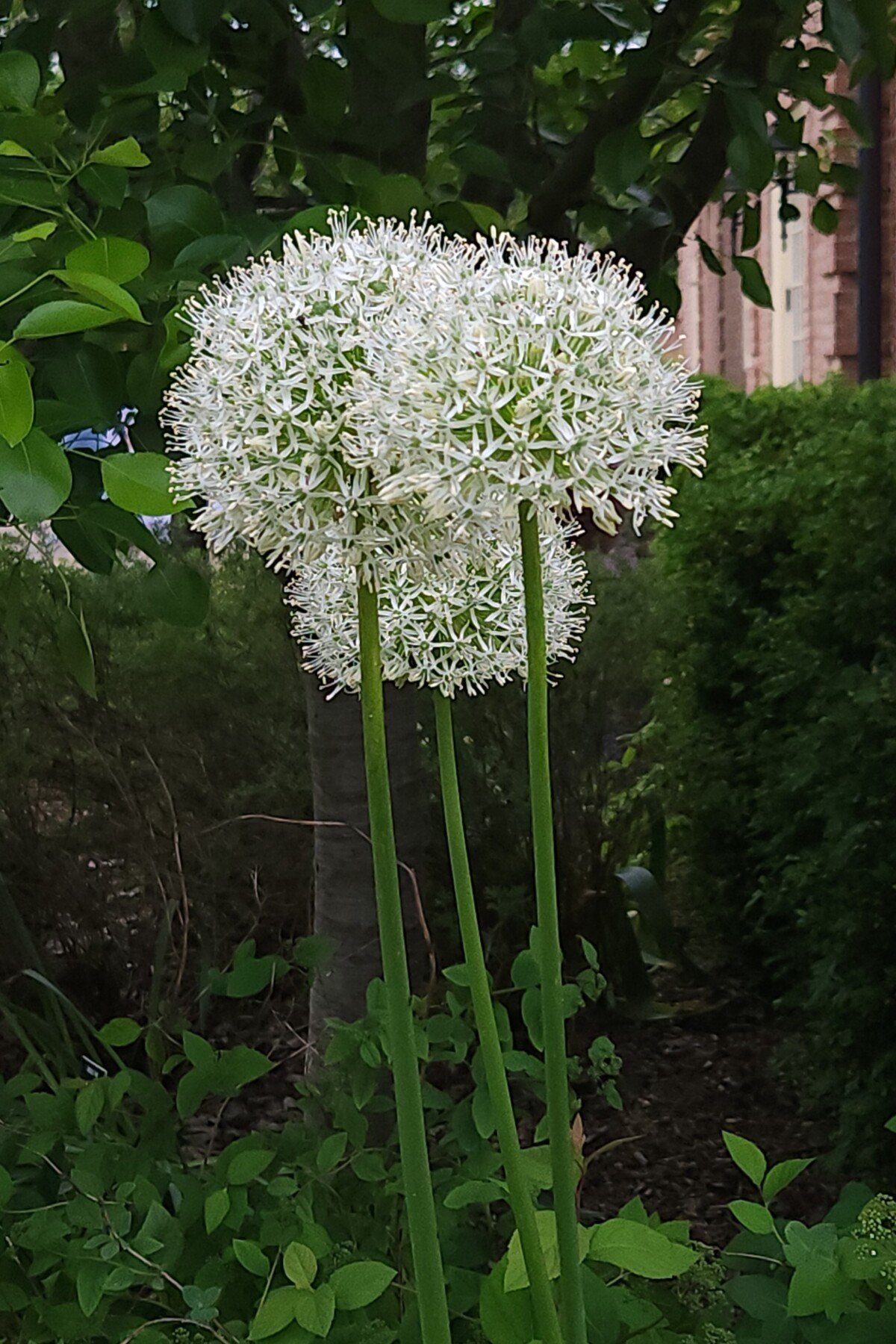
Rule Number One – Leave the Leaves
Like most spring-flowering bulbs, alliums use their leaves as batteries to collect energy, which is converted to everything needed to make – you guessed it – more blooms next year. Those sugars, etc., are stored in the bulb until next spring.
If you chop off the leaves too soon, you’re robbing yourself of flowers next year.
Wait until the leaves turn yellow and wither naturally. This usually takes about 6 to 8 weeks. Once they’ve fully died back, then you can go ahead and remove them at the base. Until then, just let them keep going, and they will die back eventually.
What to Do With Those Seed Heads

Now, what about those big, round flower heads? Once they’re done blooming, you’ve got options.
If you like a tidy garden, go ahead and snip them off once they start to fade. This prevents the plant from putting energy into producing seeds. On the other hand, if you’re into dried arrangements or like a more wild look in the garden, you can let those seed heads dry right on the stem. Just remember that the plants will use some energy to make seeds, which could mean fewer flowers the following season.
A Quick Post-Bloom Snack
Fertilizer? Yep, a post-bloom snack helps. It’s important to fertilize while the leaves are still green and photosynthesizing. I like a balanced fertilizer (I’m a big fan of Espoma Garden Food) with a decent amount of phosphorus to support root health. A granular 5-10-10 or 10-10-10 applied around the base (but not directly on the bulb or foliage) works well. Gently scratch it into the soil, water it in, and let the leaves continue doing their thing.
Rein in the Water
Speaking of water, alliums don’t like wet feet. Keep the soil lightly moist during active growth, but once the leaves start to yellow, you can dial it back. If you’ve got heavy clay soil that doesn’t drain well, you might want to consider lifting and relocating them in the fall to a sandier or loamier spot. Alliums are happiest in well-drained soil with full sun exposure.
No, you don’t have to dig up your allium bulbs every year. These guys like to settle in and do their thing without being fussed over. However, if you find that over a few seasons the blooms are getting smaller or fewer, that’s your sign that it’s time to divide and conquer.
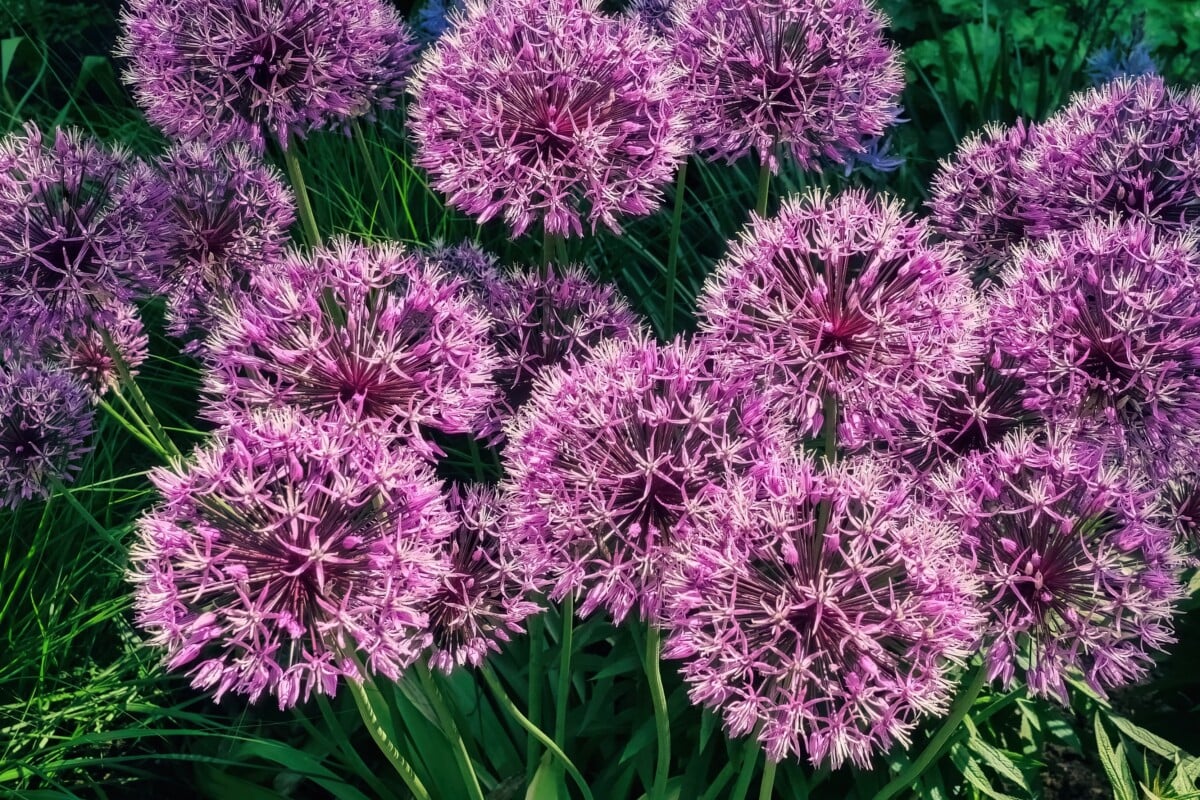
Wait until fall when they’re fully dormant, then gently dig them up, separate any offset bulbs, and replant them at the appropriate depth (typically 2–3 times the height of the bulb).
Cold-climate gardeners, take note: if you’re in a northern zone where the ground freezes hard, protect your alliums by applying a light mulch after the first frost. It adds a nice buffer between your bulbs and the frosty cold. Wait until the ground is cold (but not frozen) and apply a few inches of shredded leaves, straw, or wood chips. Come spring, rake it back to let the soil warm up.
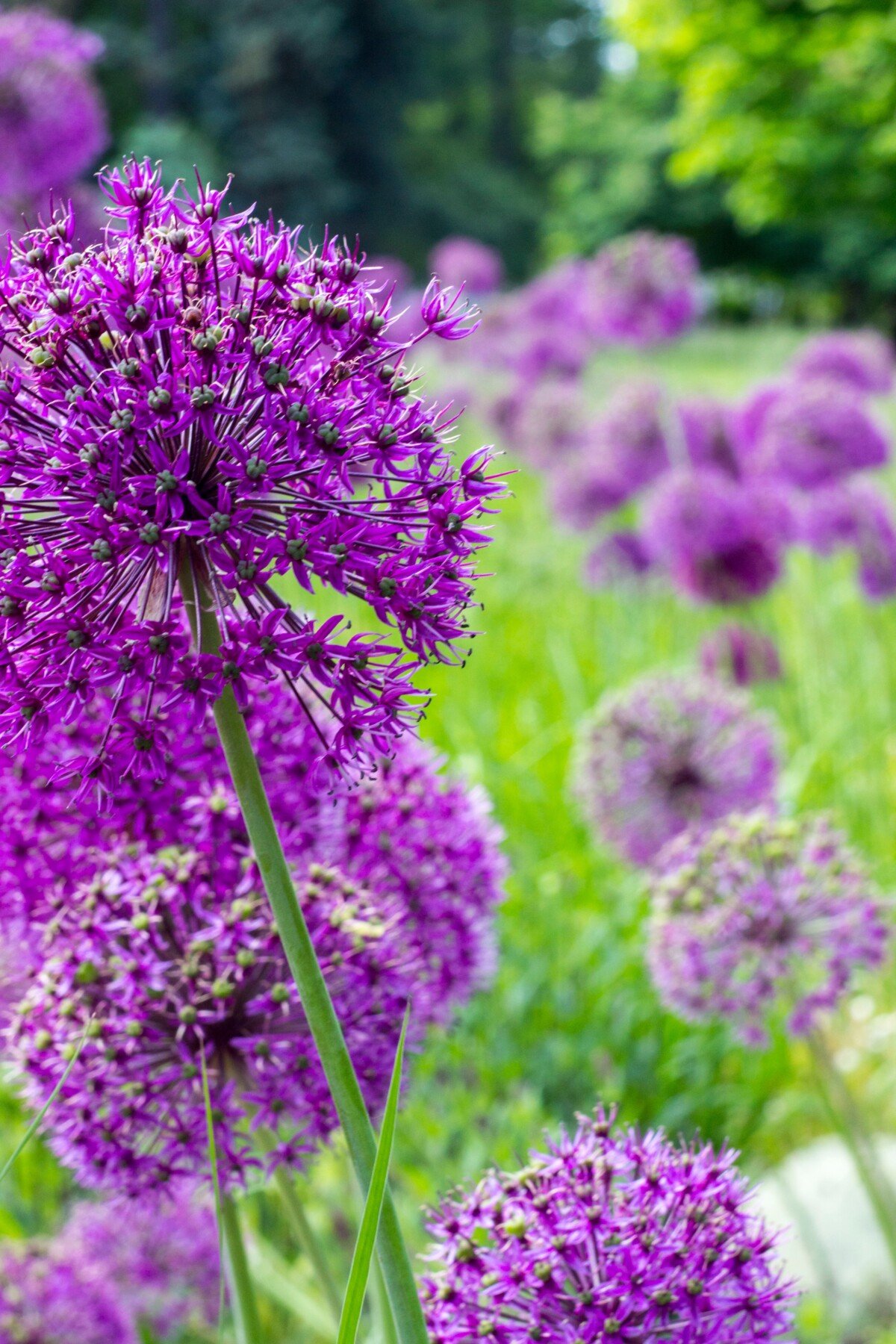
And that’s that.
This whole “aftercare” routine might not be as exciting as the blooming season, but it’s what sets your garden up for future success. Because as much as I love the dramatic entrance alliums make every spring, it’s what you do after the show is over that sets you up for another amazing performance next year.
Get the famous Rural Sprout newsletter delivered to your inbox.
Join the 50,000+ gardeners who get timely gardening tutorials, tips and tasks delivered direct to their inbox.