


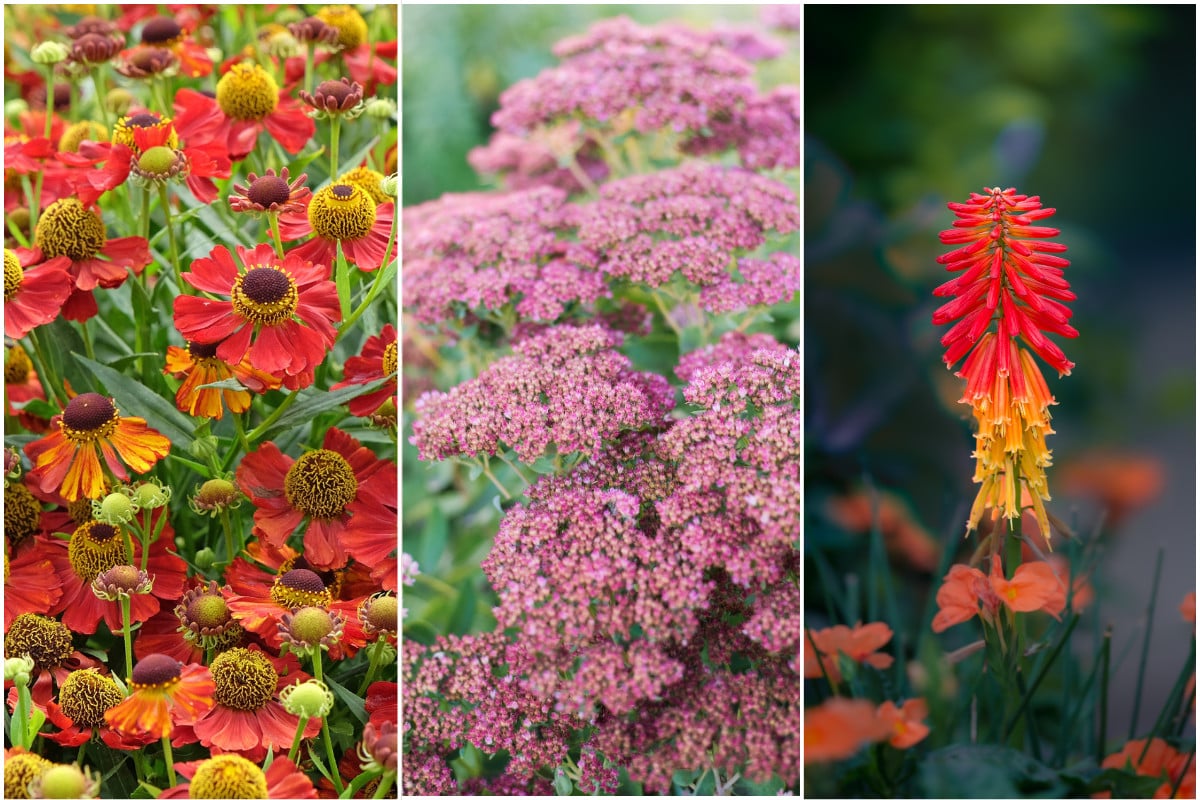
Spring and summer flowers offer a profusion of color that captivates from May through August. But what about fall? Not to be outdone, autumn offers a palette of sultry purples, burnished reds, coppery oranges and golds that rival the most glorious sunshine. So often, though, we neglect to plant for this final show-stopping season before winter resets our gardens. Add a few of these fall gems to your floral landscape for a flower garden that delights right up until that first frost.
Why Plant Flowers for the Fall?
I find myself puttering in my flower beds more in the fall than at any other time of the year. I’m not being baked by the sun or eaten alive by bugs. And I find the color palette to be one of my favorites of the year.
If there’s a slight drizzle, it’s even better. Nothing makes a fall garden pop more than a gray, rainy day.
But until recently, I never planned or planted for this time of the year. Then I moved into a new home and inherited a couple of barberry bushes in my front flower bed. Their gorgeous display of burgundy foliage in the fall had me looking for more autumn beauties to complement them.
If we plan them right, flower gardens offer a progressive profusion of color across the seasons. Spring’s array of colors starts in the primary with bulbed flowers in hues of yellow, blue and red. As the weather warms, so does the tapestry in our gardens. Purples, oranges, and vibrant pinks join the mix, culminating in an absolute riot of colors right through August.
But when fall rolls around, our gardens can seem lacking.
By adding some perennials that put on a show in autumn, you can easily create a dramatic fall floral display, extending your floral season with little effort. These gorgeous fall plants will come back year after year. And fall is even the best time of year to plant them.
Late Bloomers
Let’s start with some perennials that have real staying power. These particular flowers show up on the scene in mid to late summer and keep blooming right until the first frost, offering vibrant color as your garden transitions from one season to the next. Many of these blooms are pollinator favorites, providing important food to insects while the rest of the garden winds down.
American Blue Vervain (Verbena hastata)
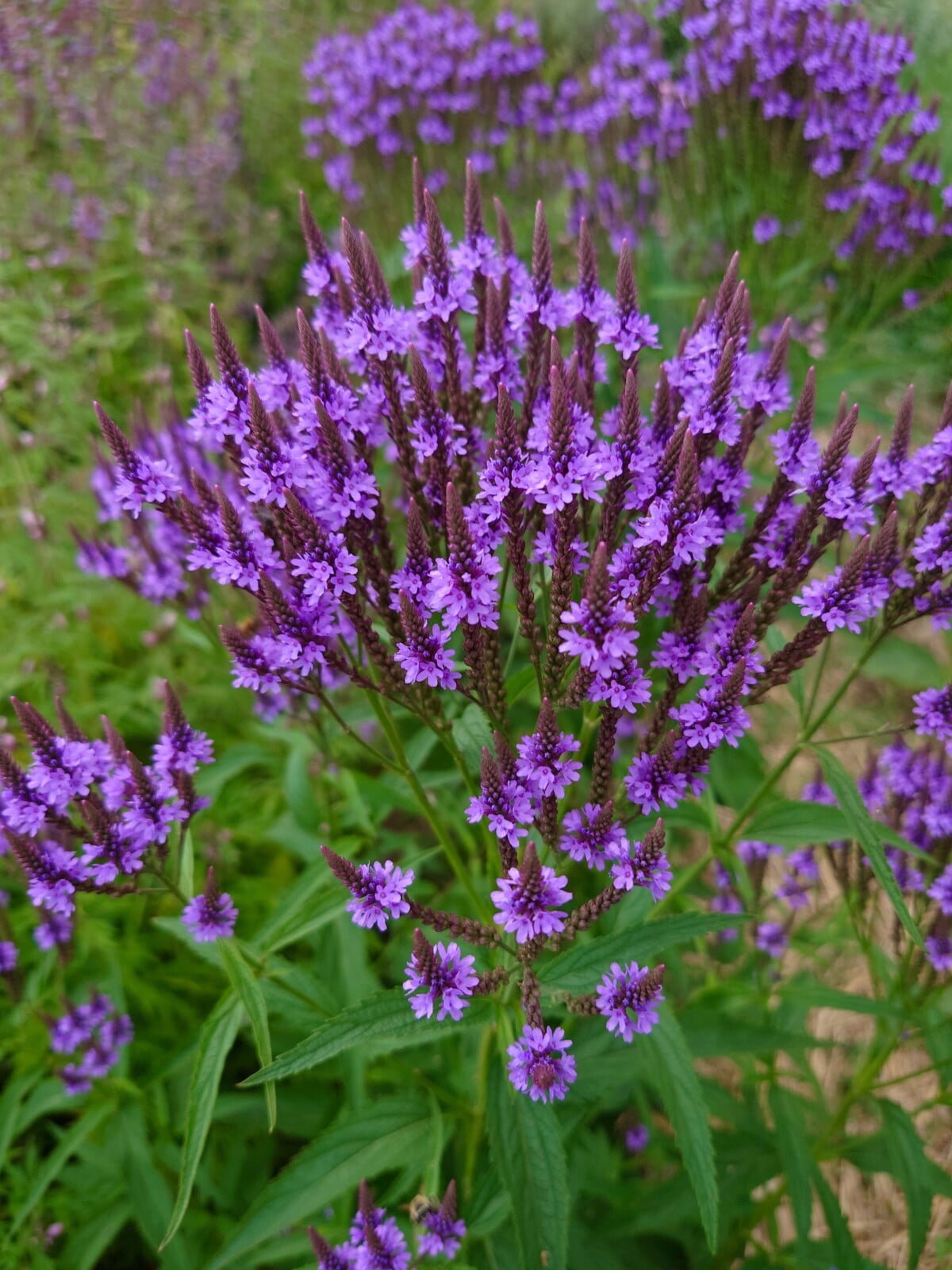
This beautiful native wildflower is a stunner with tall, slender spikes of lavender-blue blooms that appear from mid-summer into fall. It’s a magnet for butterflies, hummingbirds and other pollinators. If you need dramatic height in your garden, consider a stand of American Blue Vervain. Its wild, natural look makes it especially suited for more organic plantings.
- Sun: Full sun to part sun
- Water: Medium to moist
- Soil: Average, loamy, tolerates clay
- Zones: 3–8
Anise Hyssop (Agastache foeniculum)
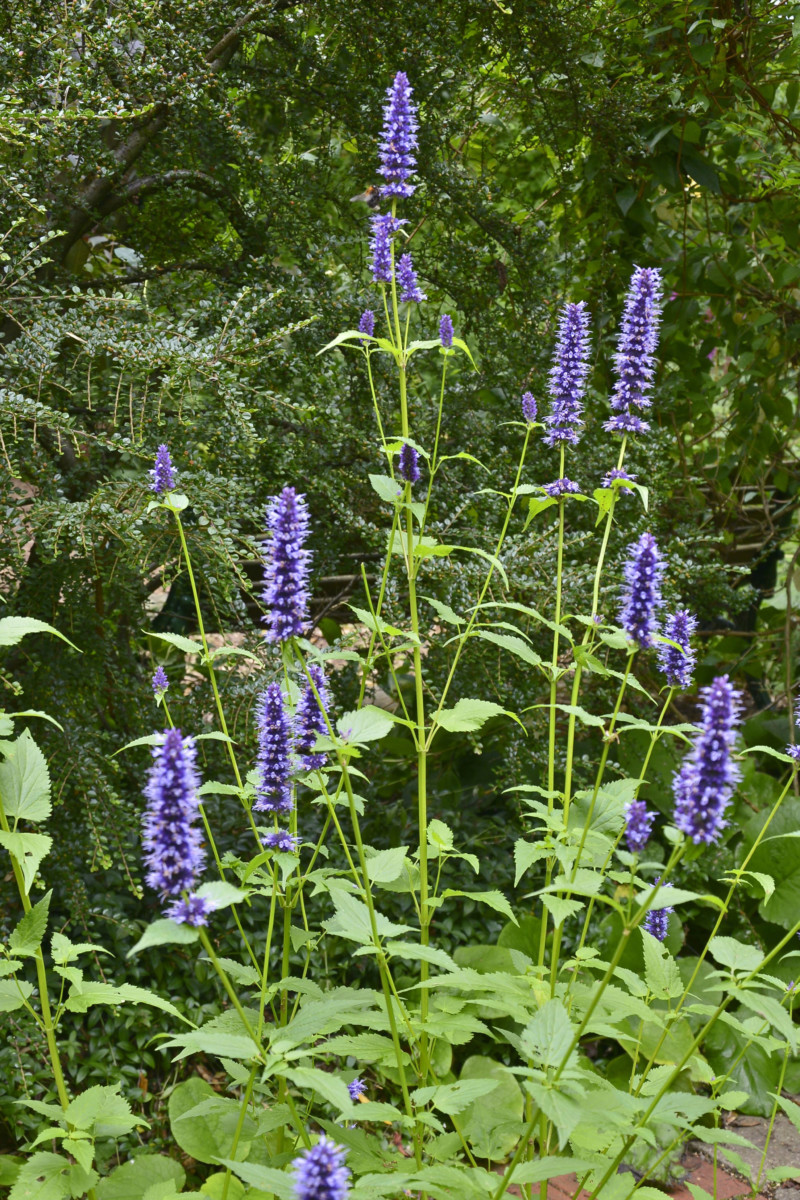
Our resident perennial queen, Mickey, is on a mission to make sure we are all growing anise hyssop in our gardens. (She makes some good points here.) With its fragrant licorice-scented leaves and beautiful spikes of soft purple, it’s a great transition from the shocking hues of summer into the colors of fall. It’s another favorite in the pollinator crowd, attracting bees, hummingbirds and butterflies alike. Anise hyssop isn’t just another pretty face; this tough perennial is also drought-tolerant and low-maintenance.
- Sun: Full sun
- Water: Low to medium
- Soil: Well-drained, sandy or loamy
- Zones: 4–9
Blanket Flower (Gaillardia aristata)

Blanket flower is a cheerful daisy-like perennial with fiery red, orange, and yellow petals. These warming blooms will continue from midsummer until frost. This perennial is also a great option if your summers are hot and your rain is few and far between. In a fall garden, blanket flower blooms in the colors of a sunset.
- Sun: Full sun
- Water: Low once established
- Soil: Sandy or well-drained; tolerates poor soils
- Zones: 3–10
Coneflower (Echinacea purpurea)

This iconic native perennial blooms in shades of purple, pink, and white, extending well into fall. What’s more, their spiky central cone seedheads provide a natural source of food for birds through autumn. Hardy, drought-tolerant, and pollinator-friendly, coneflowers bring structure and resilience to the fall garden.
- Sun: Full sun
- Water: Low to medium
- Soil: Well-drained, tolerates poor soil
- Zones: 3–9
Coreopsis, Threadleaf (Coreopsis verticillata)

With its feathery foliage and delicate pale-yellow flowers, coreopsis creates a soft, meadow-like look. It makes a lovely filler between more dramatic fall perennials. Coreopsis is drought-tolerant and thrives on neglect, making it an easy choice for late in the season.
- Sun: Full sun
- Water: Low to medium
- Soil: Sandy or well-drained, average fertility
- Zones: 3–9
Japanese Anemone (Anemone hupehensis)

Japanese anemones bring elegant white, pink, or lavender blooms on tall, graceful stems that sway in the breeze. Their simple flowers brighten up shady corners and add a touch of refinement to perennial borders. Long-lived and deer resistant, they’re a sophisticated addition to fall displays.
- Sun: Part sun to light shade
- Water: Medium, prefers consistent moisture
- Soil: Rich, moist, well-drained
- Zones: 4–8
Red Hot Poker (Kniphofia uvaria)

If you’re looking for drama, it’s hard to beat the torch-like flower spikes of Red Hot Poker. In fiery shades of orange, red, and yellow, it makes quite a statement. Some cultivars continue blooming into early fall, extending their impact in mixed borders. Their dramatic form pairs especially well with ornamental grasses and sedum.
- Sun: Full sun
- Water: Medium; drought-tolerant once established
- Soil: Well-drained, sandy or loamy
- Zones: 5–9
Rose Verbena (Verbena canadensis)

A spreading perennial with clusters of bright pink to purple blooms, rose verbena flowers reliably from late summer into fall, creating a carpet of color that softens edges, rock gardens, or the front of borders. It’s a hardy groundcover option for injecting bright, cheerful color late in the season.
- Sun: Full sun
- Water: Low to medium
- Soil: Well-drained, sandy or rocky
- Zones: 5–9
Russian Sage (Perovskia atriplicifolia)

Russian sage takes on an ethereal glow in the fall light with its airy spires of lavender-blue blooms and silvery foliage. Another drought and heat-tolerant option makes it perfect for autumn borders. The combination of texture, color, and fragrance makes it a standout.
- Sun: Full sun
- Water: Low
- Soil: Well-drained, lean or sandy
- Zones: 4–9
Moving on, these perennials make their debut as the flowers of summer fade. These bold, colorful blooms were meant for crisp leaves and golden sunshine.
Aster (Symphyotrichum spp.)

Asters are the quintessential fall perennial, bursting into bloom just as most summer flowers fade. Their daisy-like flowers come in shades of purple, blue, pink, and white, creating a veritable carpet of color from September through October. Migrating monarch butterflies adore asters, making them a must for butterfly lovers.
- Sun: Full sun
- Water: Medium; prefers regular watering but tolerates short dry spells
- Soil: Average, well-drained; slightly moist is best
- Zones: 3–8
Boltonia (Boltonia asteroides)

Known as false aster, Boltonia produces puffy clouds of tiny daisy-like blooms in pink, lavender, or white during late summer and early fall. Its tall, airy stems bring a soft, billowing effect to borders and wildflower gardens. Boltonia adds a little sway and movement to the garden.
- Sun: Full sun
- Water: Medium; tolerates short dry periods
- Soil: Average to moist, well-drained
- Zones: 4–9
Chrysanthemum, Hardy Garden Mum (Chrysanthemum × morifolium)
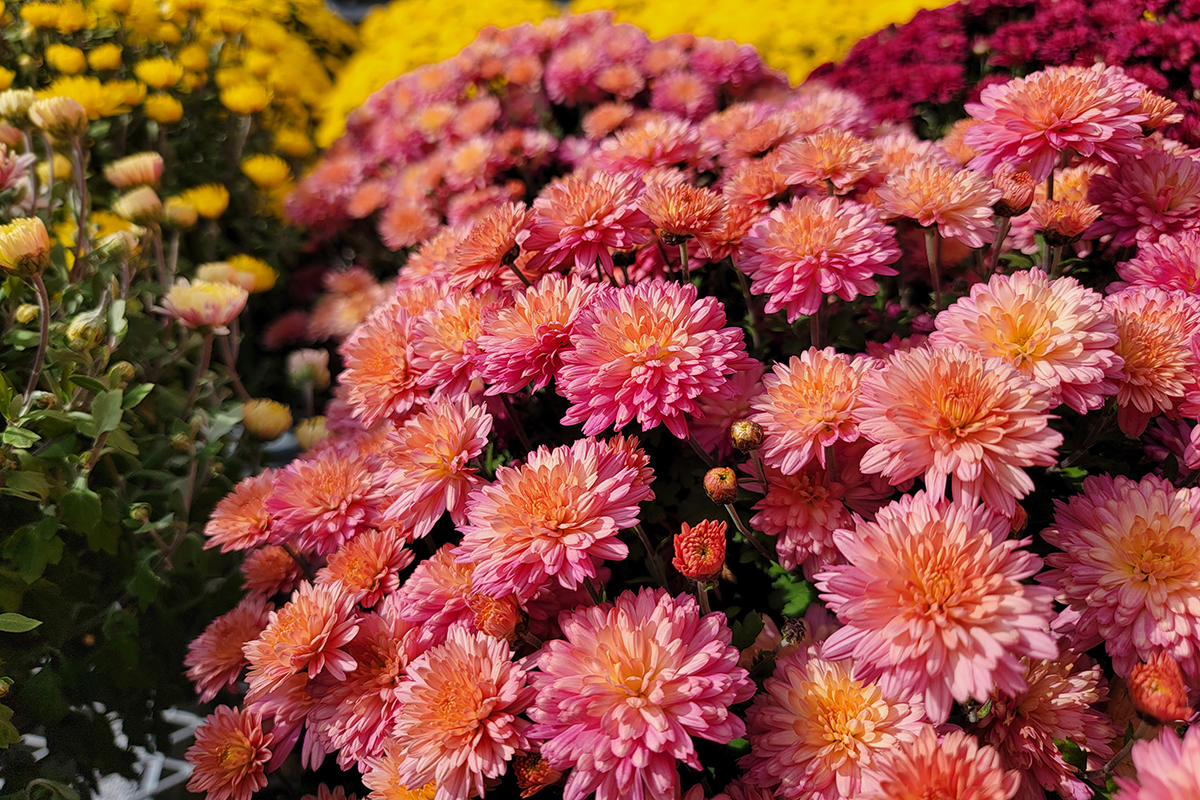
Hardy garden mums are perhaps the best-known fall flowers. Their rounded mounds of daisy-like blooms deliver fall hues right when the garden needs them most. They’re showy, easy to care for, and perfect for both containers and beds.
- Sun: Full sun
- Water: Medium; consistent moisture during bloom
- Soil: Rich, well-drained
- Zones: 5–9
Goldenrod (Solidago spp.)
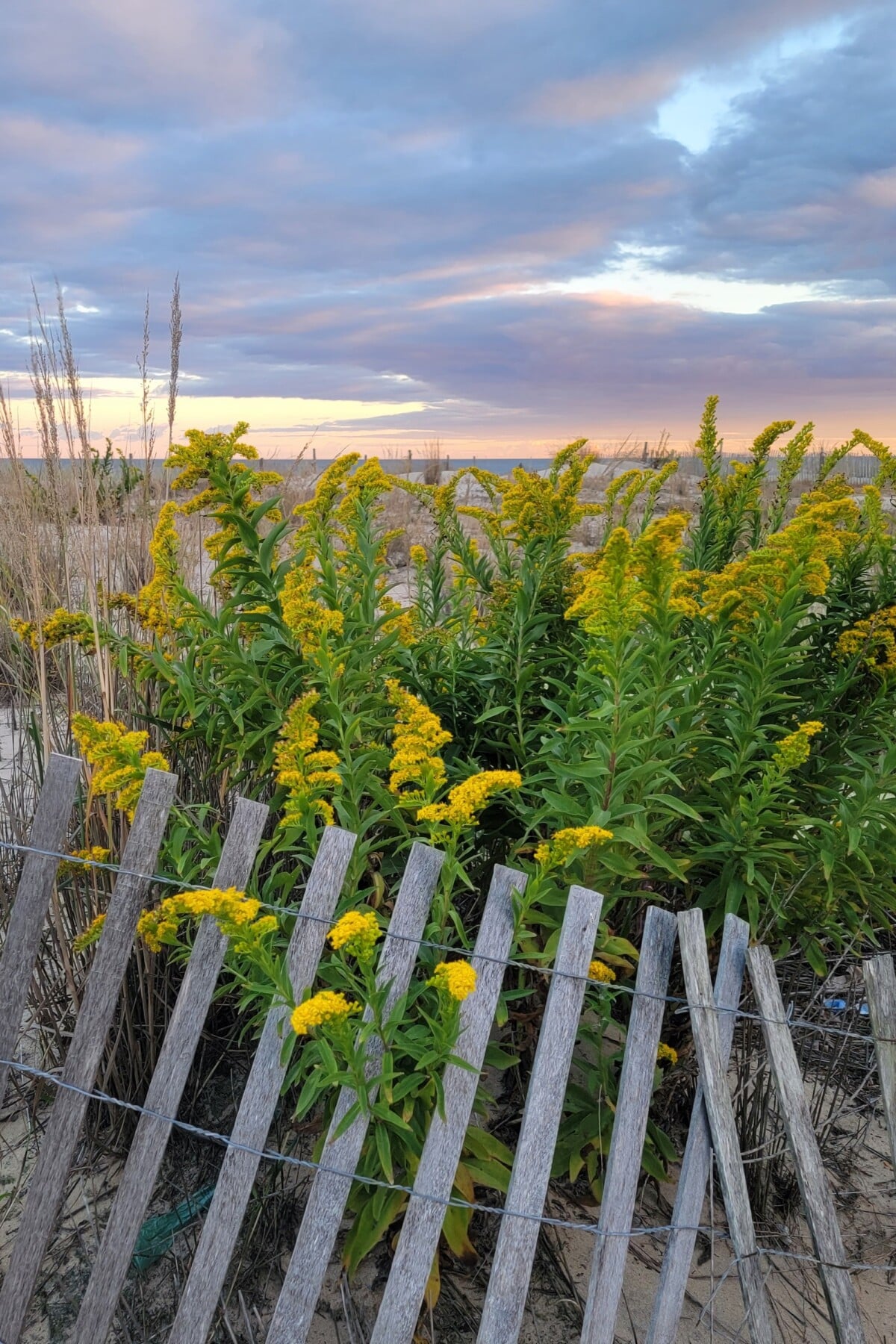
Now, I know what you’re thinking. No, the allergy thing is a myth. (It’s actually ragweed that causes all the trouble.) Goldenrod is a native powerhouse, producing golden plumes in September and October that light up meadows and borders. While it may grow wild, it also looks refined and classy tucked in among ornamental flower beds. Its warm hues blend beautifully with asters and ornamental grasses.
- Sun: Full sun
- Water: Medium; drought-tolerant once established
- Soil: Average to dry, well-drained
- Zones: 3–9
Helenium / Sneezeweed (Helenium autumnale)

Helenium bursts on the scene with bold daisy-like blooms in shades of orange, red, and yellow. Its warm colors capture the essence of fall, while its nectar-rich flowers attract bees and butterflies. With strong stems and a long bloom period, it adds reliability and drama to late-season displays.
- Sun: Full sun
- Water: Medium; prefers moist conditions
- Soil: Fertile, well-drained, slightly acidic to neutral
- Zones: 3–8
Sedum, Autumn Joy (Hylotelephium ‘Herbstfreude’)

Autumn Joy sedum transitions from pale pink buds in summer to deep rosy-red flower heads in fall. Its long-lasting blooms persist well into winter, often turning bronze and holding their shape as dried seedheads. Autumn Joy is a favorite of mine, and I’ve been taking cuttings from one of my plants to add to other parts of the garden. Drought-tolerant and low-maintenance, it’s a backbone perennial for fall color and structure.
- Sun: Full sun
- Water: Low; drought-tolerant
- Soil: Well-drained, lean or average fertility
- Zones: 3–9
Toad Lily (Tricyrtis hirta)

Toad lilies look as though they’re something from a fairy tale, with their exotic, orchid-like flowers speckled with purple and blue in the shadiest parts of the garden during fall. Their intricate blooms begin popping up when most perennials are winding down, making them true gems of the season. They thrive in woodland borders and bring a touch of the unexpected.
- Sun: Part shade to full shade
- Water: Medium to high; prefers moist conditions
- Soil: Rich, well-drained, humus-heavy
- Zones: 4–9
Turtlehead (Chelone glabra)
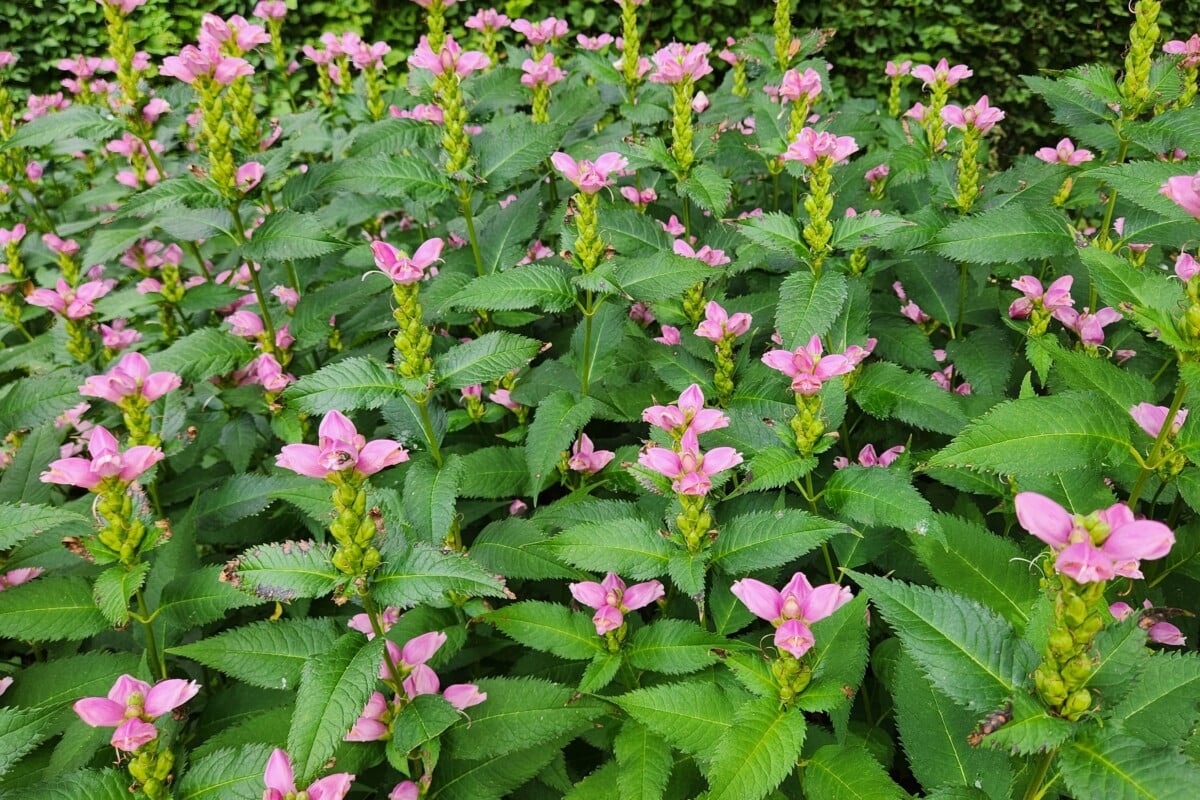
Named for their turtle-shaped blossoms (I don’t really see it), turtleheads bear clusters of white or pink flowers from late summer into fall. They’re a pollinator favorite, particularly with bumblebees, and their upright growth habit adds structure to moist garden areas. Native to North America, they’re a great choice for naturalized plantings.
- Sun: Full sun to part shade
- Water: Medium to high; prefers moist to wet soils
- Soil: Rich, consistently moist, well-drained
- Zones: 3–8
Of course, fall color in the flower garden doesn’t only come from blooms. Many perennials are grown for their beautiful foliage, too. Quite a few do their best to impress when the leaves begin to fall, along with the temperatures.
Amsonia / Bluestar (Amsonia hubrichtii)

Bluestar is prized for its fine, threadlike foliage that turns a brilliant golden yellow in fall, creating a soft glow. In spring, it also offers clusters of pale blue flowers, making it a true multi-season favorite. Its airy texture pairs beautifully with bold-leaved perennials and ornamental grasses.
- Sun: Full sun to part sun
- Water: Medium; prefers consistent moisture but tolerates some drought
- Soil: Average, well-drained
- Zones: 5–9
Geranium, Bloody Cranesbill (Geranium sanguineum)

This tough groundcover geranium offers small magenta blooms in spring and early summer, likely causing one to wonder at the name. But its name becomes apparent in the autumn when the deeply lobed leaves turn brilliant shades of crimson and scarlet, spreading vivid color through borders and rock gardens. Low-maintenance and hardy, it thrives in less-than-ideal soils.
- Sun: Full sun to part shade
- Water: Medium; drought-tolerant once established
- Soil: Well-drained, average fertility
- Zones: 3–8
Heuchera (Coral Bells)

Coral bells are standout foliage perennials, grown primarily for their leaves, which come in a kaleidoscope of colors—deep burgundy, gold, lime, silver, and even nearly black. They are one of the few plants I can grow in my shady side flower bed. As fall approaches, their foliage often intensifies in tone, creating rich contrasts in borders and containers. Low mounds of colorful leaves remain vibrant long after blooms are gone, making them a favorite for extending seasonal interest.
- Sun: Part shade to full shade (some varieties tolerate full sun)
- Water: Medium; prefers consistent moisture but dislikes soggy soils
- Soil: Rich, well-drained, humus-rich
- Zones: 4–9
Heucherella (Foamy Bells)

Foamy bells are hybrids of Heuchera and Tiarella, combining the colorful foliage of coral bells with the leaf shapes and creeping habit of foamflower. Their foliage is often intricately patterned or lobed, and in fall, colors deepen to rich reds, oranges, and purples. Compact, shade-loving, and versatile, they’re excellent for edging beds or filling in around shrubs where they provide a tapestry of autumn color.
- Sun: Part shade to full shade
- Water: Medium; keep evenly moist, not soggy
- Soil: Rich, moist, well-drained
- Zones: 4–9
Little Bluestem (Schizachyrium scoparium)
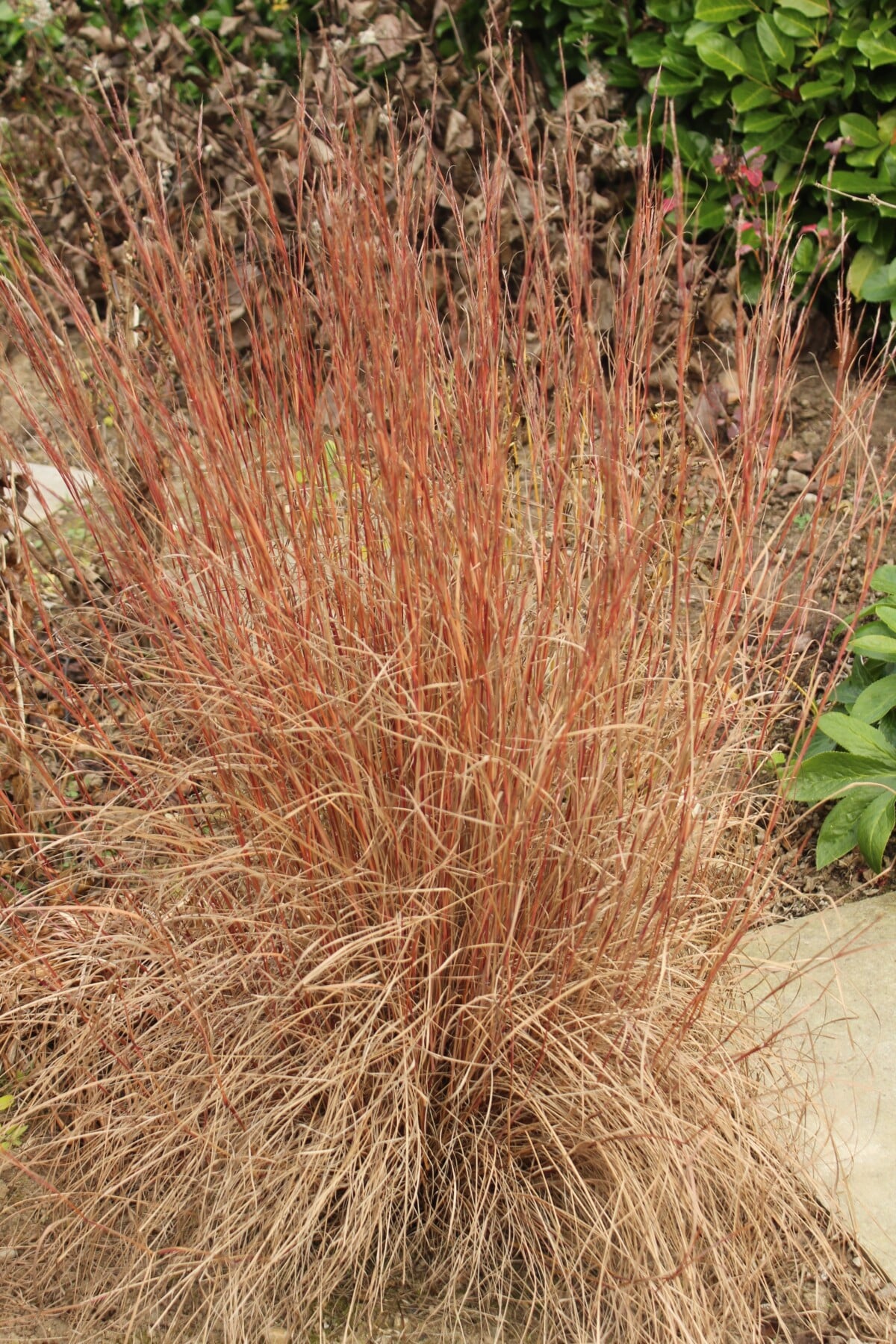
This native prairie grass shifts from blue-green in summer to copper, orange, and red in fall, glowing in the autumn light. Its fine texture adds movement and contrast in mixed borders. It’s drought-tolerant, wildlife-friendly, and keeps visual interest even through winter with its seedheads.
- Sun: Full sun
- Water: Low; drought-tolerant
- Soil: Well-drained, sandy or rocky
- Zones: 3–9
Mukdenia, Red-Leaf or Nova Flame (Mukdenia rossii ‘Karasuba’ ‘Nova Flame’)

Mukdenia starts with bright green, maple-like leaves in spring that gradually redden as the season progresses, peaking in a brilliant scarlet display by fall. Its compact size makes it ideal for small spaces, shady borders, or woodland gardens. It also offers clusters of white spring flowers for multi-season appeal.
- Sun: Part shade
- Water: Medium; prefers even moisture
- Soil: Rich, well-drained, humus-rich
- Zones: 4–8
Fall doesn’t have to be the end of beautiful blooms in your garden. With a few of these perennials, you can easily transition into the drama of autumn, a season known for its color.
Get Garden Notes From Tracey, Right to Your Inbox
Pull up a chair on the front porch. Join 54,000+ gardeners who get Tracey\'s friendly notes, seasonal to-dos, and hands-on tutorials three times a week.