

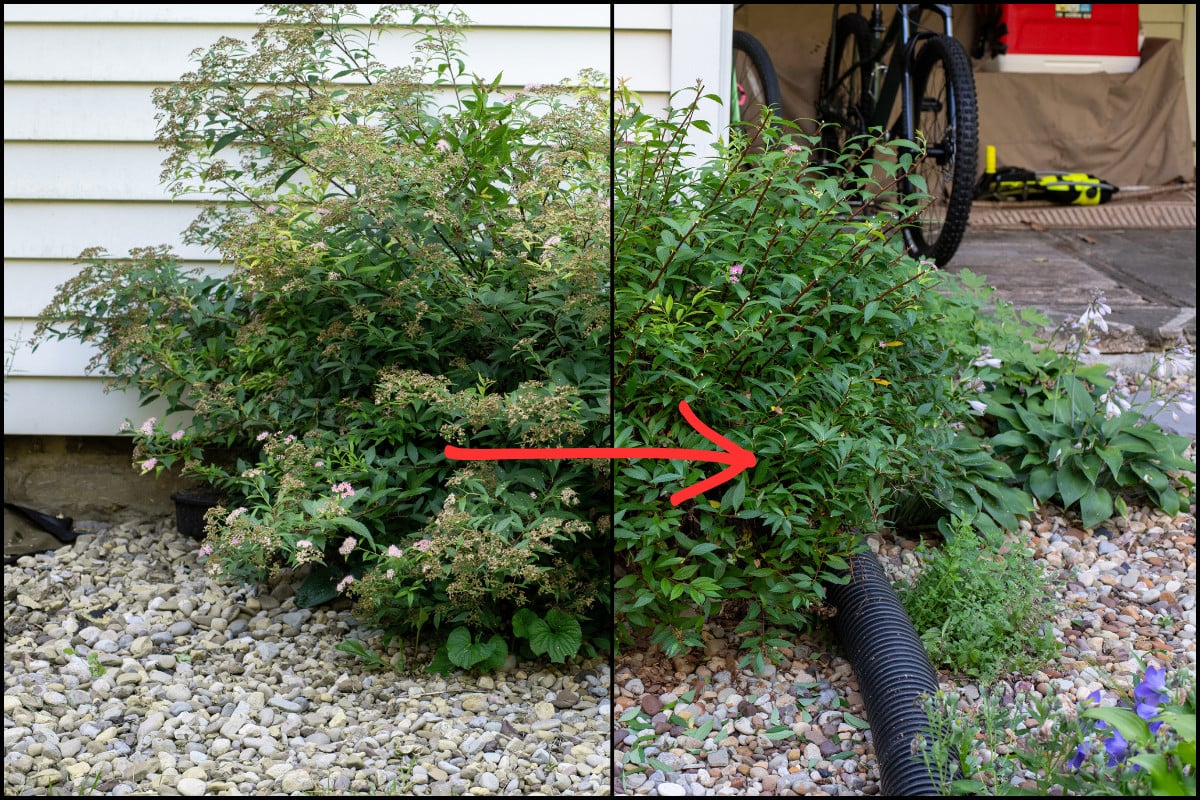
Japanese spirea is a beautiful addition to any landscape, with its fluffy pink clouds of flowers. That is, until those fluffy pink clouds turn into crusty brown clusters, which are far less visually appealing. But with a little effort, you can get your spirea to bloom nearly nonstop, all summer long.
A Love–Hate Relationship
Before we dive in, I have to do what every annoying blogger does and share a personal story about the topic at hand. (Hey, be thankful this isn’t a cooking blog and I’m not spending seven paragraphs waxing on about a recipe handed down through generations of my family.)
When I moved into my new place in the spring of 2024, I inherited a woefully overgrown Japanese spirea. Who knows when it had last been pruned? At first, I couldn’t even tell what it was because it was a crunchy brown mess. But about a month after it leafed out, I figured out what it was.
This thing made me nervous.
It was so overgrown with both new and dead growth that I couldn’t see into the center of it. It sprawled onto the old wood ramp that led up to my patio, and I always skirted its ankle-brushing branches. Who knew what creepy things were hiding in its dark depths?
On May 3rd, I found out exactly what was hiding in it.
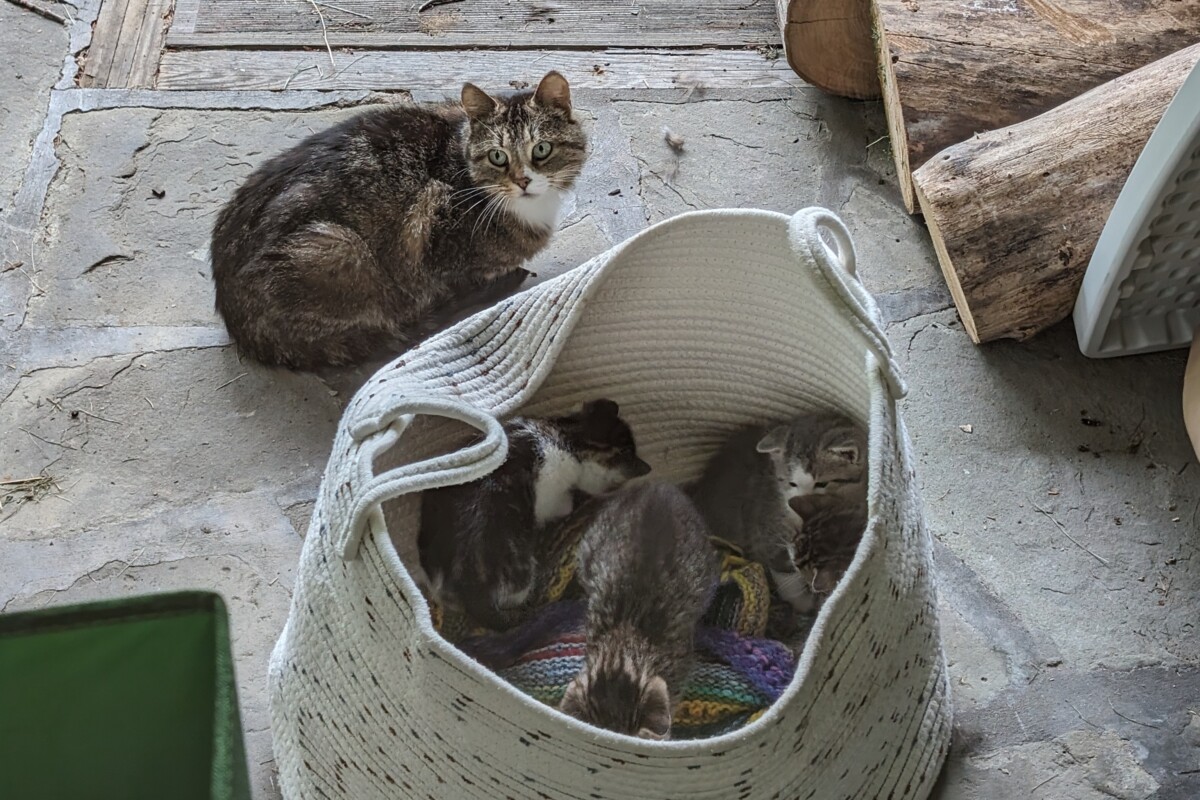
I made a vow, then and there, that I would prune the dickens out of this thing just as soon as Mama Cat moved her babies out. I didn’t want any more surprise babies. As cute as they were.
(Of course, this was a solid month before the snapping turtles showed up en masse from the creek to lay their eggs in my flower beds, at which point I gave up the notion that this was “my” home.)
Japanese spirea (Spiraea japonica) is a popular, easy-care shrub in the Rosaceae family. Yup, the same family as roses. And unsurprisingly, their summer care is quite similar. They will fill up with buds in the spring and put on a big show as we head into midsummer. And then peter out about mid-July.
That is, unless you give them a little haircut.
Deadheading spirea is a little different than deadheading your marigolds, but the result is a dramatic display of more flower clusters right up until the first frost.
Speaking of roses…
Related Reading: Triple Your Rose Blooms This Summer with This Simple Trick
Why is Deadheading Important?
In the spring, your spirea puts a ton of energy into jamming as many buds onto the plant as possible. It’s all about reproducing. They want to ensure there will be new plants next year, so the more flowers, the better.
They bloom, get pollinated, and then start pouring all their energy into seed production.
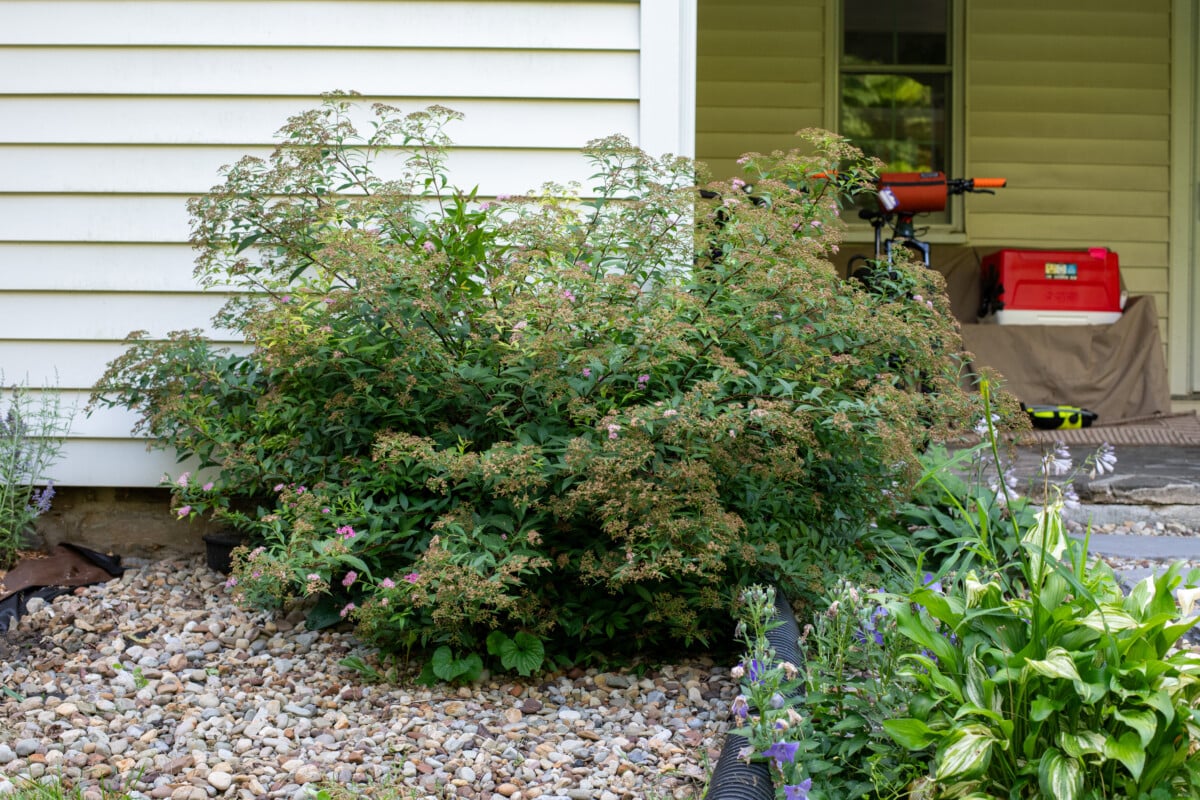
Here’s where the trouble starts. Once a plant thinks its job is done, it starts slowing down. But, if instead, you keep cutting off the spent flowers, you trick the plant into thinking it hasn’t completed its job. So, it starts over again and pushes out more blooms.
Spirea, especially Japanese spirea (Spiraea japonica), responds beautifully to this little ruse.
Left alone, you’ll get one big burst of color and then a few much smaller blooms here and there until fall comes. Nice, but kind of underwhelming when you know what these plants are capable of.
Deadheading Spirea Two Ways
There are actually two ways to approach this. You can continuously deadhead as the plant blooms fade, or you can do one whole-plant light pruning in midsummer. I love the idea of continuously deadheading my spirea as bloom clusters (called corymbs) fade, but my summer is way too busy. So, I like to wait and do the whole thing at once, midsummer.

You’ll want to start with a pair of sharp, clean and sterilized pruning shears. (I love my Fiskars pruning snips for this as secateurs are overkill for this job and you need something a bit beefier than a pair of scissors.)
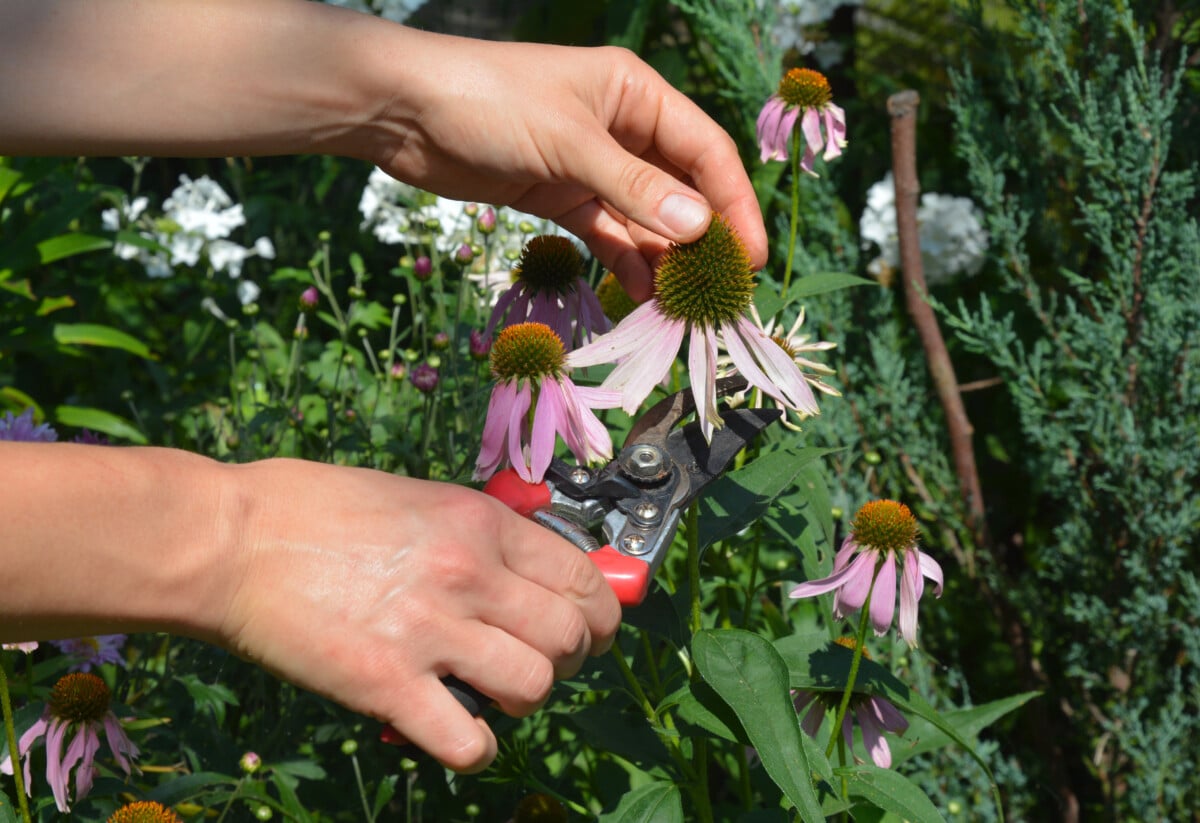
Take a look at your shrub. Snip just below the spent flower heads, ideally cutting back to the next set of healthy leaves or a side bud. That’s where new growth will emerge.
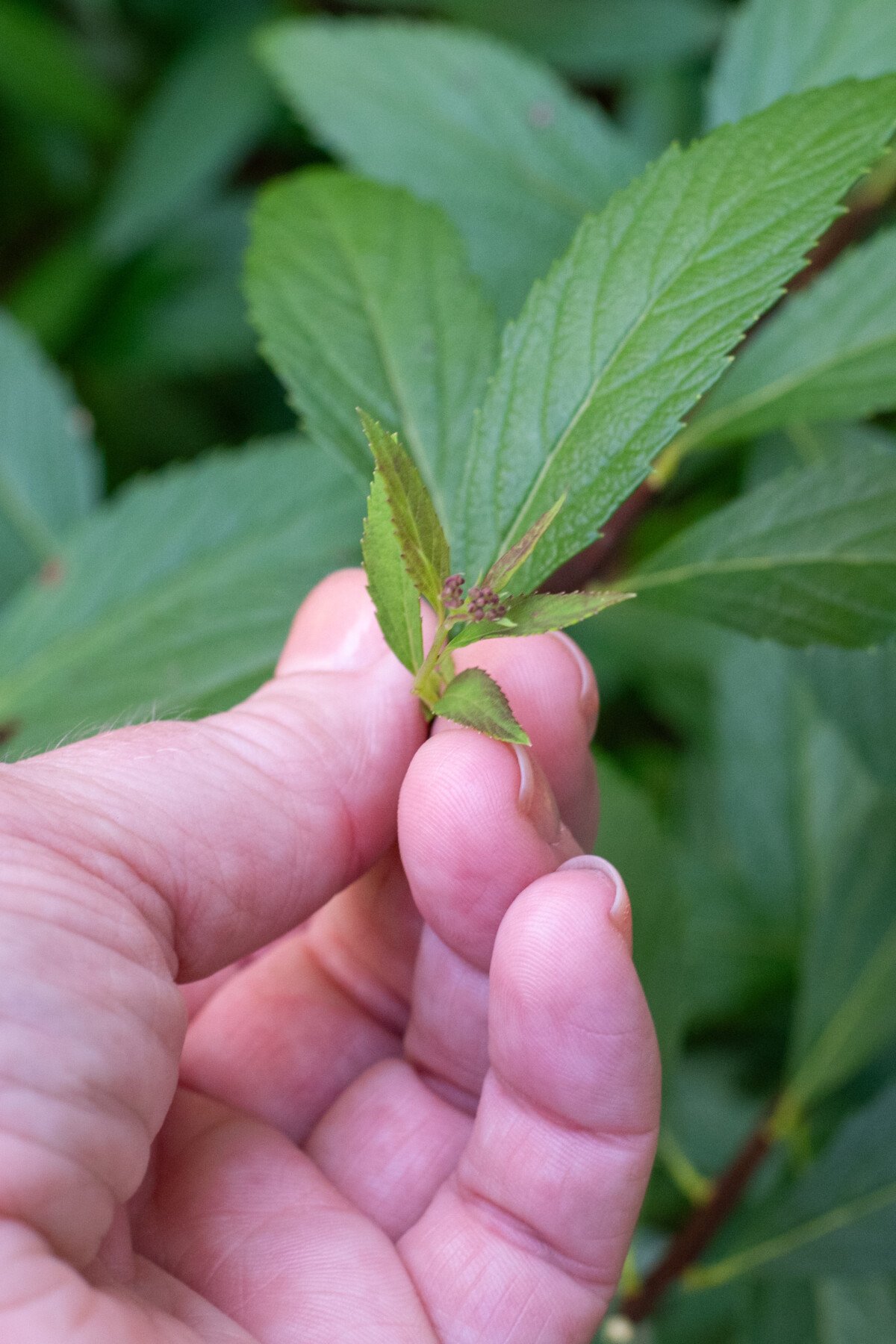
If you want to give your spirea a bit of a shape-up at the same time, you can cut a little further down—maybe an inch or two below the old bloom—and even out the whole plant as you go. Spirea is very forgiving, and this kind of light shearing can encourage denser, tidier growth while also earning you more flowers.

I’m a big fan of this kind of shape-up, as I can easily see if anything is nesting in my spirea. (I might be paranoid.)
My spirea is pretty big, and from start to finish (dumping the pruned bits in the compost), this little midsummer cleanup takes me about ten minutes.

Which Spirea Appreciates a Midsummer Snip?
Now, a quick word of warning. Not all spirea are created equal. Japanese spirea is the most common type you’ll see in garden centers, and it’s the one that responds best to deadheading. Other types, like my beautiful bridal wreath spirea (Spiraea prunifolia) out by the mailbox, bloom in early spring on old wood.
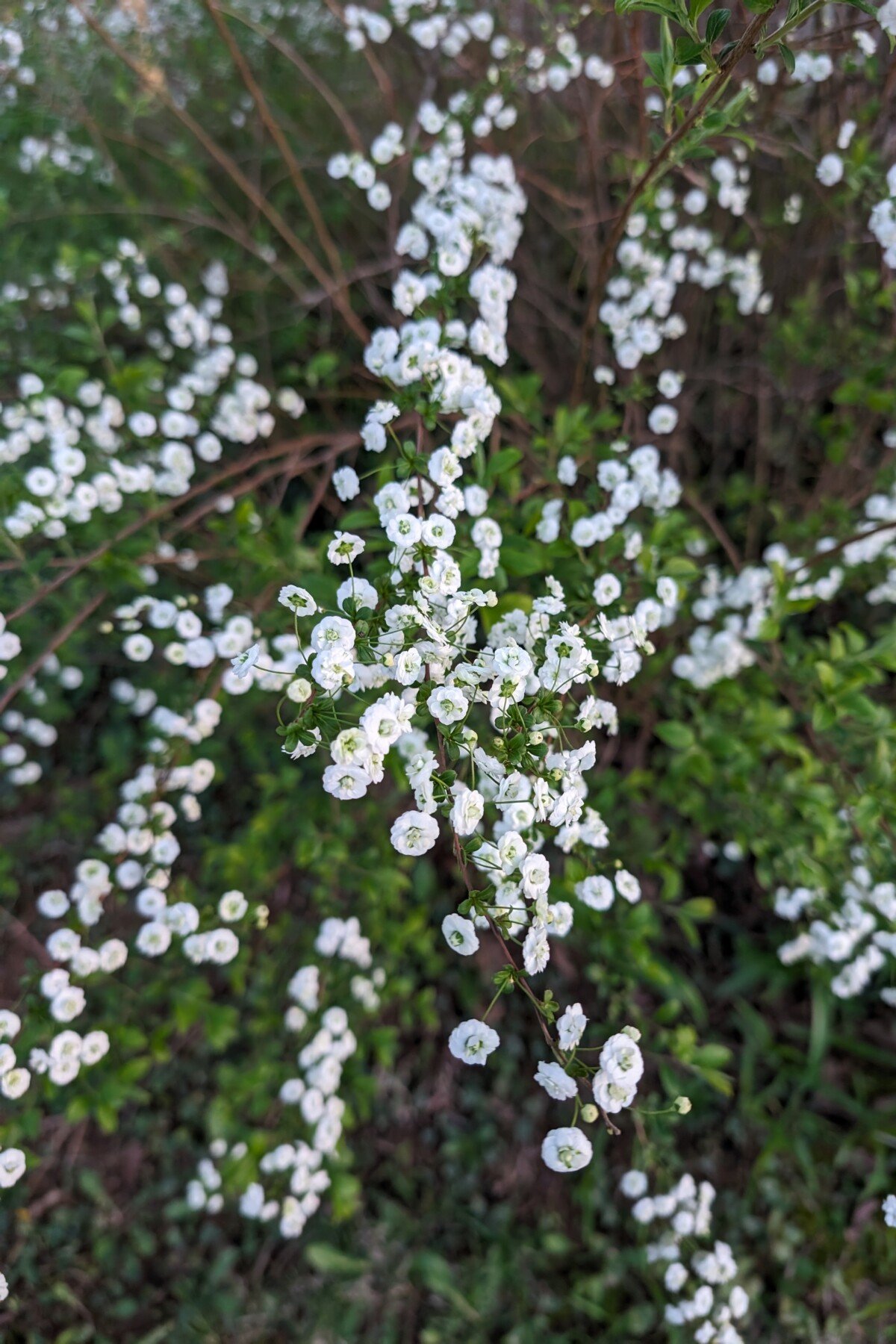
These get pruned immediately after blooming in the early spring, and then you leave them alone until next year. Otherwise, you end up cutting off next spring’s flowers.
But if you’ve got a classic ‘Magic Carpet,’ ‘Goldflame,’ or ‘Anthony Waterer’ spirea, you can deadhead these varieties as often as needed and end up with blooms all summer long. A good rule of thumb is that if it starts blooming in the summer, you can keep it blooming by deadheading it.
When to Stop Deadheading
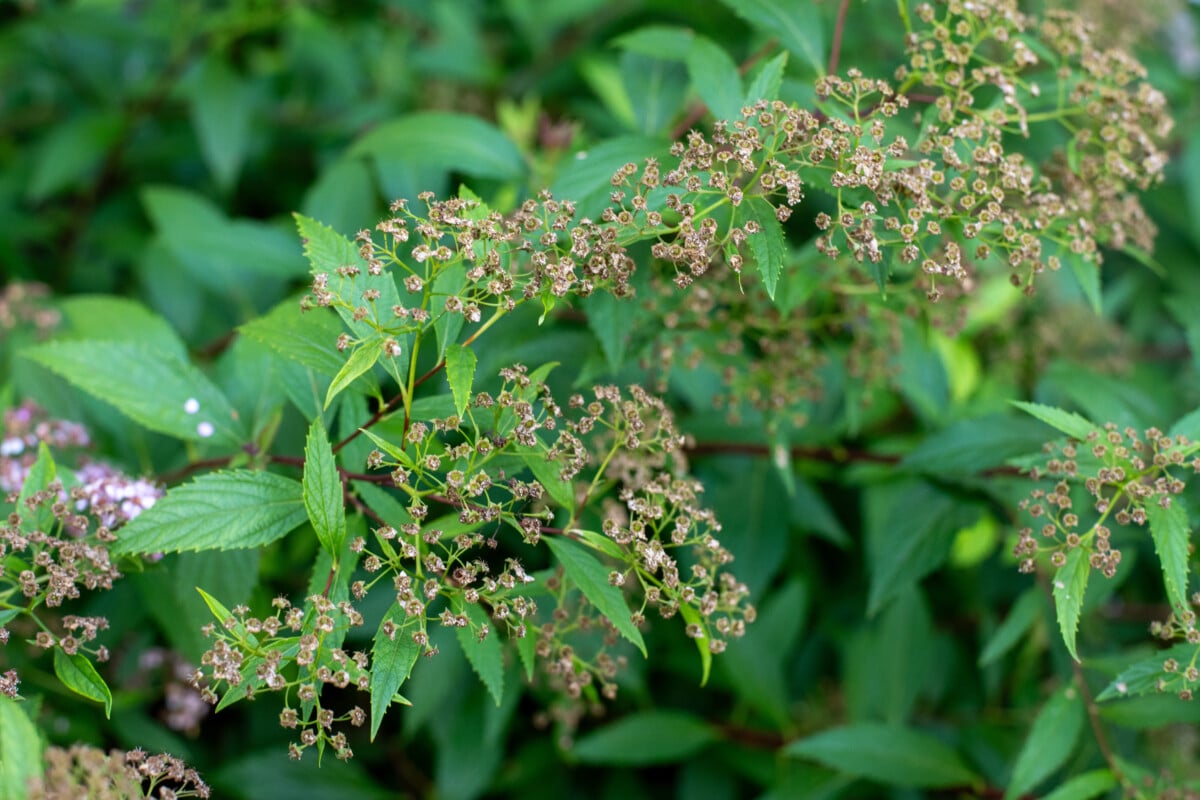
I stop deadheading in early fall, once the plant starts to slow down and shifts into dormancy. At that point, I let the last blooms go to seed. I like the look of the dried seed heads catching frost in late autumn.
Plus, the birds sometimes snack on them, which is always a win in my book.
If your spirea starts looking a little tired later in the season despite your best efforts, it might just need a rejuvenating cut next spring. These shrubs can get a little woody and leggy over time. You know, enough to hide a fully grown cat and four kittens.
A hard prune in early spring can do wonders. Cut the entire shrub back to 6” to 8” and clean out any dead branches within the crown. It sounds harsh, but spirea loves a fresh start every few years. My spirea will be getting a hard prune next year as it’s so big that the branches flop over when it’s in bloom, and it rains.
A Word About Fertilizing
While we’re here, let’s talk about fertilizing. If you’re regularly deadheading and asking your spirea to keep blooming, make sure it has the nutrients to do so. A balanced, slow-release fertilizer applied in the spring is usually enough. You can give it a second light feeding in mid-summer if needed, using a balanced fertilizer that contains phosphorus and potassium to support floral growth. (My go-to is Espoma Garden-tone.)
Deadheading might not be glamorous, but it’s extremely satisfying, and in the end, adds up to a bigger blossom payoff. Oh, and the kittens I found? They all came inside after Mama Cat weaned them, so they could be spayed and adopted, two of them by me. Thankfully, only flowers grow in my spirea these days.

While you’ve got those pruners to hand, why not cut back these fading perennials for fresh growth and a second flush of flowers?
Read Next:

Get Garden Notes From Tracey, Right to Your Inbox
Pull up a chair on the front porch. Join 54,000+ gardeners who get Tracey\'s friendly notes, seasonal to-dos, and hands-on tutorials three times a week.