

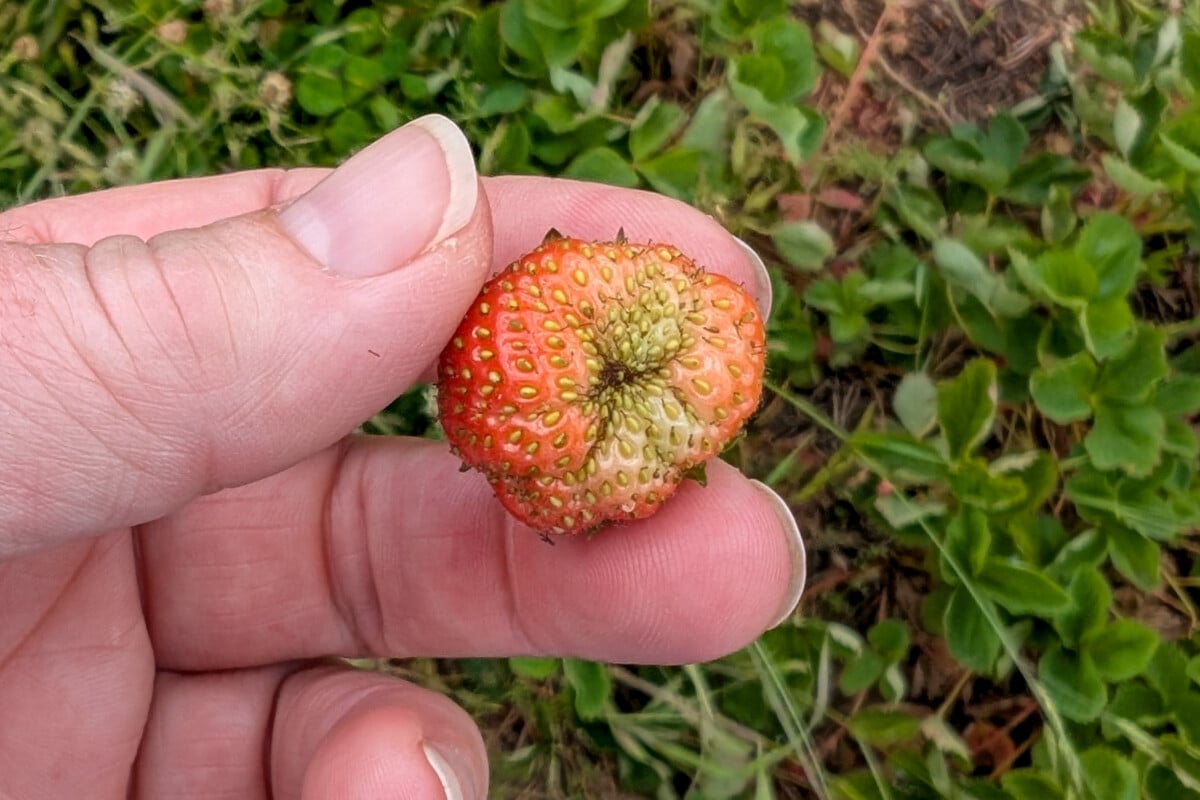
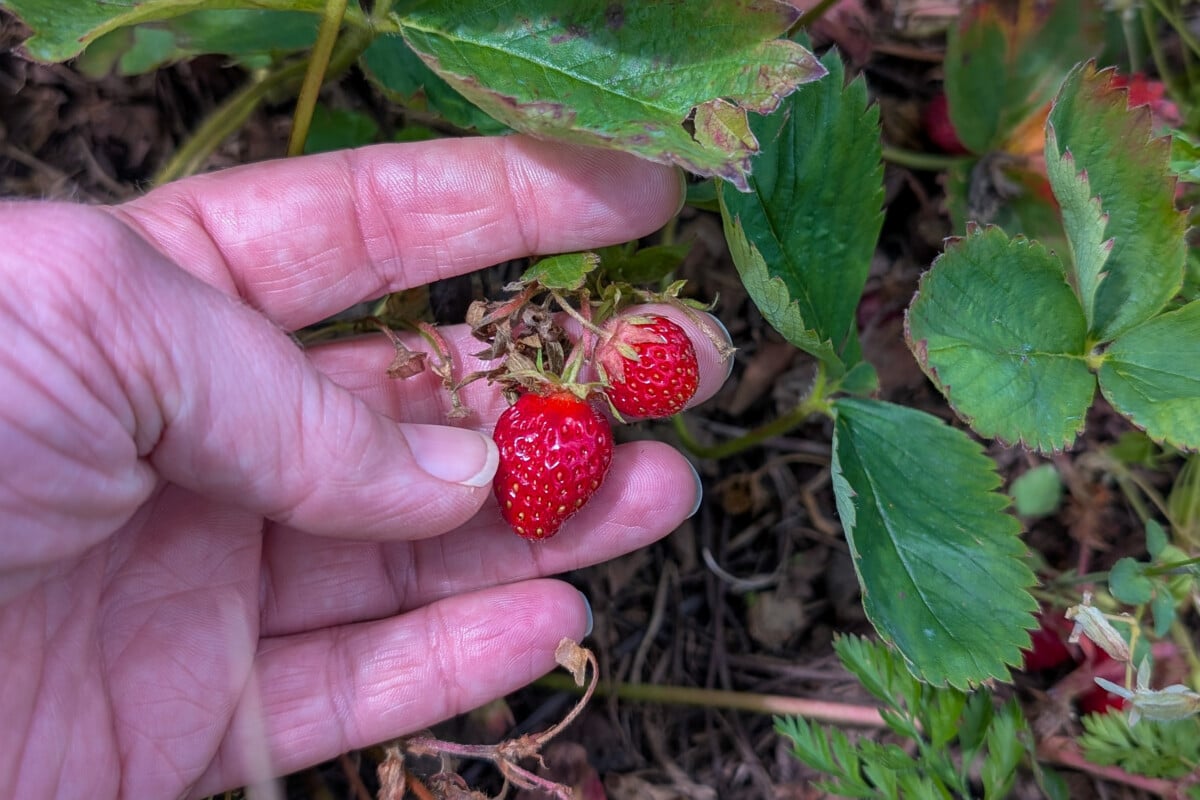
Strawberries are one of the first sweet treats that we home gardeners can look forward to each year. (There’s rhubarb, but that’s quite tangy without a lot of sugar, so I’m exempting it.) So, it can come as a big disappointment after a winter of waiting to end up with a crop of small, misshapen berries.
Oftentimes, we’ll blame it on the weather, or we’re sure that our berry plants were underfed.
But quite often, maybe even most of the time, funky-shaped strawberries come about due to poor pollination. And when you take a moment to consider strawberry biology, you begin to understand how important it is that your berries are visited by some hardworking insects each spring.
Plant Biology is Weird
I recall some very opinionated vegetarian commenter in an Instagram thread stating that eating eggs was “disgusting” because you were eating a “chicken period.” Of all the arguments you can make against eating meat, this one struck me as plain odd. If eating the reproductive organs of a living thing is disgusting, then I have some bad news for her about nearly every fruit and vegetable that graces our table.
Except for leaves, like spinach, kale and lettuce, all of the fruit and vegetables we eat are the reproductive organs of plants.
Take berries, for example, a berry is the ripened ovary of a plant. Yet none of us stick up our nose at a “disgusting” juicy, sun-ripened heirloom tomato. A tomato, being a true berry, is a ripened ovary containing the seeds (eggs, if you will) of the next generation. Food for thought, as they say.
This brings me to my point. From a horticultural standpoint, strawberries are one of the weirdest plants we eat.
My example of a tomato is the classic definition of a berry. The seeds grow inside the ovary, or berry, whereas with strawberries, that’s not the case. Not even close!
You might think that strawberries don’t count as a true berry because they grow their seeds on the outside.
Nope. Their oddness is only getting started.
The little green-yellow dots on the outside of the berry that most people assume are seeds aren’t seeds at all; they are actually the fruit of the strawberry. Each berry is made up of hundreds of little fruits called achenes. Inside every achene is a microscopic seed.
And the red fleshy part that we so enjoy served over shortbread? It’s called the receptacle, and it grows from the dome at the center of each flower. Each achene produces hormones that trigger the receptacle around it to grow in size, and voila – a strawberry. In botany, strawberries are called an aggregate accessory fruit.
I like strawberry much better, though, don’t you?
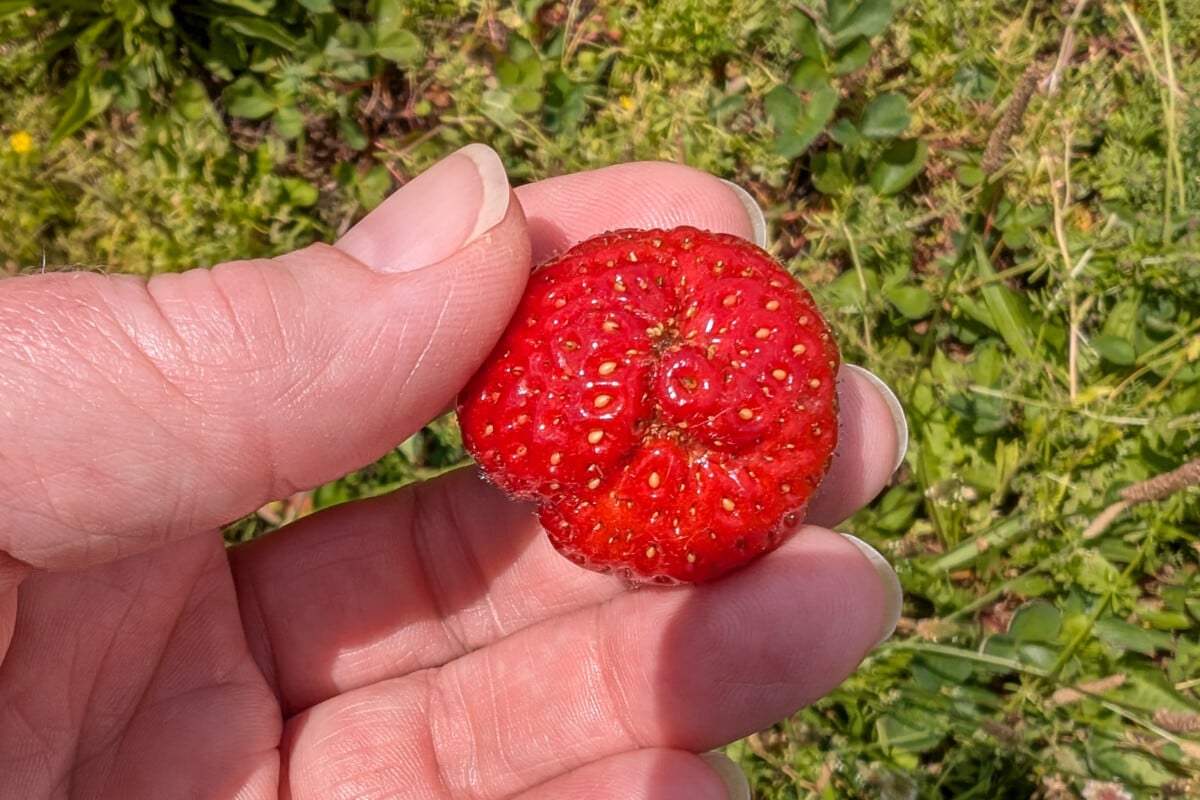
To reach that stage of hormone exchange between the achene and the receptacle, hundreds of pistils on a single flower need to be pollinated. If enough are missed, then you end up with:
- Flat berries
- Berries with ‘seedy’ tips
- Lopsided berries
- Smaller than usual berries
- Hollow, pithy berries
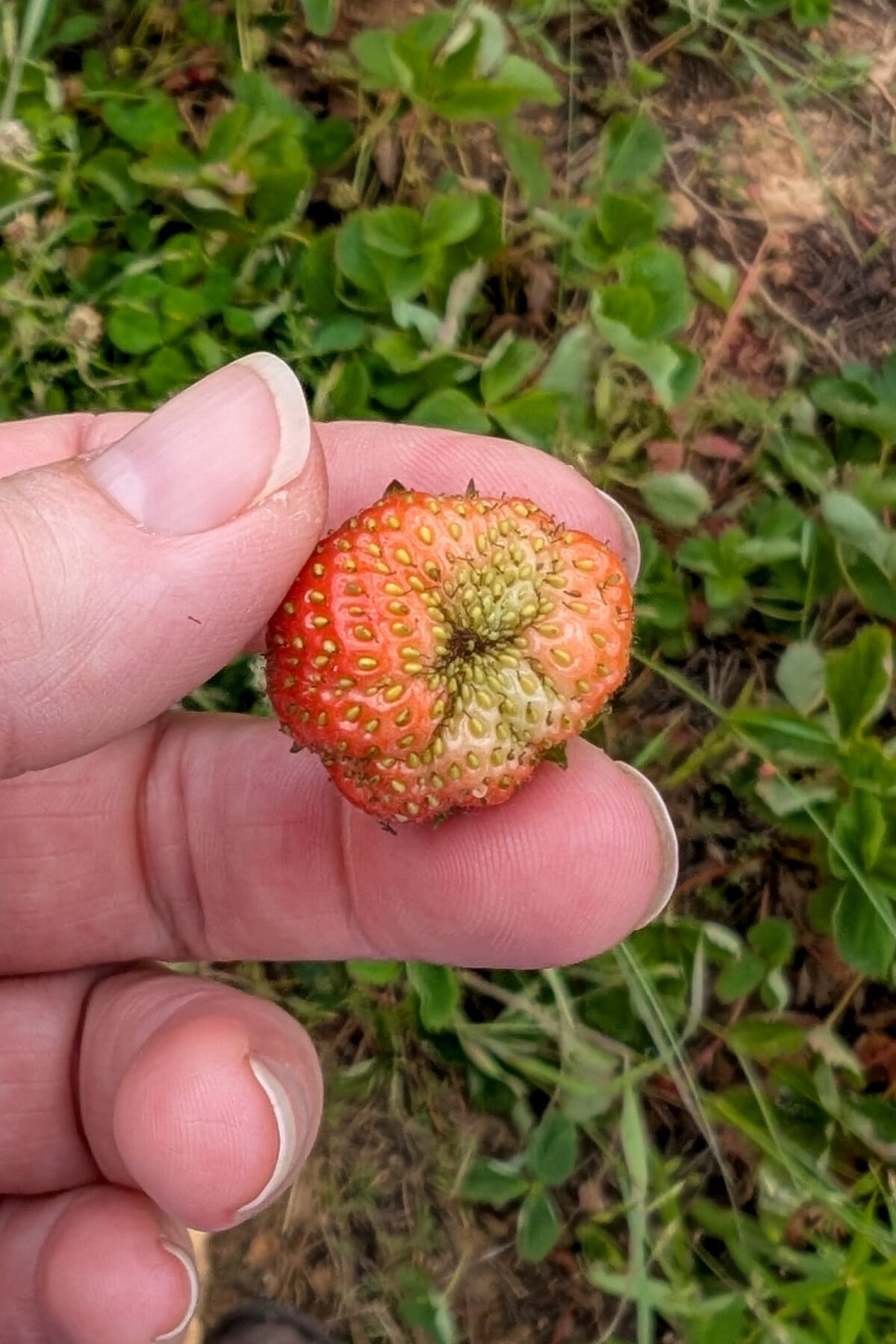
So, if you’re dealing with dinky, funny-shaped strawberries, it’s nearly always a pollination issue.
Hardworking Pollinators
Every single strawberry flower that pops up has roughly 200-400 pistils (the female part of the flower); every single one of those needs to be pollinated for each to grow an achene and a fully formed strawberry.
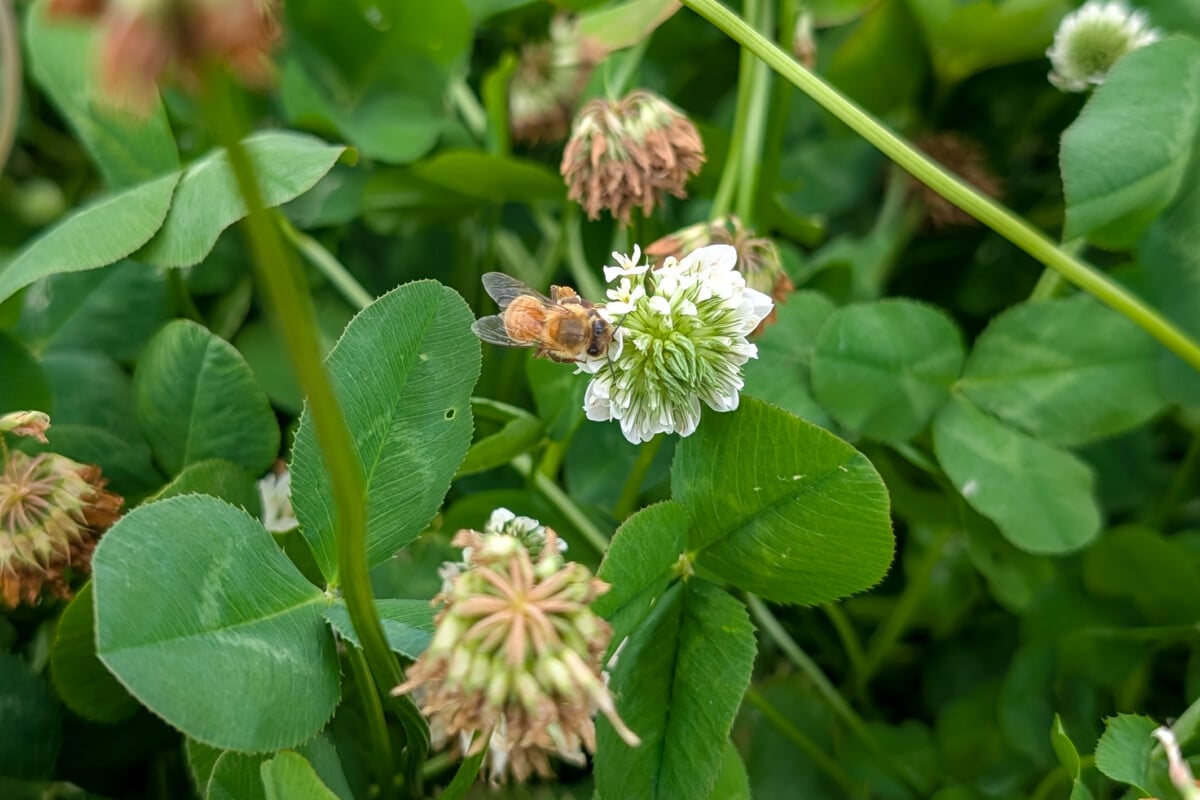
To get there, you need some hardworking pollinators to visit your berries, and not just once. Research has shown that every strawberry flower needs anywhere from six to fifteen different visits from a pollinator to ensure that each pistil is pollinated and fertilized.
Pollination is so important in growing great strawberries that commercial growers will rent honey bee colonies to do the job each spring.
But what can we home gardeners do to encourage pollinators to visit our strawberry plants?
For starters, we’ll skip the honey bee rental. For many of us, honey bees aren’t active yet when our strawberry plants are blooming, and few flowers have started blooming for the season yet.
Instead, we’re going to concentrate our efforts on letting the locals deal with the job. Quite a few native bees are active in early spring and more than up for the job of pollinating your strawberry flowers.
Bumble Bees
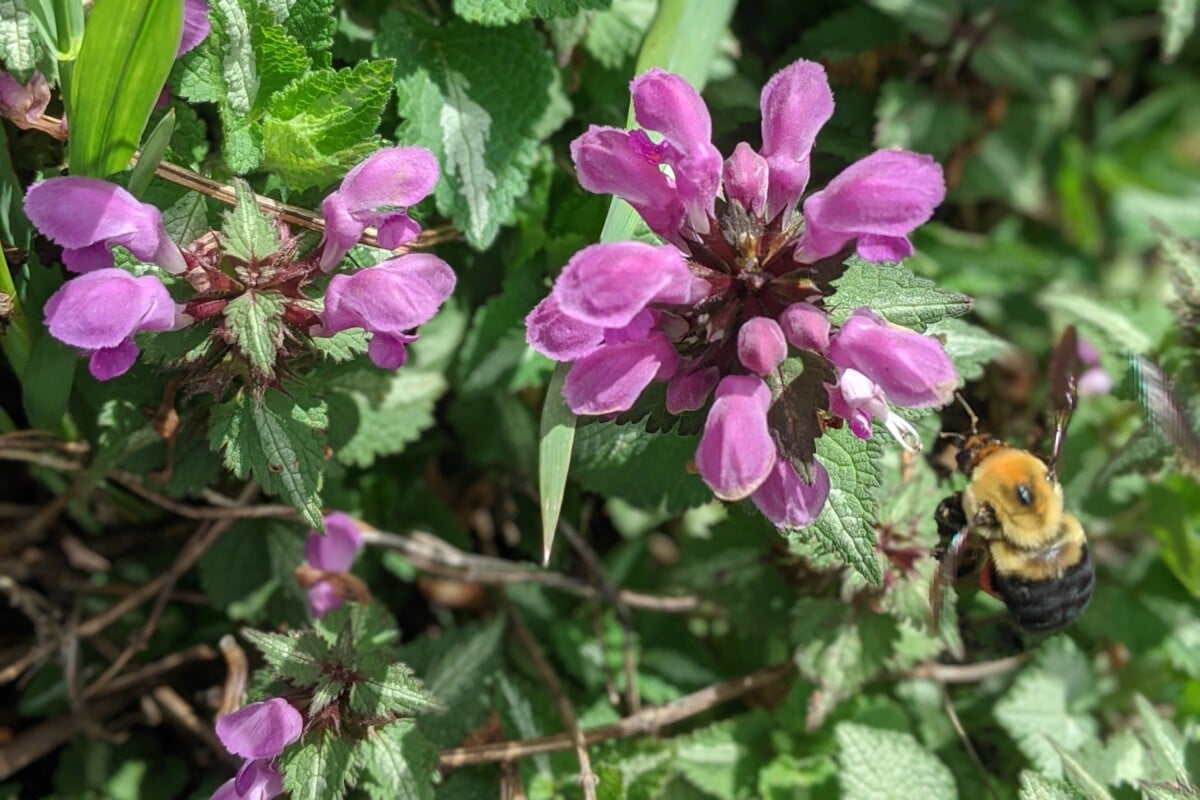
These guys always remind me of happy little drunks, drowsily floating from flower to flower, completely covered in pollen. There’s also a growing body of research showing that bumble bees are spectacular strawberry pollinators. Their size means they cover more of the flower and carry more pollen. Bumble bees are also active during cool, cloudy weather when other bees are grounded.
Other Native Bees
Depending on where you live, several native bees will happily show up to pollinate your strawberries: sweat bees, mining bees, mason bees, and cellophane bees, to name a few.
Hoverflies
If you’re growing everbearing or day-neutral strawberries, hoverflies are great pollinators that show up a little later in the spring.
Create a Bee-friendly Backyard
Okay, now that we know which bees are strawberry pollinating superstars, let’s take a look at how to attract them to your yard. As I’ve already mentioned, if you live in certain areas of the United States, there aren’t a whole lot of flowers in bloom when strawberries start blossoming. This, in part, makes your strawberries a particularly enticing meal for pollinators, but you need to sweeten the pot to ensure you have plenty of buzzing activity in your backyard.
Leave a Bare Spot of Two
Quite a few native bees build their nests in the ground. You can encourage them to nest near your strawberries by leaving a patch of ground bare, no mulch, no grass, etc. It doesn’t even have to be a particularly large patch, just a couple of square feet.
Provide Water
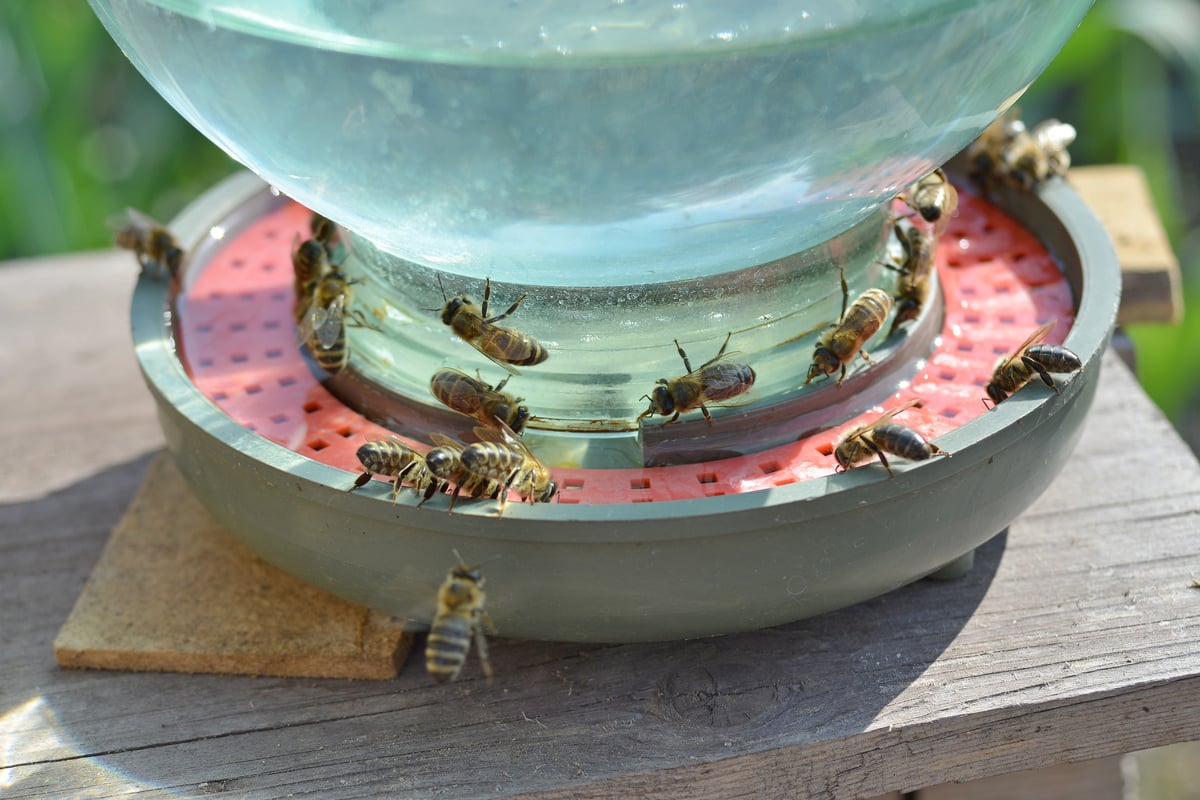
While you’re at it, make sure your emerging pollinators have something to drink when they show up for the season. Despite spring having a reputation for being rainy, it can take a while for that rain to show up. By providing a source of water for emerging bees, you’ll ensure they stick around to pollinate your strawberries.
(Here are seven great DIY bee watering station ideas)
This can be as simple as a small dish filled with water and small pebbles. Hit up your local thrift store for an old piece of Blue Willow or other decorative China for a beautiful pollinator water dish.
Early Food for Early Pollinators
I’m going to say something that’s going to get half the internet up in arms. Don’t worry about dandelions. No, they are not most bees’ first food each spring. Dandelions aren’t even particularly nutritious food sources for bees. I’m not going to go into detail here as I’ve already written about why the “save the dandelions for the bees” brigade is well-meaning, but incorrect. You can read that here.
If you want to create a backyard that’s full of good food for pollinators early on in the season, stop looking down at your yard full of dandelions and start looking up.
For many bees, their first (and most nutritious) source of food is blossoming trees, such as maples, quince, redbuds, cherry, apple and other fruit trees and willow trees. Just because we may not pay attention to tree blossoms because not all of them are decorative, doesn’t mean bees aren’t absolutely buzzing around them every spring.
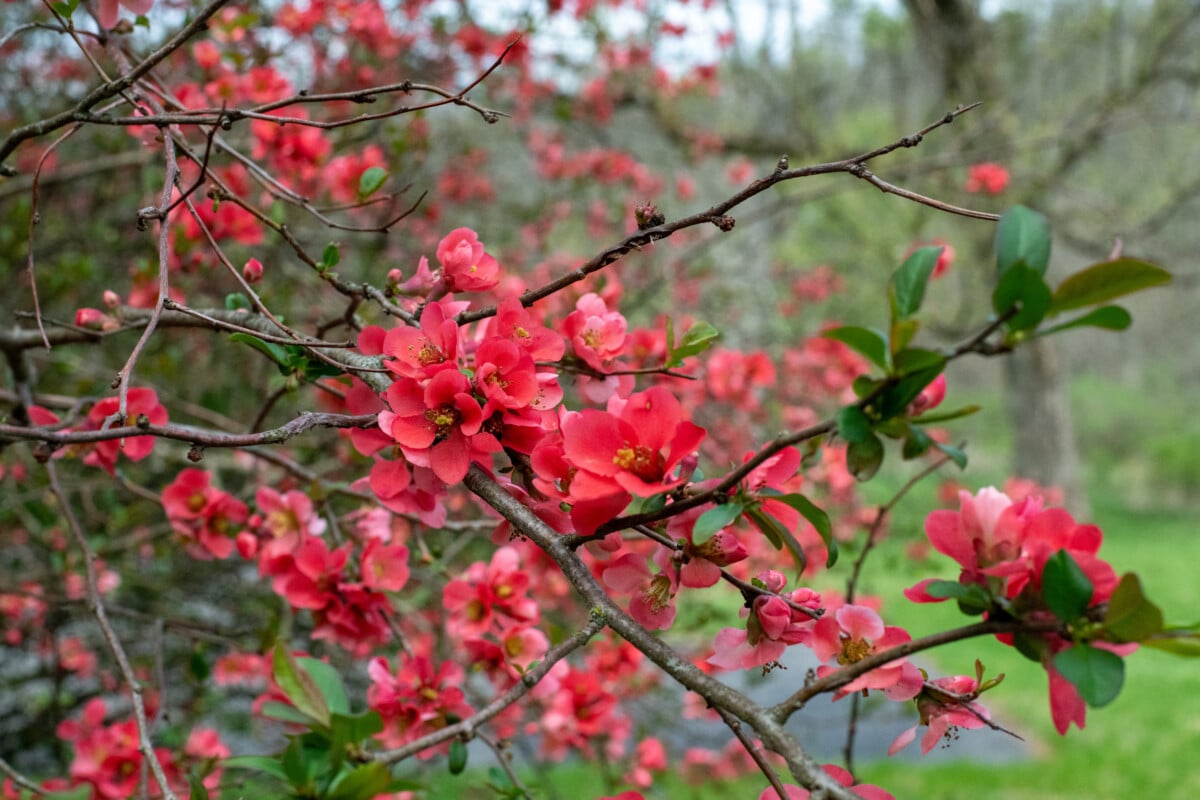
Also, consider early blooming flowers with nectar that bees can actually use, such as naturalized daffodils, grape hyacinths, lungwort, creeping and woodland phlox, and wild columbine. Remember that most daffodils and tulips are sterile hybrids and are completely useless to bees. (Here are a few more flowers that don’t help your pollinators.)
Leave the weeds, as some of the earliest weeds that show up are also great food for bees. Purple dead nettle, chickweed and hen bit are all bee favorites.
White Clover Lawn
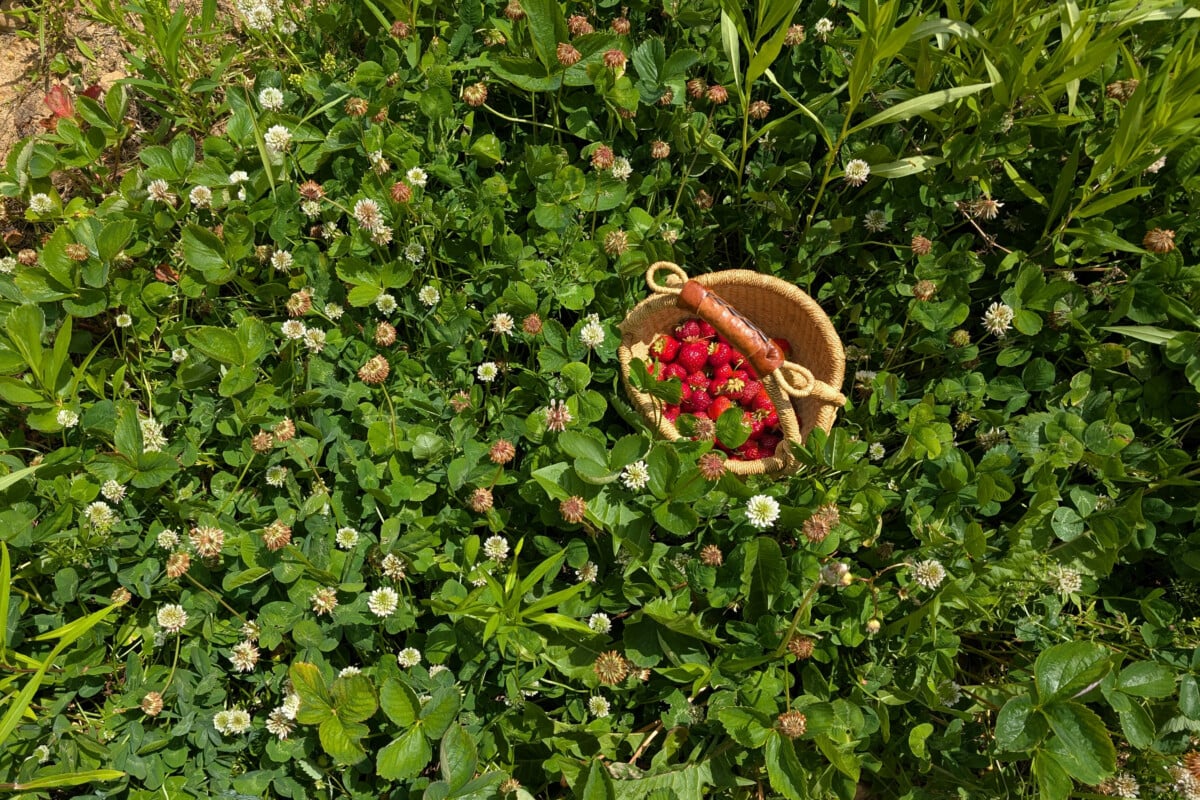
Consider adding white clover seed to your lawn. Not only will this ensure you have well-pollinated strawberries, but white clover lawns also are great news for your vegetable and ornamental gardens for the same reason.
I got to see this effect firsthand when I visited my local u-pick berry farm.
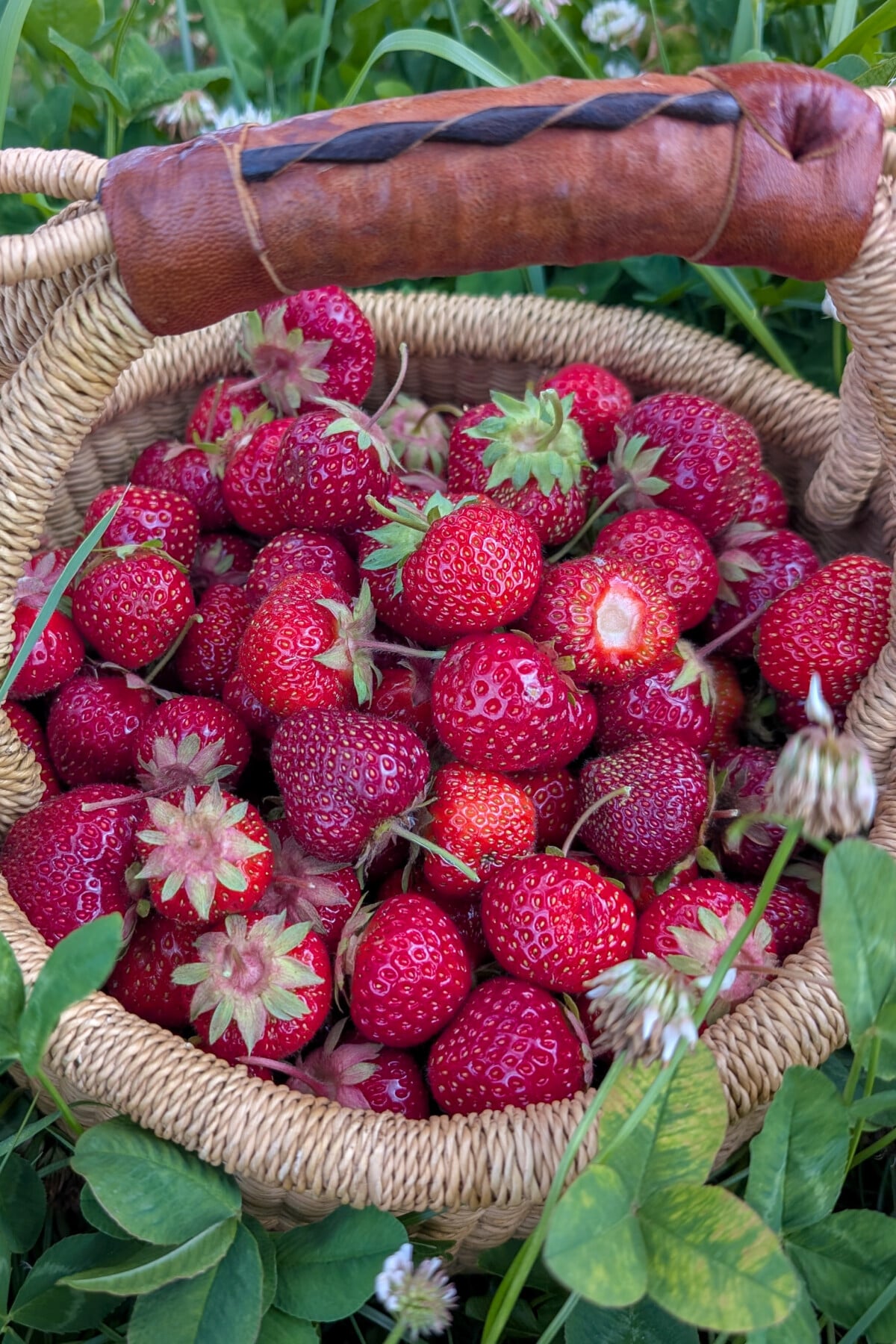
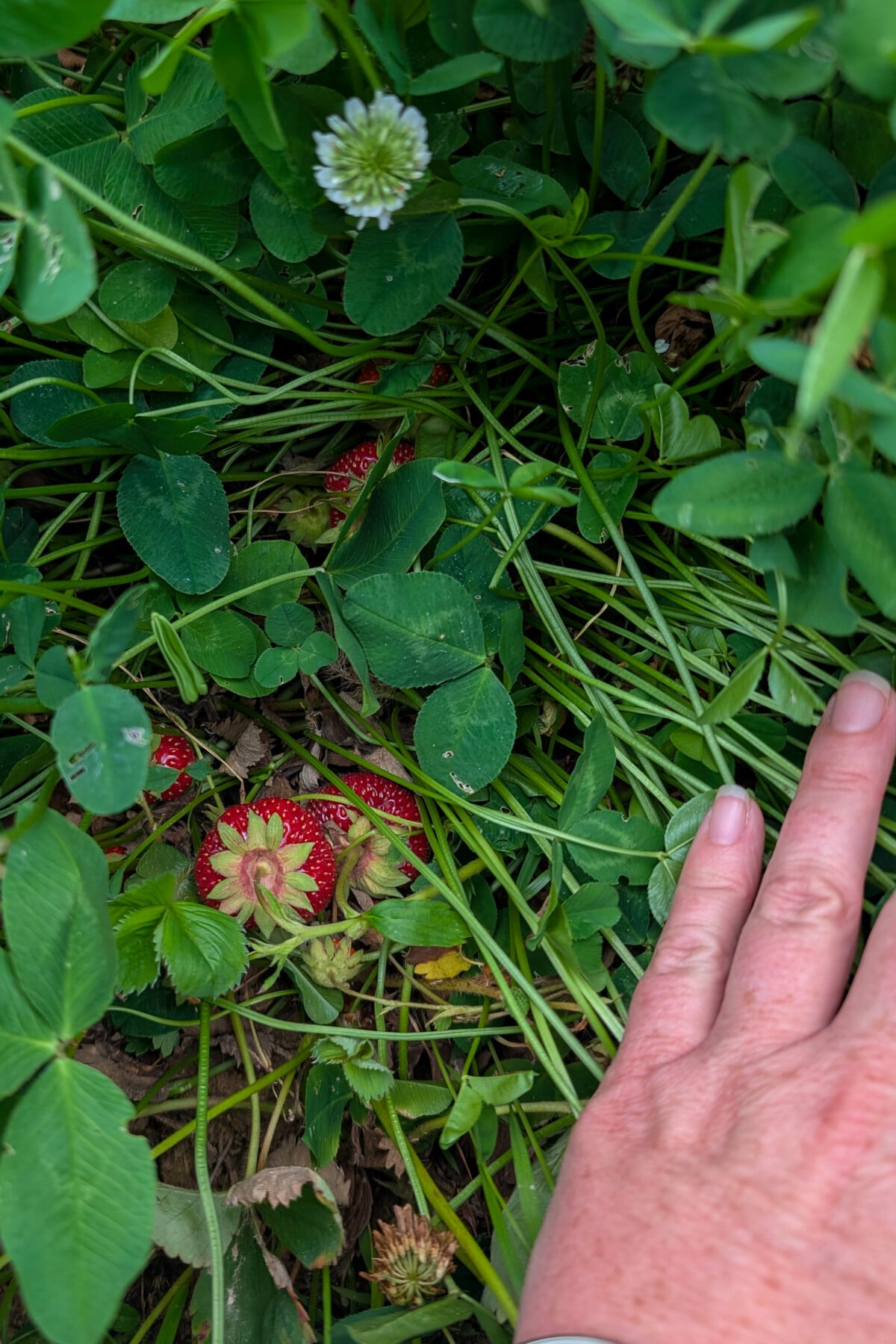
They had plenty of white clover mixed right in with their strawberry plants. Every time I got close to one of these patches of white clover, I could hear the buzz of pollinators. I was shocked the first time I moved some of the clover and peeked inside – huge strawberries nestled in among the white flowers. It’s toward the end of the strawberry season, so the fields were pretty picked over. I started targeting the clumps of clover growing among the strawberry plants and filled my basket faster than other pickers nearby.
When Bad Weather Keeps Pollinators Grounded
Sometimes it just so happens that when your strawberries are in full bloom, waiting to be pollinated, the weather is cold and rainy, keeping most pollinators from visiting. In that case, you can hand-pollinate the blossoms. Obviously, if you have a large strawberry patch, this can be quite a chore. But for small patio containers or patches, you can take care of the job with a soft paintbrush or an electric toothbrush.
Use the paintbrush and gently swab both the stamens and pistils of each flower. When using an electric toothbrush, hold the tip of the brush at the base of the flower or along the stem and let the vibrations shake the flower for a few seconds before moving on to the next.
By fixing your pollination problems, you’ll enjoy large, juicy berries every single summer. If fertilizing your strawberries has you stumped, you can click here to learn when to feed your plants. And if you think your berry issues might be due to another problem, I’ve covered a number of common strawberry growing issues here.
Get the famous Rural Sprout newsletter delivered to your inbox.
Join the 50,000+ gardeners who get timely gardening tutorials, tips and tasks delivered direct to their inbox.