

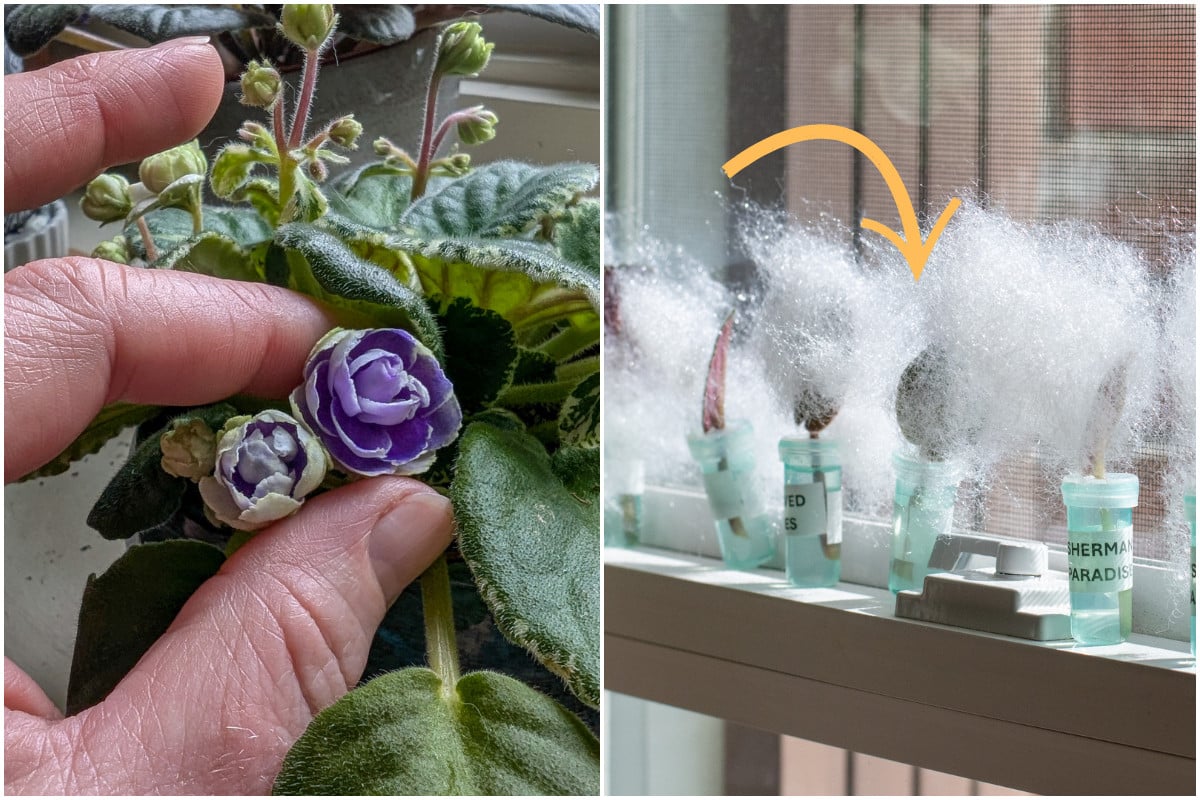
African violets are making a comeback. Whether you’ve been growing them for ages or you’re just getting interested in these nostalgic plants, there are some important things you need to know about keeping the plant your grandma grew – African violets.
A Tiny Plant with a Big Personality
A couple of years ago, I wrote this piece that discussed seven important things you need to know if you have an African violet. If you haven’t already read it, I highly recommend doing so. I offer a few key tips for getting your violet to bloom, along with some sound care advice.
These humble little plants are gaining popularity once again. (I suspect the recent “cottagecore” trend may have something to do with it.) The longer I grow them, the more information I keep stumbling on that I want to share with you, dear readers. So, I thought, it’s time for part two!
1. Not Your Grandma’s Purple African Violets
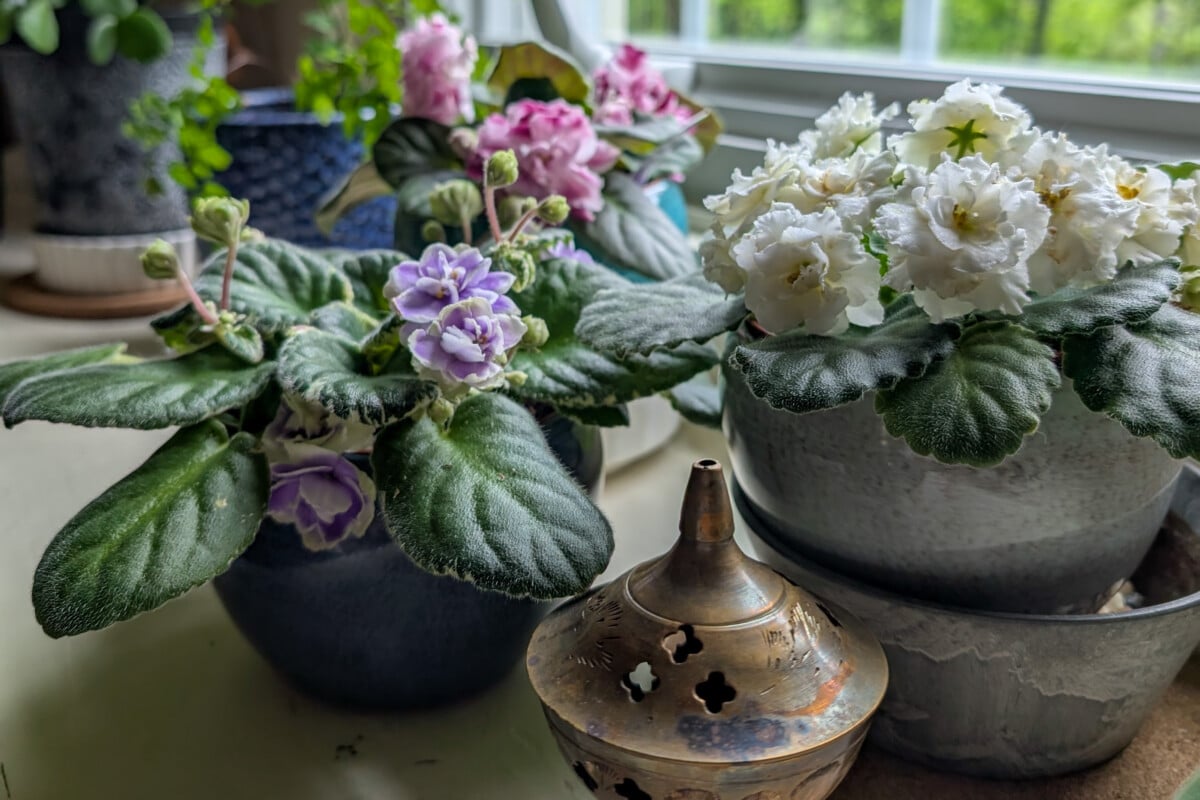
According to the African Violet Society of America, there are over 20,000 cultivars of African violets. With breeders always experimenting, that list is growing every year.
What this means for anyone who loves houseplants is that you have tons of plants to choose from that are small enough to sit on your windowsill and can be started from a single leaf.
We’re not just talking about purple flowers anymore.
Oh, no. There are African violet cultivars in shades of white, pink, red, lavender, neon green, and even yellow (yes, yellow!). There are varieties like ‘Mermaid Kiss’ that feature hot pink petals with lime green edges.
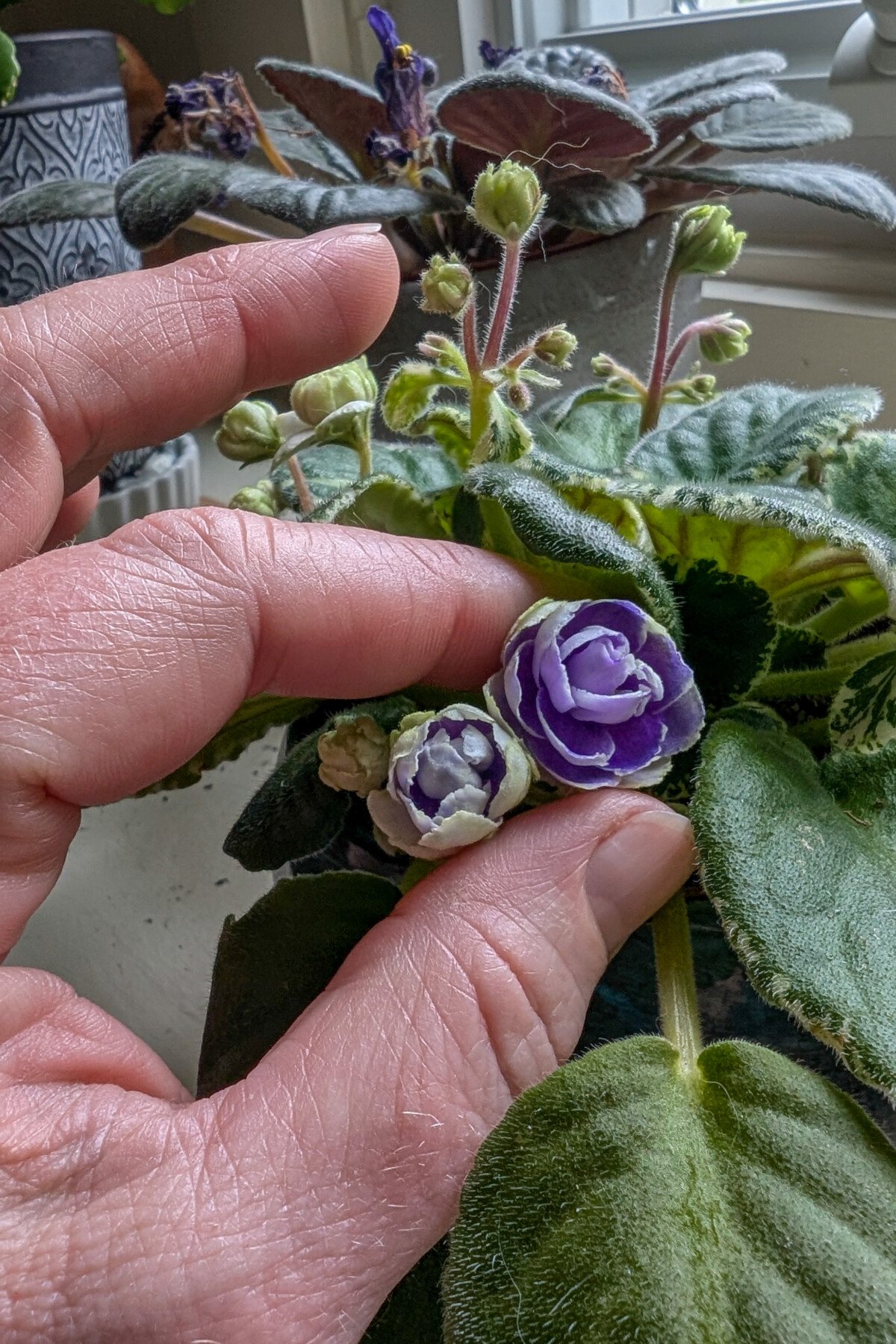
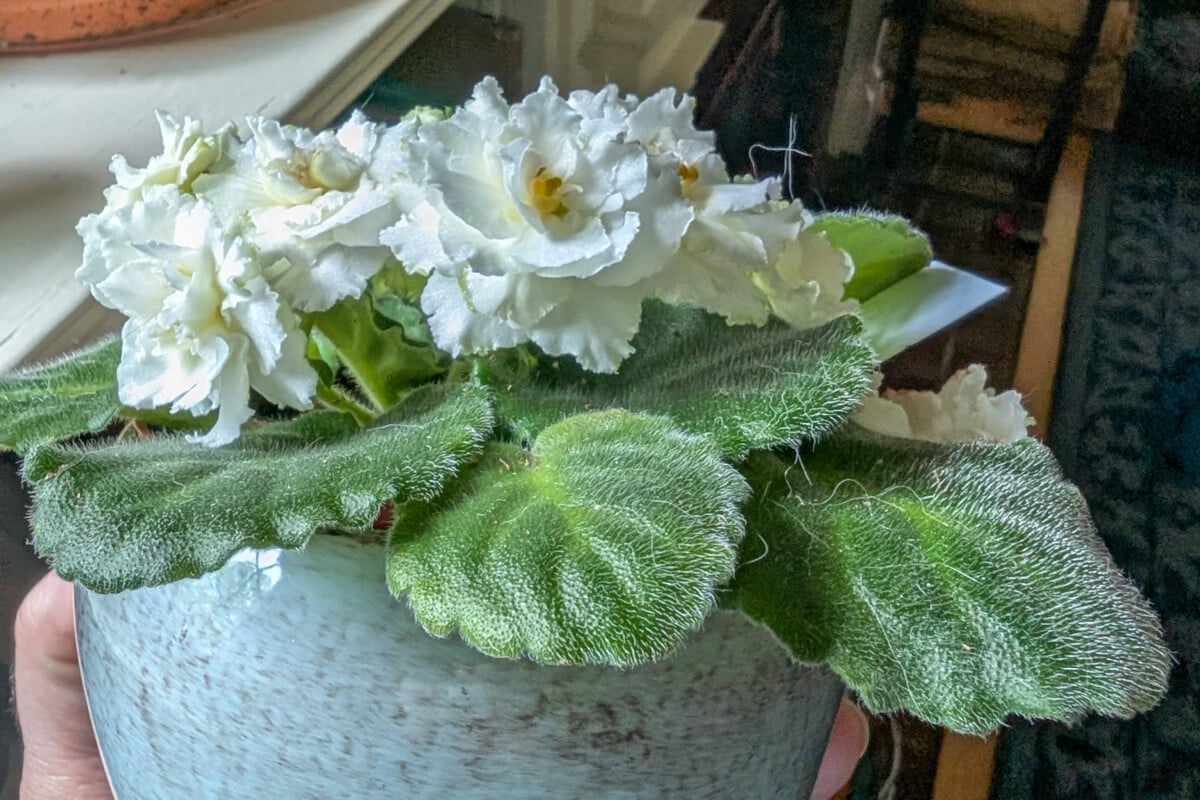
There are ones with single flowers, double flowers, frilled petals, star-shaped blooms, and yes, even those floofy, rosebud-style flowers that look like miniature peonies. Buckeye’s Seductress or Frosty Cherry are beautiful examples.
And the leaves? Don’t even get me started.

Variegated foliage with white or pink edging, yes, pink leaves! Deep emerald green or beautiful jade. Scalloped leaf margins, quilted textures. Pointed or rounded tips, the list goes on and on.
There are even trailing violets with long creepers that spill over the edge of their pots and miniature violets that spend their lives being squee-worthy in tiny 2” pots.
And unlike many popular houseplants that have insanely expensive variants and hybrids (looking at you, Albino Monstera), leaf cuttings for African violets are abundant and affordable, making them highly collectible. The fact that they are small for houseplants also helps.
2. One Leaf = Many Plants

By far, my favorite aspect of African violets is how they propagate.
I have several pothos plants. I have numerous Christmas cactuses, spider plants and other tropical houseplants. You know what drives me nuts about them? If you want to propagate them and get them to look great in a pot, you need many cuttings. Otherwise, you end up with this goofy, skimpy plant that doesn’t quite fill the pot.
Do you know what happens when you propagate a single African violet leaf?
It grows plantlets, as in, many new whole plants.

For instance, I bought a single leaf cutting of a ‘Rockin Robin’ and poked it in some coconut coir. Once the plantlets produced from that leaf were large enough to be separated and moved into their own pots, I had six new plants. All from just one single leaf.
Etsy is my favorite place to score African violet leaf cuttings.
3. Skip the Terracotta

When it comes to growing African violets, many folks love the look of classic terracotta against the green leaves of an African violet, complemented by its gorgeous blooms. Unfortunately, using terracotta pots can shorten the life of those leaves and sometimes the plant itself.
African violet leaves are incredibly tender, as anyone who has snapped one off with the brush of a hand can tell you. Terracotta is naturally porous, which means it acts as a wick. When the tender stems of an African violet leaf rest against the lip of a terracotta pot, it slowly pulls moisture from the stem.
In the end, the bottommost leaves of the plant die off much quicker.
On a larger plant, this isn’t a huge issue, but with smaller plants, it can quickly lead to a dead violet.
Most serious African violet growers insist on using plastic pots for the best results. But if you really want to use terracotta or that’s all you have on hand, take a leaf out of your grandmother’s book and line the lip of the terracotta pot with a strip of aluminum foil. This will stop the natural wicking action of the clay and protect your plant’s leaves.
4. Everblooming

Many blooming plants set buds based on the length of the day. For instance, many of the perennials we grow in our gardens are long-day bloomers, relying on the lengthy days of summer to trigger blooming. Christmas cactuses and other Schlumbergera are short-day bloomers. They set buds when the days shorten and the nights begin to grow longer and cooler, hence their reputation as holiday plants here in the Northern Hemisphere.
African violets couldn’t care less.
They are everblooming plants, which means as long as they receive the right amount of nutrients and light, they will bloom continuously. This is one of my favorite things about growing African violets. I always have some that are blooming. And the ones that aren’t are busy growing new buds for another round of blooms.
I can hear quite a few of you grumbling right about now. Yup, getting them to bloom takes a bit of trial and error. Mostly, it takes getting the light just right, and often those needs change from one cultivar to the next. I highly recommend using the umbrella method.
5. The ‘Umbrella’ Method

“Okay, yes, Tracey, I know that African violets need lots of bright, indirect light to bloom continuously. But how do I know what’s not enough or what is too much?”
The leaves can help you a little. If they are pale and the green looks washed out, they are likely getting too much light. However, that’s only one indicator, and with so many leaf colors, it can be hard to tell what’s washed out. So, I use the ‘umbrella method’ to judge whether my plants are getting the right amount of light.
Think of the shape of an open umbrella.
If your African violet is healthy (meaning the leaves aren’t limp from under- or overwatering) and it’s growing in a slight umbrella shape, but with the leaves growing down the sides of the pot, your plant is getting too much light and is trying to move away from it.
Now, picture a very windy day, when your umbrella gets blown inside out.
If the leaves of your plant resemble this shape – growing upwards and somewhat compacted cone – your violet is not receiving enough light and is stretching up to get more light.
A healthy African violet that’s getting the right amount of light should have the shape of an umbrella sitting on top of the pot (not growing down). It will have bottom leaves that grow (mostly) straight out from the pot, with a slightly domed shape overall.
This is the best method I’ve found so far to determine whether my plants are receiving the optimal amount of light.
When moving your plant to a new space with different light, give it between two to three weeks to adjust before you determine if that light is adequate and if your light source is a window, rather than an overhead grow light, don’t forget to turn the saucer once a week so that all sides of the plant receive light and it can grow evenly.
6. The Best African Violet Fertilizer
I get emails from readers almost every day. When it comes to African violets, the top question I get asked is, “What should I use to feed my violets?”
There are a ton of fertilizers out there marketed as African violet fertilizers, but many are simply terrible. I used to be a huge fan of Schultz African Violet liquid fertilizer, but it gets its nitrogen content from urea, which is horrible for African violets. Their tender roots are easily burned, and urea is notorious for causing fertilizer burn.
In this matter, I agree with The Violet Barn, which is a fantastic nursery in upstate NY that specializes in African violets. They recommend you avoid “blooming” formulations and instead, opt for a well-balanced fertilizer, such as Superthrive Grow, which has an NPK ratio of 7-9-5.
I switched to using Superthrive two years ago, and my violets have never looked better! You can purchase it here.
If you don’t wish to use Superthrive, look for a balanced formulation that has no urea.
I feed my plants according to the bottle recommendations with every watering and flush them with clean water once a month.
Oh, and by the way, The Violet Barn has hundreds of incredible violets for sale, and yes, they ship them. They will even give you a free plant when you order simply for leaving them a review or by joining the African Violet Society of America from their page.
7. Speaking of the African Violet Society of America
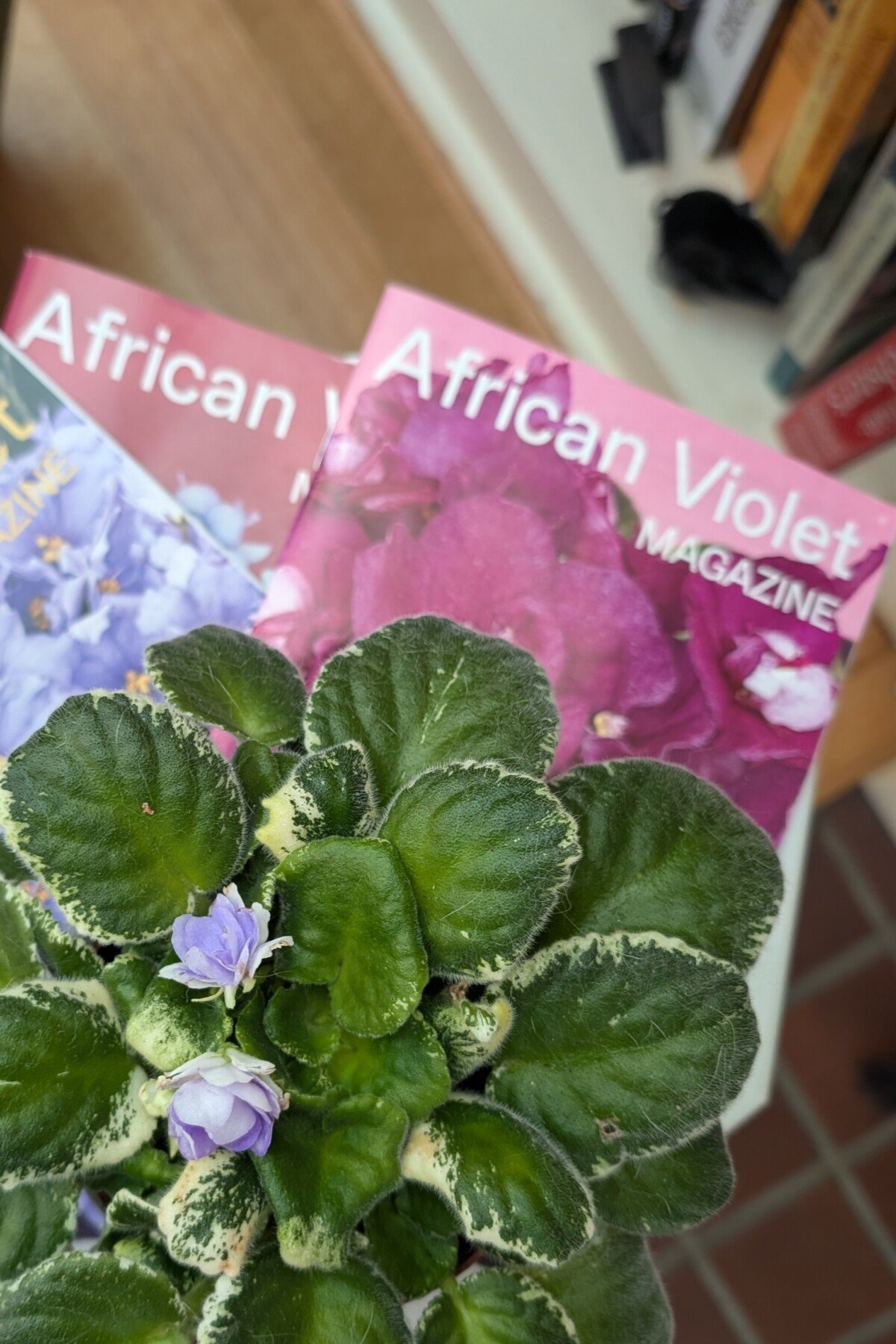
If, like me, your love of African violets turns slightly obsessive, you may wish to consider joining the African Violet Society of America. They have a wealth of information. You can find affiliate clubs near you on their website, and they have over 3,000 pictures of violet hybrids (listed alphabetically) to help further your need for ‘just one more violet.’
By far, my favorite perk of joining is the quarterly magazine. It’s always packed with helpful information and interesting articles. I love the photos of fancy cultivars (although sometimes this leads to more violet collecting).
That’s not necessarily a bad thing.
Get Garden Notes From Tracey, Right to Your Inbox
Pull up a chair on the front porch. Join 54,000+ gardeners who get Tracey\'s friendly notes, seasonal to-dos, and hands-on tutorials three times a week.